Netflix stock was down roughly 4% in after-hours trading Thursday after the company posted quarterly results that missed investor expectations on revenue, though it beat earnings expectations.
Yes, but: Most importantly to Wall Street, Netflix beat expectations for user growth, growing its total paid subscriber base to nearly 140 million worldwide.
Dan talks about D.C.'s growing antipathy toward big tech with Dean Garfield, who is stepping down as CEO of the IT Industry Council in order to lead global policy for Netflix. How did we get here, and what comes next?
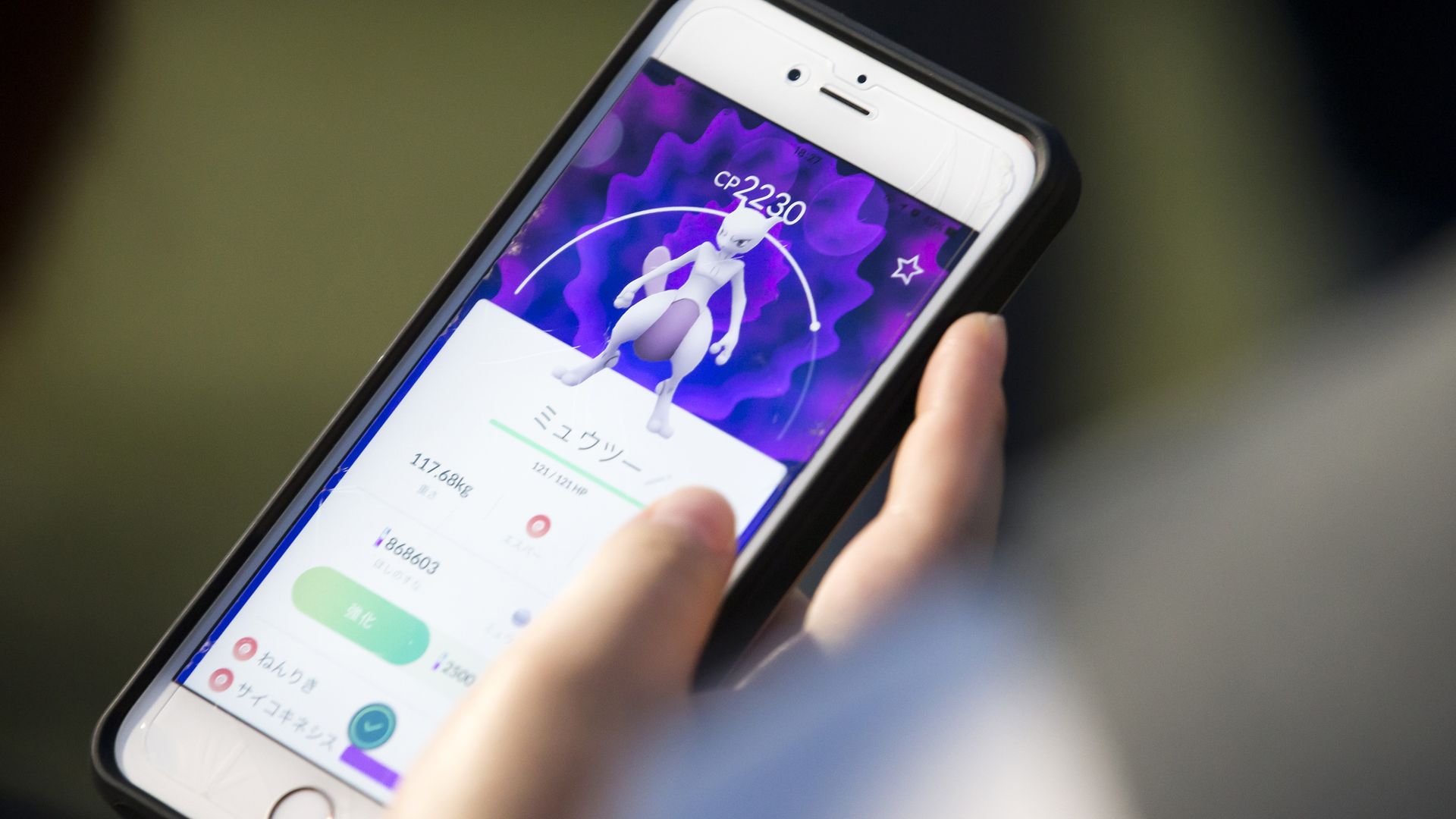
Niantic, the mobile AR game-maker behind Pokémon Go, raised $245 million in Series C funding at a post-money valuation of nearly $4 billion.
Why it matters: Because this comes ahead of Niantic's anticipated release of a Harry Potter-themed game, further blurring the value line between tech and legacy brand content.
Facebook said Thursday that it hasremoved hundreds of pages and accounts that pretended to be real news sites from places in Eastern Europe, but were actually operated employees from Russian state-owned news company Sputnik.
Why it matters: The effort potentially shows a new tactic being used by Russia to weaponize misinformation — using its state-run media arm to create fake posts that look like they come from real newsrooms in vulnerable countries.
Apple CEO Tim Cook writes for TIME: "In 2019, it’s time to stand up for the right to privacy — yours, mine, all of ours."
What he's saying: "This problem is solvable — it isn’t too big, too challenging or too late," Cook writes. "Innovation, breakthrough ideas and great features can go hand in hand with user privacy — and they must. Realizing technology’s potential depends on it."
Pick up a glass of water, then lift a fork: Without thinking, you chose the best way to grasp each object. Researchers at UC Berkeley have developed a robot that makes the same calculation, choosing on the fly whether to grab an object with pincers or lift it with a suction cup.
Why it matters: Reliable robot grabbers are the just-out-of-reach holy grail for e-commerce outfits like Amazon and Walmart, who still rely mainly on human hands for the job. Smart picker-uppers would clear a serious bottleneck in shipping and could change the nature of warehouses entirely.
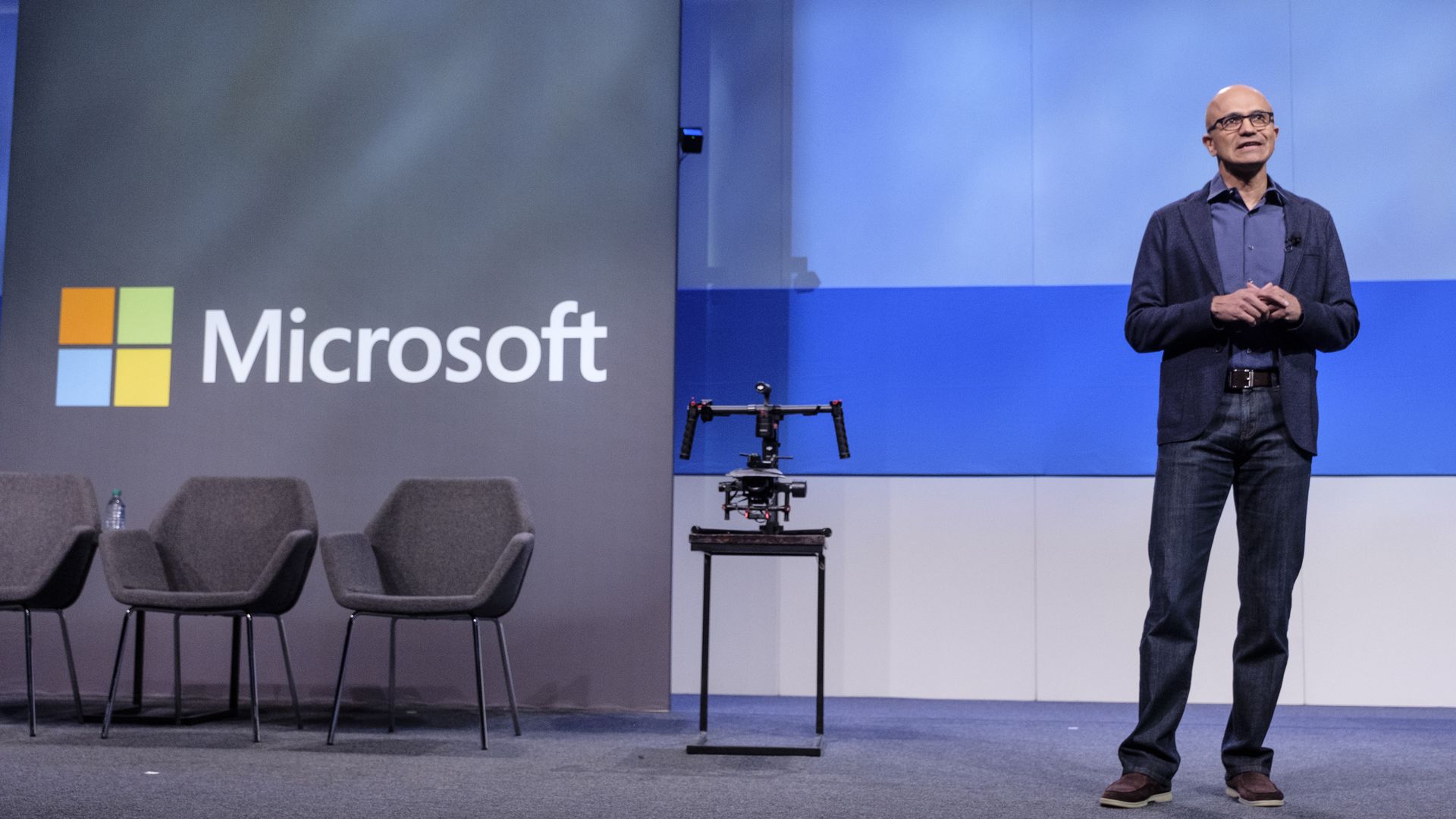
Microsoft is pledging $500 million to the Seattle region to address affordable housing issues, the New York Times reported and Microsoft confirmed in a blog post.
Why it matters: This kind of move from such an industry powerhouse will spur debate over what kind of responsibilities fall on companies to find "solutions for those who have not benefited from the industry's fortunes," per the Times. A report from December said the Seattle region needs 156,000 more affordable housing units and will need 84,000 more by 2040 if growth continues.
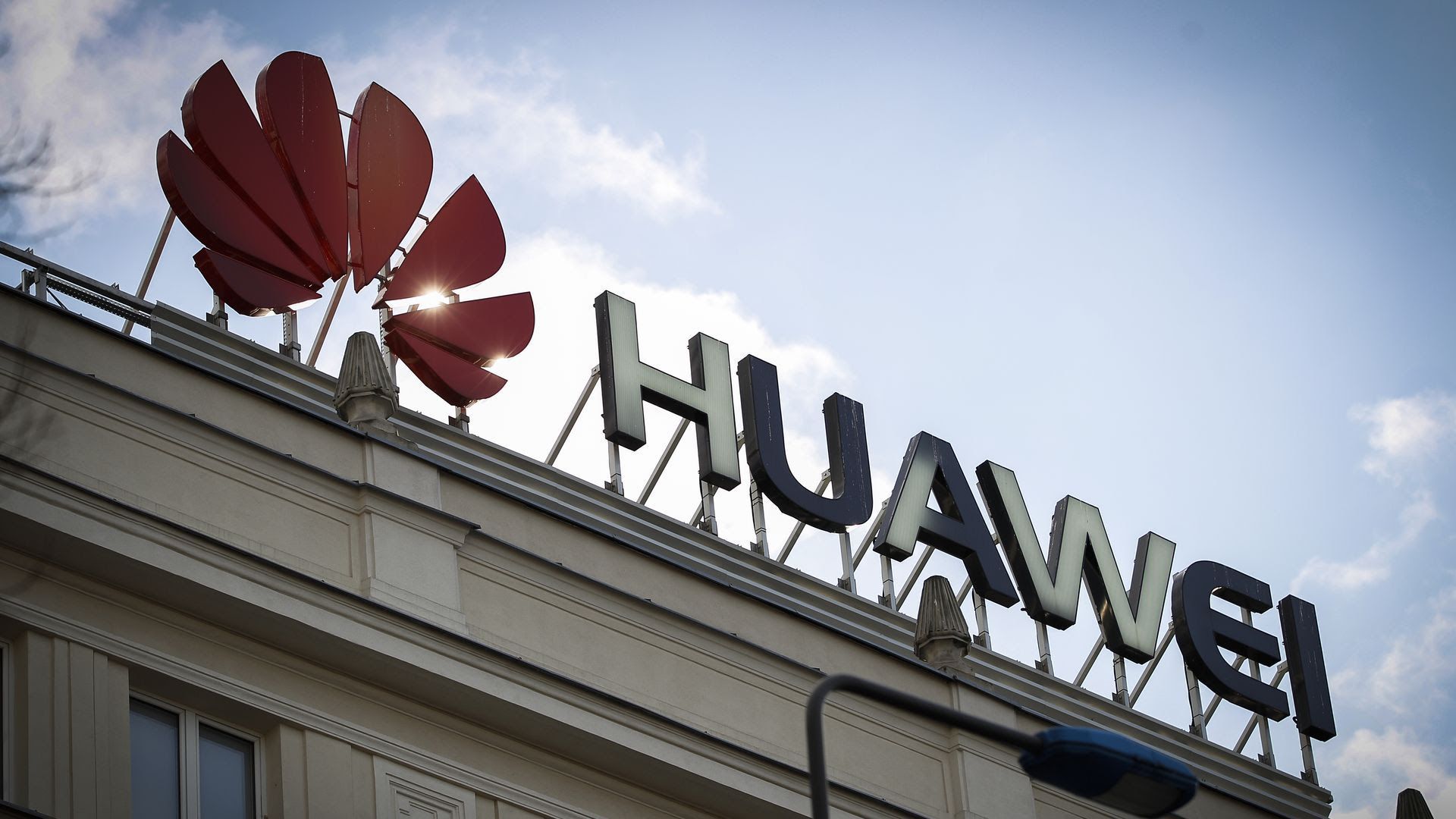
U.S. authorities are investigating Huawei, the Chinese telecom giant, for the alleged theft of the tech behind a T-Mobile robot called “Tappy,” reports WSJ.
“I had heard from the company last year that they bought something from Huawei and were surprised to see their own code in it. This is consistent with Huawei’s past practice, dating back more than a decade ... Stealing IP is part of their DNA.”
— Jim Lewis of the Center for Strategic and International Studies to Axios
The backdrop: T-Mobile first accused Huawei of thievery in 2014, when the American company had hired the Chinese one to supply phones for its network.
Everyone wants a piece of the $19 billion U.S. subscription video market that Netflix created, then cornered.
The big picture: Netflix has already reached saturation in the U.S. with nearly 60 million domestic subscribers, and it can't afford to lose customers to new streaming rivals.
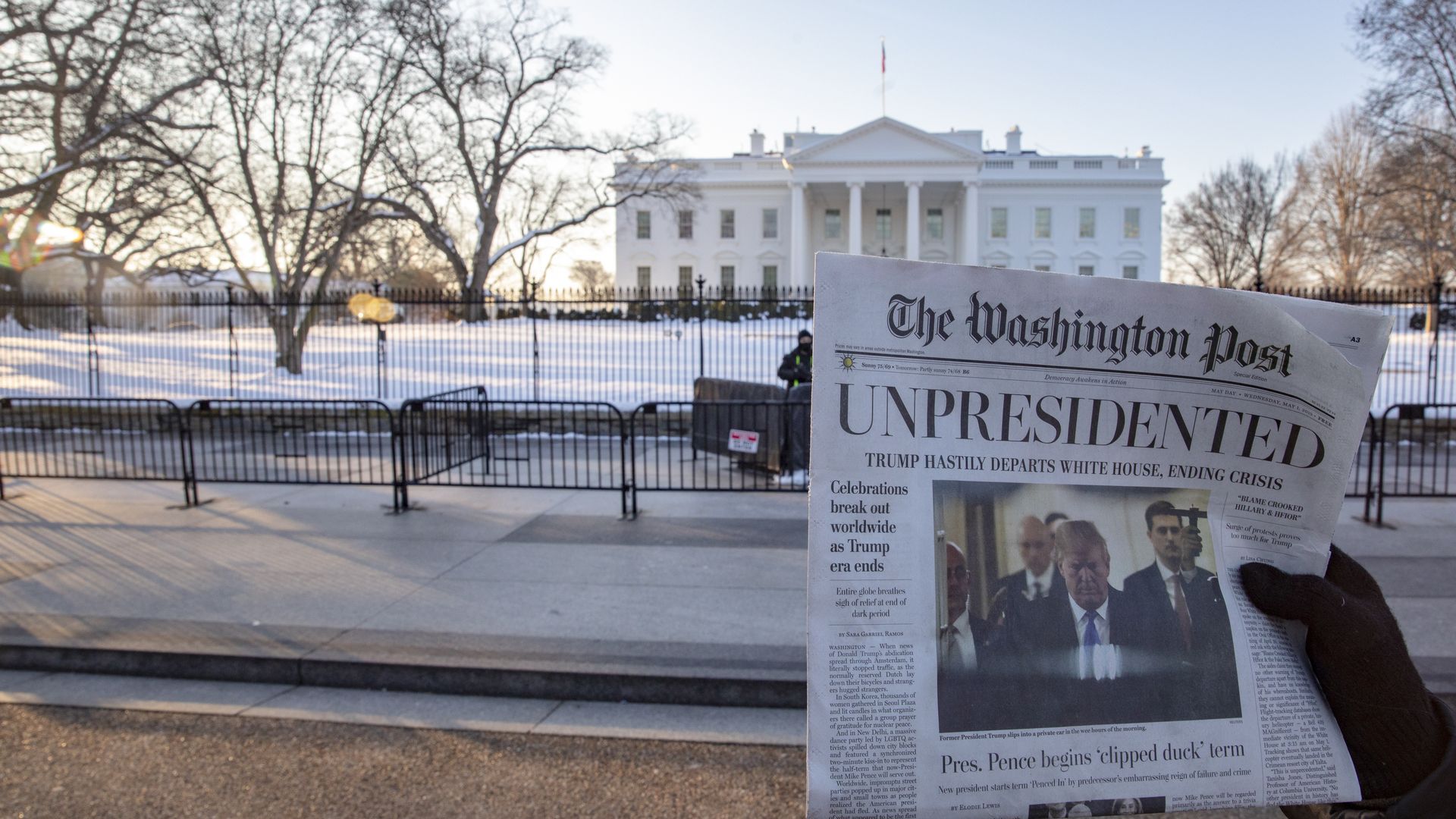
Fake Washington Post papers filled with anti-Trump stories were distributed around D.C. on Wednesday morning, the real Washington Post reports.
Details: The fake paper, which was supplemented with a live online edition, led with a front page story reporting that President Trump has left office. Per the Post, a video was posted by liberal activist group Code Pink of its founder Medea Benjamin passing out papers and saying, "The crisis is over — Trump has left the White House." Liberal advocacy group MoveOn was suspected to possibly be behind the fake papers, but the organization tweeted: "While we love the headline, we didn't produce today's satirical Washington Post."
It's fun to imagine lounging in our cars once they start driving themselves, but safety engineers are worried about how to make sure we'll still be protected if there's a crash.
Why it matters: A dashboard-mounted airbag could land like a sucker punch in the back of the head if we've swiveled our chair around to talk to rear-seat passengers.
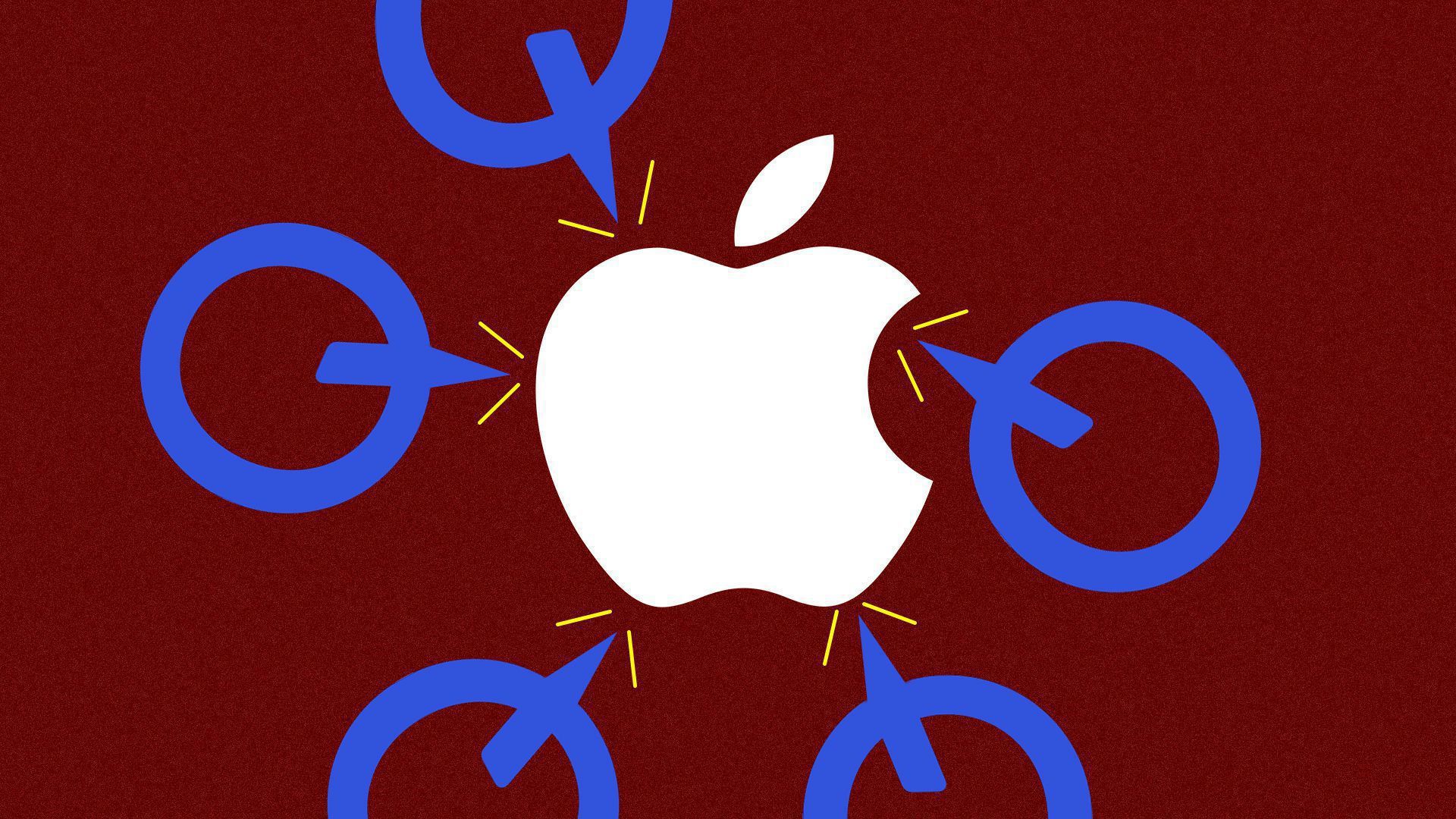
The two sides may not be talking to one another, but some sort of resolution to the giant Apple-Qualcomm legal dispute may be getting closer as more courts weigh in on the matter. That said, who's winning depends entirely upon who you ask.
Why it matters: Should Apple prevail, the battle could lead to dramatic changes in how Qualcomm licenses its patents and sells its chips, which are widely used in high-end smartphones.
Dozens of AV-related companies have launched in the past few years, but recent consolidation suggests there may be a limit to how many companies can muster the data and talent to succeed.
The big picture: As saturation continues into 2019, players lacking in capital face a choice between joining a more powerful player and narrowing their focus.
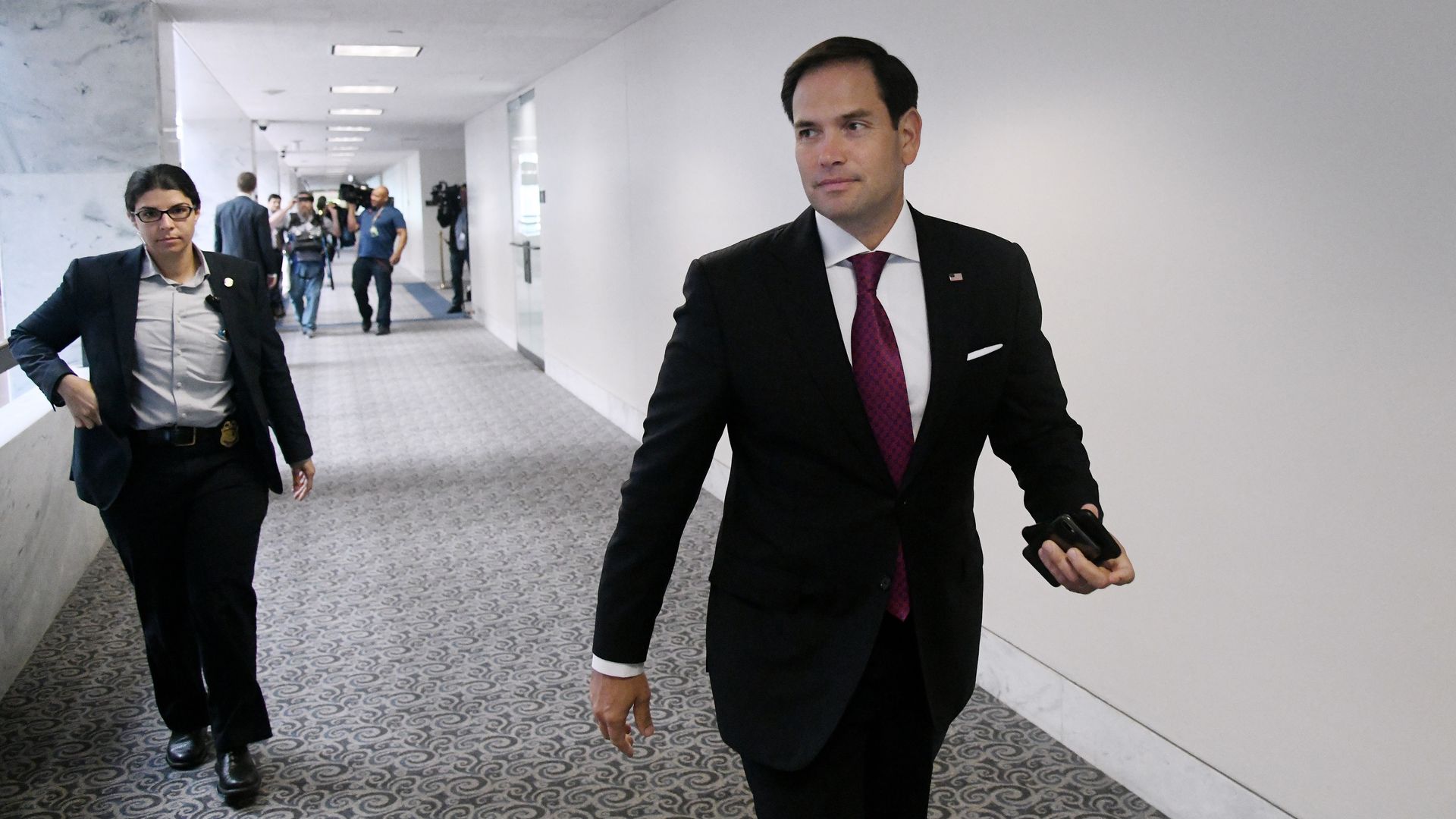
Sen. Marco Rubio (R-Fla.) will introduce a privacy bill Wednesday tasking the Federal Trade Commission with recommending, and Congress with finalizing, national rules for companies like Google and Facebook.
Why it matters: Rubio's bill seems to steer clear of giving the FTC wide new authority, instead only letting the agency write rules itself if Congress fails to do so.
Some experts warn of an impending automation-fueled upending of work, and they argue that non-technical skills will become increasingly valuable as rote tasks are handed over to computers and robots.
What's happening: Automation is roiling jobs, but in a way that is redefining the skills in demand. The top five skills companies now seek, according to a LinkedIn analysis, are creativity, persuasion, collaboration, adaptability and time management. Their popularity outstripped more than two dozen hard skills.








/2019/01/16/1547664404897.gif?w=3840)


/2019/01/16/1547674690315.gif?w=3840)