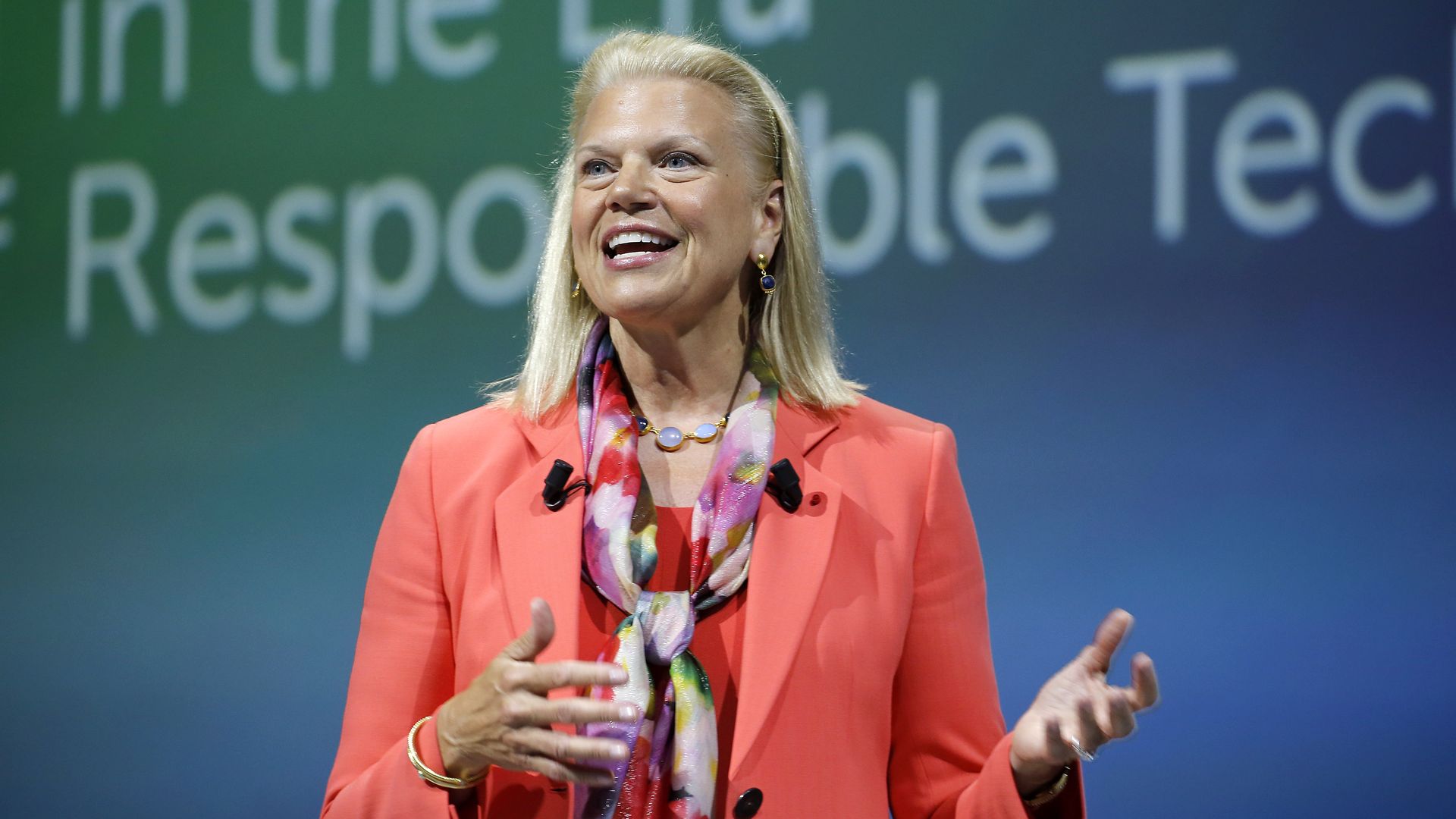
IBM chief executive Ginni Rometty said Monday that governments should rethink laws that shield “dominant online platforms” from being sued or penalized over the content they host.
Why it matters: Rometty is the latest tech leader to call for tighter regulation on the industry, especially when it comes to platform companies like Facebook and Google. Apple CEO Tim Cook said in an interview with “Axios on HBO” this month that new rules were “inevitable.” Making platforms liable for user content is one of the most aggressive options available to policymakers.
Dan and Axios transportation reporter Joann Muller discuss the future of self-driving cars, and if they'll really save as many lives as advocates claim.
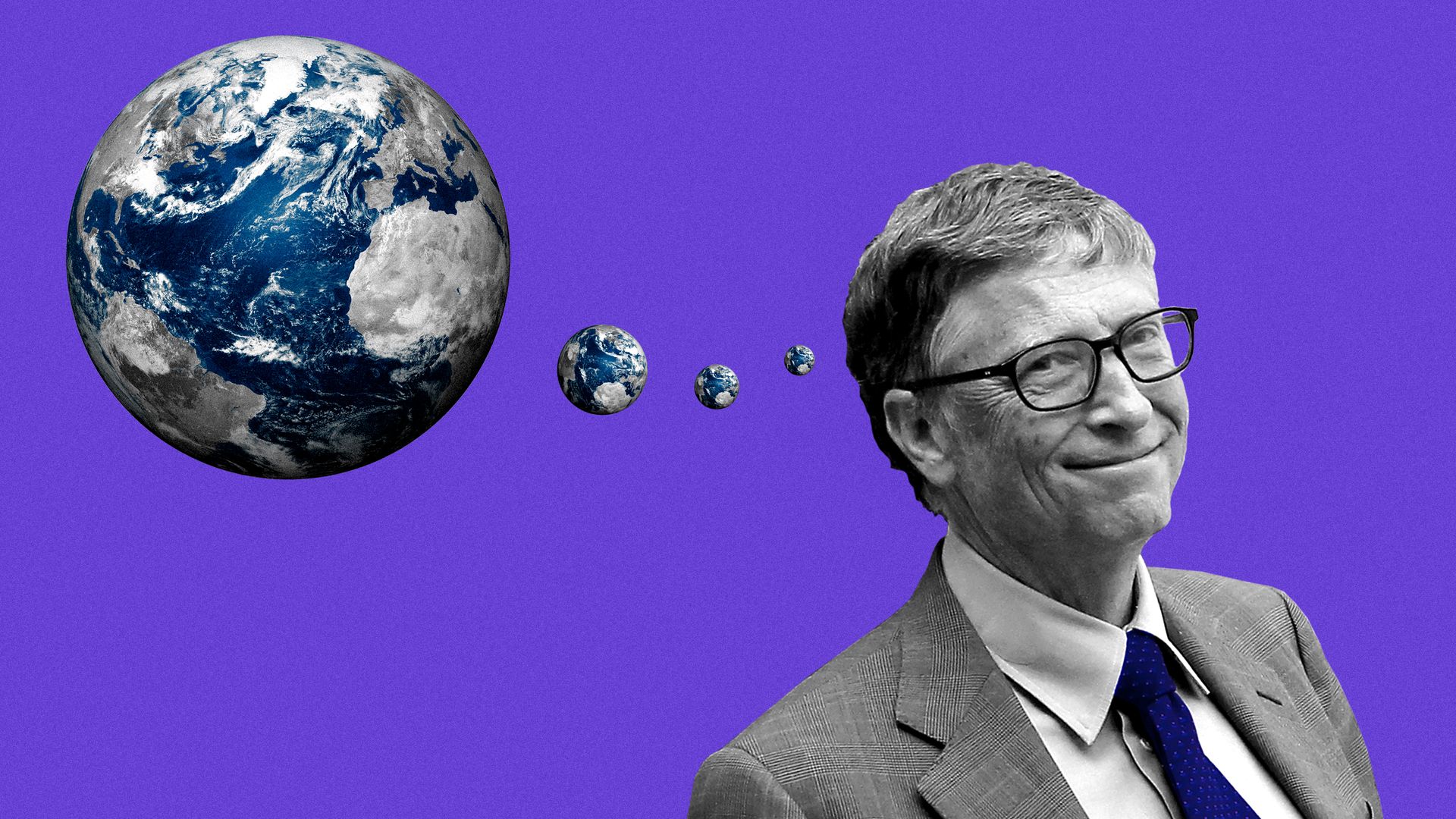
I'm not surprised that Bill Gates remains optimistic that we can avoid ecological disaster despite little progress toward reducing carbon emissions. But I am a bit surprised he won't take a tougher public line against President Trump.
Driving the news: Gates has met several times with Trump, most recently in March. And while he has yet to get concrete positive action from the president on climate or other issues close to his heart, he refuses to talk critically about the president. Pressed several times on the matter in an "Axios on HBO" interview, he briefly acknowledged areas where the executive branch hadn't taken action before quickly shifting to point out others who have acted — including Congress, business leaders and other countries.
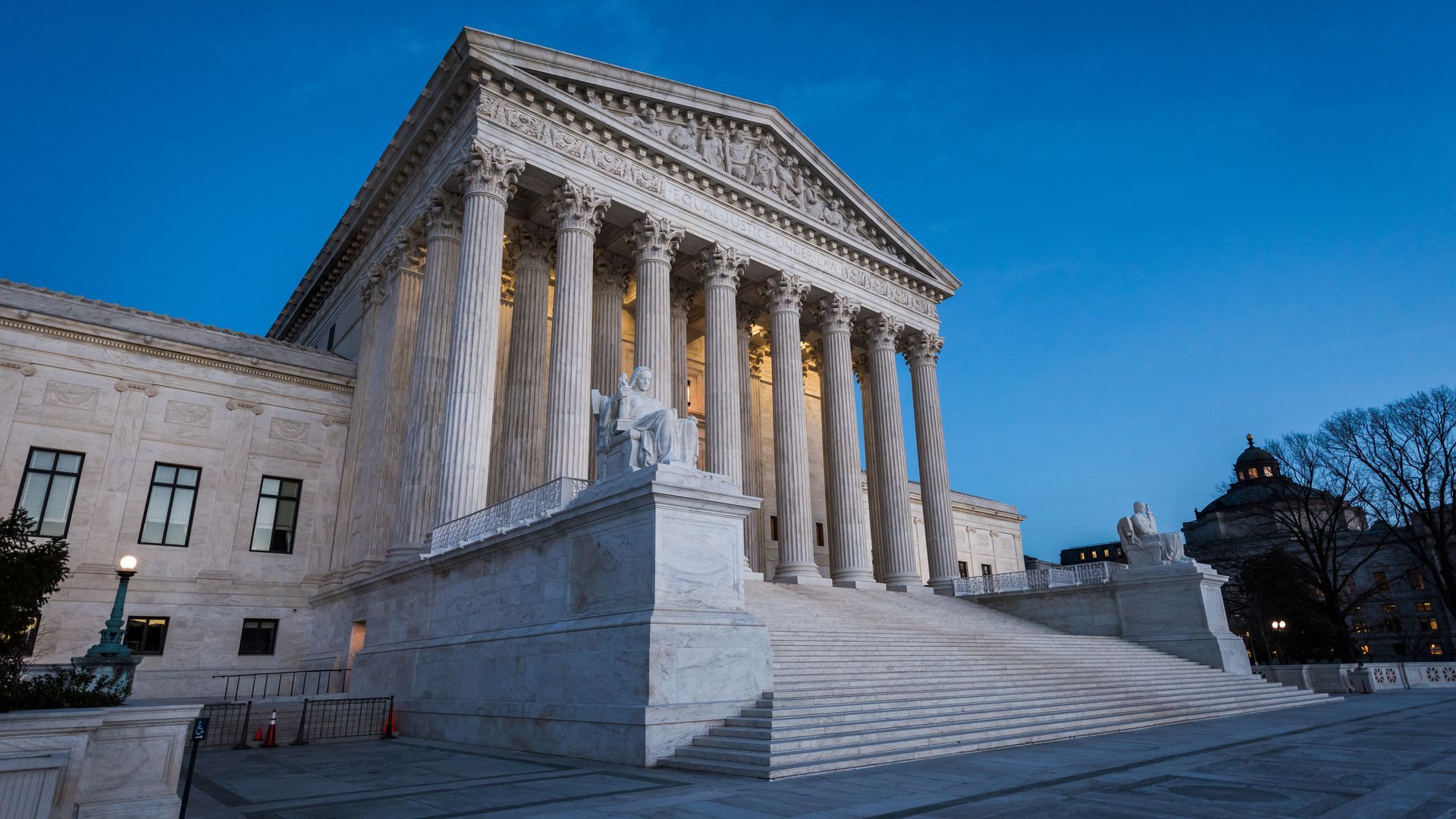
Apple will be before the U.S. Supreme Court this morning as part of a long-running dispute over whether the company exercises and abuses monopoly power in being the sole distributor of iPhone apps and taking a 30% cut.
Why it matters: The ruling could impact a broad range of digital marketplaces, not just Apple's. The company has seen support for its position from a range of tech and business trade groups, including ACT Online, CCIA and the Chamber of Commerce.
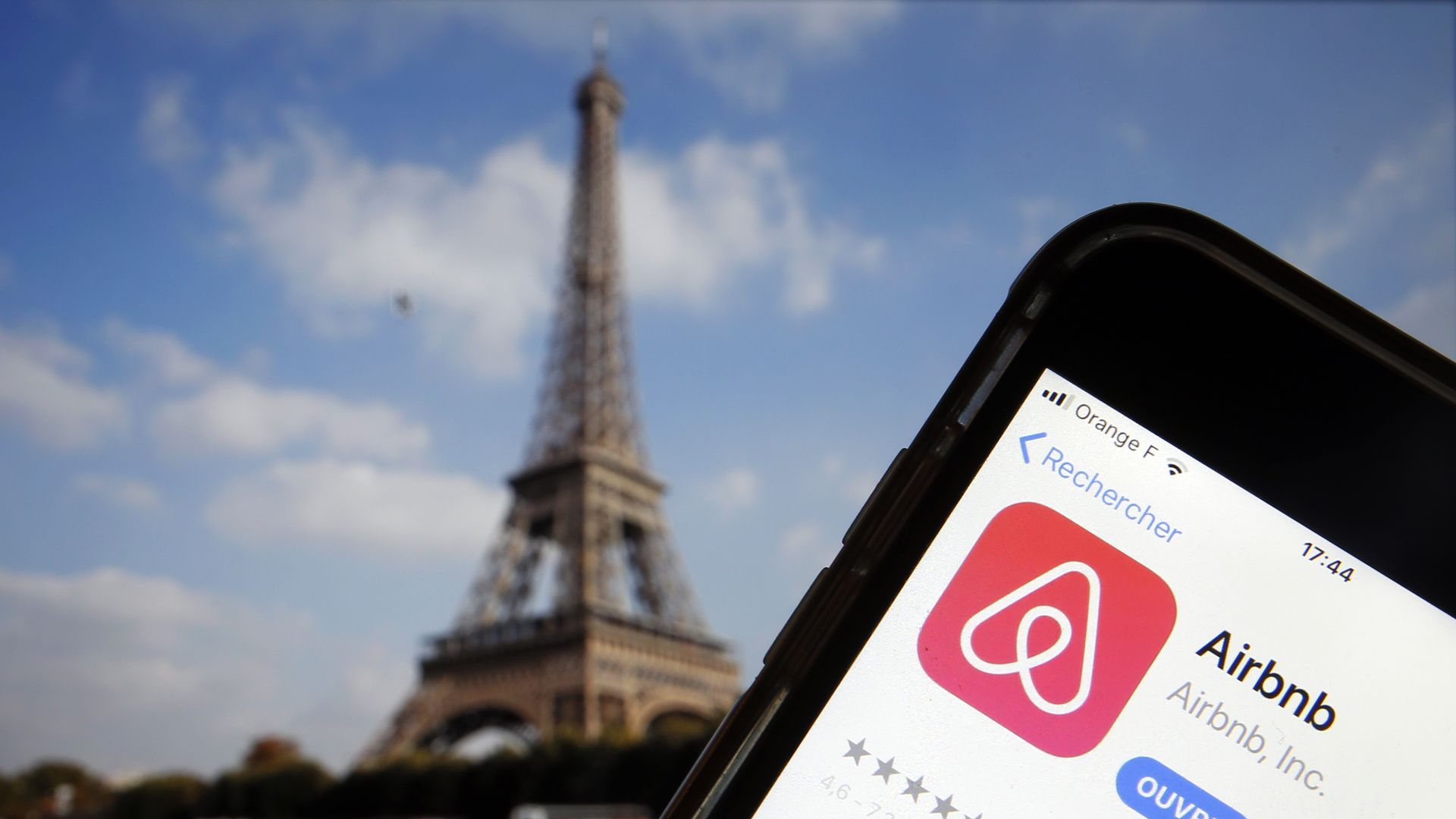
Airbnb has named its new chief financial officer: Dave Stephenson, a 17-year Amazon veteran who currently serves as CFO of its worldwide consumer group.
Why it matters: Airbnb needed to fill this position in order to properly prepare for an IPO. It had been empty since Laurence "L.T." Tosi left in early February.
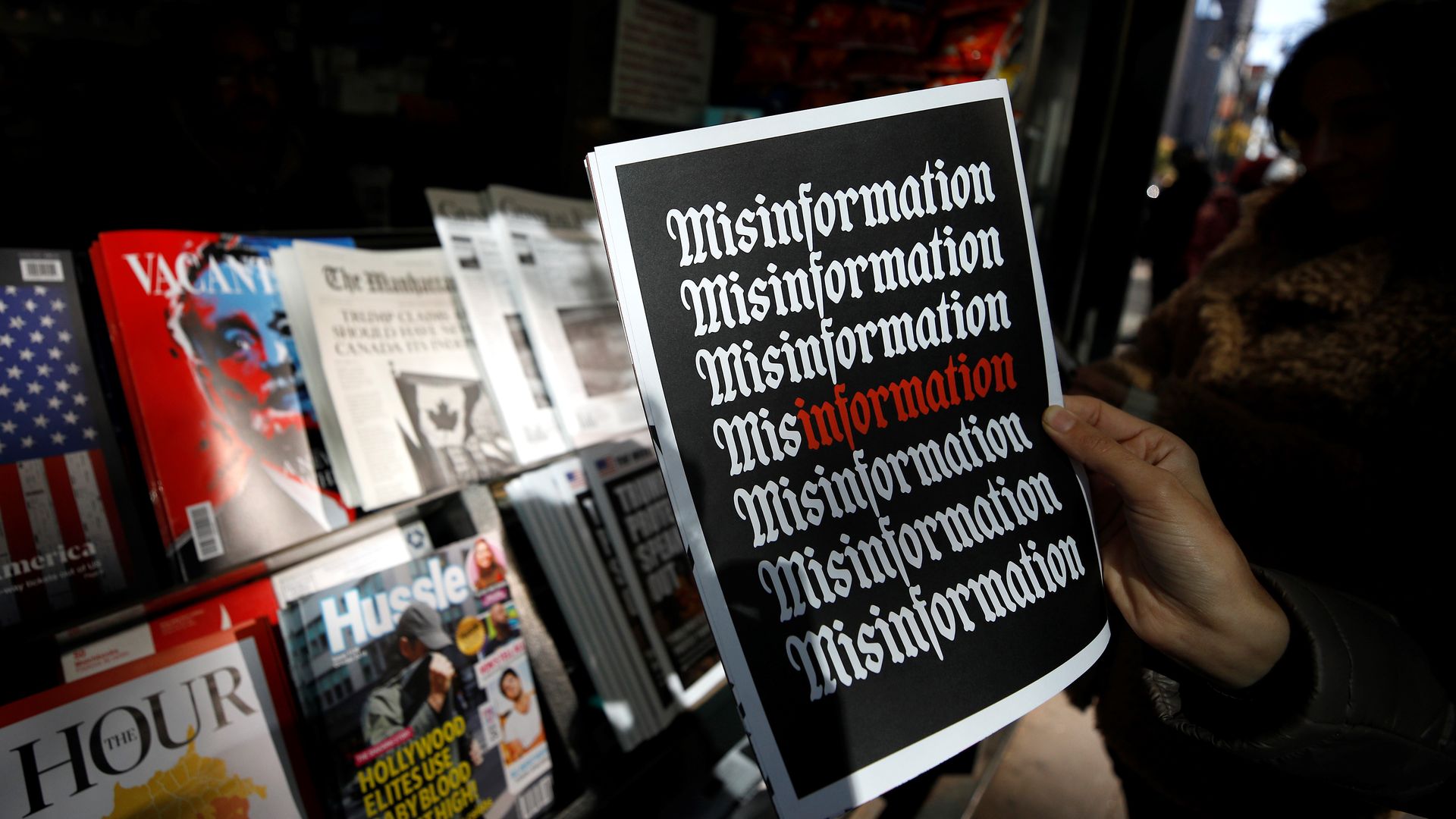
Dictionary.com has selected "misinformation" as its 2018 word of the year, defining it as “false information that is spread, regardless of whether there is intent to mislead,” reports AP.
The big picture: Search results on Dictionary.com suggested that society's "relationship with truth" has become a common theme, with words like "mainstream," "white lie" and "Orwellian" among those that spiked at various points this year, per AP. Social media platforms have come under intense scrutiny in 2018 for their role in spreading misinformation that incites violence — as in Myanmar, for example, where investigators say Facebook played "a determining role" in disseminating hateful rhetoric about Rohingya Muslims.
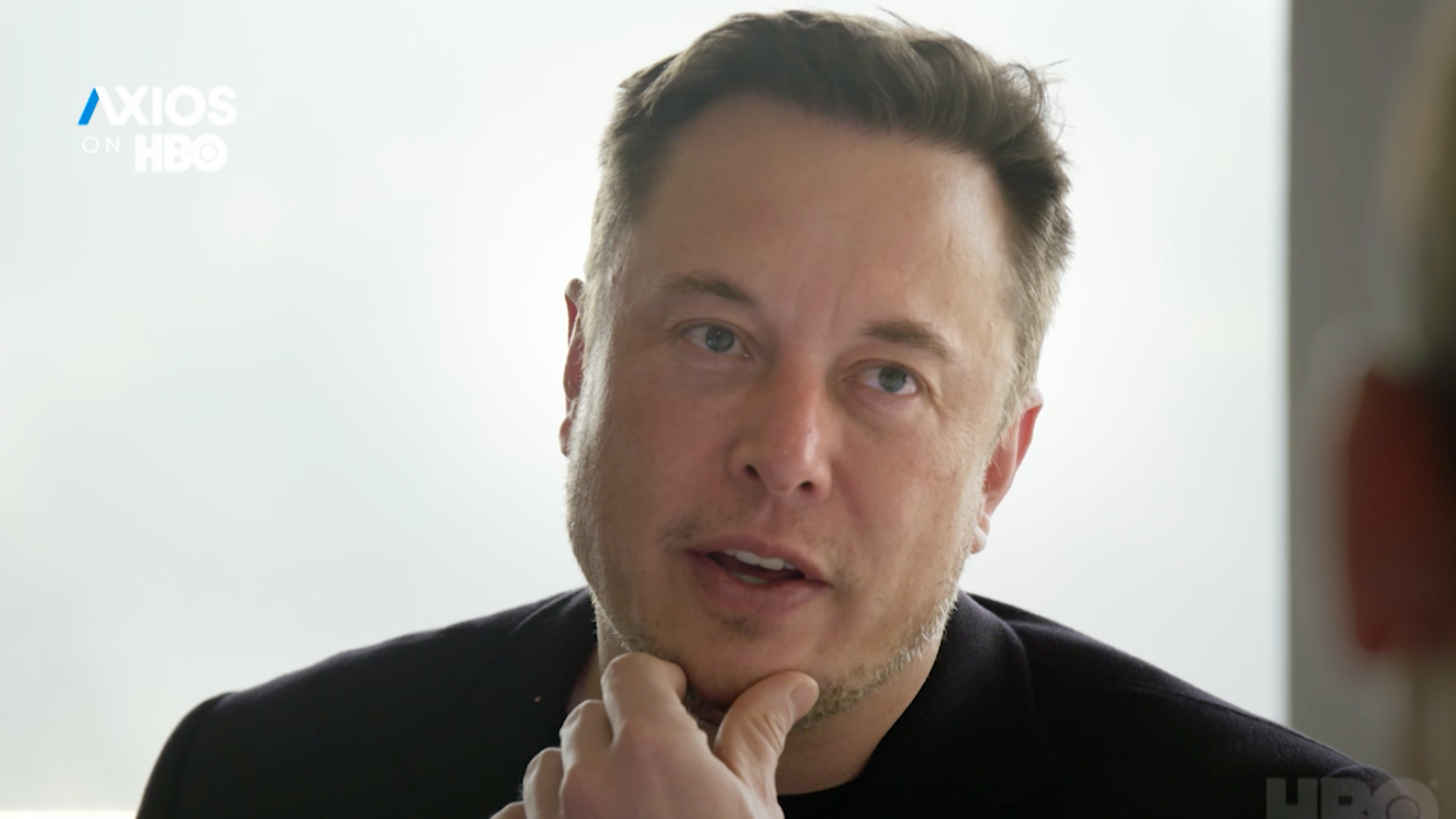
During an interview with "Axios on HBO" in which he discussed the “existential threat” of artificial intelligence, Tesla CEO Elon Musk said he's "not joking" about his belief that humanity might be living in a computer simulation.
The backdrop: Musk is among the most high-profile proponents of simulation theory, famously claiming in 2016 that there's a "one in billions" chance that we're notliving in a simulation. He explains that video games today have become astronomically more realistic than they were 40 years ago, and that "if you assume any rate of improvement at all" — especially with the advent of virtual reality and augmented reality — games will eventually become indistinguishable from reality.
Most breaches of personal health information stem from "internal issues" among doctors, hospitals and other providers, rather than hacks, according to research from Michigan State University and Johns Hopkins University, published last week in JAMA Internal Medicine.
Between the lines: Earlier research showed that the overall number of health care data breaches — and the number of records exposed from those breaches — is rising. But, according to this latest paper, most of those breaches aren’t hacks.
Meet Bill Gates. You know him most as the co-founder of Microsoft and one of the richest people on the planet.
Why he matters: I know him as an advocate for climate change and clean energy. Gates has long worked on these issues, but here's what's new for the tech visionary: He's increasingly worried not enough people understand the dimensions of the problem and that it's going to prevent progress. This escalation was on display in an interview with “Axios on HBO.”
The Washington, D.C. metro area doesn't have enough affordable housing to meet the needs of its current workforce, and urban leaders fear 25,000 more workers flooding into the area to work at Amazon's new Arlington headquarters will exacerbate the problem.
Why it matters: This was the top concern raised at a recent Axios Expert Voices event on economic issues in D.C. It's already one of the most expensive cities in the country, with high housing prices and a tight labor market. Property rates are expected to rise as demand increases with the influx of new workers, which could push lower-income residents out and worsen the existing economic disparities.
The U.K. Parliament has seized internal Facebook documents in an unusual move to answer questions it feels the company has been dodging, the Guardian reports.
Why it matters: Pressure has been mounting on Facebook CEO Mark Zuckerberg to testify in front of the members of Parliament and other world leaders for weeks, but Zuckerberg has repeatedly turned down such requests.









/2018/11/20/1542754504668.gif?w=3840)

/2018/11/24/1543101678352.gif?w=3840)