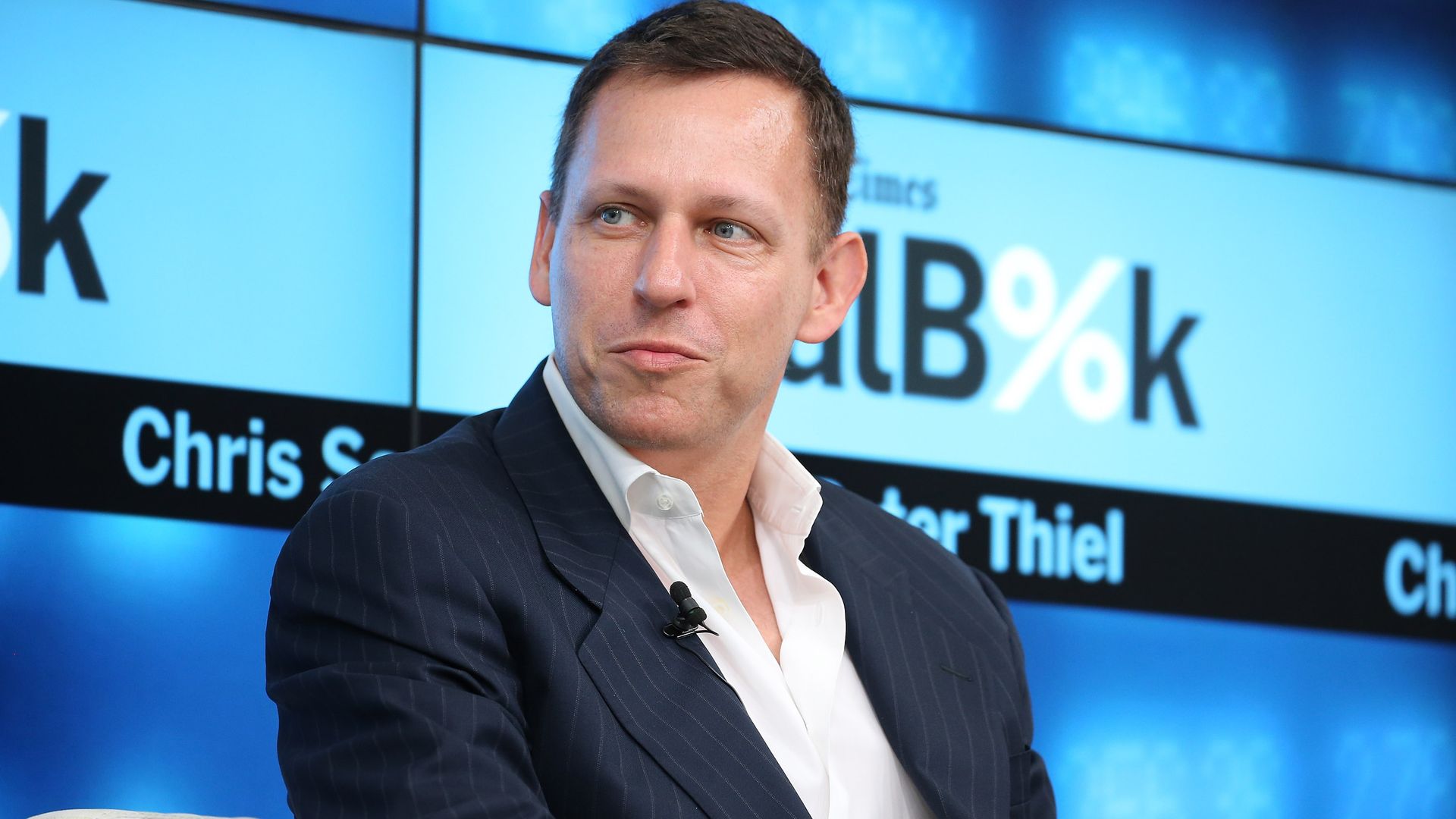
Peter Thiel, a partner at Founders Fund and long-time supporter of President Trump, said at the New York Times Dealbook conference on Thursday that Facebook political ads bought by Russians did not make a "material" difference in the 2016 presidential election.
Why it matters: Thiel is on the board of Facebook, which has stepped up its attempts to prevent further election meddling on its platform. After the election, CEO Mark Zuckerberg dismissed the idea that Facebook played a role in the outcome of the election. But Zuckerberg told CNN earlier this year that it's "hard" to know whether or not Facebook had any impact.
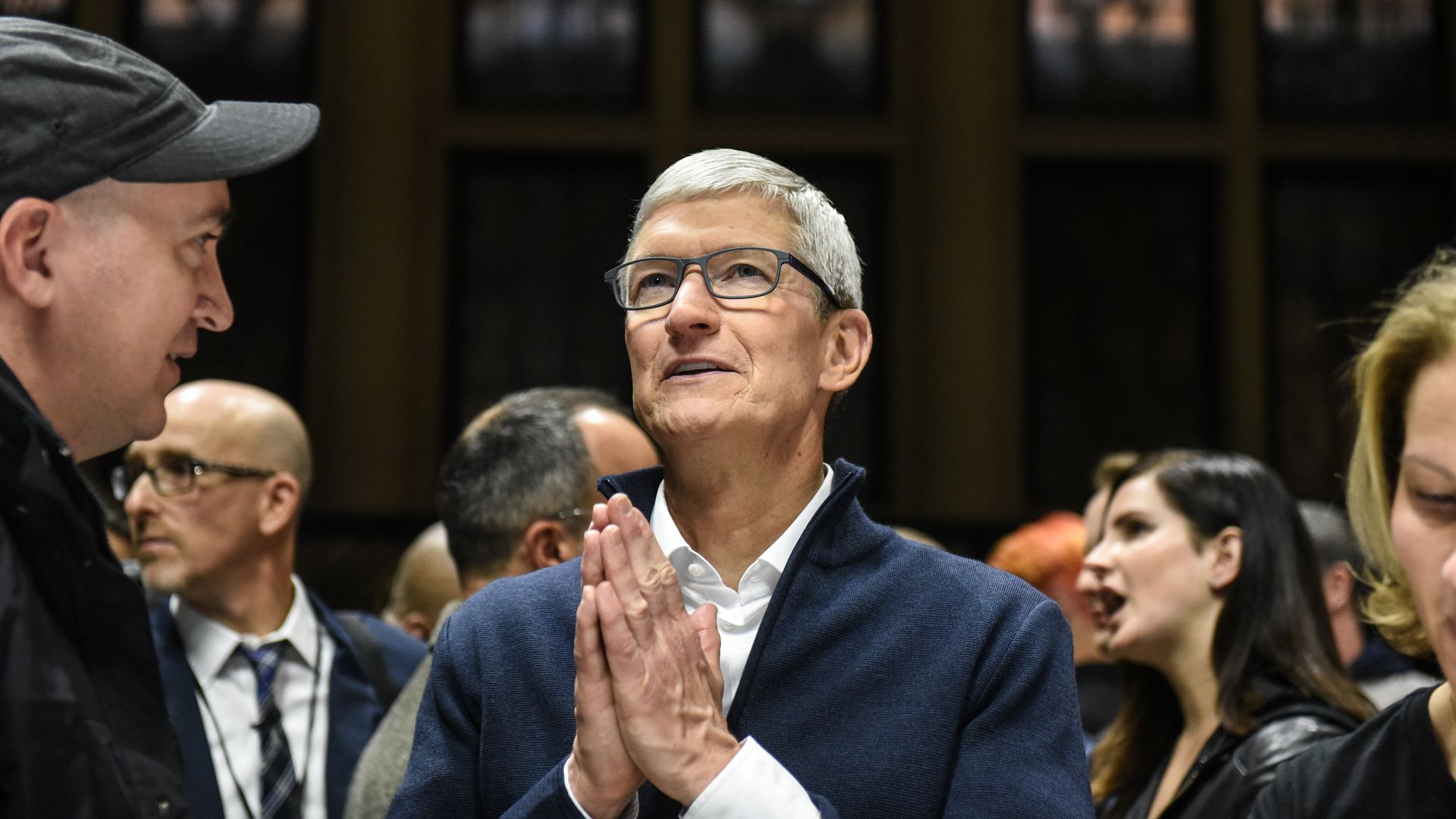
Apple reported record sales and profits for the September quarter, though unit sales for the iPhone were lower than some analysts were looking for. Meanwhile, its revenue from services topped $10 billion for the first time.
Why it matters: Apple is the world's highest-valued company and its results are closely watched as a signal of the health of the tech industry, though its success can sometimes be an outlier. Earnings this quarter from some other tech companies have failed to meet Wall Street expectations.
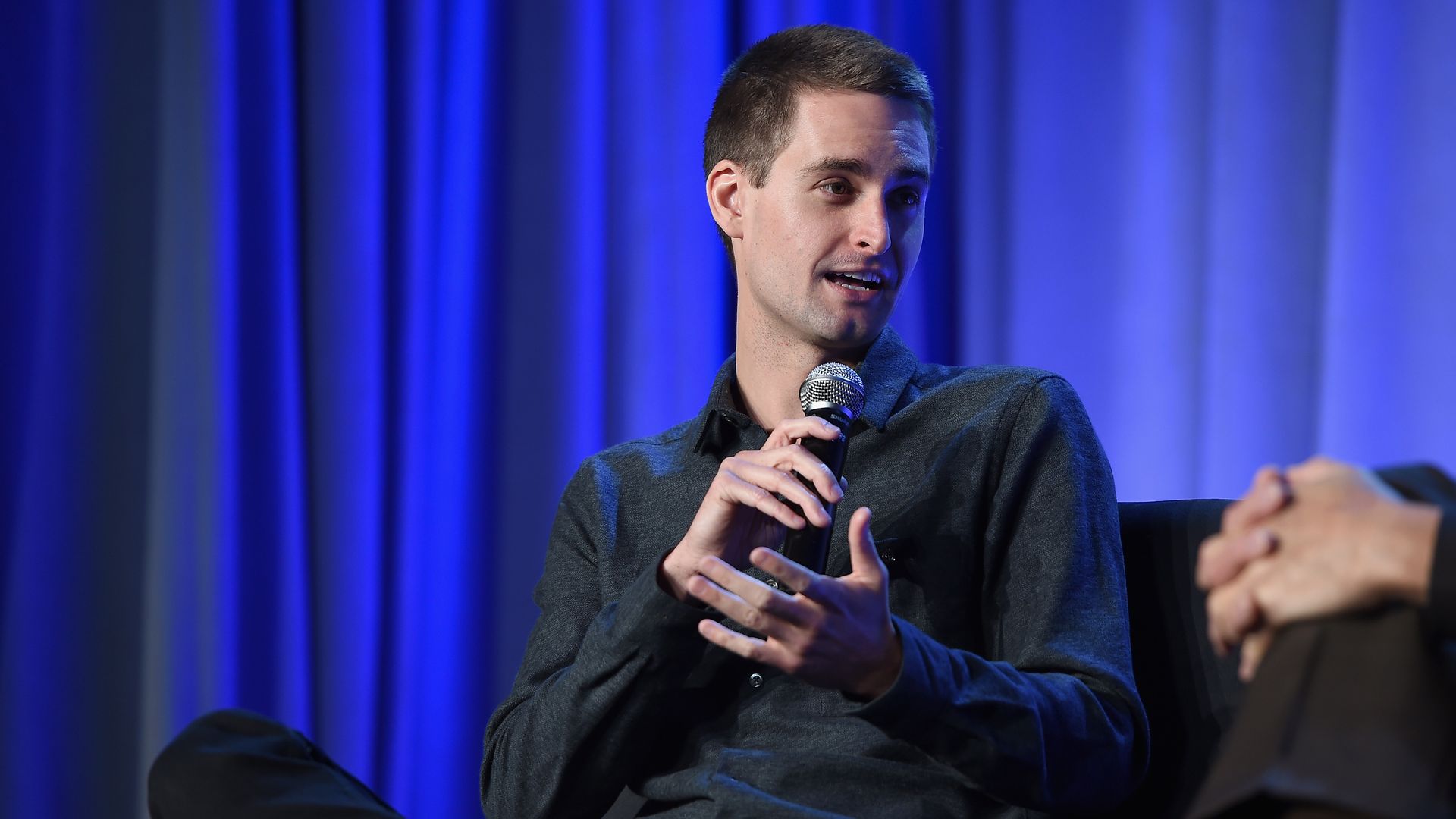
Evan Spiegel, CEO of Snap Inc., said at the New York Times Dealbook conference on Thursday that Facebook and Twitter's algorithms are the reason why misinformation and harassment is so widespread on the platforms.
"These platforms have created an environment ... that incentivize negative behavior. You can create a personalized content experience that doesn't compromise integrity."
— Evan Spiegel, Snap CEO
Go deeper: Spiegel echoed these thoughts in an op-ed for Axios last year, writing that personalized newsfeeds, while revolutionary in changing the way people share and consume content, "came at a huge cost to facts, our minds and the entire media industry."
Apple has held preliminary talks about investing in bankrupt broadcaster iHeart Radio, in an effort to boost its streaming music service, per the Financial Times.
Why it's a big deal: Because terrestrial radio still holds strategic value in a digital streaming age.
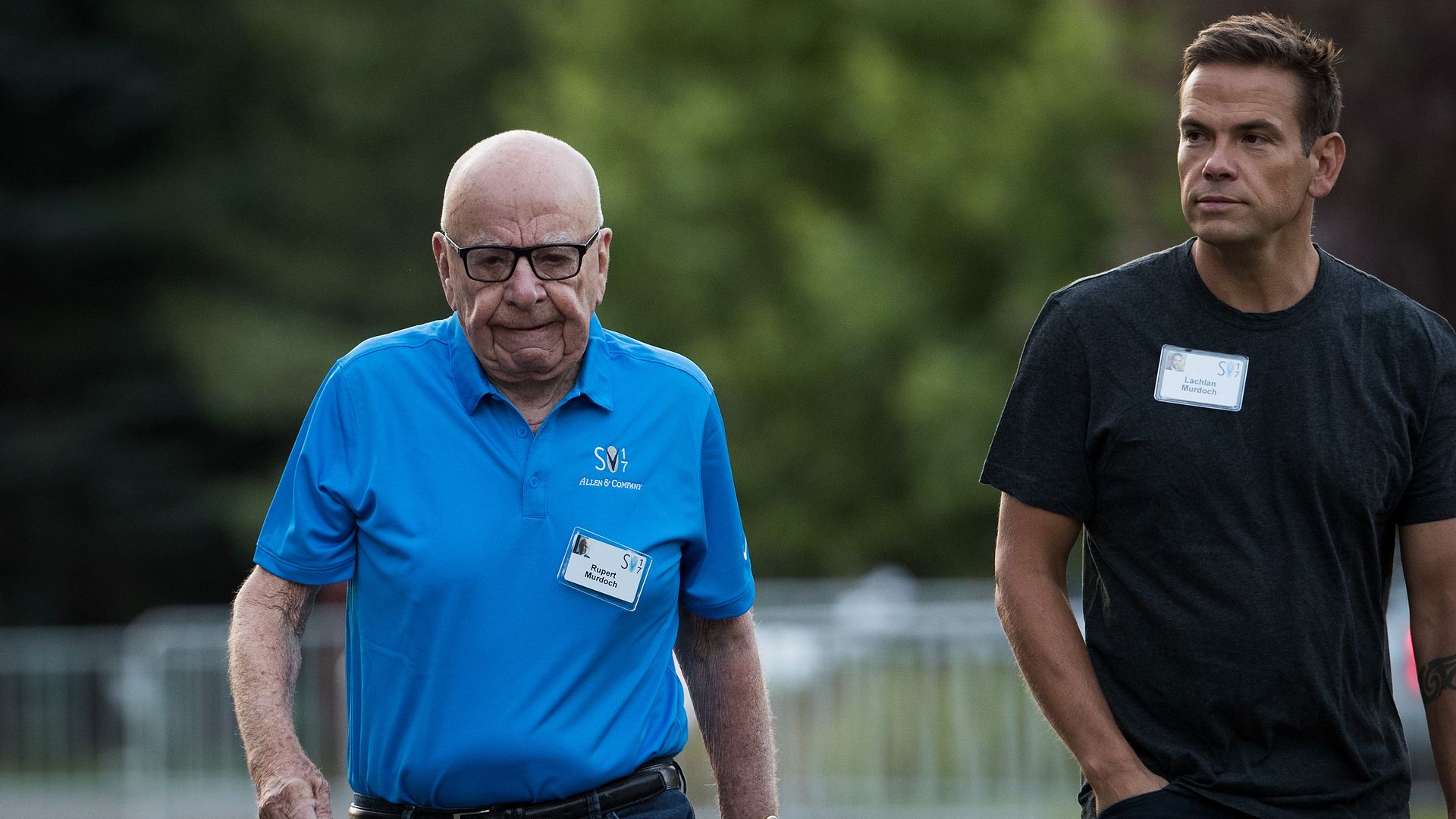
Verizon approached 21st Century Fox about a potential deal a "few months" before Disney, Lachlan Murdoch, the executive chairman of 21st Century Fox, said at the New York Times Dealbook conference on Thursday.
The context: It was previously reported that Verizon was first interested in acquiring the entertainment assets, which were eventually sold to Disney in a $52.4 billion deal (after a fierce bidding war with Comcast), but now Murdoch is confirming it. Murdoch added that Comcast approached the company "shortly after" Disney, but they went with Disney because under their ownership, "these assets were stronger and made more strategic sense."
Groups of Google employees are staging walkouts around the globe today to protest how the company has handled sexual harassment and misconduct, per the New York Times.
Why it matters: Within the last week, Google’s leadership has been on the defensive about its handling of accusations of harassment or misconduct by executives.
Dan talks with Aaron Gouveia (aka @DaddyFiles) about what happened when his 5 year-old son Sam was bullied at school for wearing nail-polish, and Aaron decided to tweet about it.
"Twitter is never going to be a social media paradise, and the company must continue to improve its moderation. But there are still times it can be used to reflect the best of us, and not the worst."
On Tuesday, Americans will choose the lawmakers who will try to hammer out privacy rules for major tech players like Google, Facebook and Amazon.
Why it matters: California’s recently-passed privacy law goes into effect in 2020, and the European Union has already started to enforce its General Data Protection Regulation. Leading firms like Apple and Facebook are begging Congress to set rules now that are nationwide and, they hope, friendlier to the industry.
Workplace, Facebook's counterpart to Slack, "is moving onto a website domain separate from Facebook.com in an effort to build trust with customers," CNBC's Salvador Rodriguez reports.
The big picture: "The new domain, Workplace.com, is now live as a marketing website. It is expected to go into use as a landing page for Workplace by Facebook customers sometime in 2019." Customers have expressed concern "that the enterprise tool is hosted on the same domain as Facebook's consumer business."
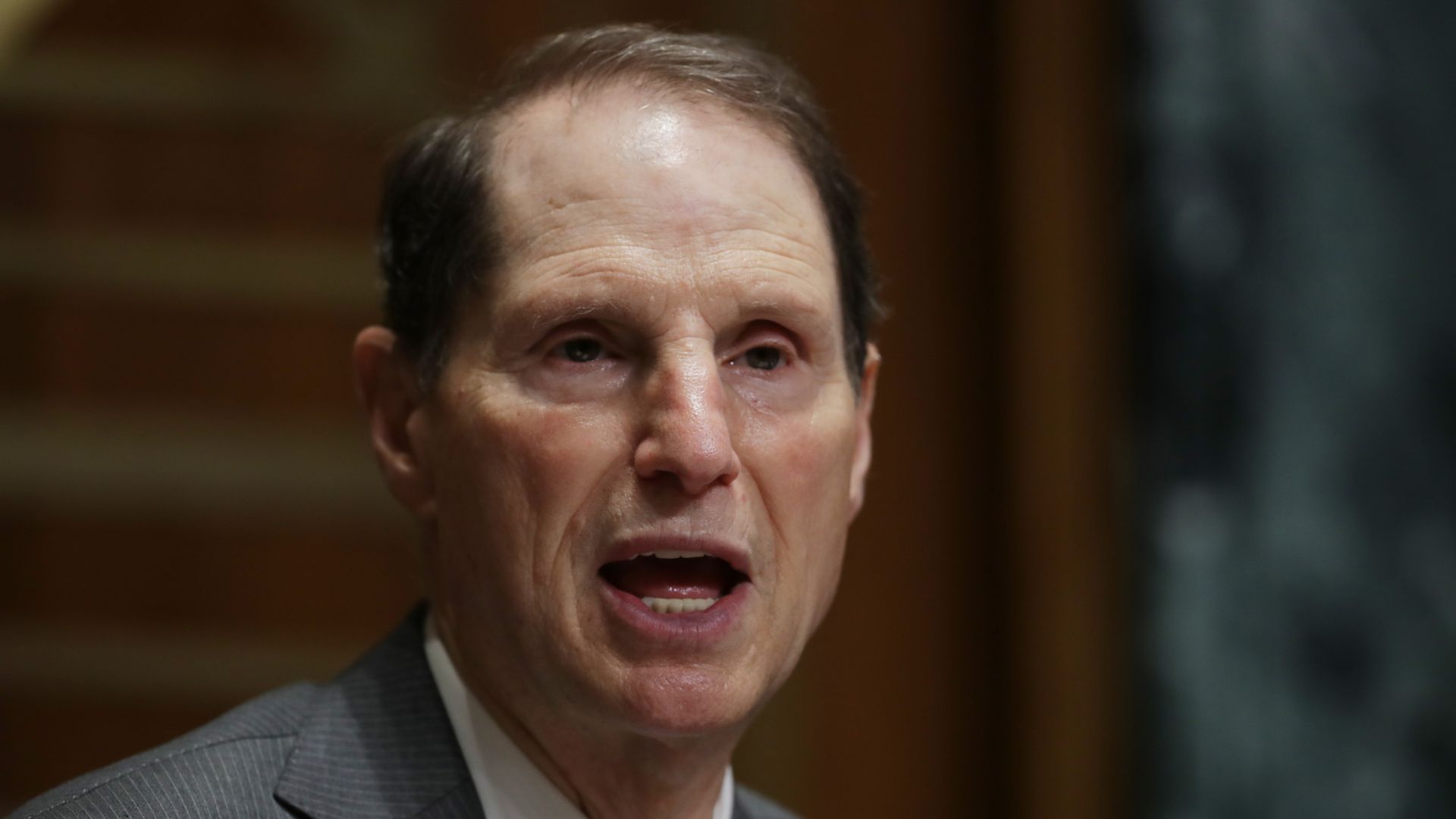
Democrat Sen. Ron Wyden released a draft bill Thursday creating a system for consumers to opt out of some data sharing and giving the Federal Trade Commission more authority to punish privacy violations, including by sending corporate executives to prison.
Why it matters: The early proposal is one of many unveiled on the issue in Congress, but it sets a marker for lawmakers who want to give the FTC greater powers over large tech companies.
In an essay in Harper's in 1913, Louis Brandeis, the future Supreme Court justice, decried the "curse of bigness," a broadside against the huge business trusts that dominated the U.S. economy. Big railroads and banks, in his view, were at core in the era's widespread economic squalor and political corruption, and he made it his aim to break them up.
Today, taking stock of the new political turbulence crossing the globe, numerous scholars have found disturbing similarities in the Gilded Age, the heyday of the trusts, just preceding World War I.