Uber on Thursday sent a letter to federal securities regulators, asking for rules changes that would let it provide company stock to its drivers, Axios has learned.
Uber first met with U.S. Securities and Exchange officials several years ago about this issue, but was rebuffed. New SEC chairman Jay Clayton, however, spearheaded a request for comment on the issue, and Airbnb received attention last month for its positive response.
Why it matters: This could become an important new type of compensation for millions of "gig economy" workers.
Facebook is purging 559 pages and 251 accounts that have demonstrated spammy behavior that violate its rules, a spokesperson tells Axios. Many of the accounts removed are from hyper-partisan political pages and accounts.
Why it matters: Spam content often reflects society's emotions and obsessions — like diet pill scams and celebrity gossip. Facebook's finding an increase in spam activity around political content is a sign of how radicalized U.S. users have become around political extremes.
The Center for Strategic and International Studies and McAfee released a new report on modernizing the Social Security number system Wednesday. And the numbers are a thing that need modernizing — we use them as identification in everything from mortgages to job applications, despite the fact that they're easy to steal.
The problem: “If we look at how well we're doing right now with Social Security, an estimated 60–80% are already compromised,” said Candace Worley, McAfee vice president and chief technical strategist. That’s because the online world has opened up previously unavailable potential for hackers to steal and sell Social Security numbers.
Apple has agreed to pay $300 million in cash to carve out part of European chipmaker Dialog Semiconductor, and also committed to buy another $300 million of products from the remaining Dialog business over the next three years.
Why it's a big deal: Because it's Apple's largest-ever acqui-hire, with over 300 Dialog engineers moving over, and reflects how Apple is seeking to control more of its supply chain.
On Monday I was sent a four-page memo purportedly written by a Defense Department official, requesting that the U.S. Treasury launch a national security review of Broadcom's proposed $18 billion takeover of CA Technologies.
The details: The sender claimed to be a government official who shared the memo's concerns that Broadcom, which recently reconciled from Singapore to the U.S., is beholden to Chinese interests because of its client base and the physical locations of its manufacturing facilities.
Google released a report yesterday describing an interesting challenge: It aims to eventually use carbon-free electricity to power its energy-thirsty data centers around the clock and around the world.
Why it matters: The tech giant announced months ago that it already purchases enough renewable energy in the aggregate to match their annual power consumption. But that's not the same thing as never using carbon-emitting power.
Apple is acquiring a piece of U.K.- and Germany-based chip company Dialog Semiconductor for $600 million, including $300 million as a pre-payment for chips.
Why it matters: Apple is going deeper into designing its own chips as the deal includes about 300 employees joining Apple and acquisition of intellectual property. It also puts more certainty into Dialog's future after recent rumors that Apple may turn to other suppliers.
An algorithmic recruiter meant to help Amazon find top talent was systematically biased against women, a Reuters investigation found.
Why it matters: This is a textbook example of algorithmic bias. By learning from and emulating human behavior, a machine ended up as prejudiced as the people it replaced.
Amazon said Wednesday that it will provide additional raises for workers whose lost stock or bonuses following the company's announcement that it is increasing its minimum wage to $15-per-hour, the Seattle Times reports. The
Why it matters: The move to increase the minimum wage came after several politicians, including Sen. Bernie Sanders (D-Vt.) and Elizabeth Warren (D-Mass.), criticized the e-commerce giant for paying its workers too little. But, following the increase, many employees publicly complained about how Amazon failed to communicate that workers would simultaneously be losing stock options and bonuses as a result.
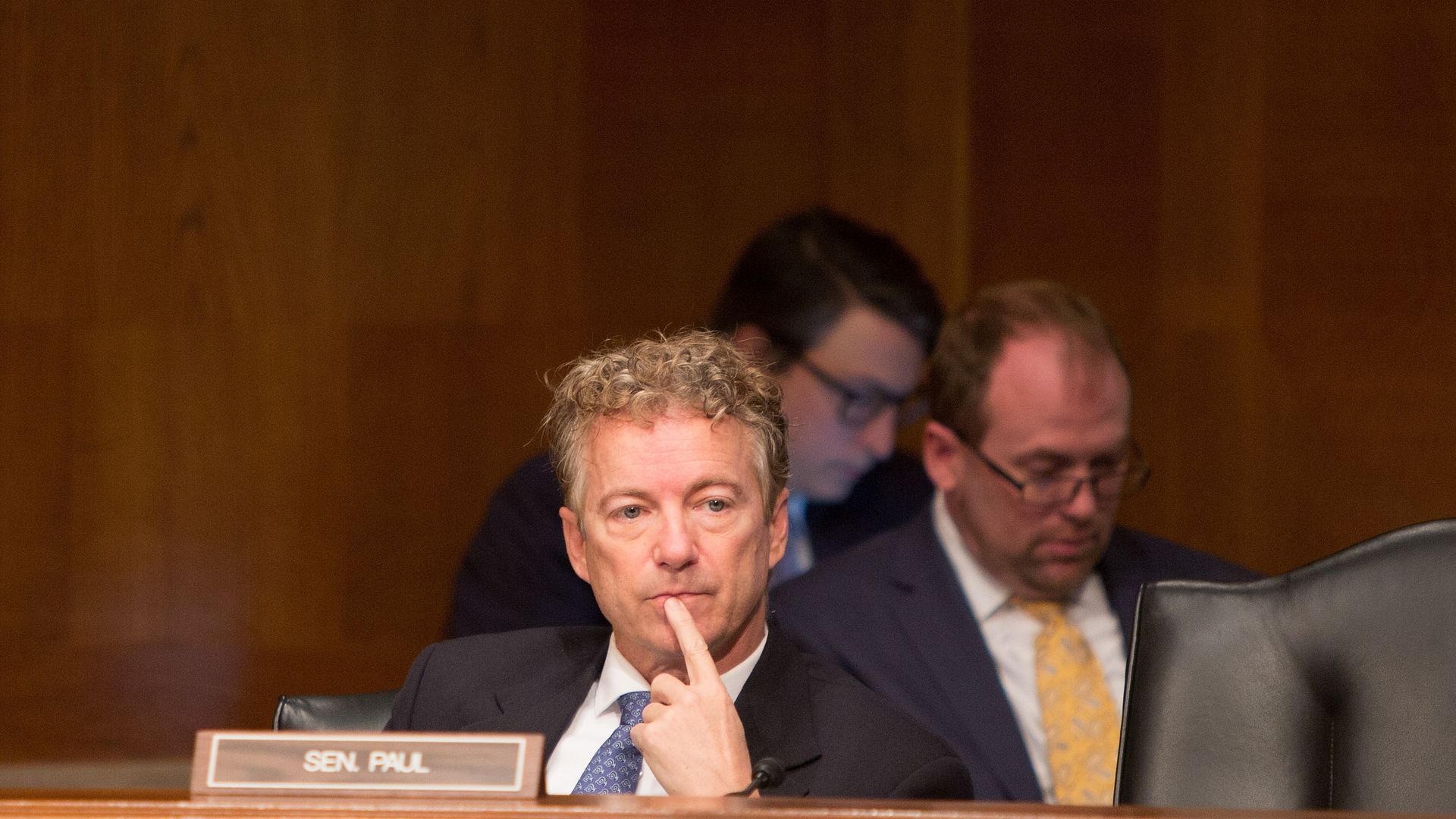
Sen. Rand Paul (R-Ky.) sent a letter Wednesday to Treasury Secretary Steve Mnuchin formally requesting a national security review of Broadcom's proposed $18 billion takeover of software maker CA Technologies, Axios has learned.
The backdrop: Paul first expressed his interest in a review by the Committee on Foreign Investment in the United States (CFIUS) during a Senate hearing this morning on homeland security. Broadcom then disclosed the existence of an allegedly forged memo circulating through Congress, which also called for a CFIUS review. However, Paul's chief strategist tweeted that he hadn't seen that memo, and that it didn't affect Paul's decision.
Kaspersky Lab uncovered a new zero-day, or cyber vulnerability, in August in the Microsoft Windows operating system which Microsoft patched this Tuesday after Kaspersky notified the company.
Why it matters: The cyber espionage group "FruityArmor," which is likely responsible for this zero-day, has slowly been ramping up activity over the past two years, Kaspersky assesses.
Broadcom on Wednesday said it "learned of a fraudulent memo purported to be signed by the U.S. Department of Defense," calling for a review of its planned $18 billion takeover of software maker CA Technologies.
This comes just hours after Sen. Rand Paul called for a CFIUS review of the $18 billion merger. It is unknown if he saw or reviewed the four-page memo, although he did cite two statistics from it. [Update: Paul's chief strategist tweets that he didn't see it.]
Bottom line: Broadcom learned of the memo from Axios, which had received it on Monday. We had not yet been able to authenticate it, thus had not reported on it.
IBM filed a protest on Wednesday with the Government Accountability Office to challenge the Defense Department’s solicitation for bids to provide cloud computing for the Pentagon. Oracle has also filed a challenge of the plan.
The trend: IBM still intends to bid on the $10 billion, 10-year-long contract, but its reasoning tracks with much of why Oracle protested and why Google dropped out of the bidding process earlier this week. The companies all say requesting a single cloud provider will prevent the Pentagon from optimizing its network for different missions.
Senator Rand Paul (R-Ky.) on Wednesday called for a federal national security review of Broadcom's proposed $19 billion acquisition of Computer Associates Technologies (CA) during a Senate hearing on homeland security.
The bottom line: Sources tell Axios that neither Broadcom nor CA asked for a review of their transaction by the Committee on Foreign Investment in the U.S., but that some within the defense and energy communities have been agitating for a CFIUS review anyway. Paul's public call might move the needle.
Why it matters: In the past, Facebook has been criticized for not being more mindful of publishers' needs when building and changing its platform and algorithms. But now it's trying to show the publishing community that it cares about its success, even if it can't be a direct driver of it.
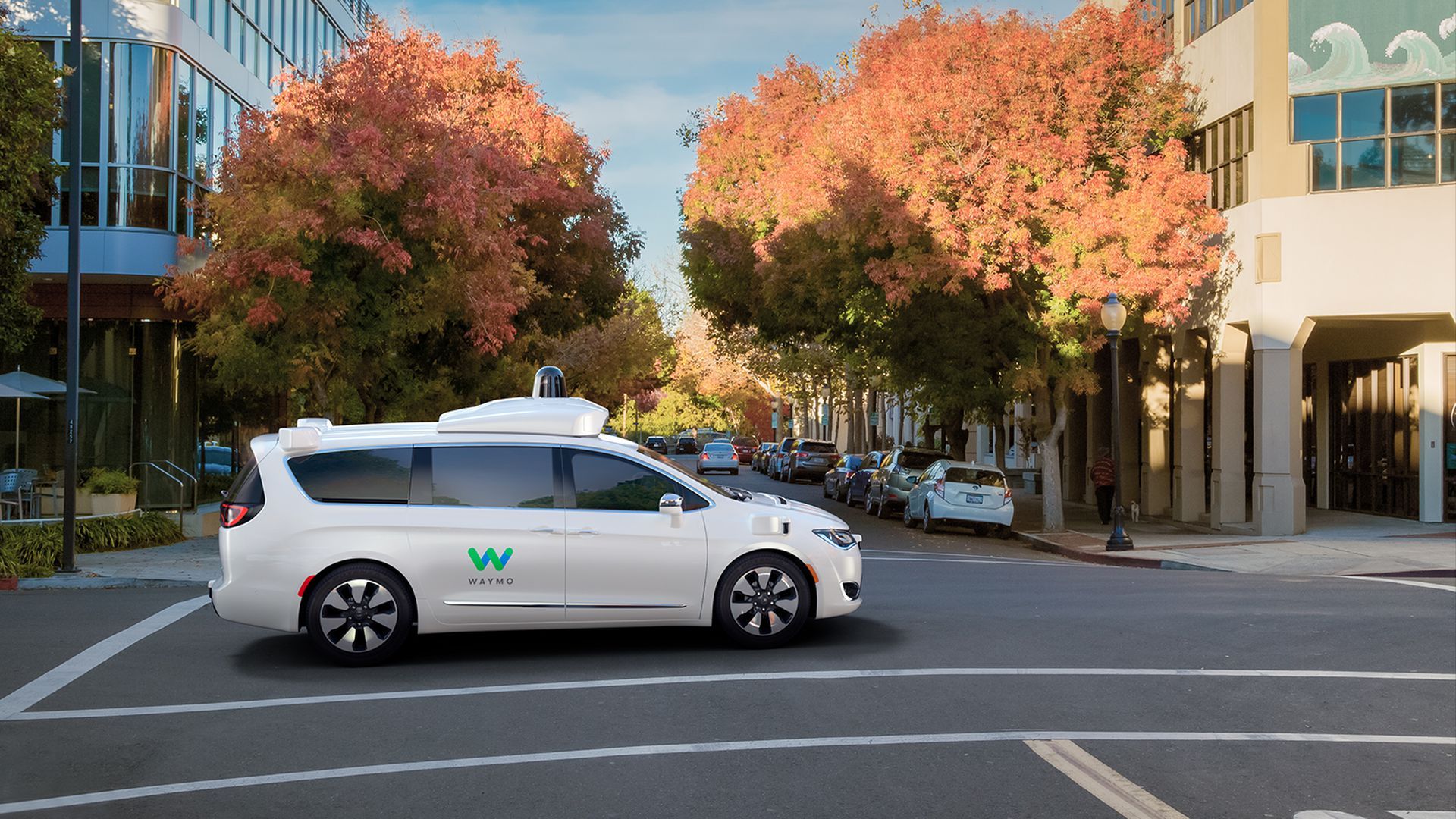
Having reached 10 million miles, Waymo has a new goal for its self-driving cars — be a little more daring.
What's new: While safety continues to be its priority, the company says it also recognizes that being overly cautious can lead autonomous cars to take longer routes and slow things down for everyone on the road.
Snapchat is launching Snap Originals, its first full slate of roughly a dozen serialized original shows, including scripted series and docuseries. The new shows, produced by the creators of some of TV's biggest hits, were written and shot exclusively for the app.
Why it matters: The launch is a part of a larger push by Snapchat to get younger generations to watch TV-quality video daily on their phones — forming a new type of daily video habit outside of watching TV on the big screen.