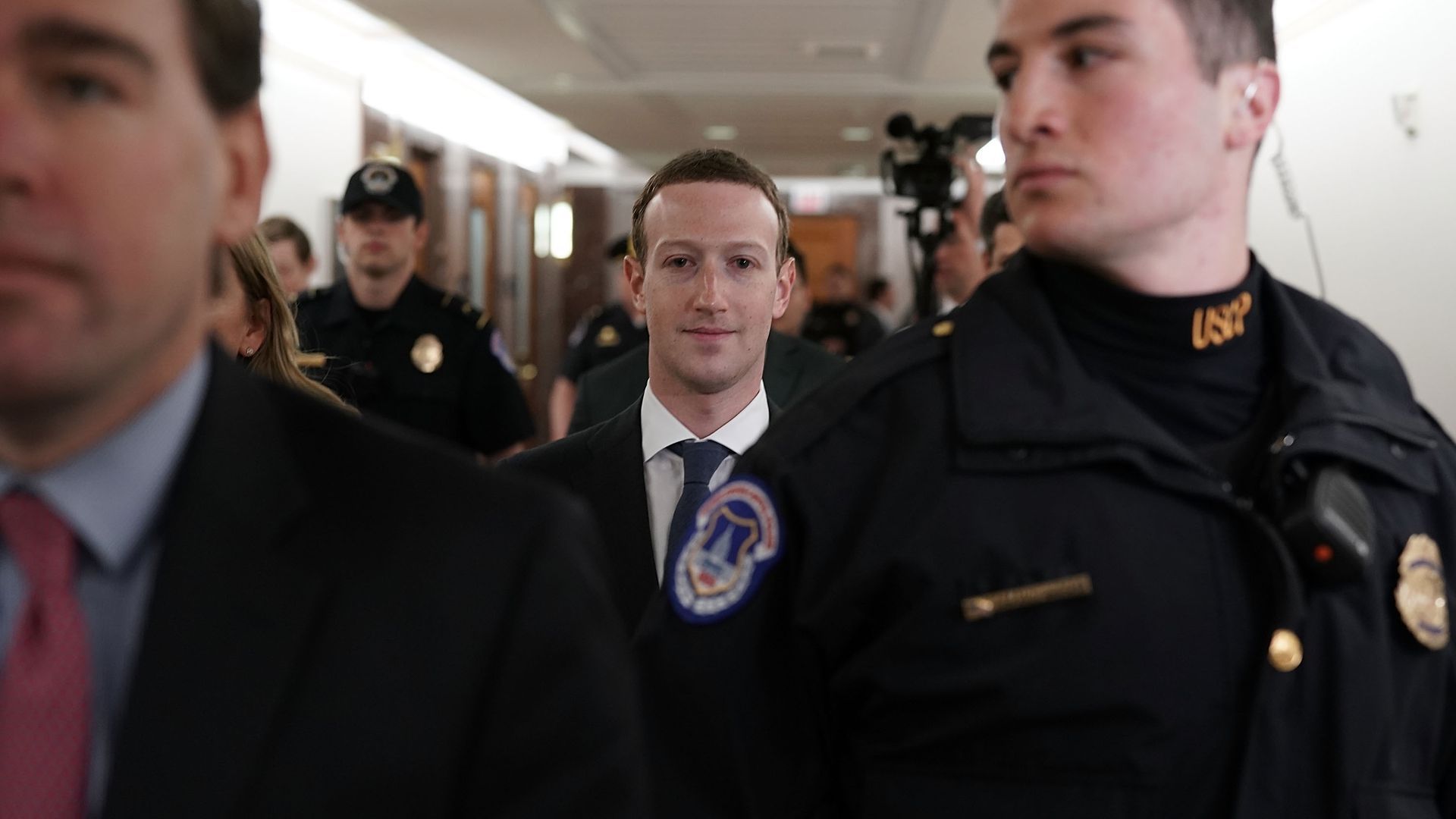
Facebook today revealed a “security issue” in which a code flaw could have allowed hackers to take over upwards of 50 million user accounts.
“We face constant attacks from people who want to take over accounts or steal information…We need to do more to prevent this from happening in the first place."
— Facebook CEO Mark Zuckerberg, during a call with reporters.
The big picture: This is just the latest in a long string of recent problems for Facebook, including executive defections, social media interference, privacy concerns, and accusations of anti-conservative bias.
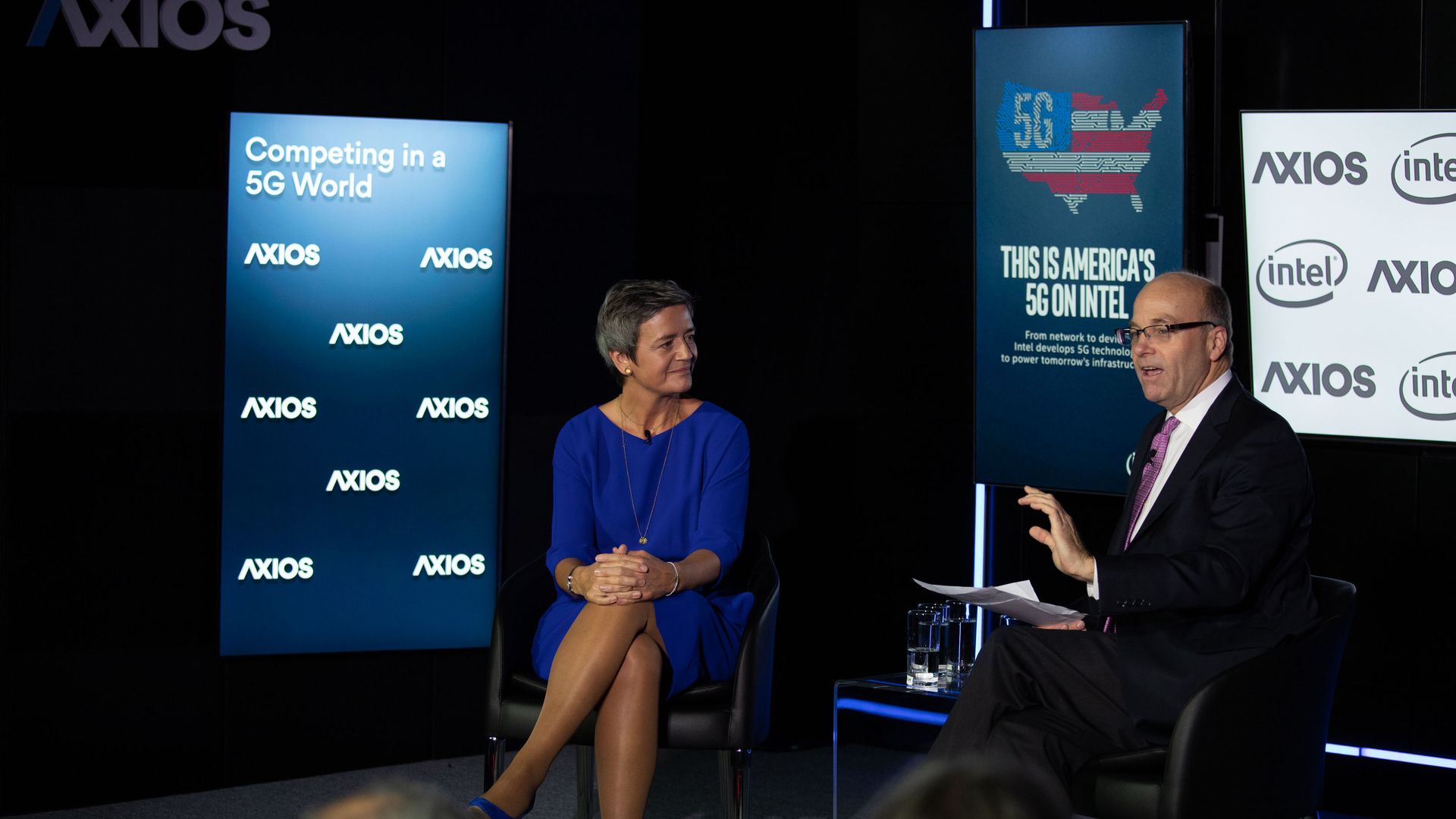
European competition chief Margrethe Vestager said at an Axios event on Friday that she wouldn’t revisiting Facebook’s purchase of WhatsApp, even though the app’s founder claimed this week he had been coached to tell regulators it would be tough to link the platforms, when the company was actively exploring doing so.
What she’s saying: Vestager said that a previous $122 million fine she levied on Facebook for misleading regulators while the deal was being vetted had addressed the issue. She said that “when we did the post merger case on not giving full information, the wording of the decision reflects the seriousness” of the issue.
The top antitrust regulators of the U.S. and Europe — EU competition commissioner Margrethe Vestager, and Assistant Attorney General Makan Delrahim, who leads the Justice Department's Antitrust Division — speak with Axios' Mike Allen in Washington, D.C. These two are among those who wield the most power to chip into the dominance of the tech giants.
Human drivers are faulted for most accidents involving autonomous vehicles, but closer inspection reveals the responsibility for such incidents is more complex and shared: many appear to have occurred when an AV took an action that was technically legal and safe, but which a human driver did not expect.
The big picture: As more AVs are tested and put into mainstream service, developers must ensure that humans interact safely and efficiently with them, whether on the road or as pedestrians. If not integrated into a larger change-management plan, AVs could end up causing more accidents, congestion and public resistance.
A recent study from the American Automobile Association found that 73% of Americans said they would be too afraid to ride in a driverless vehicle and 63% would feel unsafe sharing the road with one.
Why it matters: Mistrust of robotic decision-making, and doubts about safety, are changing the focus of the autonomous vehicle industry. Increasingly, the critical question for companies is shifting from who can build the technology first to who can win people’s trust.
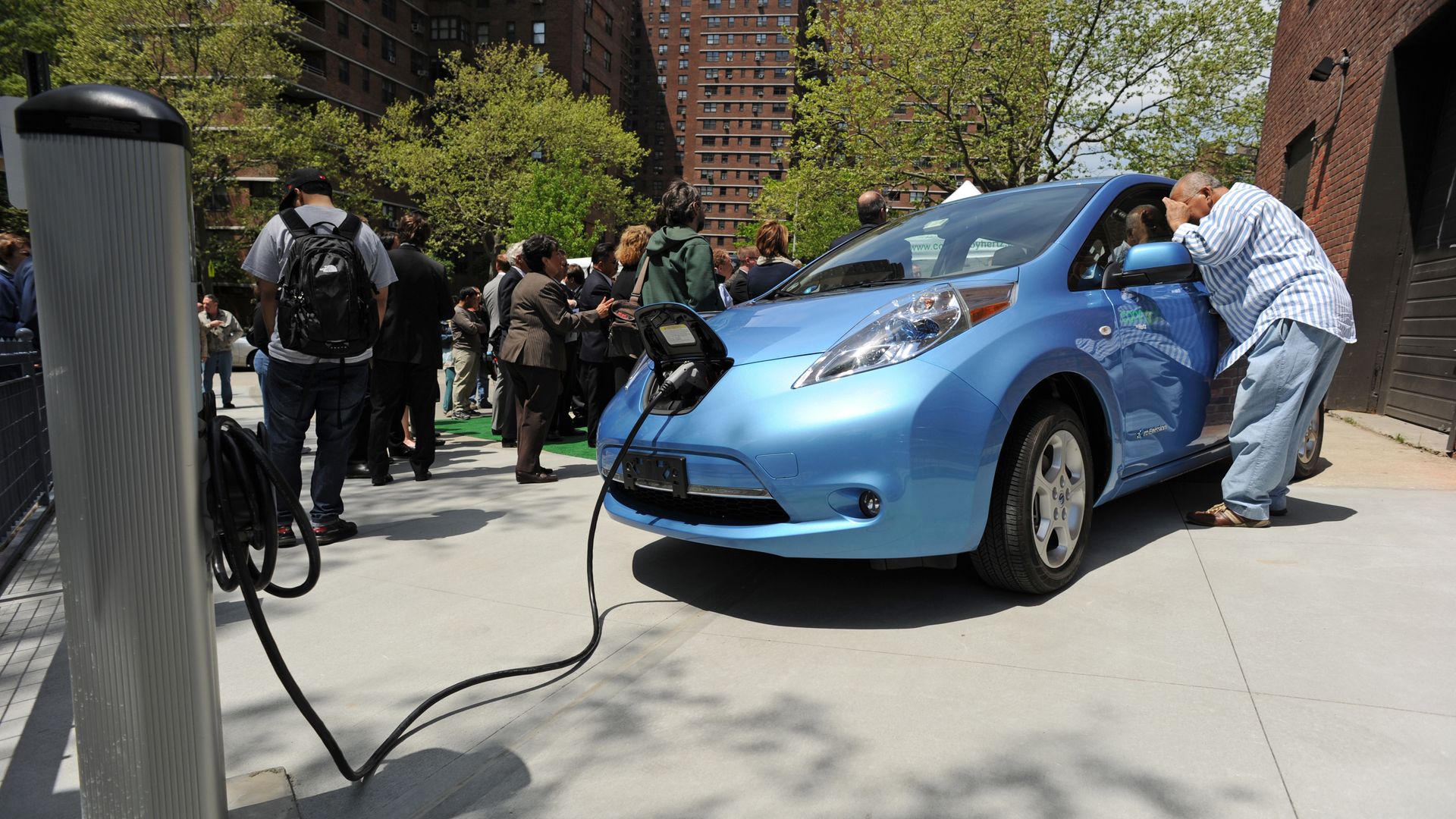
The recent pace of emission reductions in New York and New England is insufficient to meet 2050 CO2 emissions targets, set at an 80% reduction from 1990 levels, according to the most recent data published by the U.S. Energy Information Administration. In fact, at recent emission reduction rates, the Northeast region will struggle to make it even halfway to its goal.
The big picture: While the power sector has made progress, transportation emissions across the Northeast remain stubbornly at or above 1990 levels, and now account for over 40% of all energy-related emissions (e.g., transportation, heating and power generation). Without continued decarbonization of the electric sector, electrification of the transportation sector, and accelerated progress in the heating sector, the Northeast will fall far short of its goal.
When the world's automakers are scrambling to retool into electric and driverless mobility companies, they are thinking about this number: 1 billion.
That's how many cars it is estimated will be added to the global fleet as early as 2030, igniting a frenzy over who will capture the sale of these probably much cleaner, higher-tech vehicles.
Facebook's terrible 2018 got even worse yesterday, with a searing attack on the social network and CEO Mark Zuckerberg by a WhatsApp co-founder. Dan discusses the mess in Menlo Park with Axios tech reporter David McCabe:
"Facebook is now under attack from the people it thought were it friends. "
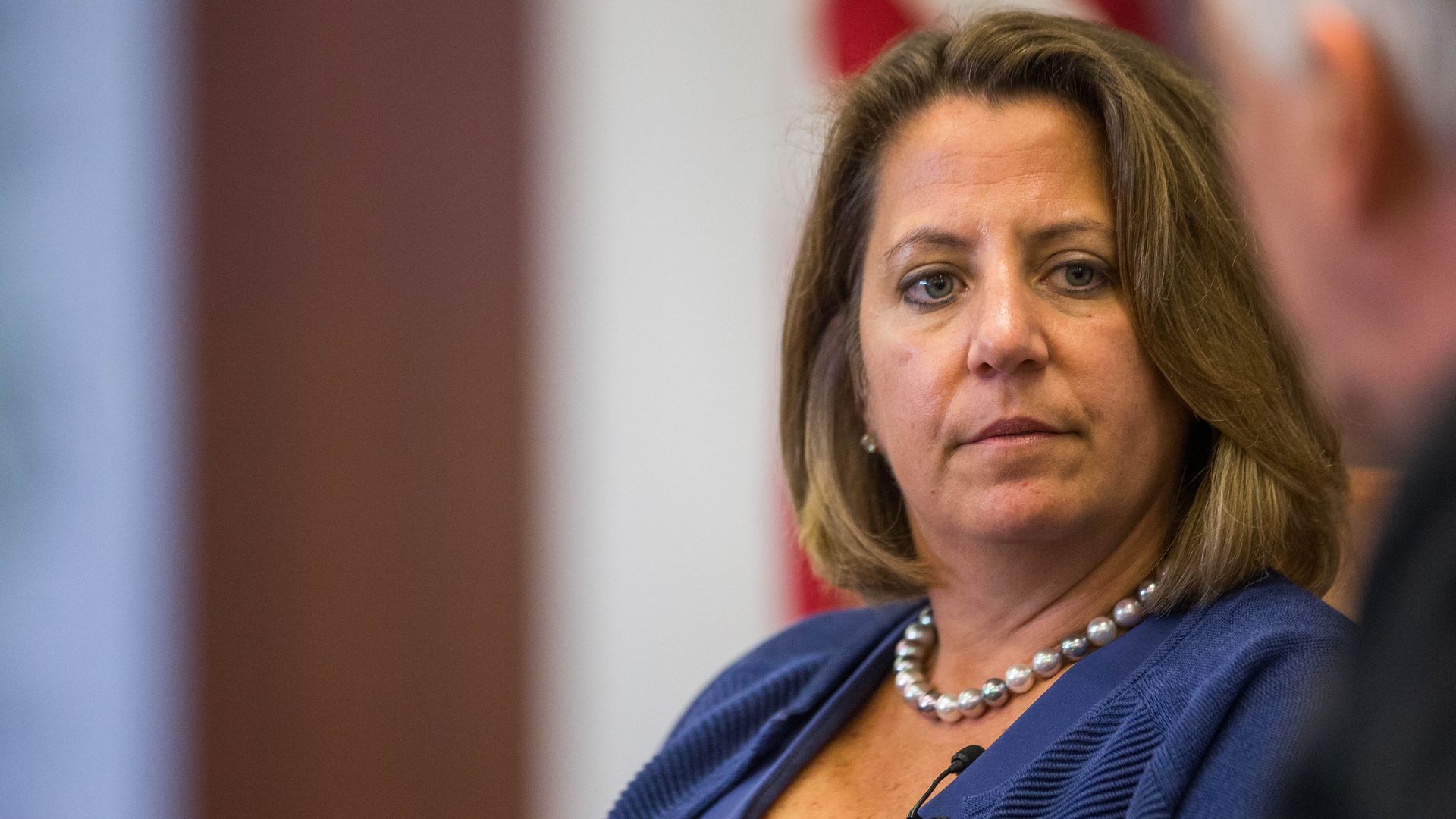
Lisa Monaco, chief homeland security and counterterrorism adviser to former President Barack Obama, will serve as an adviser to Lyft for her expertise on Lyft's safety initiatives.
Why it matters: Ride-sharing companies like Uber and Lyft have been coming up with safety features, such as background checks and riders' abilities to share the ETA with others, to protect drivers and riders. Monaco, a household name in federal law enforcement and cybersecurity, will help expand Lyft's plans for safety and security, a news release said.
First it was the Instagram co-founders leaving. Now WhatsApp co-founder Brian Acton is taking fresh aim at the social network that he sold his company to in 2014 for $22 billion.
Why it matters: The dramatic back-and-forth underscores the disconnect between Facebook’s leaders and the founders of WhatsApp and Instagram as those apps buoyed the company in the face of stagnant growth on its original platform.
Just days after it announced a visual product search partnership with Amazon, Snapchat is launching a slew of new ad products that will help the tech giant go all in on its push to win e-commerce dollars.
Why it matters: Despite having dramatically improved its ad program, Snapchat's ad revenues have so far been a disappointment to Wall Street — but e-commerce is a market in which Snapchat thinks it can be very competitive.
Uber announced Wednesday that it's funneling $10 million over three years into a new "fund for sustainable mobility" to help address congestion, aid urban design, boost electrification and bicycle transit, and more.
Why it matters: The move arrives as some analysts and policymakers fear that the growth of ride-hailing is worsening urban traffic — and hence boosting emissions — and could be cannibalizing mass transit.
Amazon announced it will open a general store in New York City that will sell toys, household goods and some of its other top-selling products, Reuters reports.
Why it matters: The e-commerce giant already accounts for nearly 50% of the e-commerce market, with a recent survey showing the reality of Amazon's untouchable advantage against other retail companies. Now, the company is continuing its push to satisfy customers with physical locations.



/2018/09/26/1537993463227.gif?w=3840)