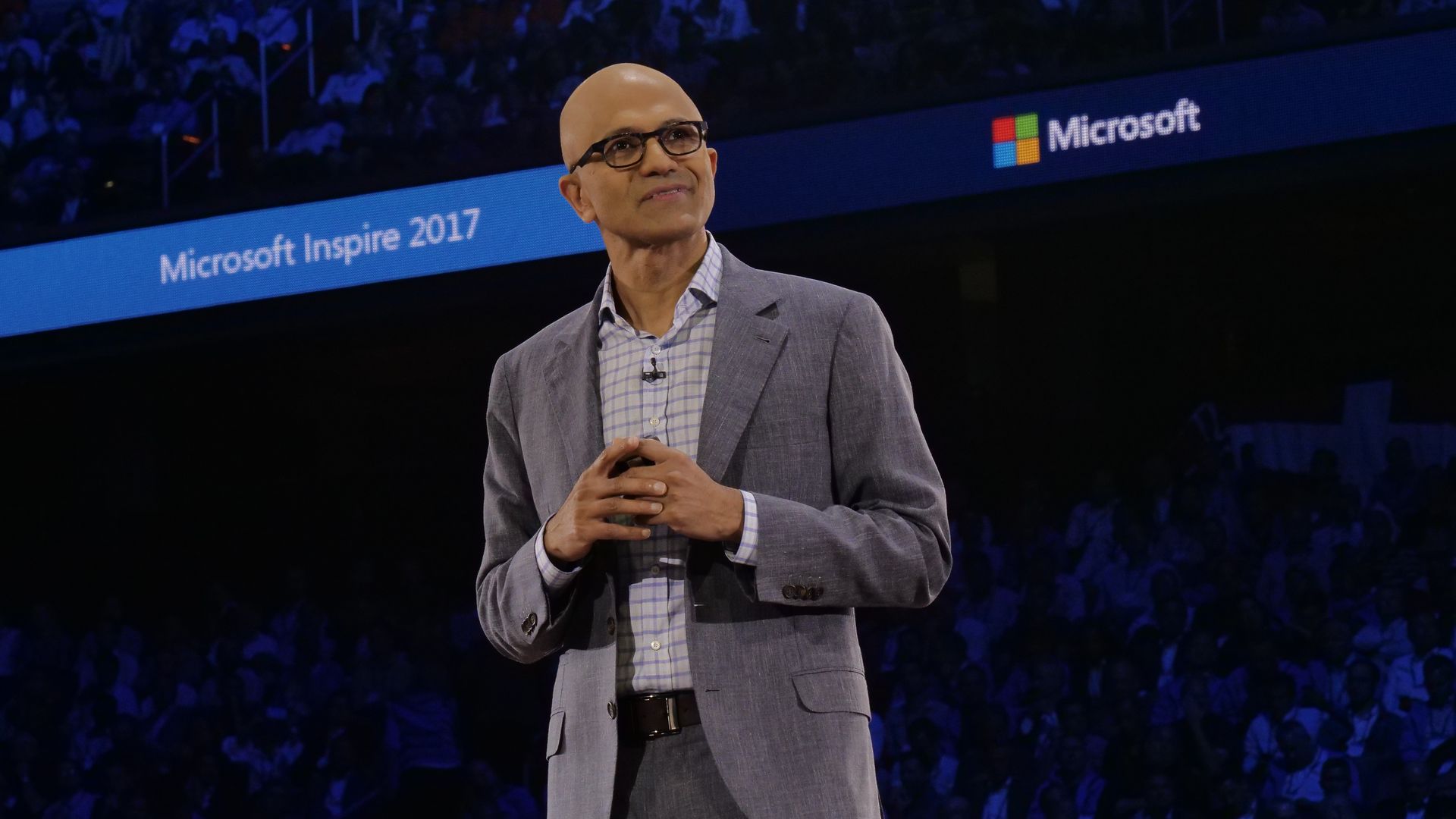
More than 100 Microsoft workers signed an open letter calling for the company to sever its ties with Immigration and Customs Enforcement over the agency's family separation policy.
Why it matters: Microsoft said in a January blog post it was "proud" of the work it was doing with ICE. The company said Monday it was "dismayed' by the family separation practices but defended its work with the agency. CEO Satya Nadella has not commented directly on the move, which has drawn condemnation from the CEOs of Apple, Google, Facebook and many other tech companies.
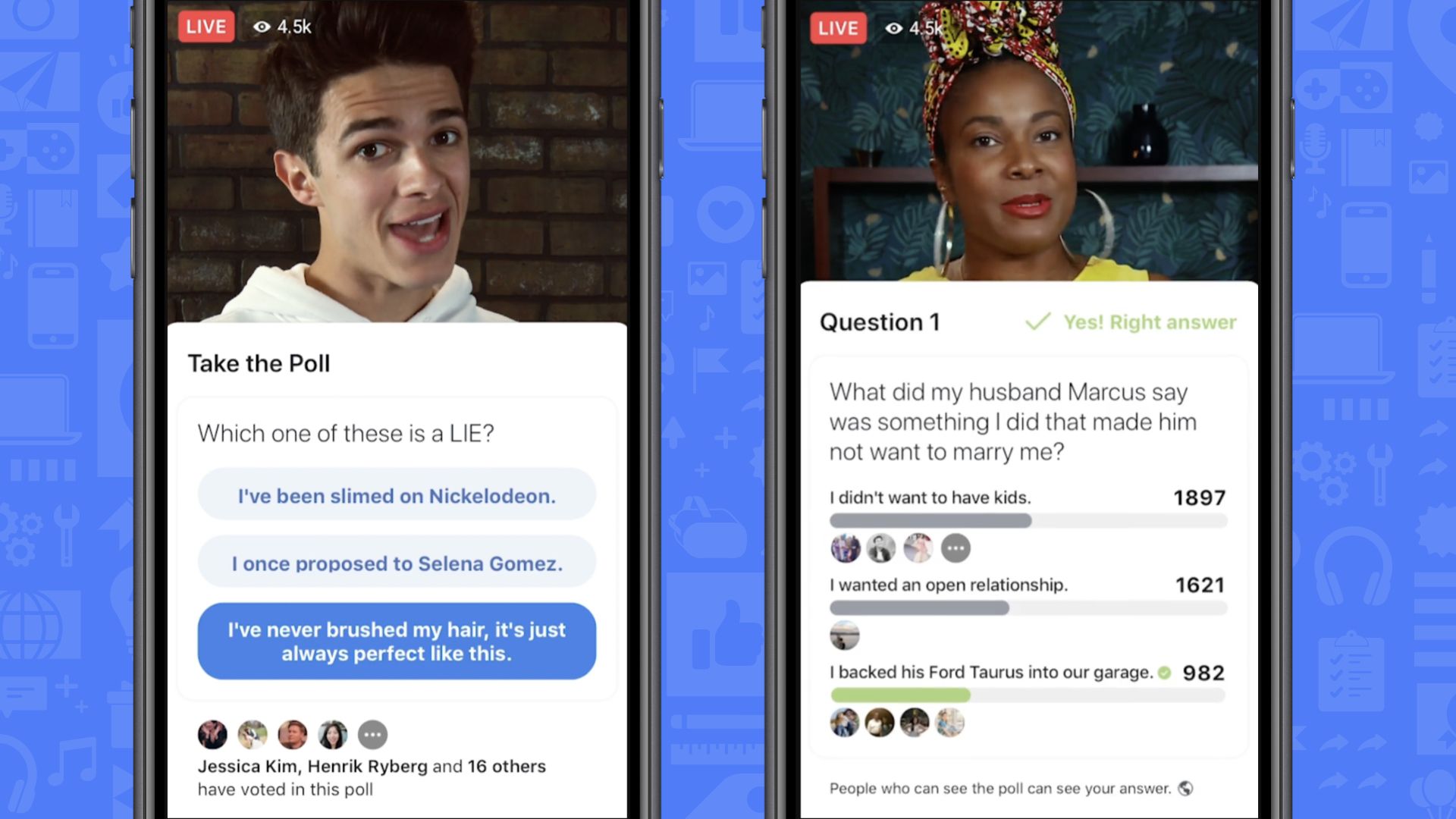
Facebook is rolling out tools for video creators to host gameshows and poll viewers as part of a broader set of new video features.
Why it matters: Known for copying popular social apps, it was only a matter of time before Facebook tried to take on HQ Trivia, which debuted last August. But Facebook's new video features also put it head-to-head with other services like Patreon with a monthly $4.99 pledge for fans to access exclusive content and perks from creators, and YouTube with additional ad and creator tools.
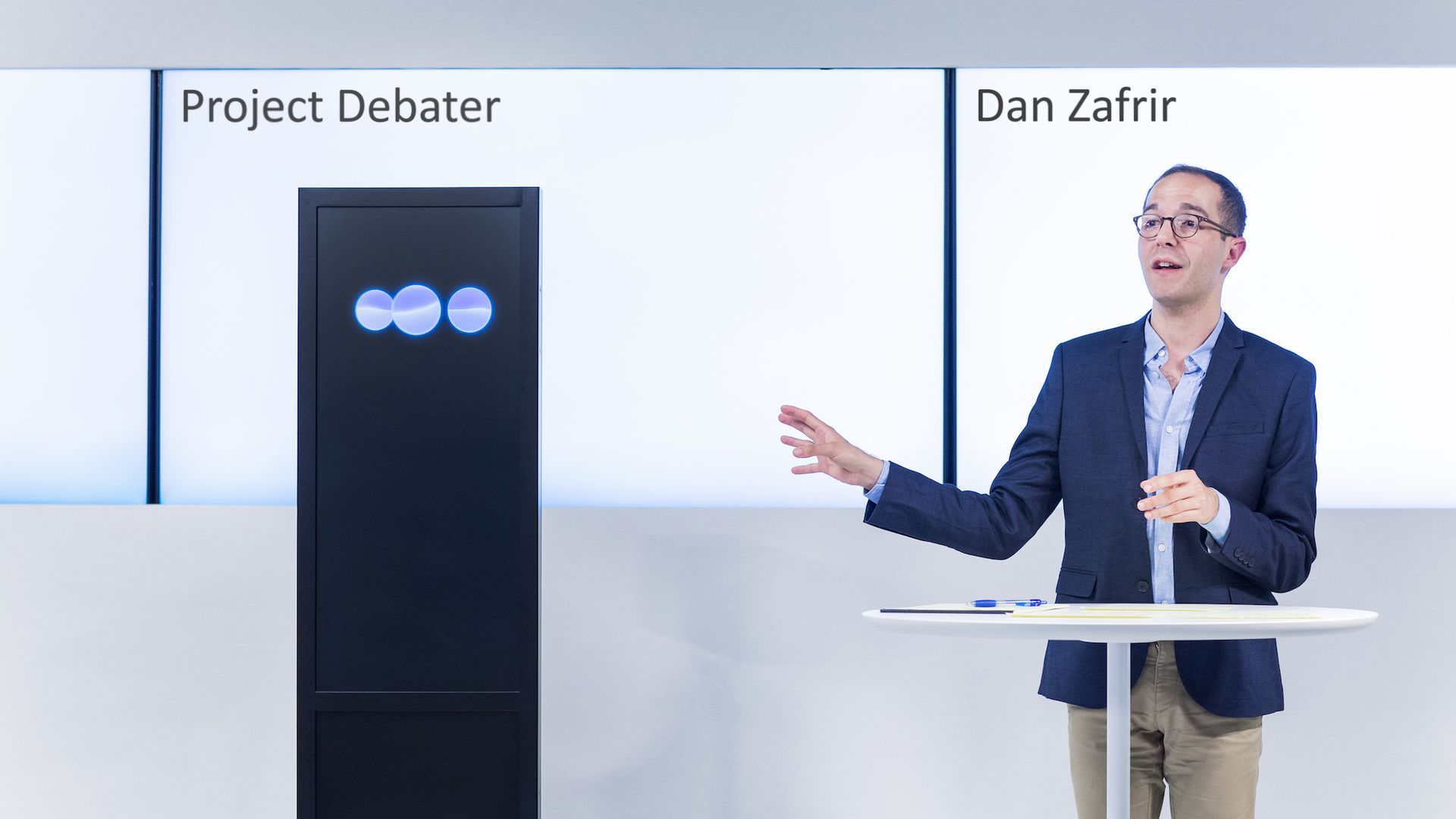
On Monday, a quarrelsome AI from IBM matched wits with a pair of human debaters in San Francisco in an impressive showcase of technology known as "computational argumentation."
Why it matters: By quickly synthesizing persuasive arguments from a trove of source material, IBM's remarkably conversant debater can "help broaden minds with unbiased debate," said Arvind Krishna, IBM's director of research. It could even be used to combat fake news by "asking critical questions of news," according to Noam Slonim, a technical staff member at IBM's Haifa Research Laboratory in Israel.
Google has launched a new Google Podcasts app on Android, available globally in the Google Play Store, with the goal of driving adoption of podcasts among Android's two billion users worldwide.
Why it matters: It's experimenting with how its artificial intelligence features, like automatic subtitling and Google Translate, can help modernize podcasting and broaden audiences.
Several major acquisitions have helped Google and Facebook on their way to unprecedented dominance over the advertising supply chain, antitrust analysts argued at the Open Markets Institute forum in Washington last week.
Why it matters: Many blame these two companies for absorbing the majority of ad revenue that would've gone to traditional media.
Comcast and Disney are about to engage in a bidding war for the entertainment assets of 21st Century Fox, and analysts tell Axios that Comcast is likely to win because it's more desperate for what Fox is trying to offload.
Why it matters: There is huge pressure on media and telecom companies to compete with new rivals like Amazon and Netflix, so the loser will be forced to buy something else.
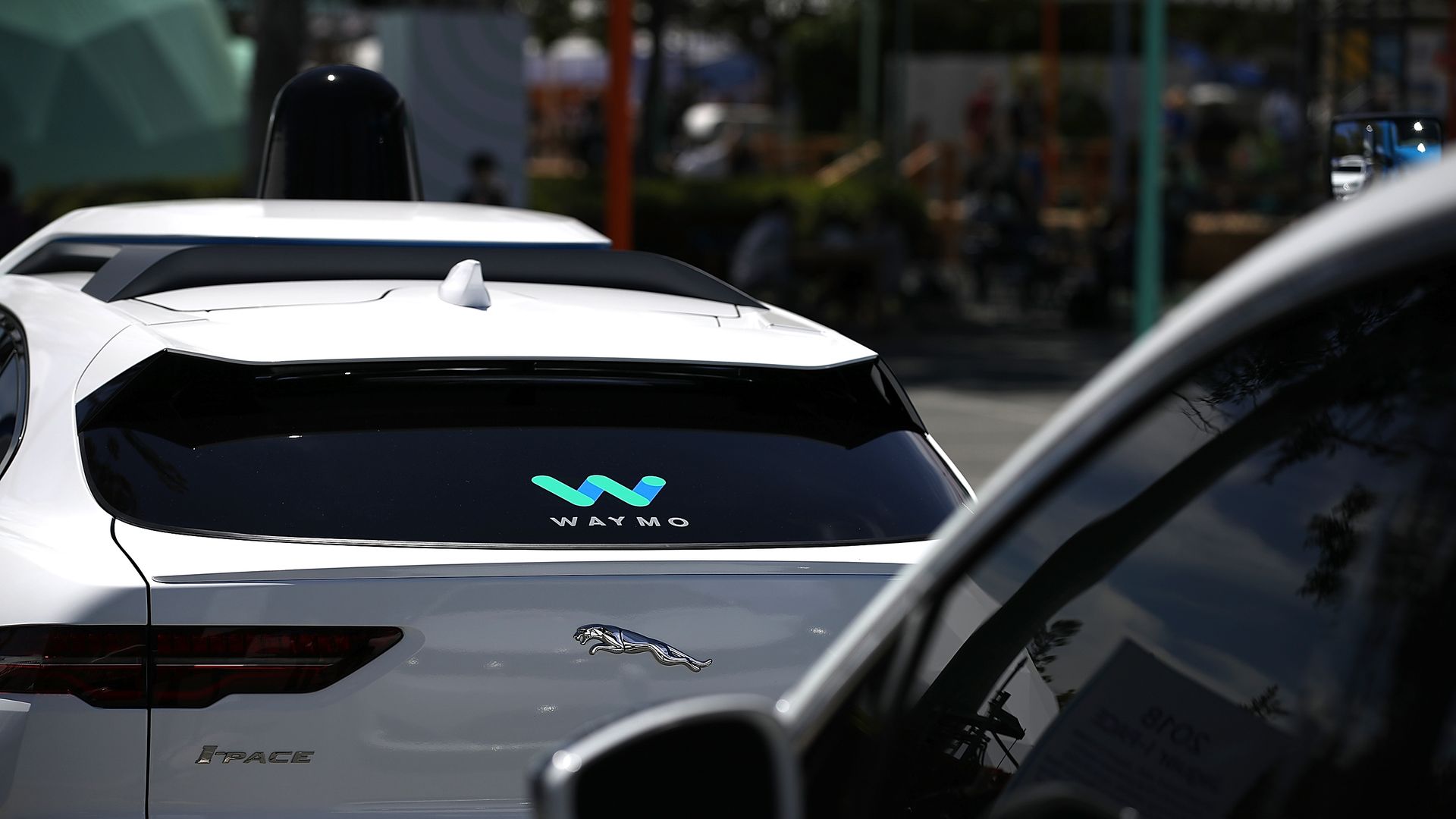
Scoop: Voyage, the autonomous vehicles startup, is bringing on Drew Gray — an industry vet who was a senior self-driving engineer at Tesla, Uber and elsewhere — as chief technology officer.
Why it matters: The company is focusing on providing taxi and fleet services by grafting its self-driving technologies onto existing vehicles. Voyage's system equips Chrysler Pacifica Hybrids, which drive on electric power for about 30 miles, to be autonomous, and later it plans to move into pure electrics, Oliver Cameron, Voyage's CEO, tells Axios.
Several of the leading companies developing autonomous vehicles are planning a Washington push to calm fears that the technology will radically reshape the nature of work, including the elimination of driving-focused jobs.
Why it matters: Automation powered by new developments in robotics and artificial intelligence is both a business opportunity for these companies and a potential public-relations nightmare, if they are seen as responsible for large-scale unemployment.
Microsoft said Monday it is "dismayed" by the Trump administration's moves to forcibly separate children from their parents at the border and called on the administration to change its policy and Congress to pass legislation barring such policies.
Why it matters: Microsoft has come under fire for boasting of its role as a supplier to the Homeland Security Department and, in particular, ICE.
A British privacy watchdog is preparing to mount a legal challenge to the use of AI-based facial recognition technology in the U.K.
Why it matters: Law enforcement around the world is increasingly using real-time facial recognition. The technology is already widespread in China and is used by some police departments in the U.S.
The Supreme Court has agreed to hear arguments on an antitrust case alleging that Apple created a monopoly with its App Store, which makes Apple the exclusive distributor of apps for the iPhone and takes a cut of app sale prices.
Bottom line: If Apple is found guilty of engaging in monopolistic behavior in what it charges developers to carry their apps in its App Store, Apple could be forced to pay out hundreds of millions of dollars to consumers purchasing the apps.
With the next release of iOS, Apple plans to automatically share detailed location information with 911 providers.
Why it matters: Roughly 80% of 911 calls in the US are made from a mobile phone, but the system was built for an era of voice calls over landlines. Sharing accurate location info is one small step in modernizing an outdated system.