General Motors is reportedly considering several options for self-driving unit Cruise, including an IPO or pubic tracking stock, according to Bloomberg.
Why it matters: It's not surprising that GM would want to highlight Cruise's value to investors but, as Bloomberg notes, a complete spin-off would leave the parent company without a high-tech narrative of its own.
Apple and Oprah Winfrey have signed a multi-year content partnership, although specific terms aren't yet available.
Why it matters: It’s the latest example of big tech investing in big-name talent to build its content businesses, whereas telecom companies like AT&T and Comcast have been seeking to buy entire content creation companies. Apple earlier signed programming deals with such Hollywood A-listers as Jennifer Aniston and Reese Witherspoon.
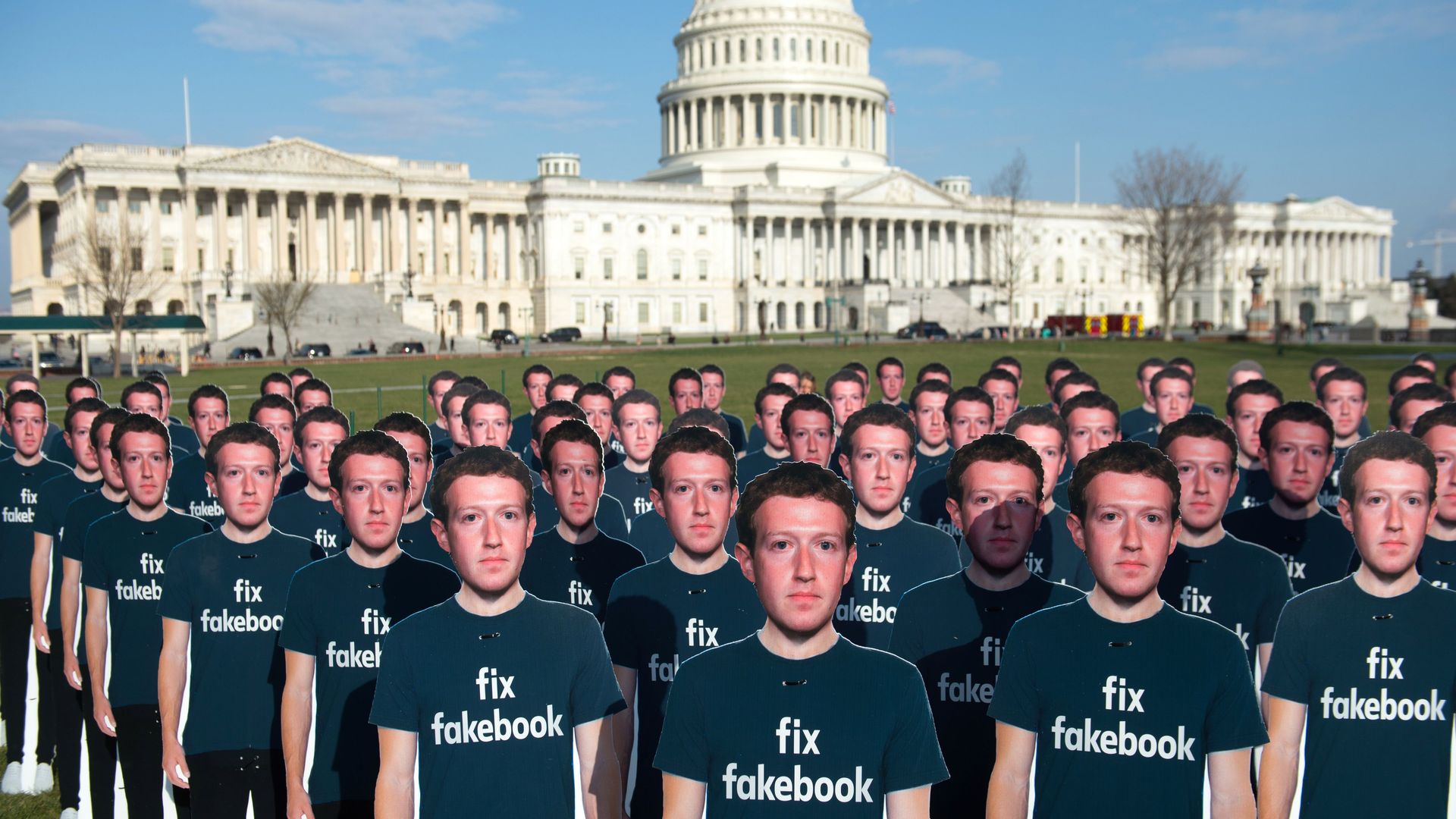
Following complaints about censorship of conservatives, Facebook execs will meet today with House Majority Leader Kevin McCarthy (R-Calif.), RNC chair Ronna McDaniel and Trump reelection campaign manager Brad Parscale.
This is in response to a May 17 letter from McDaniel and Parscale saying "Facebook and Twitter operate in liberal corporate cultures," and asking for protections from "bias against conservative content."
The departure of Facebook’s policy and communications czar, Elliot Schrage, comes as the company navigates a difficult period marked by scandals over foreign election meddling and consumer data privacy.
Why it matters: Policy and communications are exactly the areas where Facebook has needed the most help throughout its recent controversies, and the company's choice of new leadership there will provide clues to how it intends to move forward.
A year after its $13.7 billion acquisition of Whole Foods, Amazon has implemented changes among its high-level executive leadership team and store operation as part of a broader effort to reinvent the way consumers shop in stores, CNBC reports.
Yes, but: Axios' Business Editor Dan Primack says Amazon "hasn't made as many consumer-facing changes to Whole Foods as people had expected, but these behind the scenes moves suggest it's just a matter of time."
The AI system operating in maze environments with partial information. Credit: DeepMind
A machine learning system from Google's DeepMind can collect snapshots of a 3D scene taken from different angles and then predict what that environment will look like from a viewpoint it hasn't seen before, according to research published today in Science.
The big picture: Researchers want to create AIs that can build models of the world from data they've seen and then use those models to function in new environments. That capability could take an AI from the realm of learning about a space to understanding it — much the same way humans do — and is key to developing machines that can move autonomously through the world. (Think: driverless cars.)
Facebook's board of directors is expanding the charter of the its audit committee, chaired by former White House chief of staff Erskine Bowles, to cover risk oversight responsibilities like data privacy, community safety and cybersecurity.
Bottom line: The move is largely cosmetic, as Facebook's audit committee already had such responsibilities, but is designed to reassure shareholders that the company takes its social responsibility seriously.
Aleksandr Kogan, the academic who helped Cambridge Analytica harvest Facebook's user data, is one of three witnesses schedules to testify next week at a Senate Commerce Committee hearing.
Why it matters: This controversy has stretched on for months, and every new hearing or controversy raises the profile of privacy issues on Capitol Hill.
Elliott Schrage, Facebook’s longtime head of policy and communications, is stepping down after 10 years in the role — and after a series of high-profile public relations controversies.
Why it matters: It's the latest organizational shakeup at Facebook, which continues to be beset by negative news after the Cambridge Analytica scandal. Schrage, a close confidant of Mark Zuckerberg and Sheryl Sandberg, had been mulling the departure for some time, according to Recode, and will stay on to find his replacement.
People are relying less on Facebook for news consumption around the world and more on messaging apps, according to the 2018 Reuters Digital New Report out Thursday.
Why it matters: For years social media use, and particularly Facebook, for news was on the rise. Now, it seems to be declining as trust in social media platforms and Facebook wanes due to problems with privacy and fake news.
Pandora is partnering with Snapchat to stream music on the app via its new developer tool, Snap Kit.
Why it matters: It's an example of how Snap's developer tools can be used to link Snap to other apps that users engage with frequently. This partnership will expand music discovery on both platforms.
The dispute between Qualcomm and Apple over technology at the heart of cellphones will come to the forefront on Friday, when opening arguments are scheduled before the U.S. International Trade Commission.
Why it matters: It's a battle of two tech giants accustomed to holding sway over their business partners. That said, the ITC case is just one part of a broader legal fight taking place in courts across the globe, involving claims of everything from breach of contract to patent infringement.
Snapchat's parent company is finally rolling out Snap Kit, its rumored suite of tools that lets developers plug in the ephemeral app's data, and vice versa. Initial third-party apps with Snap Kit access include Postmates, Tinder, Poshmark, Eventbrite, Pandora and Giphy.
Why it matters: Snap says its approach to letting outside developers into its network is much more user privacy-focused than fellow social media companies, but it will still have to prove that it's learned from early mistakes.
Shanghai, China: I am inside a 28-meter-tall, 100,000-square-foot Shanghai warehouse stacked almost to the ceiling with boxes stored one atop the other on 60,000 pallets.
Math question: How many workers are needed to process the 50,000 to 100,000 orders that go out of the building every day?
A startup that is involved in a sensitive Pentagon project was hacked by a person or group in Russia and did not immediately inform the Defense Department, Wired reported on Tuesday.
The big picture: The company, Clarifai, is one of several working on Project Maven, a Defense Department program that uses artificial intelligence to identify elements like people or vehicles in drone footage. Google, the highest-profile participant, said last month it will not renew its involvement in Maven after an employee petition and several resignations made news.