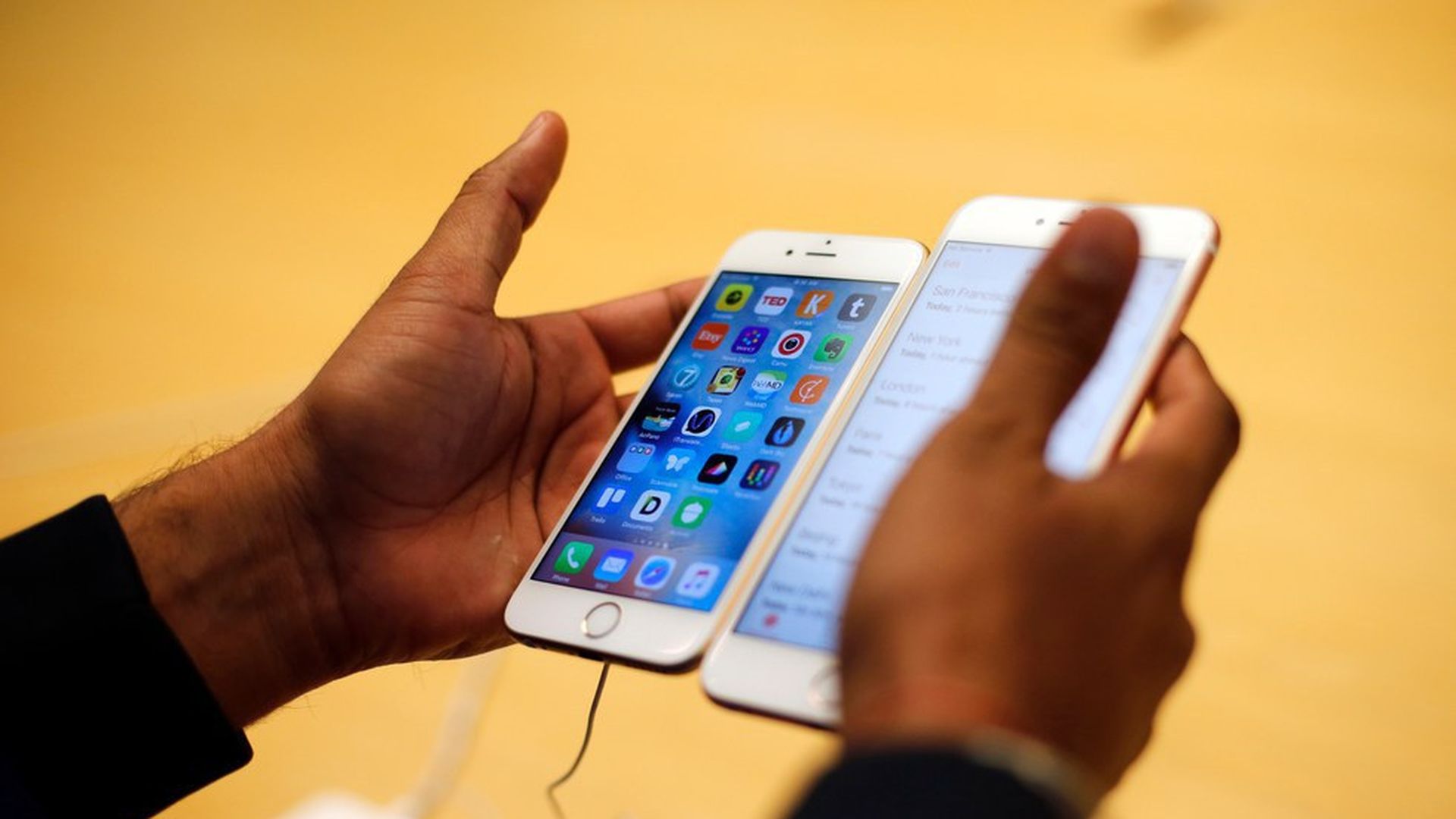
Nartron, a Michigan-based company also known as UUSI, has filed a lawsuit against Apple, claiming that several of the tech giant's mobile devices are infringing on a touch screen patent.
In the lawsuit, Nartron says that it notified Apple of the potential infringement back in 2007, suggesting a licensing deal. However, Apple declined, arguing that its tech was not infringing on the patent.
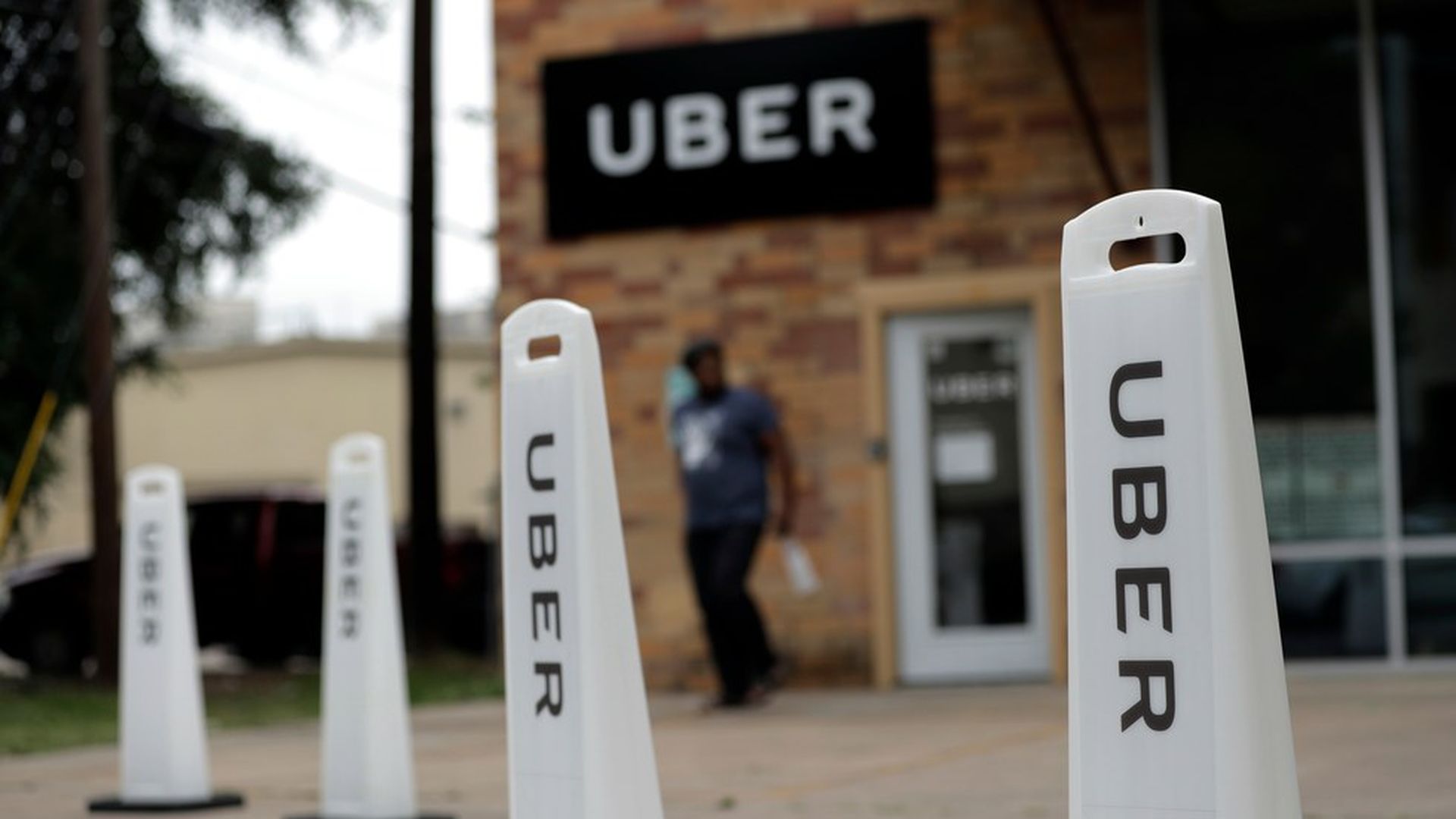
Illinois, Massachusetts, New York, and Connecticut are planning investigations into Uber's recently announced 2016 breach that left 57 million customers' and drivers' data vulnerable to criminals, and the FTC might launch a probe as well, according to Recode.
Why it matters: Most states (48) have some form of a law requiring companies to reveal data breaches to consumers, but Uber did not immediately disclose the details to consumers and reportedly tried to cover up the hack.
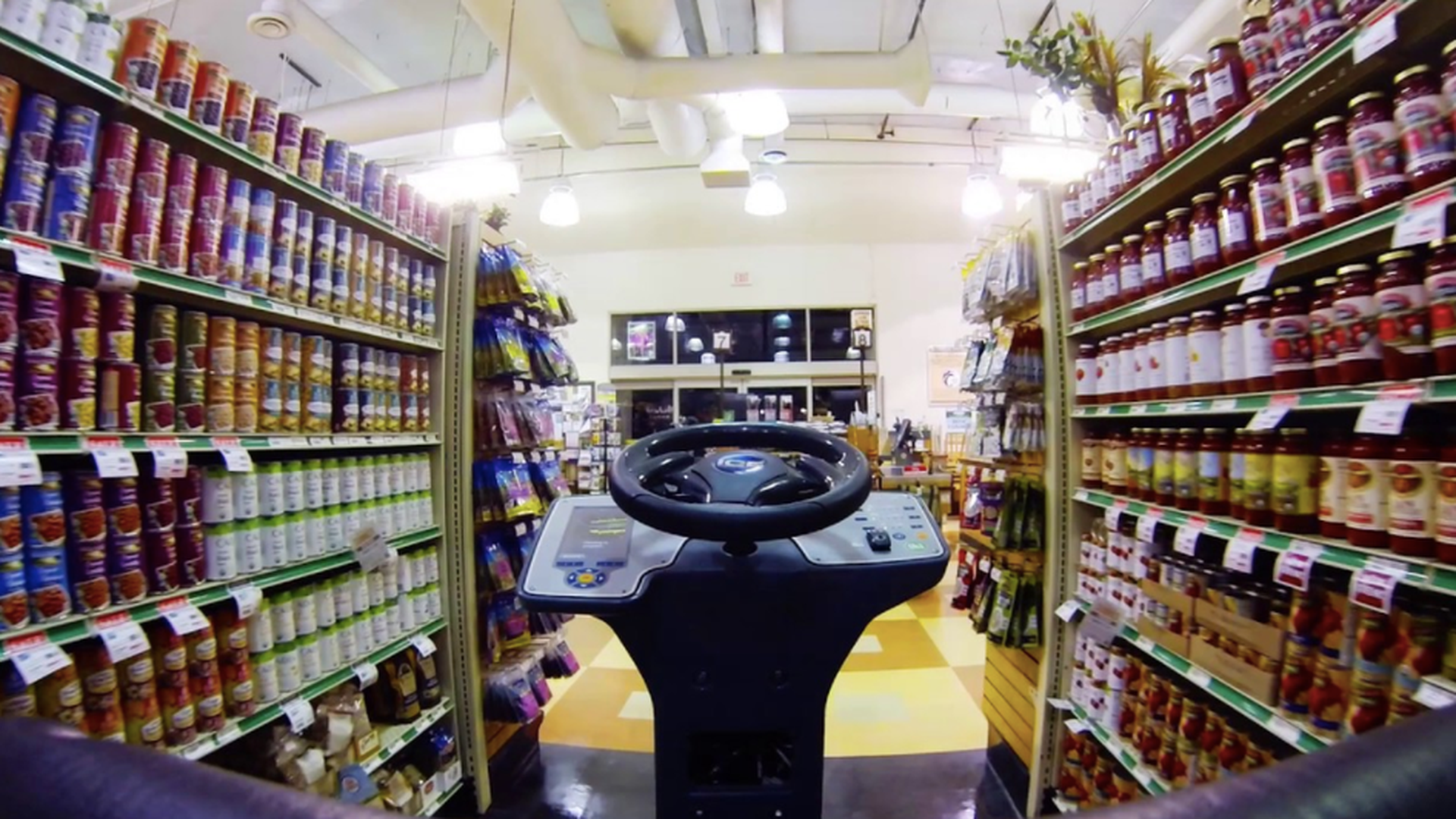
Walmart is moving fast into the autonomous age. Last week, it ordered 15 advanced self-driving semi-trucks from Tesla, and now LinkedIn's Chip Cutter reports that a few stores are testing out EMMA, an autonomously driven floor scrubber. EMMA can careen through Walmart aisles at a whiplashing 2.5 miles an hour, evading unalert shoppers, stacks of cereal boxes along her way.
Why it matters: It's another lesson in the reality of robotics. Like iRobots and the Roomba, Brain Corp. started out with heady ideas of commercializing artificial intelligence, but has discovered that, at least for now, the technology and the market is much more prosaic.
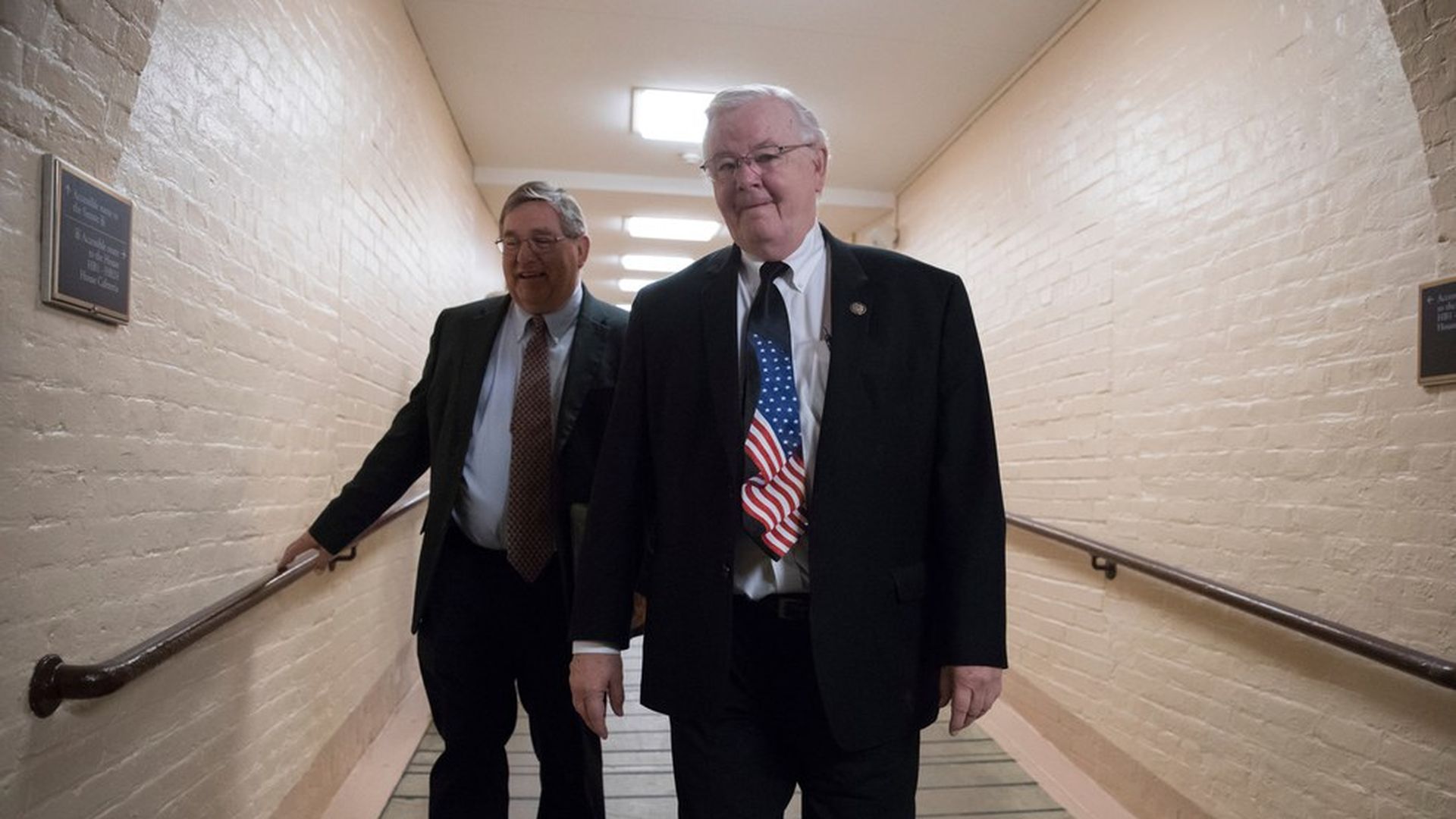
Congressman Joe Barton said he is sorry that he "did not use better judgment" when he took a nude photo which circulated on social media earlier this week after being posted from an anonymous Twitter account. In a statement, the Texas Republican said he had been separated from his then-wife at the time and was in sexual relationships with other women.
Why it matters: Barton has not been accused of any misconduct, but after announcing earlier this month that he would seek re-election, he told the Texas Tribune he is now pondering his political future.
Amazon's cloud-computing division is expected to partner with health care technology giant Cerner to mine patient health care data, CNBC reports. Amazon would work with Cerner, a major developer of electronic health records, to analyze clinical data and predict what treatments are valuable.
Why it matters: Amazon is expected to make a bigger jump into health care. Pharmacies and drug distributors are worried the conglomerate will overhaul prescription drug delivery. But the partnership with Cerner would get at the lower-hanging fruit of health care data analysis, which is attracting gobs of money in the hope of reducing the country's health care spending.
Lyft is the latest company to get a permit to test self-driving cars on California's public roads, according to the California Department of Motor Vehicles website.
Why it matters: Lyft earlier this year unveiled plans to build its own autonomous driving tech, as well as make its ride-hailing network available to other companies for testing. Getting the California permit suggests it's ready to begin putting self-driving cars on the road.
A new clue about Apple's work on autonomous driving technology has emerged in the form of a scientific paper authored by two of the company's engineers, as Reuters first noticed.
Why it matters: Apple is notorious for its secrecy and while rumors floated for years that it was working on an automotive project, its interest in the area wasn't confirmed until it obtained a permit to test self-driving cars in California earlier this year. This new paper is a departure from Apple's secretive culture in that it reveals some of the technological approaches it's developing.
SoftBank is seeking to increase its stake in Indian ride-hail company Ola, in which it already owns 25%. According to The Financial Times, the Japanese giant is in talks to buy some or all of a 13% to 14% stake currently held by U.S.-based Tiger Global Management.
Bigger picture: SoftBank basically wants to own global ride-hail, having already invested in China's Didi Chuxing, Southeast Asia-focused Grab, Brazil's 99 and launching a multi-billion dollar tender offer for Uber shares.
Uber's belated announcement of a "2016 Data Security Incident" — the hack of personal information about 57 million Uber users around the world — is the latest in a barrage of breaches that shows we can't count on any privacy, regardless of how personally cautious/paranoid we are.
The big picture: This is part of a creeping change in our society — not based on any one announcement or event. But these breaches, which the targeted corporations have repeatedly tried to conceal and understate, show that all of us have either had private data captured and resold underground, or will soon enough.
President Trump kicked off his Thanksgiving break from Mar-A-Lago by addressing LaVar Ball on Twitter. POTUS told the "poor man's version of Don King" that his son, UCLA basketball star LiAngelo Ball, would have remained in China for 5 to 10 years on a shoplifting charge without Trump's intervention.
Apple has acquired Canadian VR headset maker Vrvana (whose product was praised but never shipped) for about $30 million, according to TechCrunch.
Between the lines: The acquisition adds to the growing rumors that Apple is planning to develop more augmented and virtual reality products in the future. The release this year of its ARKit showed the company's interest in augmented reality using smartphones, but it's hard to believe Apple isn't interested in adding new devices to its lineup. Also in June, it confirmed it acquired a small German maker of eye-tracking glasses.