Uber has parted ways with chief security officer Joe Sullivan and one of his deputies, over their handling of an October 2016 data breach in which hackers stole account information of 50 million customers and 7 million drivers, the company told Bloomberg.
The big deal: Instead of immediately disclosing the incident to customers and relevant government agencies, Uber paid the hackers $100,000 to delete the data and keep the incident quiet. Ex-Uber CEO Travis Kalanick, who was ousted in June, learned of the incident one month after it happened. The attack was discovered recently by an outside law firm hired by Uber's board to investigate the activities of Sullivan's security team.
New order: This is the latest attempt by new CEO Dara Khosrowshahi to set a new tone for the company, which has long been known to skirt regulations.
After a protracted legal battle, tobacco companies will begin running court-ordered ads next week about the health risks of smoking. The campaign of "corrective statements," mandated by a federal judge in 2006, includes a year of TV spots and roughly four months of full-page ads in 50 newspapers.
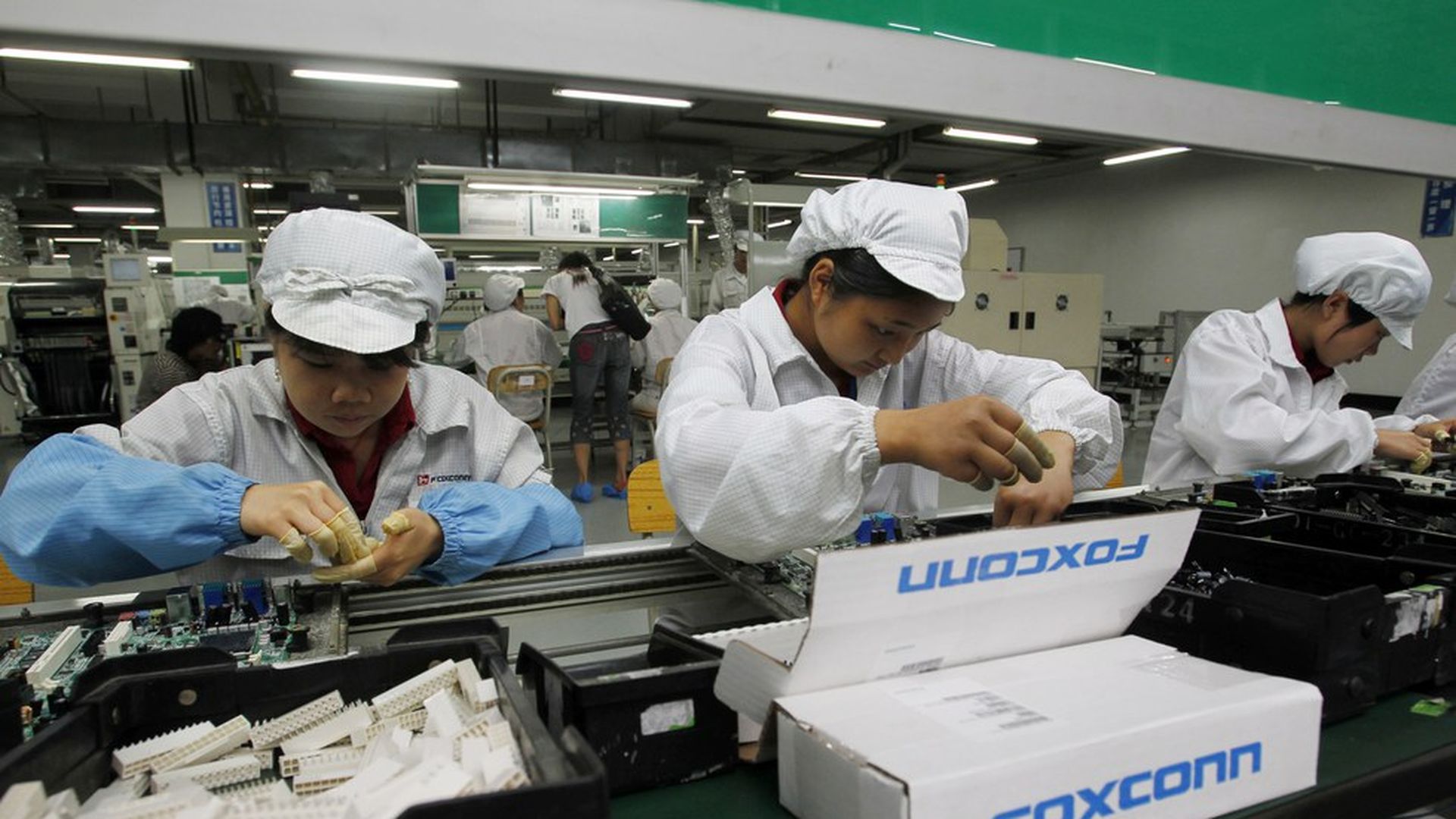
Students have been working illegal overtime hours to assemble the iPhoneX at Apple's main supplier in Asia, the Financial Times reports. Six high school students told the FT they often work 11-hour days in a Foxconn factory, where they were told they must get "work experience" in order to graduate.
Why it matters: Apple dealt with iPhoneX production issues that delayed its launch. Providing flexible student labor is one of the incentives that China's Henan province offers to keep Foxconn there, the FT said. Foxconn said it offers the internship program in cooperation with local governments and schools.
Microsoft's Skype video chat app has been unavailable in several app stores in China, including Apple's and Android's, for last few months after reportedly violating local laws relating to voice over internet protocol services (VoIP), per the New York Times.
Why it matters: Skype was one of the last remaining online foreign chat tools allowed in China. Although it has yet to be wiped entirely from the country, its removal from several of the most popular App stores make it the latest victim of the Chinese government's attempts to control the flow of information online.
Chinese Internet giant Tencent became the first Asian company ever to be valued above $500 billion on Monday, after its shares rose 4.1% in trading on the Hong Kong Stock Exchange, per Axios' Dan Primack.
What we're watching: Tencent and other Chinese tech companies have notably made efforts to penetrate the Western media market, while China has continued to clamp down on letting American companies access its market.
A new App Annie report out Tuesday commissioned by Snap in response to the same non-commissioned report earlier this spring shows surprisingly better than expected results for the "camera" company.
By the numbers: 48% of daily U.S. Snapchat users can't be found on Instagram, as well as 40% on Facebook, and 80% on Twitter. The previous report, summarized by Bloomberg, found that 46% of daily U.S. Snapchatters can't be found on Instagram.
Why it matters: This data shows that social media isn't always a zero-sum game, and people use popular apps differently. This especially rings true for Snap's younger audience that seems to have migrated away from Facebook and Twitter. Expect Snapchat to lean on these stats as they communicate their value to advertisers and investors moving forward.
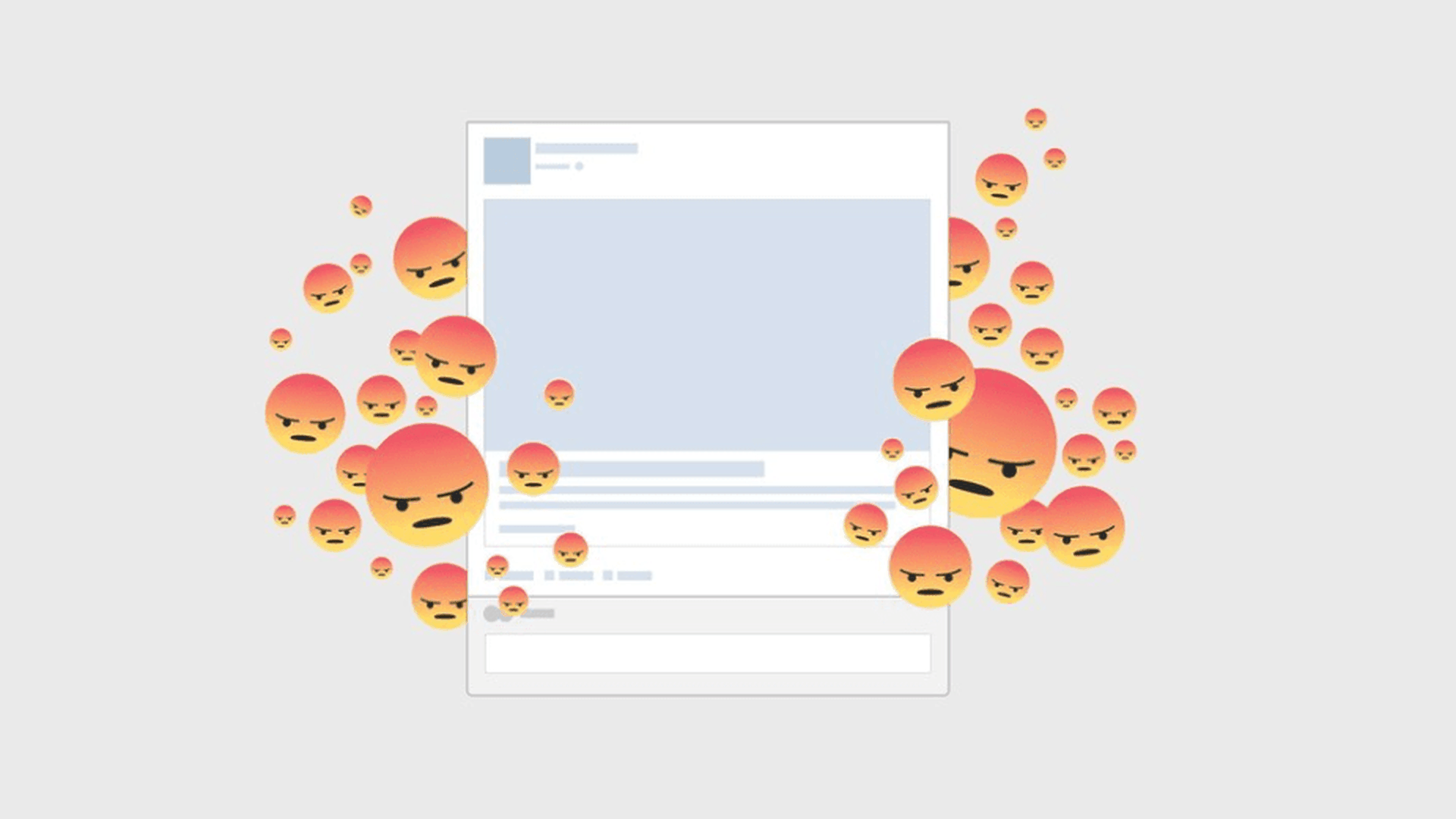
Facebook insiders with detailed knowledge of the company's priorities and operations are increasingly voicing concerns that the tech giant is putting profits ahead of its users' best interests. Their accounts come as many Silicon Valley insiders are speaking out about the negative consequences of the world they helped create.
Why it matters: The accounts put more pressure on the company to quickly and publicly address tough philosophical questions that they may not have the answers to yet. And it gives more ammunition for other Facebook alumni to come forward with their perspectives while they work their issues out.
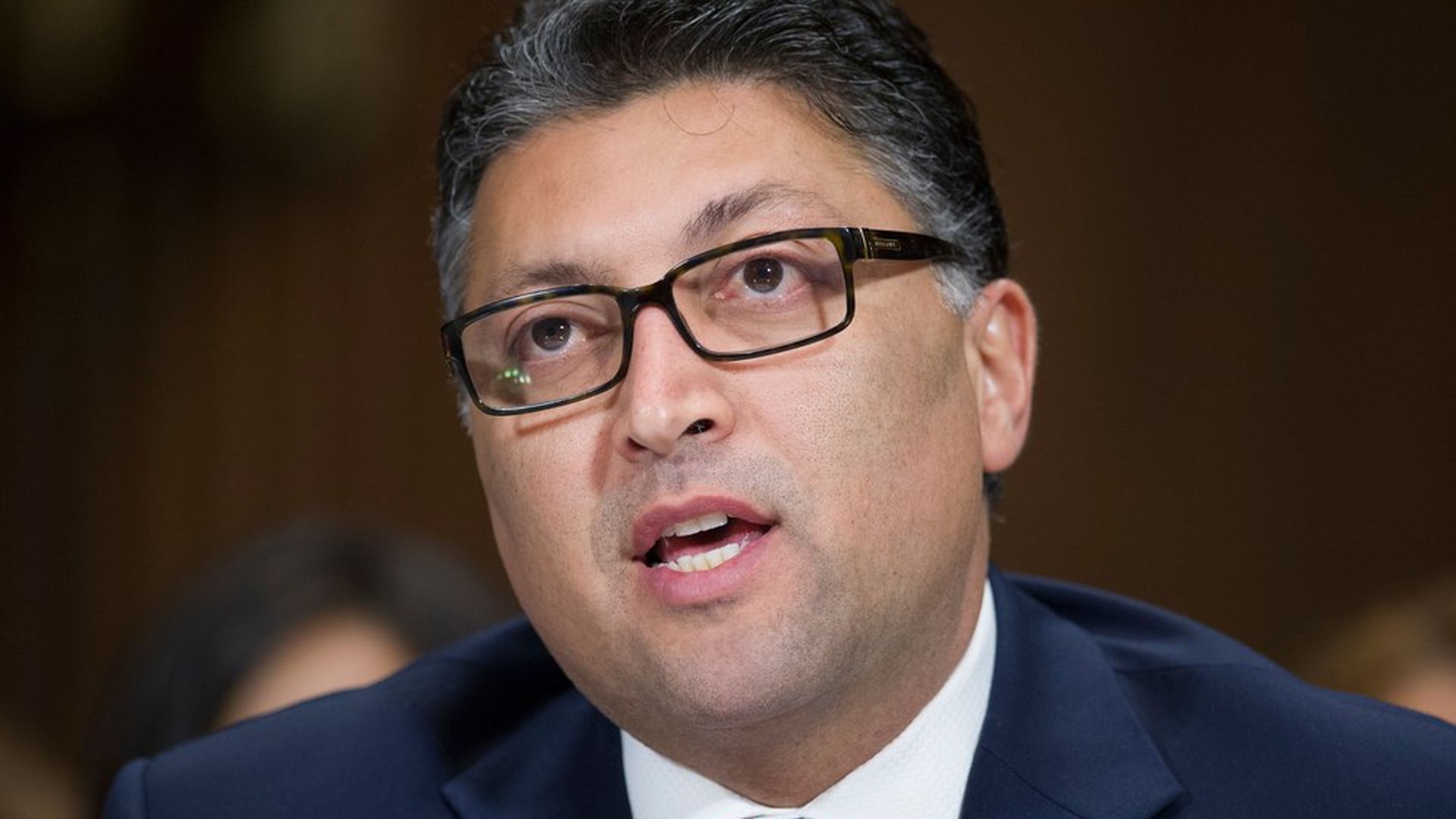
The Justice Department's move to block AT&T's proposed $85 billion bid for Time Warner puts on hold a slew of media and telecom transactions that may have been in the works. And it could upend the antitrust precedent that has created some of today's biggest media companies.
Why it matters: The lawsuit is not only a blow to AT&T, but also to other companies hoping that similarly structured deals that combine content producers and distributors have a shot with the current administration. It could also bring new scrutiny to the size and power of Google and Facebook, which have become media powerhouses in their own right.
Chinese Internet giant Tencent today became the first Asian company ever to be valued above $500 billion, after its shares rose 4.1% in trading on the Hong Kong Stock Exchange.
Rivals: Facebook and Amazon both crossed the $500 billion threshold this past summer, with the former opening trading today with a market cap of $520 billion. In terms of tech, they all still trail market cap leaders Apple ($872 billion), Alphabet ($712 billion) and Microsoft ($636 billion).
Data: Money.net; Chart: Andrew Witherspoon / Axios