Asked about the recent removal of VPN apps from the Chinese App Store, Apple CEO Tim Cook said the company had no choice under local laws, but expressed hope the crackdown won't be permanent.
"We're hopeful that over time the restrictions we are seeing (will be) loosened," Cook said on a conference call with analysts. "Innovation really requires freedom to communicate and collaborate."
"We were very encouraged by the results this quarter," Cook said on a conference call with analysts. "We improved as we thought we would from previous quarters." (Sales were still down year-over-year for Greater China, but less so than in recent quarters.)
Cook noted that sales in mainland China were actually flat year over year and, were it not for currency fluctuations, would have been up 6%.
Other notes on China:
Cook said the iPad and Mac grew much more than the overall Chinese market for tablets and computers
iPhone sales were relatively flat year on year, Similar to the broader market.
Services grew extremely strongly during the quarter
"We see all of those as very encouraging signs," Cook said.
Apple reported quarterly earnings and revenue slightly ahead of what Wall Street was expecting, but more importantly issued a strong forecast for the current quarter.
Bottom line: All eyes will be on what Apple has to say (or not) about the next iPhone. But investors were encouraged by the company's financial outlook, which calls for revenue for the current quarter and runs through the end of September, to be between $49 billion and $52 billion.
In its first foray into hardware, Facebook is developing a video chat device for the home, according to Bloomberg. Facebook is also working on a smart speaker to go up against the likes of Amazon Echo and Google Home, Bloomberg says, citing unnamed sources. Both devices would run a voice assistant service also being built by Facebook.
Why it matters: These projects are coming from Facebook's experimental Building 8 lab, run by former Googler Rugina Dugan, that was created to build hardware to encourage consumers to spend more time an all-Facebook ecosystem of products, centered on the company's social core. It underscores the race between the top tech companies, including Apple and Microsoft, to control consumers' interactions not only with each other, but also with devices and voice-activated services in their daily lives.
Internet payment company Stripe has quietly begun handling a large portion of Amazon's transactions, a deal that can help Stripe significantly increase its transaction volume, Bloomberg reports. The number of transactions Stripe is handling is unknown, as the companies aren't commenting.
Why it matters: Stripe, the company founded by Irish brothers Patrick and John Collison, handles tens of billions of dollars in internet transactions every year. It makes money by charging a small fee on each transaction. The low margins in the online payment business means Stripe has to process high volumes of transactions to effectively compete in the market. The deal with Amazon could help Stripe live up to its $9.2 billion valuation.
British Home Secretary Amber Rudd is in Silicon Valley as part of her campaign to push platform companies to do more to combat extremist content. She's attending a forum involving tech companies devoted to the issue.
Rudd has been prodding companies to let law enforcement access encrypted data. "Companies are constantly making trade-offs between security and 'usability', and it is here where our experts believe opportunities may lie," she said in a Telegraph op-ed published late Monday. But encryption supporters say it'd be impossible to make any real tradeoffs without rendering it useless.
Facebook's Sheryl Sandberg, who met with Rudd this year,told the BBC recently if "people move off those encrypted services to go to encrypted services in countries that won't share the metadata, the government actually has less information, not more."
Sky News says that she'll huddle with Apple, WhatsApp, Facebook, Google, Twitter and Microsoft. "We look forward to further conversations about how Facebook and WhatsApp can work with policymakers to address this challenge," a Facebook spokesperson said in a statement.
N.Y. Times Quote of the Day, from Marina Umaschi Bers, a professor of computer science and child development at Tufts University who directs a research group that is working in part on how to prepare children for an increasingly automated economy:
Technology can be a vehicle to help people create and collaborate better, but at the end of the day, people need to learn to work with people.
Lawyers for ex-Uber CEO Travis Kalanick have told Alphabet's self-driving car unit that they have recovered more than 400 missing text messages and will turn them over by Tuesday, August 1, according to new court documents.
Last month, Waymo complained that Uber was withholding evidence, including Kalanick's text messages with Anthony Levandowski, the former employee at the center of Waymo's trade secret theft lawsuit against Uber. Because the text messages were not initally found, Waymo accused him of deleting them.
Because Uber didn't provide the messages before Kalanick's deposition on July 27, the company has agreed to make him available for a second one.
Waymo is also seeking an unredacted copy of a presentation by Kalanick and other execs to Uber's board of directors in April 2016 about its plan to acquire Levandowski's startup, Otto. Waymo argues that the presentation was for business purposes, not legal, and thus can't be confidential.
Why this matters: one of the biggest questions is whether Uber/Travis knew what Levandowski was doing and helped him do it. So far Uber has argued that they had no idea and Levandowski was just a rogue actor so Waymo wants to see what the two of them discussed.
U.S. companies are largely unprepared for what's about to hit them when sweeping new EU data laws take effect next year. The regulation — the General Data Protection Regulation (or GDPR) — is intended to give users more control of how their personal data is used and streamline data processes across the EU. Companies that fail to comply with the complex law will face steep fines of up to 4% of their global annual revenue.
Why it matters: Europe has by far taken the most aggressive regulatory stance on protecting consumer privacy and will in many ways be a litmus test for regulating the currency of the data economy. It impacts a huge number of businesses from advertisers to e-commerce platforms whose data flows through EU countries. That means everyone from Google to your neighbor who sells shoes on eBay could be affected.
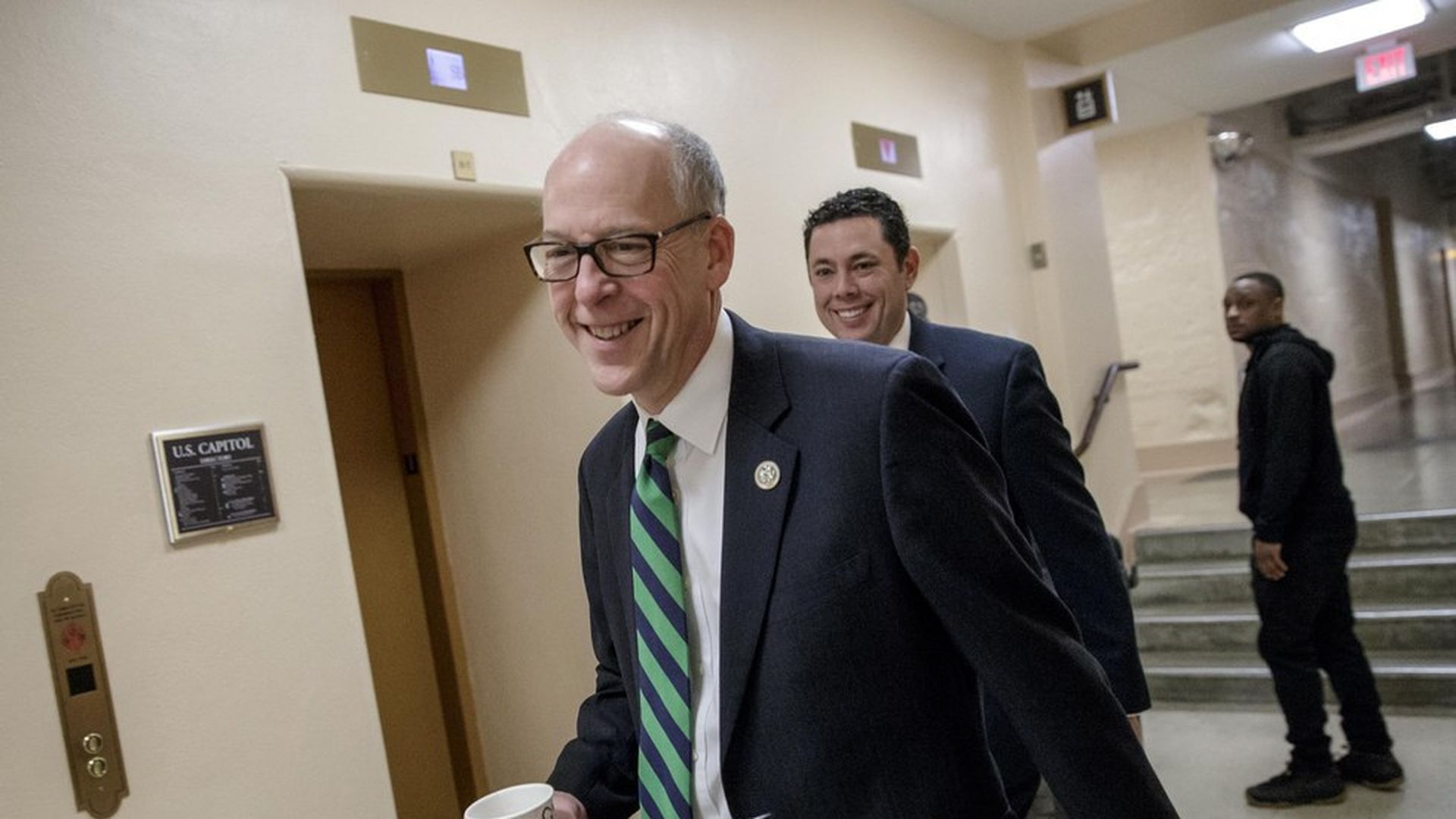
A top House committee is trying to push Silicon Valley companies to the table to craft an elusive legislative compromise on net neutrality. To that end, it's postponed the deadline for CEOs from those companies — Facebook, Amazon, Alphabet and Netflix — to respond to invitations to testify before the committee.
Robin Colwell, the top tech and telecom lawyer for the House Energy and Commerce Committee, told eight tech companies and internet providers in an email sent Monday that committee Chairman Greg Walden "has asked us to manage and execute a process that will allow him to quickly determine the current likelihood of forming a broad coalition of support for any particular set of deal terms."
"The Chairman has no interest in wasting anyone's time in this process," she said in the email obtained by Axios. "So all we are looking for at this stage is a list of asks."
A couple of U.S. airlines have gone faster than their rivals in using intelligent booking and management systems, and it shows in their share price, according to an artificial intelligence consultant firm.
Data: Noodle Labs; Note: Stock performance is percentage point difference between company's 5-year change and the industry.
Separate moves by China and Russia to crack down on VPNs came this weekend that are designed to further prevent citizens in both countries from accessing the full internet.
The trend here is towards major governments tightening their grip on the web. It's part of a wider balkanization of how access to content is regulated around the world. On the other end of the spectrum, for example, are the "right to be forgotten" rules that have empowered European users who want certain content about them removed from search results.
Our thought bubble: Where do companies draw the line? Watch how American tech giants respond to these new regulations, starting with the Russian law that goes into effect in November. They can accommodate governments, as Apple did in China, and keep those markets open — or they can skip town and take the hit.
While Uber works to find a new CEO, rival Lyft is adding a new board member: Valerie Jarrett, a former Senior Advisor to President Obama and Assistant to the President for Public Engagement and Intergovernmental Affairs.
The job: Jarrett is Lyft's first independent board member. The ride-hailing company says it's been looking to hire one for the past several months, and Jarrett is best suited thanks to her experience in both the private and public sectors, including as commissioner of Chicago's planning department and chairing the city's transit board. Lyft co-founder and CEO Logan Green shares this type of experience with Jarrett; in college, he served on his local transportation board.
This week, the company behind the Cochlear implant announced a new version of its processor that connects wirelessly to an iPhone. That means anything on the phone — calls, movies on Netflix or songs from iTunes — get streamed right into the ear of those with severe to profound hearing loss.
Why it matters: The new Cochlear-iPhone connection highlights one of the most important trends in the mobile industry. Whereas once it was all about the changes being made to the phone itself, now even basic smartphones are so powerful that the most impactful innovation is coming from all the things that connect to the phone. Medical devices, which typically take longer to come to market because of regulatory approval, but promise to shift this from matters of convenience to improving and ultimately extending life.