Wednesday's technology stories

Uber says it found one stolen file in self-driving dispute
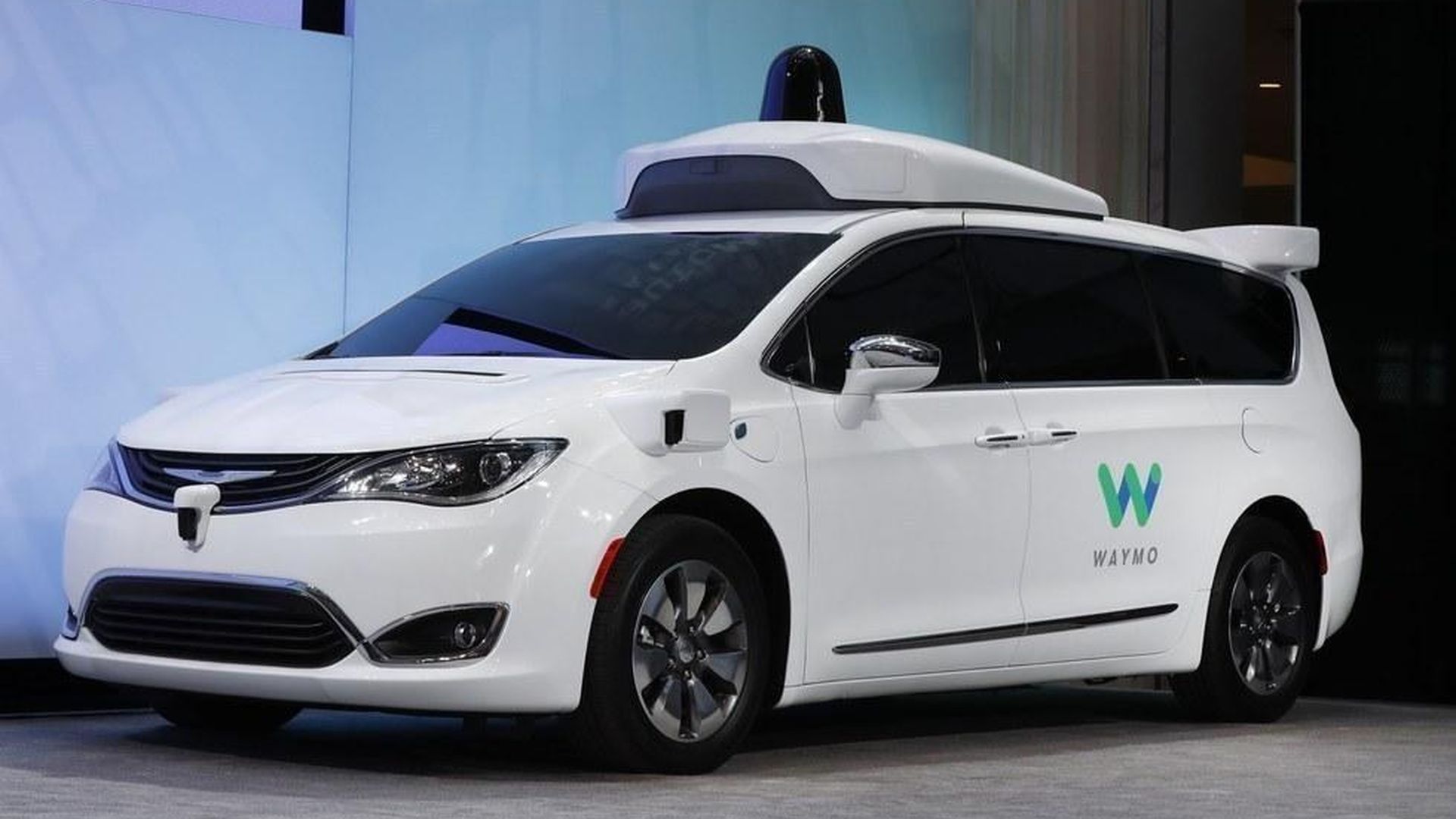
Uber's lawyers told a federal judge on Wednesday that they've found at least one of the files Waymo, Alphabet's self-driving car unit, claims former employees stole before joining Otto, a self-driving tech company now owned by Uber, according to TechCrunch.
The file was found on the personal computer of Sameer Kshirsagar, and is the first such file—out of an alleged 14,000—Uber has admitted to locating.
Uber said it interviewed 85 current and former employees, has searched the computers of 10 employees, as well as the company's internal repositories for the stolen documents, but found nothing "substantive." Uber also argued that Waymo's delay in filing the lawsuit shows the documents aren't aren't crucial enough to merit the injunction Waymo is seeking.
On-going challenge: Anthony Levandowski, the Otto co-founder and former Alphabet employee at the center of the case, has exercised his Fifth Amendment right and declined to provide documents in his personal possession, making it difficult for Uber to conduct a thorough search.
Next: A hearing on the preliminary injunction request is set for May 3.

Polls: Public opposes internet privacy rollback

Two recent polls say that public opinion is tilted against the Republican maneuver that overturned privacy rules for broadband providers like Comcast and AT&T.
- Priorities USA, a liberal group, says that 83 percent of voters polled opposed passing the measure and six percent supported it. Sixty-six percent of people who strongly approved of the job President Trump has been doing opposed the measure. The poll was conducted by Civis Analytics with a margin-of-error of plus-or-minus 3.1 percent.
- A Huffington Post/YouGov poll found that almost three quarters of people thought Trump should veto the measure (he signed it). It had a margin of error of 4.1 percent.
Why it matters: The use of an obscure law to roll back the rules has triggered significant press attention, and Democrats hope it will help them get the edge on vulnerable Republicans who voted for it. Whether that's the case remains to be seen.
Democrats keep hammering on internet privacy
Democrats are trying to keep alive the controversy over Congress overturning privacy rules for broadband providers before they could go into effect.
- House Democrats on the Energy and Commerce Committee used a hearing on wireless spectrum on Wednesday to drive home their concerns, to the frustration of Republicans. "I'm just telling you that this is not what it's been made out to be," said Republican Greg Walden, who chairs the full committee.
- Eight Democratic Senators wrote to major internet providers asking about their privacy practices. They encouraged each company to "provide your subscribers with the same level of privacy and security protections as stipulated in the FCC's broadband privacy order."
Why it matters: Democrats have already indicated they think this issue has legs, with some of the party's campaign arms using the vote to hammer Republicans. For example, the Democratic Congressional Campaign Committee deployed robocalls letting swing voters know that their representative voted in favor of overturning the privacy rules. Politico's Alex Byers detailed other efforts. This is also red meat for the Democratic base. Liberal groups are outraged by the rollback of the rules, which President Trump signed this week.
What we're watching: Whether constituents bring this issue up with their representatives during the coming Congressional recess.

Comcast is finally ready to talk about its cell service plan
After months of delays, Comcast is hosting a Webcast on Thursday morning to offer details on its long-planned cell phone service. The company isn't building its own cell network, but rather tapping an existing deal that lets it resell service from Verizon. It also has a big Wi-Fi network it can use to cover a lot of places.
Among the details we will be watching for:
- How much does Comcast focus on price vs. any other differentiator
- What is its level of support for popular phones, including the iPhone, Samsung Galaxy, etc.
Why it matters: The U.S. market is already pretty competitive, but Comcast wants to be able to offer a quad play (cell and home phone service, TV and Internet), especially now that AT&T has moved deeper into video with its DirecTV purchase.
Disclosure: Comcast is an investor in Axios through NBC.
Facebook tests a free version of its workplace chat tool
Facebook wants more companies to use its workplace chat tool, so it's beginning to test a free version.
The details: The free version will be called Workplace Standard, and will be similar to the paid version, though it won't include analytics tools and administrator controls, the company told news outlets. Facebook released the premium version of Workplace in October and has signed up companies like Starbucks, Viacom, and Campbell's.
Targeting smaller companies: Facebook's aim with this free version is to get smaller businesses that wouldn't want to pay for the full version. A free version can also help the service spread in emerging markets, like India.
The competition: Though Facebook is a bit different, it will still compete with other workplace communications tools like Slack, HipChat, Microsoft Teams, and Google's new Hangouts Chat.

Uber drivers have spent over $1.3b through the app's Instant Pay
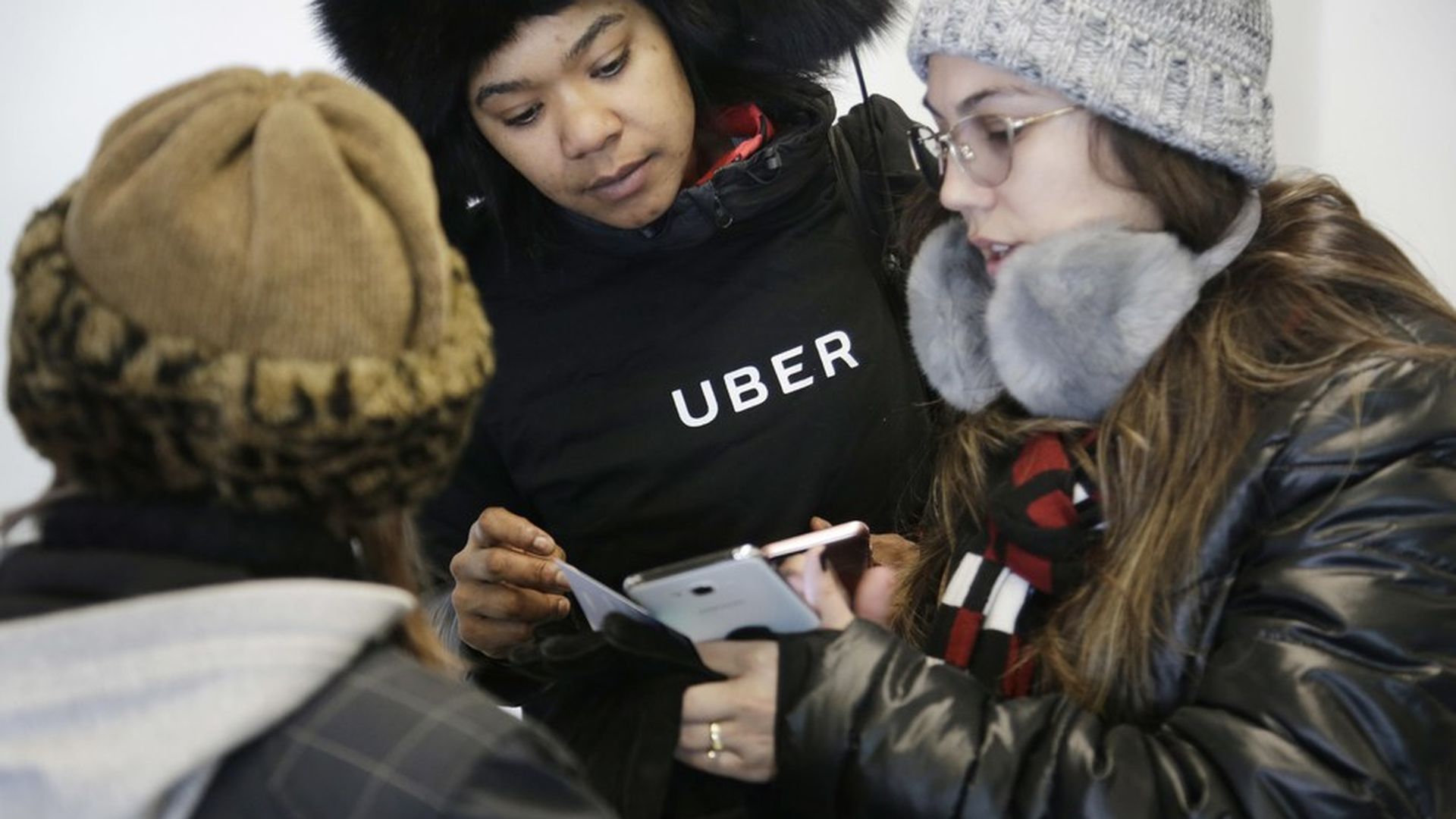
Uber's Instant Pay — which lets Uber drivers use the money made from rides to purchase goods right away, rather than wait for the money to be deposited in their bank accounts — has led to over $1.3 billion in transactions in its first year alone, reports TechCrunch.
The feature launched last year with GoBank and a dedicated Visa card, and has since opened up the program to most U.S.-accepted cards. Uber says expansion has led to "hundreds of thousands" of signups and has encouraged the ride-sharing company to widen the feature once again. Now, essentially all U.S.-based drivers, UberEATS, and delivery cars will have access to the program.
Google's former self-driving car guru raises cash for his own startup

Aurora Innovation, the stealth startup founded by the former CTO of Alphabet's self-driving car project, has raised over $3 million in venture capital funding, according to an SEC filing.
Facebook debuts tools to tackle "revenge porn"
Facebook is rolling out new features to help users report suspected "revenge porn," or intimate images of a person shared online without their consent, and block users from reposting the images.
The details: Users can report suspicious images, which are then vetted by Facebook staffers. The company says it will deploy "photo-matching technologies" to recognize if users are trying to share the image again — across Facebook and its Facebook Messenger and Instagram apps — and stop them from doing so.
Why it matters: The sharing of explicit images without the permission of their subjects has become a pernicious and persistent problem online, including on Facebook. It recently emerged that explicit images of female members of the military were shared in a Facebook group called "Marines United," which had thousands of members. The issue has attracted attention from Washington, as well.

Trump's 2013 tweets on Syria tell a different story

President Trump's statement on the Assad regime's chemical attack today in Syria pulled no punches in blaming the Obama administration:
Today's chemical attack in Syria against innocent people, including women and children, is reprehensible and cannot be ignored by the civilized world. These heinous actions by the Bashar al-Assad regime are a consequence of the past administration's weakness and irresolution. President Obama said in 2012 that he would establish a "red line" against the use of chemical weapons and then did nothing. The United States stands with our allies across the globe to condemn this intolerable attack.
But Trump's tweets around the time that President Obama considered seeking congressional approval for military action in Syria — an idea discarded after the Syrian government agreed to destroy its chemical weapons stockpiles on September 10, 2013 in an agreement jointly negotiated with Russia — indicate an agreement with Obama's ultimate decision not to act, if not his methods.
Judge temporarily blocks Seattle Uber drivers from unionizing
U.S. District Judge Robert Lasnik granted a request by the U.S. Chamber of Commerce to temporarily block the city of Seattle from implementing a new law that allows drivers of ride-sharing companies — like Uber and Lyft — to unionize, reports Bloomberg.
The first of its kind, the law was passed in the Seattle city council back in December 2015, but was disputed by a series of organizations, including Uber and anti-union group Freedom Foundation. Uber's suit was tossed out of court in March, but scored a temporary victory when Lasnik determined that the measure would disrupt ride-hailing businesses in "fundamental and irreparable ways" and that it should be blocked until the case is settled.
AT&T tests homegrown networking gear that boxes out Cisco and Juniper
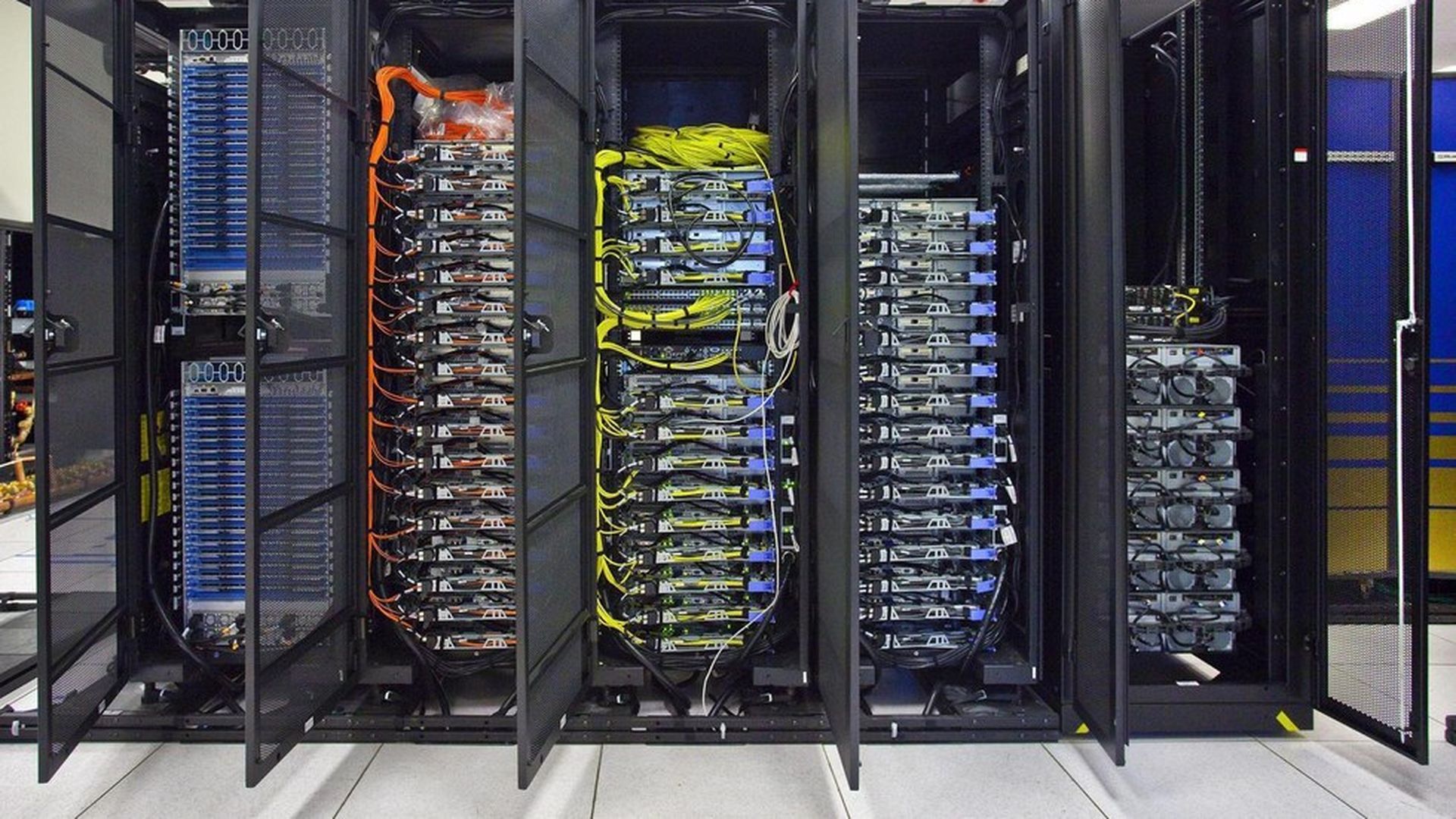
AT&T is making a rather nerdy announcement Tuesday about "white box" networking gear, but it's actually a rather big deal. Last week, the company started putting real network traffic onto hardware that it put together from a variety of chip, hardware and software partners. The test network gear comes in a couple flavors and was placed in San Francisco and Washington, D.C.
Who is involved: AT&T is working with a tiny software start-up SnapRoute, which was started by a bunch of ex-Apple employees. Chip partners include Barefoot Networks, Broadcom, and Intel, while units of Delta Electronics and Edgecore Networks assembled the gear to AT&T's specifications.
Who is on the outside looking in: Traditional network gear makers Cisco and Juniper Networks aren't part of this and risk losing out on some serious business down the road unless they get a lot cheaper and more open, as this opens the door for AT&T to make its own networking gear.
Why it matters: Not only can white box gear be a lot cheaper to install, support and service, but AT&T also has far greater visibility into what's going on inside. With the test gear, AT&T executives say they can literally see what is happening with each packet of data, allowing for greater security as well as potentially opening the door to new lines of business. AT&T CTO Andre Fuetsch compared the increased visibility to the difference between an X-Ray and an MRI.
Why the Mac Pro proved so hard to upgrade

When Apple introduced its cylinder-shaped Mac Pro, it thought it had a product with a striking design that would meet the needs of a wide range of professional users for years to come. It turned out to only be the former.
Why it matters: Although the Mac Pro accounts for just a tiny, single-digit percentage of all Mac sales, professional users still make up some of the company's most important and most loyal customers.
In a candid admission, Apple executives said Monday that the round design actually boxed the company into a corner. While certainly a head-turner, the unique design imposed some strict limits on how much heat the machine could generate and also required the company to split intense graphics workloads among two modestly powered graphics chips.
Salesforce spent $3 million to close employee pay gap this year
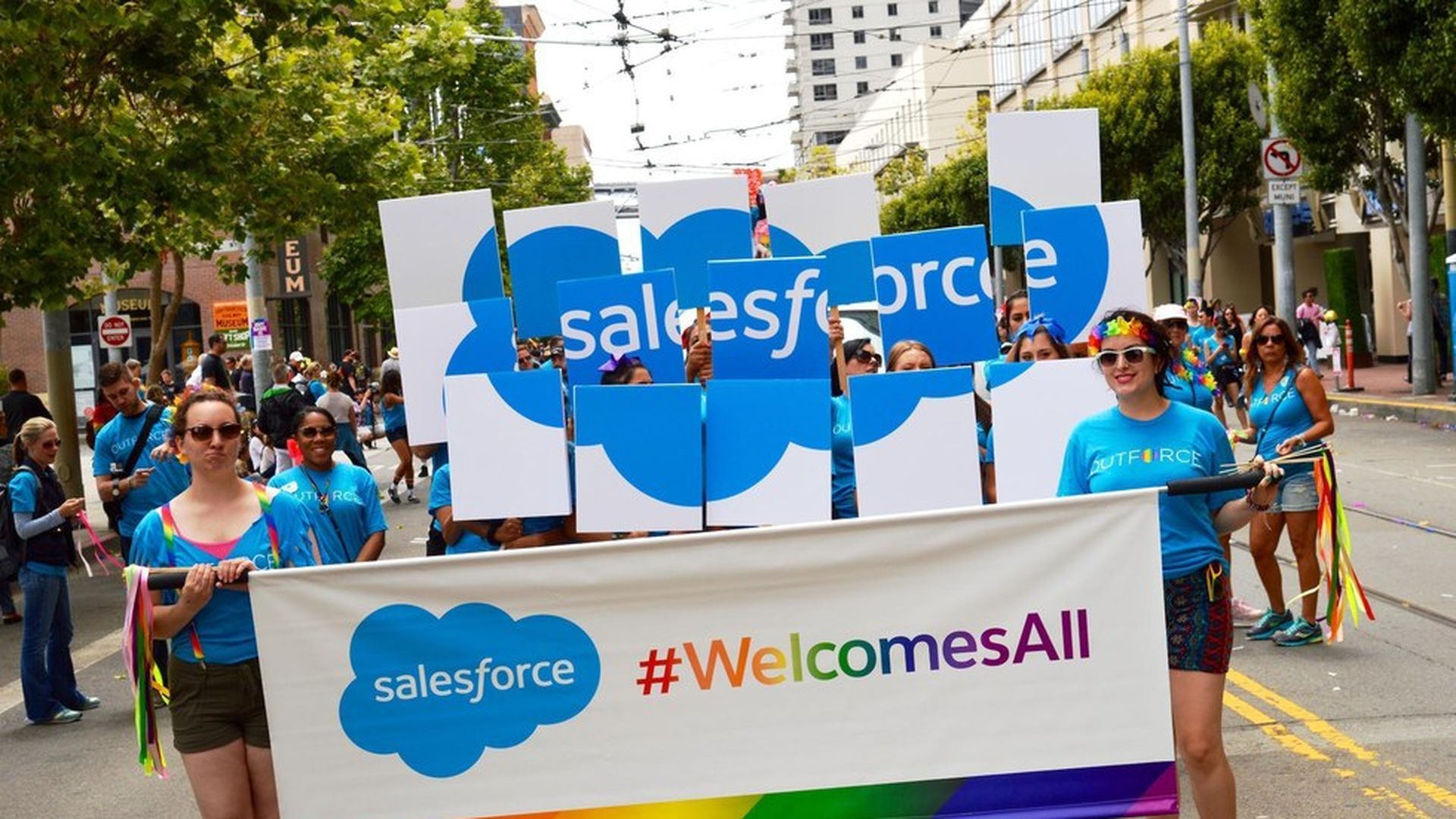
As part of its second annual audit aimed at closing employee pay gaps, Salesforce has spent about $3 million this year to adjust the compensation of 11% of its employees, the company said on Tuesday. It spent the same amount last year following its first audit.
Beyond gender: Although Salesforce's efforts to close the pay gap began with a focus on gender, the company has added race and ethnicity to its analysis of U.S. employee pay this year. It also took into account bonuses, not just salaries.
Diversity is still a challenge: Nevertheless, Salesforce's employees are still as diverse as the rest of Silicon Valley—meaning, not very. As of last year, women make up 30.1% of all employees, and hold 22.7% of tech jobs and 19.4% of leadership roles. Only 3.9% of employees are Latino, and 2.4% are black, according to Salesforce's diversity website.