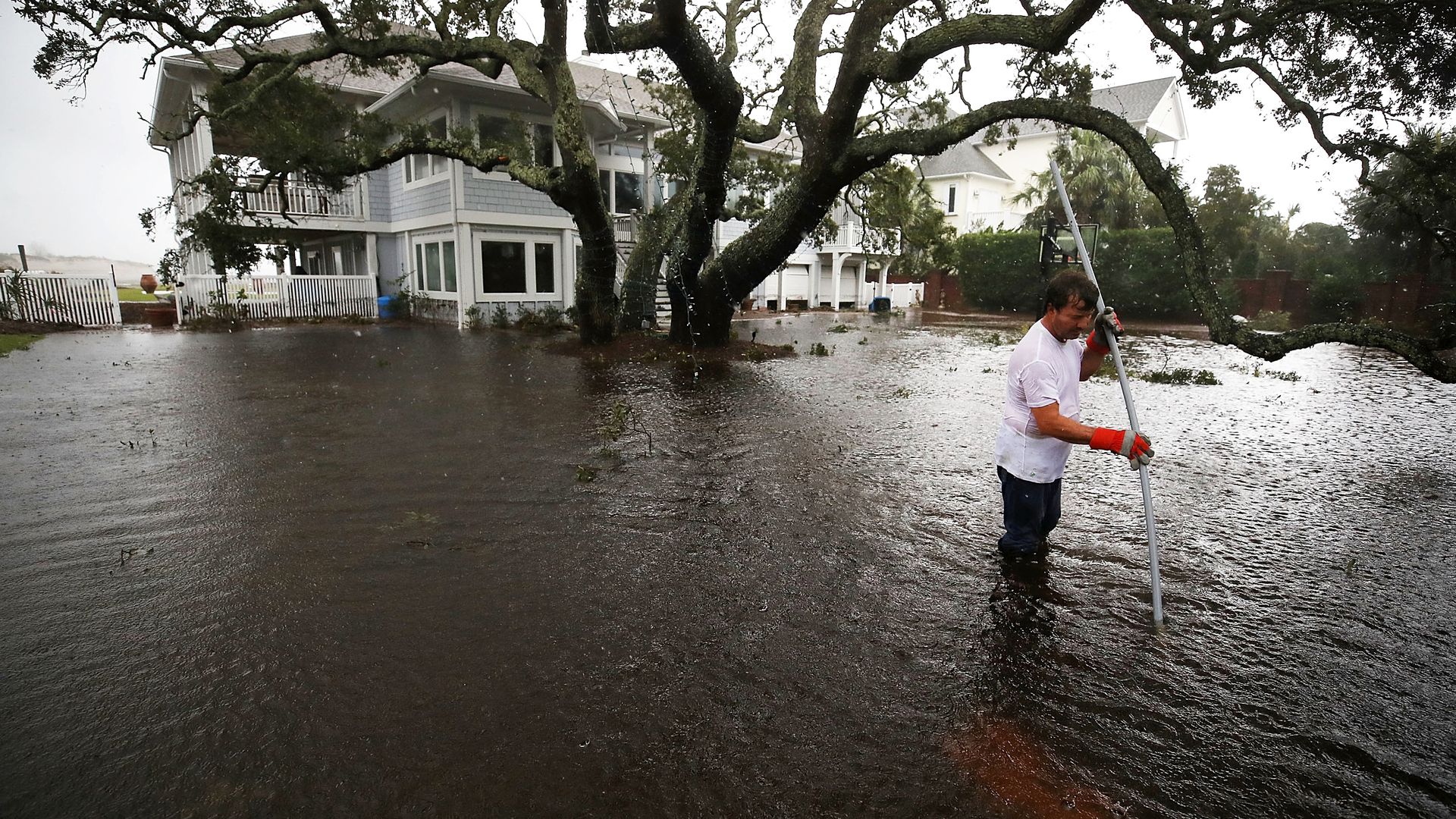
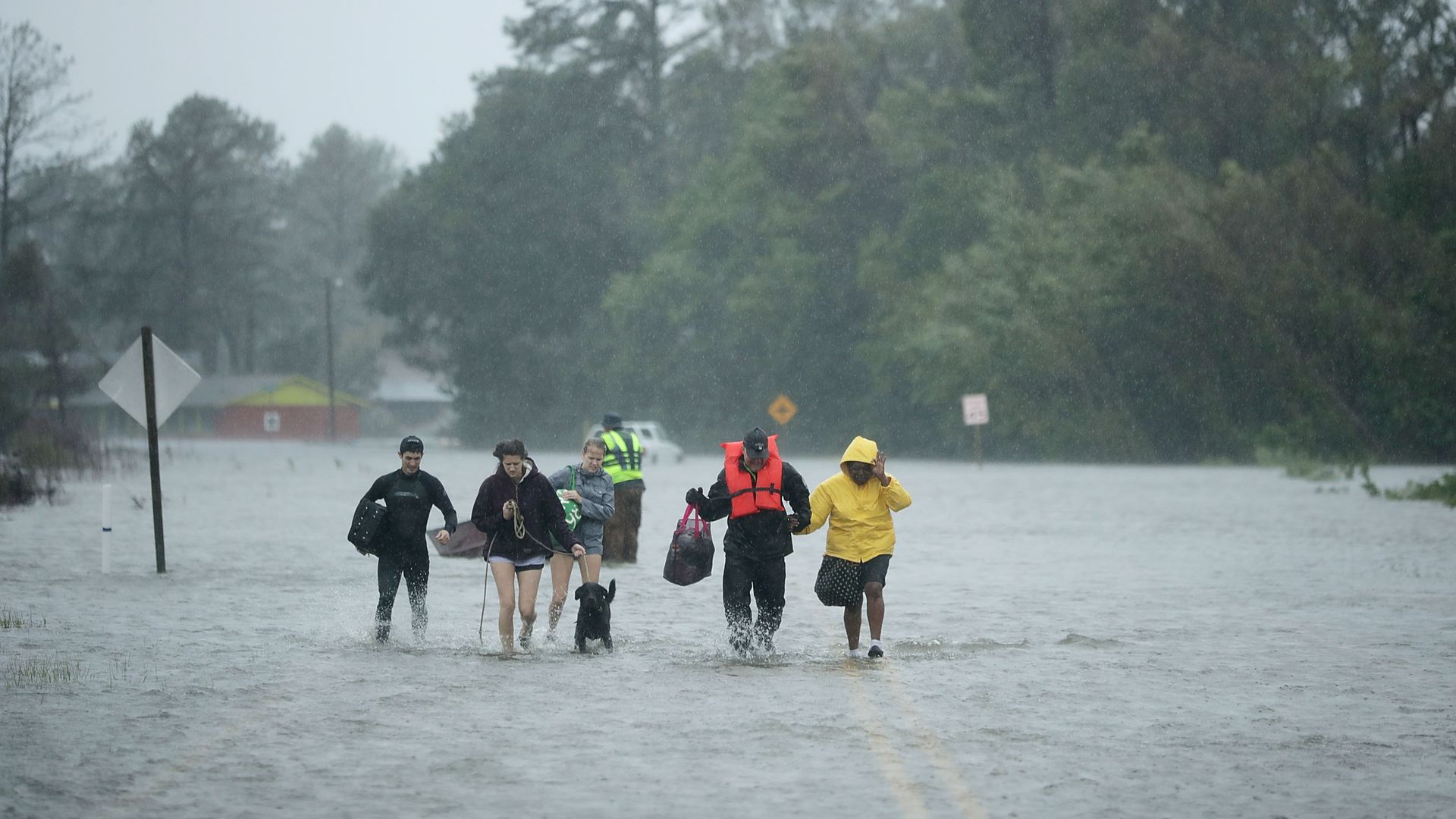
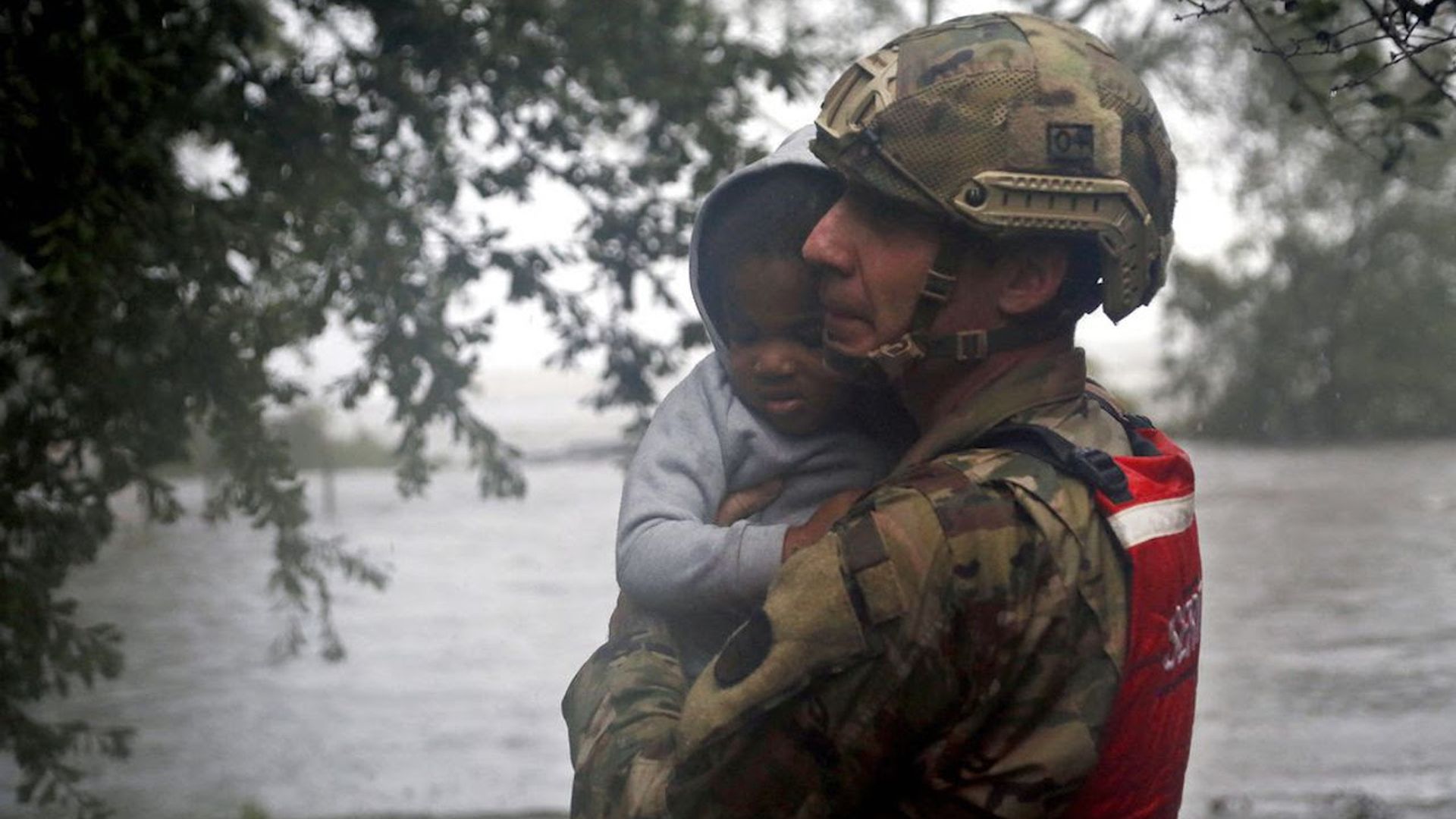
Portions of the Carolinas have been inundated by the heaviest amount of rain on record for this region, and torrential rain is still falling. Parts of southern North Carolina and northeastern South Carolina could see another foot or more of rain through the weekend, according to the National Weather Service.
The big picture: Flood levels could hit record highs at multiple locations during the next week. For example, the Cape Fear River near Fayetteville is projected to rise nearly 45 feet, to near 62.4 feet by Tuesday. Homes within 1 mile of the river were evacuated on Saturday.
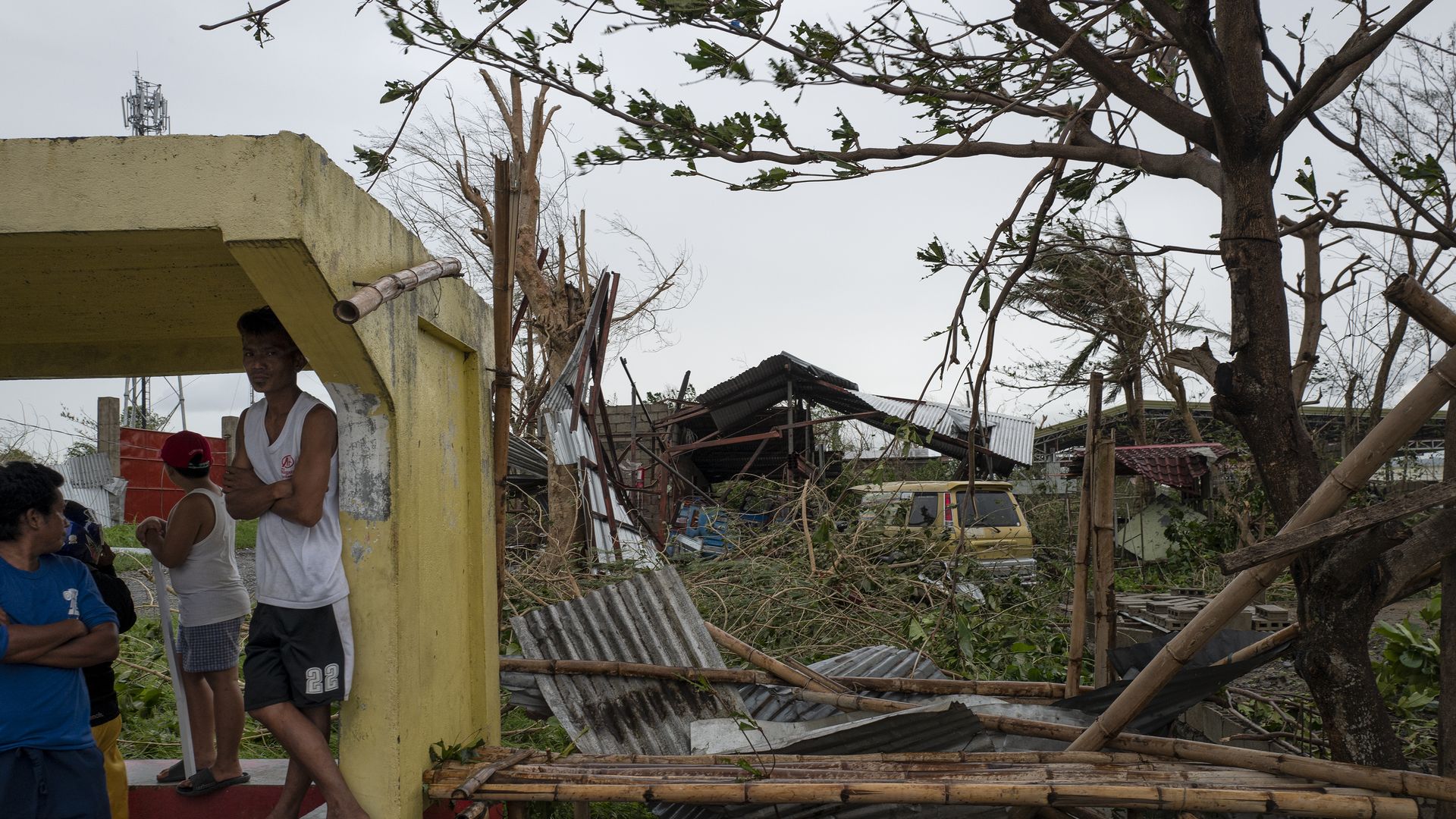
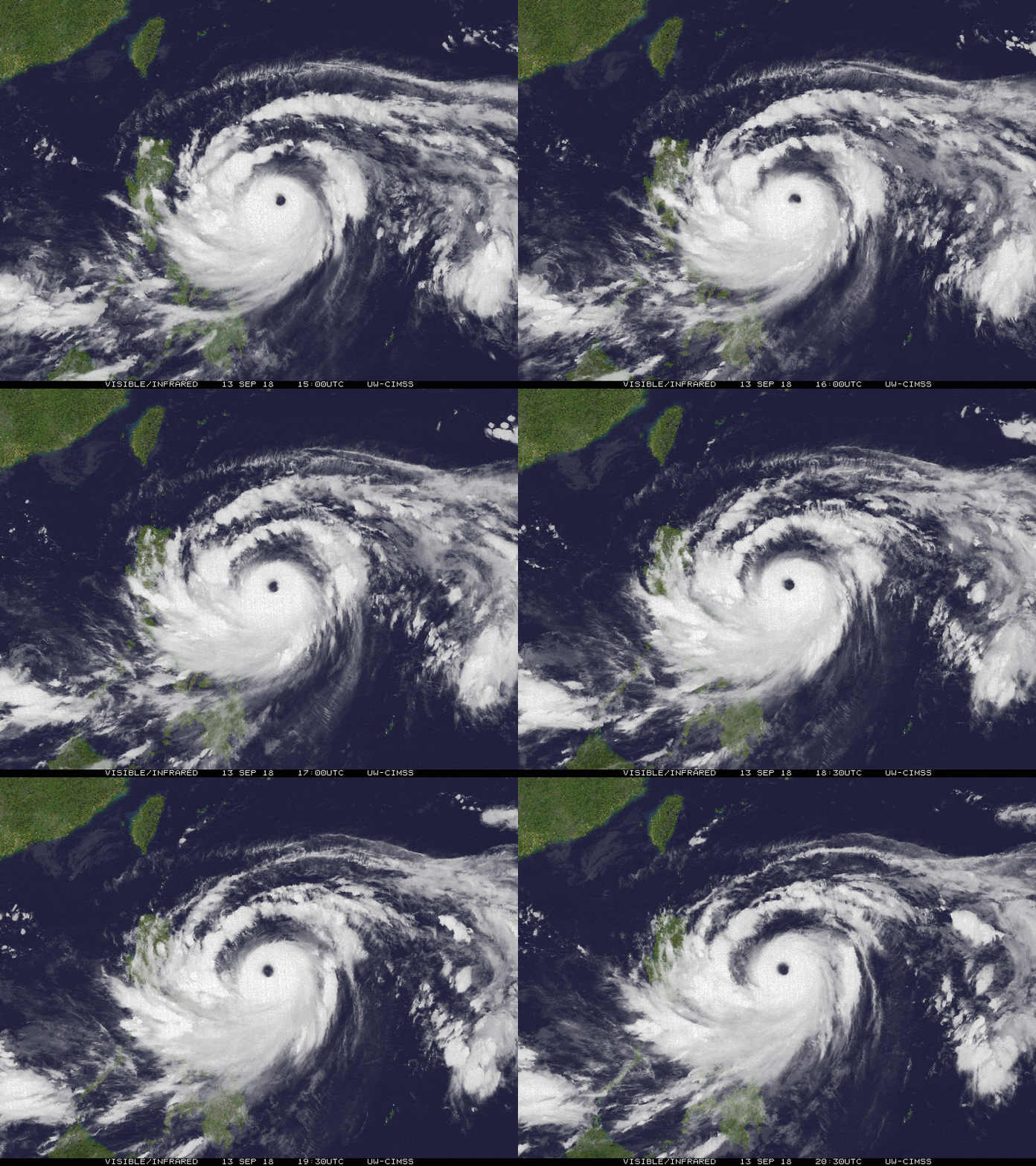
Super typhoon Mangkhut is making its way out of the Philippines and is now moving west toward China, reports BBC, after killing at least 14 people.
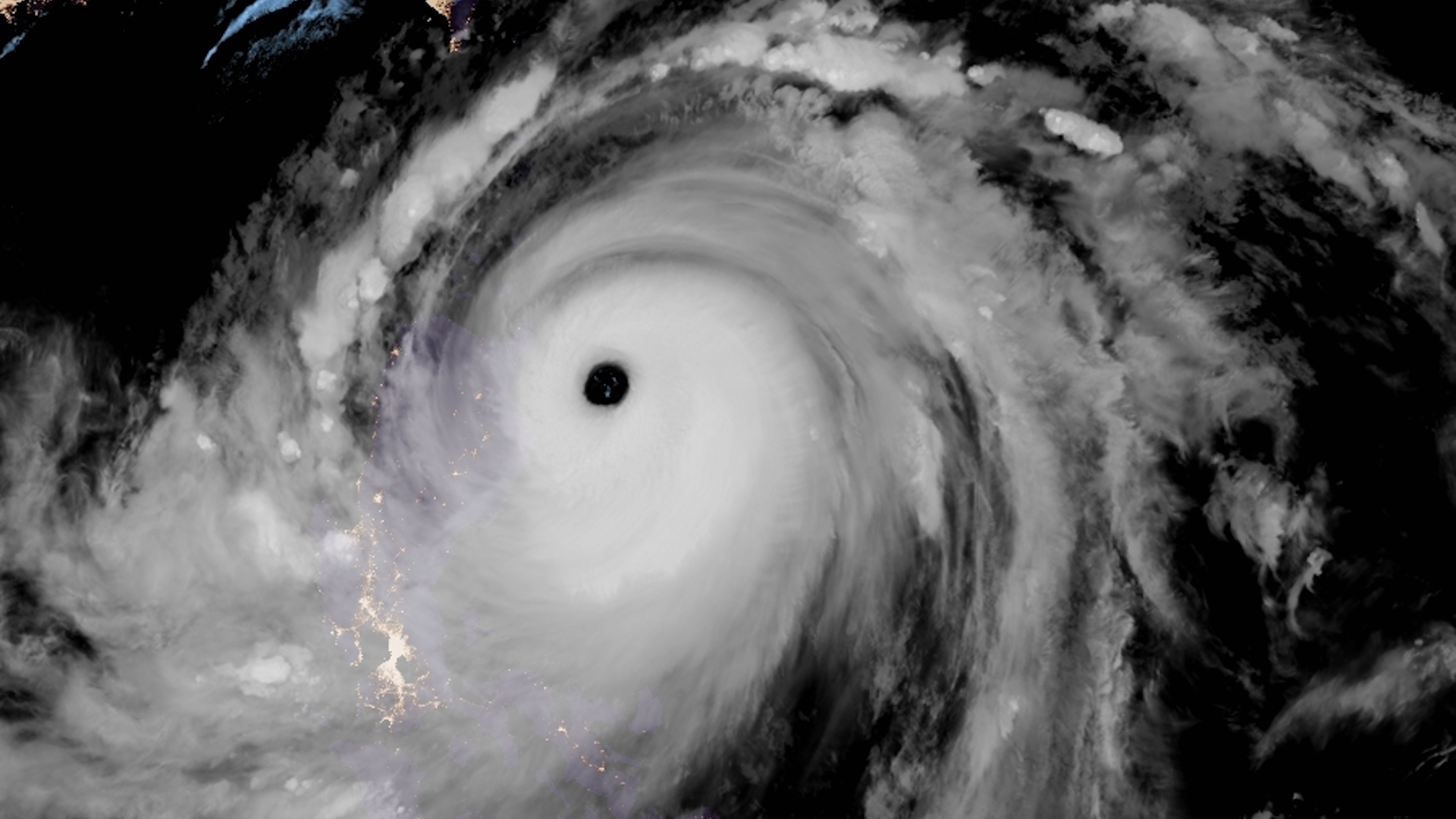
Why it matters: Mangkhut was one of the strongest storms on in the past two decades to strike northern Luzon, explains Axios Science Editor Andrew Freedman. It’s now a weaker system, but threatens to bring heavy rain, flooding, and damaging winds to China, including Hong Kong, during the next few days.
Hotels and airlines are relaxing their policies to offer refuge and support for those fleeing Tropical Storm Florence, including opening their doors for free and waving traditionally pricey rebooking fees for travelers.
The big picture: Millions were forced to evacuate before Florence hit the Carolinas hard on Friday. Conditions haven't let up as mandatory evacuations continue in parts of North Carolina. As of Saturday morning, at least seven had been killed as the storm crawls along the coast.
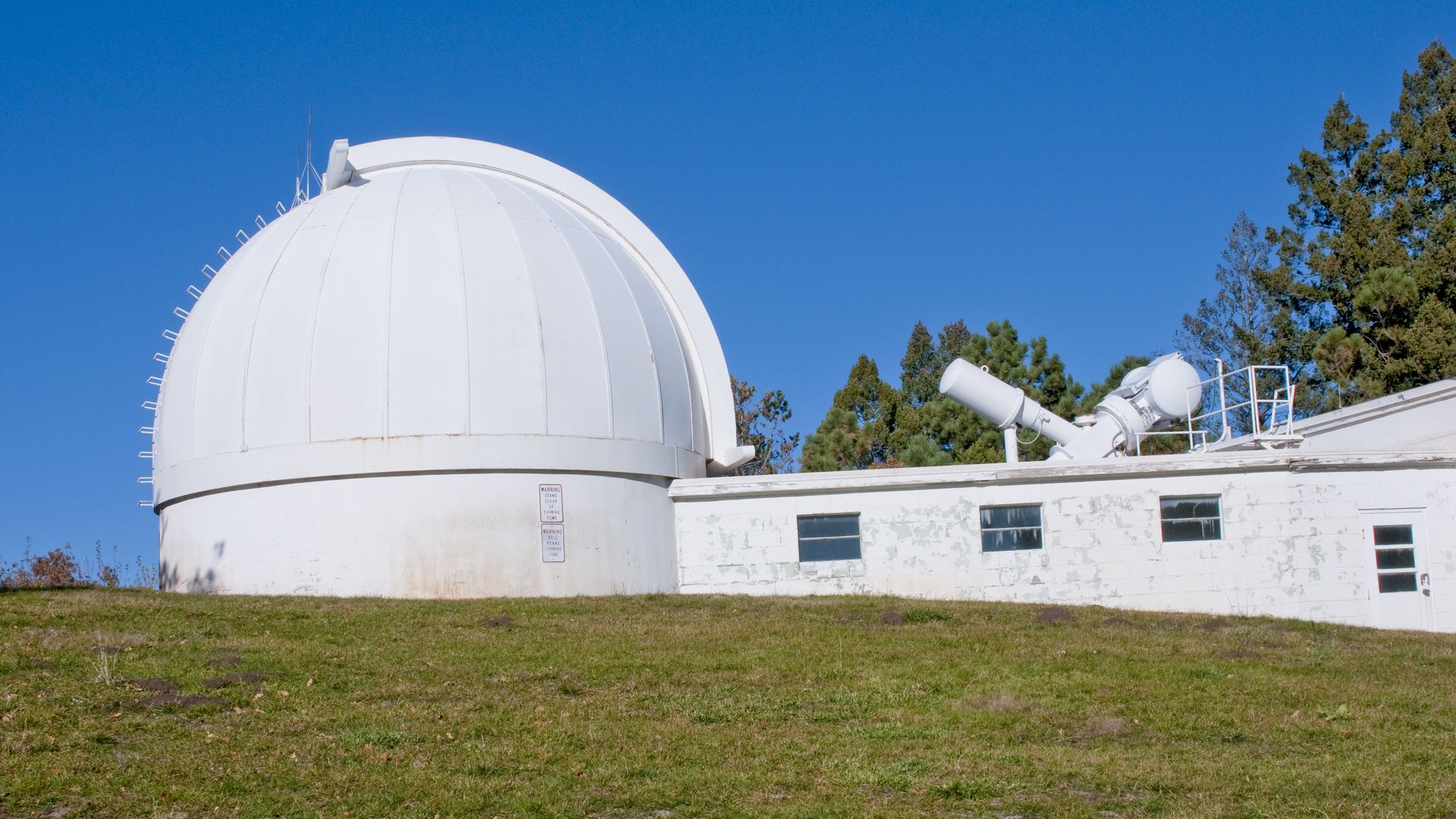
A cloud of suspicion has set in around a New Mexico observatory that was emptied of personnel suddenly last week for unknown reasons, and continues to remain empty, the Washington Post reports.
The details: Per the Post, the entrance to the National Solar Observatory has been "blocked by yellow crime scene tape," and security officers tasked with guarding the entrance said even they didn't know what had happened. A spokeswoman for the nonprofit that runs the observatory has said it "definitely wasn't aliens," per the Post, but speculation still remains.
North and South Carolina were hammered by Hurricane Florence after it made landfall on Friday. As of Saturday morning, at least seven have been killed as the storm continues its crawl along the coast.
The big picture: Axios' Andrew Freedman explains that the danger of Florence lies in "the surge and inland flooding from what is likely to be the worst tropical cyclone-related rainstorm in North Carolina history."
"Elon Musk’s SpaceX, demonstrating [his] penchant for showmanship, announced that it had signed up the first private passenger seeking to fly around the moon," per The Wall Street Journal's Andy Pasztor.
The details: "The identity of the passenger [is] expected to be disclosed Monday." Some industry officials say the rocket may be at least a year or two from an initial test flight, but "[o]thers speculated that, based on SpaceX’s history, the [rocket, dubbed the] BFR may not launch humans until the middle of the next decade."
Tropical Storm Florence's relentless rain is causing devastating flooding in the Carolinas and promises even more today.
The latest: A least seven are dead — including a baby, per CNN. The National Hurricane Center reported gusts over 105 mph on the Outer Banks. "The storm's center is crawling inland over South Carolina, but its main rain bands largely are over already-saturated North Carolina — setting up what may be days of flooding for some communities."
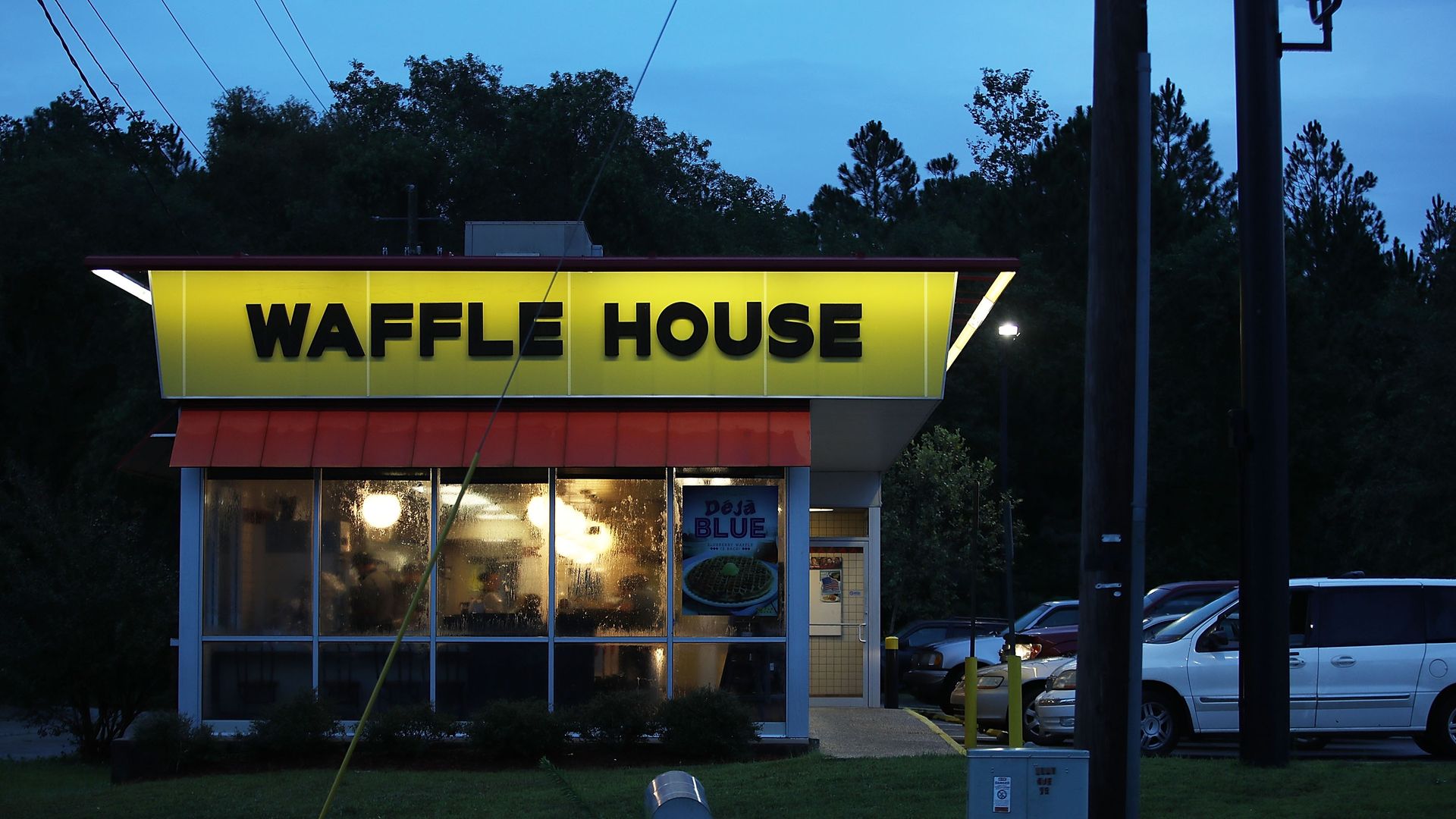
Waffle Houses throughout the South are being used to determine the damage and stability of communities in North and South Carolina as the state rides out Hurricane Florence.
How it works: The Federal Emergency Management Agency uses the "Waffle House Index" to determine if an establishment is offering a full menu. According to FEMA, "If a Waffle House can serve a full menu, they’ve likely got power (or are running on a generator). A limited menu means an area may not have running water or electricity, but there’s gas for the stove to make bacon, eggs, and coffee: exactly what hungry, weary people need."
Hurricane Florence roared onto the North Carolina coast at a snail's pace Friday, subjecting the coastline to more than 12 hours of punishing hurricane-force winds and pushing a massive storm surge inland. Based on a weakening of sustained wind, Florence has since been downgraded to a tropical storm.
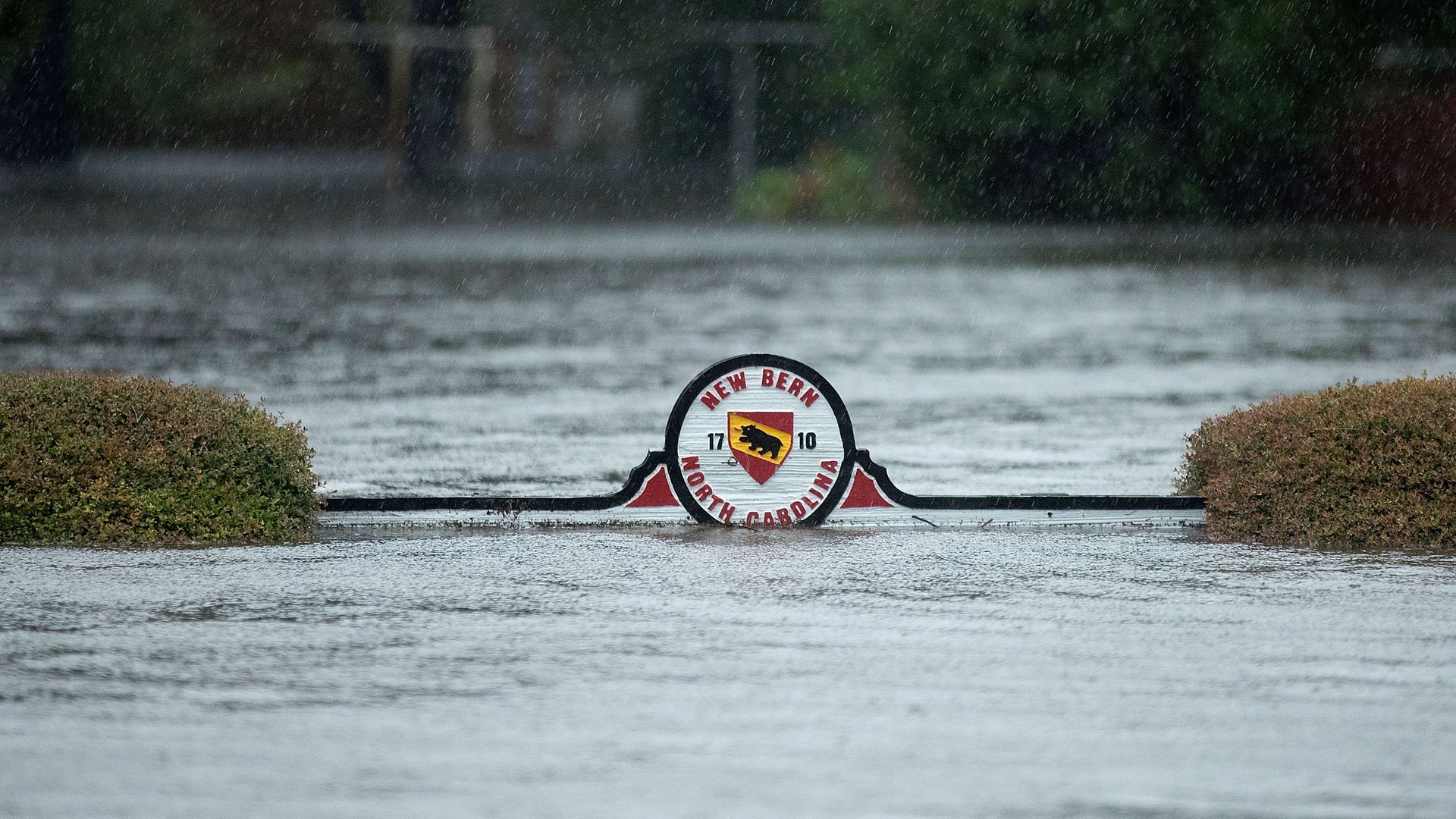
The big picture: The surge put a large portion of the community of New Bern underwater Thursday night and Friday. While winds are still gusting to greater than 100 miles per hour in some locations, the danger from here on out remains the surge and inland flooding from what is likely to be the worst tropical cyclone-related rainstorm in North Carolina history. In some areas, rain was falling at rates between 3 and 7 inches per hour.
While most of the attention in the U.S. has focused on Hurricane Florence, a far stronger storm has struck more vulnerable country, as Super Typhoon Mangkhut made landfall on the island of Luzon in the Philippines.
Why this matters: Mangkhut, which struck land Friday afternoon Eastern time, is one of the strongest typhoons to hit that country since the devastating Super Typhoon Haiyan virtually wiped the city of Tacloban off the map in 2013.
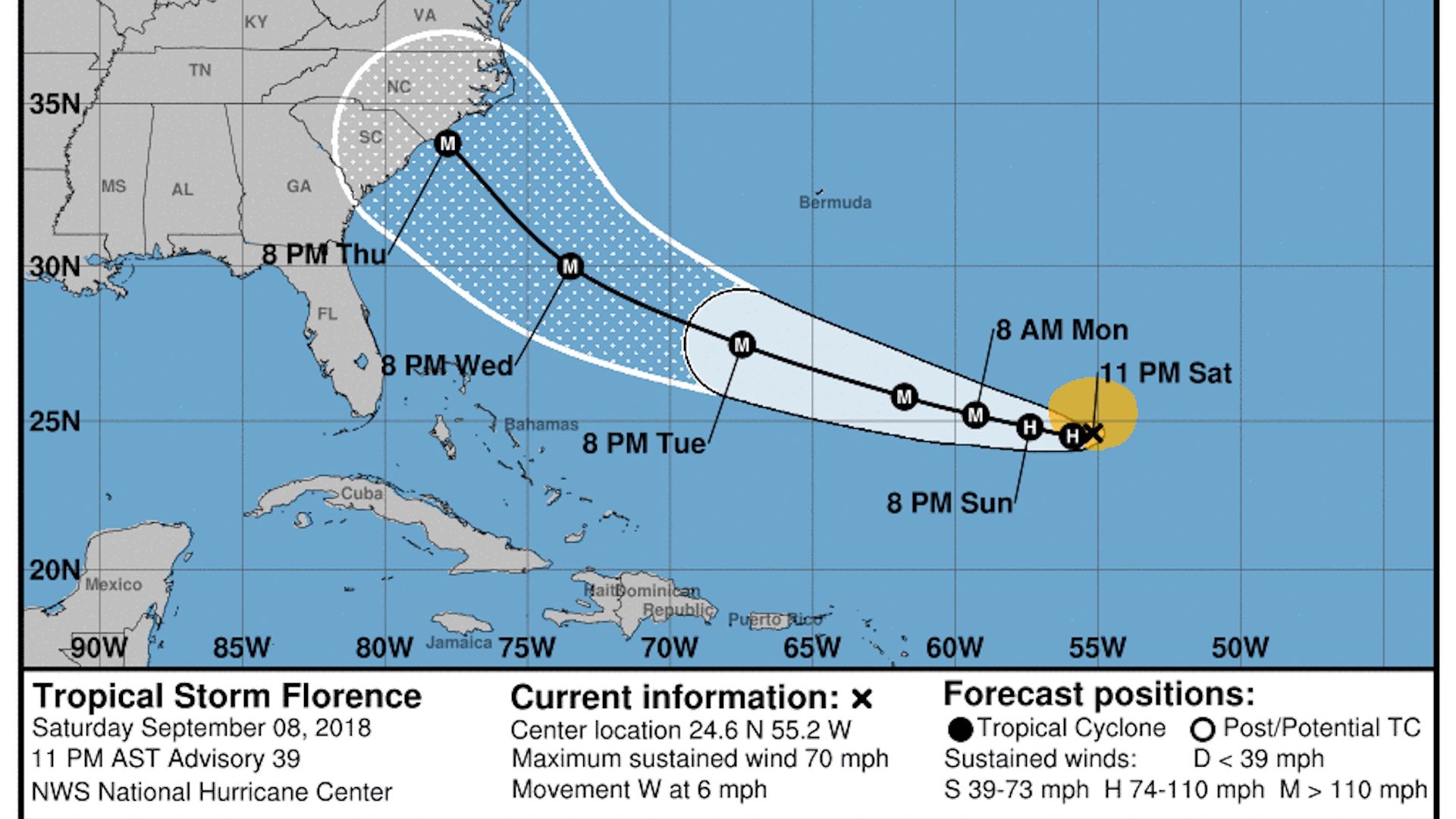
When it comes to hurricane track forecasts, the one that the National Hurricane Center issued for Hurricane Florence at 11 p.m. on September 8 may go down in history as the most accurate 5-day forecast they've ever issued — just 2 miles off target in the center of the "cone of uncertainty."
Why it matters: The average 5-day error is closer to 250 miles, to put that in perspective. The forecast provided residents of the Carolinas with 5 days of lead time to prepare for the storm, and alerted governors and emergency managers to start moving assets into position to respond to the storm.
Hurricane Florence made landfall in North Carolina around 7:15 a.m. on Friday morning. The storm's eye crossed the coast near Wrightsville Beach.
What's next: Florence is expected to move further inland across southeastern North Carolina and eastern South Carolina today and Saturday. Heavy rain, inland flooding and storm surge flooding will continue through the weekend. Axios' Andrew Freedman reported that there "are no historical analogs for Florence. Its forecast track is unprecedented, and its array and magnitude of threats are as well."
The most intense storm on Earth so far in 2018 is on track to hit the northern Philippine island of Luzon on Friday. Super Typhoon Mangkhut peaked in intensity at sustained winds of 180 miles per hour, equivalent to a Category 5 hurricane, and was expected to make landfall near full strength.
The big picture: On the other side of the world, Hurricane Florence is barreling towards the U.S. East Coast with sustained winds of 100 miles per hour. Mangkhut, with current sustained winds of 170 mph, is one of the most powerful typhoons to hit the Philippines since the disastrous Super Typhoon Haiyan ravaged the islands in 2013.