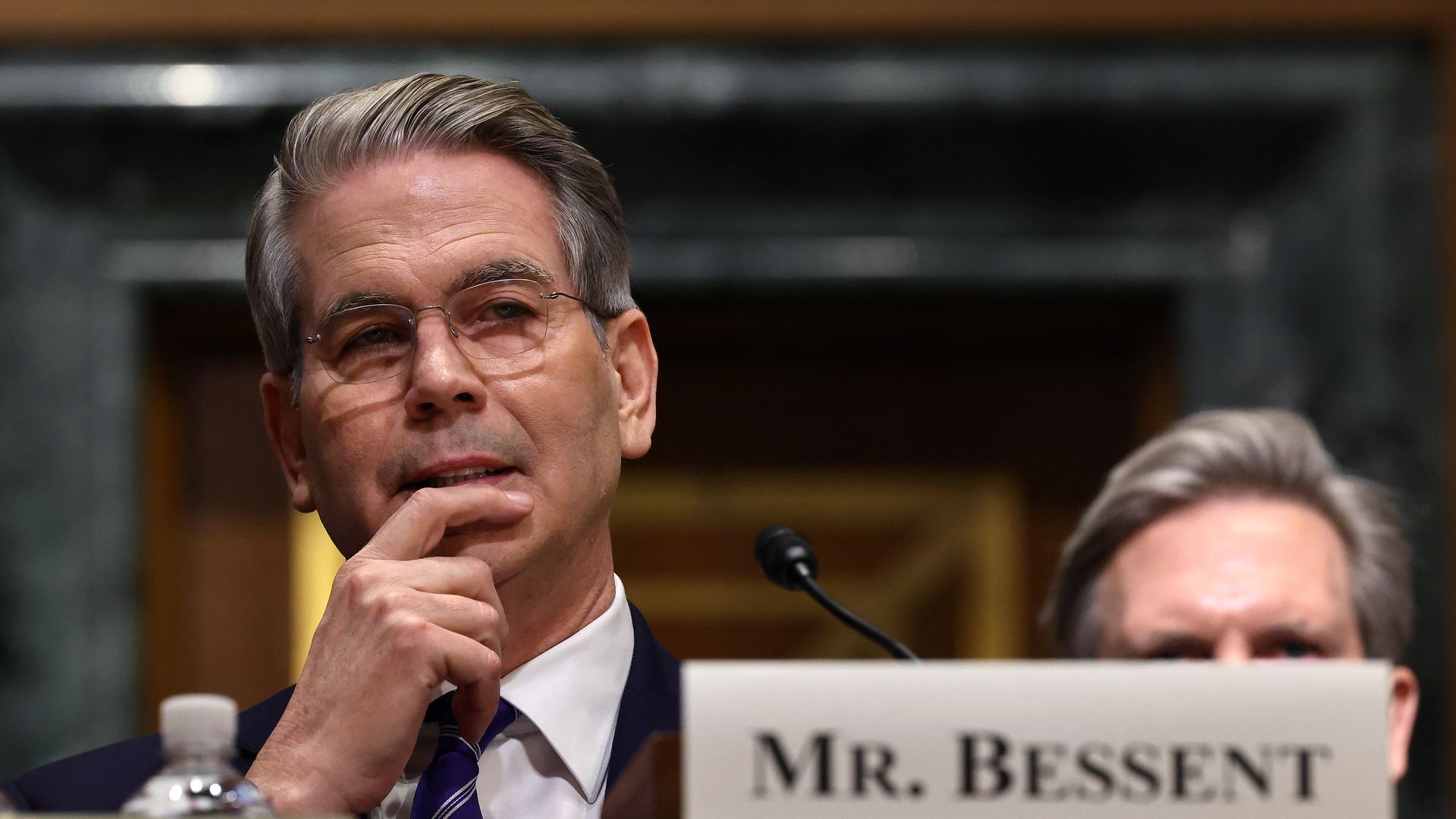
The Senate voted 68-29 Monday to confirm Scott Bessent to lead the Treasury Department.
Why it matters: A financier focused on global macroeconomics, Bessent will play a key role in shepherding administration efforts to extend the 2017 tax cuts and will be an influential voice on trade policy as Trump seeks to impose higher tariffs on U.S. imports.
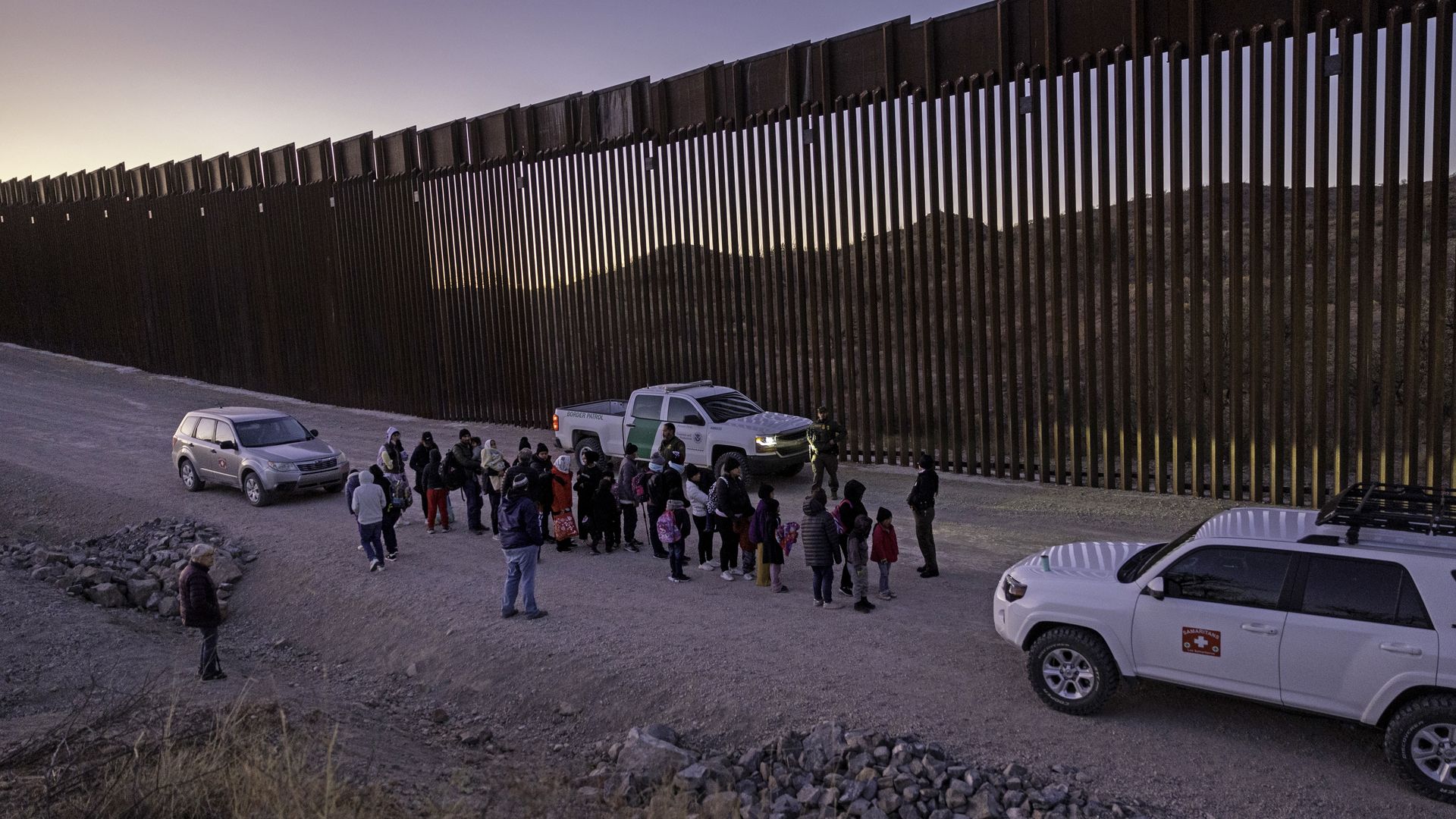
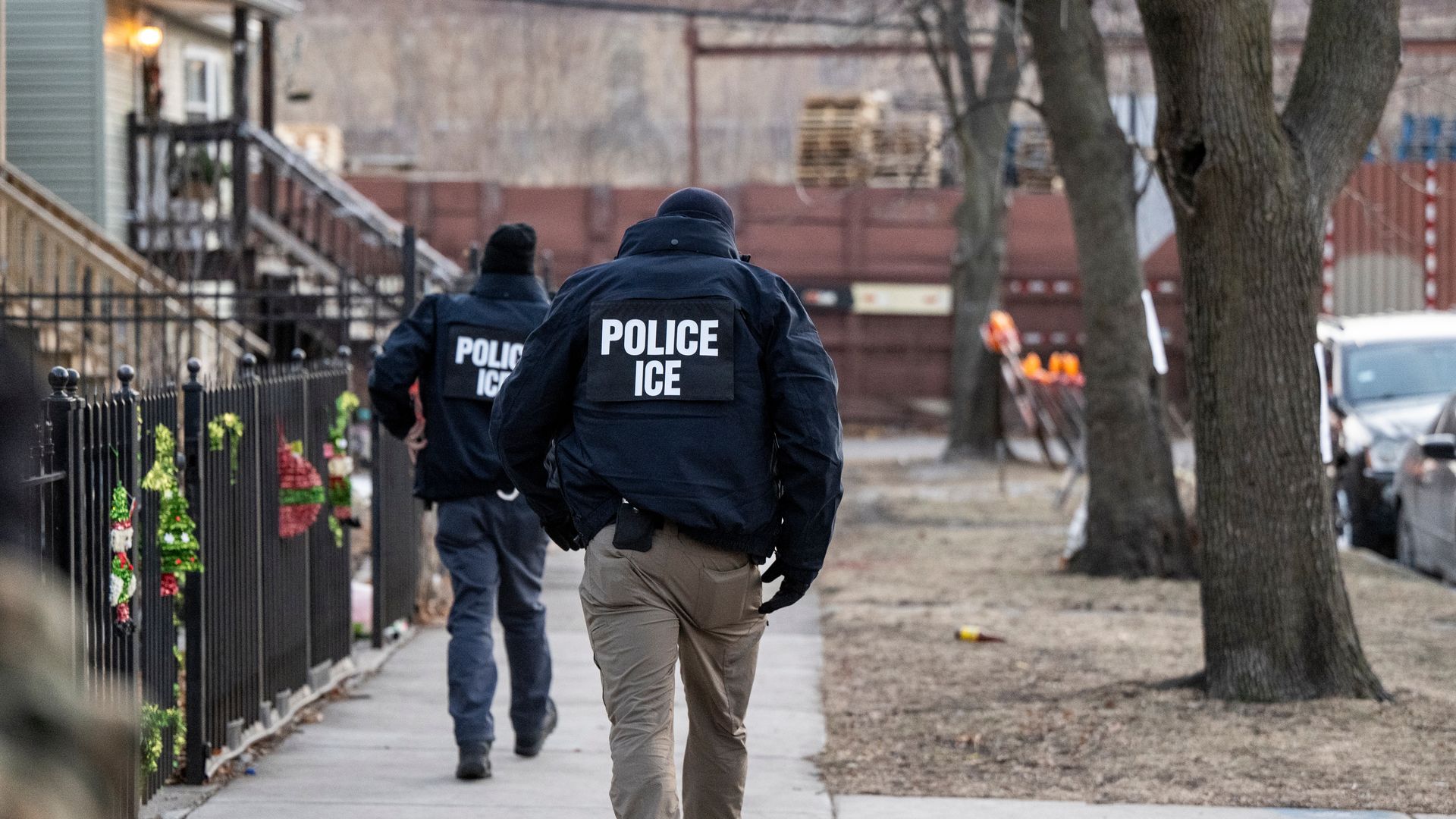
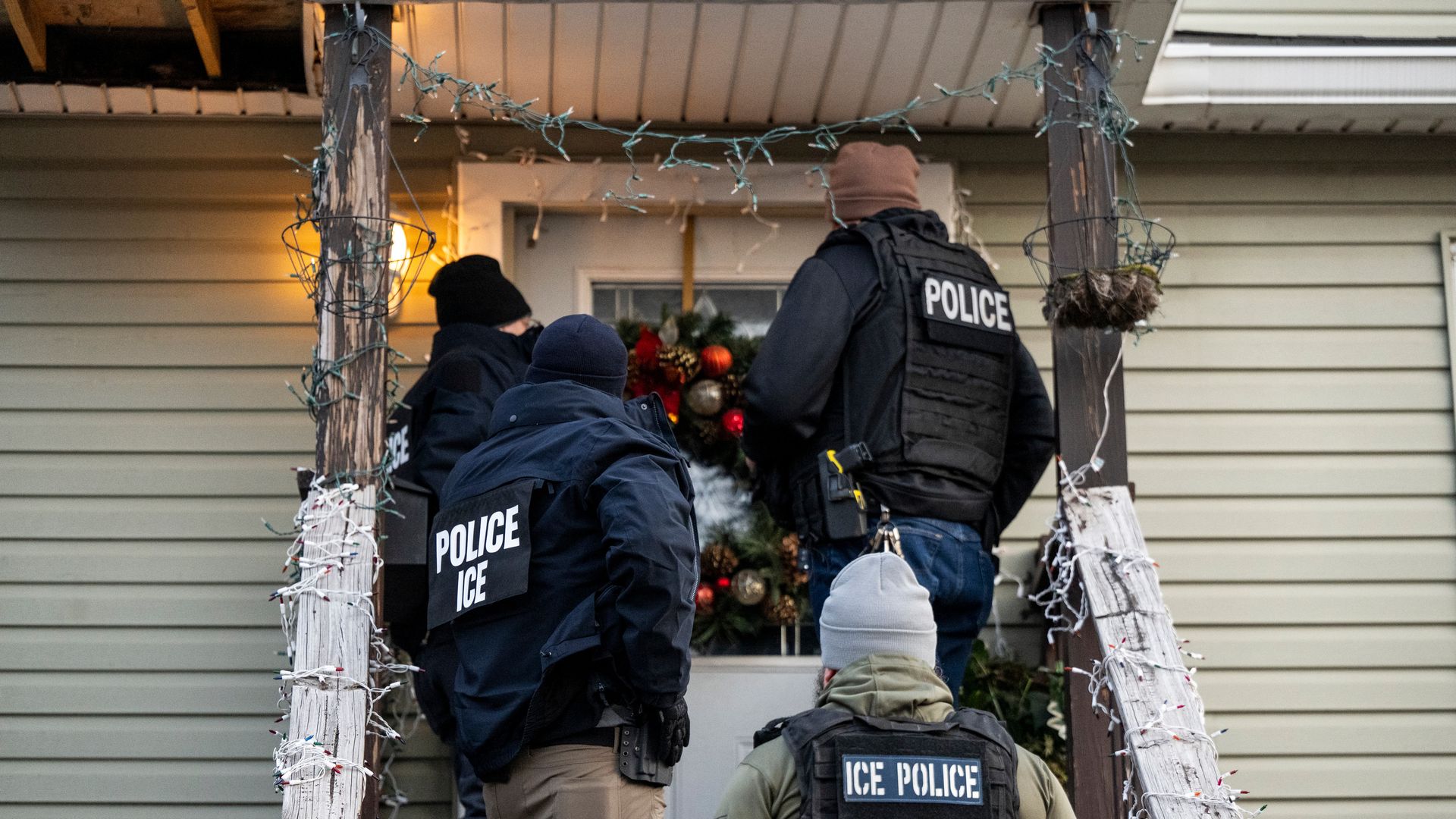
Immigrants across the U.S. have been on edge as they anticipate a wave of Immigration and Customs Enforcement raids ordered by the Trump administration.
The big picture: President Trump has already acted on his promise to crack down on undocumented immigrants through large-scale deportation. With more arrests and detainments to come, ICE's tactics are becoming clearer.
A collection of Quaker groups sued the Trump administration Monday over a policy allowing federal officials to arrest undocumented immigrants in "sensitive" spaces, like houses of worship.
Why it matters: The policy, issued as part of a bevy of measures meant to carry out Trump's long-promised immigration crackdown, reversed a long-standing federal policy against raiding spaces like churches and schools.
Some leaders in agriculture, food service and health care are urging the Trump administration to craft an immigration policy that "removes dangerous individuals" but "protects law-abiding immigrant workers who are vital" to their sectors.
Why it matters: The bipartisan group says President Trump's pledged mass deportations could gut their industries and drive further inflation for consumers.
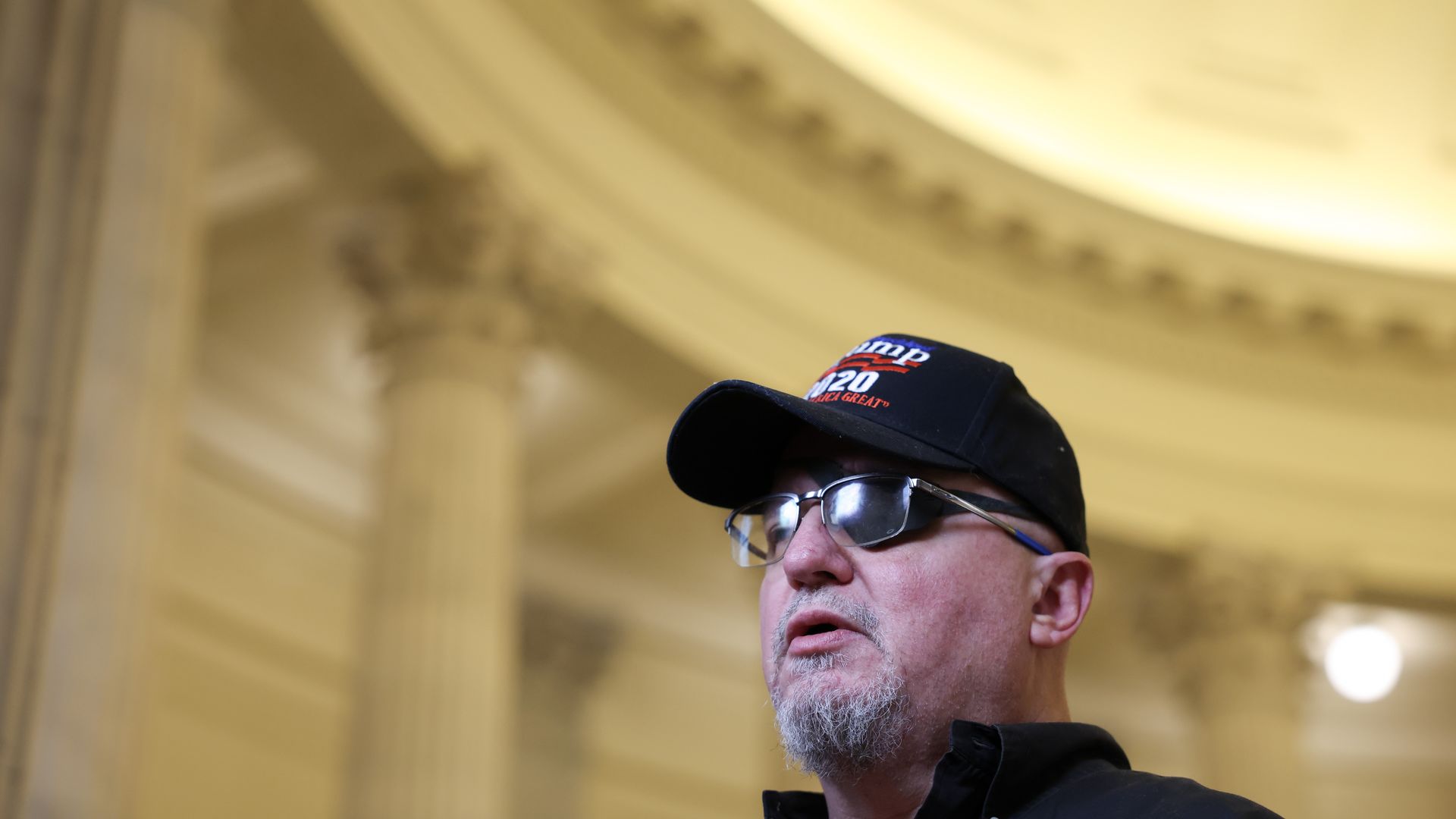
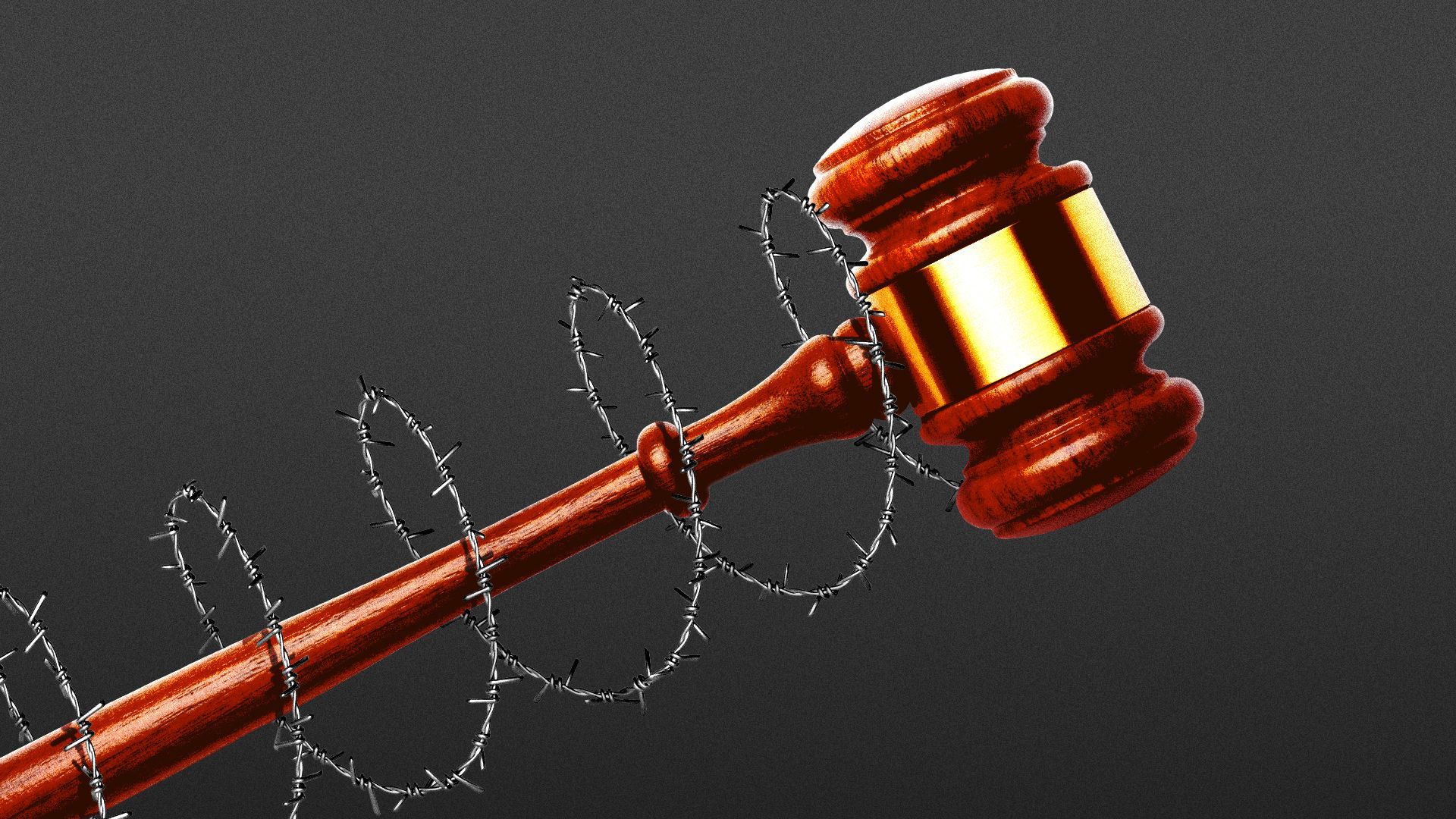
The travel restrictions placed on eight Jan. 6 defendants whose sentences were commuted by President Trump will not be enforced, a federal judge ordered Monday.
The big picture: The group contains some of the most notorious names charged in the attack, including Stewart Rhodes, the founder of the far-right militia group the Oath Keepers.
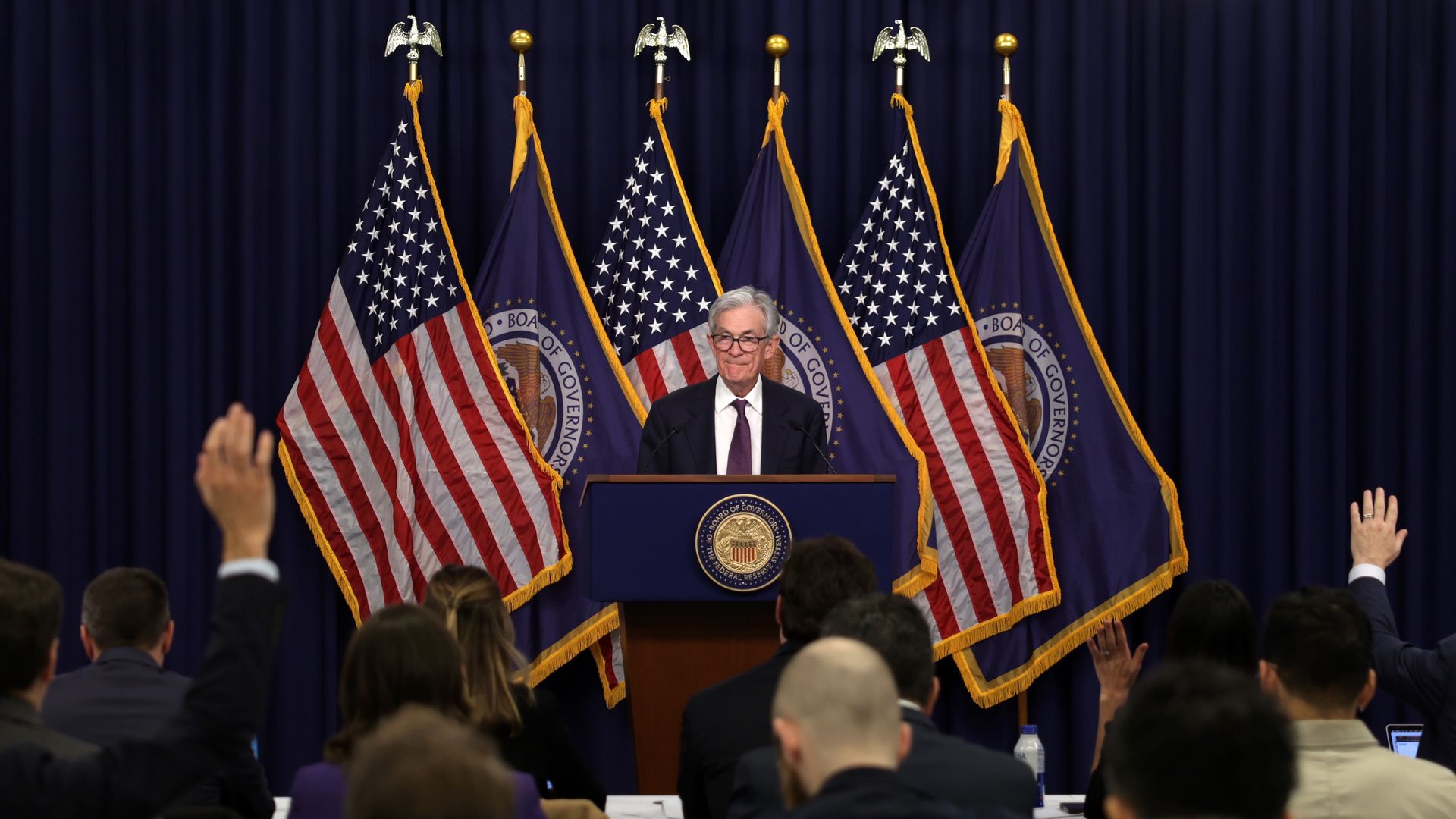
Expect the Fed to do its best to stay out of the headlines Wednesday, as the central bank is set to pause its interest rate cutting and start a waiting game to see where things go next.
Why it matters: The outlook is cloudy, with inflation proving stubborn and the impact of President Trump's immigration and trade policies uncertain.
President Trump's new foreign policy team managed to stabilize two fragile ceasefire agreements and prevent Middle East escalation on its first weekend in office.
Why it matters: Maintaining the ceasefires in Gaza and Lebanon and implementing the deal to release hostages held by Hamas are the main foreign policy priorities for the Trump administration in the Middle East right now.
When lots of people are worried about bubble valuations in stocks or a specific sector, all it takes is a small poke to make the whole thing wobble precariously.
Why it matters: That can cost investors $1 trillion or more in a single day, as happened Monday with the global AI rout.
Why it matters: The anniversary, which also commemorates International Holocaust Remembrance Day on Monday, is likely the last major milestone with the presence of child survivors — the last generation of the Holocaust.
Anti-abortion groups are pressing the Trump Justice Department and Food and Drug Administration to quickly reverse Biden administration policies on abortion pills and impose a clampdown, including the use of a 19th-century anti-obscenity law to block the mailing of the drugs.
Why it matters: President Trump waffled for months on a national abortion ban before saying he'd veto it, and he hasn't made clear if he would wield executive power to sharply restrict the procedure.
President Trump's orders to freeze some work and communications at government health agencies and begin a U.S. pullout from the World Health Organization are rattling clinicians and researchers, who fear they're the leading edge of a broad anti-science agenda.
Why it matters: Policy experts and researchers are mobilizing for a fight over the politicization of science that stems from — and could rival — the clashes over the COVID-19 response.
The big picture: Less than 1% of immigrants deported last fiscal year were kicked out of the U.S. for crimes other than immigration violations. In the past 40 years, federal officials have documented about 425,000 noncitizens with criminal convictions on the ICE's "non-detained docket."
Why it matters: President Trump has only been in office a week, but the departments under his command are moving with blazing speed to transform the federal bureaucracy into an army of loyalists.
President Trump's executive orders on immigration signal a new strategy that appears aimed at boosting legal arguments for travel bans, emergency declarations and other restrictions.
Why it matters: That's the consensus among immigrant rights advocates who see Trump's strategy to dramatically restrict immigration as far more sophisticated — and potentially more successful — than his first-term efforts.
President Trump's "border czar" Tom Homan and other top officials oversaw immigration enforcement efforts in Chicago on Sunday, as ICE officials announced Sunday 956 arrests in one day.
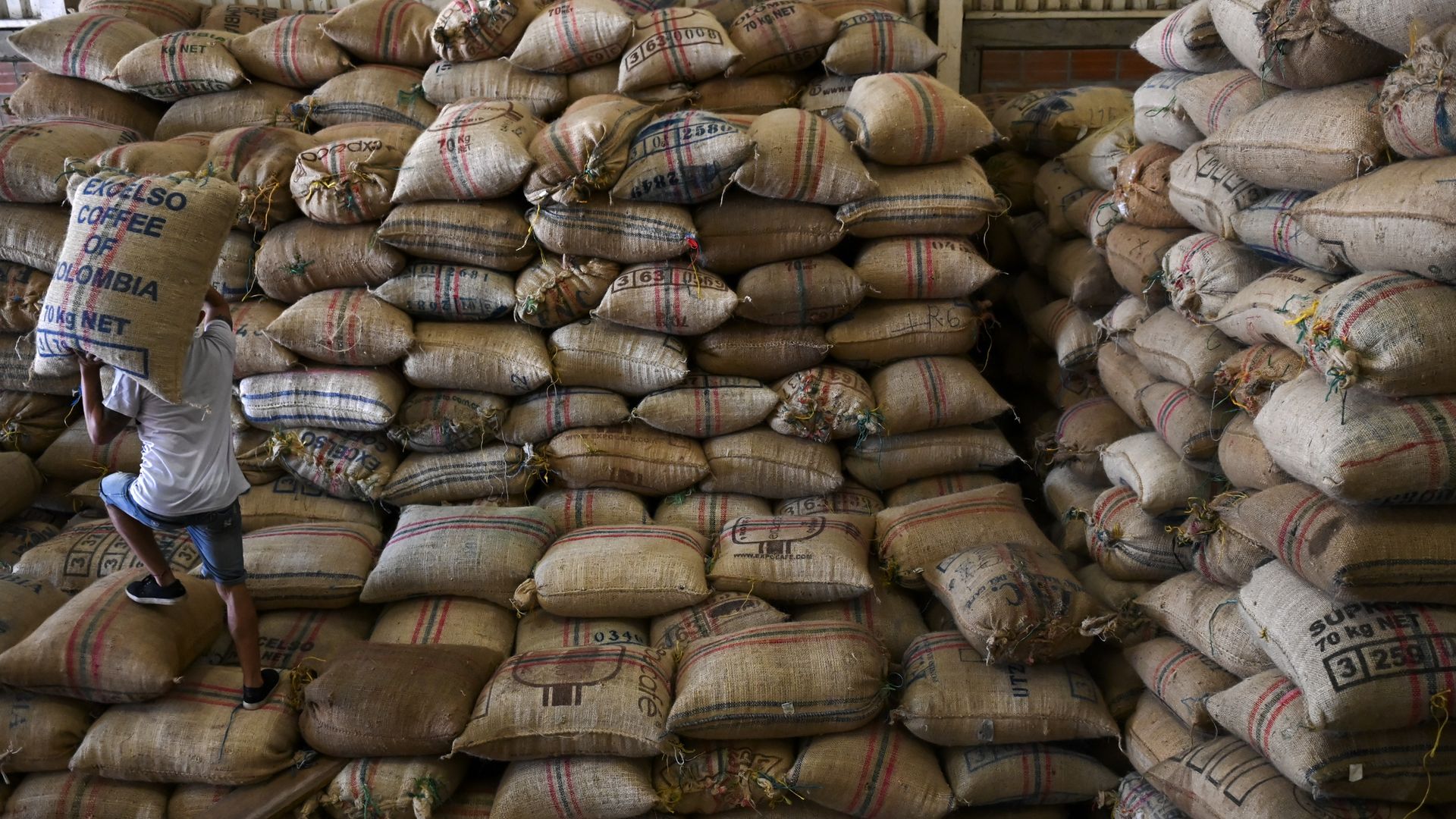
President Trump won't impose tariffs on Colombia after the government agreed to accept all of his terms — including receiving Colombians deported from the U.S., White House press secretary Karoline Leavitt announced Sunday night.
Why it matters: It's a dramatic turnaround given Colombian President Gustavo Petro announced retaliatory tariffs hours after Trump said earlier Sunday he'd impose 25% tariffs on all goods imported from Colombia, which is a leading supplier of coffee and flowers in the U.S.
South Korea's impeached President Yoon Suk Yeol was indicted on insurrection charges on Sunday after he briefly declared martial law last month, prosecutors told local media.
Why it matters: Yoon is the first sitting president to both be arrested and indicted on criminal charges.
The ceasefire agreement between Israel and Lebanon will be extended until February 18, the White House said on Sunday.
Why it matters: The extension was a result of mediation efforts by the Trump administration that were aimed at preventing the collapse of the ceasefire.
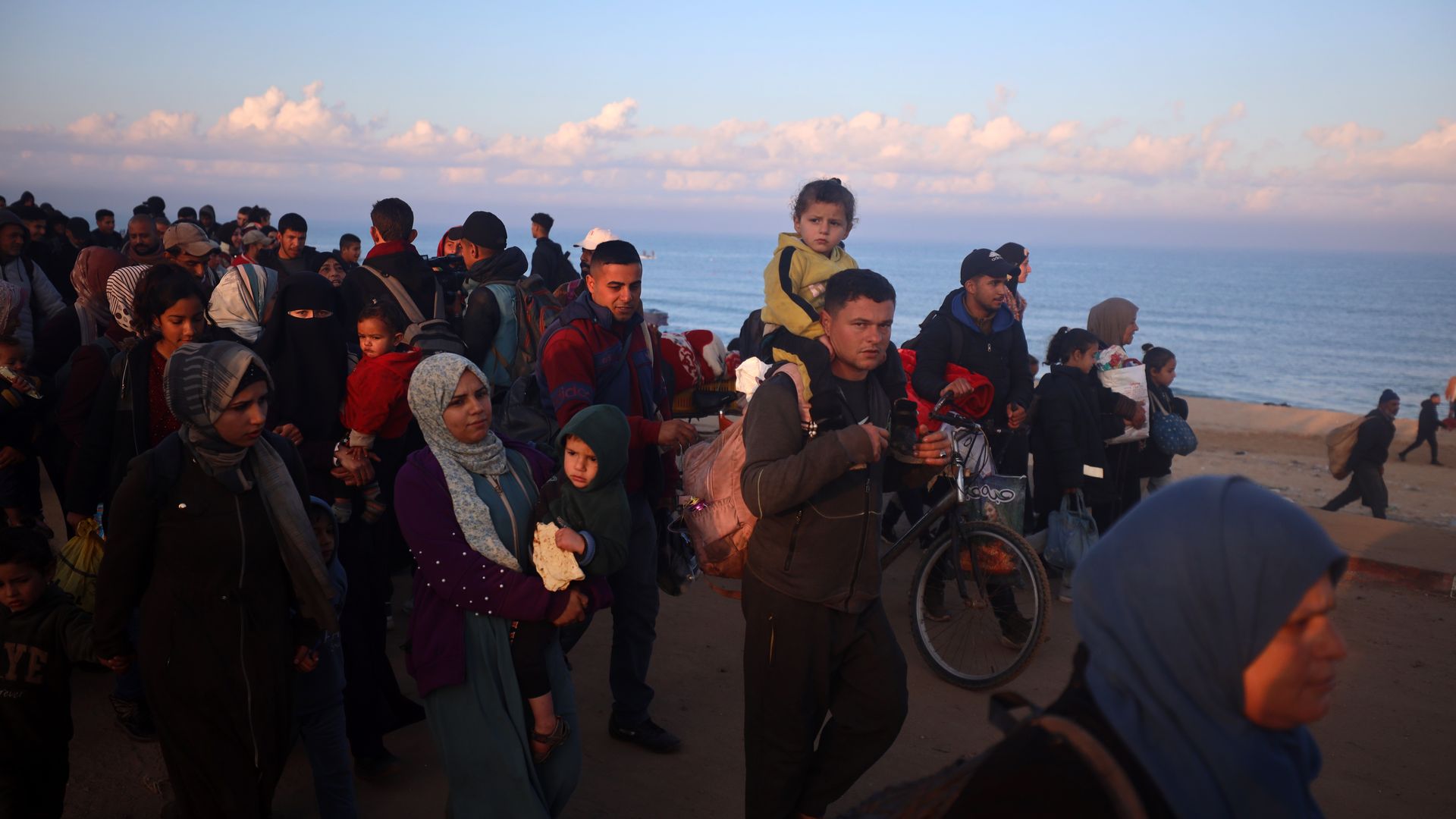
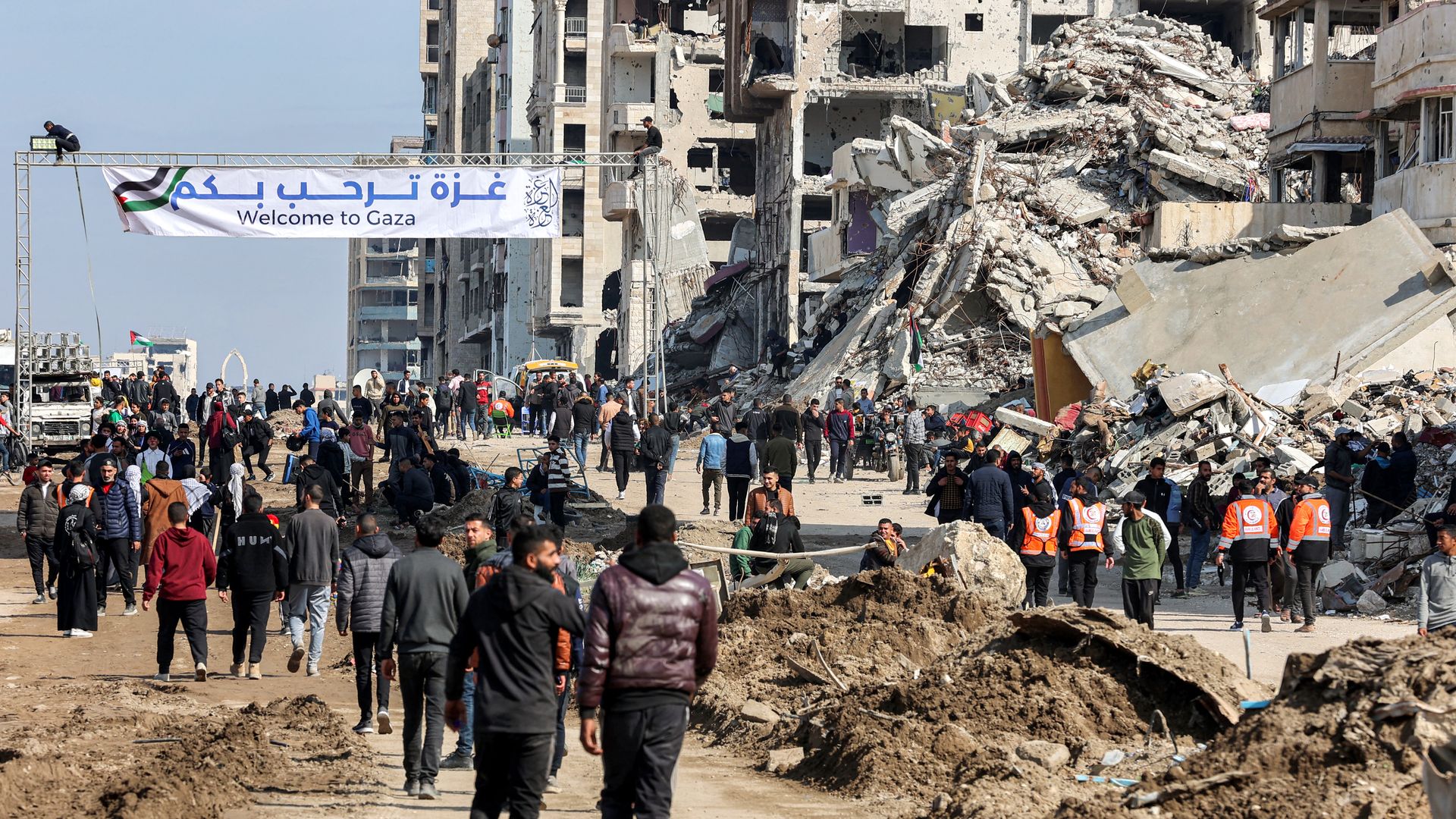
Israel will allow displaced Palestinians to return to the northern Gaza strip from Monday morning after Qatari and Egyptian mediators managed to solve the crisis over the release of an Israeli held hostage in Gaza, the Israeli prime minister's office said.
Why it matters: The failure by Hamas to release Arbel Yehud, a civilian woman, on Saturday as the hostage and ceasefire deal stipulated created a crisis that raised concerns that the agreement could collapse a week after it came into force.