Trump, Vance vault FEMA overhaul high on agenda

Add Axios as your preferred source to
see more of our stories on Google.
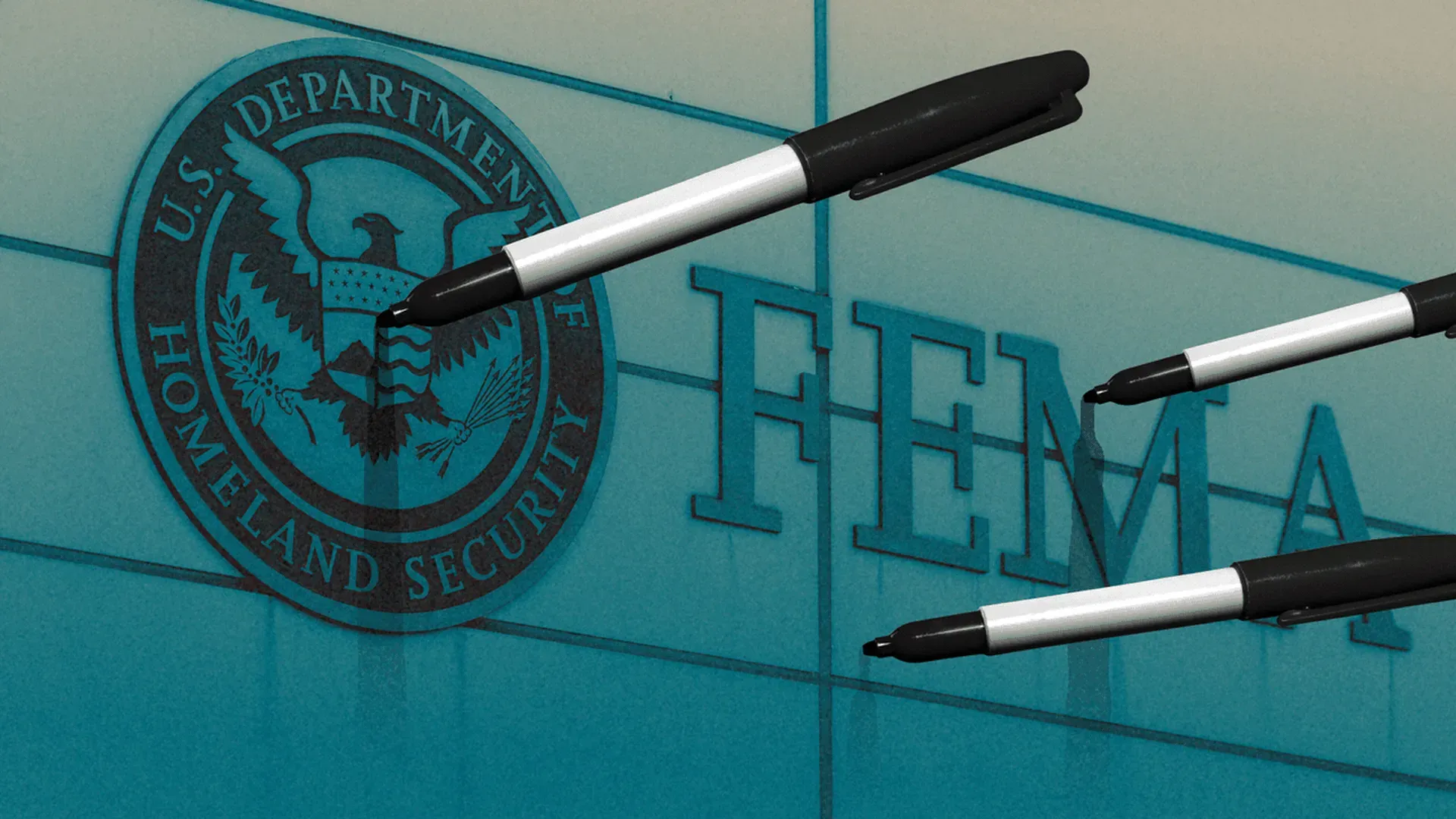
Photo illustration: Brendan Lynch/Axios. Photo: Nathan Posner/Anadolu via Getty Images
The Trump administration is looking at ways to overhaul FEMA, the government's disaster management and response agency.
Why it matters: The move — which President Trump has said could include dissolving the agency altogether — comes amid continued response efforts in the wake of September's Hurricane Helene and the deadly LA area wildfires this month.
Zoom in: The White House issued an executive order on the topic Sunday evening, and Vice President Vance criticized FEMA's work in an appearance on CBS' "Face The Nation" Sunday.
- Late last week, Trump indicated he would like states to take responsibility for disasters that occur within their borders.
- Vance indicated, however, that governors wouldn't be left alone to tackle disasters beyond their response capacity.
- Trump has yet to nominate a FEMA administrator, instead choosing to appoint someone on an interim basis who reportedly lacks emergency management experience.
State of play: Vance made clear what he saw as an urgent need for change, alluding to some of the criticisms leveled against the agency in the wake of 2024's hurricanes and the recent fires.
- "FEMA in North Carolina, in California, in Florida with some of the hurricanes, has often been a disaster," Vance said.
- "And it's not because we don't have good people at FEMA. It's because bureaucratic red tape and garbage prevents the rapid deployment of resources to people who need it the most," he said.
The executive order establishes a "review council" to examine FEMA's performance. It would include private sector participation and direct members of the council to compare FEMA's response with private companies'.
- This raises the possibility that some of the agency's functions could be moved outside the federal government.
Between the lines: Dissolving FEMA or shifting to a system of state-led disaster response would itself be a disaster, said a former senior FEMA official, who spoke with Axios on the condition of anonymity because they weren't authorized to discuss the matter.
- The official said dismantling or reducing FEMA's operations would ultimately hurt the president's supporters, many of whom live in vulnerable regions and who lack the money to quickly rebuild without government assistance.
The intrigue: According to Samantha Montano, who teaches in the emergency management program at Massachusetts Maritime Academy, the administration's approach to FEMA seems to follow many of the recommendations in Project 2025.
- That policy blueprint, overseen by the conservative Heritage Foundation, recommended having FEMA respond to only "catastrophic disasters," with states leading smaller events.
- Project 2025 also proposed ending the National Flood Insurance Program (NFIP), with private insurers covering flood-prone areas. However, Montano said insurers would be extremely reluctant to do so at affordable rates.
While Trump distanced himself from that policy blueprint during the campaign, his administration has begun to pursue policies mirroring its findings.
What they're saying: "There's a long list of things that need to be reformed within FEMA," Montano told Axios in an interview. "But you can't just get rid of FEMA and say the states need to do it."
- She said states lack the capacity to pick up the slack if FEMA were to pull back from its current role and cost-sharing arrangements, as Project 2025 recommends.
Flashback: Talk of reshaping FEMA also traces back to perceptions about the Homeland Security department's response to Hurricane Helene, particularly in North Carolina.
- Rumors, misinformation and disinformation ran rampant in the wake of that disaster, which cut off thousands from power and communication networks for long periods of time.
- FEMA staff were threatened, and response work temporarily curtailed, due to fears of violence.
A similar dynamic has played out in the wake of the fires in the LA area, with Trump alleging that water resources and forest mismanagement by state Democrats is the real cause of the disaster.
- During a roundtable discussion with Trump and other officials, California Democratic Rep. Brad Sherman defended FEMA's fire-response efforts.
- "When you have a disaster this size, you need to deploy thousands of people, which [FEMA] has been able to do," Sherman said.
Context: The FEMA discussions come at a time when climate-worsened extreme weather events, such as rapidly intensifying hurricanes, heat waves, and heavy precipitation events that can lead to record-breaking flooding, are taking a heavier toll on a large swath of the country.
- Economic damage from weather-related disasters is increasing, in part because of population growth. This puts more pressure on improving disaster management and response.
What we're watching: How disaster politics play out.
- Montano said governors — including some Republicans — are likely to deliver the strongest pushback to putting more burden on states.
