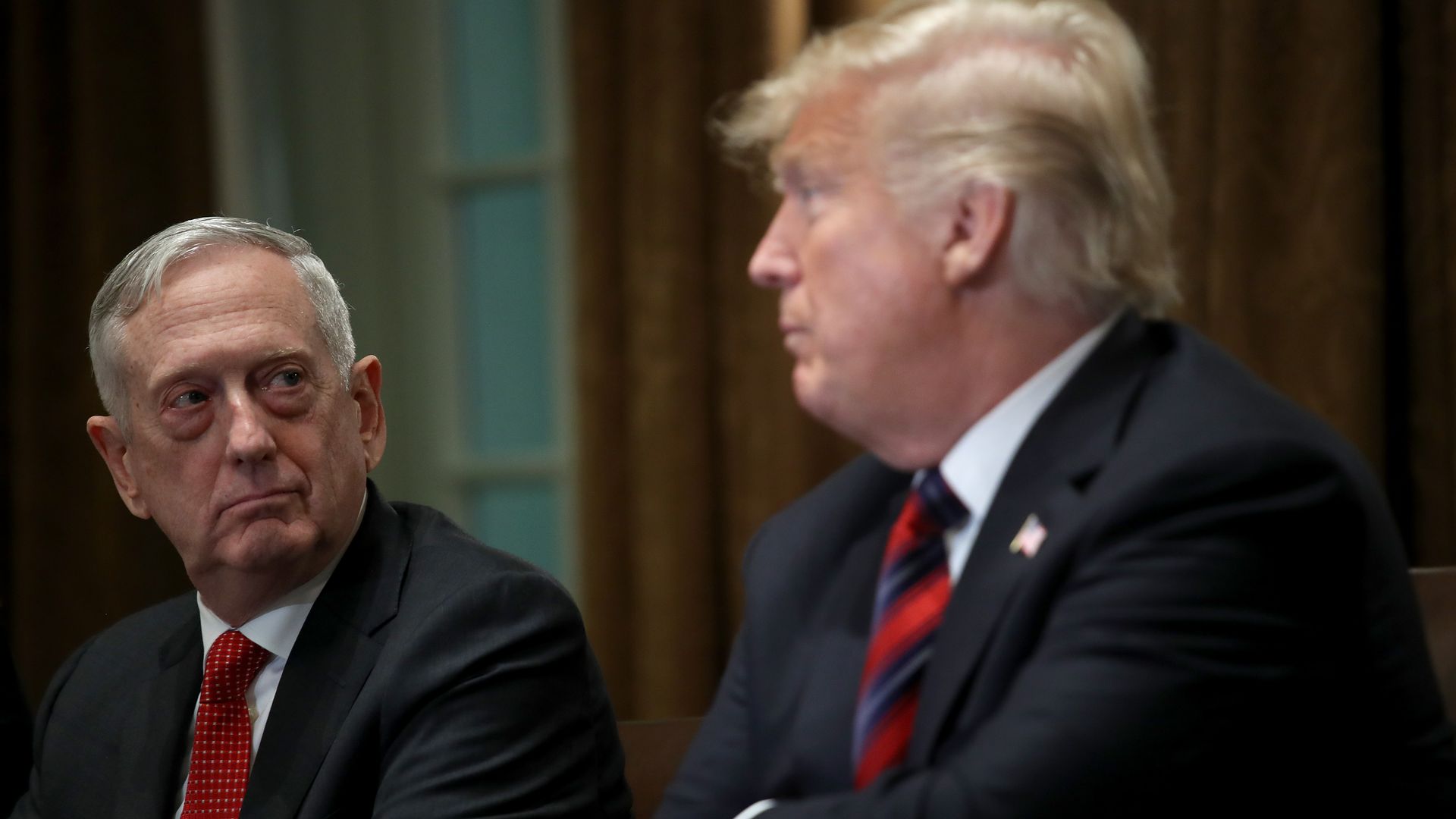
President Trump’s order to withdraw U.S. troops from Syria reversed recent pledges by a wide range of senior administration officials to remain there indefinitely — including one just two weeks ago by his top Syria envoy, Ambassador James Jeffrey.
The big picture: Trump’s tweet and abrupt decision have taken key allies and many in his own administration by surprise. Aside from being based on a false premise — the Islamic State, or ISIS, is down in Syria, but not out — the decision could have major implications for Syria, the Middle East and broader U.S. foreign policy.
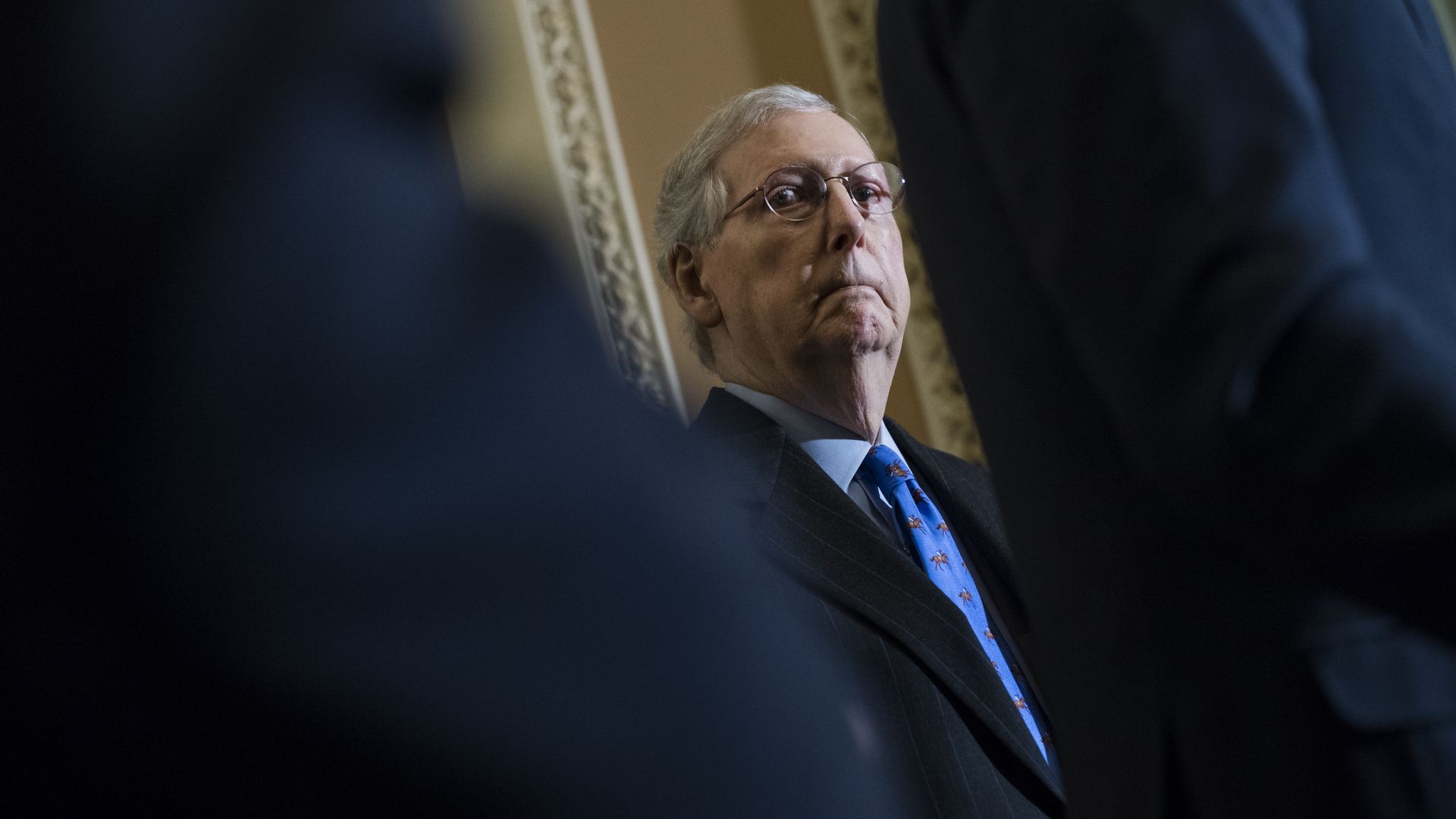
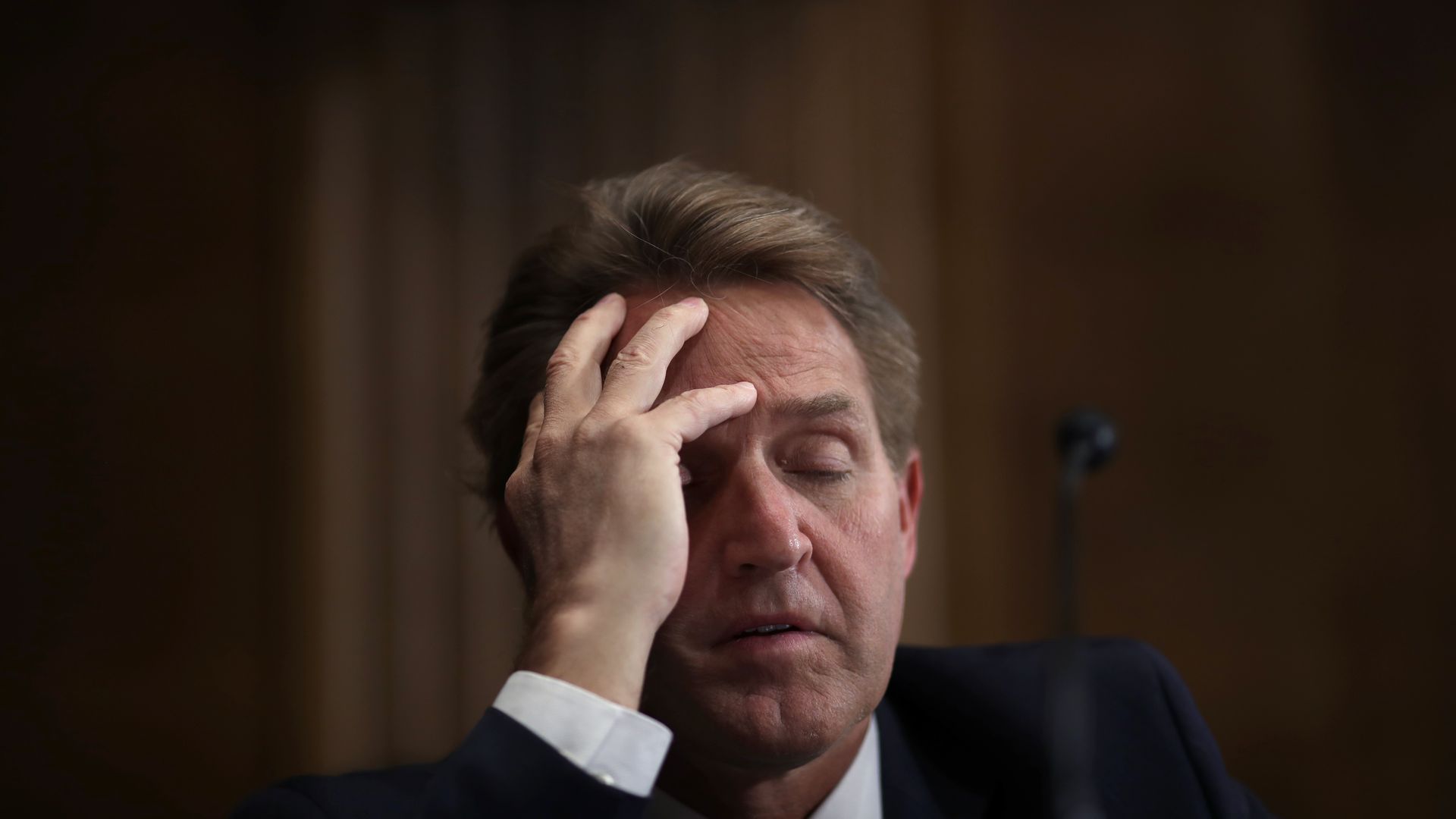
Senate Majority Leader Mitch McConnell once again blocked a bill proposed by Sen. Jeff Flake (R-Ariz.) that would protect special counsel Robert Mueller from being fired by President Trump, the Washington Examiner reports.
Why it matters: Flake has been pushing for weeks to get the bill passed, vowing to vote no on any judicial nominees Trump pushes forward until the bill is voted on. He was rejected twice in November. McConnell maintains that the president has given no indication that the investigation won't be completed.
President Trump has declared his own "Mission Accomplished," with the U.S. set to withdraw from Syria despite concerns from the national security community and many Republicans.
Why it matters: "Trump appears to be discarding his entire Syria and Iran strategy at a single stroke, giving up any and all U.S. influence in the region — and disregarding the advice of his top national security officials," WashPost columnist Josh Rogin writes.
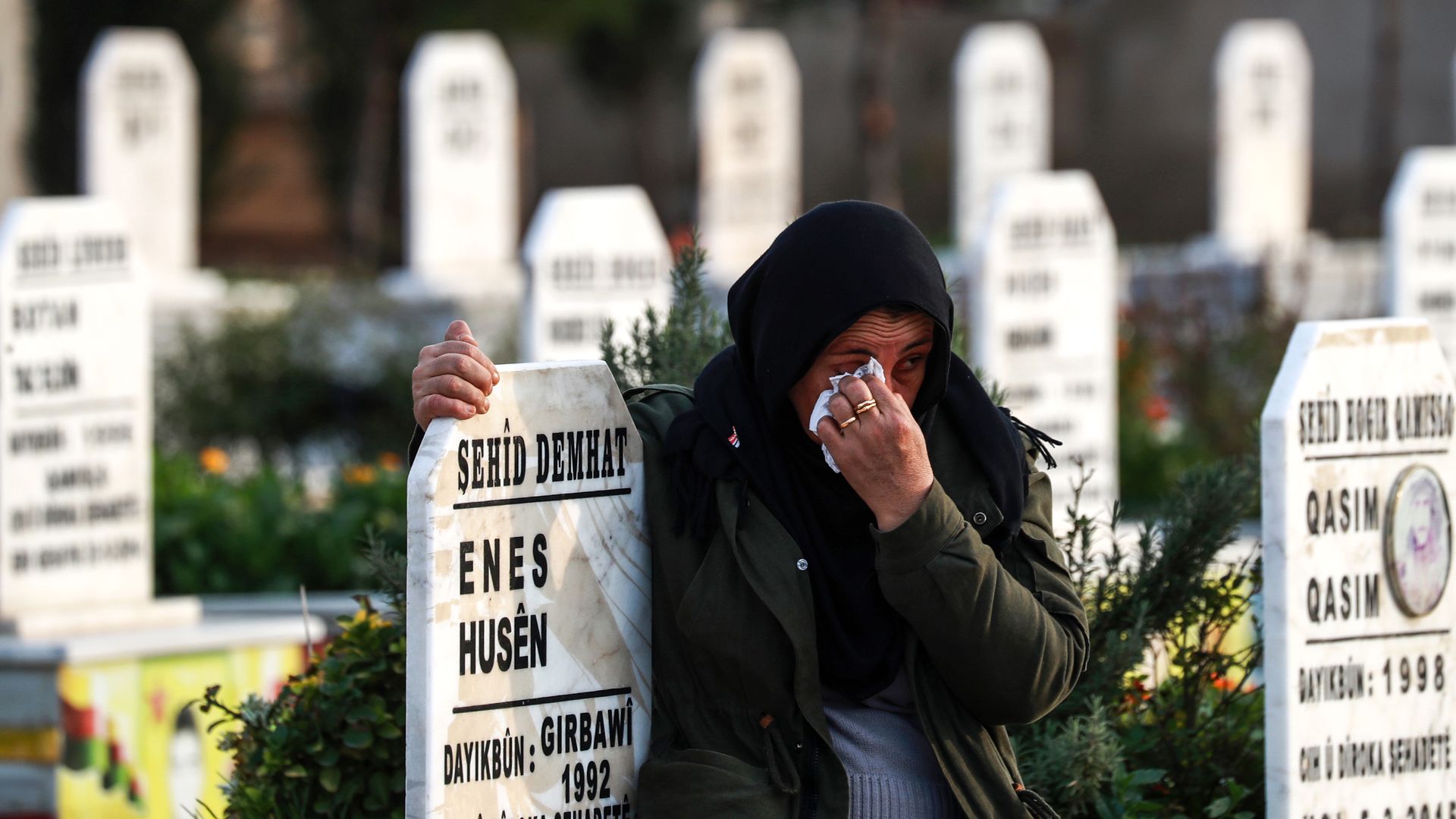
President Trump's order to begin pulling U.S. troops from Syria within the next 30 days drew pushback from Republicans, foreign allies and even officials within his own administration on Wednesday.
The big picture: Trump's claim that the U.S. has "defeated" the Islamic State, or ISIS, in Syria — which he called his "only reason" for remaining in the war — flies in the face of assessments by both the State Department and the Defense Department. Just last week, Brett McGurk, the U.S. envoy to the coalition fighting ISIS, said in a speech, "Even as the end of the physical caliphate is clearly now coming into sight, the end of ISIS will be a much more long-term initiative. Nobody is declaring a mission accomplished."
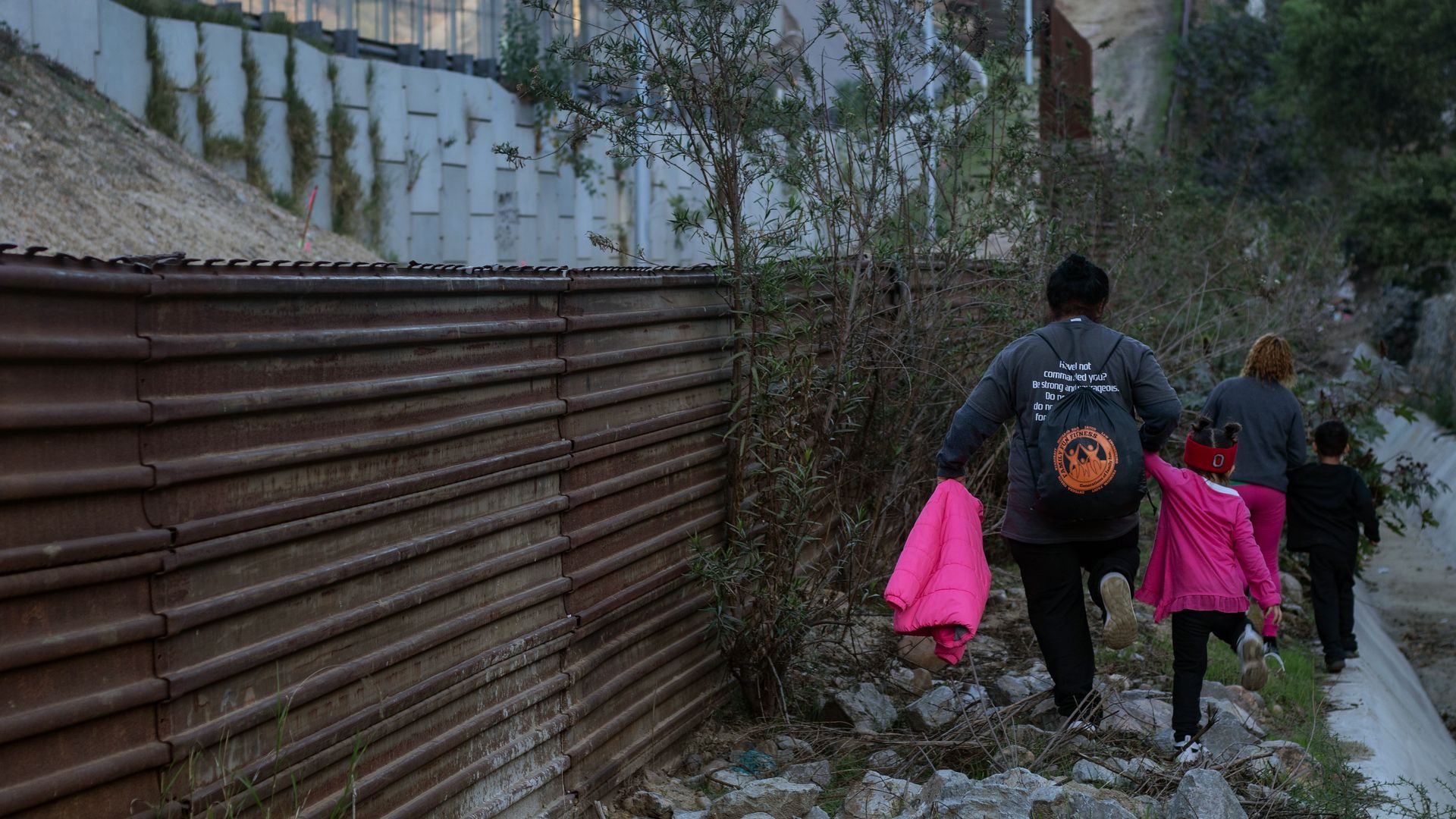
A federal judge on Wednesday prevented the Justice Department from implementing policies announced by then-Attorney General Jeff Sessions earlier this year that disqualified some victims of domestic abuse and gang violence from obtaining asylum in the U.S.
Why it matters: Federal courts have delayed or struck down one Trump administration immigration policy after another — from DACA to the asylum ban to the defunding of sanctuary cities. Judge Emmet Sullivan, who also heard former national security adviser Michael Flynn's sentencing hearing on Tuesday, called for any migrant wrongfully deported under the policy to be given a second chance at asylum.
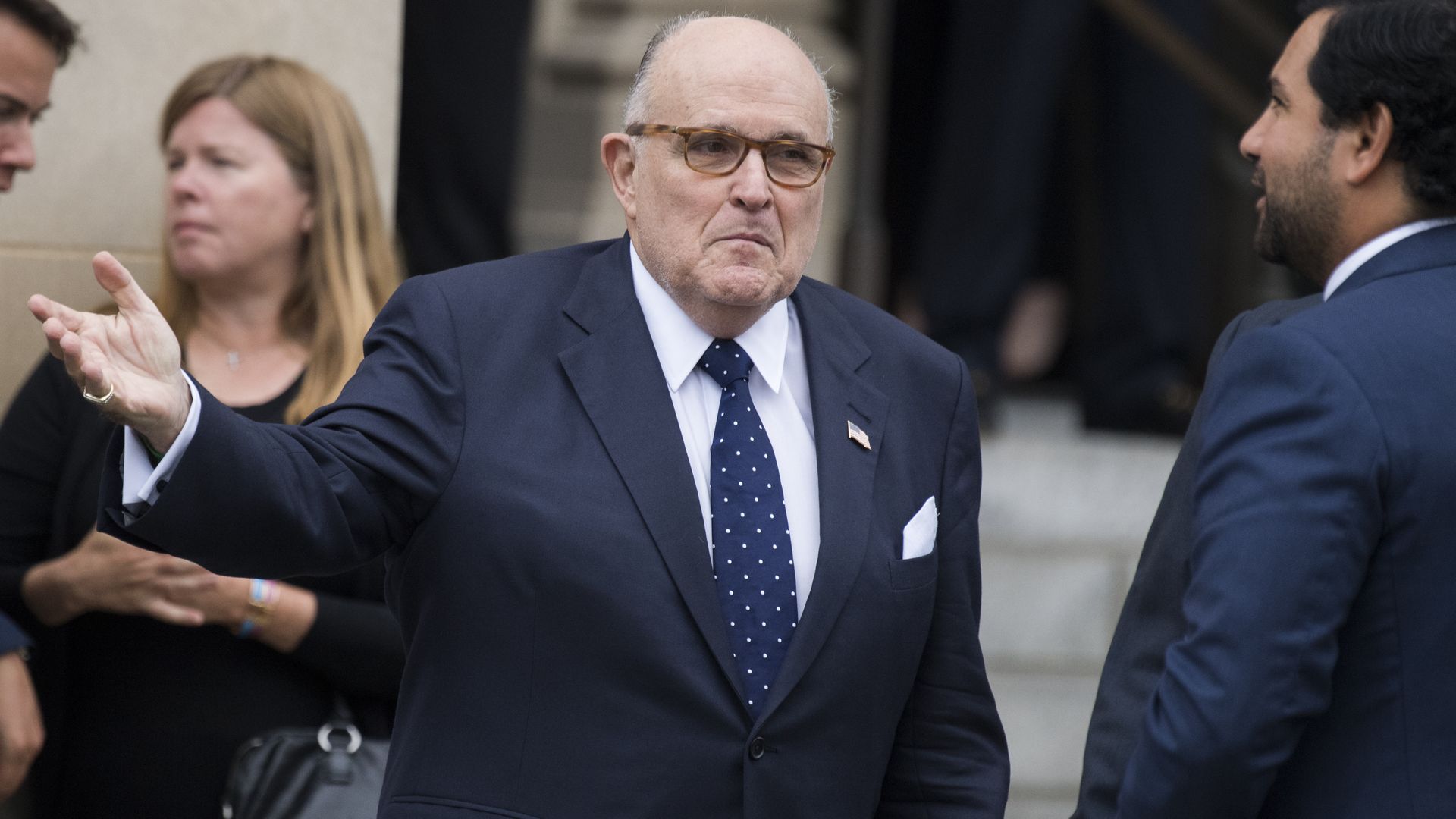
After CNN's Chris Cuomo obtained a letter of intent signed by Donald Trump on Oct. 28, 2015, to move forward with a Trump Tower in Moscow, Trump's personal lawyer Rudy Giuliani backpedalled from his earlier statement that President Trump didn't sign such a letter in an interview Wednesday with the New York Daily News.
What he's saying: "I don’t think I said nobody signed it," Giuliani told the Daily News. "How could you send it but nobody signed it?" He added that the letter was "bulls--t," saying, "It means nothing but an expression of interest that means very little unless it goes to a contract and it never did."
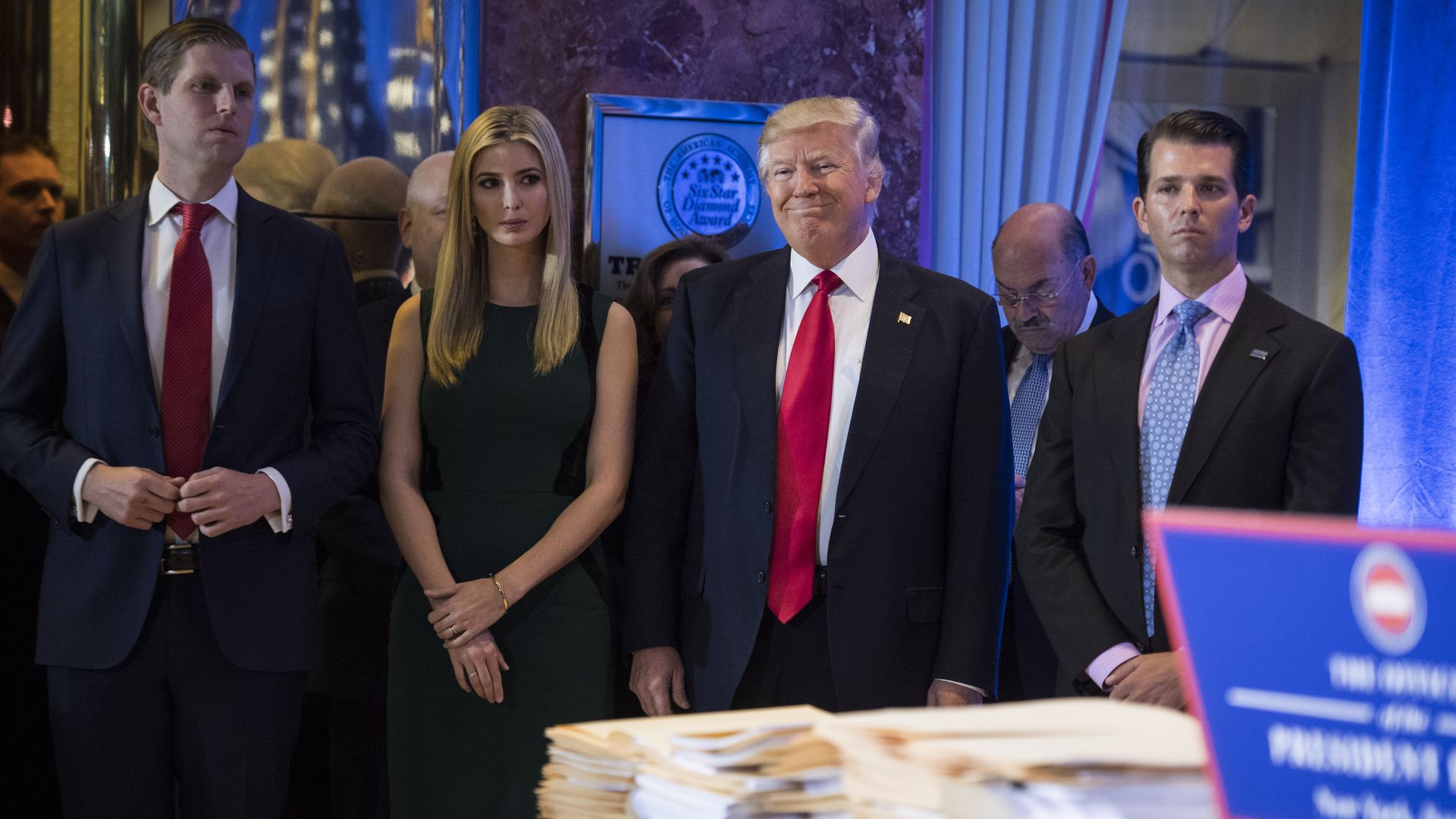
In a series of Wednesday morning tweets, President Trump blasted a lawsuit from New York Attorney General Barbara Underwood that led to the Trump Foundation's dissolution as a personal attack instead of a credible legal challenge, calling it "a total double standard of 'justice.'"
The big picture: Media reports have alleged that Trump used funds from the now-shuttered foundation to pay for hundreds of thousands of dollars in legal costs among other extravagant personal expenditures. Trump has continuously denied the allegations since they first arose in late 2016, claiming "100% of money goes to wonderful charities."
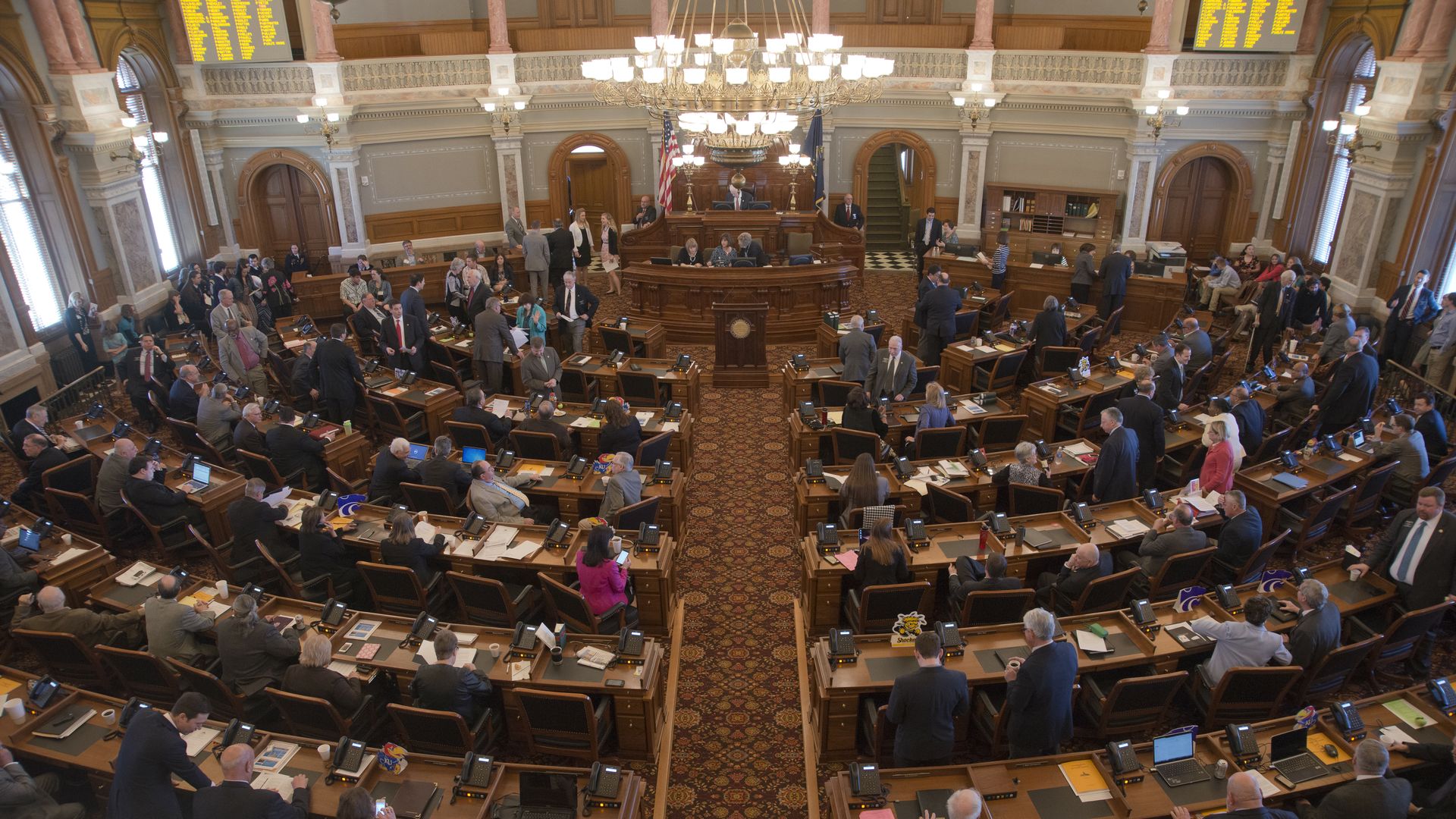
Three female Republican lawmakers in Kansas have announced they're joining the Democratic Party this month, the Wichita Eagle reports.
Why it matters: State Sens. Dinah Sykes and Barbara Bollier, as well as state Rep. Stephanie Clayton have all decided to switch parties for the same reason — they say the Republican party in Kansas has become too conservative.
Senate Majority Leader Mitch McConnell said he will introduce a short-term funding bill that, if passed, will keep the government running through Feb. 8.
Why it matters: It's unclear when votes will occur, but lawmakers have until Friday to reach a deal. McConnell said yesterday that he has been "in consultation" with the White House, and is confident there will not be a government shutdown despite President Trump's demands for $5 billion in funding for the border wall.
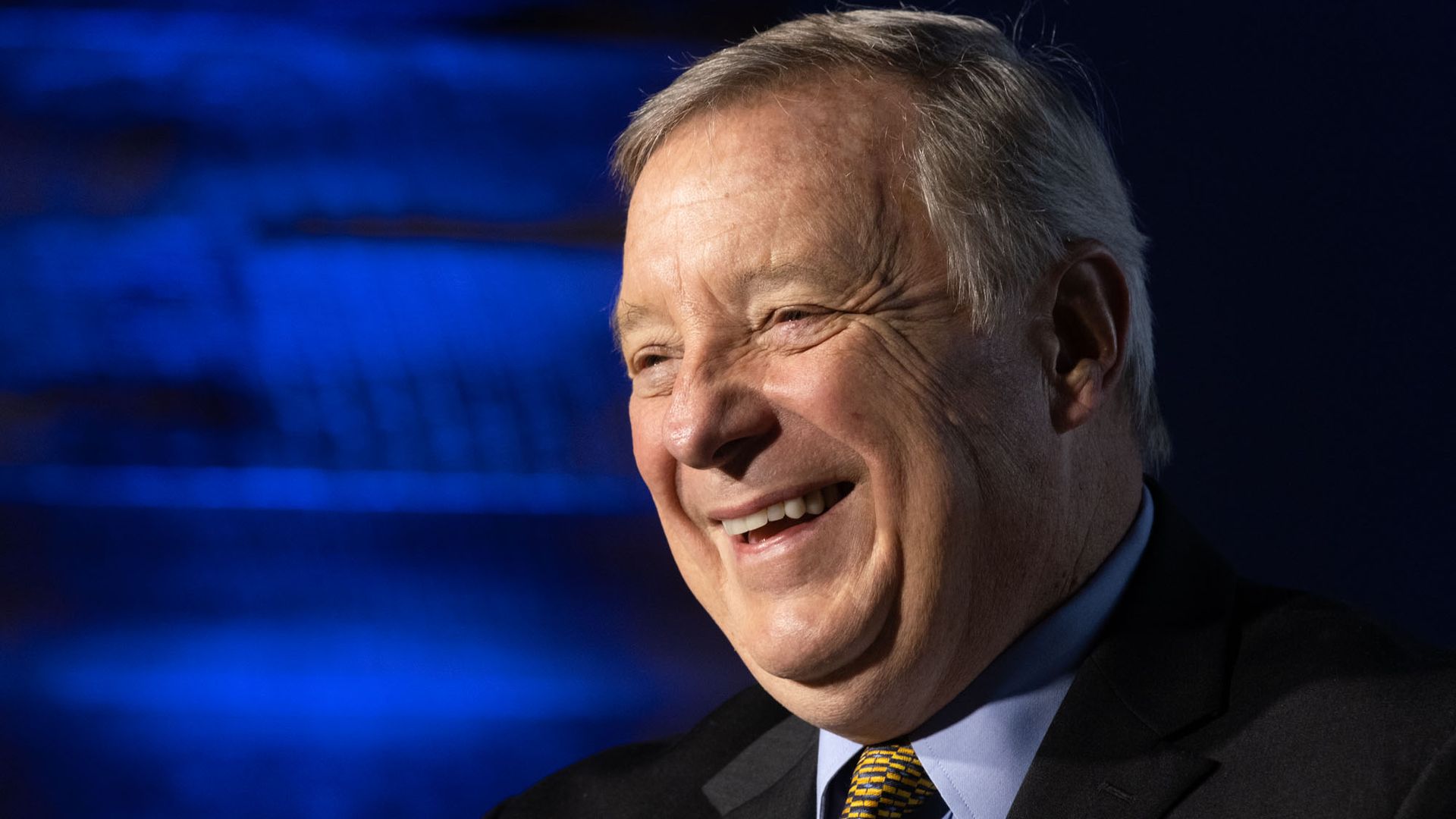
"Last night's coalition, I’ve never seen anything like this," Sen. Dick Durbin (D-Ill.) said about last night's landslide vote on the criminal justice reform bill during an event for Axios.
Why it matters: In an era of hyper partisanship, after decades of bipartisan efforts to launch a war on drugs, a bill lowering mandatory minimum sentences and providing avenues for prisoners to reduce their sentences has passed the Senate and will likely become law. "There was just a feeling in the chamber that we’ve had in the past, but haven’t had in a long time," Sen. Amy Klobuchar (D-Minn.) told Axios' Mike Allen.
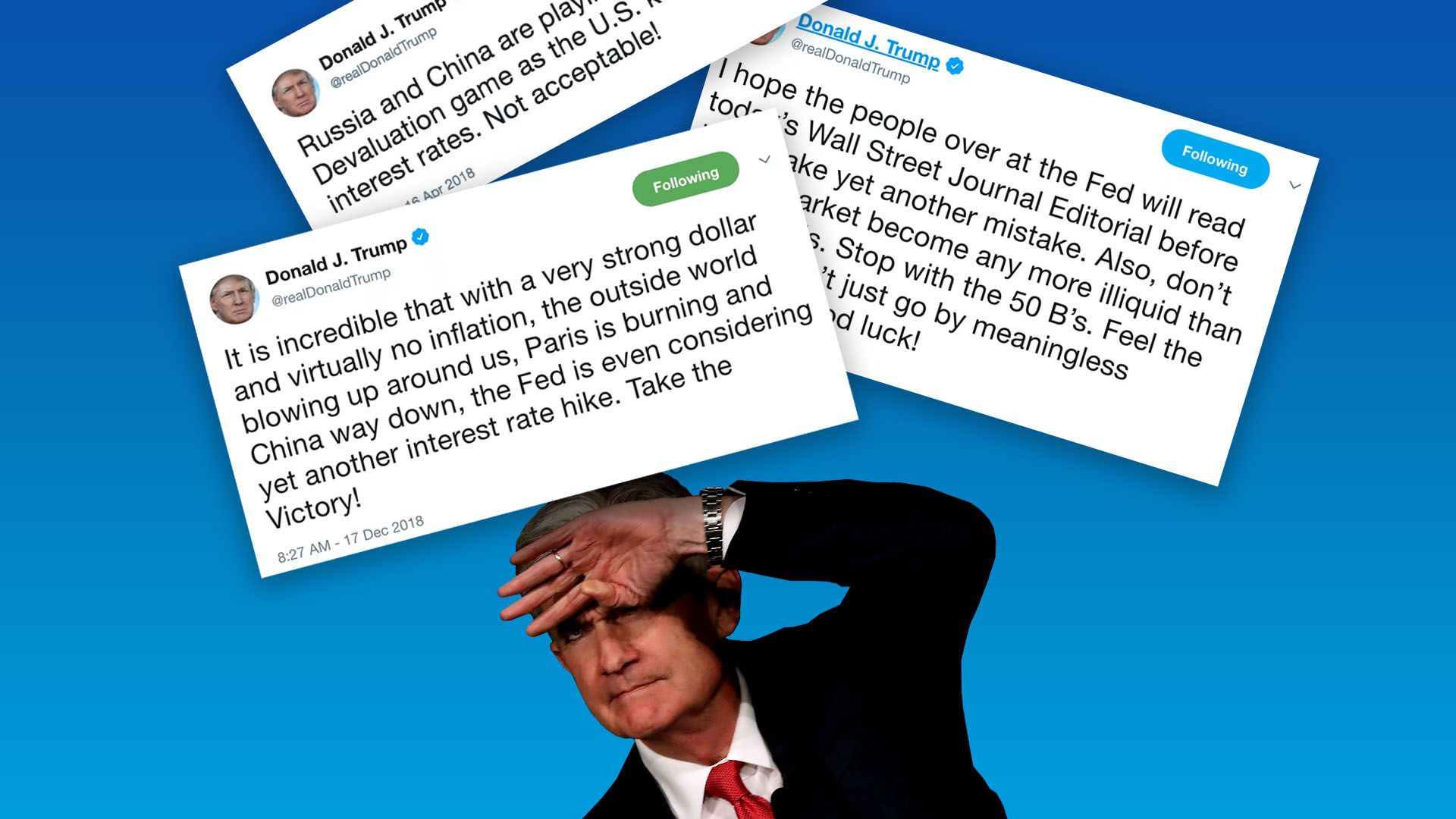
There's never been a Federal Reserve interest-rate decision quite like this, with the central bank facing public criticism from the president and a whipsawing stock market.
Why it matters: Market watchers agree that one of the greatest threats to the smoking economy is a misjudgment by the Fed on how to manage the record-breaking economic expansion. Trump's response to any rate hike is likely to be angry, losing the Fed's precious credibility among the president's supporters.
On Tuesday night, CNN's Chris Cuomo obtained a letter of intent to move forward with a Trump Tower in Moscow signed by now-President Trump on October 28, 2015.
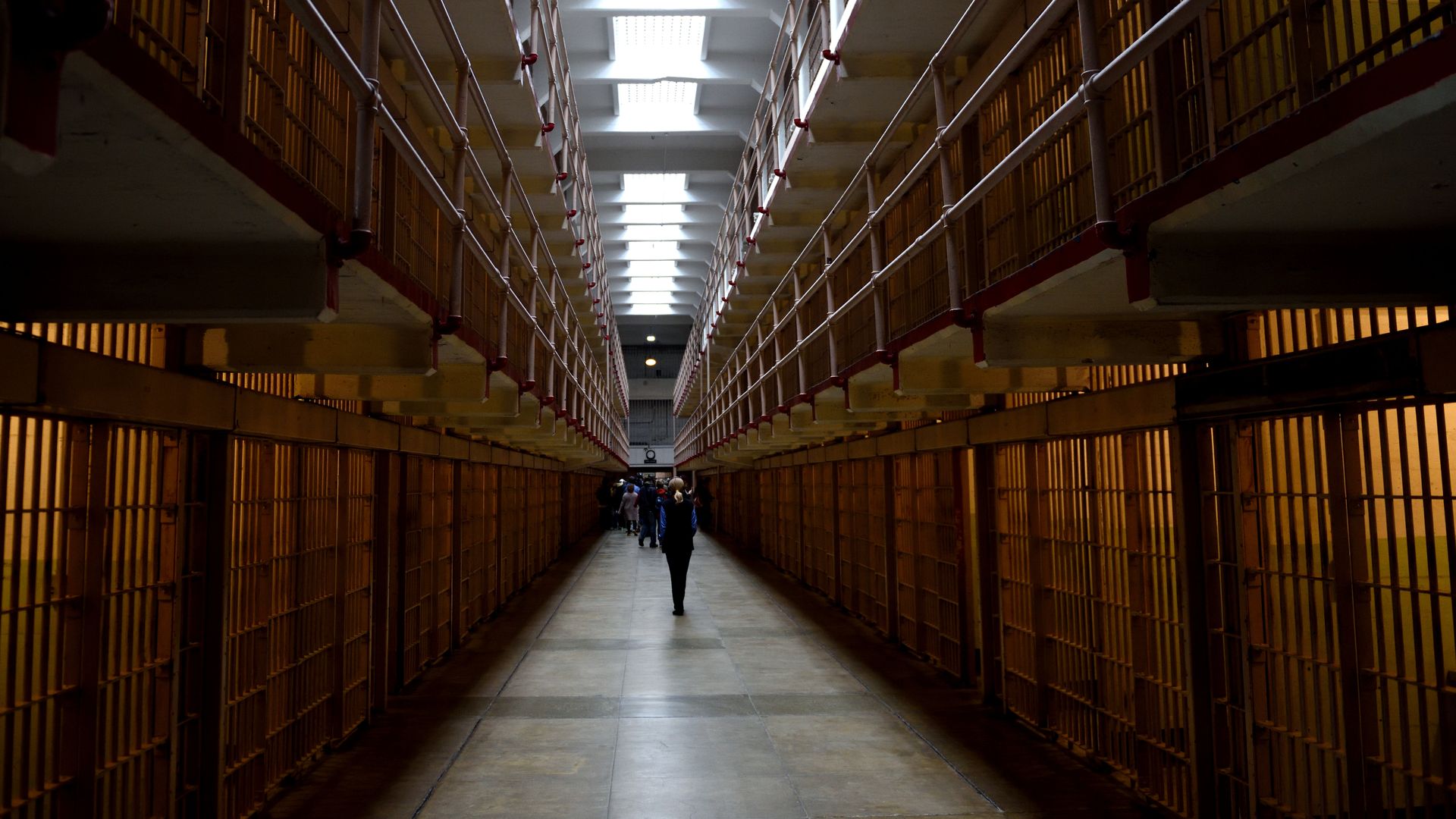
A Trump-backed bipartisan criminal justice bill passed the Senate Tuesday night by a margin of 87-12, despite ongoing efforts by Sen. Tom Cotton and other hardline conservatives to sink it.
Why it matters: For years, advocates and lawmakers have worked to reform the federal prison system only to have their efforts fall apart at the last minute. But with the help of Jared Kushner in the White House and a bipartisan Senate coalition, the First Step Act has made it past the Senate and will now likely become law — impacting thousands of current federal inmates.




/2018/12/19/1545256297840.gif?w=3840)