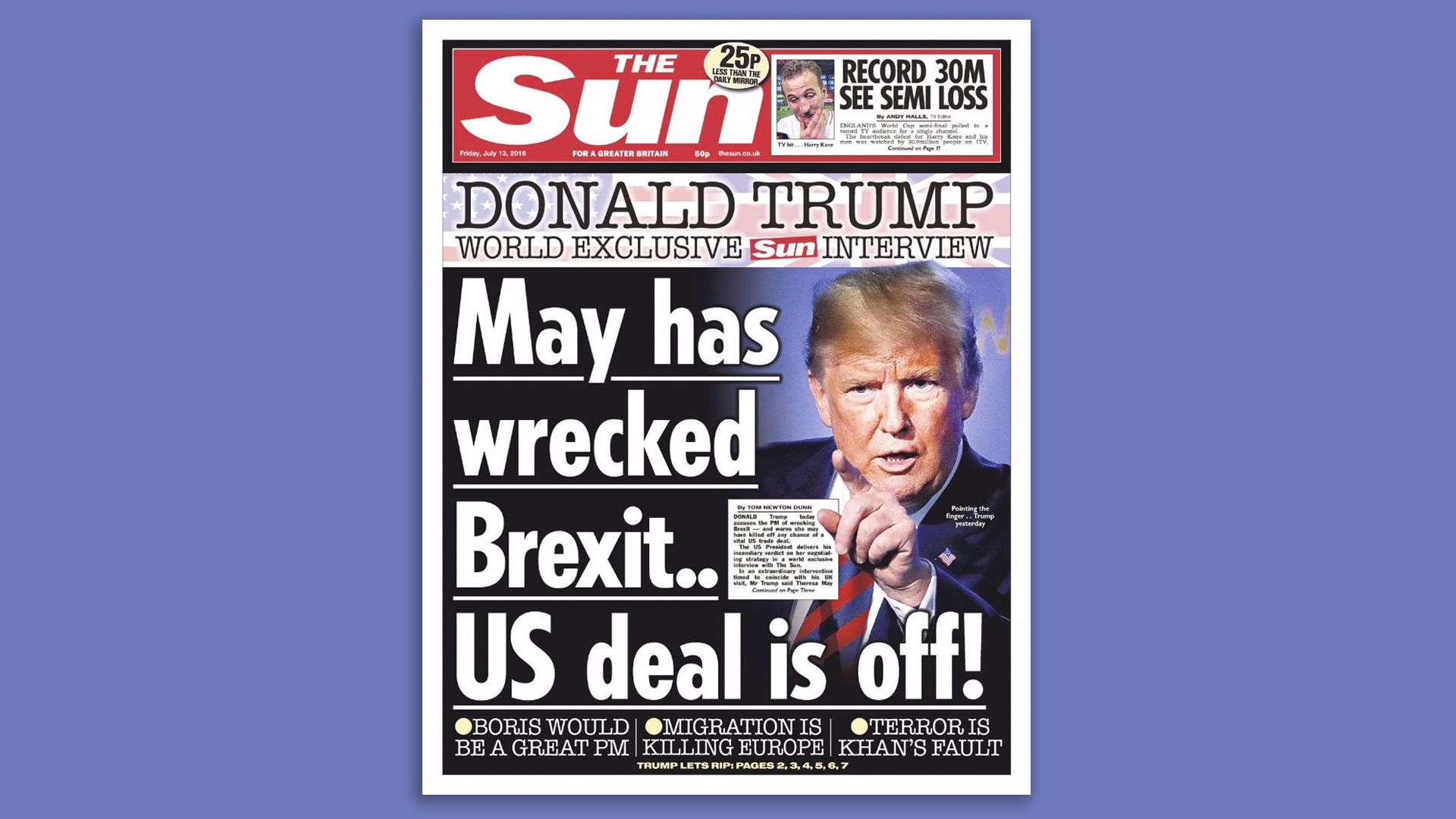
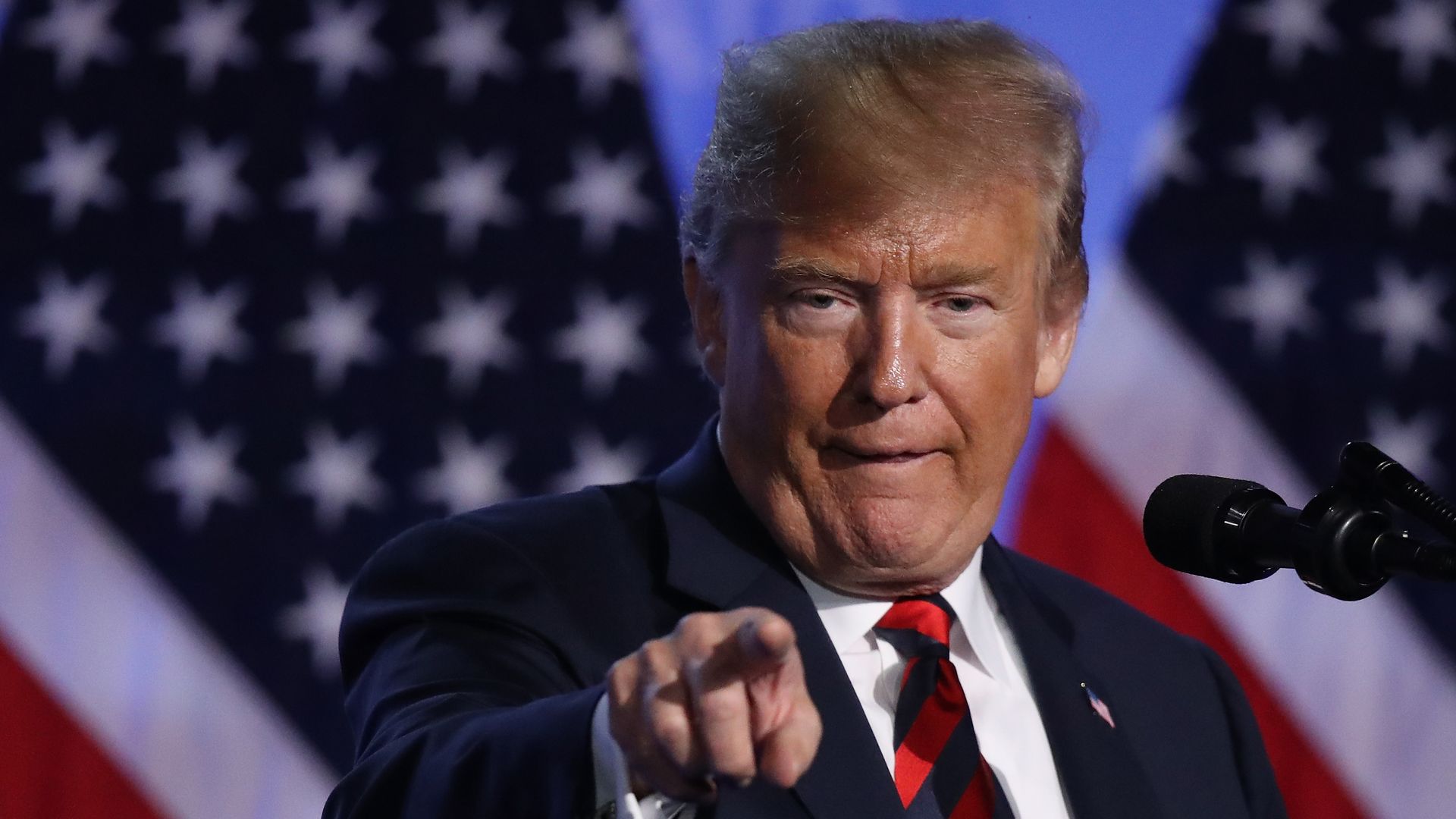
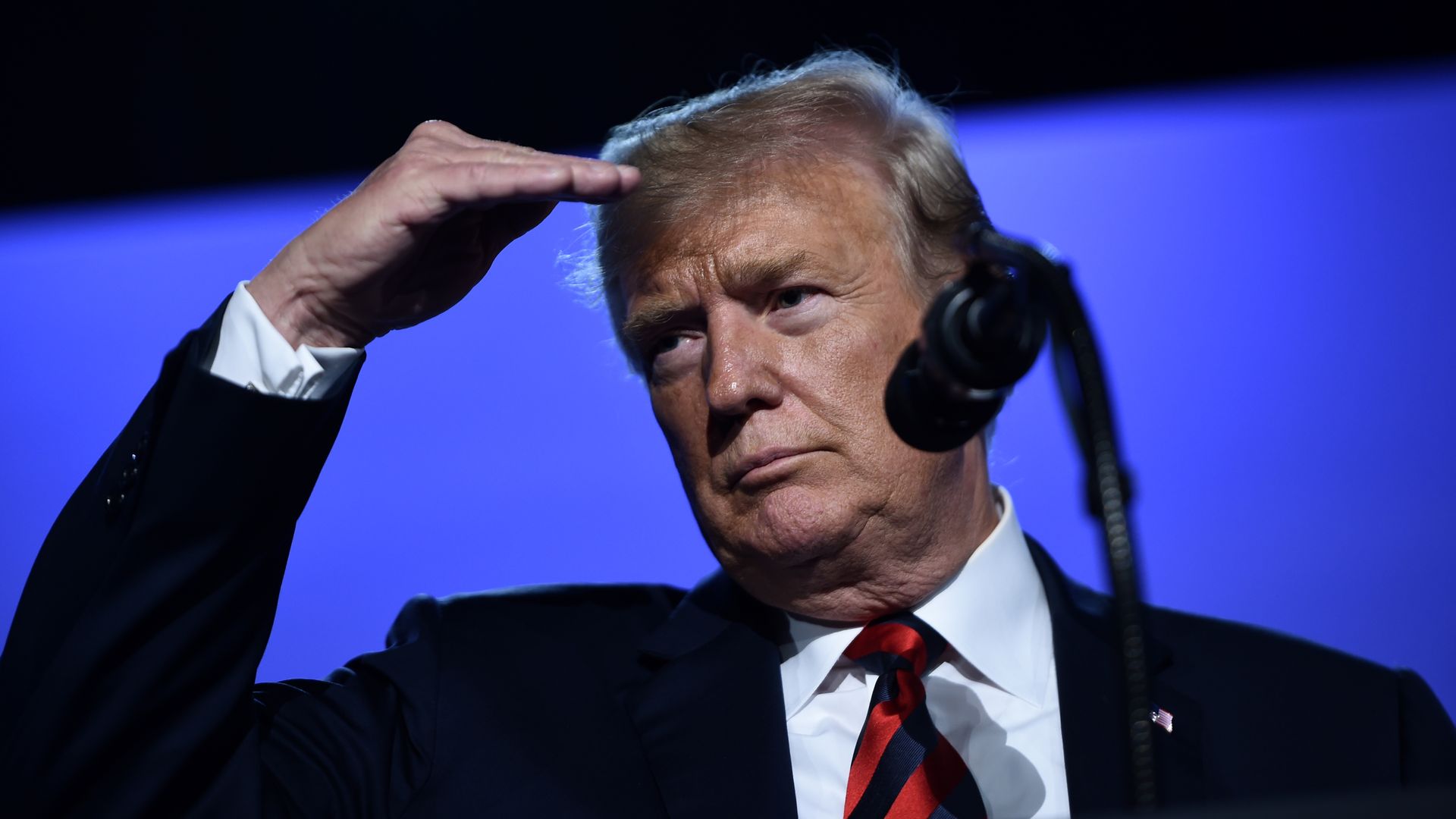
President Trump, in an interview with the popular British newspaper the Sun, criticizes Prime Minister Theresa May's handling of Brexit, says the mayor of London doesn't do enough to fight terrorism, and said May's rival Boris Johnson would make a "great prime minister."
Why this matters from Axios World Editor David Lawler: May is in the fight of her life with hardliners within her own party, and President Trump — while visiting the U.K. — has just openly sided with the rivals that may attempt to force her from power.
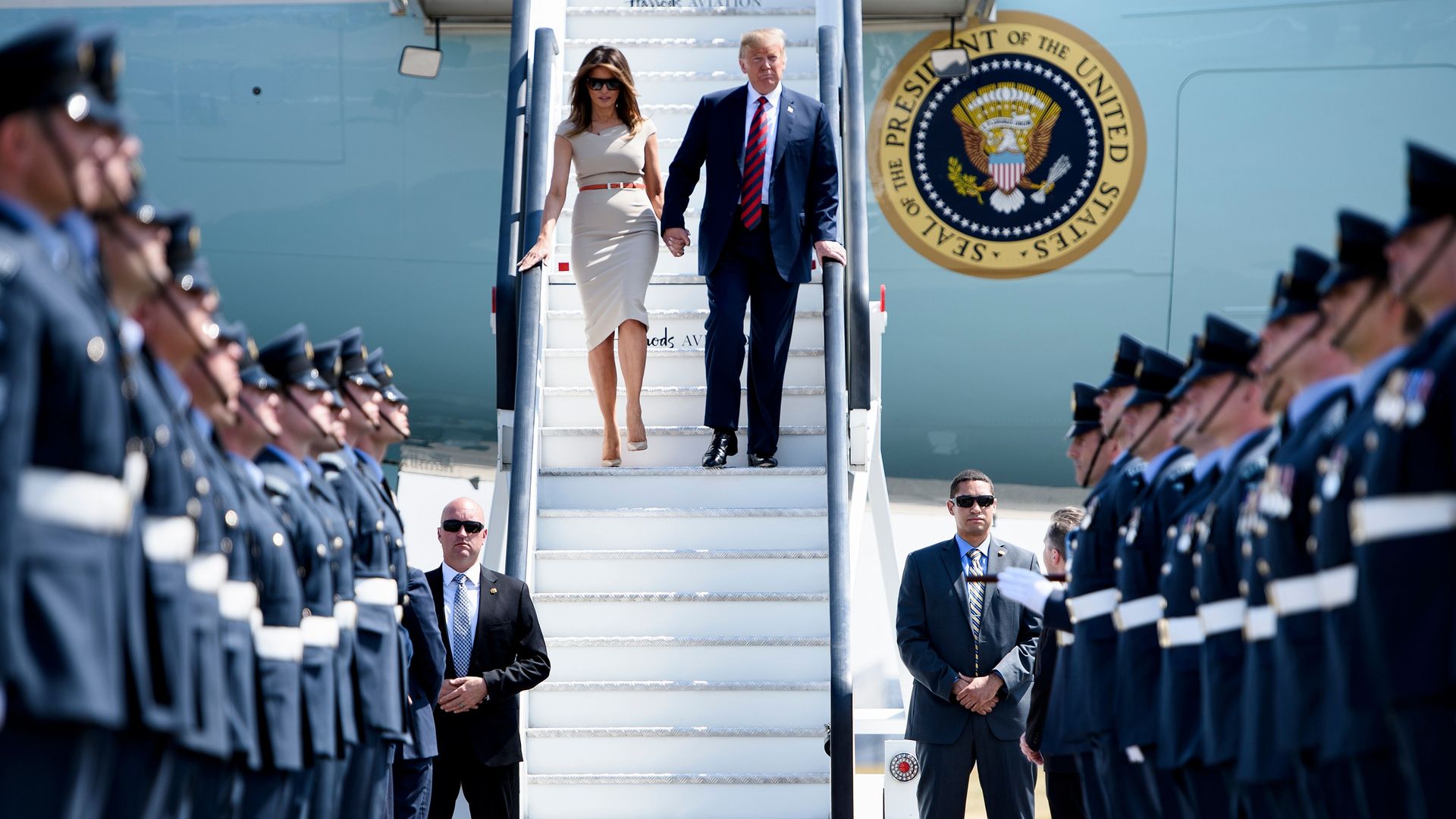
Following two drama-filled days at the NATO summit in Brussels, President Trump arrived in the United Kingdom for the second of three stops on his European tour.
The details: The president and first lady dined with Prime Minister Theresa May at Blenheim Palace, a 2,000-acre estate in the English countryside famously known as the birthplace of Winston Churchill. On Friday, Trump will travel to the country house of Prime Minister May in Chequers for a working lunch, before joining Queen Elizabeth for tea at Windsor Castle.
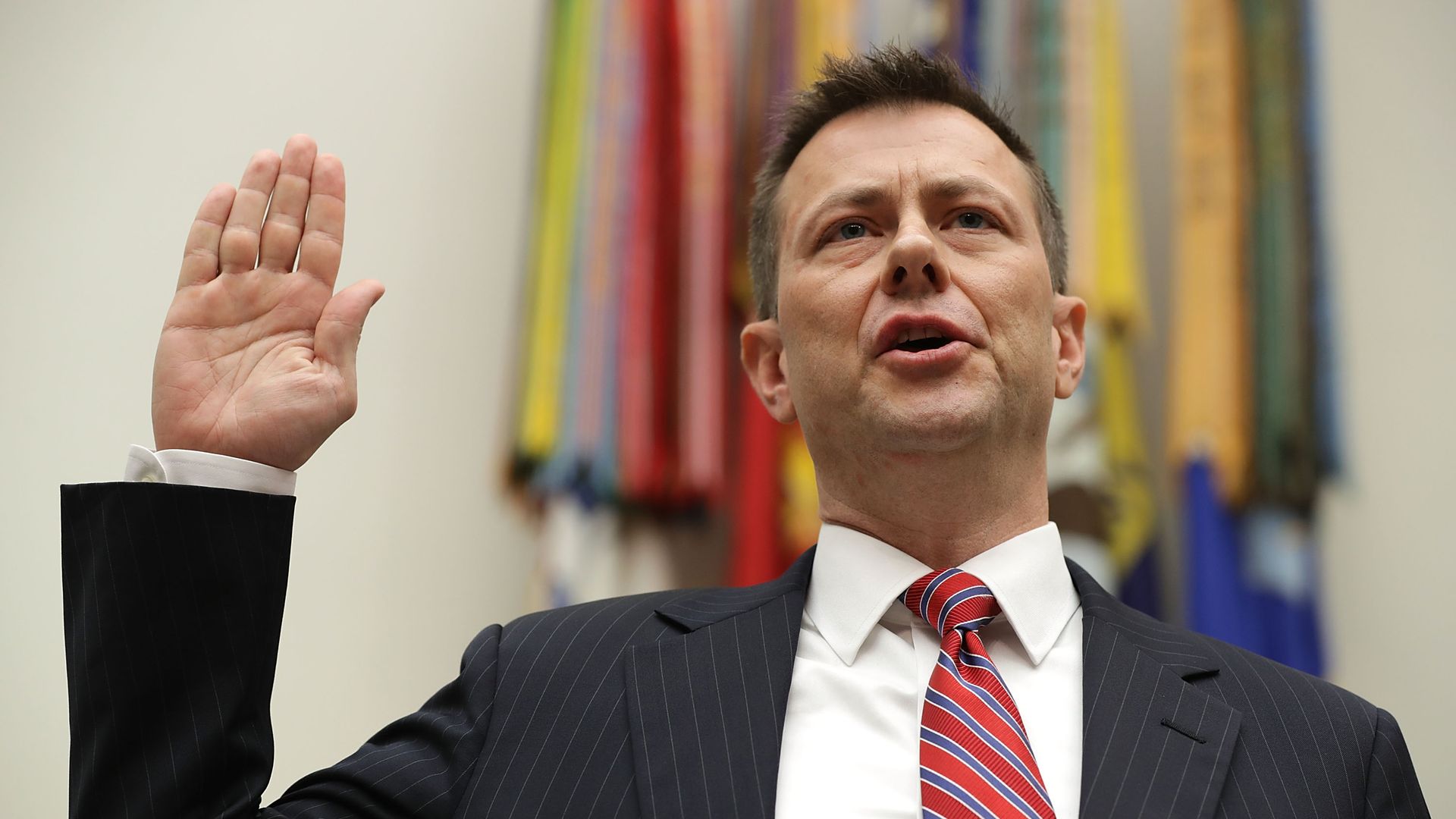
FBI agent Peter Strzok broke his silence on a series of controversial anti-Trump texts he sent before the 2016 election. Strzok told a House hearing Thursday that he does not recall writing a text that said "No. No he's not. We'll stop it," referring to Trump winning the presidency.
“I don’t recall writing that text … What I can tell you is that text in no way suggested that I or the FBI would take any action to influence the candidacy of candidate Trump.”
— Peter Strzok
Why it matters: Republicans have been waiting for the chance to grill Strzok about their suspicions that he was biased against Trump. The testimony quickly devolved into a yelling match, with House Judiciary Committee chairman Bob Goodlatte threatening to hold Strzok in contempt after he refused to answer Republicans' questions about the FBI's investigation of Russian election meddling, citing the fact that it is ongoing.
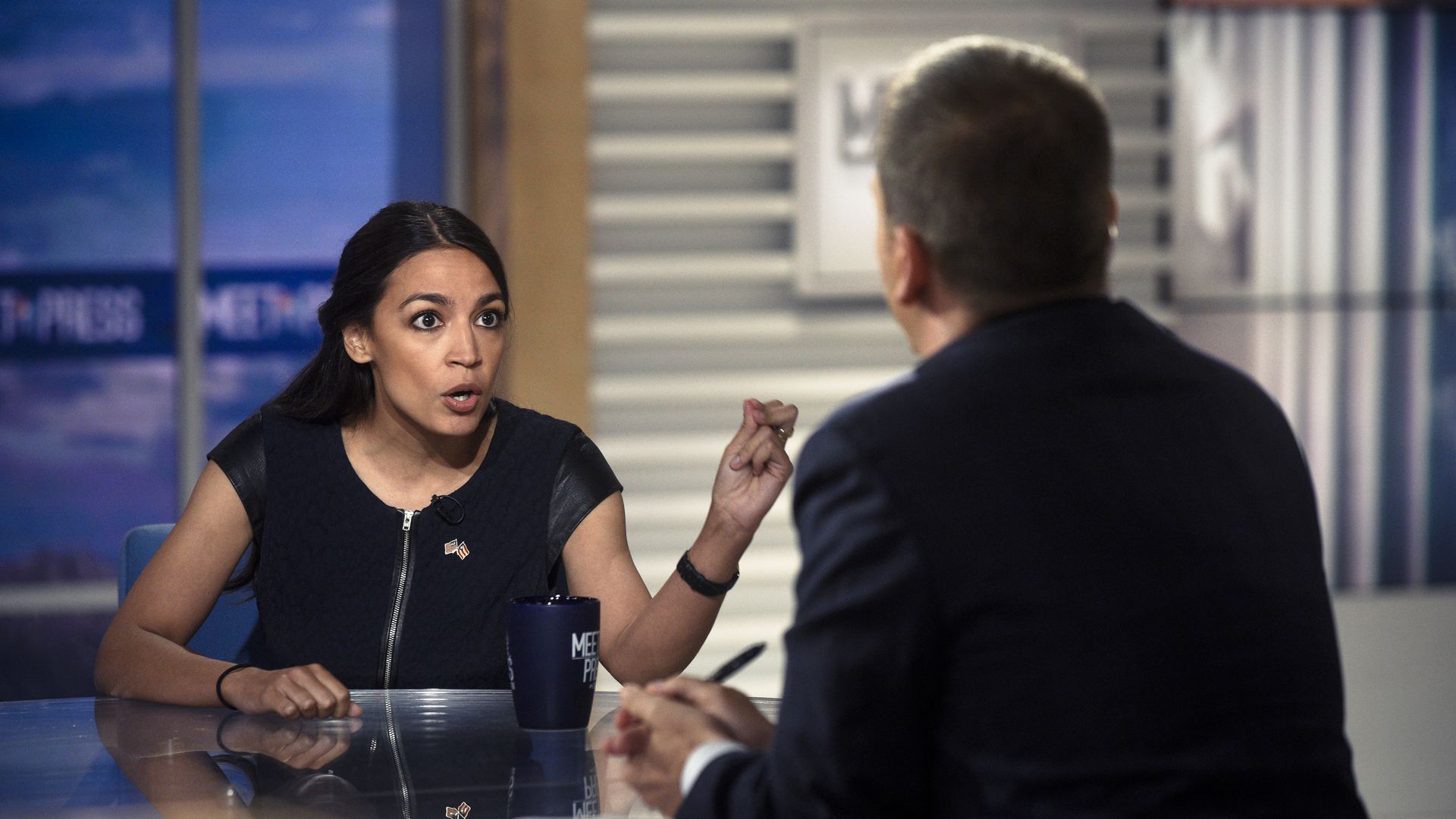
Rep. Joe Crowley stated on live TV that he would absolutely support my candidacy. Instead, he’s stood me up for all 3 scheduled concession calls. Now, he’s mounting a 3rd party challenge against me and the Democratic Party — and against the will of the New York Working Families Party.
What's happening: In her tweet, Ocasio-Cortez linked to this New York Times article, which explains that Crowley won the endorsement of the Working Families Party, giving him the option to appear on the general election ballot if he so chooses. When asked to vacate the line, Crowley's campaign reportedly declined, likely due to the convoluted legal process that the request would entail.
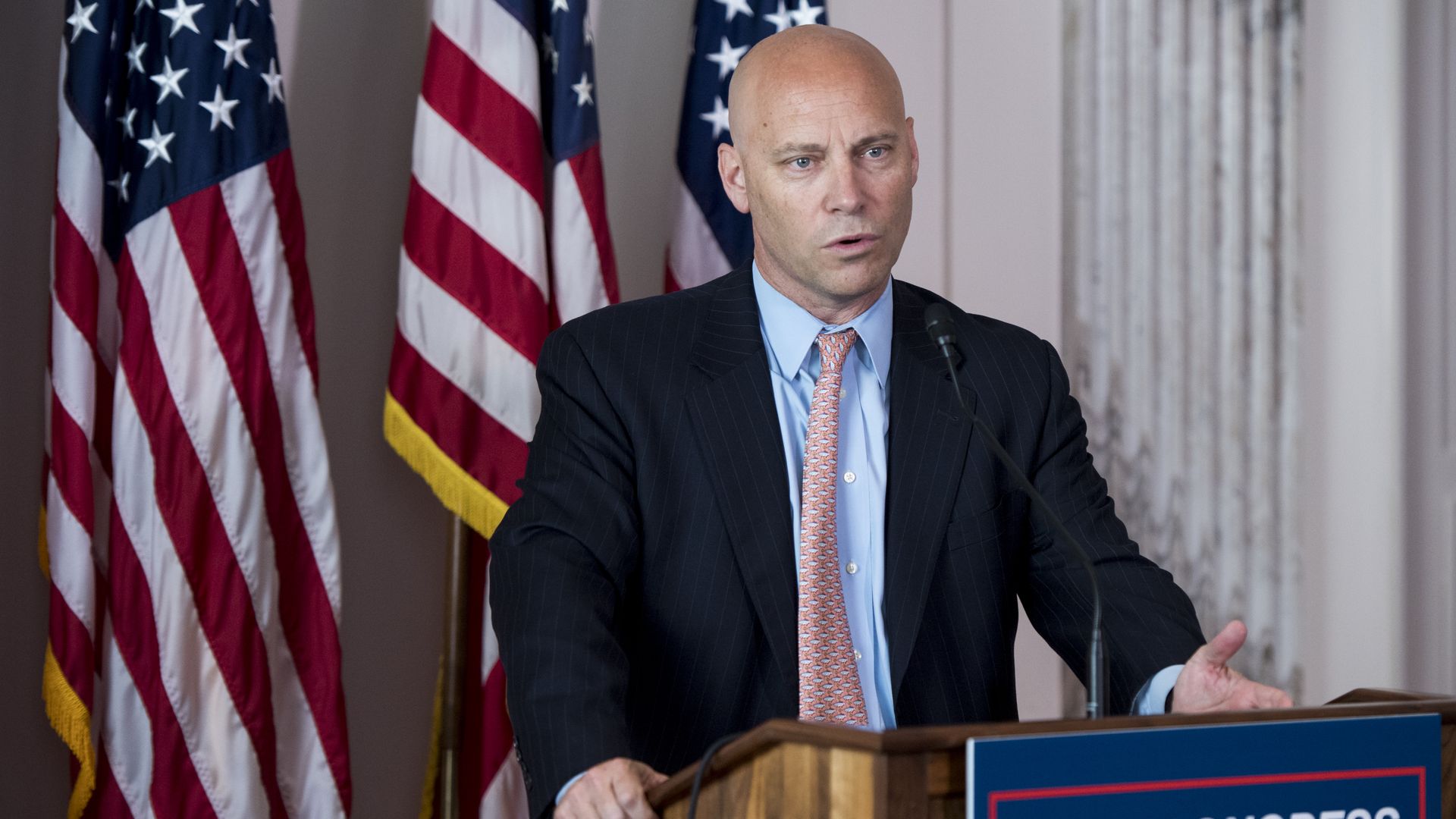
Marc Short, director of legislative affairs at the White House, will leave his position by July 20 to consult for Guidepost Strategies and teach at the University of Virginia's Darden School of Business, where he will also serve as a senior fellow for the non-partisan Miller Center, reports Politico.
Why it matters: In addition to being a frequent cable news surrogate for the president, Short is one of the administration's longest-serving senior aides and worked closely on several high profile policy initiatives, including the efforts to repeal the Affordable Care Act and overhaul the tax code.
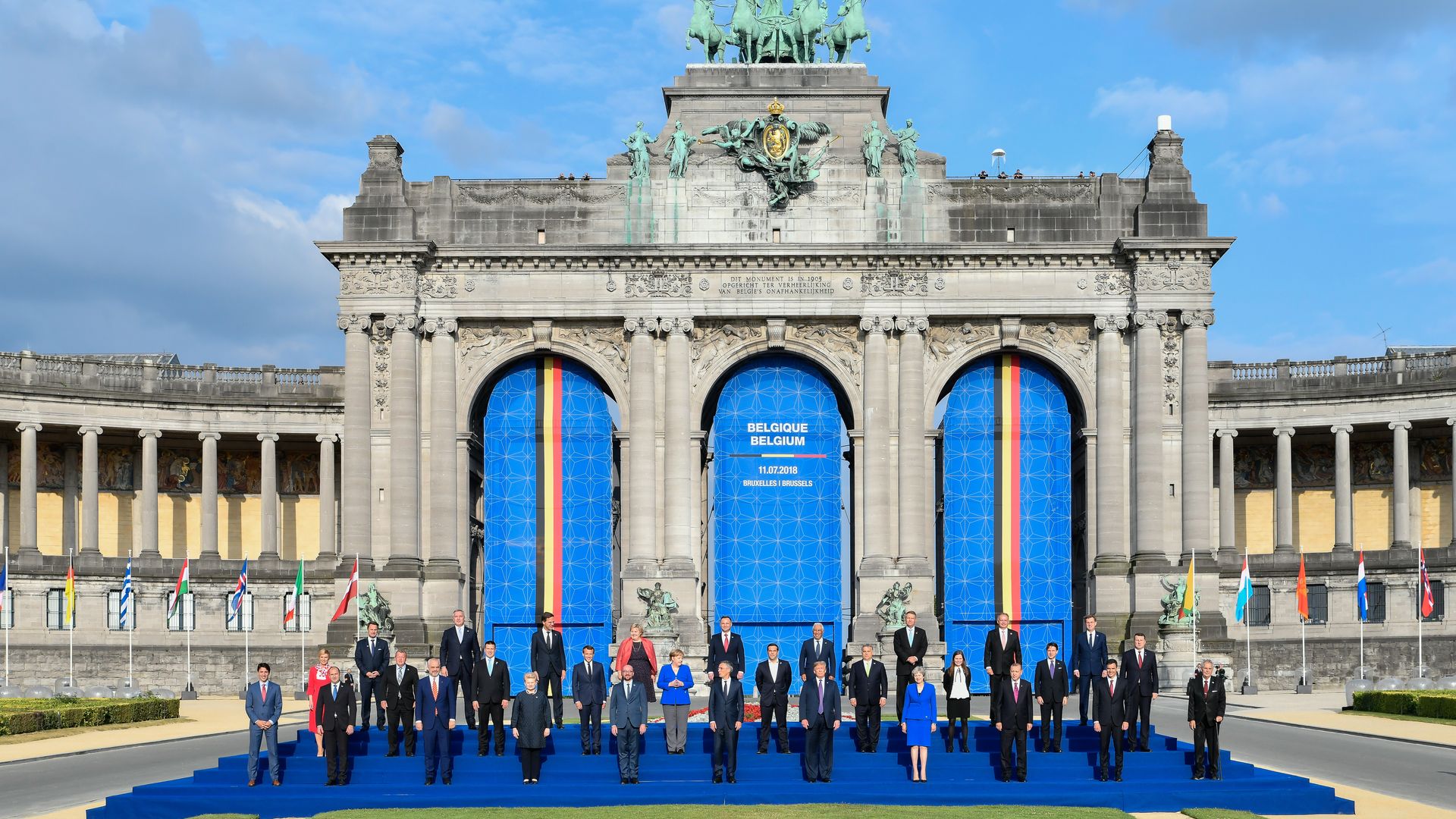
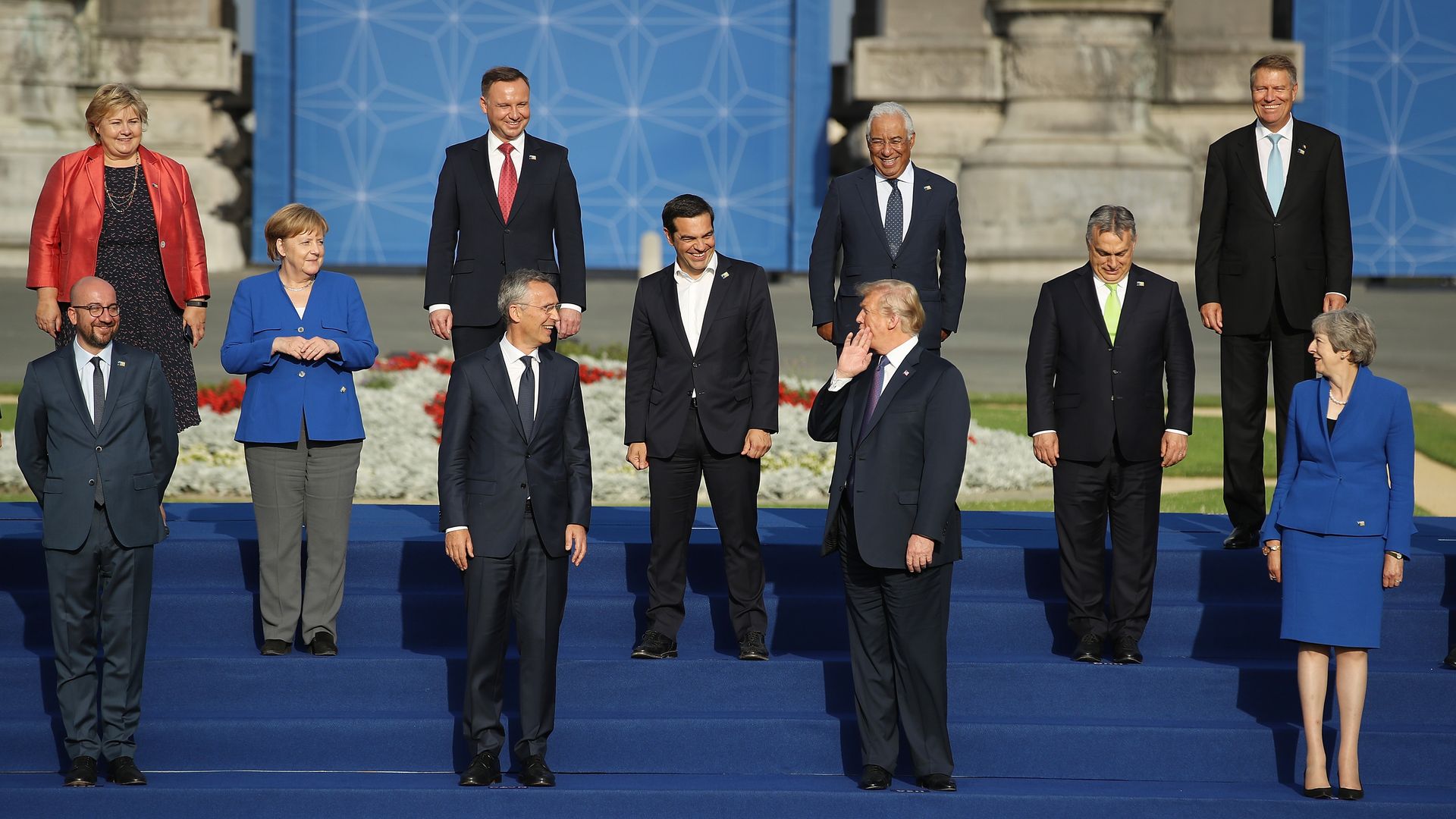
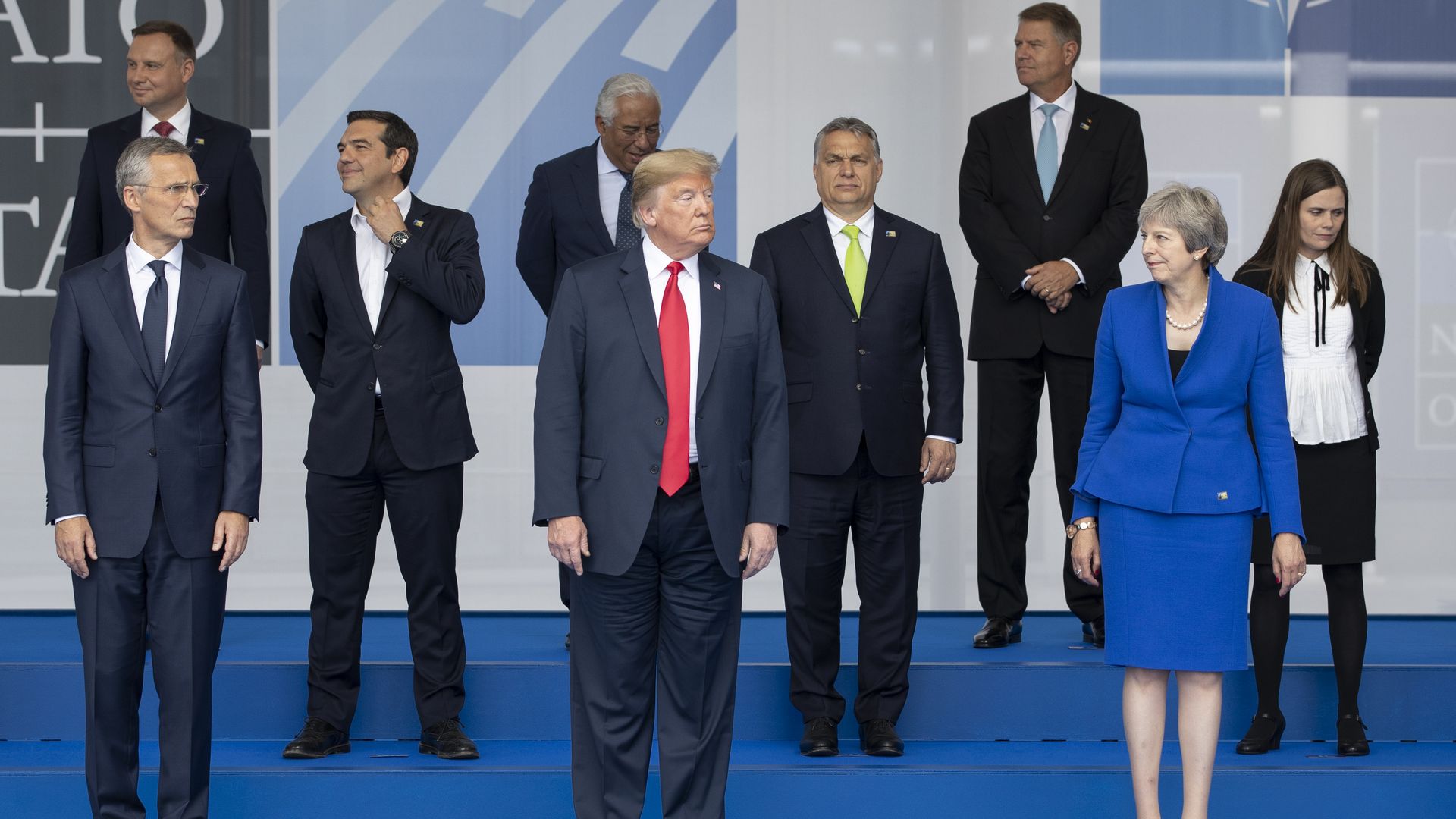
BRUSSELS — President Trump left allies in a state of irritation, confusion and — for some, relief — after a NATO summit during which I'm told he was privately charming in some of his one-on-ones but bombastic and threatening in larger meetings.
The big picture: At this morning's emergency meeting of leaders, Trump made comments that some diplomats interpreted as a veiled threat that the U.S. would withdraw from NATO, according to sources briefed on the meeting. But Trump held an impromptu press conference before leaving the summit and in that conference he claimed total victory — saying the summit had been a huge success, and thanks to him, other NATO members had committed to increase their military spending “like they never have before.”
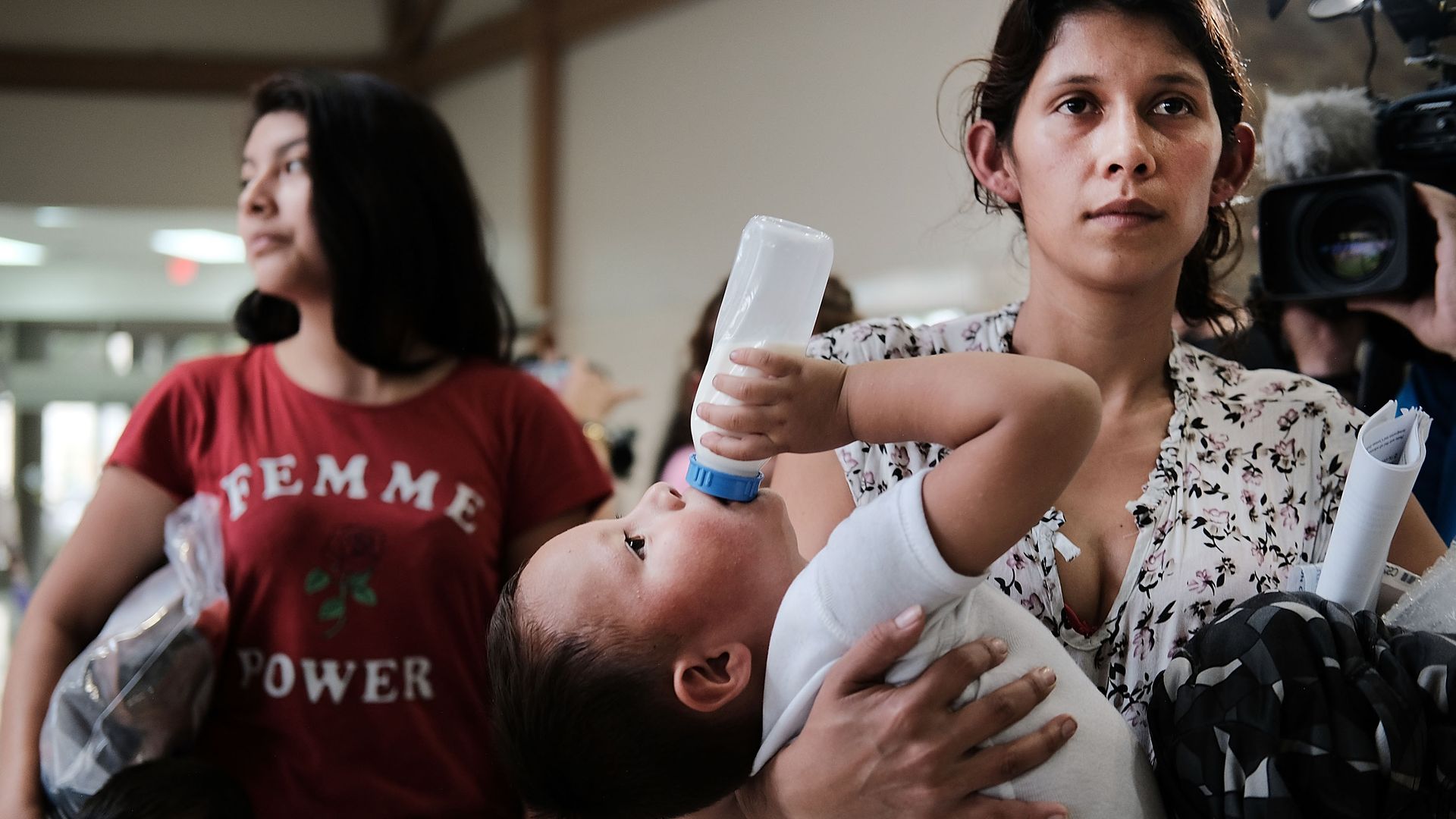
The Trump administration announced Thursday that all eligible migrant children under age 5 who were separated from their families had been reunited.
By the numbers: The administration had struggled to meet court-ordered deadlines for the reunification of the 103 migrant children held by the Department of Health and Human Services. 57 of those children were reunited with their parents, while the remaining 47 have been deemed ineligible for reunification due to safety concerns or the present circumstances of their parents, including deportation or imprisonment.
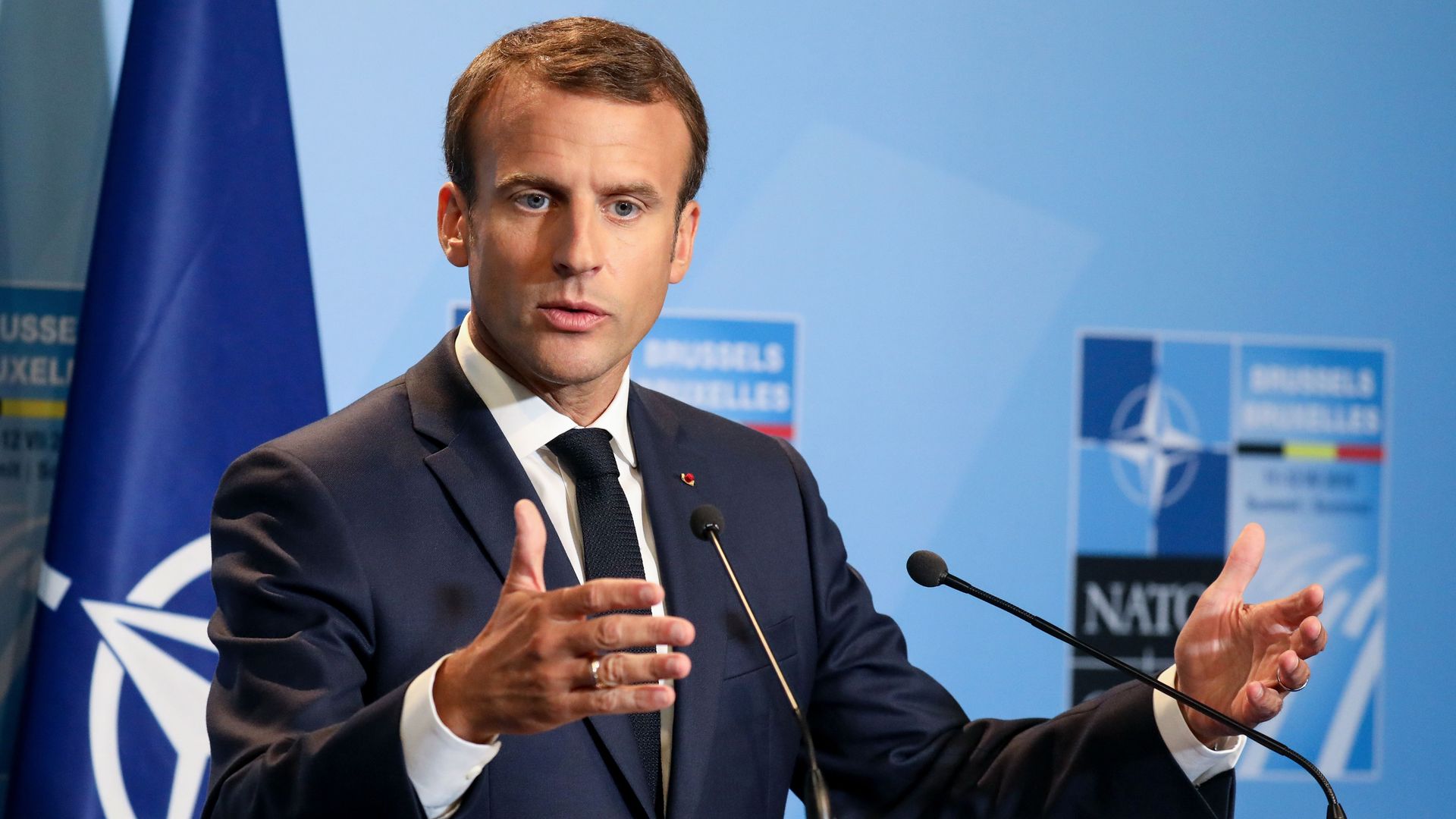
French President Emmanuel Macron told reporters Thursday that NATO leaders did not agree to increase defense spending to more than 2% of GDP, citing a "very detailed" communique signed yesterday that confirms the goal of 2% by 2024, reports the AP.
Why it matters: Macron's comments refute President Trump's claim to reporters that "everyone's agreed to substantially up their commitment." The French president also denied reports that Trump told leaders the U.S. "would go it alone" if they didn't meet their spending targets, claiming that Trump never, "in public or in private, threatened to withdraw from NATO."
Transatlantic solidarity appeared strained on day one of the NATO summit, as leaders parried rhetorical blows from President Trump, including his charge that U.S. allies "owe us a tremendous amount of money for many years back."
Trump criticized countries spending less than 2% of GDP on defense, before making an unexpected call to boost the figure to 4%. He also said Germany was "totally controlled" by Russia, denouncing a planned gas pipeline that would link the two countries and yet speaking little about the Russian threats across Europe.
Yes, but: There have been meaningful policy and security agreements that risk getting lost amid the rhetoric.
President Trump called an emergency meeting of NATO leaders at the summit in Brussels on Thursday, then held a surprise press conference and said there was a "tremendous amount of progress today."
Why it matters: At the meeting, Trump threatened to "do his own thing" if member countries do not immediately increase defense spending commitments, the Washington Post's Michael Birnbaum and Phil Rucker report, citing officials briefed on the events. Some diplomats reportedly interpreted Trump's comments as a threat to withdraw from NATO.
President Trump reiterated one of his most famous self-assessments during a press conference at the NATO summit Thursday, calling himself a "very stable genius" after a Croatian reporter asked if he'd change his tone on Twitter regarding the alliance once he'd left.
No, that's other people that do that. I don't. I'm very consistent. I'm a very stable genius.
Flashback: Trump first used the phrase on Twitter earlier this year following the publication of "Fire and Fury."
On President Trump's first day at the NATO Summit, he scolded Germany as "a captive of Russia," accused allies of being delinquent on defense payments and called on member countries to double their defense spending from 2% to 4% of GDP. But he then joined 28 allied leaders in signing a declaration that bolsters NATO deterrence and defense and starkly criticized Russia for its illegal annexation of Crimea.
Why it matters: The first set of statements are deeply divisive and call Trump's commitment to NATO into question. Germany is hardly controlled by Moscow, allies don't owe the U.S. any money and even the U.S. doesn't spend 4% of GDP on defense. These are all statements designed to undermine NATO.
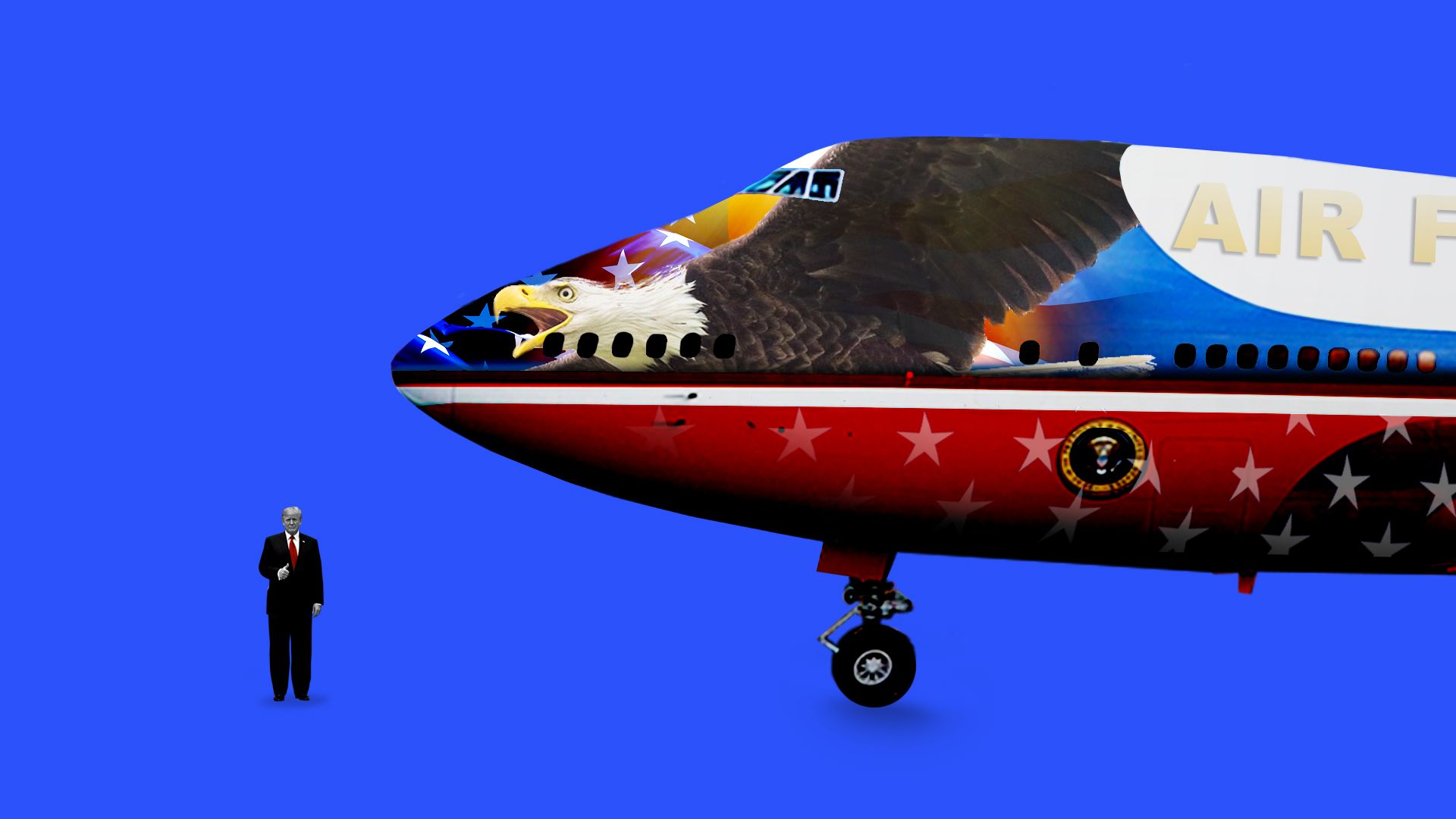
President Trump wants to update the paint job on the next version of Air Force One, ditching the iconic robin's-egg blue (which he calls a "Jackie Kennedy color") for a bolder, "more American" look.
The big picture: Trump rarely gets into the weeds of government negotiations. But he sat down in the Oval Office with Boeing CEO Dennis Muilenburg in February to personally hammer out the $4 billion deal for a pair of replacement 747s for use as Air Force One (the call sign for whatever Air Force plane the president is on).