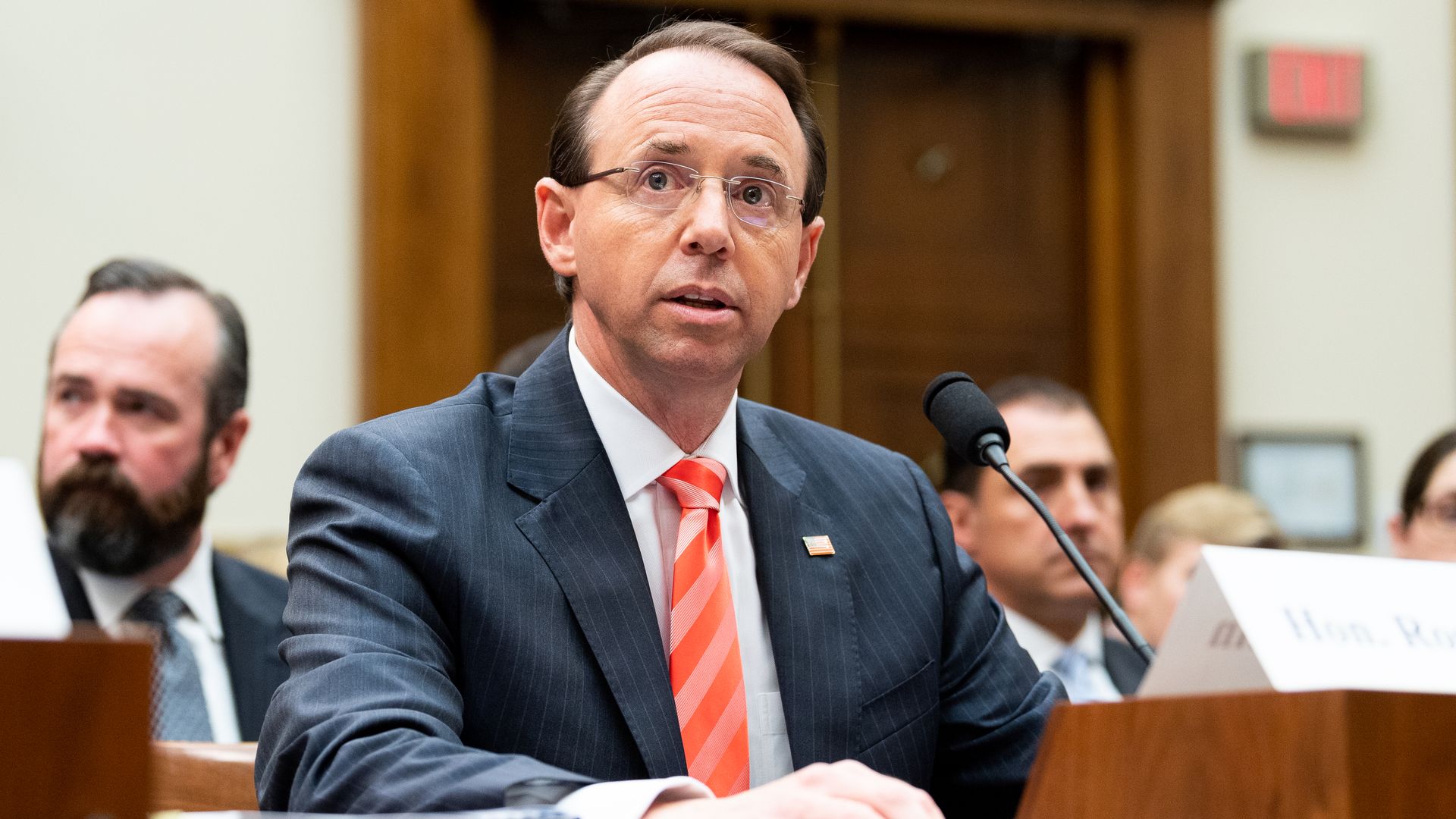
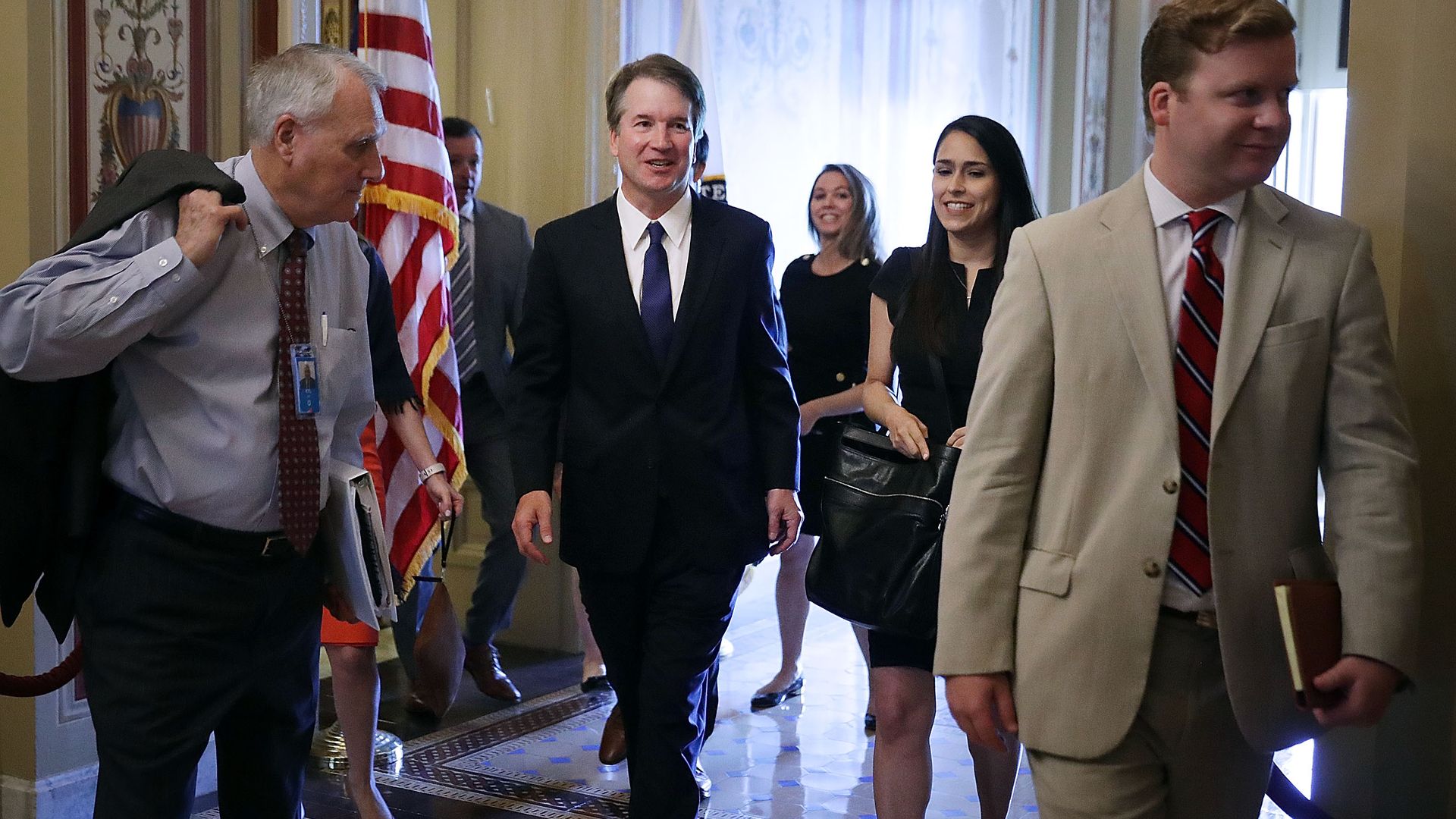
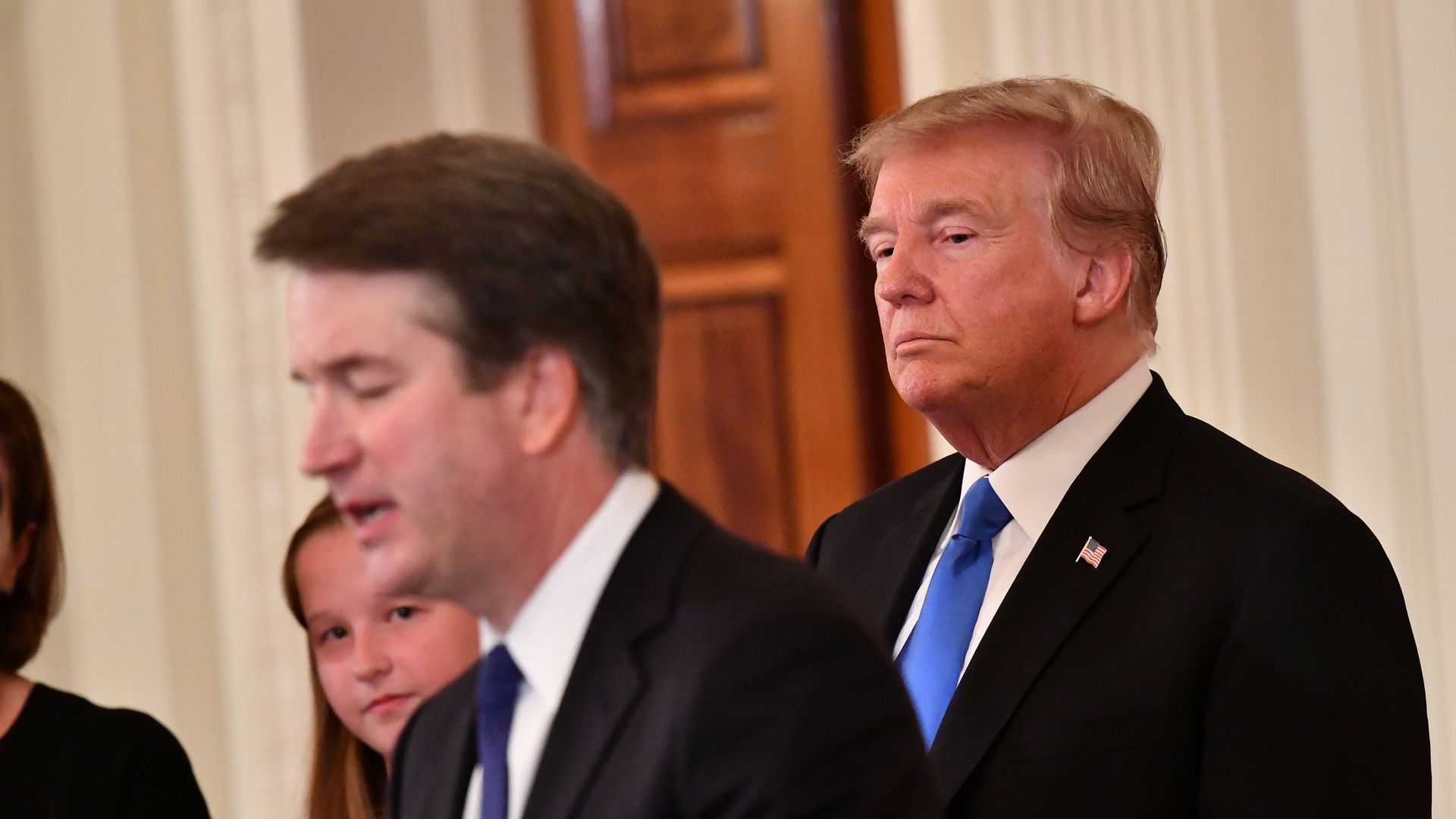
Deputy Attorney General Rod Rosenstein has asked the offices of all 93 U.S. attorneys to each provide up to three federal prosecutors to assist the Justice Department in reviewing government records of President Trump’s Supreme Court nominee Brett Kavanaugh, the New York Times reports, citing a letter it obtained.
Why it matters: The Times notes that this is an unusual move because department attorneys are not typically responsible for carrying out such a task. "The production of documents could slow down a confirmation hearing that has already shaped up as a sharp partisan battle. Democratic lawmakers say they want to inspect all of Judge Kavanaugh’s documents, including his staff work and over 300 opinions he has issued as a judge on the United States Court of Appeals for the District of Columbia Circuit," the report notes.
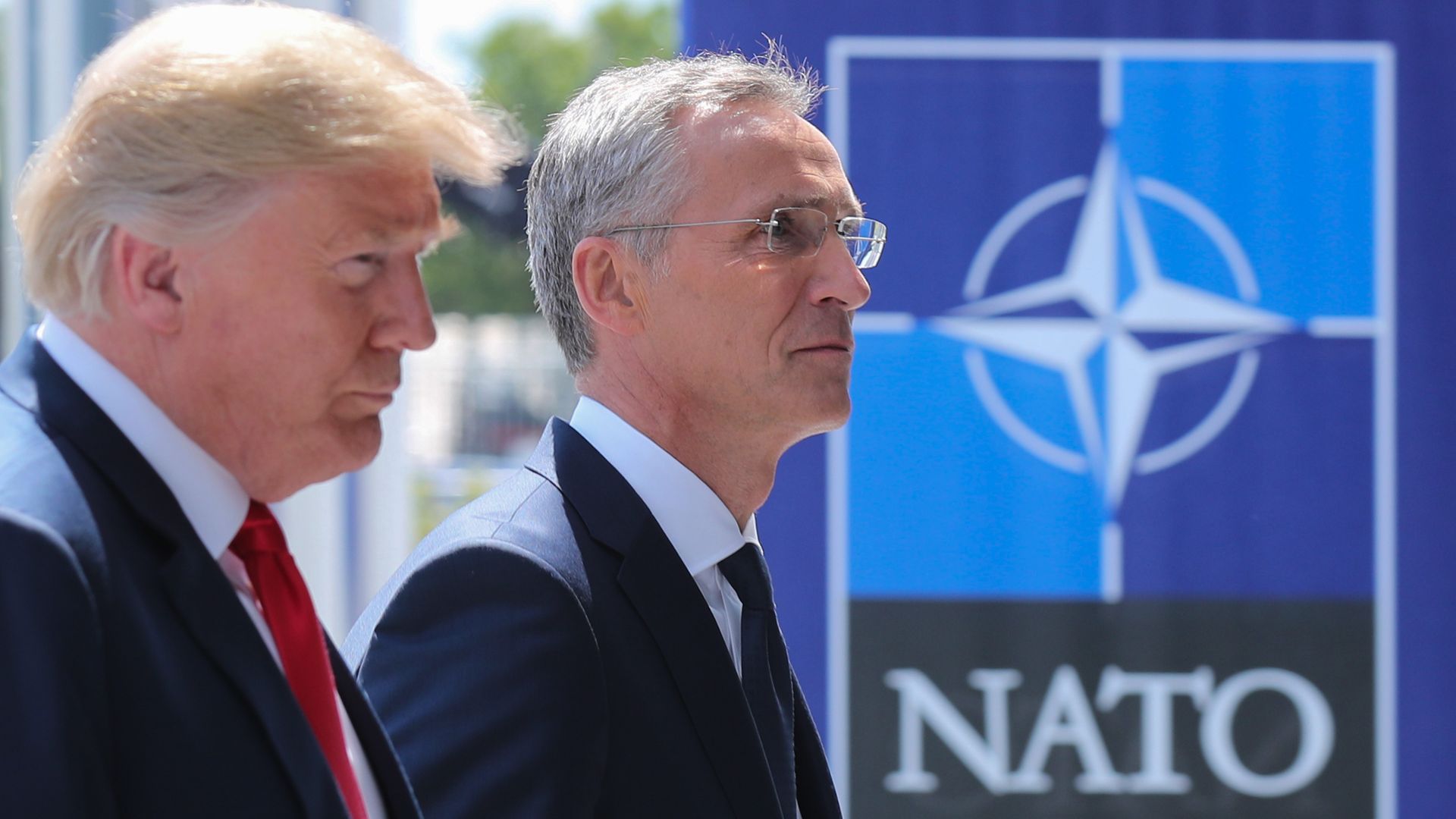
I asked NATO Secretary General Jens Stoltenberg a pair of questions in Brussels today: 1) Did President Trump assure you he wouldn't make any concessions in his meeting with Vladimir Putin — for example on Crimea? 2) Has President Trump, in any of his conversations with you, suggested he thinks the United States has too many troops in Europe?
In both of his answers, Stoltenberg made a point about Trump’s words being different from that of the administration’s deeds (so far). It's true that Trump has not done anything to reduce U.S. military support for NATO, and has actually increased military investments in Europe. But at the same time, Trump has done what no recent U.S. president has done — publicly questioned the value of NATO for the U.S. and in the process made some of America’s closest allies privately question whether they can still rely on American protection.
Red state Democratic Sen. Joe Manchin of West Virginia, who will cast a key vote during Judge Brett Kavanaugh's confirmation process, said on Talkline Communications radio Wednesday that Kavanaugh "has all the right qualities" of a Supreme Court Justice, and he will defer to his constituents when casting his vote.
Why it matters: With comments like these, it's no wonder the White House is feeling good about Kavanaugh's confirmation. The conservative movement — after some early warning shots — appears to be rallying around Kavanaugh as well. And so far we've not seen anything from the moderate Republican senators, Susan Collins and Lisa Murkowski, to signal they won't vote for him either.
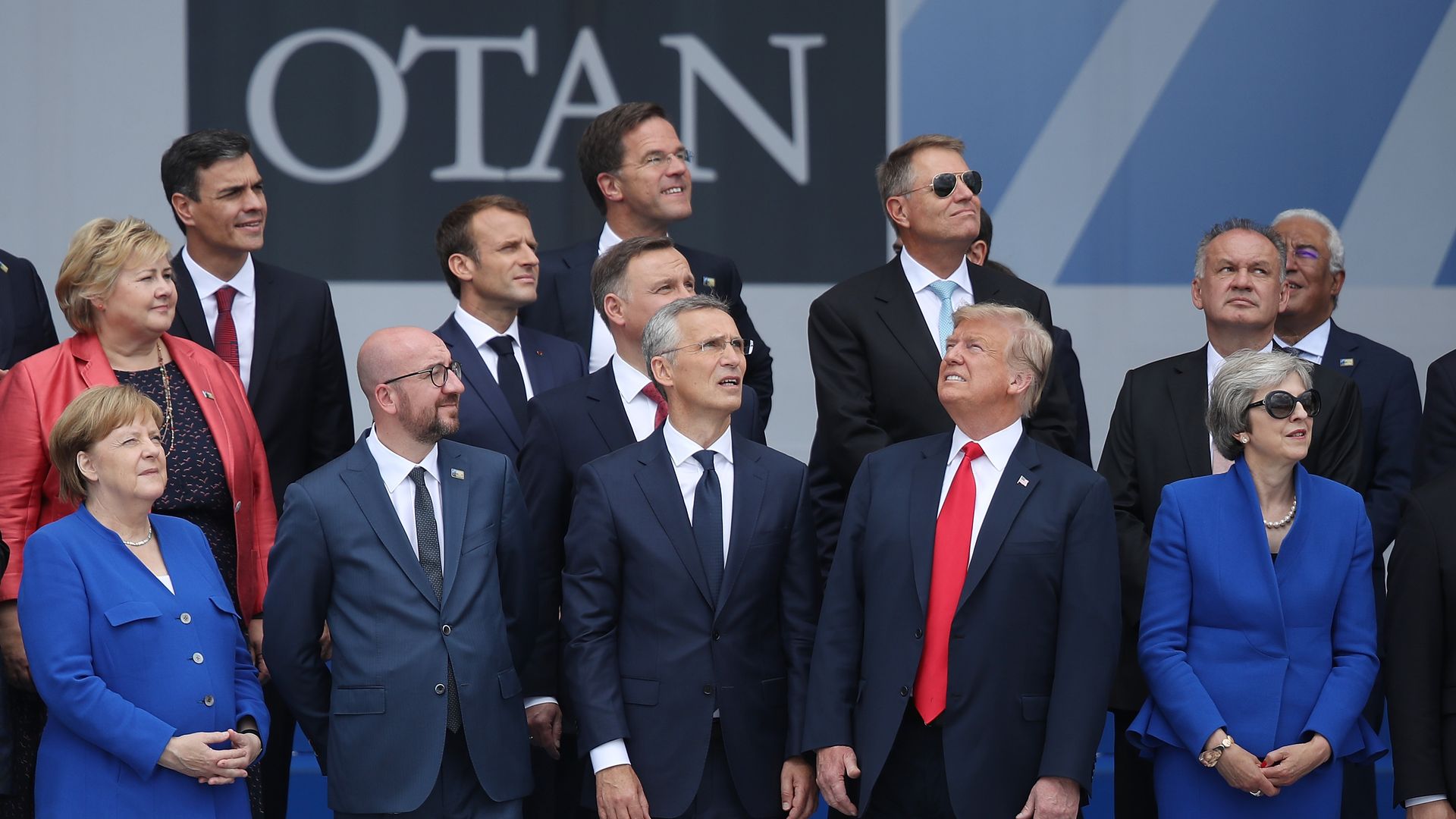
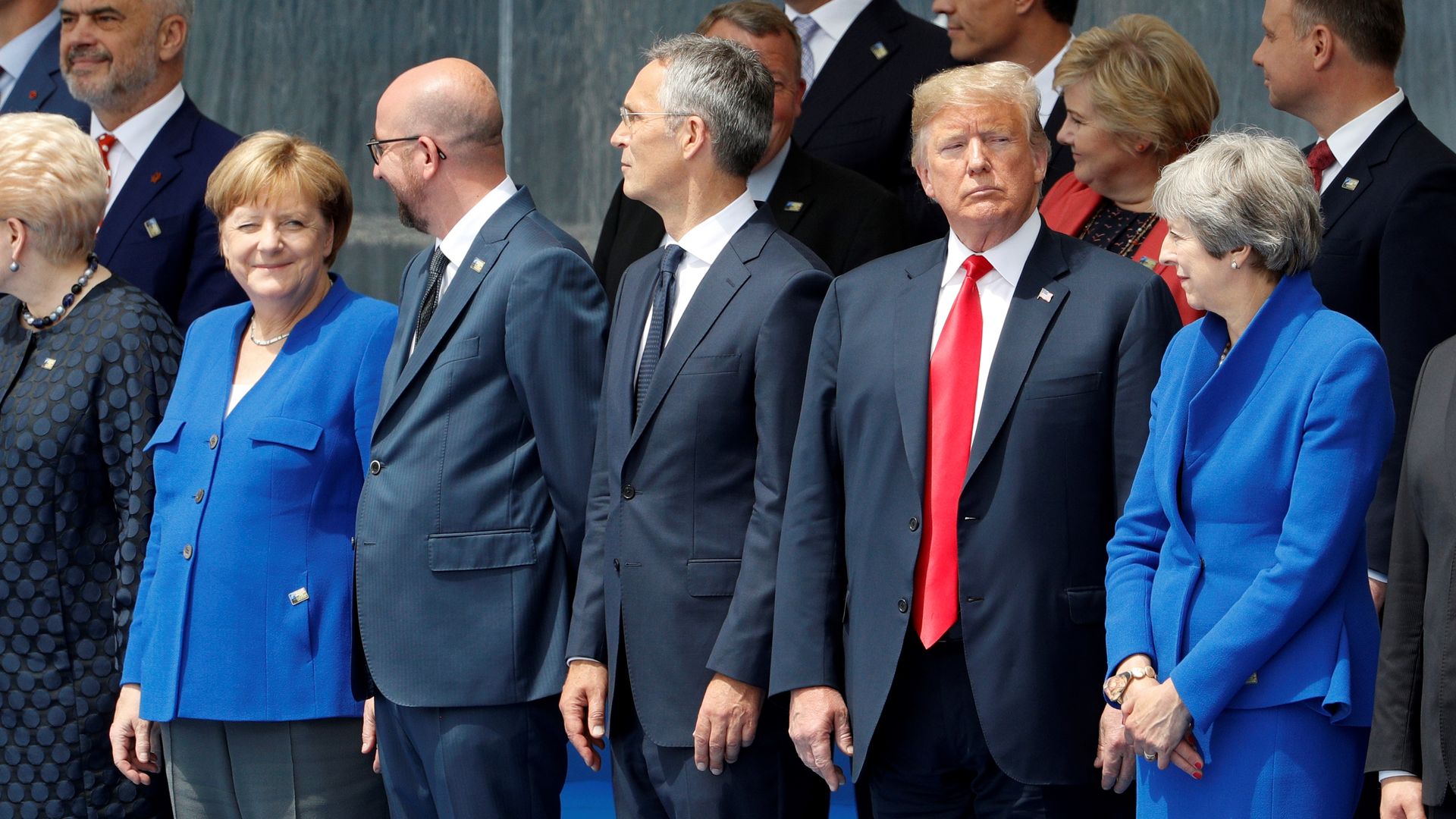
The leaders of the 29 NATO countries kicked off their annual summit in Brussels today.
The big picture: President Trump continued to posture himself against some of the United States' biggest allies, calling on them to significantly increase their contributions to the alliance and singling out Germany with controversial criticisms.
During Wednesday's NATO summit in Belgium, President Trump called on NATO members to commit to spending 4% of GDP on defense, up from the current 2% target that members are struggling to meet.
Why it matters: The U.S., which spends by far the most on defense, doesn't even spend 4% of GDP. Allies are feeling the pressure to increase their spending, but some may take this as an indication that Trump doesn't actually want progress toward that goal, but instead wants to challenge and even undermine an alliance he feels is deeply unfair for the U.S.
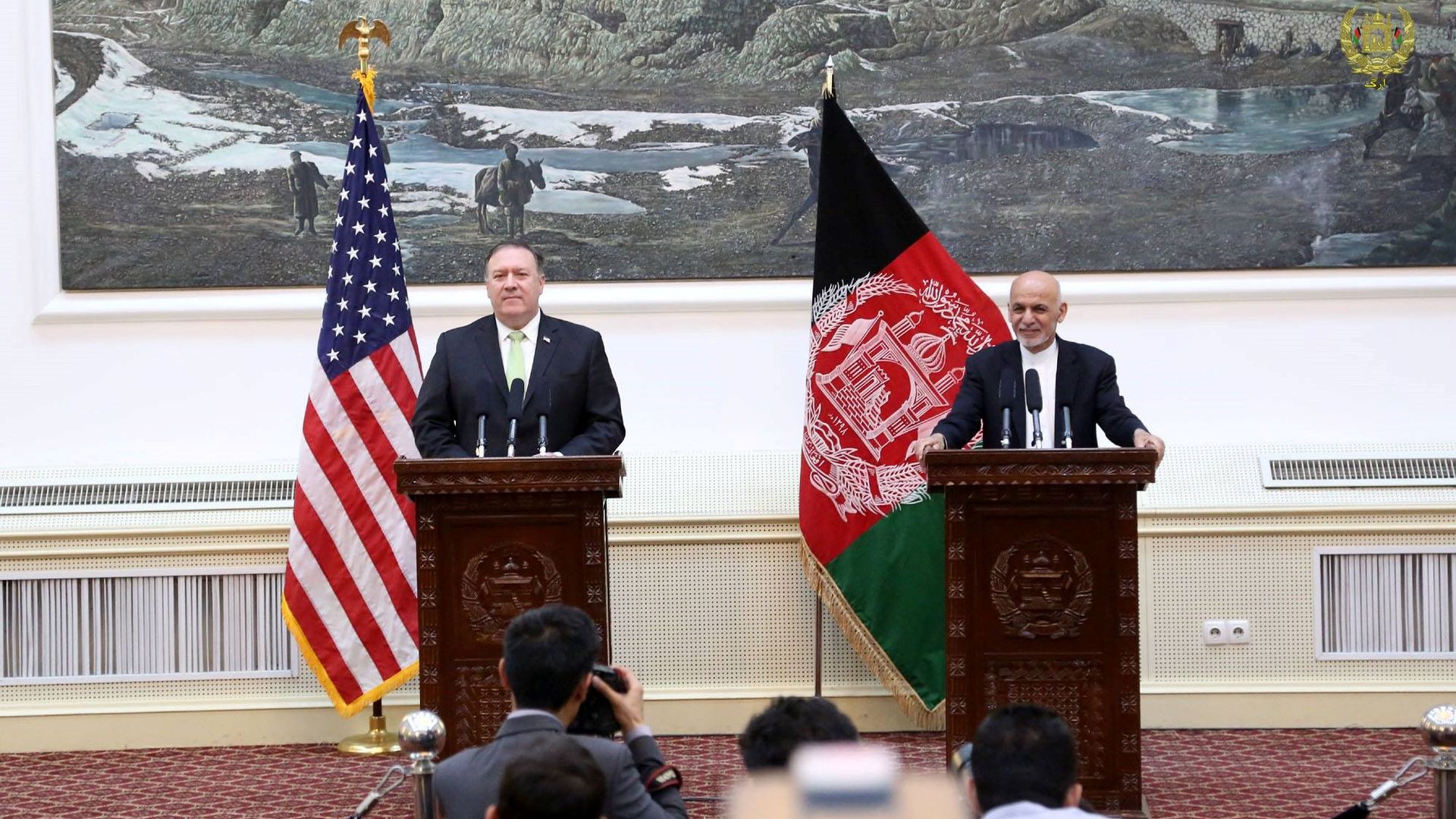
Within the next few months, the U.S. may conduct a "review of its strategy in Afghanistan," Reuters reports, citing current and former officials and advisers with direct knowledge.
The big picture: President Trump "has shown signs of frustration over the lack of progress" since last year, when he announced his strategy for continuing the war. In the last year, conditions in Afghanistan haven't significantly improved as "Afghan civilians are paying a heavy toll, the Taliban are expanding in rural areas but are unable to capture major urban centers and the capability of Afghan security forces remains in doubt," Reuters notes.
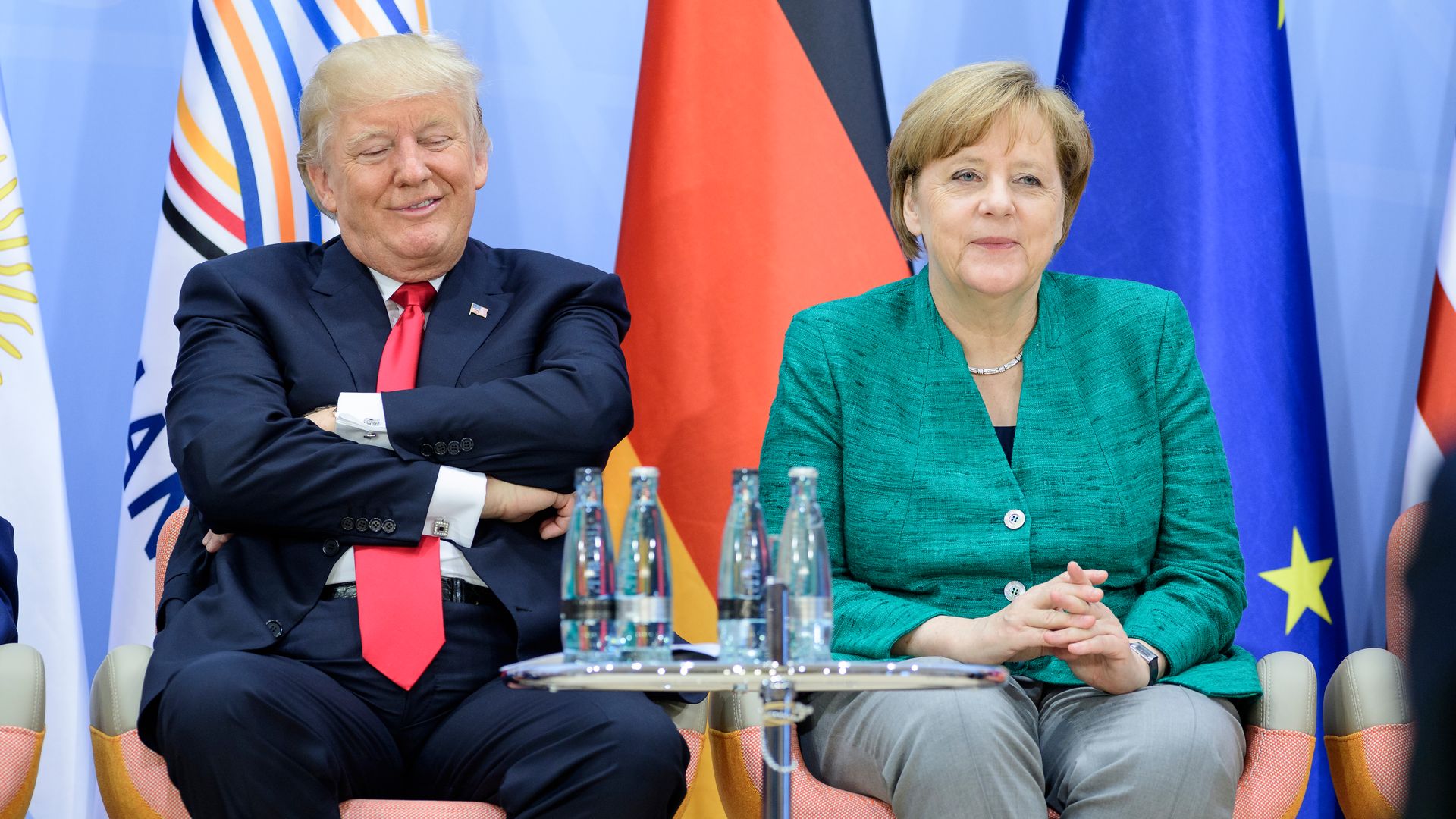
President Donald Trump and German Chancellor Angela Merkel have exchanged sharp words ahead of their tête-à-tête today at the NATO summit in Brussels.
The big picture: Merkel is notoriously more tight-lipped than Trump, but his comments in his first NATO meeting that Germany is "totally controlled by Russia" for its energy deal struck a chord with the chancellor. Merkel, who grew up under East Germany's Soviet occupation, hit back at Trump Wednesday, and said that she "experienced the Soviet occupation ... it is good that we are independent today."
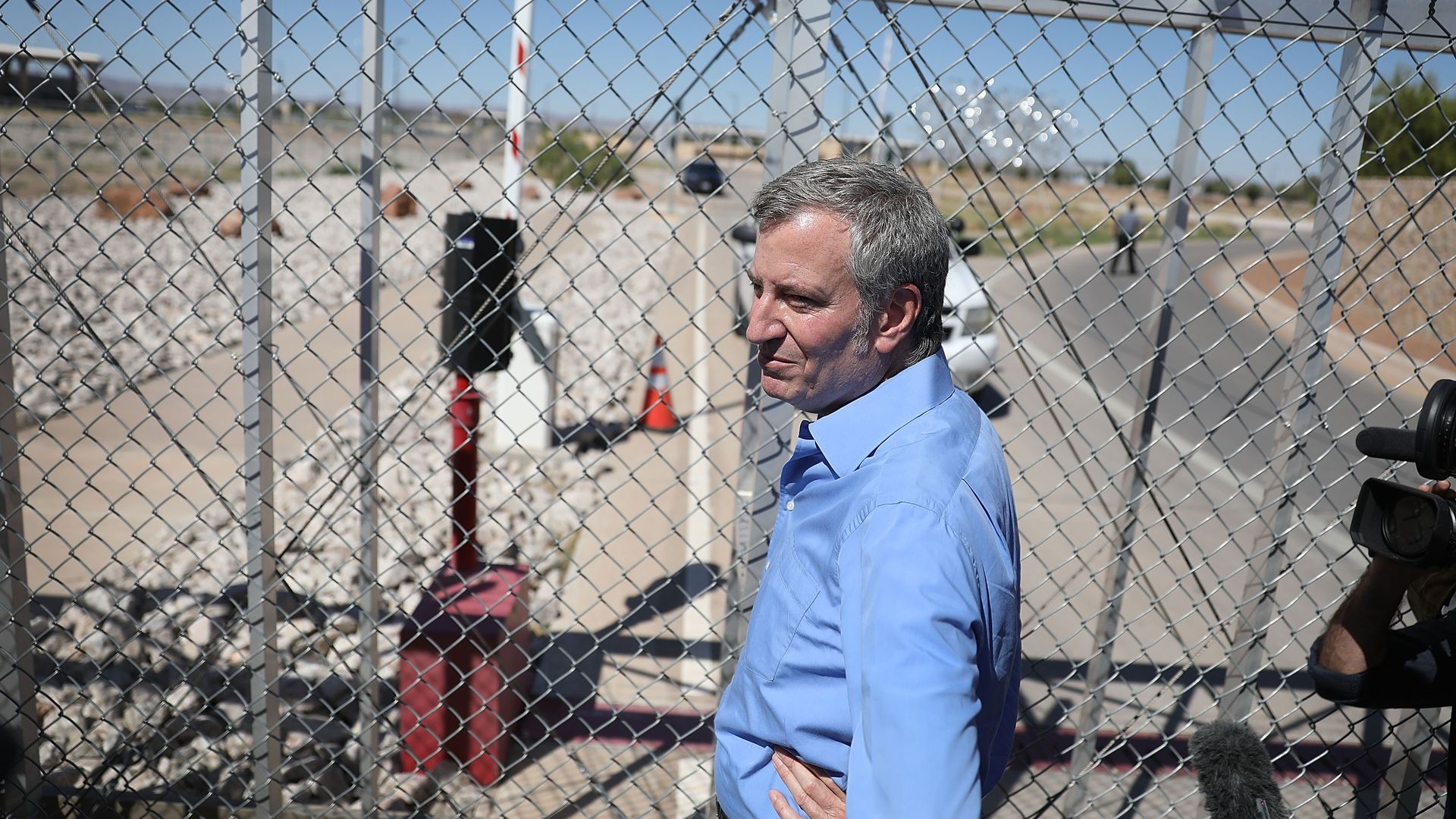
U.S. Customs and Border Protection alleged that New York City Mayor Bill de Blasio broke U.S. and Mexican immigration laws by illegally crossing the southern border in June, according to the Associated Press which obtained a letter detailing CBP's allegations.
The details: De Blasio — while visiting the border with around 20 other mayors on June 21 — reportedly wanted to enter a facility which was holding immigrant children, but was denied access. The group then crossed into the U.S. through Mexico to see the facility, illegally, according to CBP, though de Blasio's office has stated his group had direct approval to do so.
"It is not every day that a potential constitutional showdown over a presidential subpoena coincides with a confirmation hearing for a crucial Supreme Court seat. Less likely yet is a nominee who has written extensively about the very question at the heart of the dispute," the N.Y. Times' Adam Liptak writes.
The bottom line: "[T]hat novel historical moment is here."
President Donald Trump, in a "startling public outburst" at the U.S. chief of mission residence here in Belgium ahead of the NATO summit, said "Germany is a captive of Russia" and "totally controlled by Russia” because of energy purchases.
Between the lines: The gas pipeline is something Trump has been complaining bitterly about for months.
As President Trump meets other leaders of NATO in Brussels, the backdrop is his role in tearing at the post-World War II order.
The big picture: But a future is taking shape of a 21st century United States without many of the basic institutions that many consider key 20th century advances.
Trump administration officials on Tuesday said they will release hundreds of migrant families and give them ankle-bracelet tracking monitors so immigration authorities could track their whereabouts, returning to the "catch and release" policy the president formerly vowed to end, according to a New York Times report.
The background: This comes after the administration failed to meet several court-ordered deadlines to reunite migrant children with their parents, and follows a judge denying President Trump's request to keep immigrant children in detention longer than 20 days.
In a bipartisan rebuke to President Trump, the Senate on Tuesday overwhelmingly approved a non-binding motion in support of NATO.
Why it matters: The symbolic 97-2 vote came as Trump, who is in Brussels for a summit with NATO allies, continues to lambast the alliance over what he labeled as their lack of commitment in defense spending. Rand Paul and Mike Lee voted against the measure.