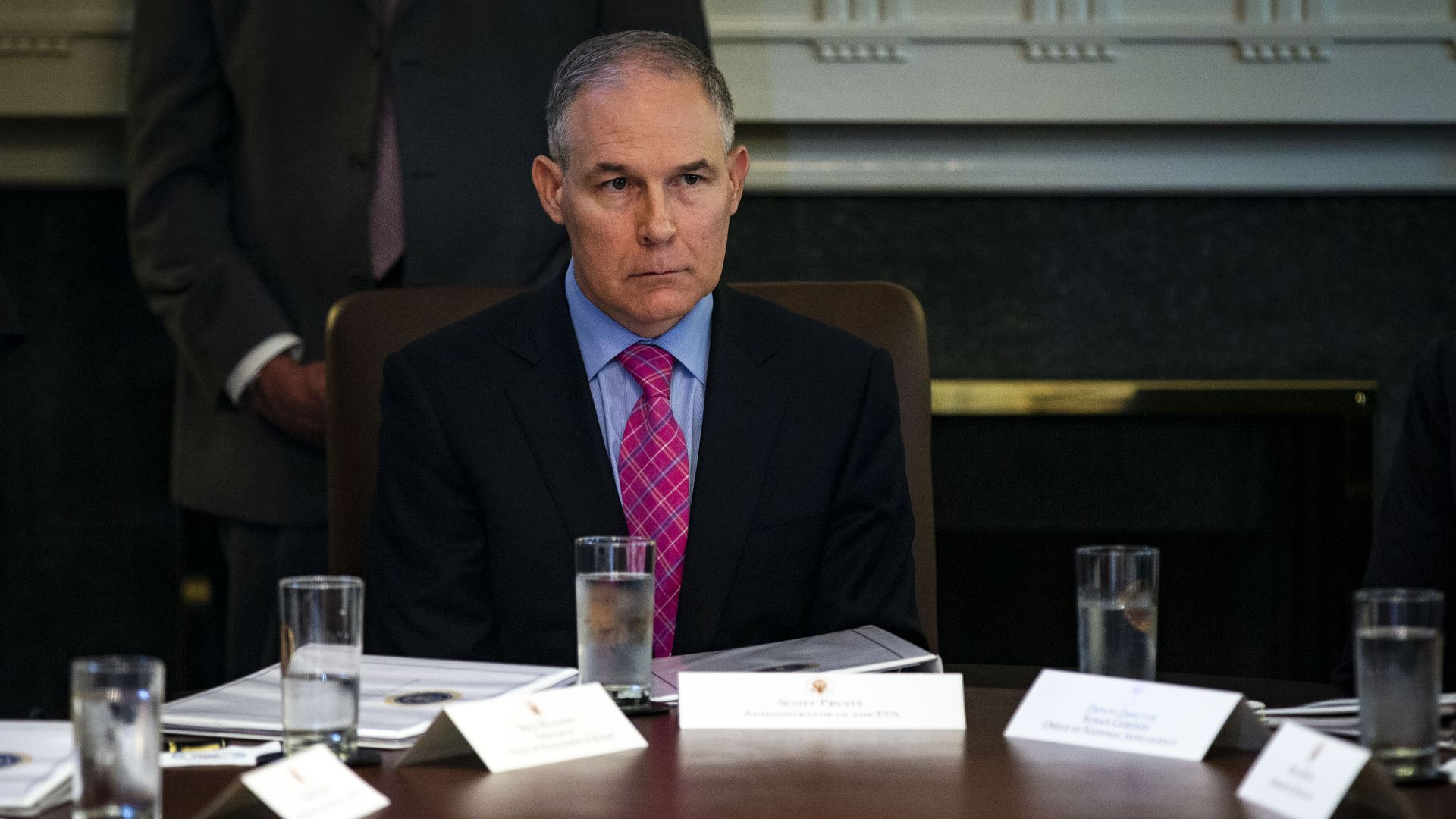
Embattled EPA Administrator Scott Pruitt had demanded and received around-the-clock armed security protection since his first day on the job, the agency’s inspector general disclosed in a letter Monday to congressional lawmakers.
The details: Inspector General Arthur Elkins, responding to an inquiry about Pruitt’s security, said the EPA head initiated the protection plan himself. The watchdog, which is responsible for probing threats made against agency employees, added that it “played no role in this decision.”
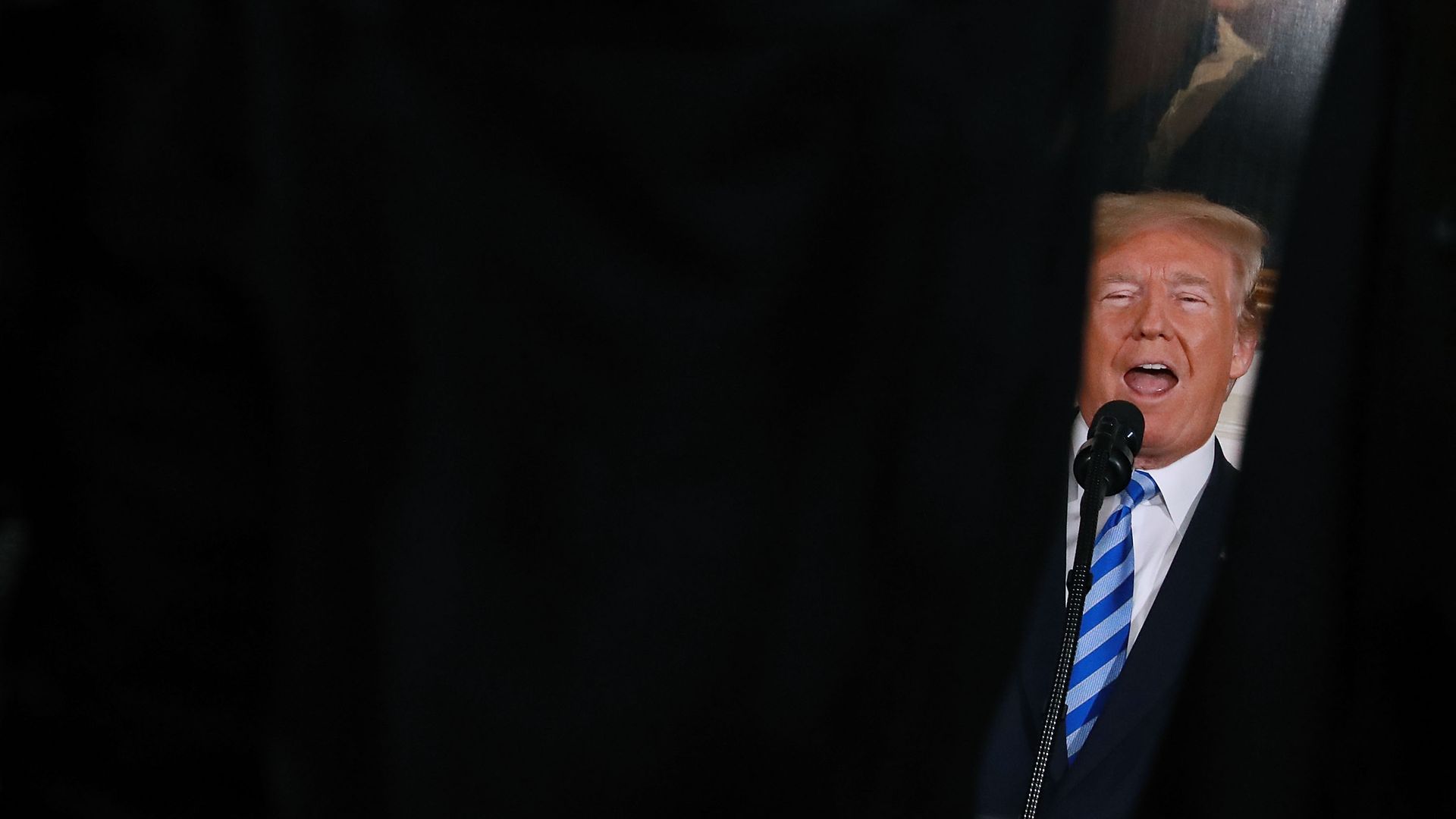
Usually when people say stupid or cruel things, they apologize and move on, instead of defiantly standing by their statements. But that doesn't happen in Trumpworld, and it certainly hasn't happened in the case of White House staffer Kelly Sadler's callous remark about John McCain.
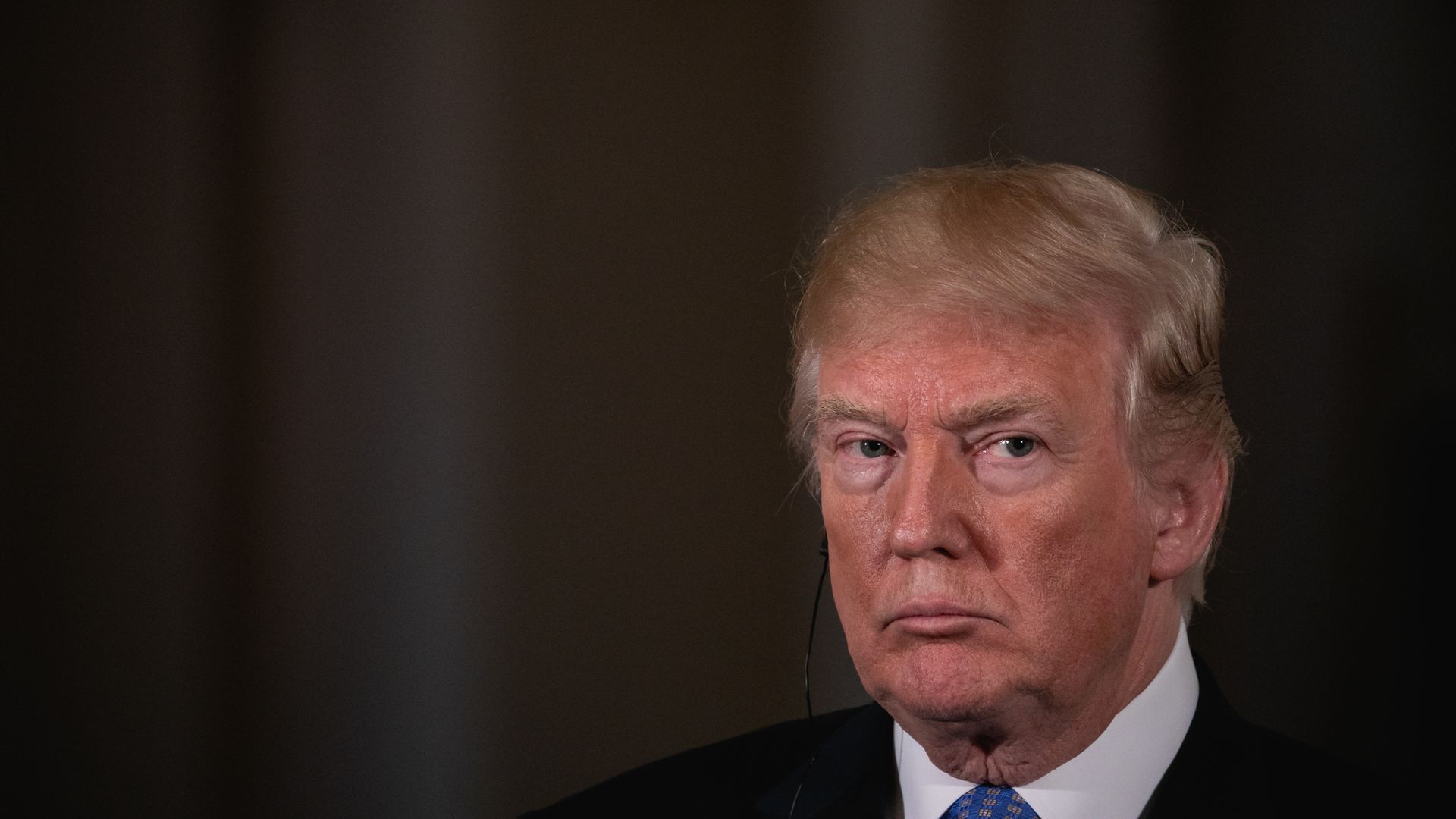
The big picture: Once you’ve worked for Trump for a while you know that the worst thing you can do, the biggest show of weakness, is to apologize. He never does and never did (with one exception — the "Access Hollywood" tape). So staff knows that if they publicly apologize they’re actually MORE likely to incur Trump’s wrath than if they just move on.
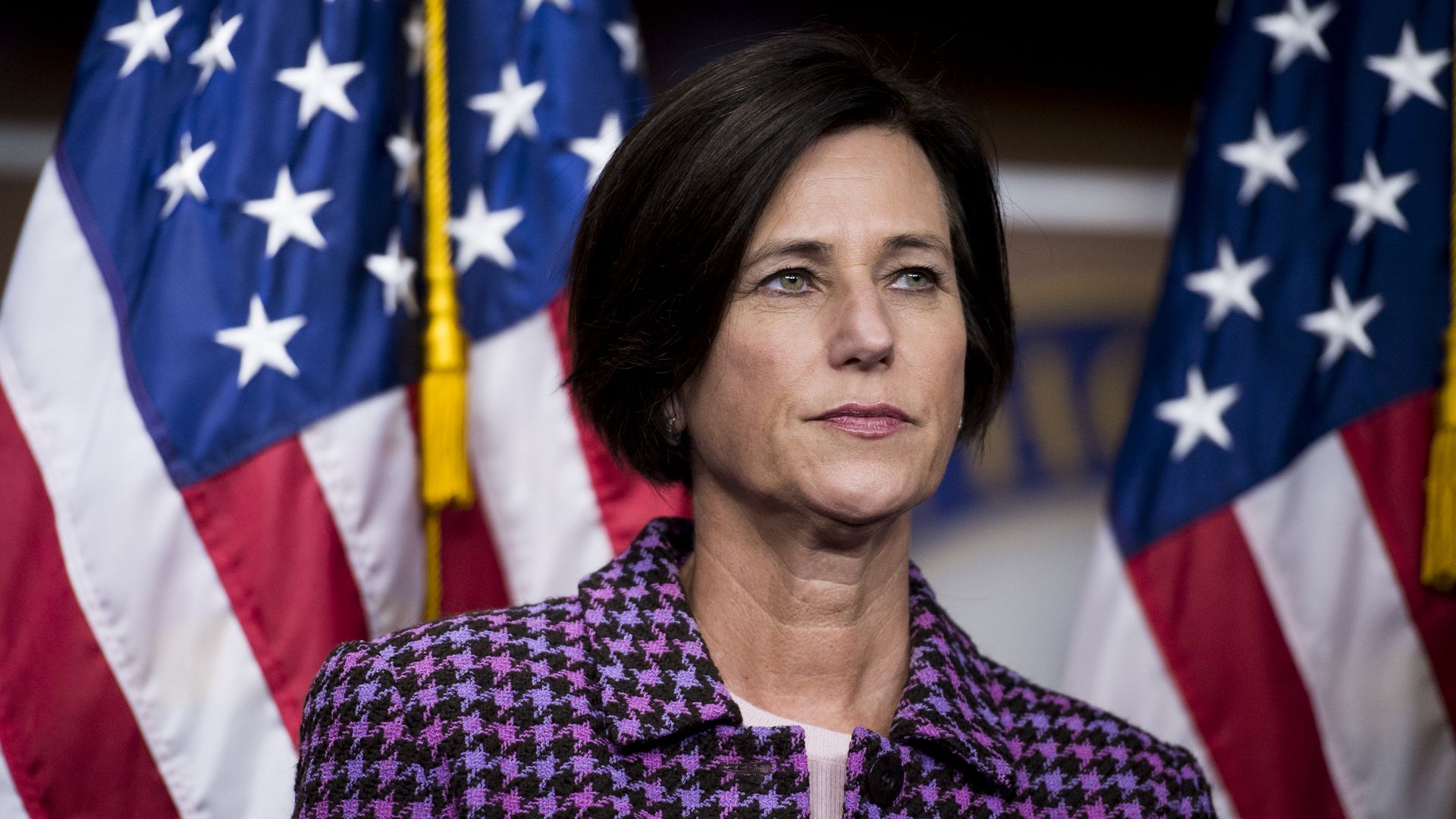
California Republicans like Rep. Mimi Walters are feeling more hopeful about holding onto their seats come November, reports Politico's Rachel Bade. They're banking on President Trump's rising approval rating (42% across the U.S.) and their work to repeal the state's gas tax.
Yes, but: A closer look at California's politics by party affiliation show potential signs of trouble for the GOP.
"How the Administration’s loyalists are quietly reshaping American governance," by The New Yorker's Evan Osnos, who "spoke to dozens of men and women throughout the federal government about Trump’s war on Washington."
Why it matters: The ethos of the Trump administration and how it views some facts is changing the way Washington operates.
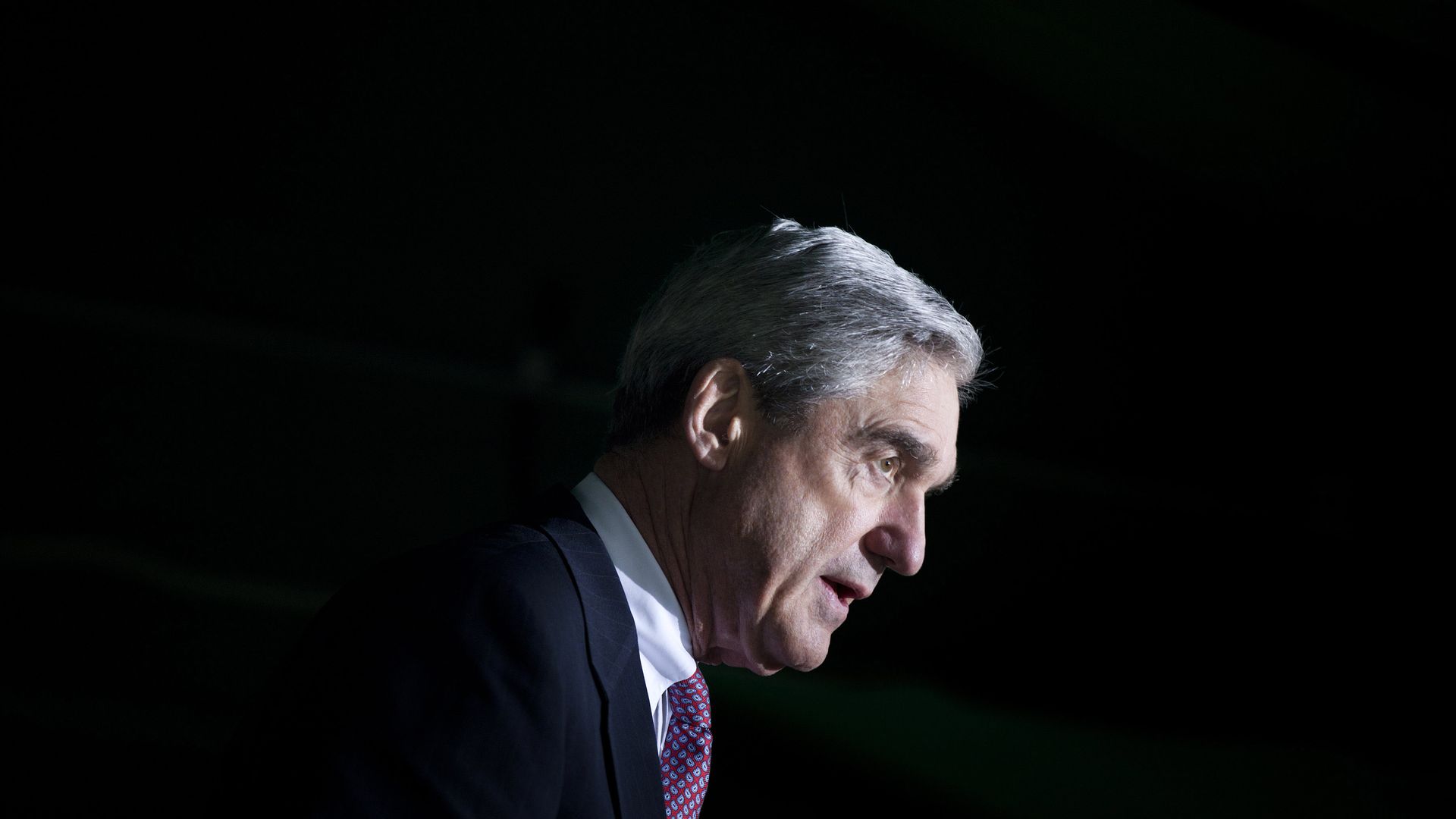
Thursday marks one year since Bob Mueller was appointed special counsel to lead the investigation into possible coordination between the Trump campaign and Russia.
The big picture: "The investigation ... has formed the cloudy backdrop of Donald Trump’s presidency — a rolling fog of controversy, much of it self-inflicted, that is a near-constant distraction for the commander in chief," the WashPost writes.
Congressional districts that tend to vote Democratic generally have more people below the poverty level and higher uninsured rates compared to those that tend to vote Republican, including districts in states that have expanded Medicaid.
Between the lines: There's an obvious connection between poverty levels and the number of uninsured: Health insurance is expensive. The fact that blue districts have higher shares of each than red districts helps explain why Democrats tend to focus more than Republicans on health care and government assistance to the poor — and why these topics will likely resonate with voters in blue districts more throughout the midterm cycle.
The big picture: The leaks come in all shapes and sizes: small leaks, real-time leaks, weaponized leaks, historical leaks. Sensitive Oval Office conversations have leaked, and so have talks in cabinet meetings and the Situation Room. You name it, they leak it.
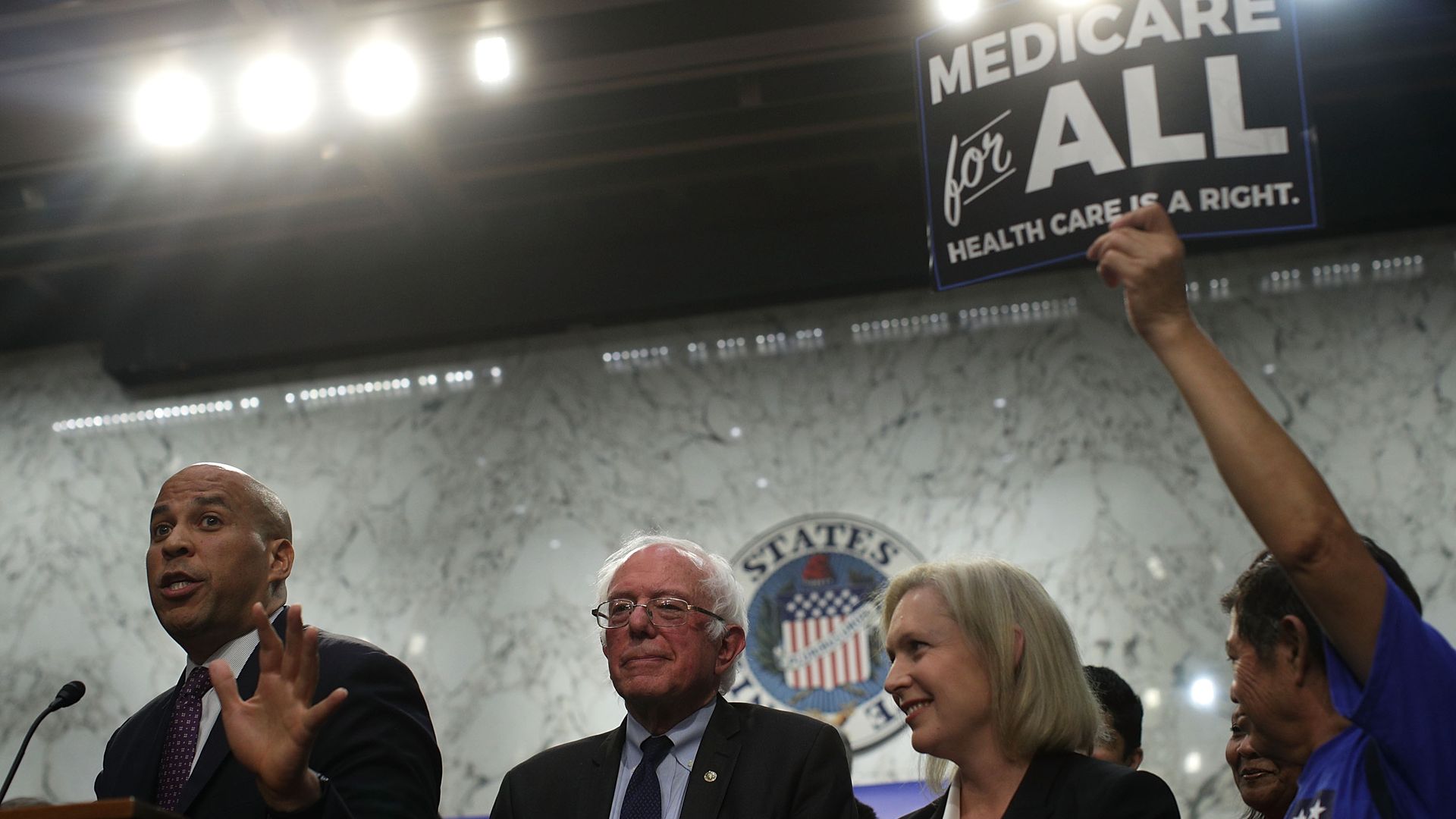
A handful of Senate Democrats are committed to opposing President Trump’s executive branchnominations at every turn — and the group bears an uncanny resemblance to the rumored 2020 frontrunners.
Between the lines: Democrats like Kirsten Gillibrand, Elizabeth Warren, Bernie Sanders and Cory Booker have nothing to lose by voting against Trump's nominations — and a lot to gain with the Democratic voters they'll need if they decide to run for the White House.
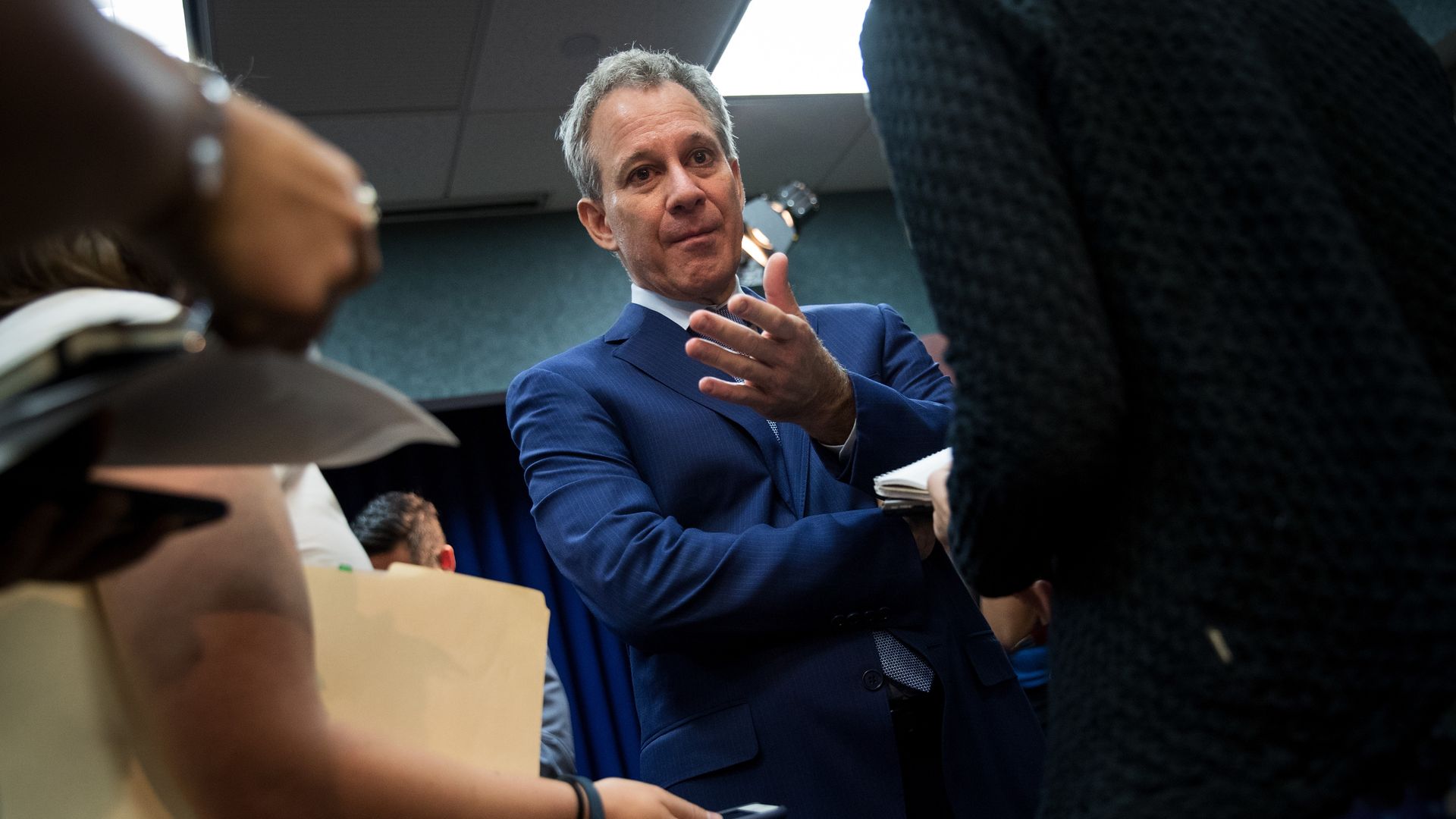
The resignation of former New York Attorney General Eric Schneiderman, one of the central figures in the liberal resistance, is unlikely to ease the state's ongoing fights against President Trump.
Why it matters: Schneiderman's office started more than 30 lawsuits against the Trump administration, a spokesperson told Axios, over policies ranging from immigration to environmental regulations.
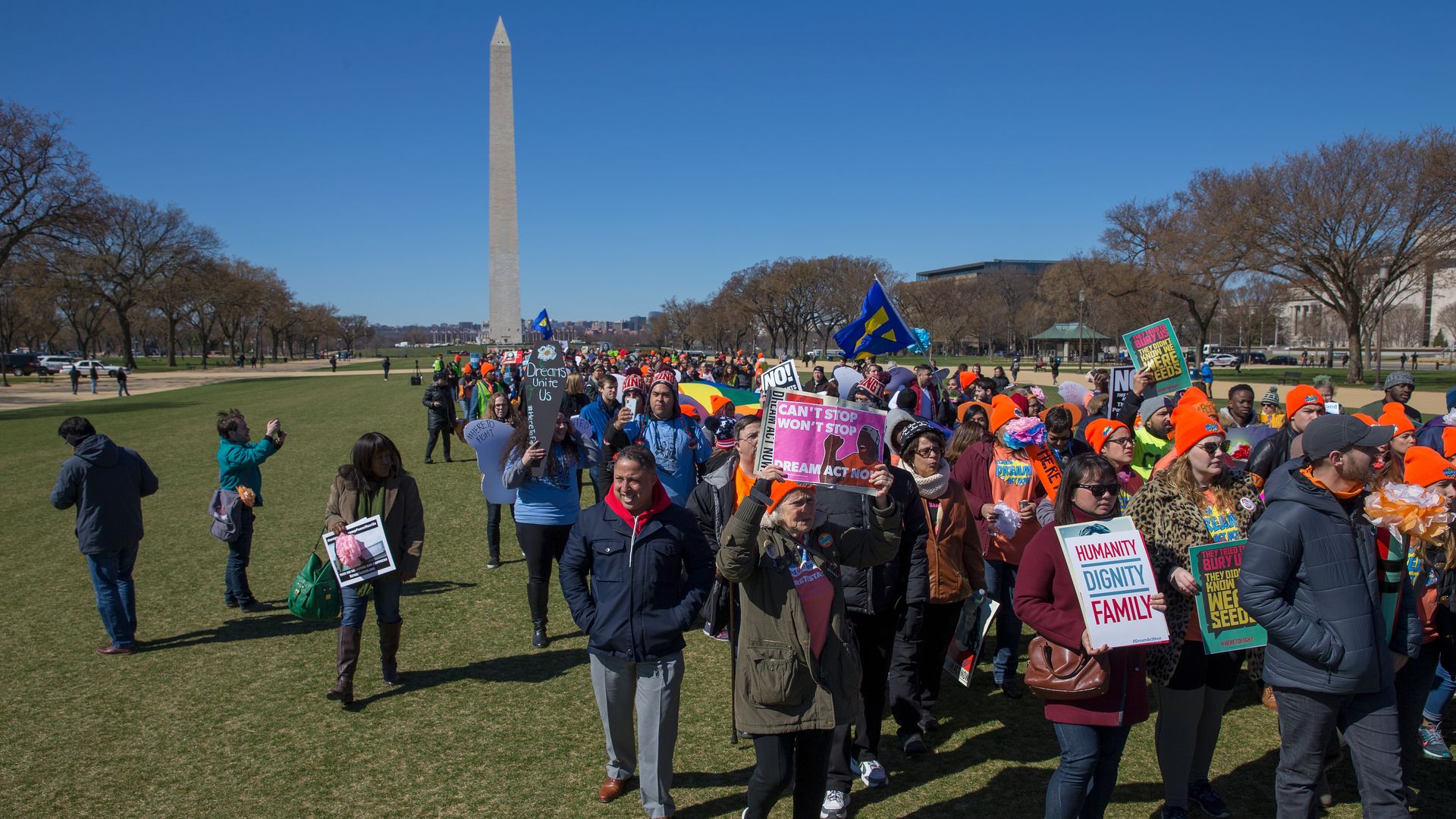
Fear and confusion keep many DACA holders from applying to renew their status, the L.A. Times' Joseph Tanfani reports.
What's happening: "The federal statistics tell a story of thousands of procrastinations, private calculations and personal gambles. ... There's a disincentive to applying too early: Renewals are good for two years from the day they're issued, not two years added on to the original period."
Redefining the left ... Policy ideas floated by potential 2020 Democratic candidates go beyond the 2016 promises of better health care, tuition relief and infrastructure spending, the WashPost's Michael Scherer writes.
Why it matters: Party leaders see "the next two years as a potential pivot point for what it means to be a Democrat, like the tumultuous 1968 Democratic convention or the business-friendly realignment that followed President Bill Clinton’s nomination in 1992."