Thursday's politics & policy stories

Qatar reopening diplomatic ties with Iran amid Saudi standoff
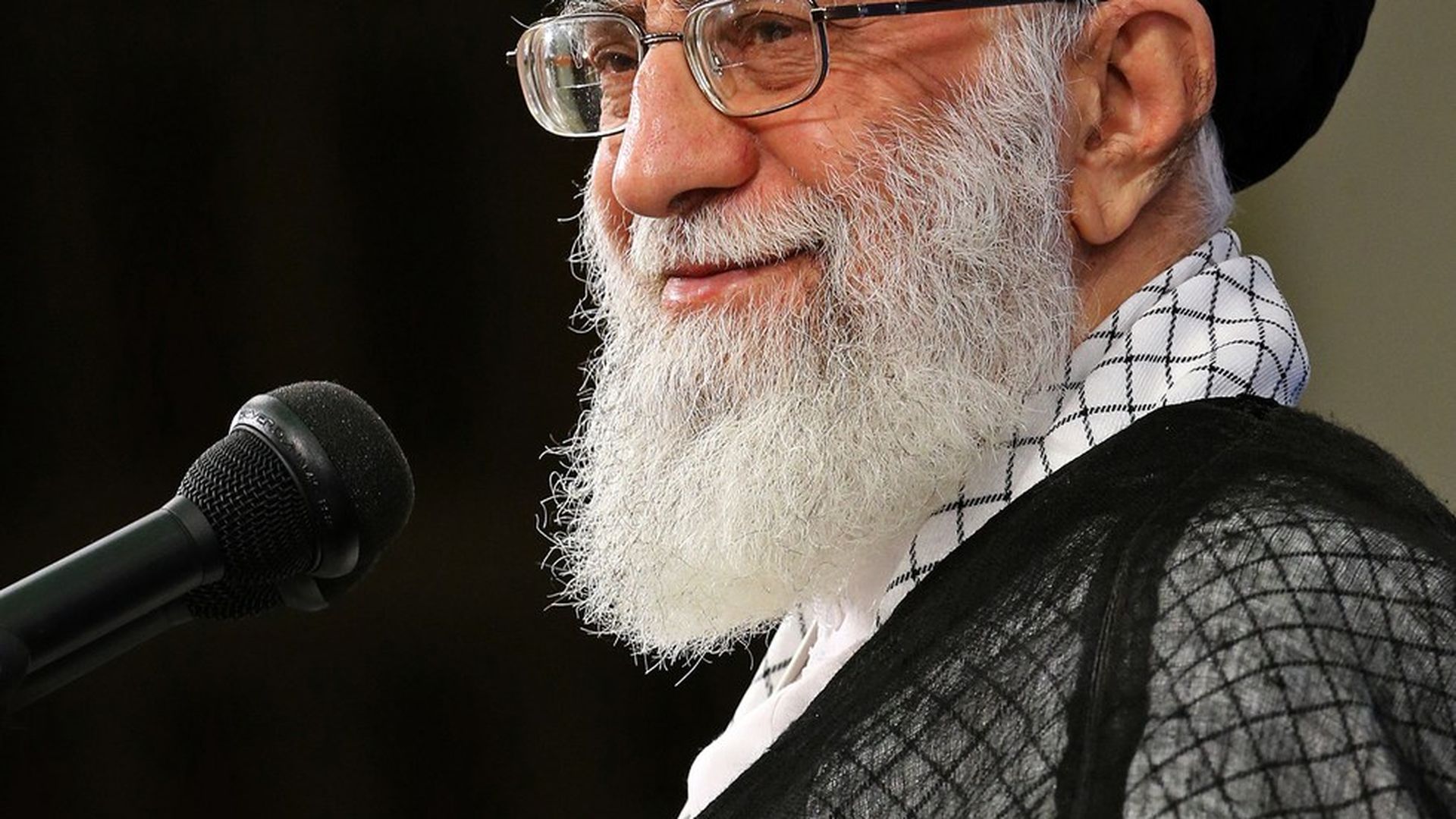
Qatar has reopened diplomatic relations with Iran and will be sending a diplomat to Tehran, the AP reports. Qatar had originally pulled its ambassador out in early 2016 when there were two attacks on Saudi diplomatic posts in Iran.
This comes amid the months-old Saudi-led blockade against Qatar, and flies in the face of Saudi Arabia's demand that Qatar restrict its ties with Iran before the blockade be lifted. Although Qatar had already been receiving shipments of food from Iran, this is likely to further entrench the blockade.
Why it matters: The blockade, which Trump has appeared to tacitly back, has brought Qatar and Iran closer together — not a desirable outcome for either Washington or Riyadh. The U.S. has its largest military base of the region in Qatar.

Trump's most memorable memes
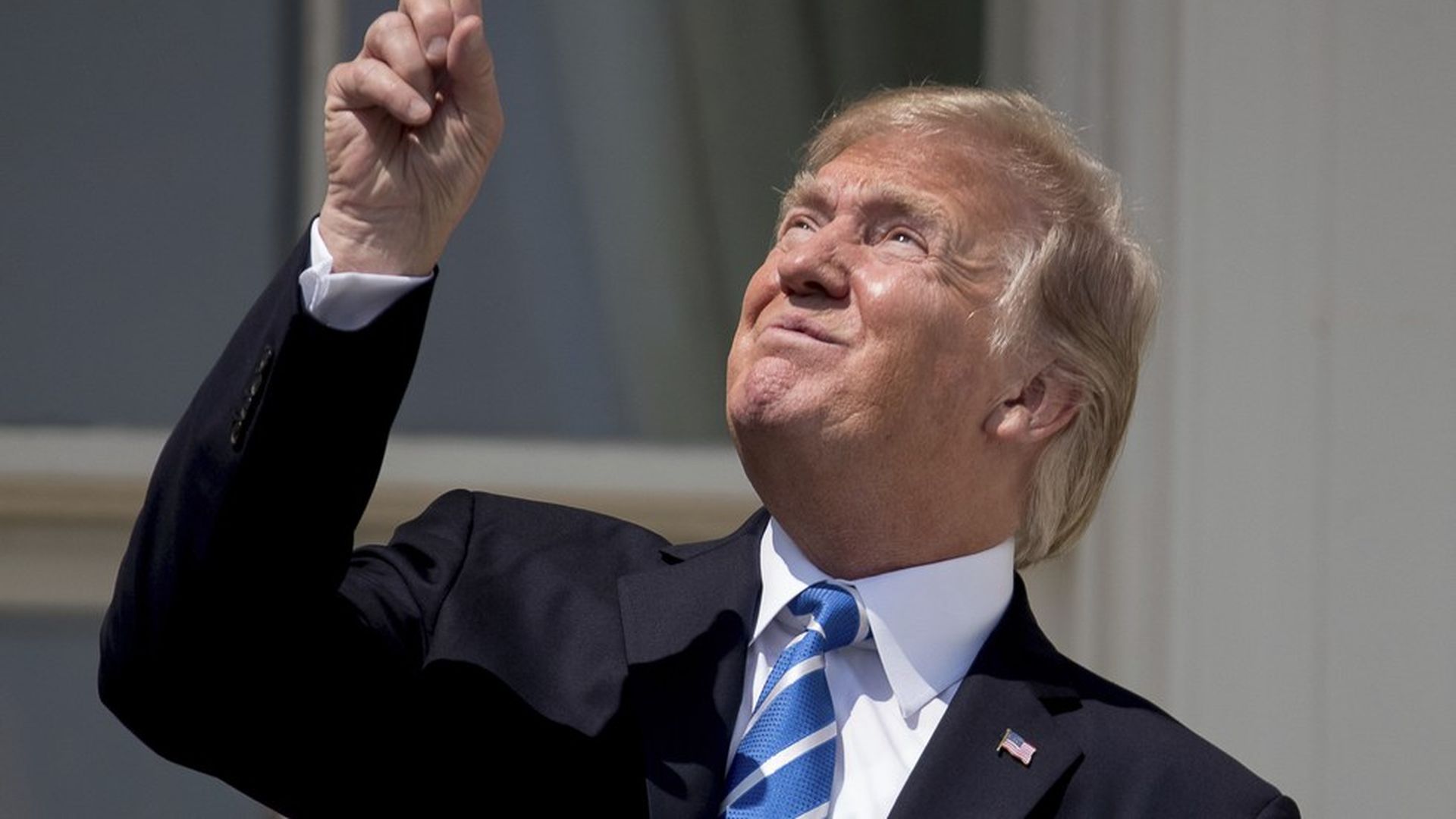
President Trump retweeted a meme this morning of him "eclipsing" Barack Obama. This isn't the first time Trump has tweeted a controversial image, so we gathered some of the most memorable and controversial memes he's tweeted.
Why it matters: No matter how hard new chief of staff John Kelly has tried to clean up the Trump message, controlling the President's tweets could prove as tough as ever. Trump loves maps and visuals, asking for them in his intelligence briefings. It's not a surprise that he can't help but tweet a flattering, visual meme on his Twitter before analyzing its context or origin.

Trump pops back at James Clapper for calling him a “nightmare”
President Donald Trump targeted James Clapper on Twitter this morning after the former director of national intelligence described Trump's speech in Arizona as "downright scary and disturbing." Clapper also questioned Trump's "fitness to be in office" and openly worried about Trump's access to the nuclear codes.
The ACLU’s moment of crisis on free speech
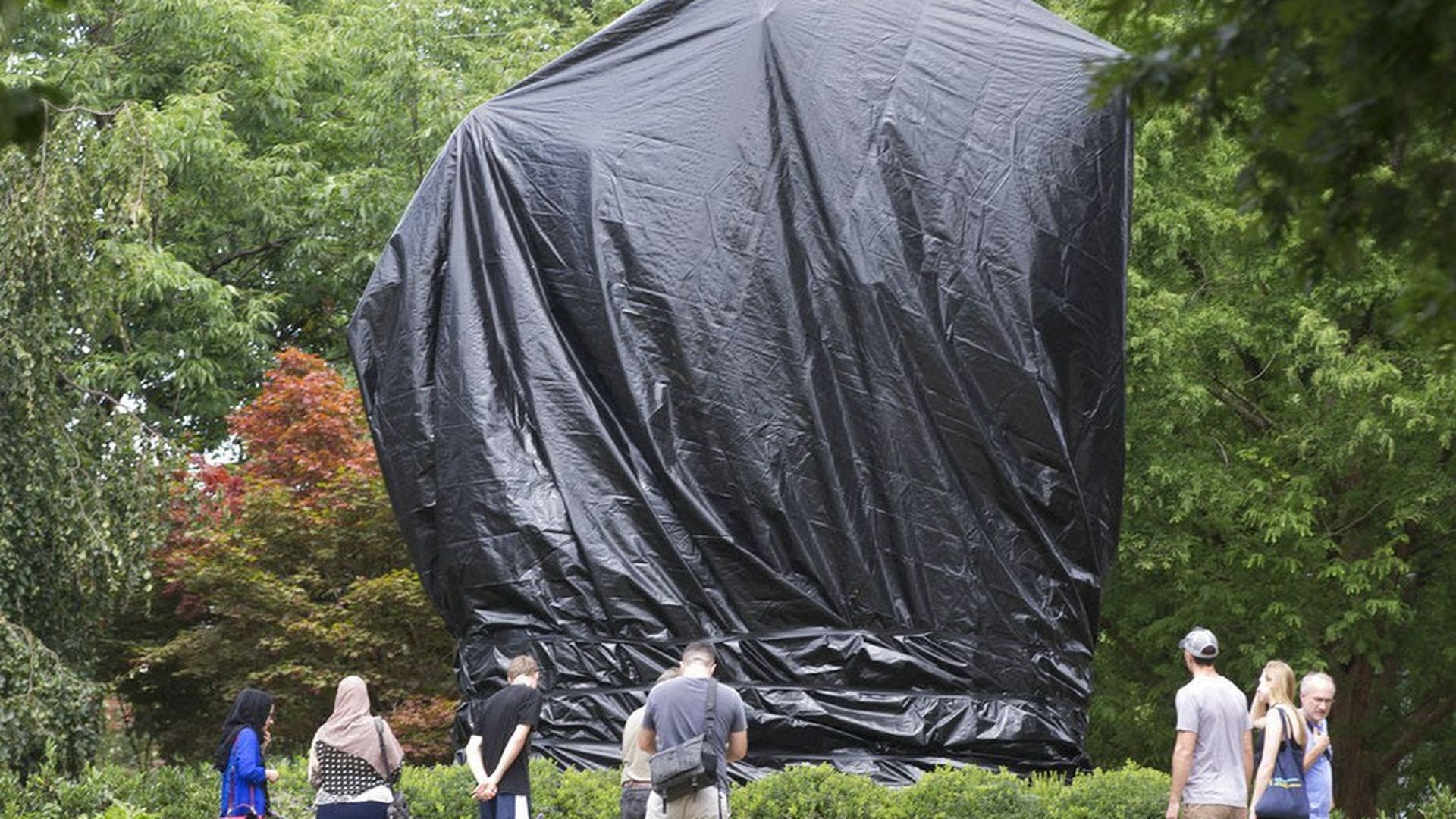
"Violence in Charlottesville leads to soul-searching at ACLU," by AP's Tom Hays and Larry Neumeister:
- "Faced with an angry backlash for defending white supremacists' right to march in Charlottesville, the American Civil Liberties Union is confronting a feeling among some of its members that was once considered heresy: Maybe some speech isn't worth defending."
- "Cracks in the ACLU's strict defense of the First Amendment no matter how offensive the speech opened from the moment a counter-protester was killed during the rally in Virginia."
- "Some critics said the ACLU has blood on its hands for persuading a judge to let the Aug. 12 march go forward. An ACLU leader in Virginia resigned, tweeting, 'What's legal and what's right are sometimes different.'"
- Why it matters: "The backlash [is] reminiscent of one that followed the ACLU's 1978 defense of a neo-Nazi group that wanted to march through Skokie, Illinois, a Chicago suburb with a large number of Holocaust survivors."
Trump’s permanent campaign
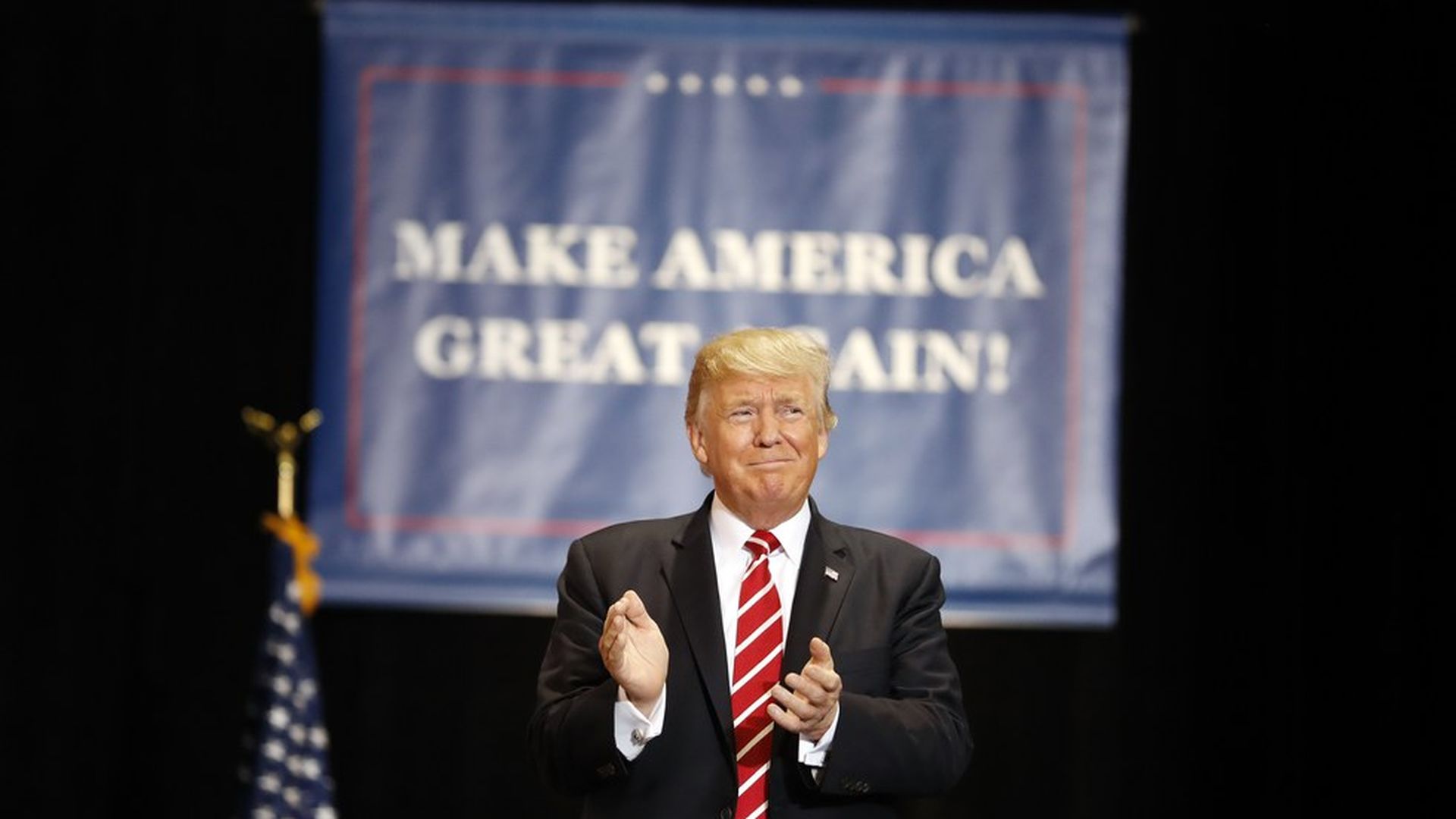
"The permanent campaign has been a fixture of the modern presidency for more than a generation ... But ... Trump ... has scaled new heights," the L.A. Times' Mark Z. Barabak writes in the paper's lead story, "Trump wages a campaign without end":
- "Trump filed the paperwork establishing his 2020 reelection committee the day he took office and has already started fundraising, years before his predecessors began raking in cash."
- "He has trampled protocol and turned explicitly nonpolitical events, like the Boy Scouts' national jamboree, into replicas of his roisterous campaign stops."
- Why it matters: "Trump has transformed the bully pulpit — the president's ability to rally the country in pursuit of his goals — into a sort of vanity project, staging events not to advance any substantive agenda but to vent and, as aides admit, bask in the adulation of supportive audiences."

California Dems ignite debate on Trump's mental health
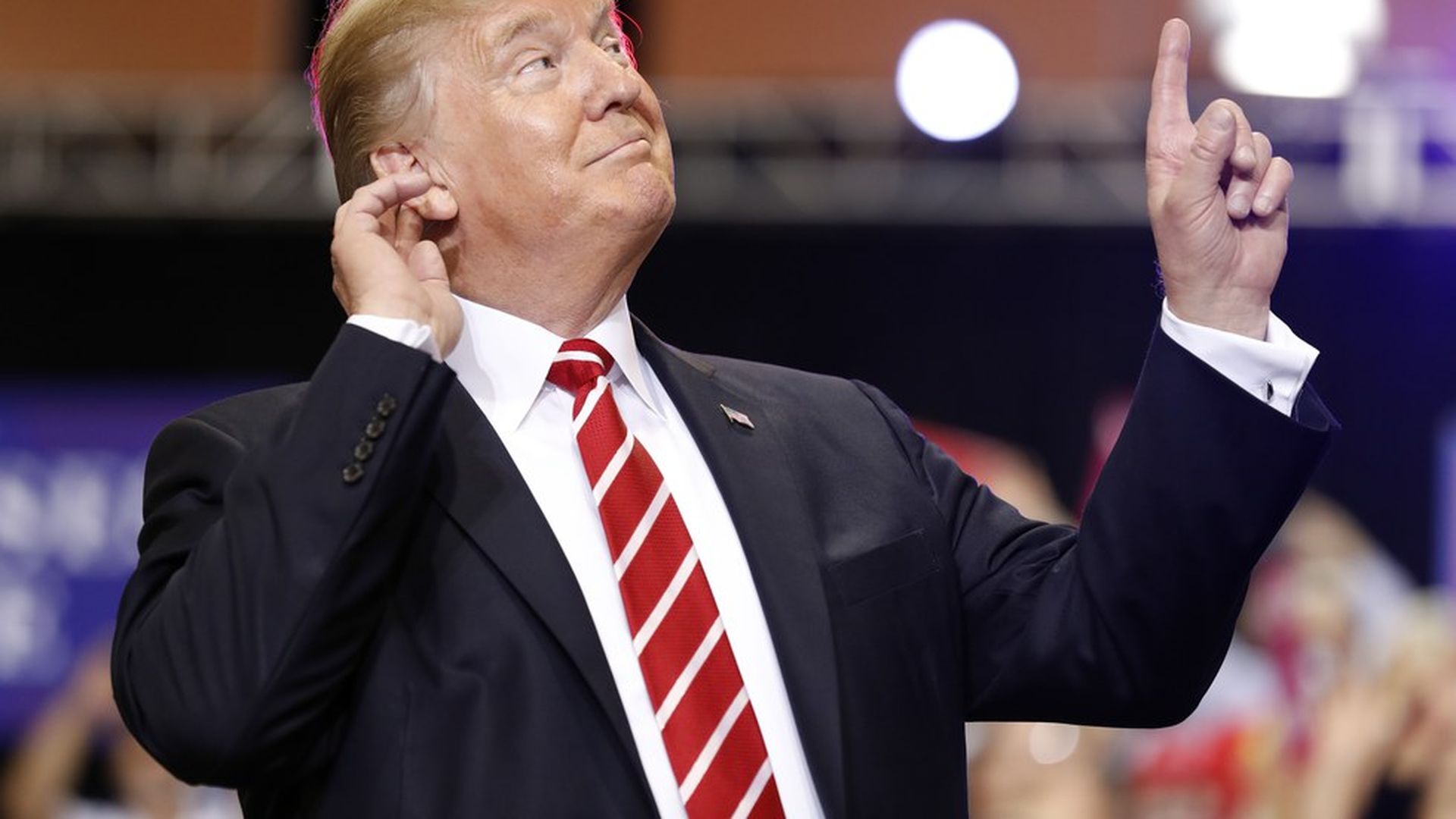
Trump's stability has been called into question in recent weeks, most notably by GOP Sen. Bob Corker and former Director of Intelligence James Clapper. But now, California Dems are seizing on the opportunity to magnify an issue that until recently has received little pickup: the notion that Trump may not be mentally fit for office, per Politico.
"[Trump] has demonstrated that his mental capacity and his erratic behavior are issues we need to be concerned about for our national security," Rep. Jackie Speier told Politico. "And I think I'm not the first person that's talked about it. I'm just the first person that's been public about it."

Natural gas causing coal, nuclear shutdowns, gov. report says

The Energy Department's highly anticipated report on America's electricity grid is out, and our biggest takeaway is that it affirms generally accepted knowledge in the energy industry — cheap natural gas has been the primary factor causing coal and nuclear power plants to shut down over the last several years.
It also contradicts comments Energy Secretary Rick Perry has made suggesting federal subsidies for wind and solar help shut down coal and nuclear plants.
Bottom line: The report's findings, though not newsy in and of themselves, are notable because they show the Trump administration adhering to objective data despite rhetoric suggesting it might come to more politically driven results criticizing renewable energy.

Former Russian ambassador: recruitment allegations "nonsense"
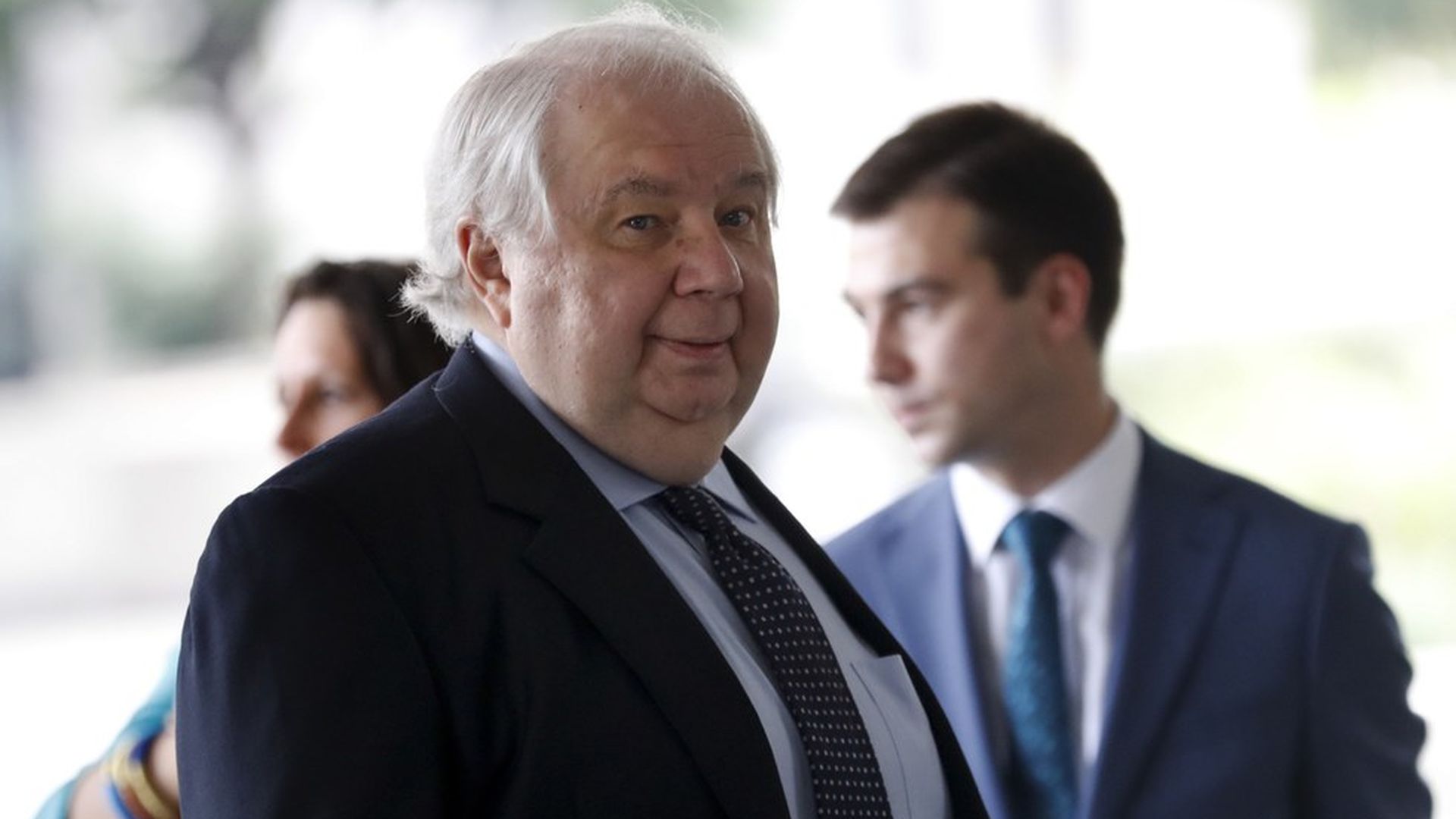
Sergey Kislyak, the former Russian ambassador to the United States, dismissed the notion that he tried to recruit Trump team officials as "nonsense" after CNN caught up with him in Russia.
- On reports Jared Kushner wanted to set up a Russian backchannel: "I've said many times that we do not discuss the substance of our discussions with our American interlocuters. Out of respect to our partners."
- On the Oval Office meeting where Trump disclosed classified intel: "I'm not sure that I heard anything that would be secretive, but it was a good meeting and we were discussing things that are important to your country and to mine."
- On the recently passed sanctions bill: "[It's] basically a statement of being anti-Russian. It's not going to be wished away, it's going to stay and it's going to spoil ability of both countries to resume a normalcy in our relations. And normalcy in our relationship is exactly what is missing."
Clapper: Trump's speech was "scary and disturbing"
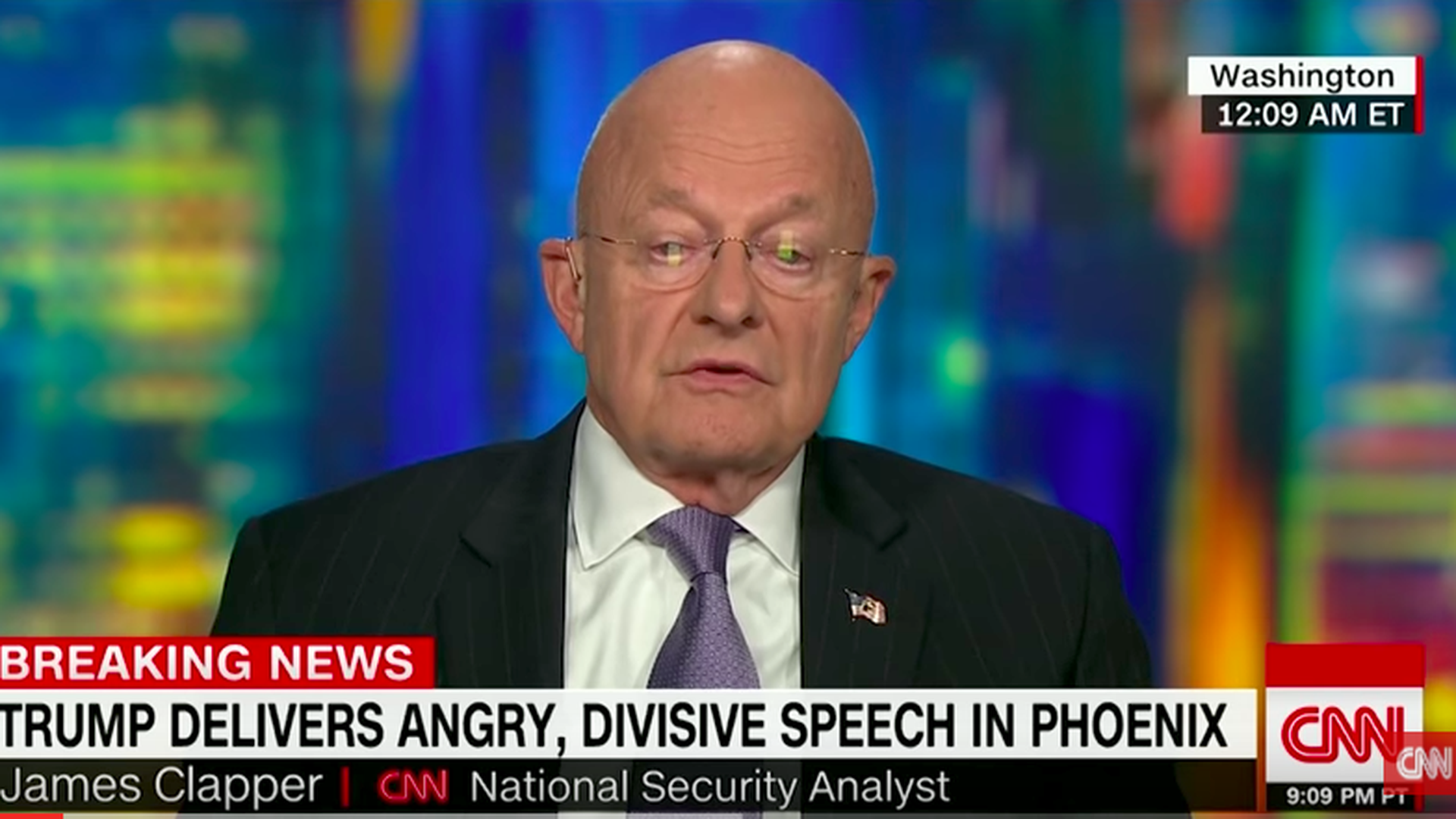
Former director of national intelligence James Clapper told CNN that he questioned Trump's fitness for office after the President's speech last night in Arizona (highlights here).
Clapper called the speech "downright scary and disturbing," adding, "but again, I think the real Trump came through."
"Having some understanding of the levers of power that are available to a president if he chooses to exercise them, I found this downright scary and disturbing."
White House reveals renovated West Wing
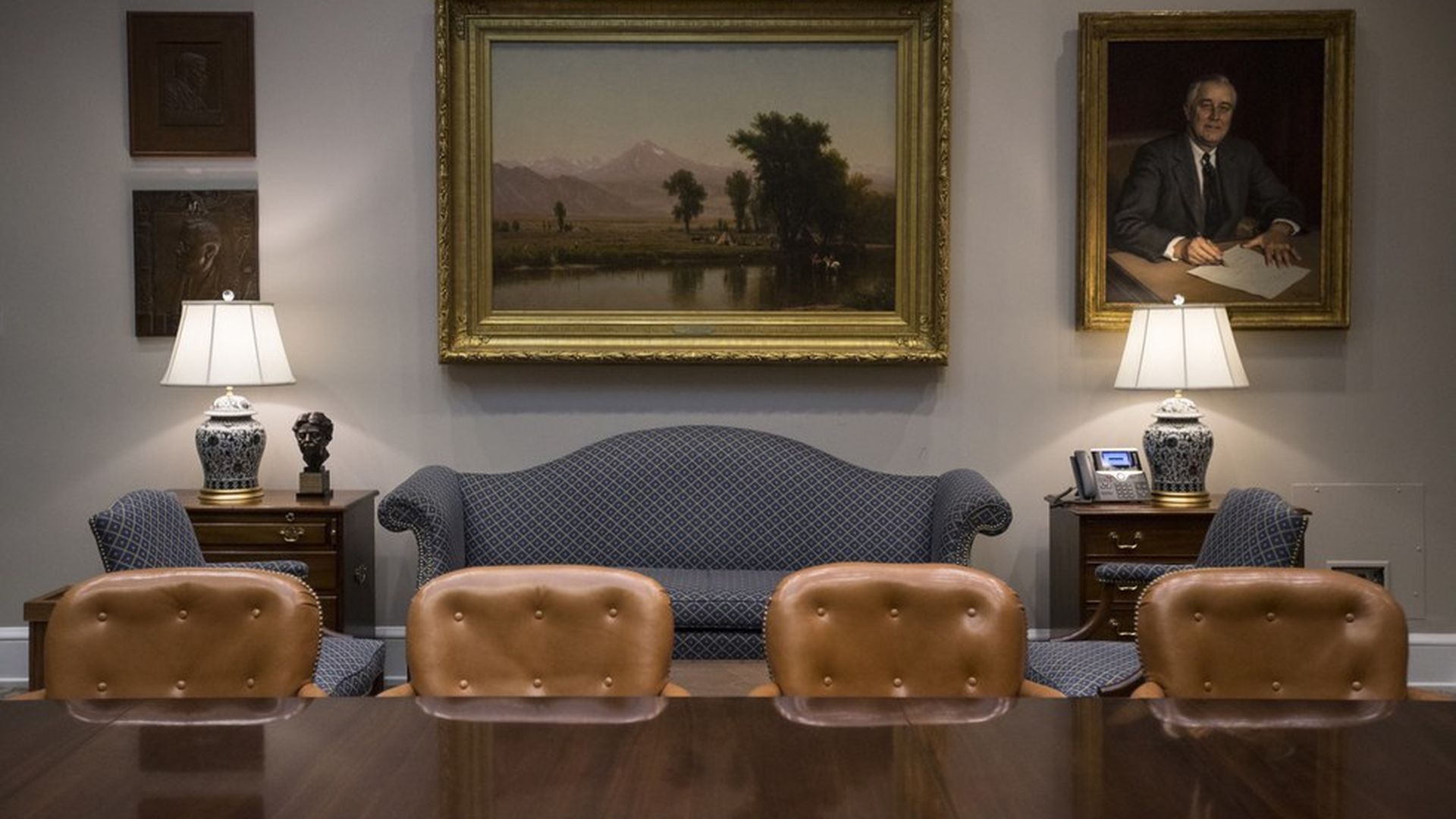
The completed West Wing renovation project — undertaken during President Trump's vacation to his Bedminster, New Jersey golf club and New York City — was unveiled today with the spotlight on a revamped Oval Office, per CBS News.
- The Oval Office refresh featured new wallpaper and a rug used by Ronald Reagan, at least until Trump designs his own floor covering, which might necessitate more new wallpaper.
- A White House official on the Oval Office: "[Mr. Trump] wanted to bring back the luster and glory of the White House. The Obama wallpaper was very damaged. There were a lot of stains on it."
- Other revamps: An overhaul of the 27-year-old HVAC system, new carpeting throughout the West Wing, and a whole host of new furnishings that the White House pointed out were all "made in America."
U.S. diplomats in Cuba suffered brain injuries after sonic attack
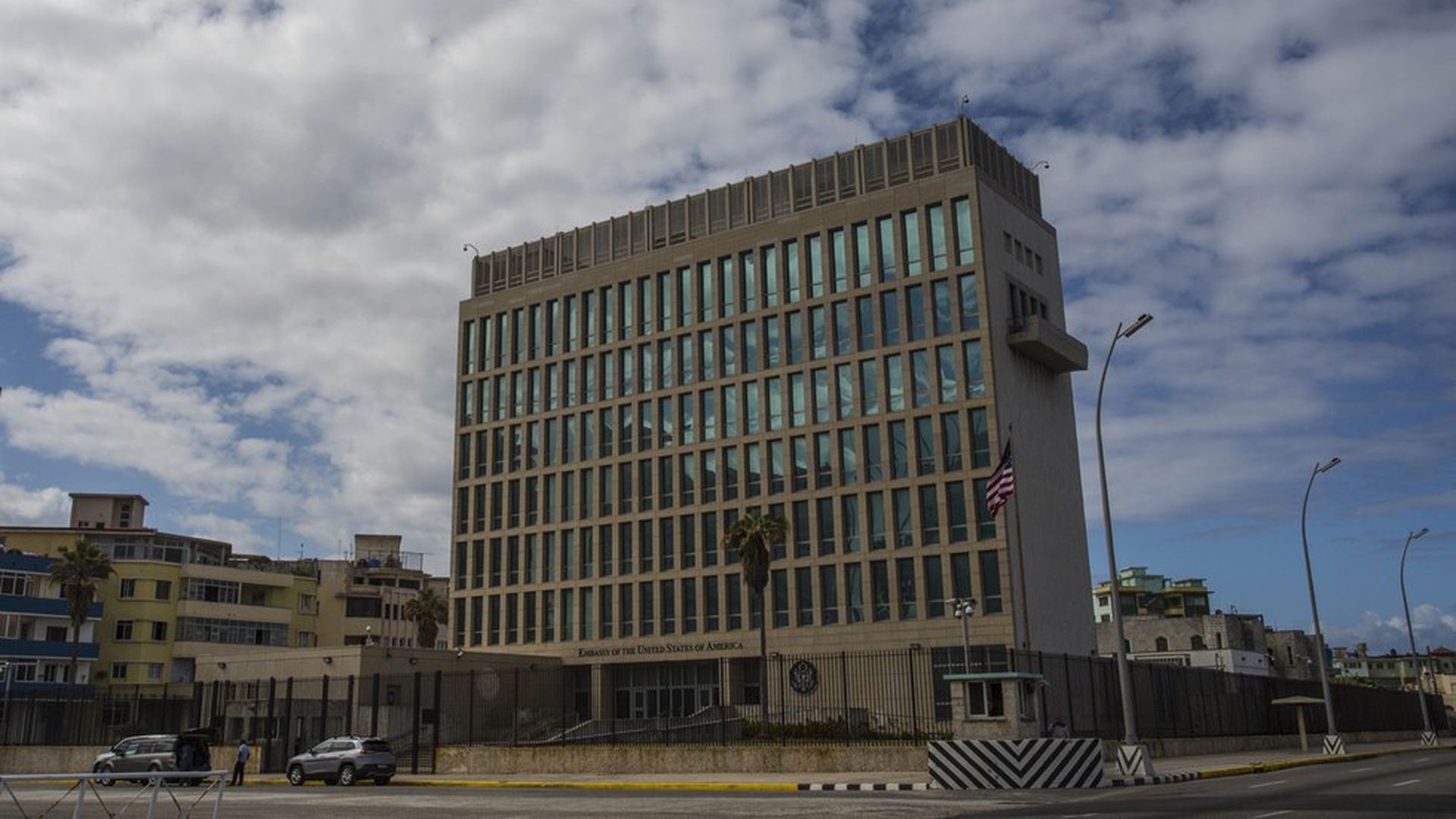
American diplomats in Cuba have been diagnosed with mild traumatic brain injury — and central nervous damage — after an apparent attack with a sonic weapon targeted their homes, per a review of medical records by CBS News.
The State Department hasn't explicitly identified the source of the attack or what person or entity might have carried it out. The Cuban government has denied any involvement with the incident.
Why it matters: The severity of the apparent injuries goes far beyond what was originally reported, so it stands to reason that President Trump's administration might choose to respond strongly given his prior rhetoric on Cuba, especially given that the report notes that the attacks on Americans are continuing.
There are 3,500 troops in Afghanistan the Pentagon didn't tell you about
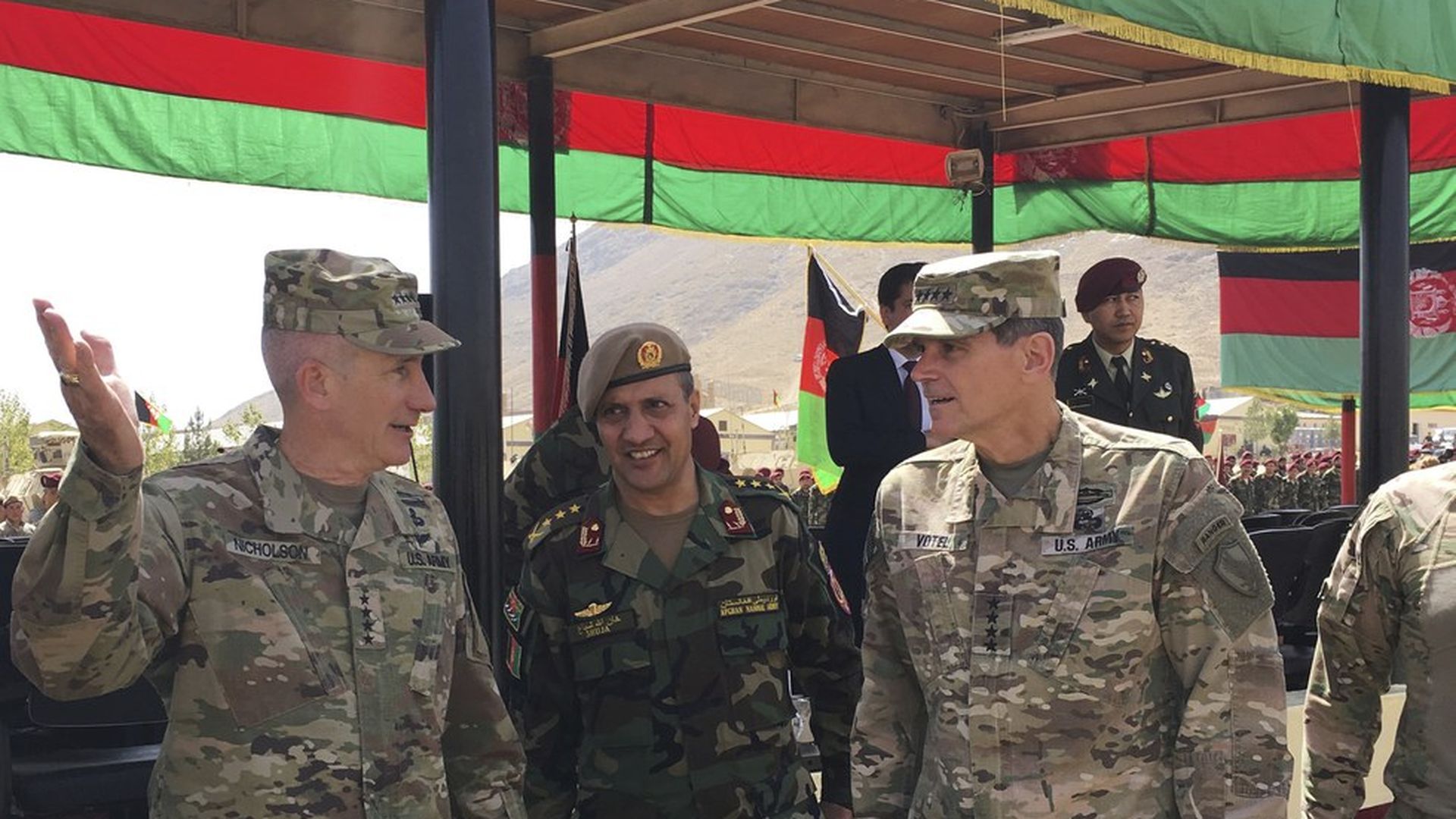
There are currently more than 12,000 U.S. troops serving in Afghanistan — 3,500 of them the Pentagon failed to publicly disclose, the Wall Street Journal reported. The Pentagon has disclosed the 8,400 military members stationed in Afghanistan long-term, but kept hidden the number of troops that are sent to the area on a temporary status. The number of troops from other groups such as special forces are almost always kept secret.
Why it matters: The real total number of troops is important in deciding how many more troops will be sent to the country after President Trump's announcement on Monday night. The new strategy is expected to include sending about 3,900 troops to Afghanistan within the next few weeks, military officials told WSJ.
Go deeper with an Axios graphic showing the number of U.S. troops and private contractors in Afghanistan since 2007, here.

The Trump doctrine
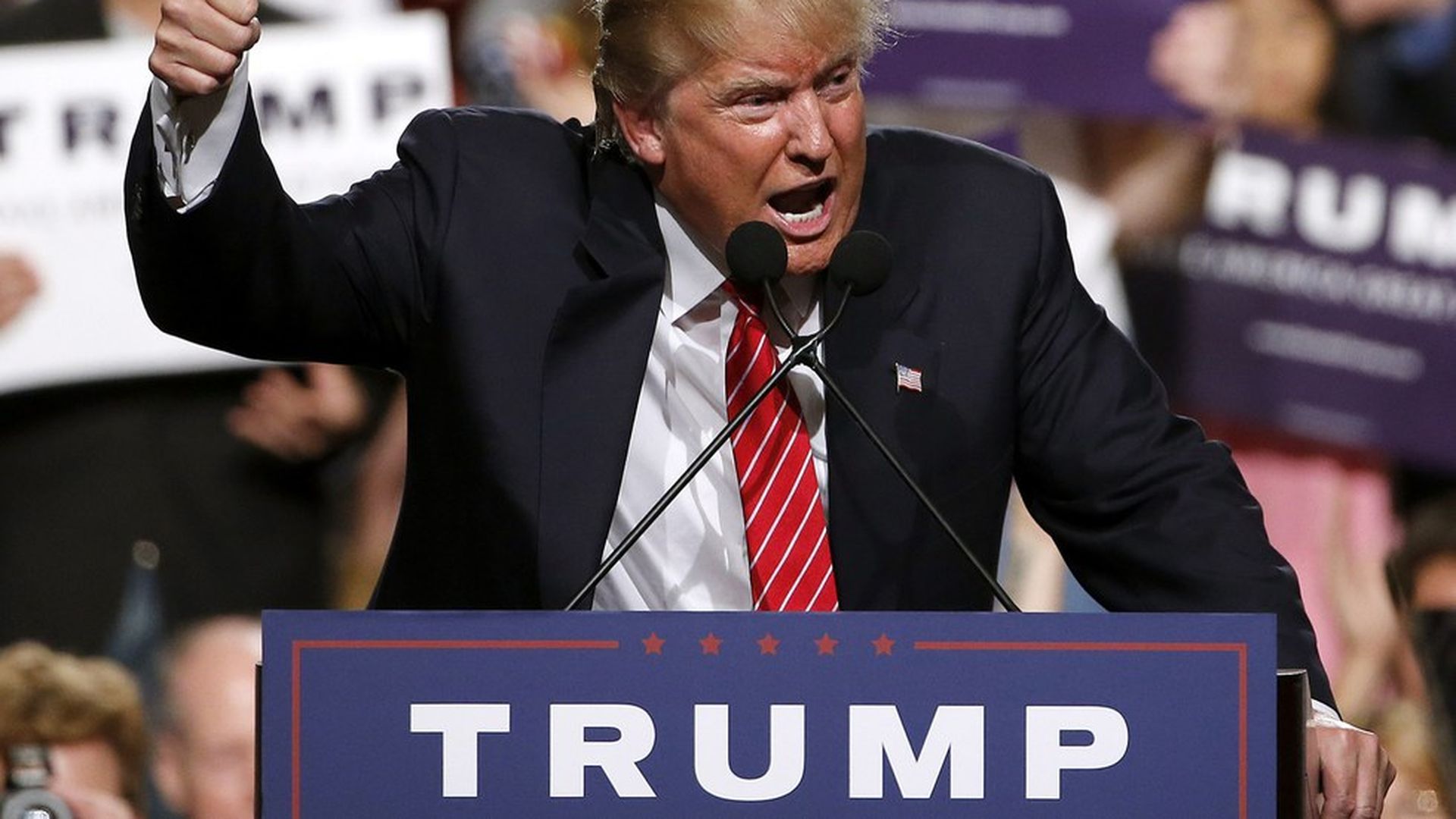
In Trump's new Afghanistan plan, AP's Josh Lederman sees "elements of a broader approach to America's most pressing national security concerns [beginning] to emerge, consistent with his efforts in Iraq, Syria and elsewhere," and drawing "on organizing principles that are also woven throughout his plans for defeating the Islamic State group and containing the threats posed by North Korea and Iran":
- Never tip your hand to the enemy.
- No timelines for military operations.
- Don't micromanage.
- No free pass for a neighbor who tolerates extremists or enables U.S. foes.
- Let locals lead.
- Key quote from Trump's Monday speech: "We are not nation-building again. We are killing terrorists."
Critique ... I ran Josh's article by Vance Serchuk, adjunct senior fellow at the Center for a New American Security, who wrote me back that "Trump as commander-in-chief thus far is a mix of big continuities with Obama and big discontinuities":
Three big continuities:
- Disavow "nation building" and Bush-like "freedom agenda" ambitions in favor of self-declared "realism."
- Enable local forces whenever possible to clear and hold territory, supported by special operators and airpower; eschew large U.S. conventional deployments à la the Iraq war.
- Focus on discrete military objectives — e.g., smashing ISIS in Iraq/Syria, just as Obama smashed AQ core in Pakistan. Trump's impulse, like Obama's, is to want to get the job done so we can come home.
Three big discontinuities:
- Devolve much greater discretion over decision-making on troops, tactics, operations to DoD / Mattis.
- Reject time tables / deadlines as an instrument of policy.
- Cultivate a bit of a madman image — with the national security team portrayed as holding him back from his wilder impulses. If Obama had faith in the power of reason, Trump believes in the value of fear.
Go deeper ... Vance Serchuk's new Wall Street Journal op-ed, "Trump Learns From America's Failures in Afghanistan: By focusing on getting out of the country, Bush and Obama fostered conditions that forced us to stay."
Hillary Clinton: My "skin crawled" when Trump stood behind me
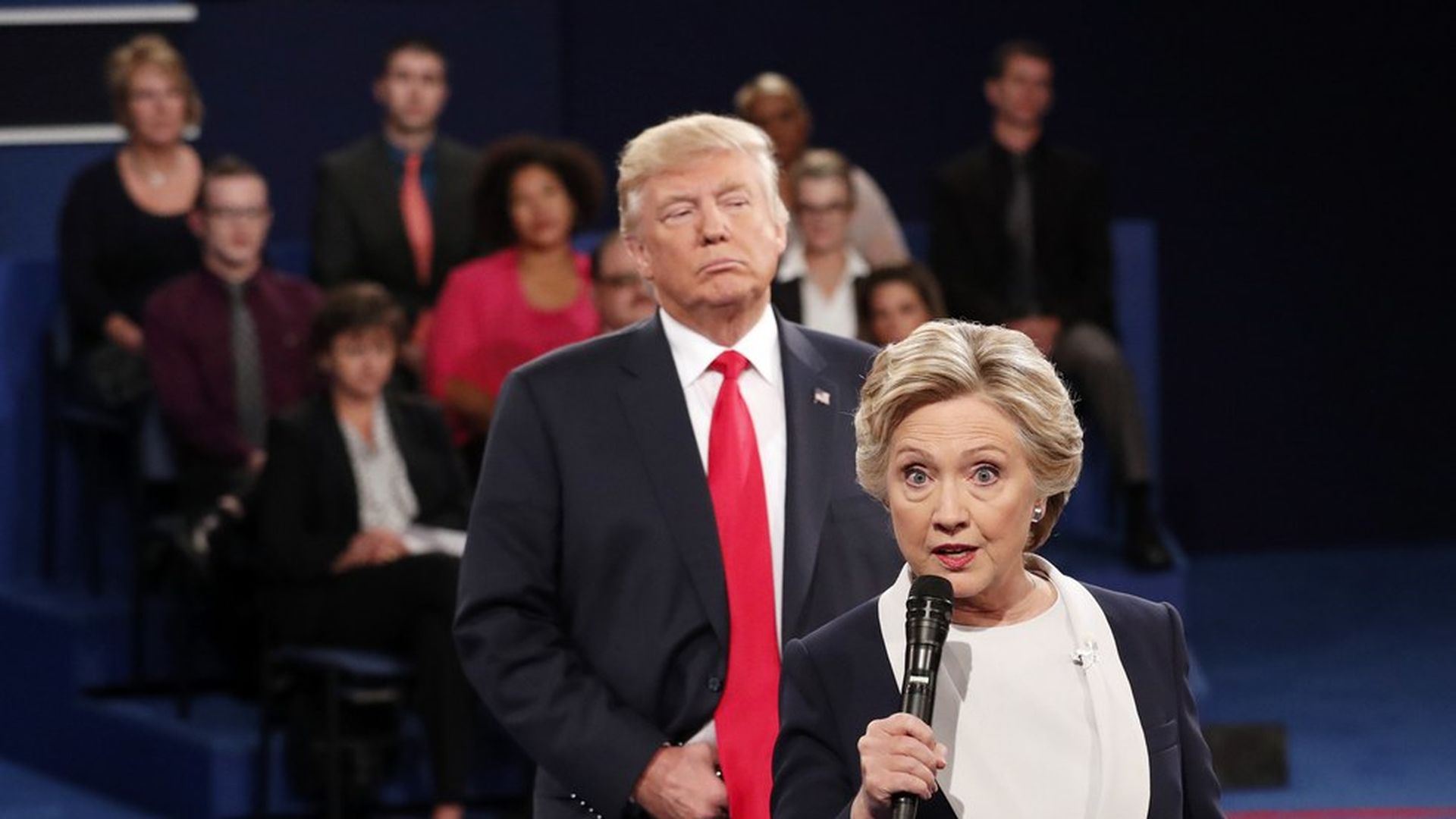
MSNBC's Morning Joe has the first batch of excerpts from "What Happened," Hillary Clinton's forthcoming memoir on the 2016 presidential election, which feature her reflecting why she wrote the book and on President Trump's intimidation tactics that made her "skin [crawl]" during their second, town hall-style debate.
Her reason for writing: "I want to pull back the curtain on an experience that was exhilarating, joyful, infuriating, and just plain humbling. Every day I was a candidate for president, I knew that millions of people were counting on me. And I couldn't bear the idea of letting them down. But I did. I couldn't get the job done. And I'll have to live with that for the rest of my life."
Her question to America during the second debate: "Well, what would you do? Do you stay calm, keep smiling and carry on as if he weren't repeatedly invading your space? Or do you turn, look him in the eye and say loudly and clearly: 'Back up you creep, get away from me. I know you love to intimidate women, but you can't intimidate me, so back up.'"
Top Arizona Republicans won't attend Trump's rally
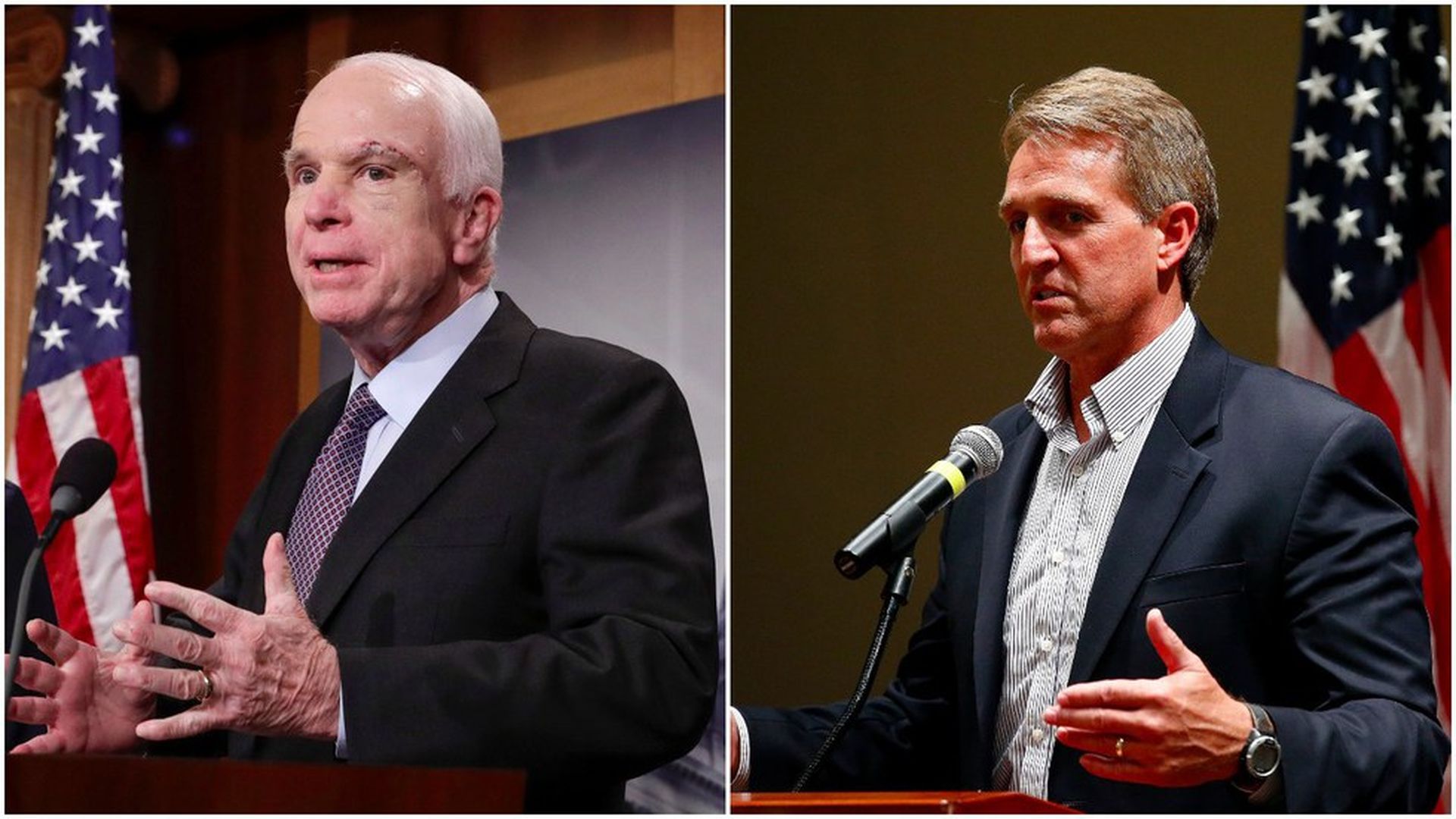
Top Arizona Republicans won't be attending Trump's first rally since Charlottesville tonight, VICE News reports. The expected absences: Arizona Governor Doug Ducey (though he greeted Trump upon his arrival), Arizona's state Republican party Chair Jonathan Lines, Sen. Jeff Flake, who's been one of Trump's most vocal critics recently, and Sen. John McCain.
Why it matters:
- Arizona swung for Trump in the presidential election, so presumably Republicans would be there for him.
- But this comes at a time when Republicans aren't willing to back Trump in the fallout after Charlottesville.
- Brian Stelter reports Shep Smith couldn't get a single Republican to defend Trump on Fox News, MSNBC's Chuck Todd tried all 52 Republican senators, and none would come on the show, and CNN's Kate Bolduan said only one out of 55 Republicans said yes.