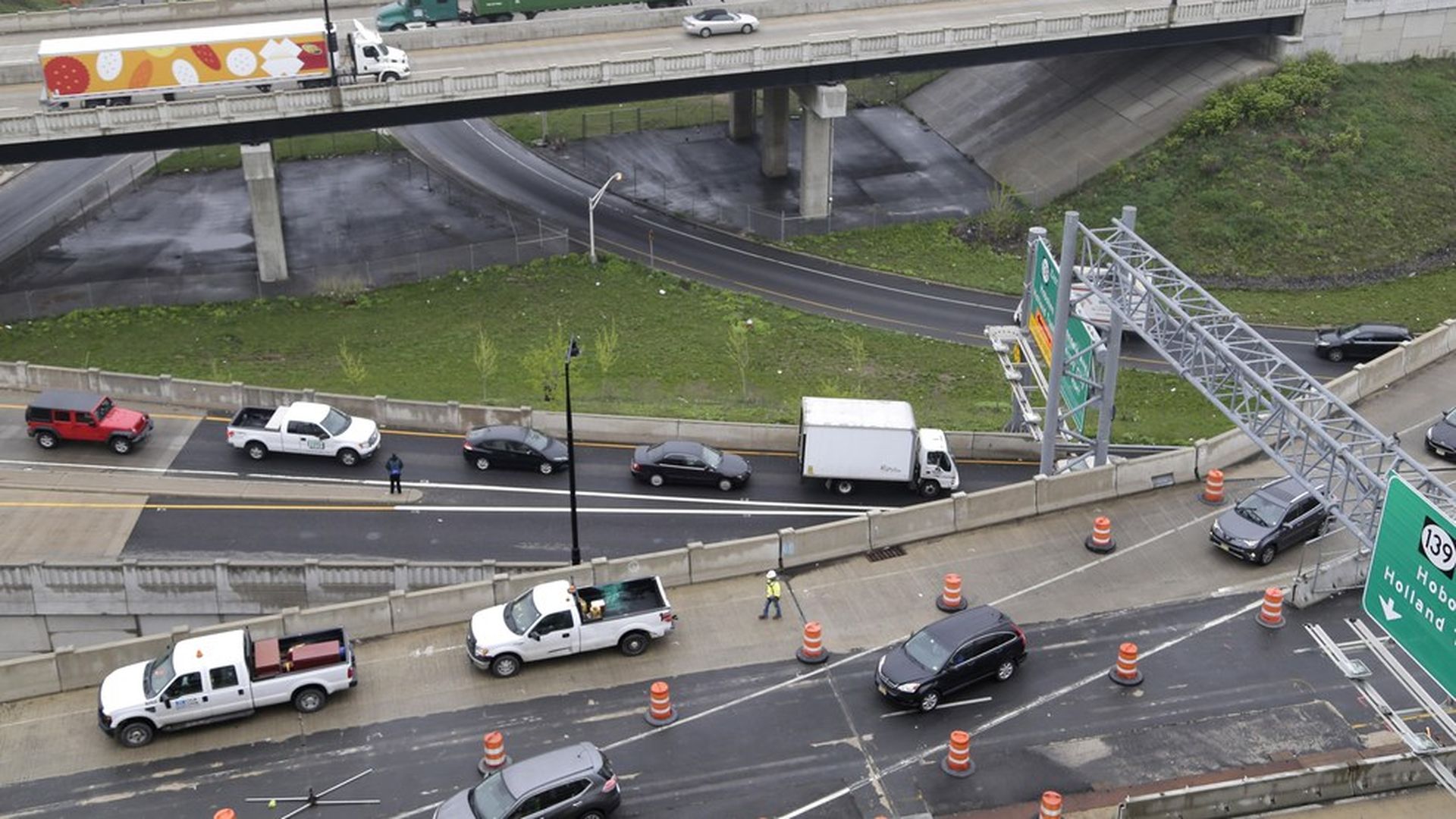
Transportation Secretary Elaine Chao said Monday that Trump's infrastructure plan will be out in just a few weeks.
It will require $200 billion in taxpayer money to generate $1 trillion in private investment over 10 years, although it's unclear whether that $1 trillion pledge is possible, per the AP. A public-private investment in an infrastructure plan of this size has never been achieved before.
Note the timing: Infrastructure has largely been bypassed in the first three or so months of Trump's administration, but it's by far the issue most likely to get bipartisan backing on Capitol Hill. Looks like Trump's team is turning to an issue they can get a win on after months of bungled policy moves.
What to watch: Chao says to expect Congressional debate on a bill in Q3.
The NATO meeting coming up May 25 is getting a Trump makeover, per Foreign Policy. As Robbie Gramer put it:
"NATO is scrambling to tailor its upcoming meeting to avoid taxing President Donald Trump's notoriously short attention span. The alliance is telling heads of state to limit talks to two to four minutes at a time during the discussion,"
As Trump told Axios in January, he has an affinity for quick takes (like bullet points) and a distaste for detailed and long briefings.
Why it matters: NATO has already accommodated Trump's administration by changing the date of an earlier NATO meeting to get Secretary of State Rex Tillerson to attend, even after Trump called NATO obsolete and flip-flopped on that. The effort to appear interesting and relevant to Trump by using his preferred method for digesting information shows NATO might still be trying to win Trump over.
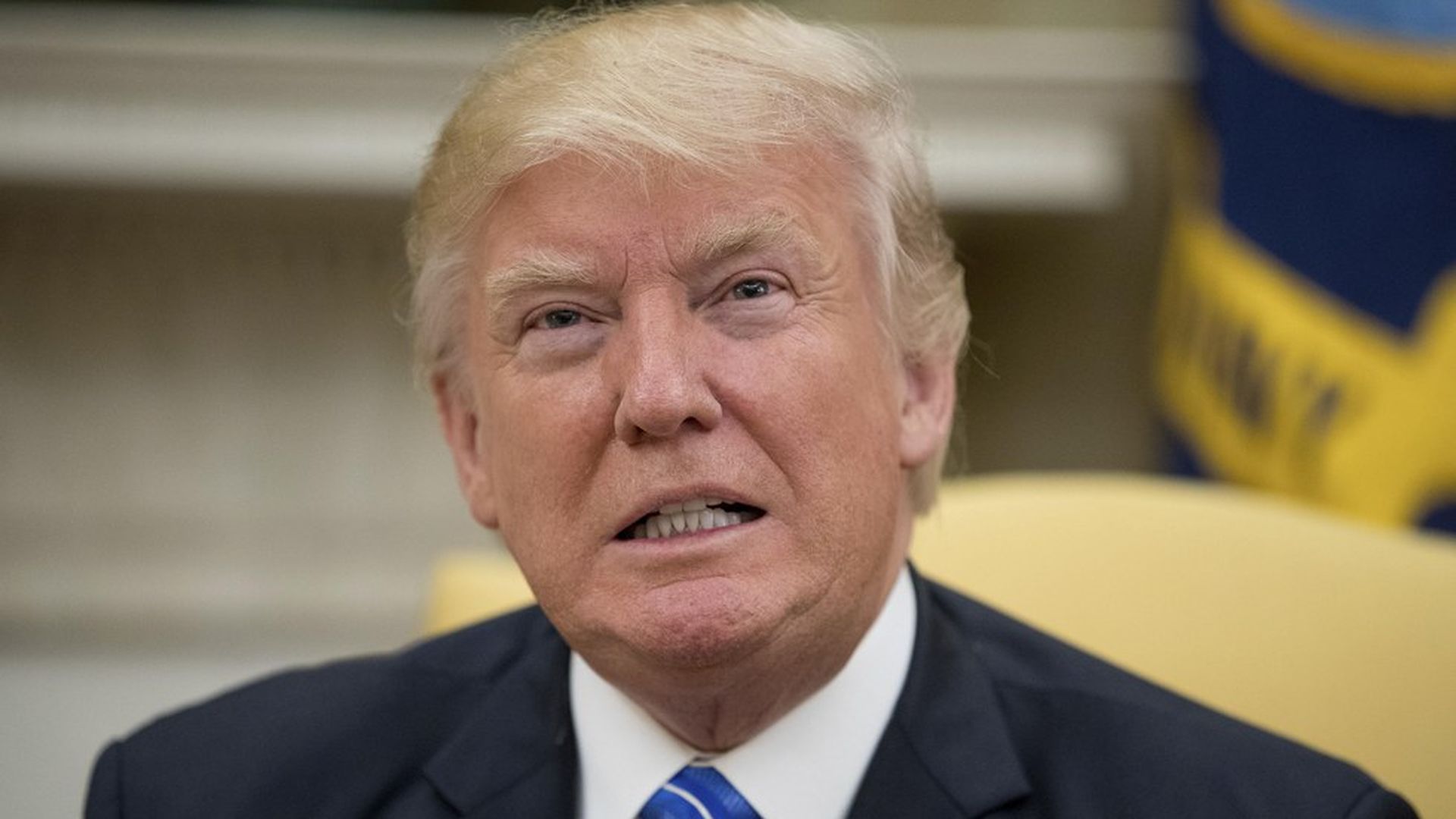
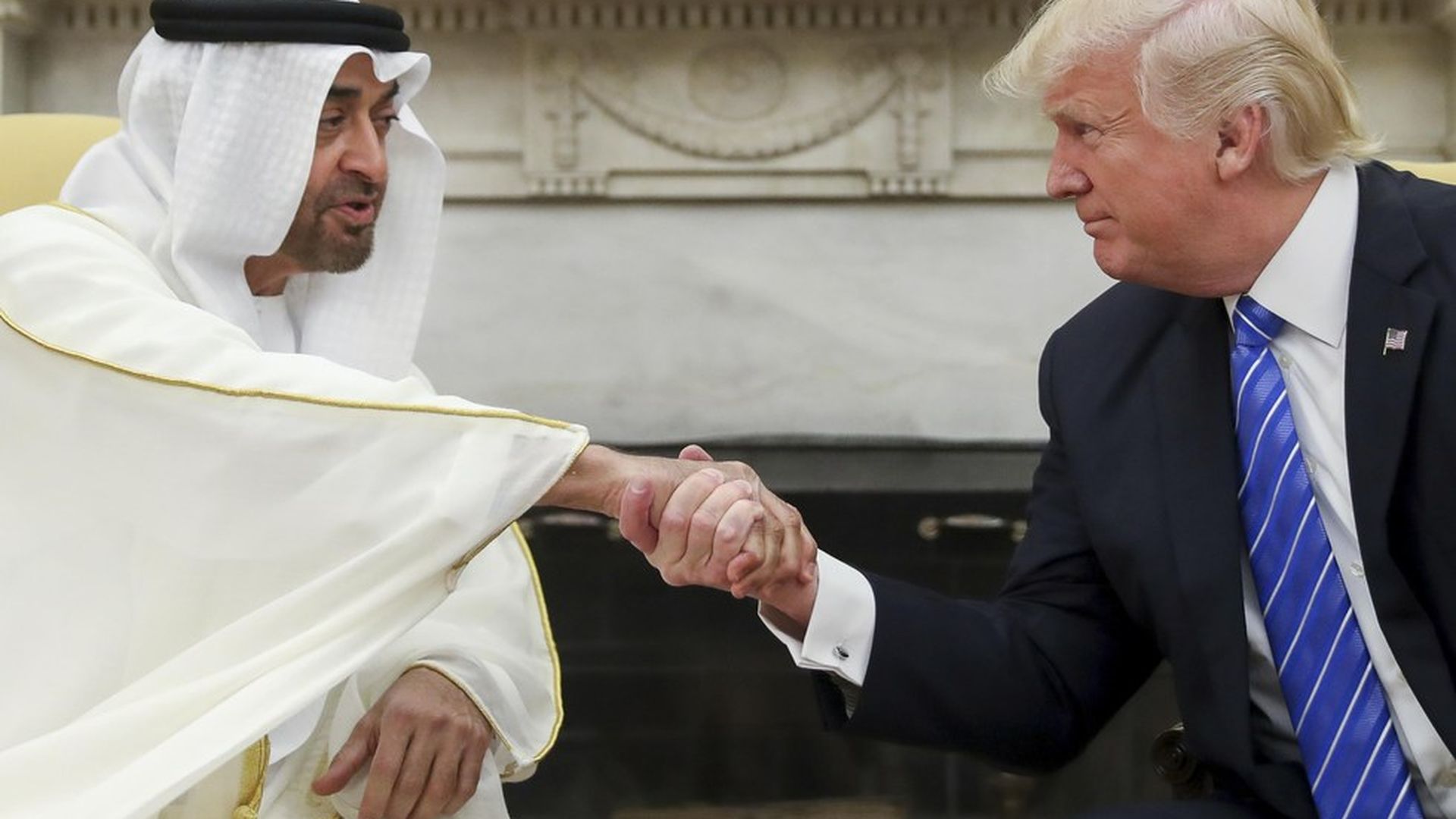
President Trump welcomed a United Arab Emirates leader, Abu Dhabi Crown Prince Sheikh Mohamed bin Zayed Al Nahyan, to the White House Monday. Trump told reporters in the Oval Office he thinks the Crown Prince loves the U.S., which he said was important.
Get smarter: The Crown Prince-Trump meeting comes ahead of a meeting with Saudi Arabia that could serve as a reset for U.S.-Middle East cooperation ever since Obama's decision to not follow through on the red-line Obama set on Syria's chemical weapons, per Fox Business News. Plus, the OPEC meeting is coming up as America's shale oil is flooding the market and checking OPEC's influence — read Axios' Ben Geman's preview of the OPEC meeting here.
Trump heads to Saudi Arabia to kick off his first foreign trip at the end of this month.
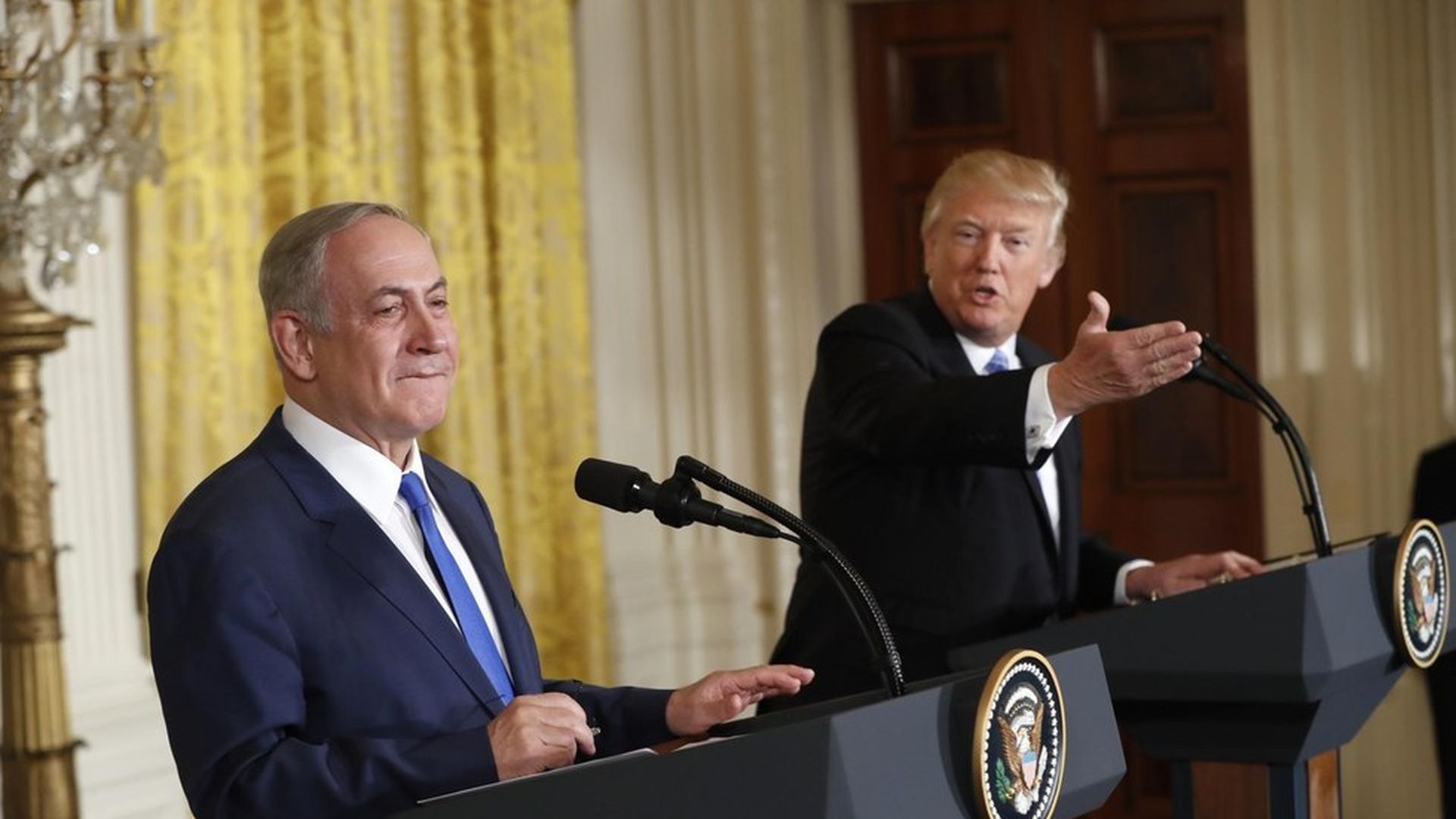
Israeli Prime Minister Benjamin Netanyahu's office published sections of its internal report on his February meeting with President Trump at the White House in order to push back against a Fox News report that Netanyahu asked Trump not to move the U.S. embassy to Jerusalem, per Haaretz.
An excerpt: "The prime minister was asked about moving the embassy and explained that this wouldn't cause bloodshed in the region as people were telling [Trump]."
The problem: Moving the embassy to Jerusalem would effectively mean recognizing Jerusalem — a city Palestinians claim as their own — as the capital of Israel. Rex Tillerson has said the U.S. will delay the move so as not to undermine peace talks.
Why it matters: The publication of these internal documents is highly unusual move from Netanyahu's office, showing just how intent he is to push back against rumblings that he isn't fully committed to the embassy move.
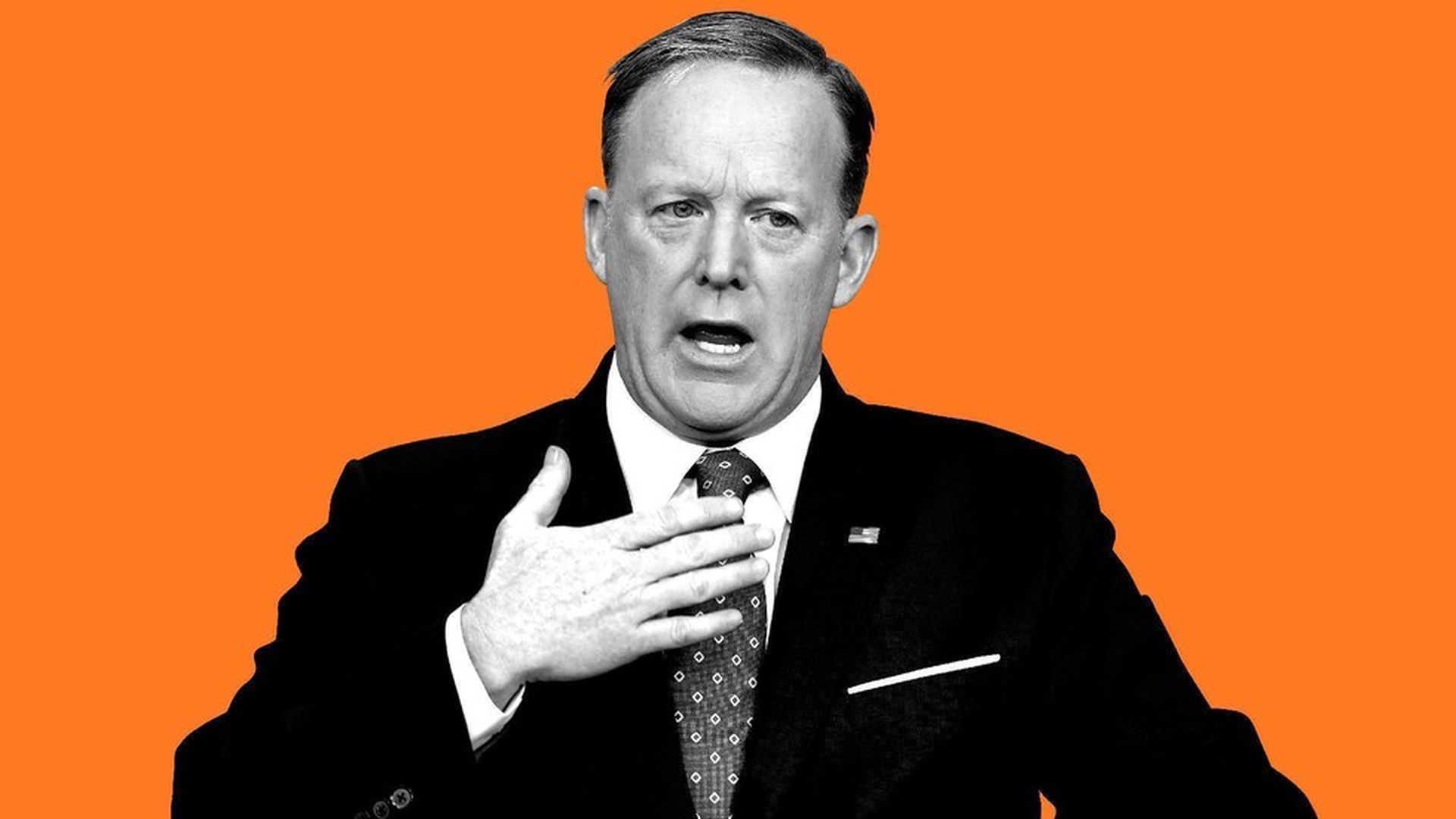
Sean Spicer said "there's frankly no need for a special prosecutor," during his briefing Monday, noting that the Congressional and Senate committees, as well as the resources cited by acting FBI Director Andrew McCabe, are enough. "The process is running completely as it should," he said. Other takeaways:
Firing Comey as a selfless act: "The actions that he took, he knew could be detrimental to himself but none of those things mattered because the president had to do the right thing for the American people."
On Trump taping WH conversations: MSNBC's Hallie Jackson pressed Spicer repeatedly, but he'd only say that "the president has made his position clear."
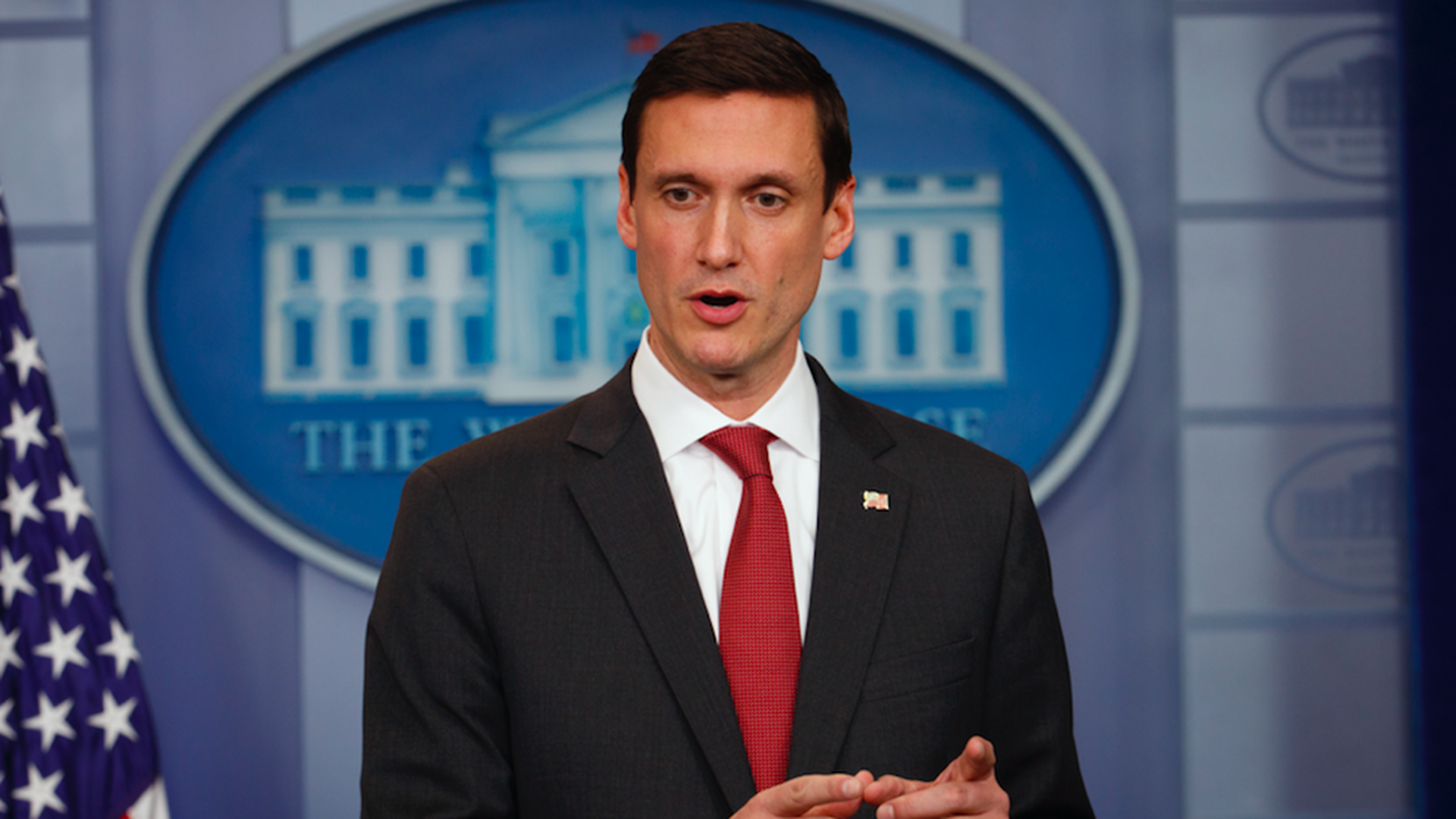
Global ransomware attack: Homeland Security Advisor Tom Bossert said as of now, no U.S. federal systems have been affected. Bossert also insisted the attack "was not a tool developed by the NSA to hold ransom data."
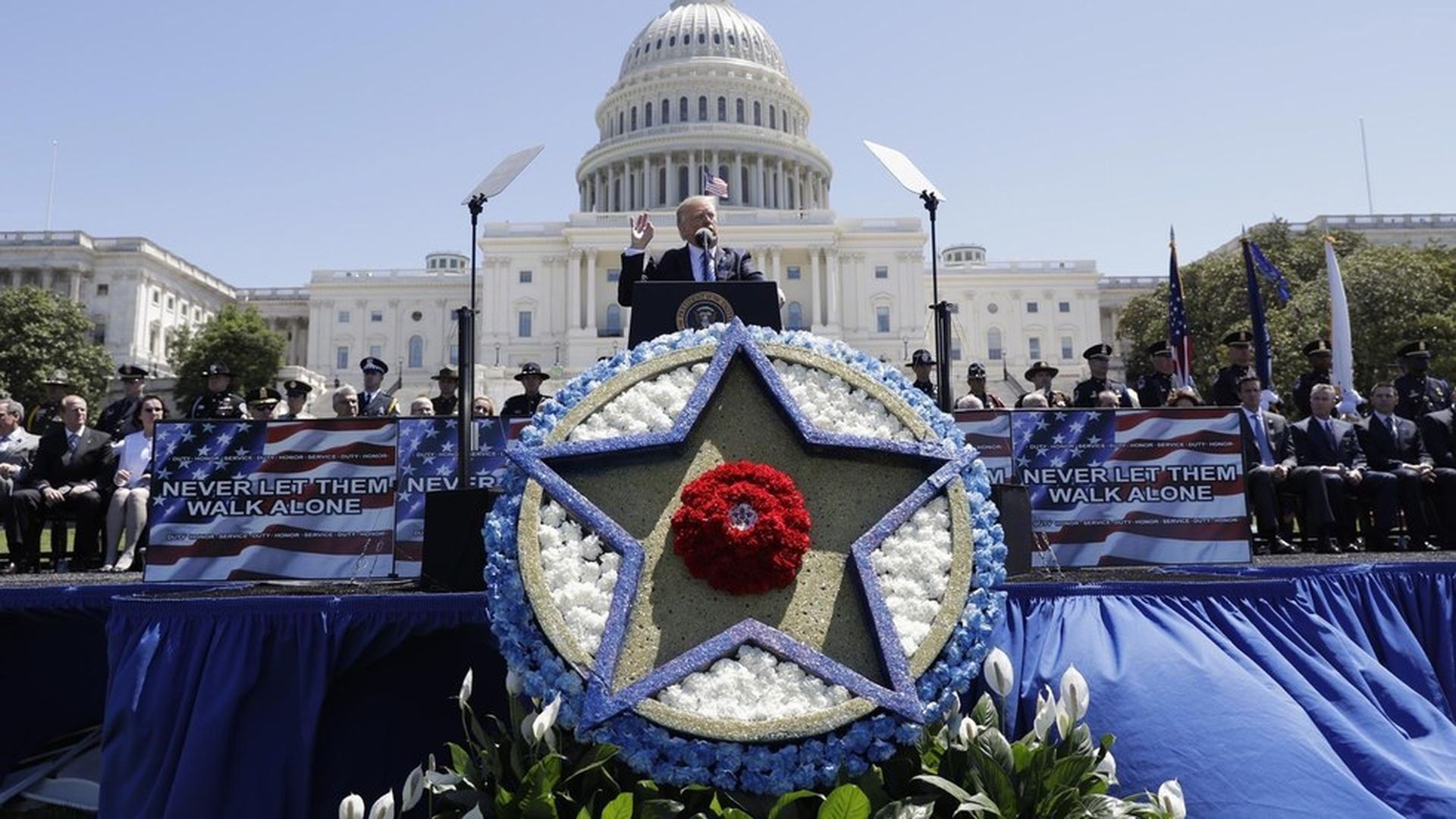
President Trump and Vice President Pence spoke at the National Peace Officers' Memorial Service at the Capitol this morning, where Trump told the assembled law enforcement members and their families that they "will always find an open door to the White House."
His promise: "I will make it the personal priority of my administration to ensure that police are finally treated fairly and with honor and respect that they deserve."
On attacks on police: "Every drop of blood spilled from our heroes in blue is a wound inflicted upon the entire country."
Some color: Trump tossed a white "USA" hat into the crowd for the son of a fallen police officer.
President Trump's homeland security adviser, Tom Bossert, said that Friday's global cyberattack is something that "for right now, we've got under control" in the U.S., reports AP:
"Bossert tells ABC's 'Good Morning America' that the malware is an "extremely serious threat" that could inspire copycat attacks. But Microsoft's security patch released in March should protect U.S. networks for those who install it."
"Microsoft's top lawyer has criticized U.S. intelligence for 'stockpiling' software code that can aid hackers. Cybersecurity experts say the unknown hackers behind the latest attacks used a vulnerability exposed in U.S. government documents leaked online."
"Bossert said 'criminals' are responsible, not the U.S. government. Bossert says the U.S. hasn't ruled out involvement by a foreign government, but that the recent ransom demands suggest a criminal network."
On "60 Minutes" last night, "What bin Laden documents reveal about al Qaeda," by correspondent Holly Williams:
Why it matters:
Osama's message lives and now there's a new messenger — his young, charismatic son, Hamza bin Laden (around 28 years old): "I think we're not done with the bin Ladens yet."