Tuesday's politics & policy stories

Trump reportedly not hot on Spicer
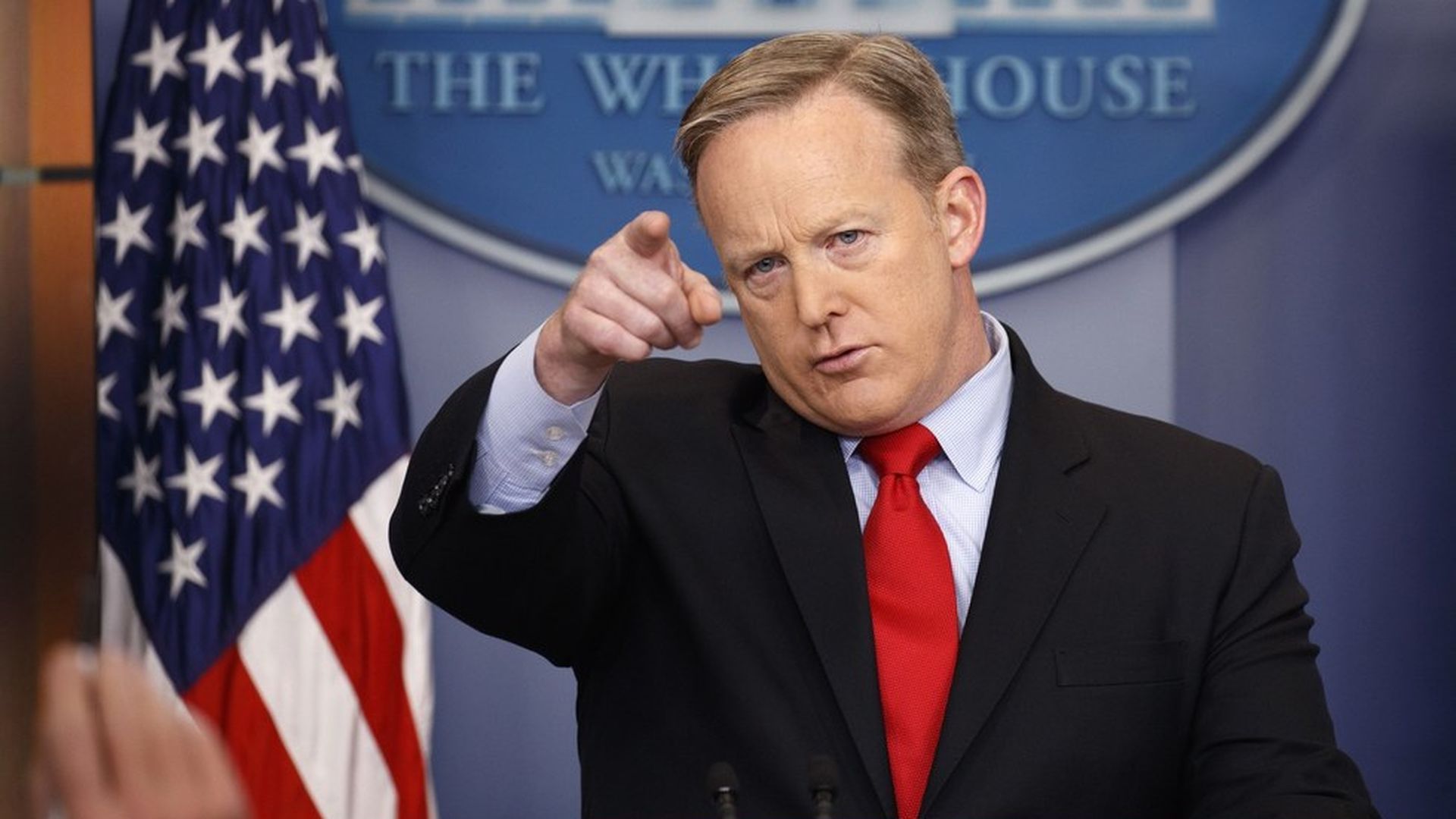
Per CNN, the White House is prioritizing its search for a White House Communications Director to help out Sean Spicer, who has been handling that role in addition to his duties as press secretary.
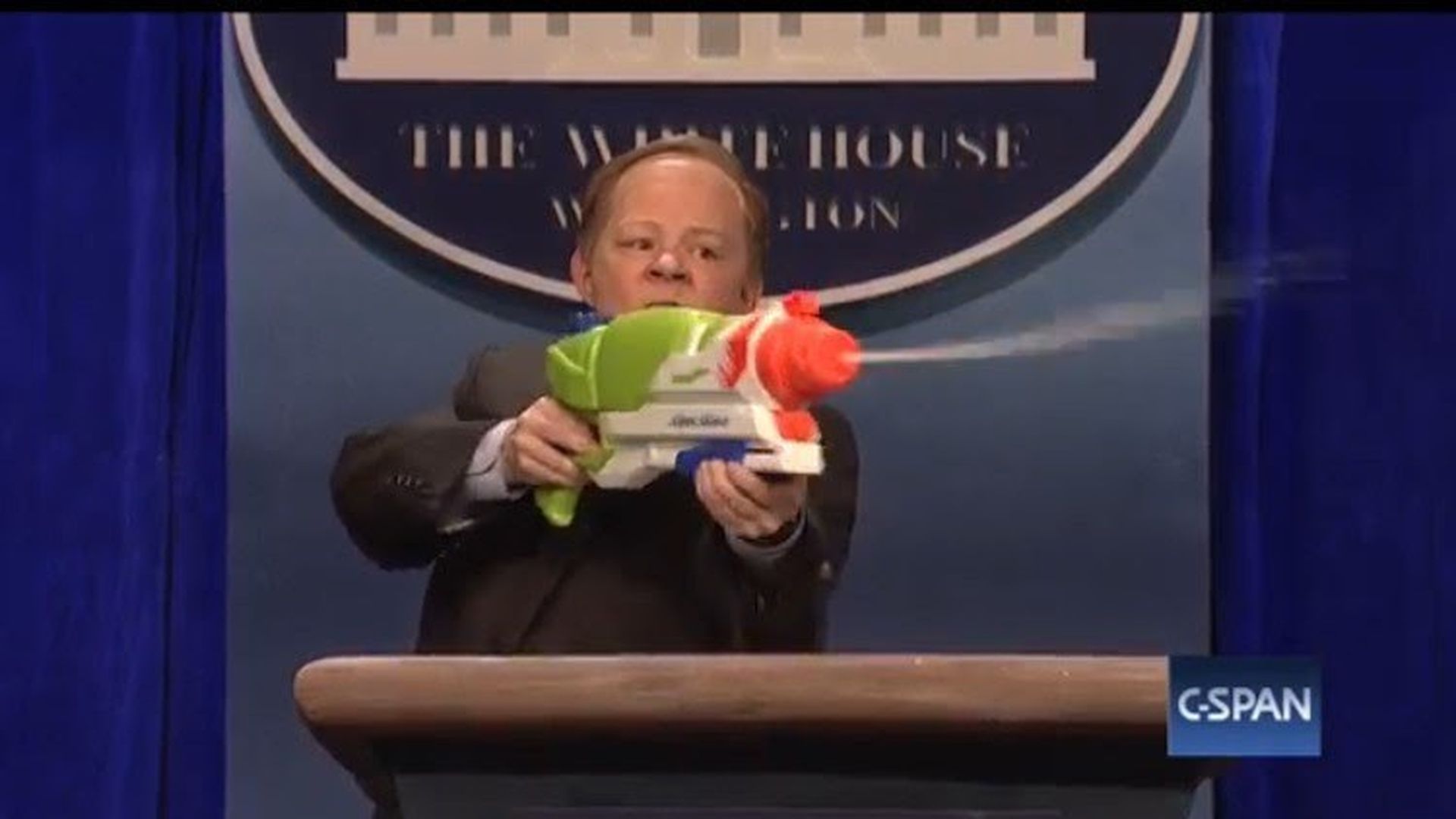
CNN's source says the role "needs to be filled more than ever" as Trump is reportedly unhappy with Spicer's performance as press secretary after Chief of Staff Reince Priebus recommended him for the position. That's been further compounded by Melissa McCarthy's blistering impression of Spicer on SNL last weekend, which did not amuse the president at all.
Twisting the knife: Trump "regrets [the choice of Spicer] every day and blames Priebus."
The last time someone held both positions?: In addition to his duties as communications director, George Stephanopoulos acted as a de facto press secretary at the outset of Bill Clinton's presidency. He only lasted a tumultuous five months in both roles until he was pulled out of the communications department — however, he remained close to Clinton in an influential role as senior advisor on policy and strategy.
Happy ending for doctor caught in Trump travel ban
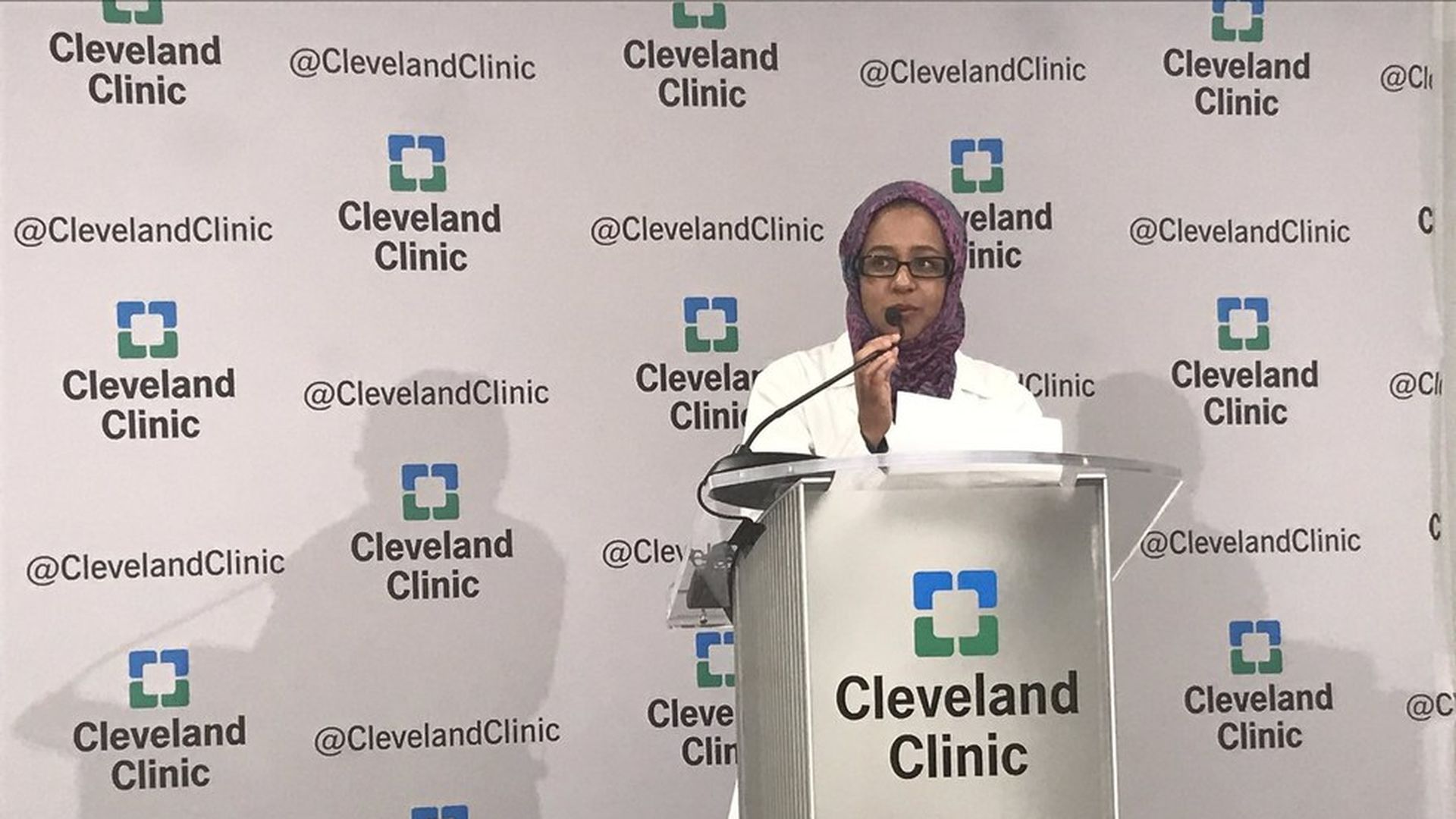
Last week, ProPublica's Charles Ornstein had the story of Dr. Suha Abushamma, a Sudanese first-year resident at Cleveland Clinic with an H1-B visa, who had been turned away upon landing at JFK and forced to fly to Saudi Arabia when President Trump's executive order on immigration took effect.
According to STAT, Abushamma returned to the United States yesterday thanks to the stay of the executive order issued by a federal judge in Seattle. The Cleveland Clinic had faced controversy for scheduling a fundraiser at Trump's Mar-a-Lago, but worked diligently behind the scenes to ensure Abushamma's return.
Her text to her lawyer upon arriving in the U.S.: "Hi David. I'm out. I'm in front of the Dunkin Donuts Express. Where are you?"

Mexican remittance tax could lead to Bitcoin boom

GOP Rep. Mike Rogers on Tuesday said that he will introduce legislation to charge a 2% tax on remittances from individuals to Mexico and other South American countries to help offset costs of President Trump's proposed border wall. It also could unintentionally spark mass adoption of Bitcoin and other cryptocurrencies, which could be used by immigrants to circumvent such rules.

The highlights from Spicer's press briefing
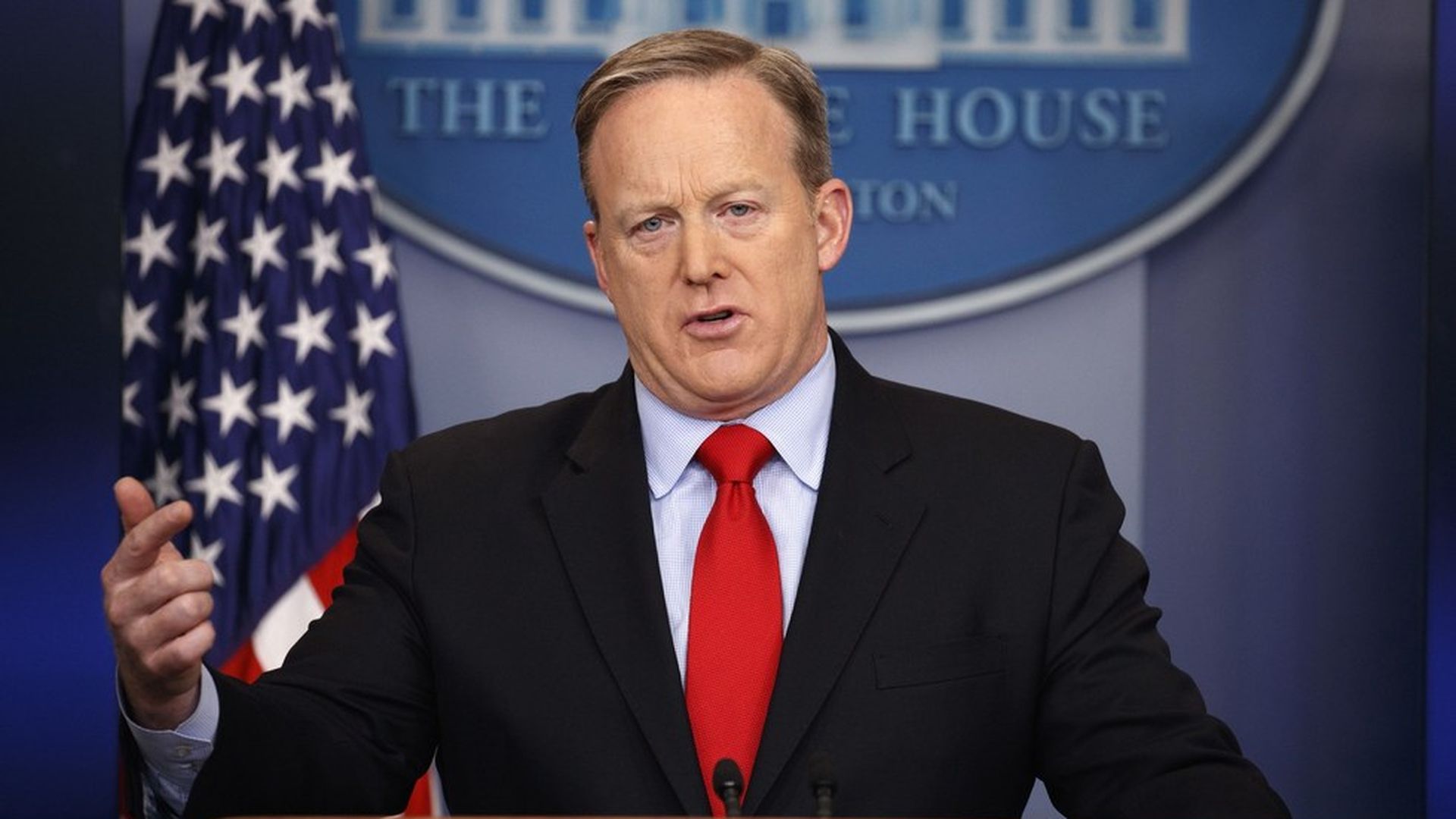
Spicer stated that the hearing tonight, in which Trump will be fighting Seattle District Judge James Robart on his immigration and refugee executive order, is solely "an interim decision" on whether the president's order is enforced. If not, Trump has said that he is prepared to take the order to the Supreme Court. Other takeaways:
- Trump on Iran rhetoric: "The Ayatollah is going to realize that there's a new president in office... [Trump] is not going to sit by and let Iran flaunt its violations to the joint agreement."
- On list of terrorist attacks Trump says weren't reported: Spicer says many of the attacks didn't get the attention they deserved, and said it undermines the threat that faces our country. Emphasizes that the list was put together AFTER Trump's comments.
- Secretary Kelly's comments on not adding countries to travel ban: Spicer said that's the case for "right now," but "nothing is final until the end of the review period" for the executive order.
- Timeline of repealing and replacing Obamacare: "I think we can have this done legislatively sooner rather than later, but the implementation might take a little bit longer."
- Terrorist in Yemen taunting Trump: Spicer denied that the Yemen raid was to target AQAP leader Qassim Al-Rimi. He reiterated the raid was for "intelligence gathering" and emphasized that it was "highly successful."
Trump staffer: We'll say "fake news" until media backs off
CNN's KFILE has audio from President Trump's deputy assistant Sebastian Gorka on Michael Medved's conservative radio talk show yesterday. His quotes on the administration's continued use of the term "fake news":
- "There is a monumental desire on behalf of the majority of the media, not just the pollsters, the majority of the media to attack a duly elected President in the second week of his term. That's how unhealthy the situation is and until the media understands how wrong that attitude is, and how it hurts their credibility, we are going to continue to say, 'fake news.' I'm sorry, Michael. That's the reality."
- "Every single organ that generates these kinds of stories comes from the same clique of media organs that predicted that Hillary would win and that Brexit wouldn't occur. I know what fake news is. And it's coming from those organizations. It's time that you yourself understood that as well."
Mike Pence casts tie-breaking vote to confirm Betsy DeVos
Betsy DeVos, Trump's nominee for Secretary of Education, was approved by the slimmest of margins, thanks to Vice President Mike Pence. His vote broke the 50-50 tie — marking the first time a VP has had to cast the tiebreaker on a Cabinet nominee.

Trump's blindspot on the widening trade deficit
The U.S. trade deficit widened to $502.25 billion in 2016, the largest since 2012.
Data: Bureau of Economic Analysis
Trump's blindspot: The president sees trade deficits as evidence of the United States losing, and appears to want to reduce this number whatever the consequences. But there are several reasons why this world view will not serve him well:
- U.S. GDP is nearly $19 trillion, so the trade deficit is just 2.6% of GDP. Even if we were able to close the trade gap purely through increasing exports, the effect of this relative to the overall economy would be small.
- That is an unrealistic scenario. Americans tend to buy more imports as the economy improves, as has been the case for the past several years.
- Trump could resort to tariffs to lower imports and potentially spur more domestic production, or put pressure on the Federal Reserve to adopt policies that devalue the dollar. But there would be potentially insurmountable institutional resistance.
- A border-adjusted tax may help reduce the deficit, but not if the dollar surges in value in response. A stronger dollar makes imports cheaper and exports tougher to sell abroad.
Trump ready to take immigration order to Supreme Court
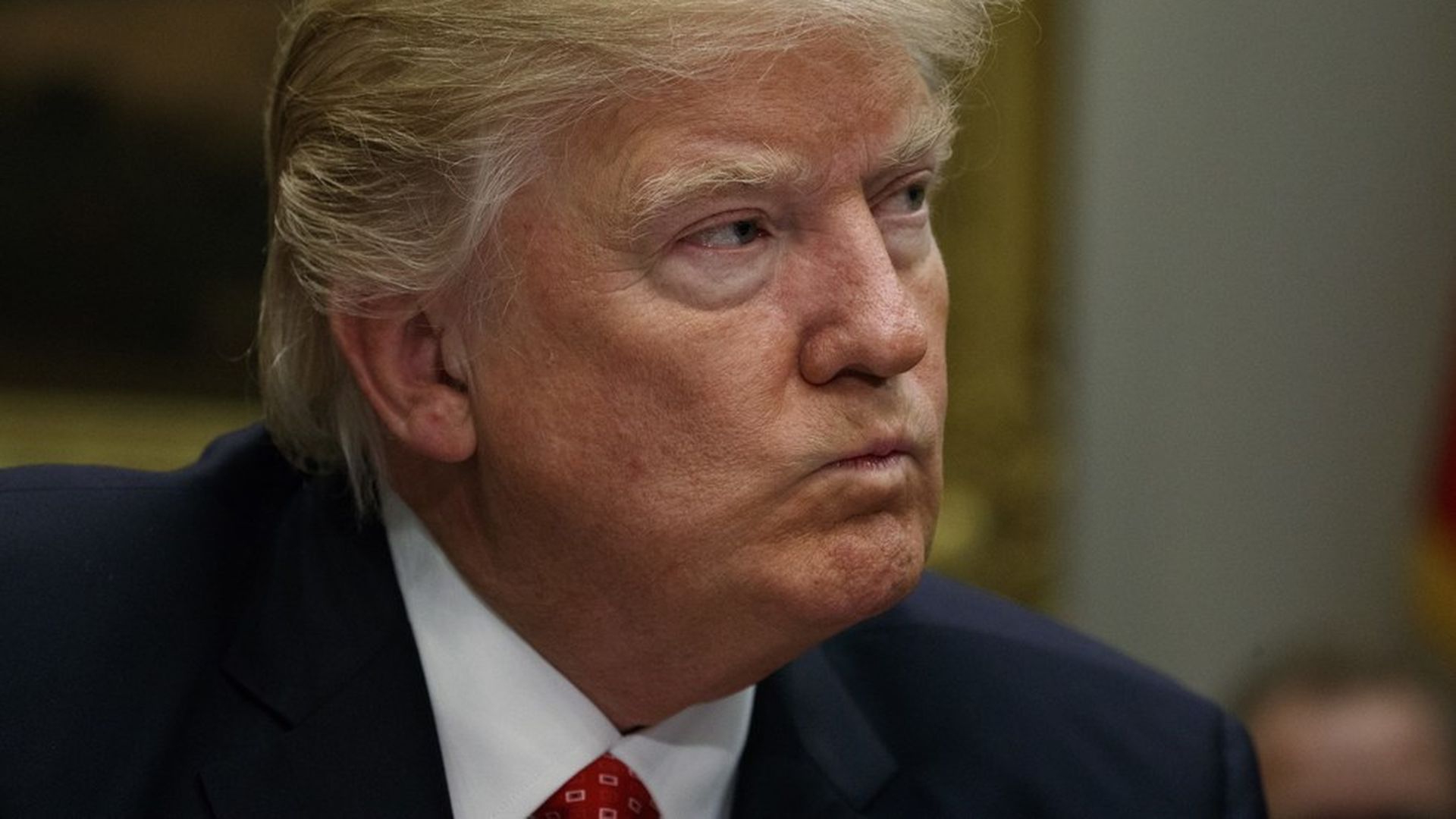
Trump told reporters at the White House today that he might have to take the fight over his "common sense" immigration and refugee executive order to the Supreme Court.
We're going to take it through the system. It's very important for the country.— President Donald Trump
Context: Over the weekend, Seattle District Judge James Robart temporarily blocked the order, igniting intense criticism from the president, who tweeted that the opinion of the "so-called judge" is "ridiculous." He's also argued that more Americans support his policies than those protesting against it, stating that any negative polls are "fake news."
What's next: Later today, state and federal lawyers go before a panel of federal appellate court judges.

Tech investors hit Trump on immigration
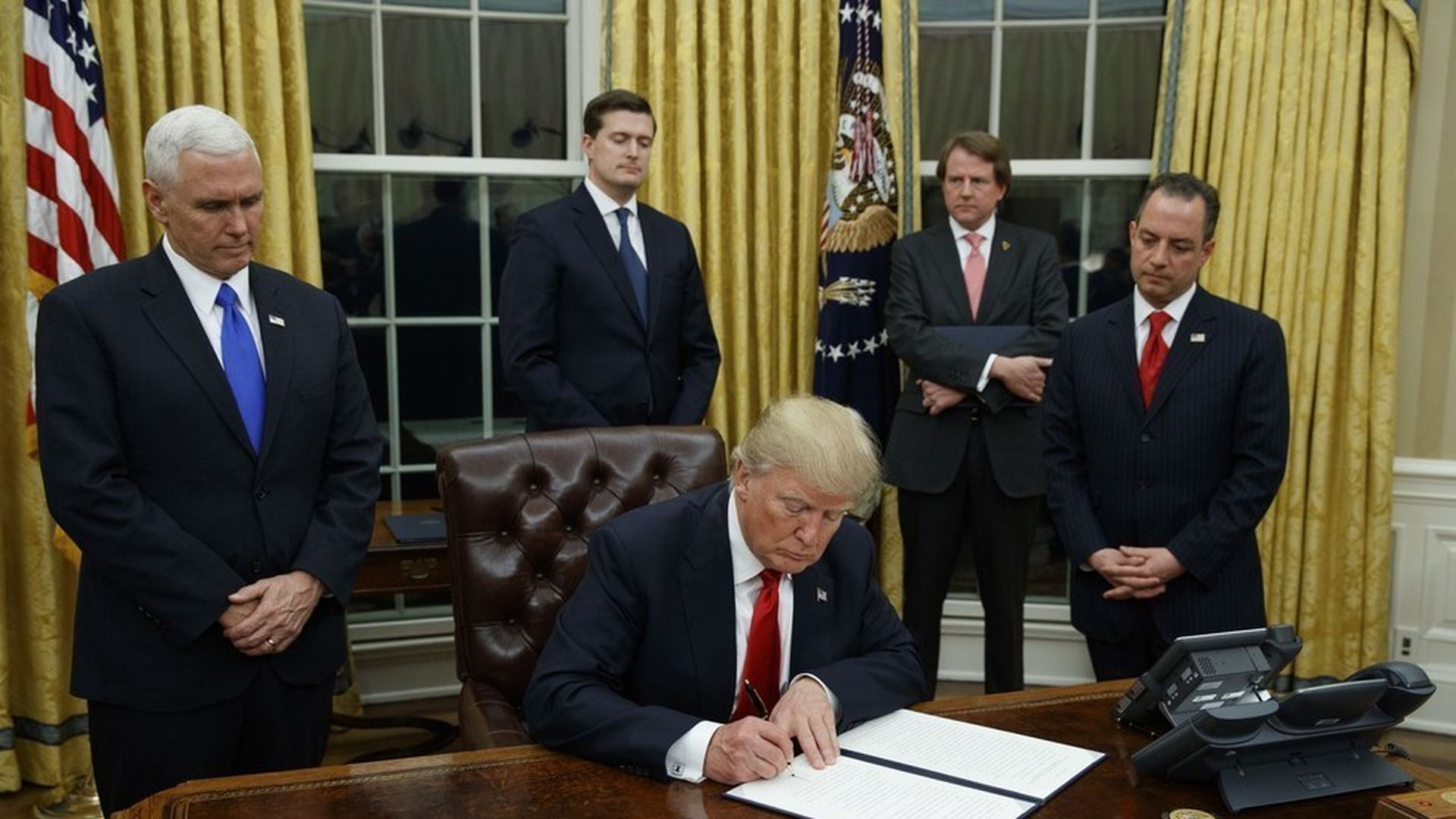
A group of investors and startups have signed on to a letter critiquing President Trump's travel ban for individuals from seven Muslim-majority countries — as well as a reported draft order also focused on immigration. The key quote:
"We believe these actions are both morally and economically misguided, and will inflict irreversible harm on the startup community and America's ability to compete globally."
They also offered a defense of the tech industry's use of H-1B visas for high-skilled workers. Some in Trump's circle have been critical of the program as bad for American workers. "The fact that so many startups rely on H-1B visas only serves to illustrate [how important the program is to the industry], since no sensible, time-constrained startup would opt to rely on a bureaucratically difficult process for hiring foreign-born employees if simply hiring qualified American workers was an option," they said.
Who signed: Investors like Ron Conway and Dave McClure, as well as companies of varying size — including streaming video platform Vimeo and Pinterest.
The bigger picture: Tech companies have aggressively pushed back against Trump's immigration restrictions, as they face the impact of the executive order on their workers and pressure from customers and employees to speak up.
Biotech leaders speak out against immigration ban
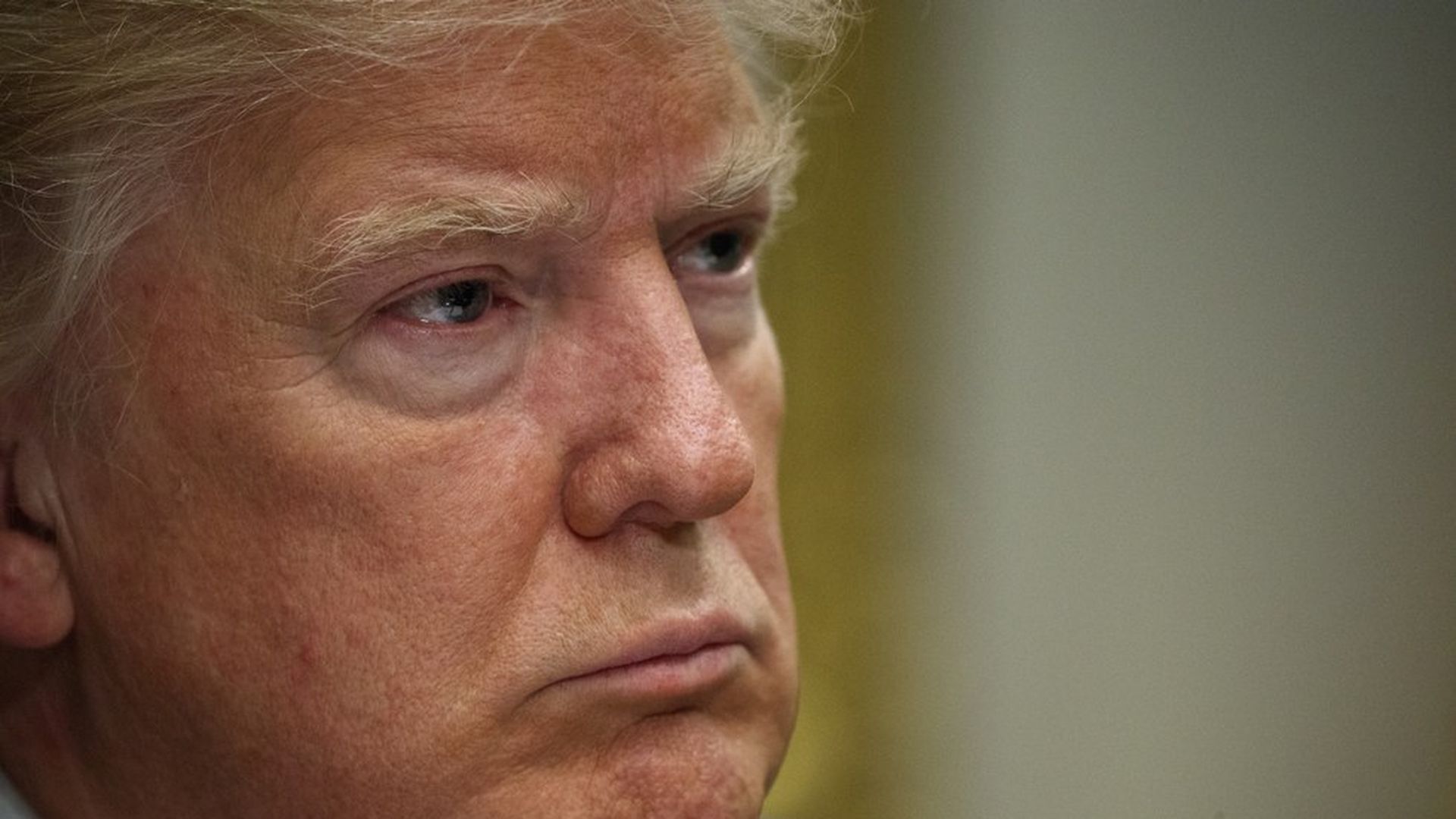
Over 150 leaders from the biotechnology industry have signed a letter published in the scientific journal Nature condemning President Trump's executive order on immigration restrictions. The letter notes that more than half of the 69,000 biomedical researchers in the United States are foreign-born.
They also state that the executive order risks the United States' status as the world's leader in biotech, adding, "It will slow the fight against the many diseases that afflict us, as well as carry negative economic consequences for the United States."

Compare how Trump described Putin in 2014 vs 2017
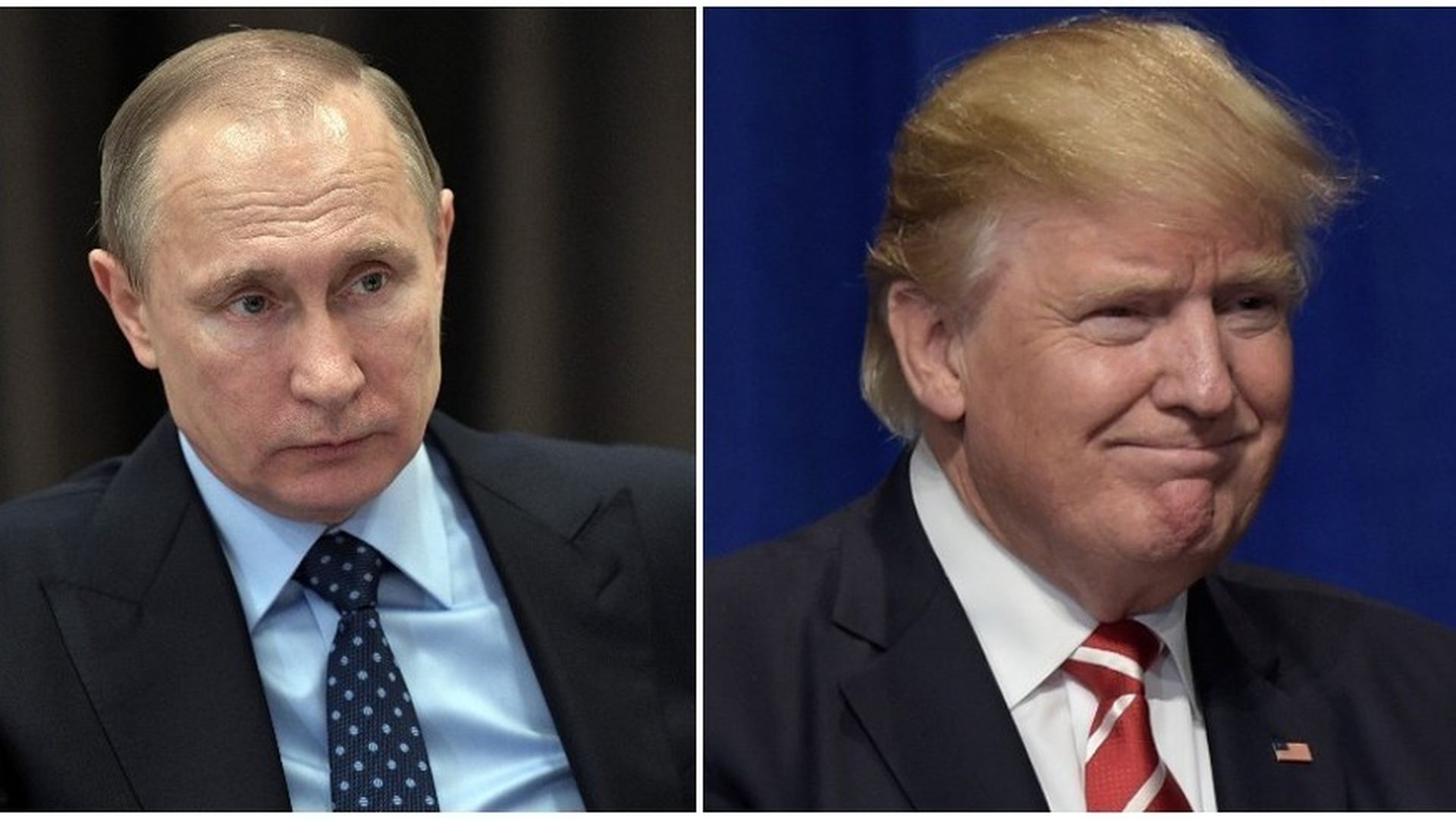
Today on Twitter: "I don't know Putin, have no deals in Russia, and the haters are going crazy - yet Obama can make a deal with Iran, #1 in terror, no problem!"
In a 2014 speech at the National Press Club: "I was in Russia, I was in Moscow recently and I spoke, indirectly and directly, with President Putin, who could not have been nicer, and we had a tremendous success."
Why it matters: Trump has been claiming of late that he doesn't know Putin. But that's after years of saying the opposite, and there's a similar pattern to how Trump and his family describe their business relationships in Russia. WaPo recounted last summer Trump's relationships with Russia (including an anecdote on a near-meeting with Putin).

This is the moment for immigration restrictionists
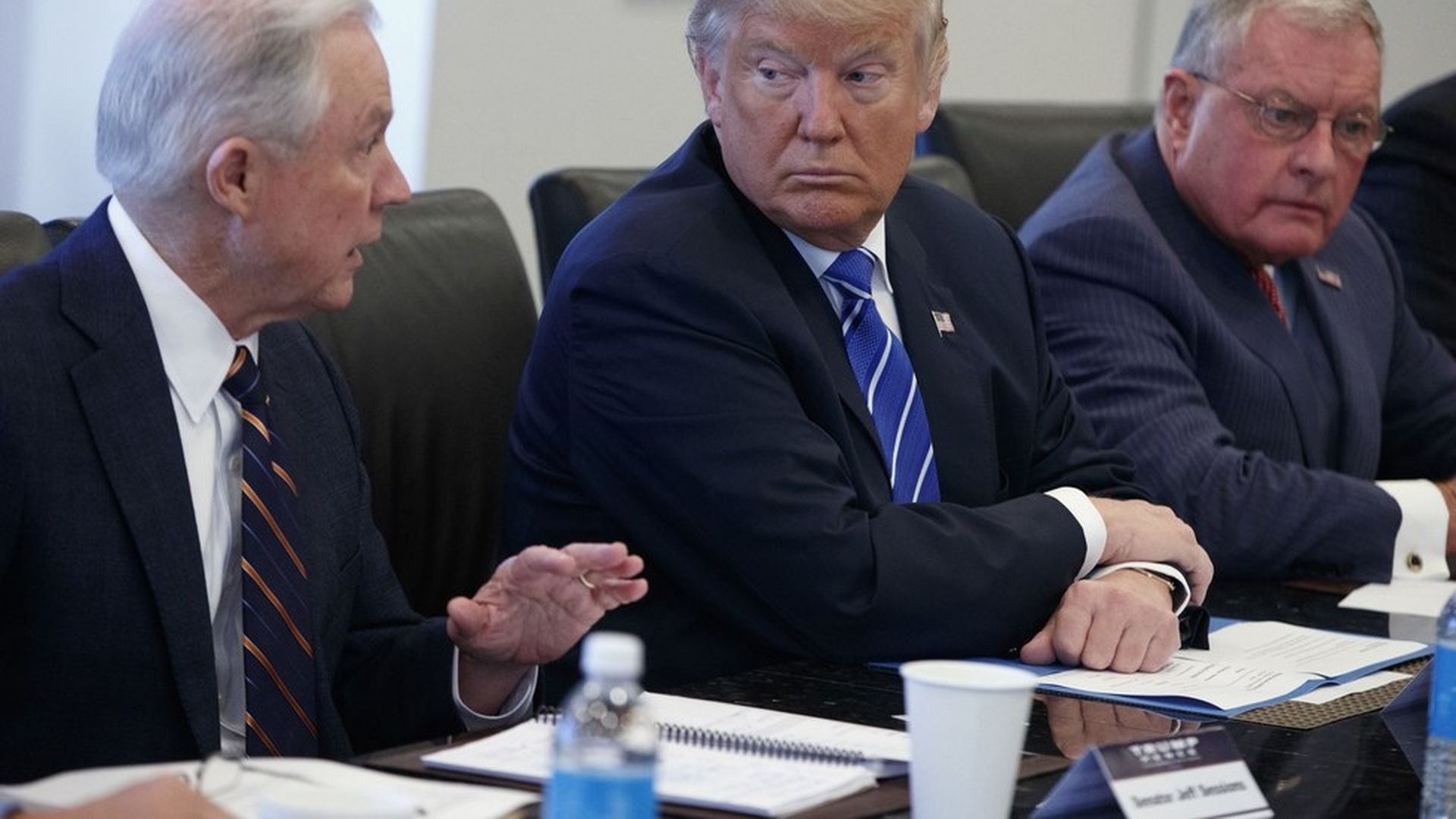
It would be impossible to overstate the resolve of the team of immigration hardliners surrounding Trump. Jeff Sessions, Stephen Miller and Steve Bannon are determined to radically change America's approach to immigration. A collection of immigration control groups has supported them and built sections of the intellectual architecture framing their policies.
Pay attention to these groups: Federation for American Immigration Reform (FAIR), NumbersUSA, and the Center for Immigration Studies. They're in a state of ecstasy.
Bill O'Reilly's approach to interviewing Trump
Page Six asked Bill O'Reilly about his strategy for interviewing the president:
"I was blunt but not condemning. His answers were straightforward. And take into consideration he knows I'll be tough but not accusatory and I wasn't trying to hurt him... Look, you can only take something up to the line. Not cross it. As he answers you can't push him as you would an ordinary citizen, nor can you give him jazz as with anyone else. You go to the next question. You must respect the office."

Iran is "thankful" Trump showed "real face" of U.S.
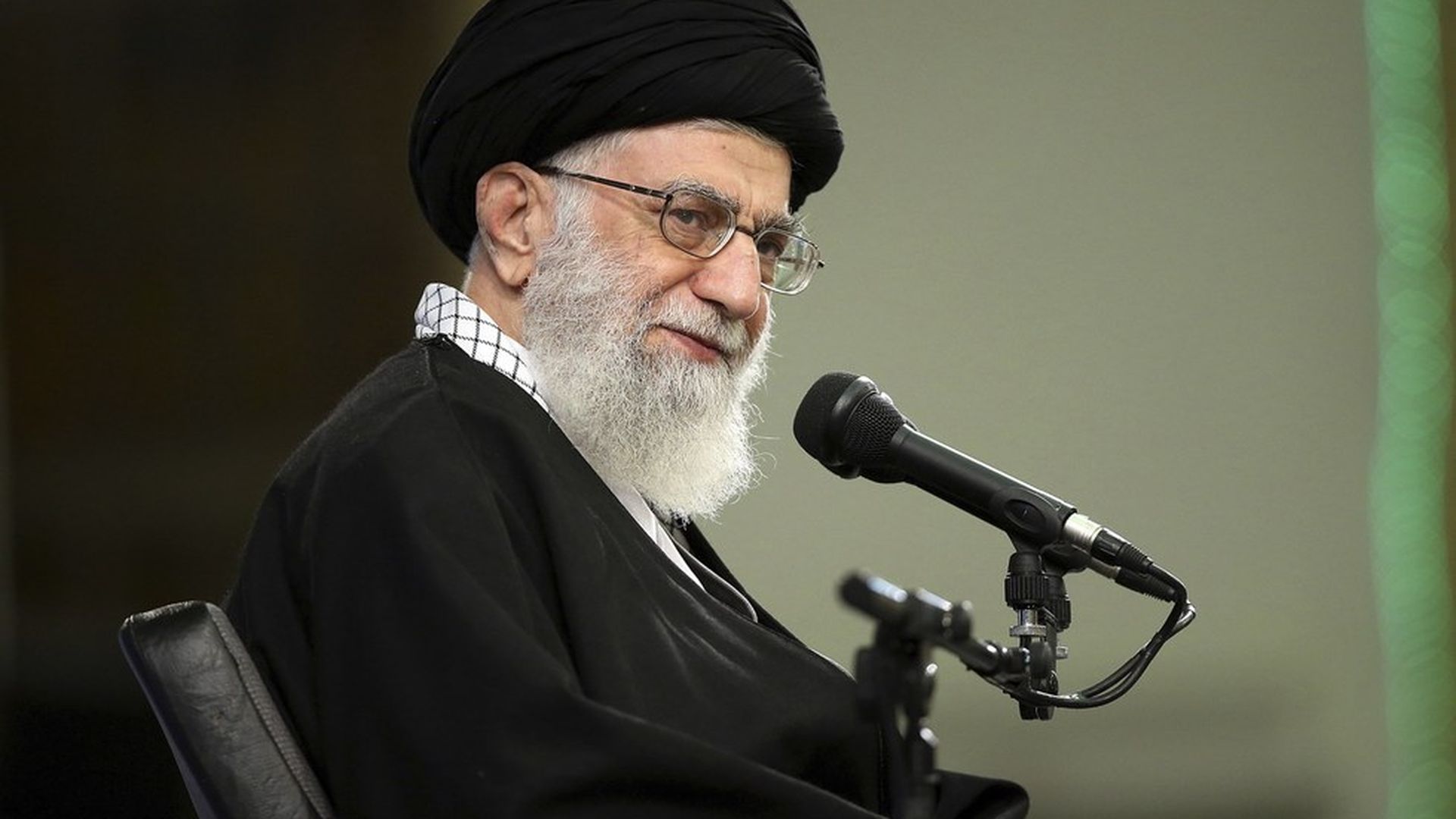
In an appearance on Iranian state TV, Supreme Leader Ali Khamenei said he wasn't thankful for former President Obama's handling of the region — bringing up sanctions, ISIS and the Syrian civil war. Then he appeared to comment on Trump, per the AP:
"We are thankful to Mr. Newcomer, of course, since he has shown the real face of the U.S. and proved what Iran has said for 38 years about the political, economic, social and moral corruption of the U.S. government."
Background: Trump tweeted last week that "Iran is playing with fire - they don't appreciate how 'kind' President Obama was to them. Not me!"
SEC considers dismantling CEO pay-gap disclosure rules
The GOP's list of grievances against the Dodd-Frank financial reform law is long, but near the top is a rule that requires companies to disclose the ratio between the compensation of its CEO and that of the median worker. The Wall Street Journal reports that an executive order signed last week concerning financial regulation would at least delay the implementation of the rule, which was supposed to go into effect last year.
Why it was included in Dodd Frank: As an effort to create more transparency around CEO pay, and pressure boards into slowing its rise.
What critics say: The ratio is difficult and costly to calculate and gives investors no useful data for evaluating the performance of firms. Furthermore, it may actually encourage companies to outsource more of their labor needs to contractors, a move that could lead to greater economy-wide inequality, even as it lowers intra-firm inequality.
Republicans target legal immigration
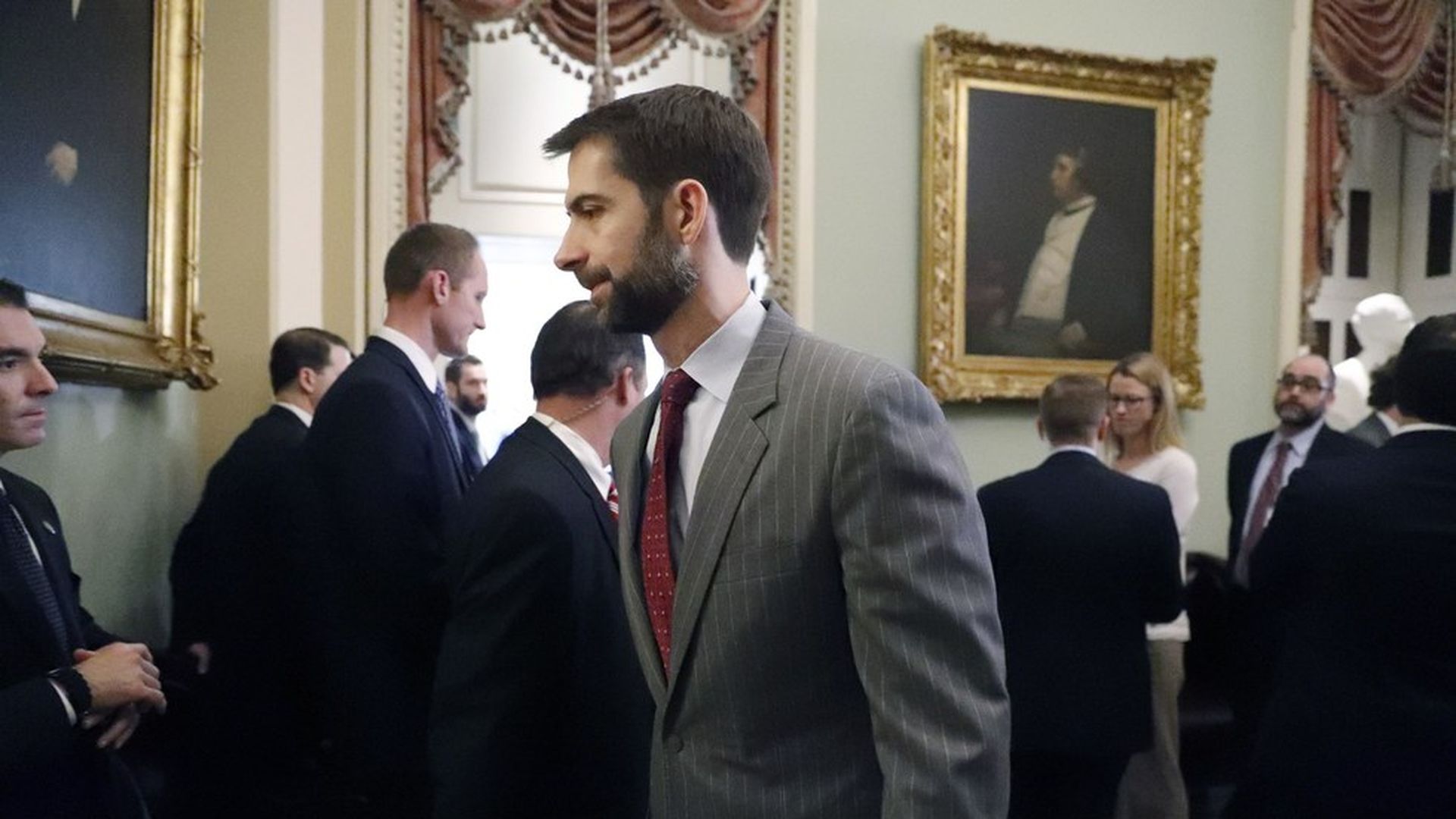
Sen. Tom Cotton and Georgia Sen. David Perdue have started taking steps to crack down on legal immigration, a focus shared by the Trump administration, per Politico. They'll formally propose legislation on the matter as soon as today. The details:
- Eliminates multiple avenues for U.S. citizens and permanent residents to sponsor family members for green cards.
- Gets rid of the diversity visa lottery, which allots 50k visas per year for citizens of countries with low levels of immigration to the U.S.
- Restricts the number of refugees allowed into the country to 50k annually — similar to rates outlined in Trump's travel ban.
- If approved, the number of legal immigrants allowed into the U.S. under the bill would plummet by 40% in the first year and by 50% over the next 10 years, according to Cotton's aides.
Not the Onion, White House edition
- Trump claims reporters are covering up terrorist attacks. When pressed for examples, the White House produces a list of attacks, most of which would be easily recognizable to media consumers.
- Sean Spicer goes on the record to argue the president doesn't own a robe, after New York Times says he decamps to his room in the evening, throws on his robe and watches cable. Twitter explodes with photos of Trump in robes -- and countless reporters gleefully retweet them.
- Politico, in a triple-bylined piece, says Trump was hacked off at Spicer being imitated by a woman on SNL. "Trump doesn't like his people to look weak," a donor tells Politico.
Big in Business: Trump vs the bureaucrats
One force thwarting Donald Trump's plan to roll back financial regulations is the regulators themselves. The Wall Street Journal points out that Dodd Frank was written in such a way as to give broad powers to the SEC and the Federal Reserve to implement the law. Even in the case of the SEC—which is more likely to toe the President's line—the regulatory reform process is overseen by the judiciary, now brimming with Obama appointees.
Wall Street is hopeful: Even so, investors are hopeful that the new administration will be able to roll back financial regulations. After Donald Trump ordered an executive review of the Dodd-Frank financial reform law—with the aim of rolling it back, financial sector stocks rose more than 3%. One theory is that eased regulations might allow banks to return more capital to investors.
Greece will need another bailout: According to the International Monetary Fund—its fifth since the start of the debt crisis in 2010. There's no more potent symbol of the failure of the euro than this protracted slump, from which there are few signs of relief.