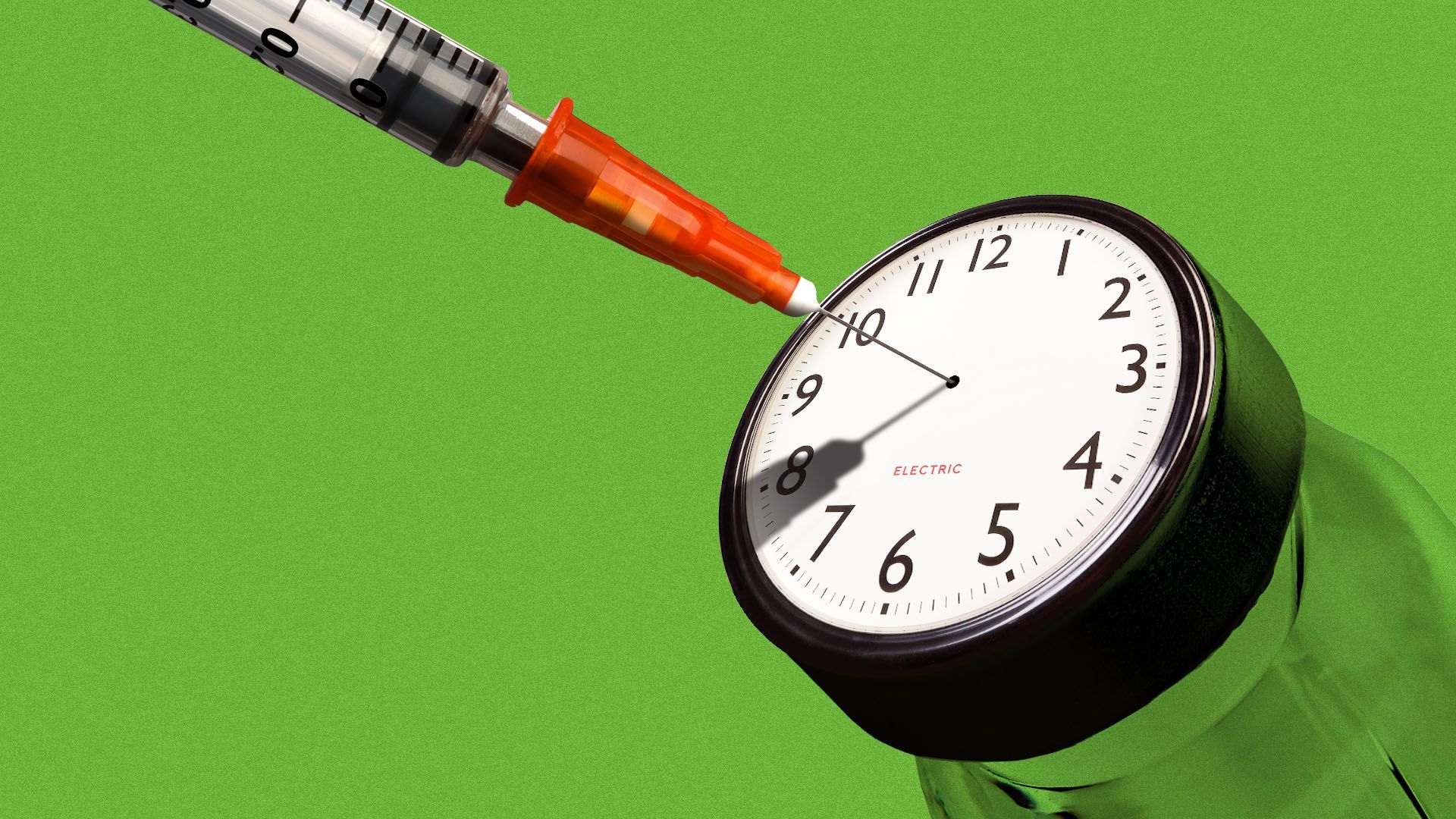
Nursing homes are suing the Biden administration to stop its national staffing requirement for the long-term care facilities from going into effect.
Why it matters: They're taking the case to the same Texas federal court that suspended approval of abortion pills and has ruled against the Biden administration on other health issues.
COVID forced us to talk — a lot — about Americans' deteriorating mental health. Four years later, the scale of the problem hardly appears to have gotten better, in large part because the system (perhaps unsurprisingly) remains ill-equipped to do much about it.
Why it matters: The complexities of mental illness, stressors of modern life and a dearth of straightforward solutions present barriers that we don't really even know how to start climbing.
OG Closer readers may rememberCourtenay Brown's story in May 2021 on how there's an exchange-traded fund (ETF) for nearly everything these days.
State of play: Well, now there's an ETF for the weight-loss drug boom.
Roundhill Investments this week debuted an ETF "focused exclusively on the rapidly growing sector of GLP-1 receptor agonists and other weight management drugs."
Zoom in: 20% is Novo Nordisk (maker of Ozempic and Wegovy), while 20% is Eli Lilly (maker of Mounjaro and Zepbound).
Other parts of the portfolio include Amgen and Viking Therapeutics.
As it turns out, the long-overlooked appendix may do some pretty important jobs keeping us healthy.
The big picture: A new analysis from Epic Research indicates the appendix may help individuals fight off a common and potentially deadly gastrointestinal infection.
These and other recent findings have researchers looking at ways to treat appendicitis without completely removing the organ, Heather Smith, a professor of anatomy at Midwestern University, recently told NPR.
Daily marijuanause has outpaced daily alcohol consumption in the U.S. for the first time, according to a study published Wednesday.
Why it matters: Shifting consumption patterns reflect changes in attitudes toward marijuana as states embrace legalization and the Biden administration moves to reclassify it as a less dangerous substance under federal law.
As it turns out, the long-overlooked appendix may do some pretty important jobs keeping us healthy.
The big picture: A new analysis from Epic Research indicates the appendix may help individuals fight off a common and potentially deadly gastrointestinal infection.
A long-acting insulin from Novo Nordisk was shown to have a greater risk of excessively lowering patients' blood sugar without offering better management of sugar levels or other benefits, Food and Drug Administration staff found.
Why it matters: European regulators in March endorsed the injection, which has been touted as the world's first once-weekly insulin and a key part of Novo's business line, along with its blockbuster drugs used for weight loss, Wegovy and Ozempic.
What they found: The FDA briefing document noted that late-stage trial data show patients with Type 1 diabetes who took the long-acting shot after a year had 50% to 80% more clinically significant or severe hypoglycemia than those who took a Novo daily insulin
The period of highest risk occurred within two to four days of receiving the injection and coincided with the peak glucose-lowering effect of the drug.
Novo suggested potential ways to support safe and effective use, including limiting the weekly insulin to patients with Type 1 diabetes who wear a continuous glucose monitor or reducing dosages.
However, FDA staff said there wasn't clinical data to assess these risk mitigation strategies.
What's next: The FDA's Endocrinologic and Metabolic Drugs Advisory Committee is due to meet Friday to evaluate the Novo shot.
Eli Lilly also is testing a once-weekly insulin in adults with Type 2 diabetes.