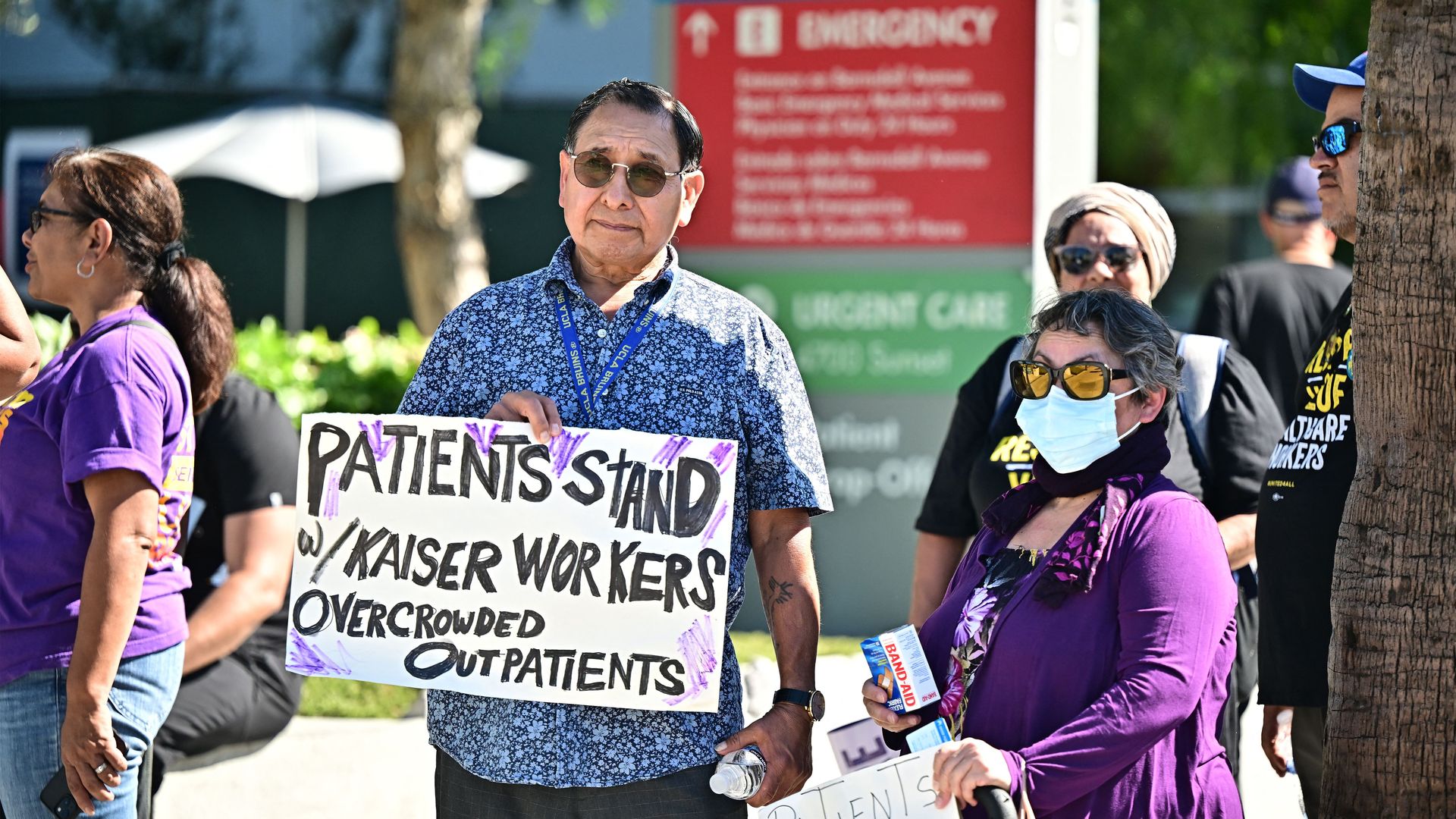
A work stoppage that's been deemed the largest health care strike in U.S. history could could see a part two with implications for employees, patients and the field at large.
Fewer U.S. cancer centers are reporting shortages of critical drugs than at the beginning of the summer, but the shortfalls are far from resolved, a new survey of leading cancer centers found.
Why it matters: The availability of life-saving platinum-based generic cancer drugs reached crisis levels earlier this year, leading doctors to delay patients' care or turn to less attractive alternatives and causing the FDA to OK importation of certain drugs from China.
Federal health officials are preparing their first major update to guidelines for handling allegations of research misconduct in nearly 20 years.
Why it matters: The evolution of research and technology since the policy was finalized in 2005, along with gaps in regulation, have made research institutions eager for new guidelines, said Minal Caron, a lawyer at Ropes & Gray who advises universities, hospitals and other organizations on scientific research and development regulations.
The warning from Sudan is dire: Nearly six months of war have created a deepening health crisis that could lead to hundreds — if not thousands — of more deaths if the fighting does not end.
The big picture: The near-total collapse of Sudan's health system underscores how the consequences of war extend far beyond the fighting — often leading to more suffering and devastation that will likely continue long after a conflict ends. That's especially true in vulnerable countries, where already strained health systems quickly buckle when fighting breaks out.
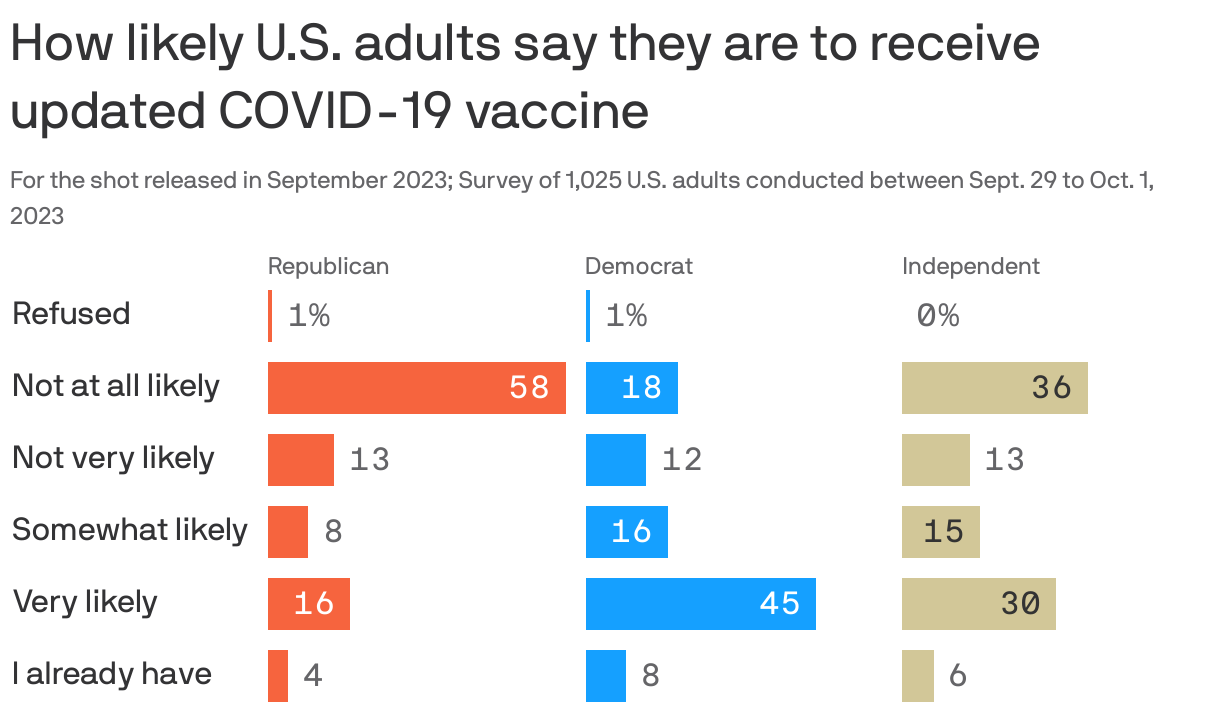
Data: Ipsos polling provided to Axios; Chart: Alice Feng/Axios
Views on the COVID-19 vaccine have crystallized during the first immunization campaign of the post-pandemic era, with partisanship — and, to a lesser extent, age — remaining the strongest predictor of whether someone will seek out a vaccine, according to Ipsos polling provided to Axios.
The big picture: About half of Americans say they plan to get the updated COVID-19 vaccine, while a small number report experiencing difficulty lining up a shot.
The Food and Drug Administration is encouraging drugmakers to develop treatments for stimulant use disorder, hoping to address a major gap in the addiction crisis response.
Driving the news: There aren't any approved treatments to help address addiction to cocaine, meth or prescription stimulants, whose use has surged in recent years — often in combination with opioids.
Moderna said Wednesday it plans to begin a late-stage trial on a combination COVID-flu vaccine later this year in adults 50 years old and above, with an eye toward regulatory approval in 2025.
Why it matters: A combined shot could simplify immunizations while simultaneously fighting two respiratory diseases that require repeated vaccinations.
The strike of more than 75,000 Kaiser Permanente workers may not wind up being that costly to the California-based health system — but its ultimate resolution could be a sign of things to come for the rest of the industry.
Driving the news: Kaiser health workers and support staff across the system began a three-day strike on Wednesday, with pay raises and staffing levels as major sticking points.
For years, the vast majority of physicians who participated in a Medicare program incentivizing high-quality care got payment bonuses.
But more doctors than ever are expected to soon be penalized for falling short of tougher new Medicare standards, prompting increased questions from providers about the program's impact.
Why it matters: The program, known as the Merit-Based Incentive Payment System (MIPS), wasdesignedto get tougher as providers got more accustomed to tracking quality metrics, but providers say it's causing more trouble than it's worth.