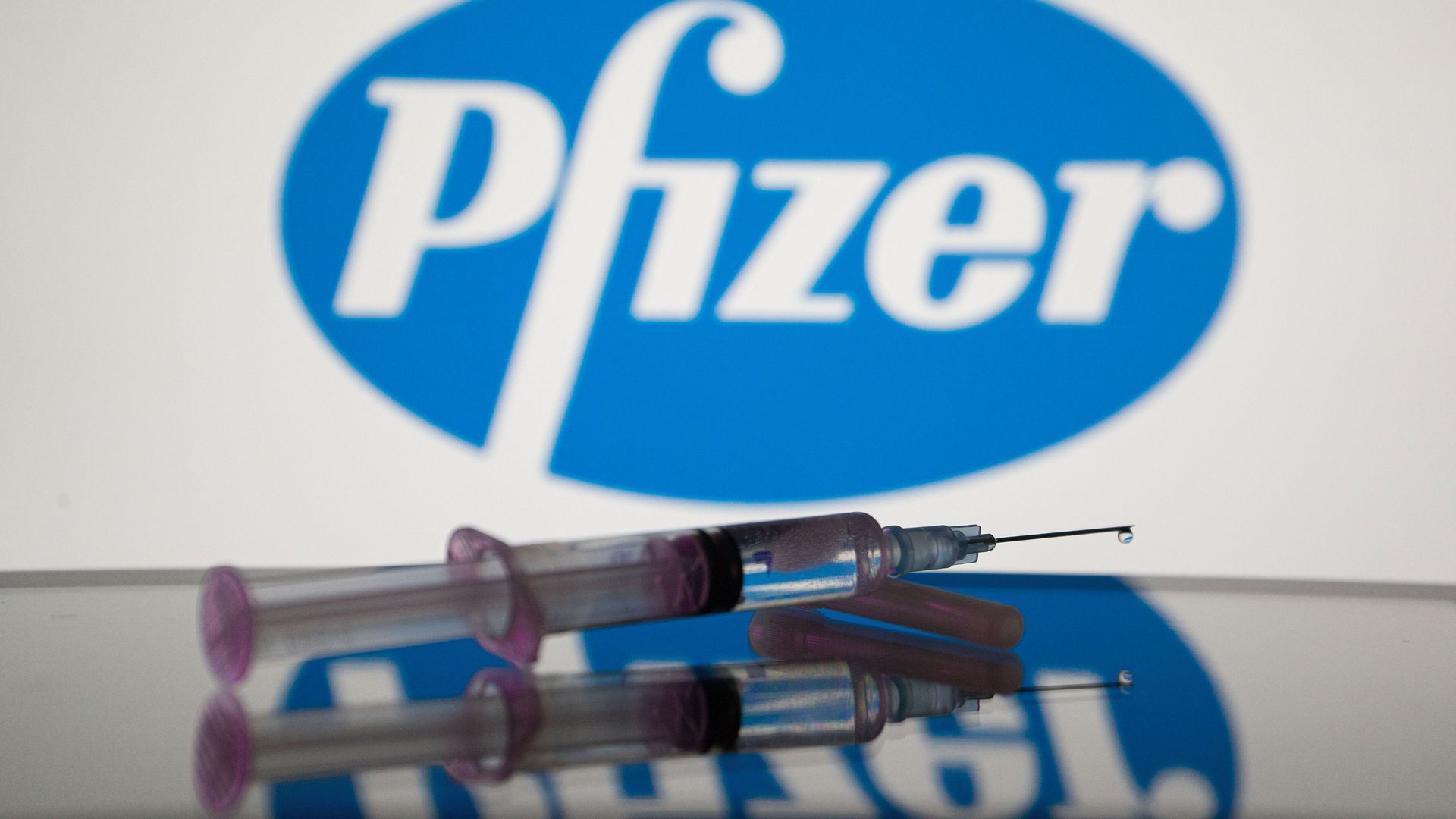
Pfizer plans to charge $110 to $130 per dose for its COVID-19 vaccine once government purchases end next year, the drugmaker's U.S. president said on an investor call Thursday.
The big picture: Weak demand for the shots and private market pressures were expected to cost manufacturers billions once government purchases end. Price increases, while expected, could lead to higher insurance premiums.
Respiratory illnesses in children are overwhelming hospitals across the United States right now.
The big picture: The unseasonably high numbers of respiratory illness in kids has put a strain on hospitals that are already preparing for the typical wintertime surge of patients ill from viruses.
The next phase of the Biden administration's bid to curb rising drug costs is in the hands of an under-the-radar federal office called the Center for Medicare and Medicaid Innovation (CMMI).
Driving the news: The center will publish a report within three months on how it can use new payment and delivery models to lower drug costs and boost access to treatments for beneficiaries of the two government health programs, per a recent executive order from President Biden.
Democrats are intent on making abortion a defining issue of the midterm election cycle and painting Republican opponents of the procedure as extremists. But it's unclear whether that intense focus will keep them in control of the Senate.
The Affordable Care Act, a trigger point in political campaigns for more than a decade, has been conspicuously absent from debates and campaign rhetoric this year. The question is how much that's depriving Democrats of a valuable talking point.
The big picture: After multiple failed attempts to scrap the health law in Congress and the courts, Republicans by and large accept that the ACA is here to stay and are reluctant to touch the tripwire again.
Advisers to the Centers for Disease Control and Prevention on Thursday unanimously voted to add COVID-19 vaccines to the 2023 schedule of childhood and adult immunizations.
Why it matters: The 15-0 vote by the Advisory Committee on Immunization Practices creates streamlined guidance for what shots people are able to receive and at what age.
Almost 40% of Americans are willing to split their ticket and vote for a candidate from the opposing party who made a top priority of lowering health costs, according to a Gallup/West Health poll published Thursday.
Why it matters: Though candidates haven't been talking much about medical costs in the run-up to the midterms, the issue remains enough of a priority that it could erode straight party-line voting.
Prime Medicine, a Cambridge, Mass.-based gene editing company founded by Harvard biochemist David Liu, has raised $175 million in its IPO and will begin trading Thursday on the Nasdaq.
Why it matters: The biotech world views this as CRISPR 3.0, from the same man who invented CRISPR 2.0.
President Biden would support a federal fund for people who need to take time off work and pay for childcare to obtain an abortion, he said in an interview forum with NowThis that will air Sunday on social media.
Why it matters: It's one of his strongest public comments in favor of federal support for those seeking abortion since the Supreme Court overturned Roe v. Wade in June.
A Food and Drug Administration advisory panel's recommendation to pull a treatment for preventing pre-term births from the market leaves one fewer option for a health care segment that's customarily overlooked researchers and drugmakers.
Why it matters: Treatments to reduce maternal mortality or reduce pre-term births — problems that disproportionately impact women of color — are few and far between. And experts say there isn't much energy directed at building a pipeline.
A Food and Drug Administration advisory panel's recommendation to pull an early birth drug from the market is only the latest controversy surrounding a popular program aimed at getting promising new treatments to patients faster.
Why it matters: Critics — including the FDA itself — say the program lacks the appropriate guardrails, putting expensive, unproven treatments in consumers' hands while drugmakers often delay proving the drugs' effectiveness.
Software that analyzes snippets of your speech to identify mental health problems is rapidly making its way into call centers, medical clinics and telehealth platforms.
The idea is to detect illnesses that might otherwise go untreated.
This article originally appeared in Axios Finish Line, our nightly newsletter on life, leadership and wellness. Sign up here.
There's a link between how much you exercise and how well you can recall things.
Why it matters: We know moving our bodies can be good for our minds, but a new study, published in Scientific Reports, demonstrates that different forms of exercise can benefit different aspects of brain function, such as memory.













/2022/10/20/1666274670804.gif?w=3840)