Pfizer said Wednesday that it has asked the Food and Drug Administration (FDA) to authorize its coronavirus vaccine for emergency use for children under 5.
Why it matters: It's one more step toward a vaccine for America's youngest.
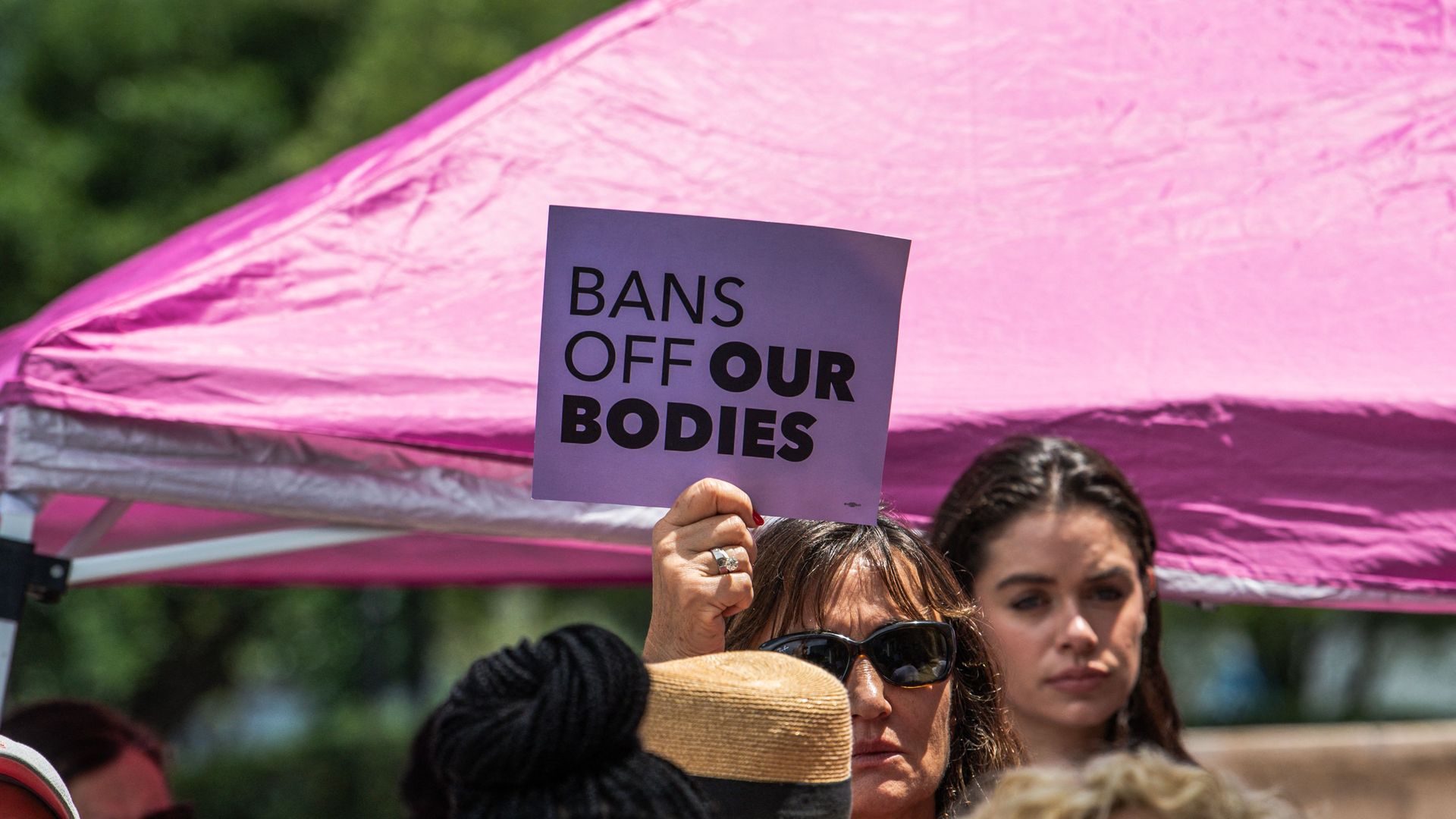
Abortion providers have filed a lawsuit seeking to void the recently enacted 15-week abortion ban in Florida, which is set to take effect in July.
State of play: Providers argue the ban violates the state's constitutional protections, intrudes on the privacy rights of Florida women, and denies women autonomy over their bodies.
A new crop of drugs received FDA approval to help fight obesity, but often insurers are refusing to cover the prescription medications, the New York Times reports.
Why it matters: Obesity affects more than 40% of Americans and is linked to a larger number of chronic diseases that erode individuals' quality of life and drive up health care costs.
U.S. consumers overpay for generic drug prescriptions by as much as 20% and it's largely because of the industry middlemen known as pharmacy benefit managers (PBMs), according to a white paper from the USC Leonard D. Schaeffer Center for Health Policy & Economics.
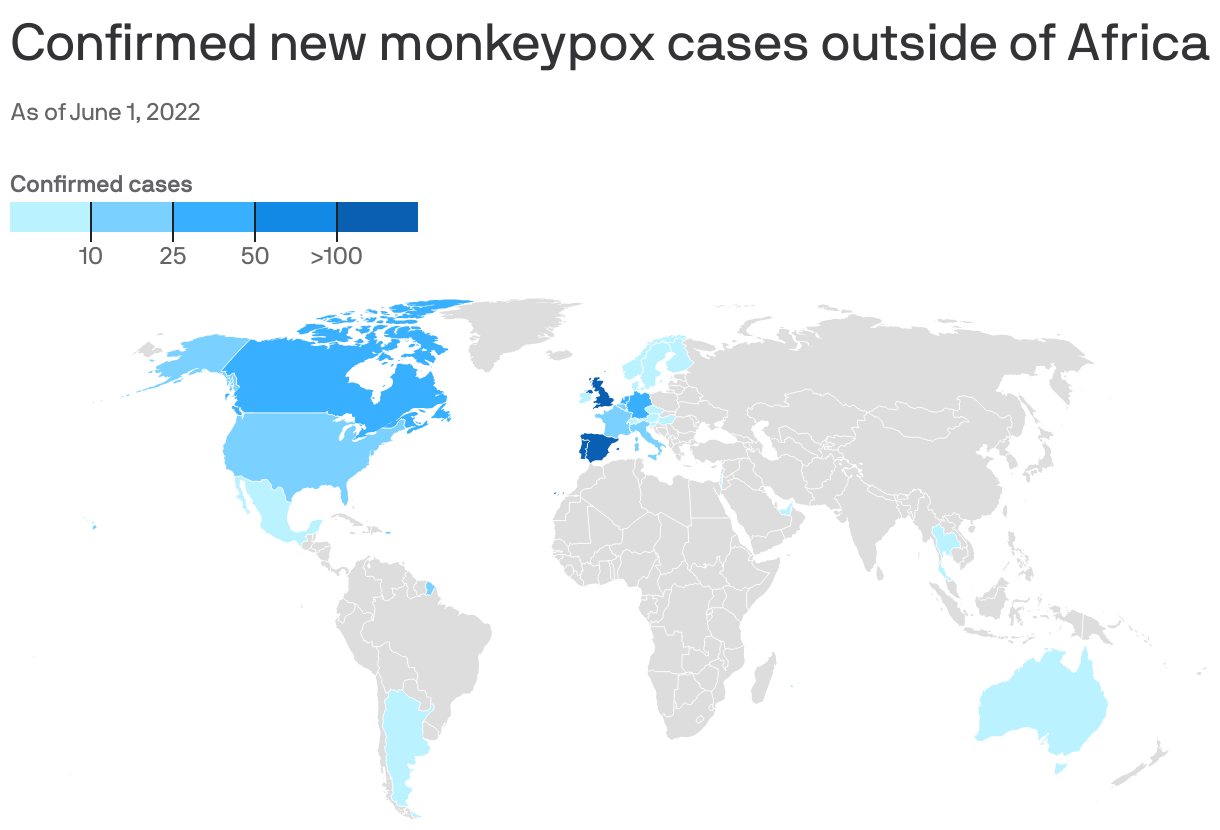
Note: Monkeypox is more common and locally transmitted in west and central Africa; Data: WHO, Axios reporting; Map: Axios Visuals
Spanish and Portuguese health authorities said Wednesday that the total confirmed cases of monkeypox across both nations have exceeded 250, Reuters reports.
Why it matters: The Iberian Peninsula has served as the epicenter of the recent outbreak, which has swept across several European countries as well as the U.S. The emergence of the virus is notable as it is rarely found outside of Africa.
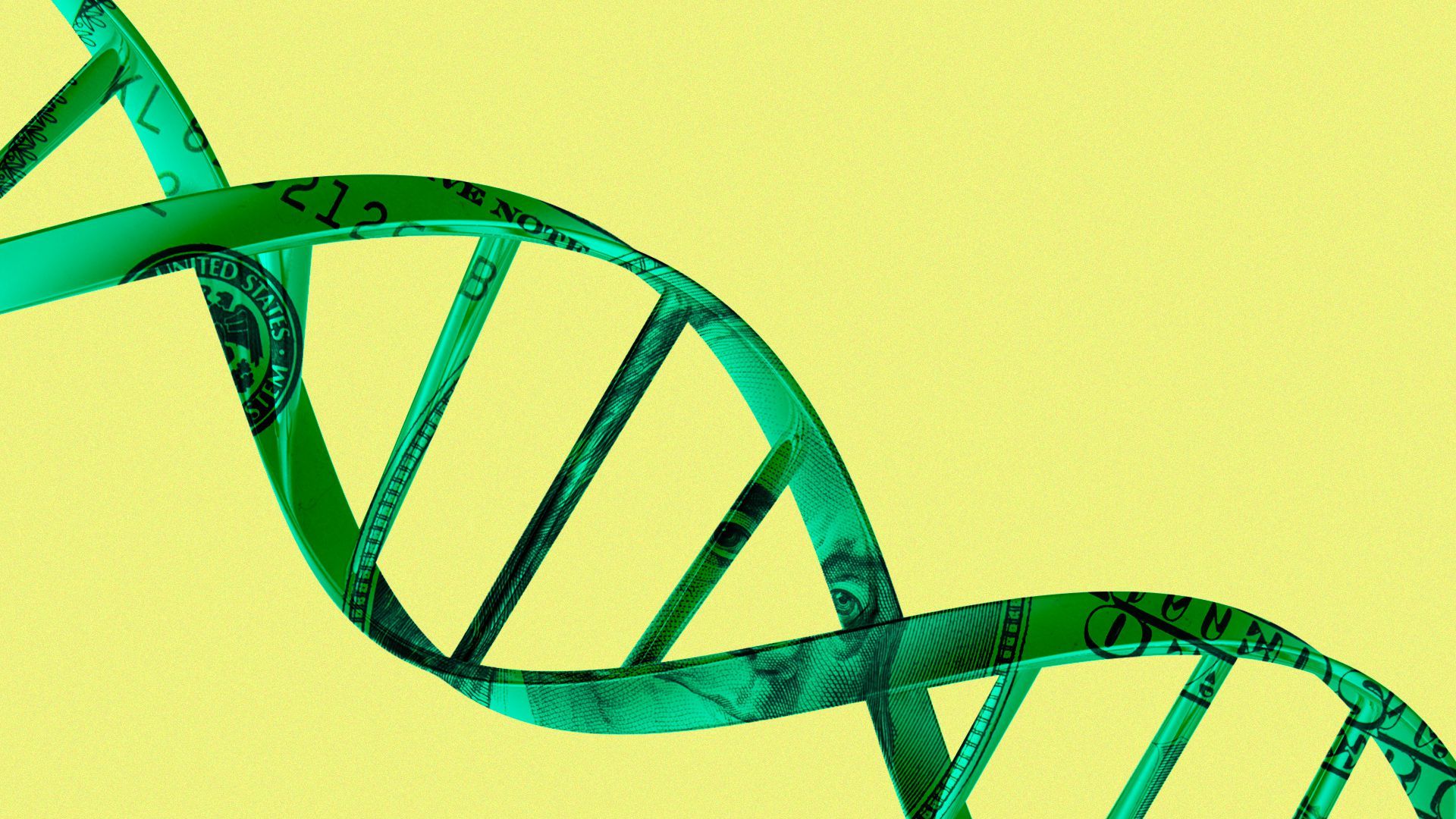
Ultima Genomics,a Newark Calif.-based gene sequencing startup, exited stealth with around $600 million in venture capital funding.
Why it matters: Ultima claims it can sequence an entire genome for just $100, which is an affordability advancement that could significantly accelerate genomic research. It's also seeking to challenge Illumina, an incumbent valued at more than $37 billion.
Efforts to update COVID vaccines can't seem to keep up with changes in the virus itself.
State of play: New variants appear to be even more immune-resistant than the original Omicron strain, raising the possibility that even retooled vaccines could be outdated by the time they become available this fall.
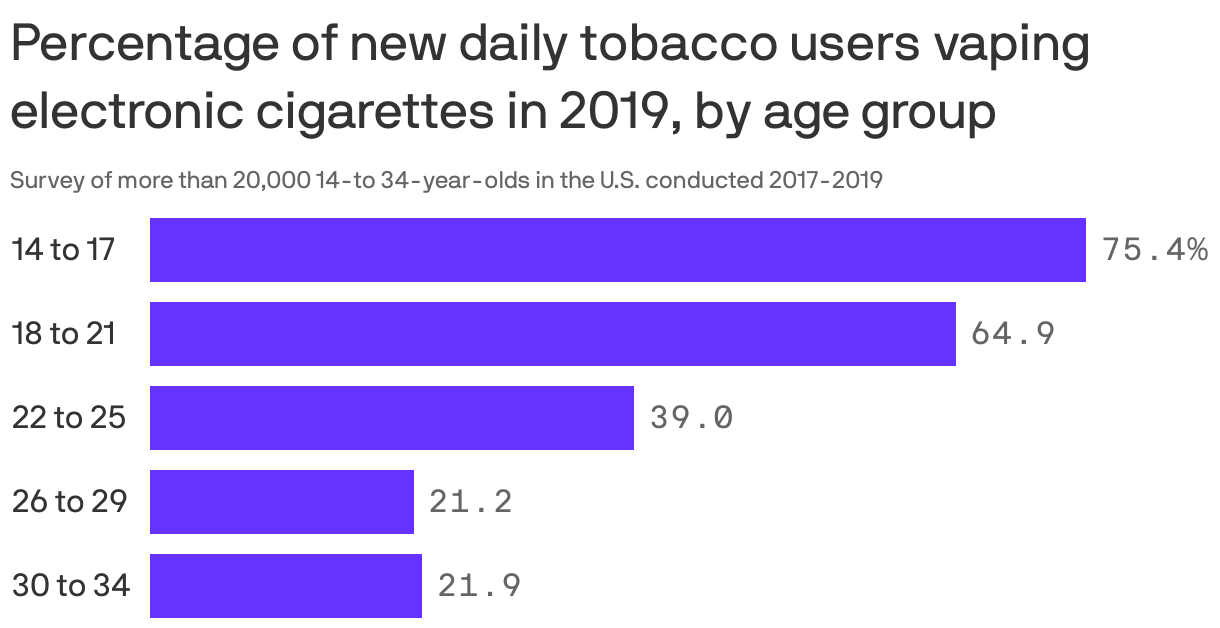
Data: Pierce, et al., 2022, Daily E-cigarette Use and the Surge in JUUL Sales: 2017–2019; Chart: Simran Parwani/Axios
More than a million teens started vaping from 2017 to 2019, throwing decades of declining tobacco use in reverse, according to a new study in Pediatrics.
Why it matters: The popularity of Juul in particular led a new generation of 14- to 17-year-olds to get hooked, although use dropped off after an outbreak of vaping-related illnesses and deaths.
As one of America's first big bets under Operation Warp Speed, Novavax's COVID vaccine is notably late to the party as the Maryland biotech seeks a potential FDA emergency use authorization for its COVID shot.
But company leaders say they see a clear runway to market success for its protein-based product — not only as a booster for the vaccinated but as an alternative first-line defense for those who've refused mRNA shots.
Driving the news: In exactly one week, a key FDA advisory committee will examine Novavax's application for use in adults 18 and older.
Those who drink coffee — sweetened or not — were less likely to die than non-coffee drinkers in the following seven years, according to a cohort study published Monday in the Annals of Internal Medicine.
The details: The researchers from Southern Medical University in Guangzhou, China, used behavioral data from more than 171,000 people enrolled in a U.K. study to understand coffee consumption patterns.
They found during a seven-year follow-up period, participants who drank any amount of unsweetened coffee were 16% to 21% less likely to die than participants who did not drink coffee.
Participants who drank 1.5 to 3.5 daily cups of coffee sweetened with sugar were 29% to 31% less likely to die than participants who did not drink coffee.
Be smart: If there one thing in health research that is certain: there will always be coffee studies. One week it's good for you. The next? It's bad.
"This study, as with all the other studies, uses observational data so we have to be cautious because it's not a clinical trial. We can't infer cause and effect," said Christina Wee, who was the editor of the paperand who wrote a corresponding editorial about the study.
The authors did a particularly good job at controlling for other factors, like the physical activity of coffee drinkers, Wee said. Even so: "You can never be sure," she said.
There are some pros and cons with coffee consumption that have been documented, Wee said. But "if you look at the totality of the evidence, I think most people would comfortably say that coffee drinking a moderate amount is probably not harmful."
Yes, but: They're talking about moderate amounts of coffee — between 1.5 and 3.5 cups a day.
As Wee pointed out, this was based on data that is about 10 years old from the U.K. where the average coffee drinker is using an average of about a teaspoon of sugar — not downing caramel macchiatos.
The bottom line: This doesn't offer evidence that one should start a coffee habit for its benefits. But: "If you're a regular coffee drinker, there's no need to give it up," Wee said.