Tuesday's health stories

Youth vaping reversed declines in tobacco use
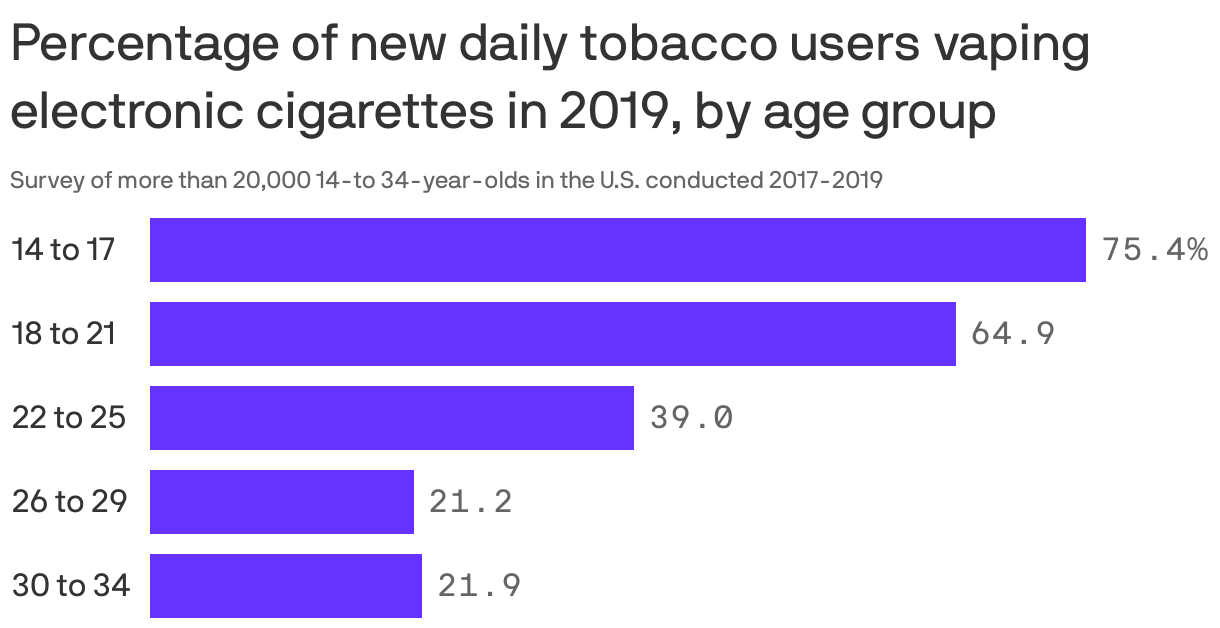
More than a million teens started vaping from 2017 to 2019, throwing decades of declining tobacco use in reverse, according to a new study in Pediatrics.
Why it matters: The popularity of Juul in particular led a new generation of 14- to 17-year-olds to get hooked, although use dropped off after an outbreak of vaping-related illnesses and deaths.

Shanghai set to ease COVID restrictions after 2-month lockdown
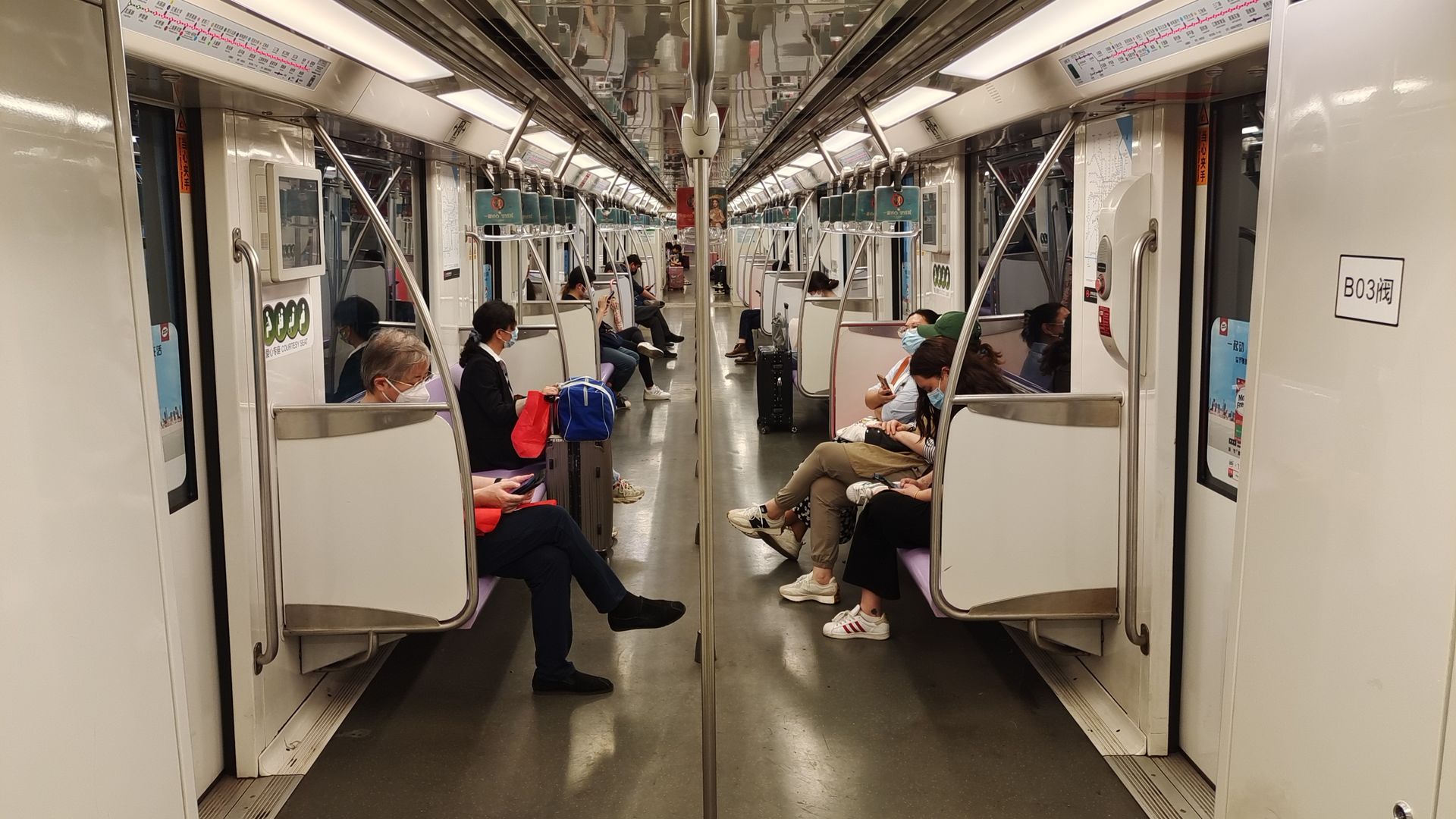
Shanghai officials on Wednesday are set to significantly ease restrictions implemented during a two-month-long COVID-19 lockdown, the Associated Press reported.
Why it matters: Stemming from China's zero-COVID strategy, the strict lockdown brought economic repercussions, led to family separations and saw residents of China's largest city scrambling for food.

Novavax (finally) prepares for takeoff in the U.S.

As one of America's first big bets under Operation Warp Speed, Novavax's COVID vaccine is notably late to the party as the Maryland biotech seeks a potential FDA emergency use authorization for its COVID shot.
- But company leaders say they see a clear runway to market success for its protein-based product — not only as a booster for the vaccinated but as an alternative first-line defense for those who've refused mRNA shots.
Driving the news: In exactly one week, a key FDA advisory committee will examine Novavax's application for use in adults 18 and older.
Coffee associated with lower mortality risk

Those who drink coffee — sweetened or not — were less likely to die than non-coffee drinkers in the following seven years, according to a cohort study published Monday in the Annals of Internal Medicine.
Why it matters: Previous studies have observed coffee is associated with a lower risk of death but didn't distinguish between unsweetened java and coffee consumed with sugar.
- The jury is still out on artificial sweeteners.
The details: The researchers from Southern Medical University in Guangzhou, China, used behavioral data from more than 171,000 people enrolled in a U.K. study to understand coffee consumption patterns.
- They found during a seven-year follow-up period, participants who drank any amount of unsweetened coffee were 16% to 21% less likely to die than participants who did not drink coffee.
- Participants who drank 1.5 to 3.5 daily cups of coffee sweetened with sugar were 29% to 31% less likely to die than participants who did not drink coffee.
Be smart: If there one thing in health research that is certain: there will always be coffee studies. One week it's good for you. The next? It's bad.
- "This study, as with all the other studies, uses observational data so we have to be cautious because it's not a clinical trial. We can't infer cause and effect," said Christina Wee, who was the editor of the paper and who wrote a corresponding editorial about the study.
- The authors did a particularly good job at controlling for other factors, like the physical activity of coffee drinkers, Wee said. Even so: "You can never be sure," she said.
- There are some pros and cons with coffee consumption that have been documented, Wee said. But "if you look at the totality of the evidence, I think most people would comfortably say that coffee drinking a moderate amount is probably not harmful."
Yes, but: They're talking about moderate amounts of coffee — between 1.5 and 3.5 cups a day.
- As Wee pointed out, this was based on data that is about 10 years old from the U.K. where the average coffee drinker is using an average of about a teaspoon of sugar — not downing caramel macchiatos.
The bottom line: This doesn't offer evidence that one should start a coffee habit for its benefits. But: "If you're a regular coffee drinker, there's no need to give it up," Wee said.