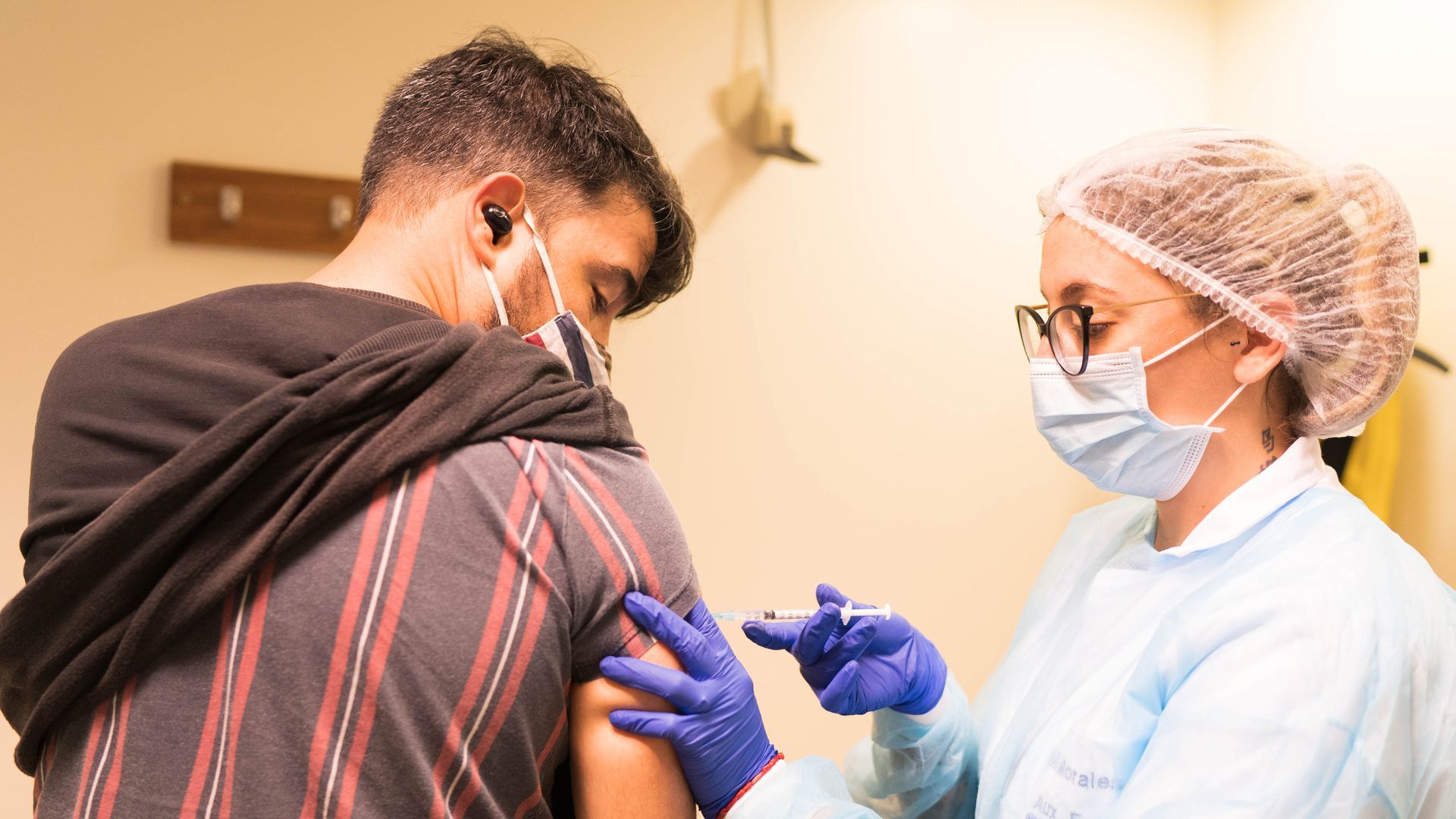
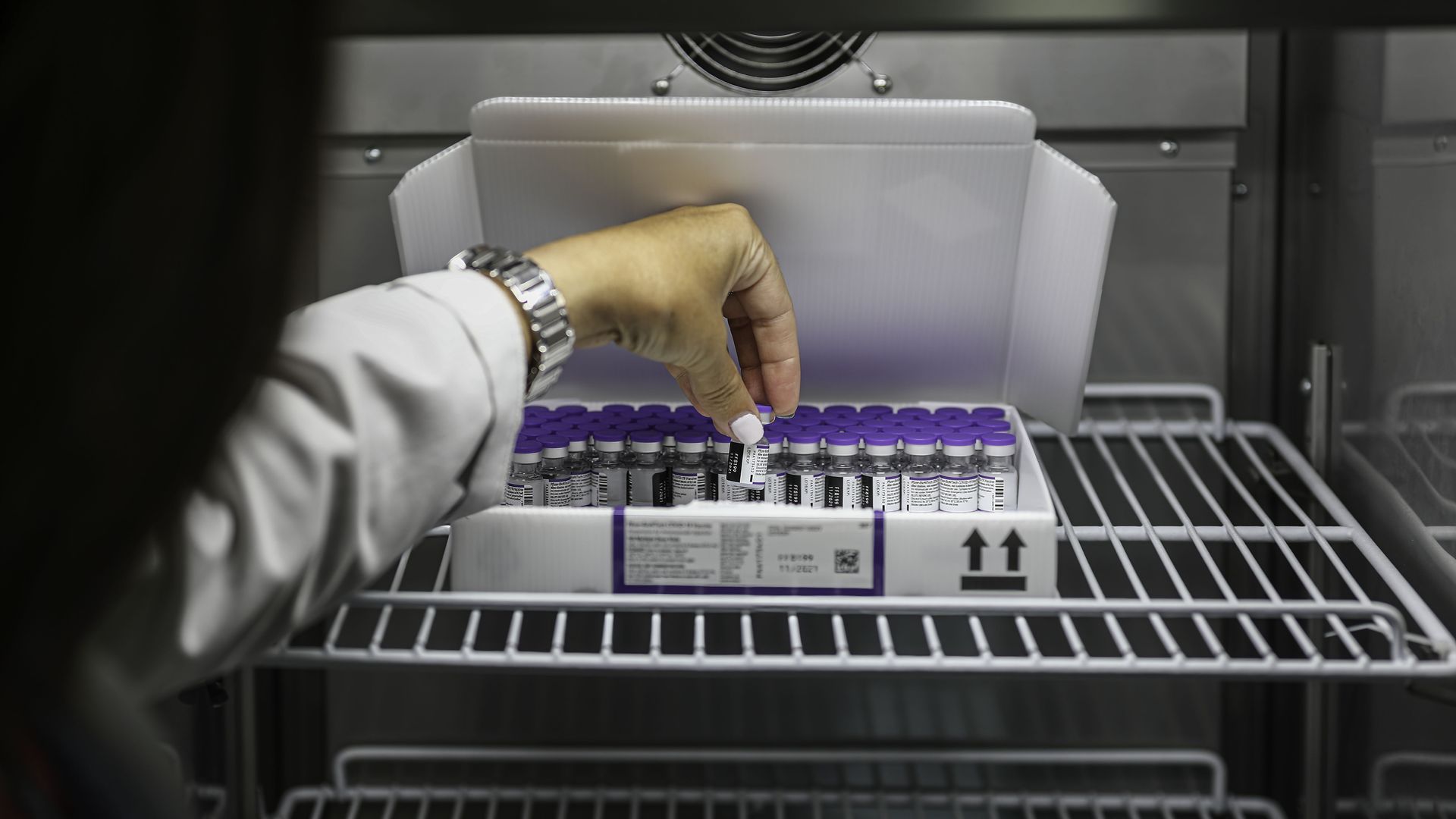
India's drug regulator on Friday granted emergency approval to the world's first DNA-based coronavirus vaccine.
Driving the news: The three-dose, needle-free vaccine was developed by pharmaceutical company Zydus Cadila. The company added that it is also the first vaccine to be approved in the country for teens between the ages of 12 and 18.
The Food and Drug Administration on Saturday urged people to stop taking ivermectin — a drug used to treat parasites in animals — to respond to or prevent the coronavirus.
Driving the news: The Mississippi State Health Department on Friday sent a letter warning health workers of the increase in poisonings from people taking ivermectin.
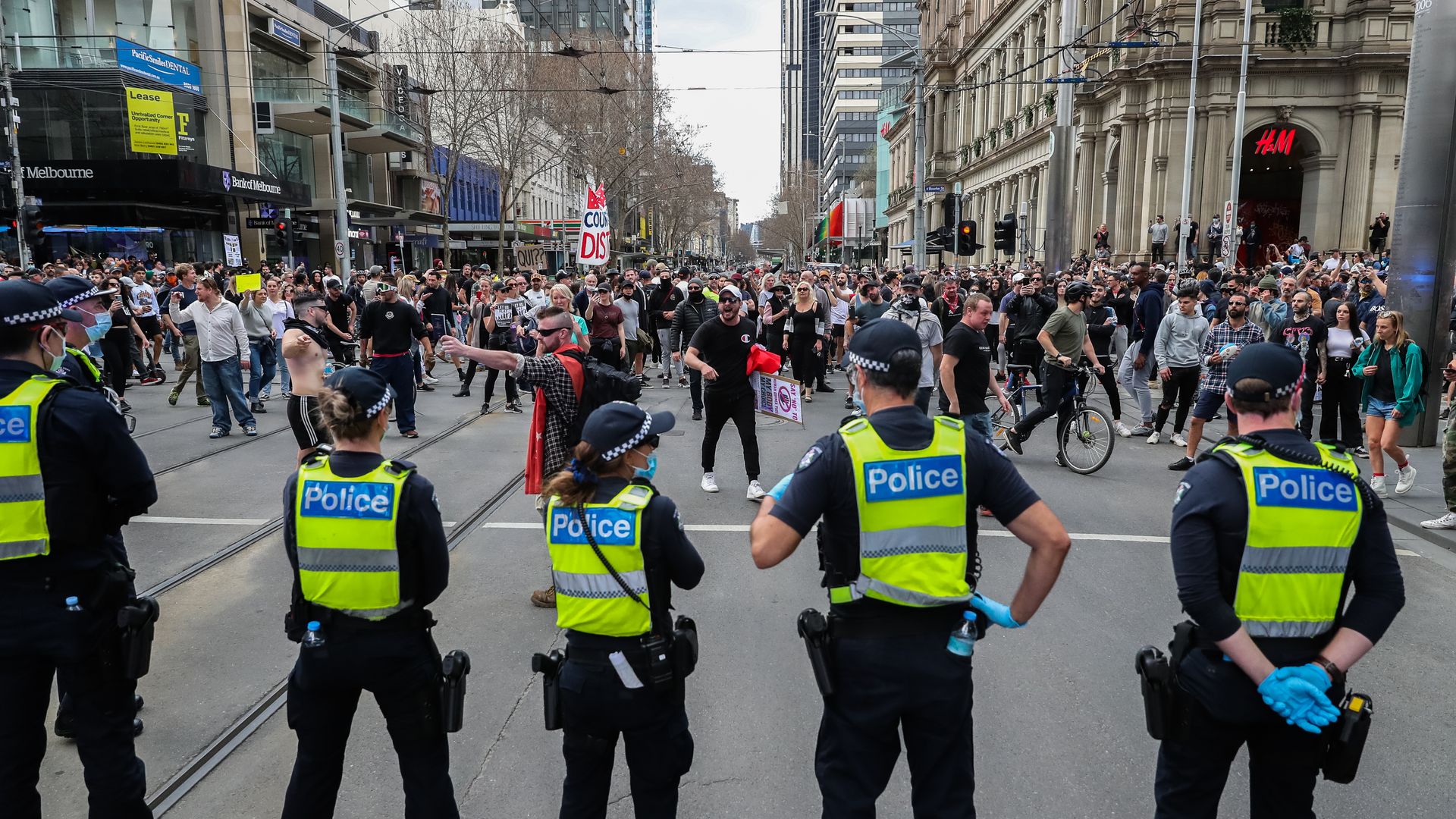
Australian police on Saturday arrested more than 250 protesters who were condemning coronavirus-related lockdown policies in the country, AP reports.
Driving the news: Sydney issued strict COVID protocol for more than two months, with Melbourne and Canberra entering lockdown in early August. Australia is currently facing its worst COVID-19 resurgence to date, and on Saturday reported its highest ever single-day rise in cases since the start of the pandemic.
Chile, Uruguay and the Dominican Republic have begun vaccinating their citizens with a third dose of coronavirus immunizations as COVID-19 continues to ravage Latin America and the Caribbean.
Driving the news: Their experience bears watching now that the U.S. has determined booster shots will be needed around eight months after the first immunization period.
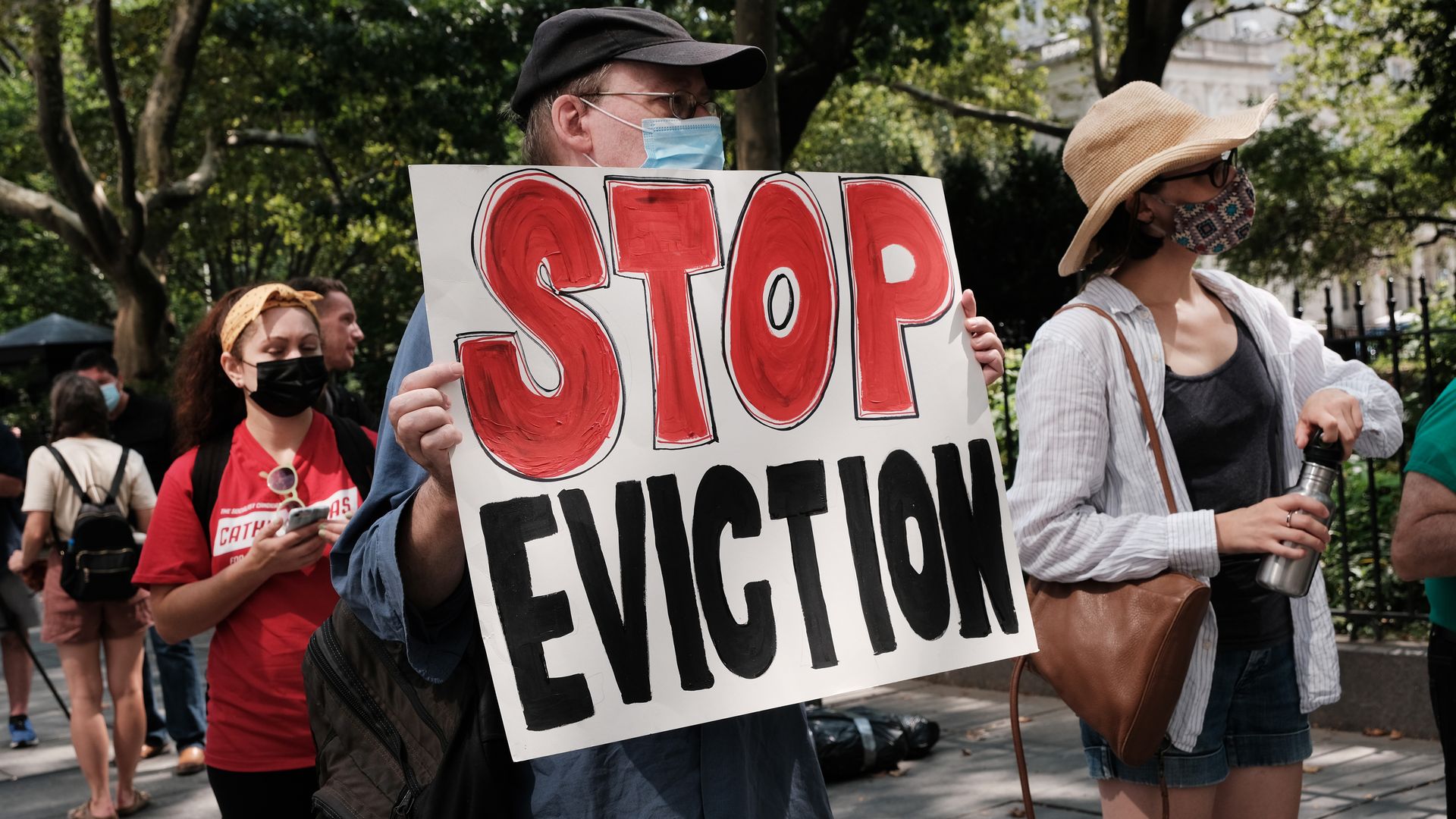
The U.S. Court of Appeals for the District of Columbia left in place the Centers for Disease Control and Prevention's COVID-related eviction moratorium on Friday.
Why it matters: Alabama and Georgia realtors will likely appeal the ruling to the Supreme Court, which declined to lift the ban in June but signaled that it would not tolerate another extension.
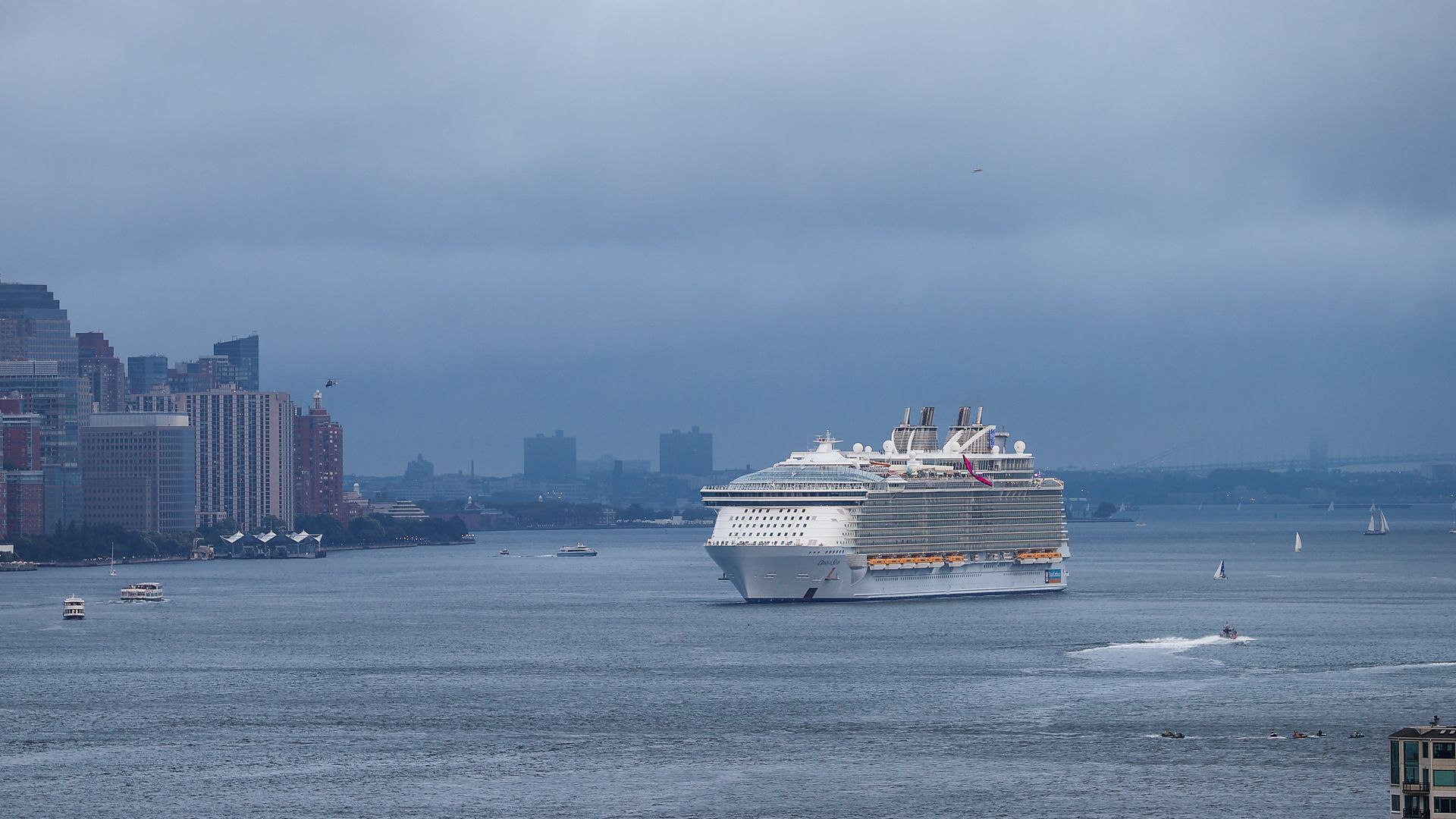
The Centers for Disease Control and Prevention on Friday said that travelers who are at increased risk for severe illness from the coronavirus should avoid traveling on cruises.
State of play: The CDC also said that individuals who are not fully vaccinated should avoid taking cruises. Additionally, unvaccinated passengers should self-quarantine for at least seven days after cruise travel, even if they test negative.
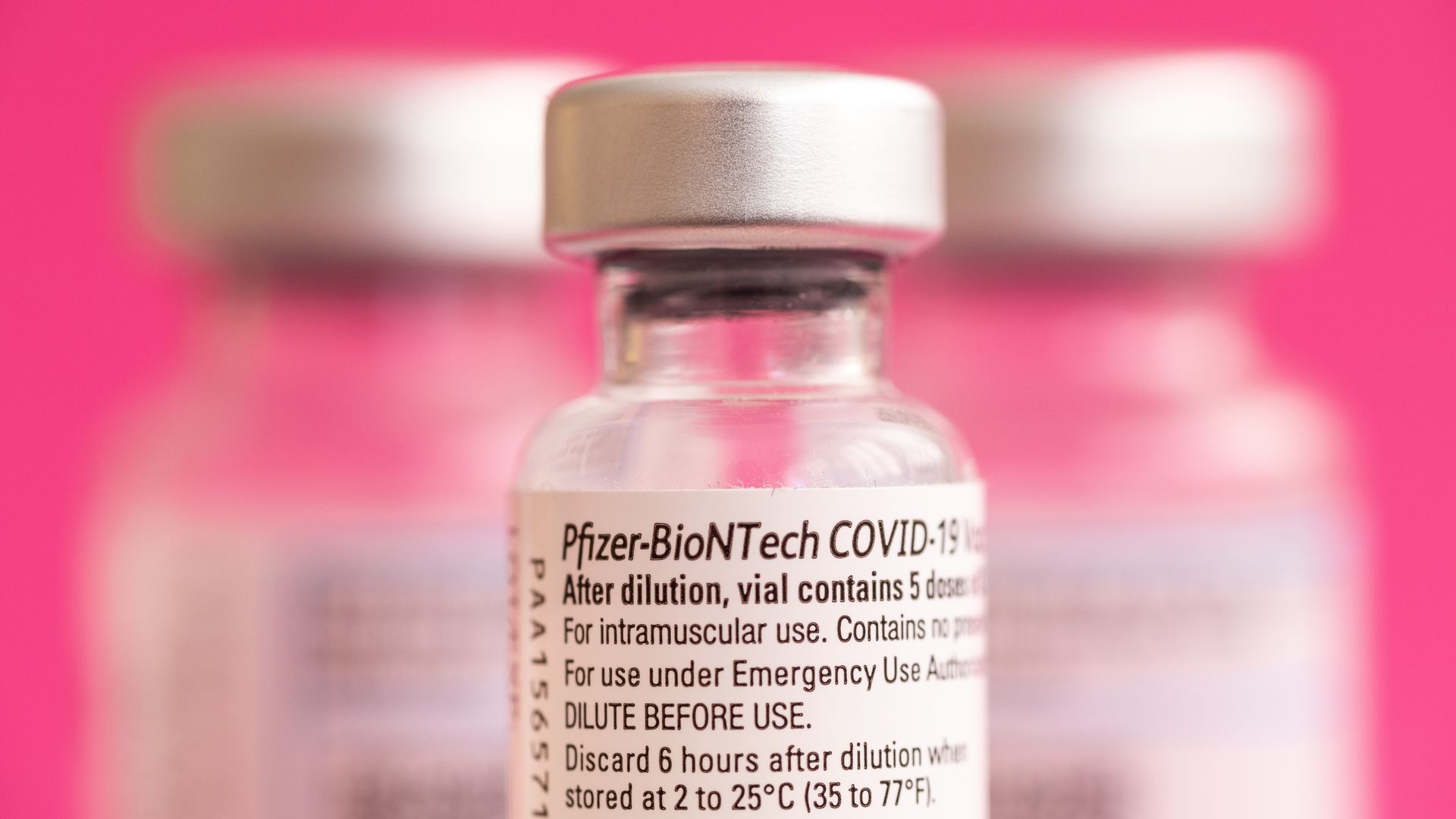
The Food and Drug Administration is expected to grant full approval to the Pfizer-BioNTech coronavirus vaccine early next week, sources told Axios on Friday.
Why it matters: It would be the first COVID-19 shot to receive full authorization from the federal government.
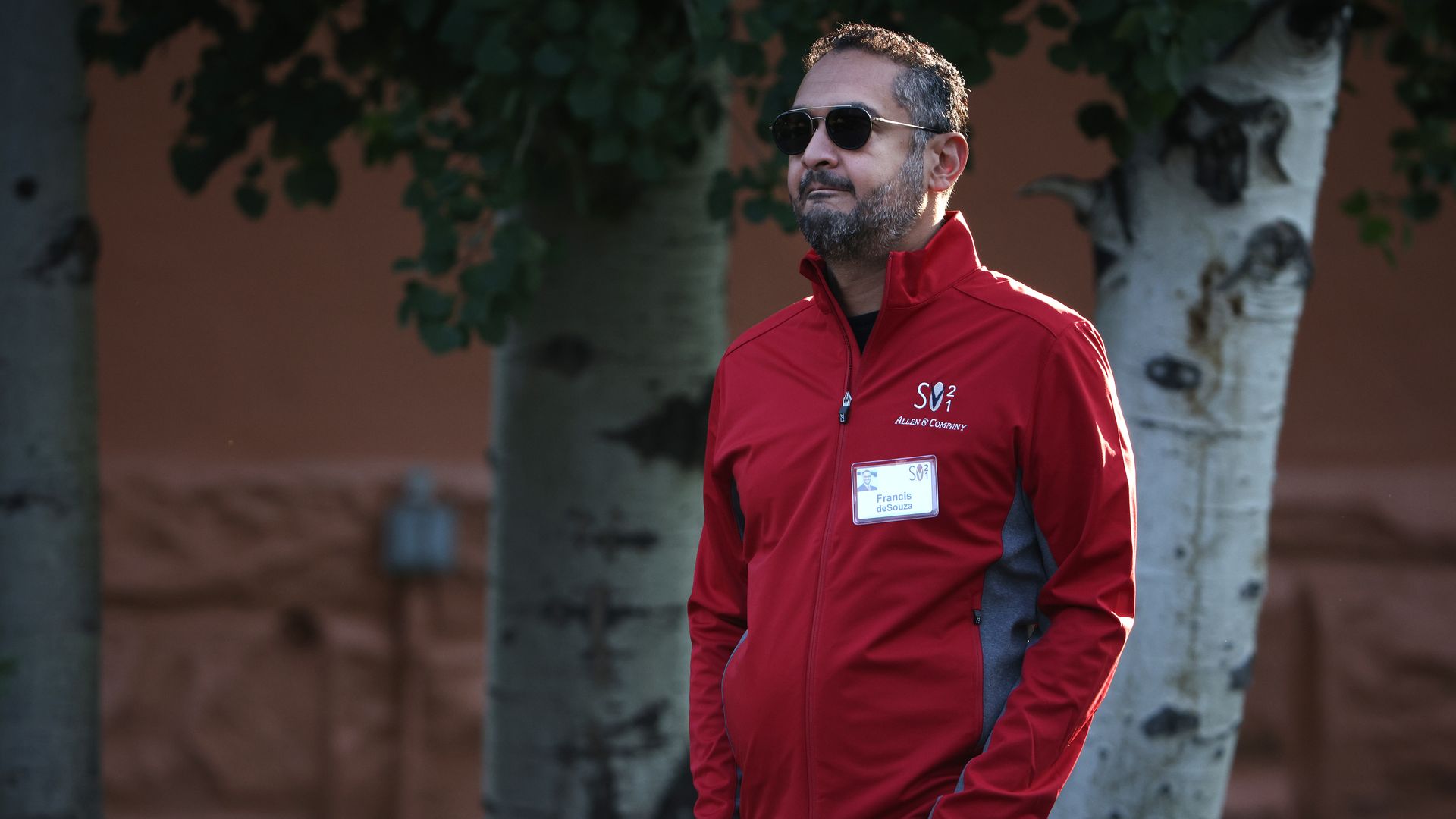
Illumina CEO Francis deSouza tells Axios that his company is not trying to defy U.S. or European regulators by completing its $7.1 billion purchase of cancer testing company Grail, despite doing so amidst ongoing government reviews.
Why it matters: Illumina argues that the merger could make early cancer detection more affordable and widely available, but there are concerns that it could be anticompetitive.
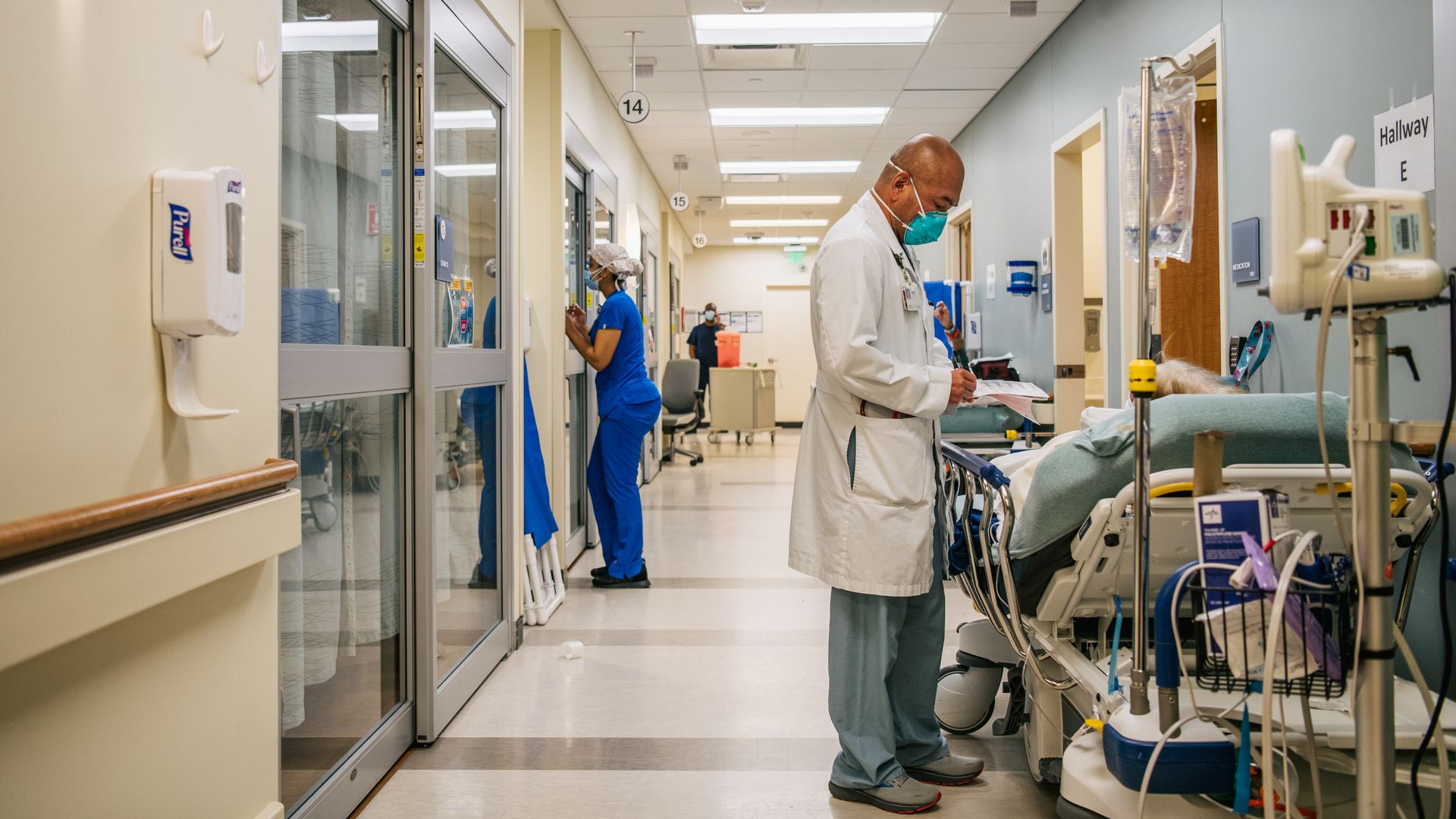
Coronavirus patients who end up hospitalized — the vast majority of whom are unvaccinated — are increasingly likely to be on the hook for their medical bills, according to a new KFF analysis.
Where it stands: Early in the pandemic, most insurers waived out-of-pocket costs for coronavirus hospitalizations.
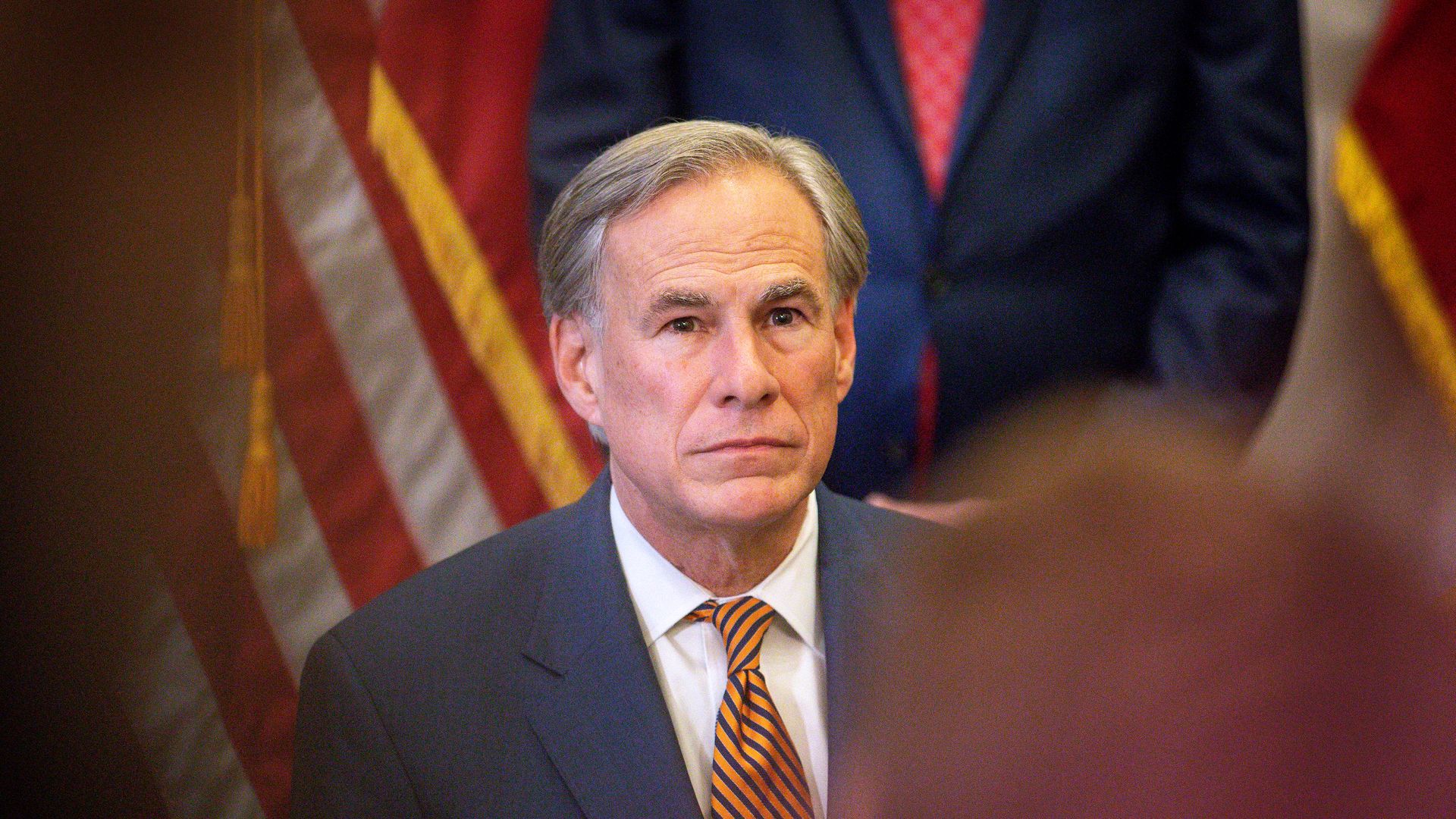
The Texas Education Agency said in new guidance Thursday that it will temporarily stop enforcing Gov. Greg Abbott's ban on public school districts imposing mask mandates, citing ongoing litigation.
Driving the news: The guidance came the same day that the Texas Supreme Court declined to uphold the mask ban over a technicality, sending the case down to an appeals court.
More time between COVID vaccine doses may help build more durable immunity, experts say.
Why it matters: The three- or four-week interval between the first and second doses of the Pfizer and Moderna vaccines was relatively short — and may help explain why the U.S. is now preparing for third doses.
More than 356,000 people died from extreme heat-related causes in just nine countries in 2019, a death toll not only preventable but expected to grow as temperatures increase worldwide, a pair of studies published Thursday in The Lancet shows.
Why it matters: Though it's known heat stress can lead to stroke, organ and brain damage, the studies out of the University of Washington found it also causes a slew of specific morbidities including several types of heart disease, diabetes, chronic kidney and chronic obstructive pulmonary disease.
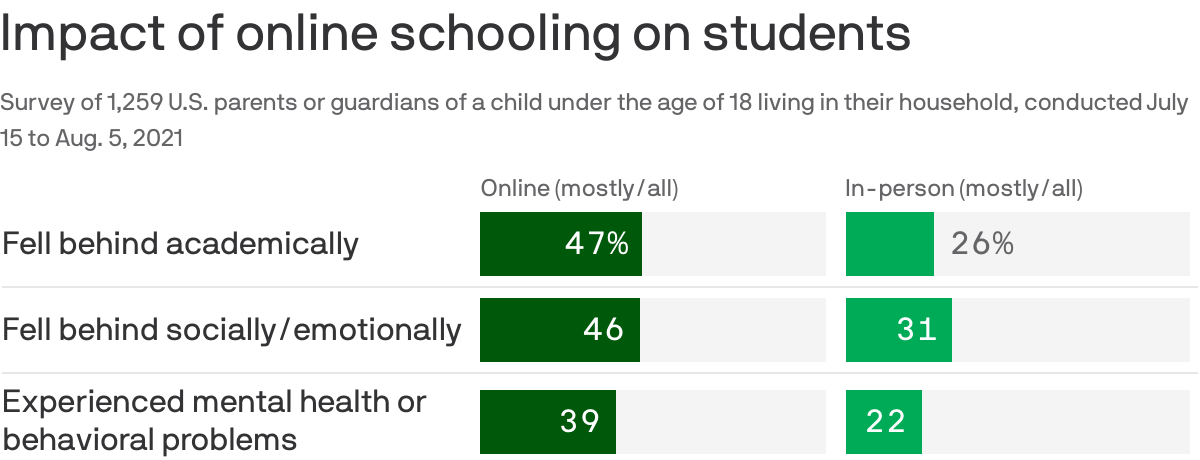
Parents are much more likely to report their kids are experiencing negative effects if they are going to school virtually during the pandemic than if they attend school in person.
Why it matters: The new findings from the KFF Vaccine Monitor underscore the importance of keeping kids in school in person, which means doing it safely with masking for younger children and school staff despite controversies over mask requirements.
Conflicting policies, fiery political debates and the continued spread of the Delta variant of COVID-19 are sowing chaos and uncertainty into the back-to-school season.
Why it matters: This will be the third school year in a row with COVID-related disruptions. Many students have already suffered severe learning loss, and the gap between students could grow even wider, thanks to disparities in vaccinations and rising case counts.
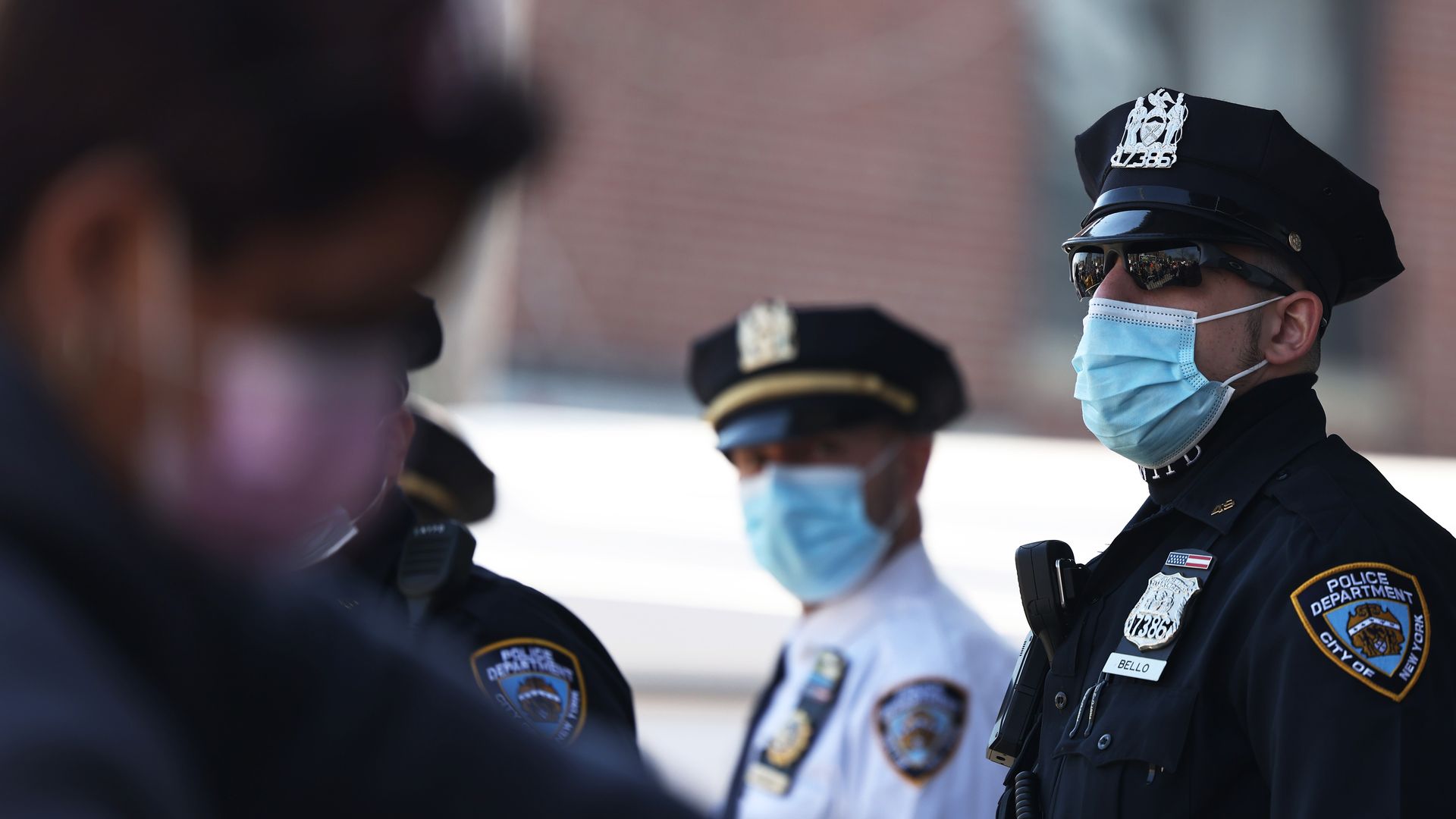
Unvaccinated officers at the New York Police Department will be required to wear masks on duty or face disciplinary action, the department confirmed Friday.
Why it matters: Public and private entities are increasingly considering reinstating mask mandates amid a surge in Delta cases. Mayor Bill de Blasio announced last month that all city employees, including law enforcement, must get vaccinated or submit to weekly testing.
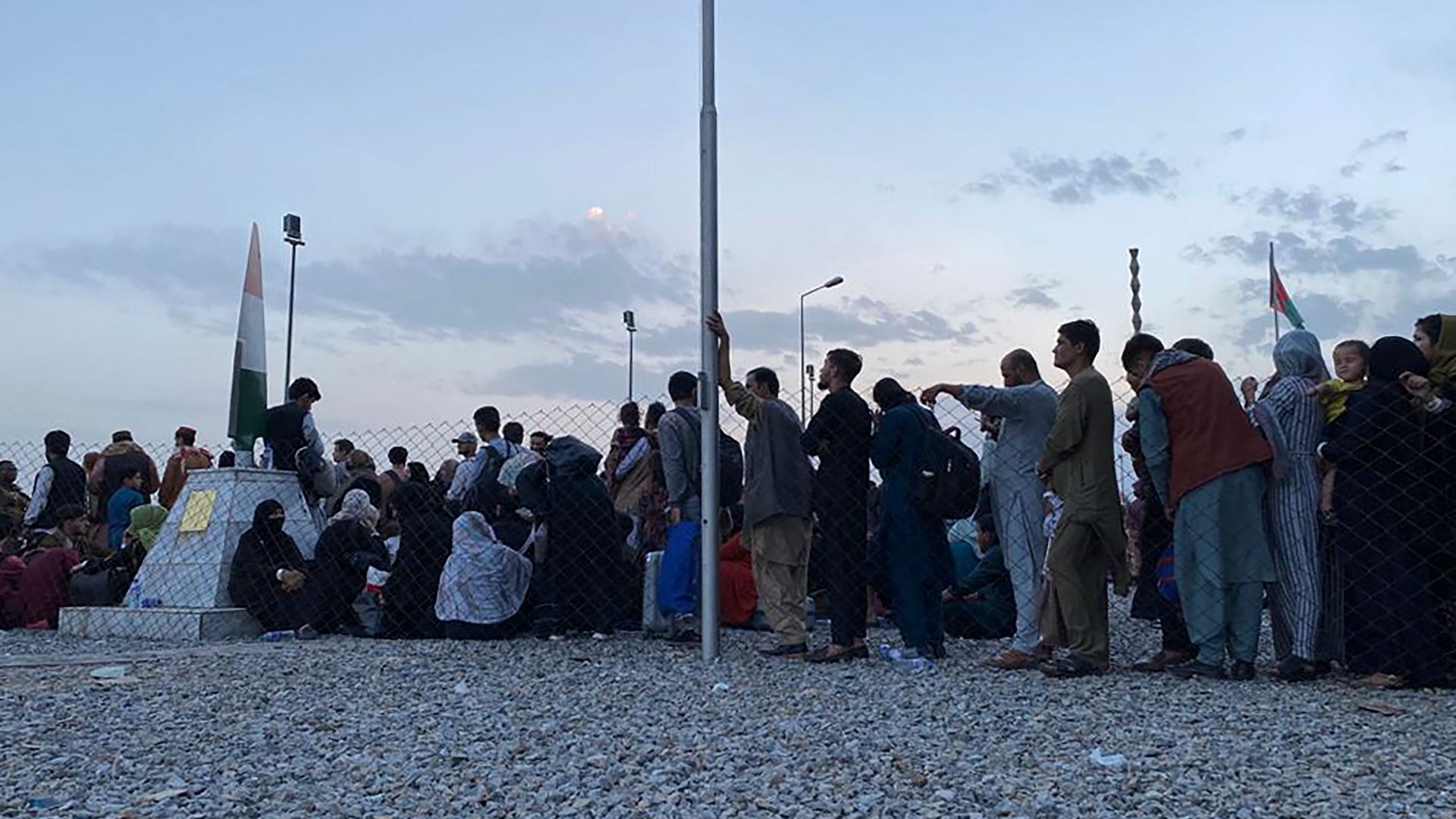
Why it matters: The country has already faced a severe drought — its second in three years — and COVID-19's social and economic impacts. The Taliban's siege has elevated the situation in Afghanistan from dire to catastrophic, World Food Program’s (WFP) country director Mary Ellen McGroarty said.
The Archdiocese of Philadelphia became the latest district of the Catholic Church to reject religious exemptions to COVID vaccine mandates, the Washington Post reports on Thursday.
Why it matters: It's another sign of the fracture within the church when it comes to vaccination. Though the Vatican says getting the vaccine is "morally acceptable," some bishops have argued that vaccination is not a moral obligation and must be voluntary.