An entire sector of America's education workforce faces paycheck jeopardy in the coming weeks that moving to remote teaching can't easily fix.
Why it matters: Half of America’s education workforce isn't teachers, and they support students and school districts in many ways educators cannot — like counseling, feeding students, transportation and mental health.
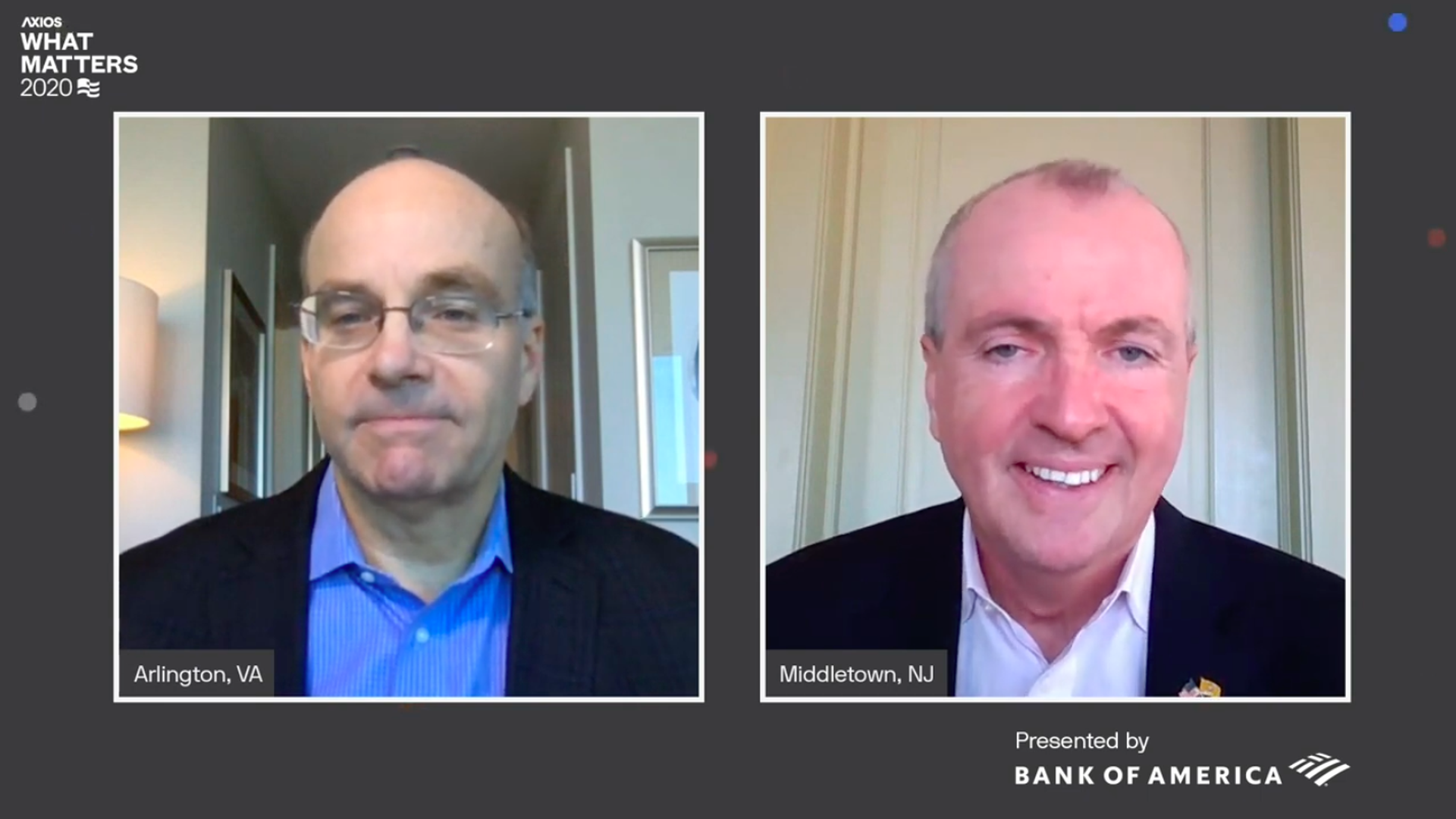
Gov. Phil Murphy (D-N.J) cautioned against calling his state a "COVID success story," during an Axios virtual event on Wednesday.
Why it matters: New Jersey, once a hot spot for the novel coronavirus, is requiring quarantines for some travelers entering the state. The number of coronavirus cases, hospitalizations and fatalities have declined drastically since June.
Johnson & Johnson on Wednesday said that it will pay $6.5 billion in cash to buy Momenta Pharmaceuticals, representing a 70% premium to where the Massachusetts drugmaker closed trading yesterday.
Why it matters: Johnson & Johnson is seeking to expand its capacity in drugs to treat autoimmune diseases, including a muscle-weakening condition known as myasthenia gravis.
In Dr. Jill Biden's speech from a classroom where she once taught, she took on the issue of reopening schools safely, acknowledging the yearning many families have for a return to learning.
Why it matters: This could help scramble President Trump's message that Republicans want to open while Democrats want to stay shut. Jill Biden wants to open, too, but it has to be safe.
People of color disproportionately lack stable health insurance and have more trouble affording health care than white Americans, a new survey from the Commonwealth Fund shows.
Why it matters: This is one of the long-standing inequalities the coronavirus pandemic has exacerbated.
Slowdowns in mail delivery could have serious consequences for the millions of Americans who get prescription drugs — in some cases, lifesaving treatments — through the mail.
Why it matters: Treatments for cancer, multiple sclerosis, rheumatoid arthritis and other complex diseases increasingly are sent in the mail. And the coronavirus pandemic has spurred more people to get their routine prescriptions mailed to their homes, as a safer alternative to visiting a pharmacy.
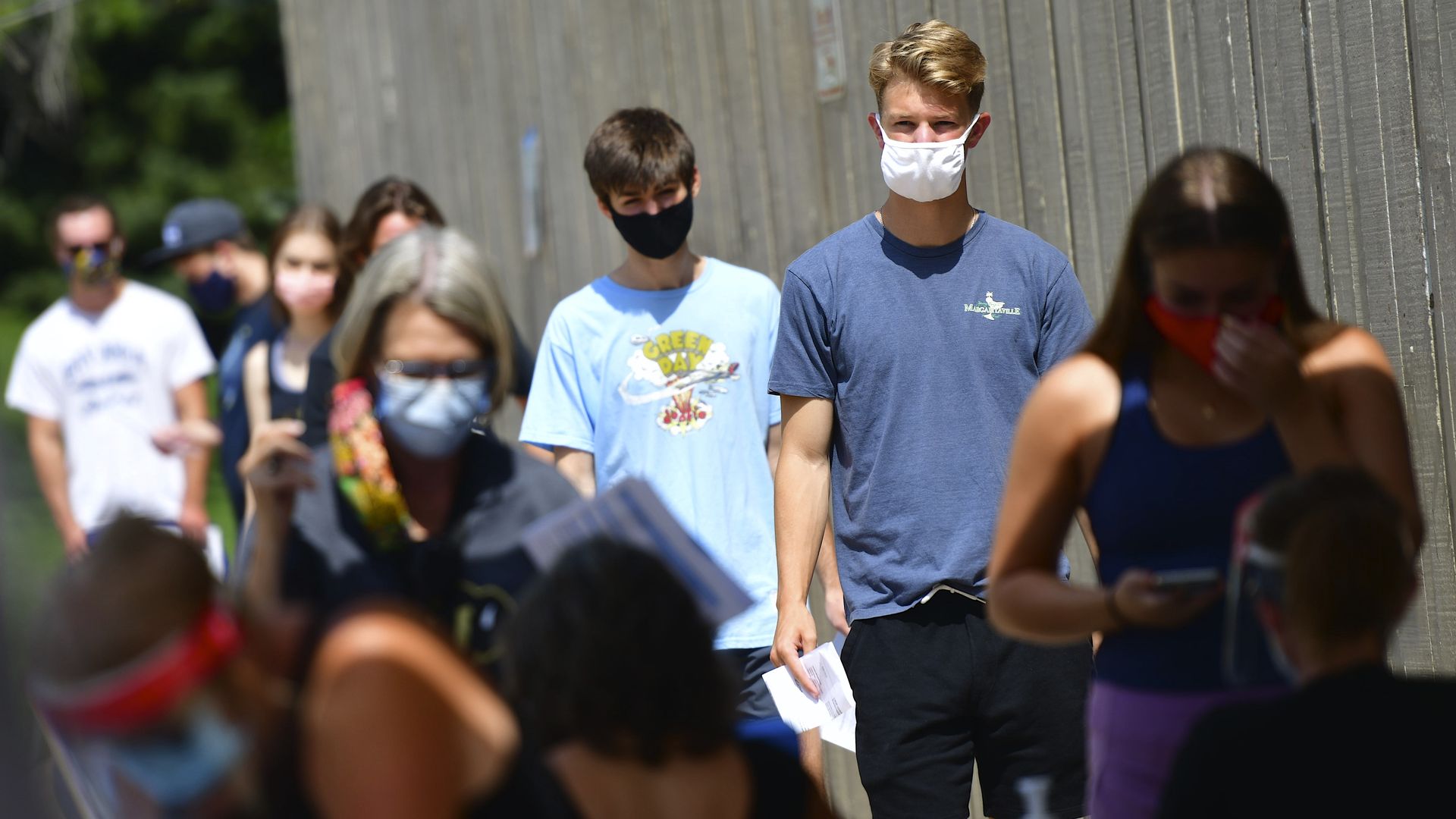
The World Health Organization warned at a news briefing on Tuesday that "people in their 20s, 30s and 40s" are increasingly the primary spreaders of the coronavirus.
Why it matters: The words of caution come as schools and colleges across the United States weigh the risks of in-person classes, which could exacerbate the trend of young people transmitting the virus.
The CDC has lifted its coronavirus warning against nonessential travel to Bermuda, as the island ramps up a scheme to attract foreign workers on year-long residencies and marks 57 days with no detected community spread.
Driving the news: Over half of the British Overseas Territory's population has been tested for COVID-19 since on-island capabilities were set up on March 17. Premier David Burt told Axios the strict testing has left him "confident that we are going to be able to catch any clusters before they spread."
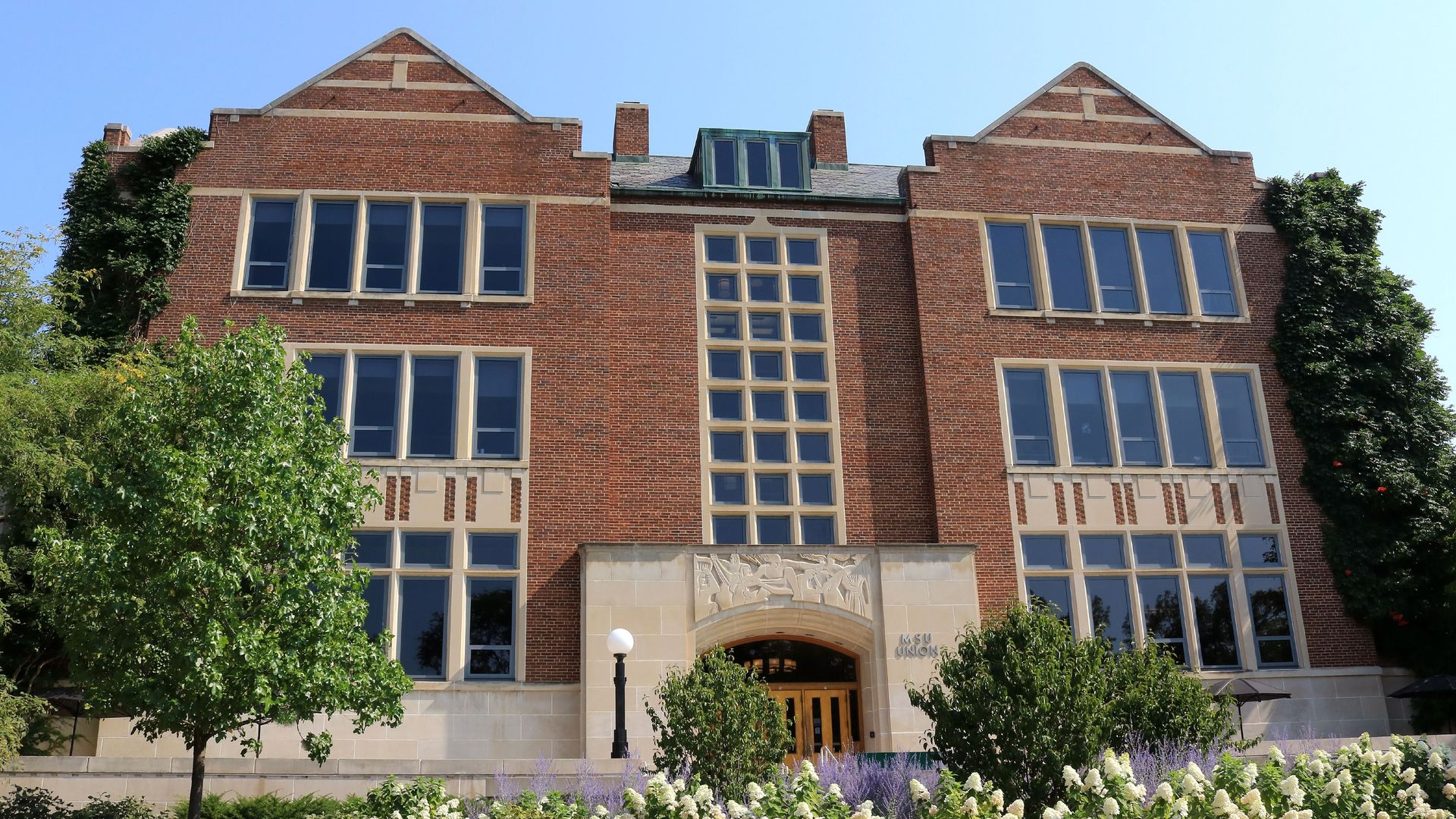
Michigan State University will hold online-only classes for its fall semester, university President Samuel Stanley announced Tuesday, just days before students were set to move onto campus.
Why it matters: Michigan State is the third major university this week to revert to fully online classes for the upcoming term. The University of Notre Dame and the University of North Carolina at Chapel Hill both announced online-only classes following spikes in coronavirus cases.
The University of Notre Dame announced Tuesday that it is canceling in-person classes for at least two weeks following a spike in coronavirus cases.
Why it matters: Notre Dame is the second prominent university to announce this week that it would revert back to remote learning, following the the University of North Carolina at Chapel Hill on Tuesday. The reversals underscore the challenges facing colleges and universities as more students are set return to campus.
Prior to the pandemic, America’s leading public health crisis was the overuse and abuse of opioids. And opioids haven’t gone away just because the coronavirus arrived. In fact, the situation may have gotten worse.
Axios Re:Cap digs into the next phase of litigation against prescription opioids makers, which states and cities estimate has cost over $600 billion since 2007.
CNN's Anderson Cooper on Tuesday clashed with MyPillow CEO Michael Lindell, a Trump supporter, for promoting oleandrin, an unproven therapeutic treatment for the coronavirus.
Why it matters: Lindell and Housing and Urban Development Secretary Ben Carson both have financial stakes in the company that develops oleandrin and would profit if the treatment is sold widely. It's part of a pattern in which entrepreneurs, often without rigorous vetting, push unproven products to Trump — knowing their sales pitches might catch his eye, Axios's Jonathan Swan writes.
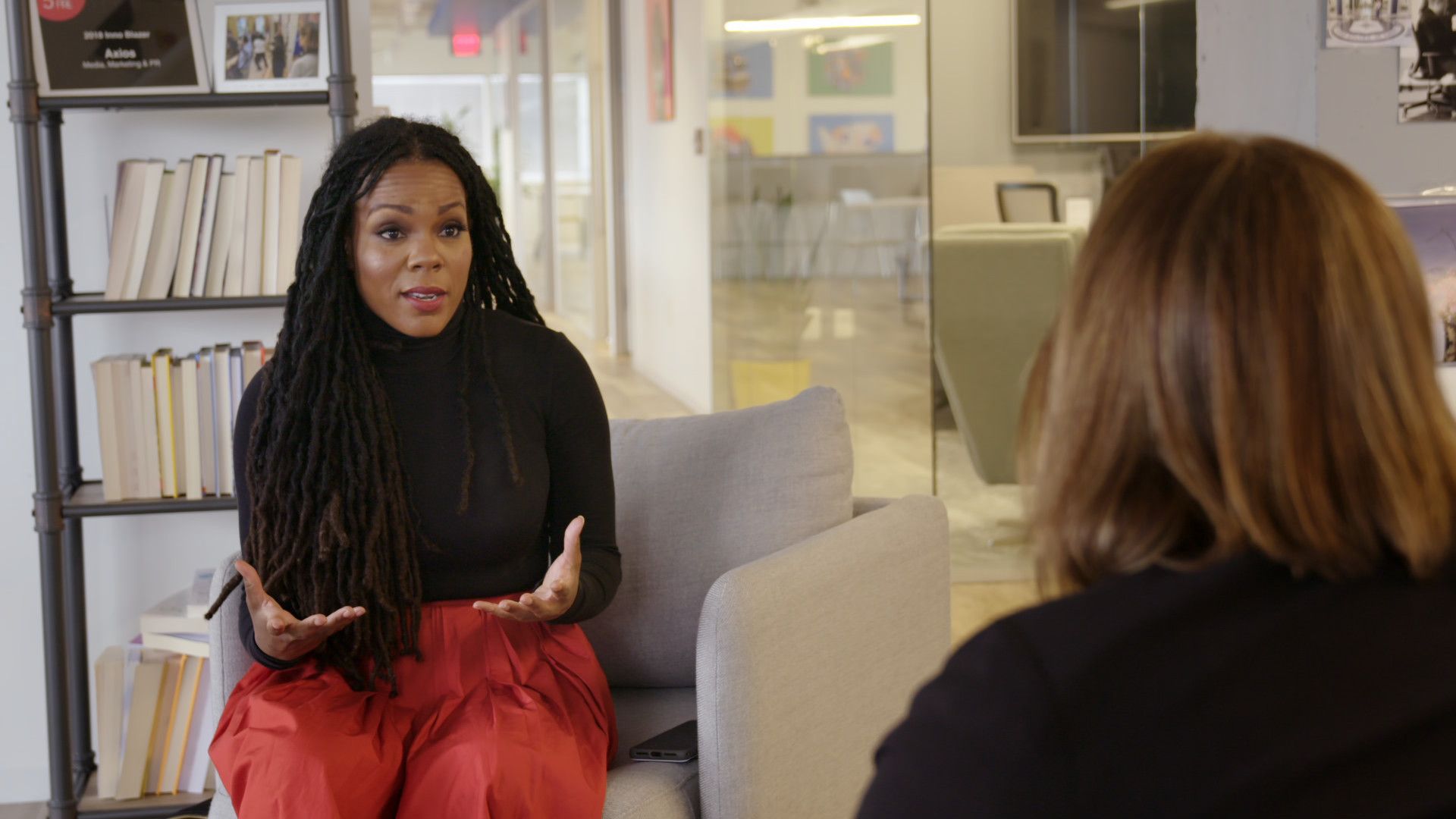
The coronavirus pandemic has been devastating for working women, but one prominent women's policy expert says it could provide a new opportunity to create the kinds of social supports they should have had all along.
Driving the news: In an interview with "Axios on HBO," Nicole Mason, president and CEO of the Institute for Women’s Policy Research, said the pandemic has created a "she-cession" — a loss of jobs that has disproportionately affected women and highlighted the gaps in the safety net for working families.
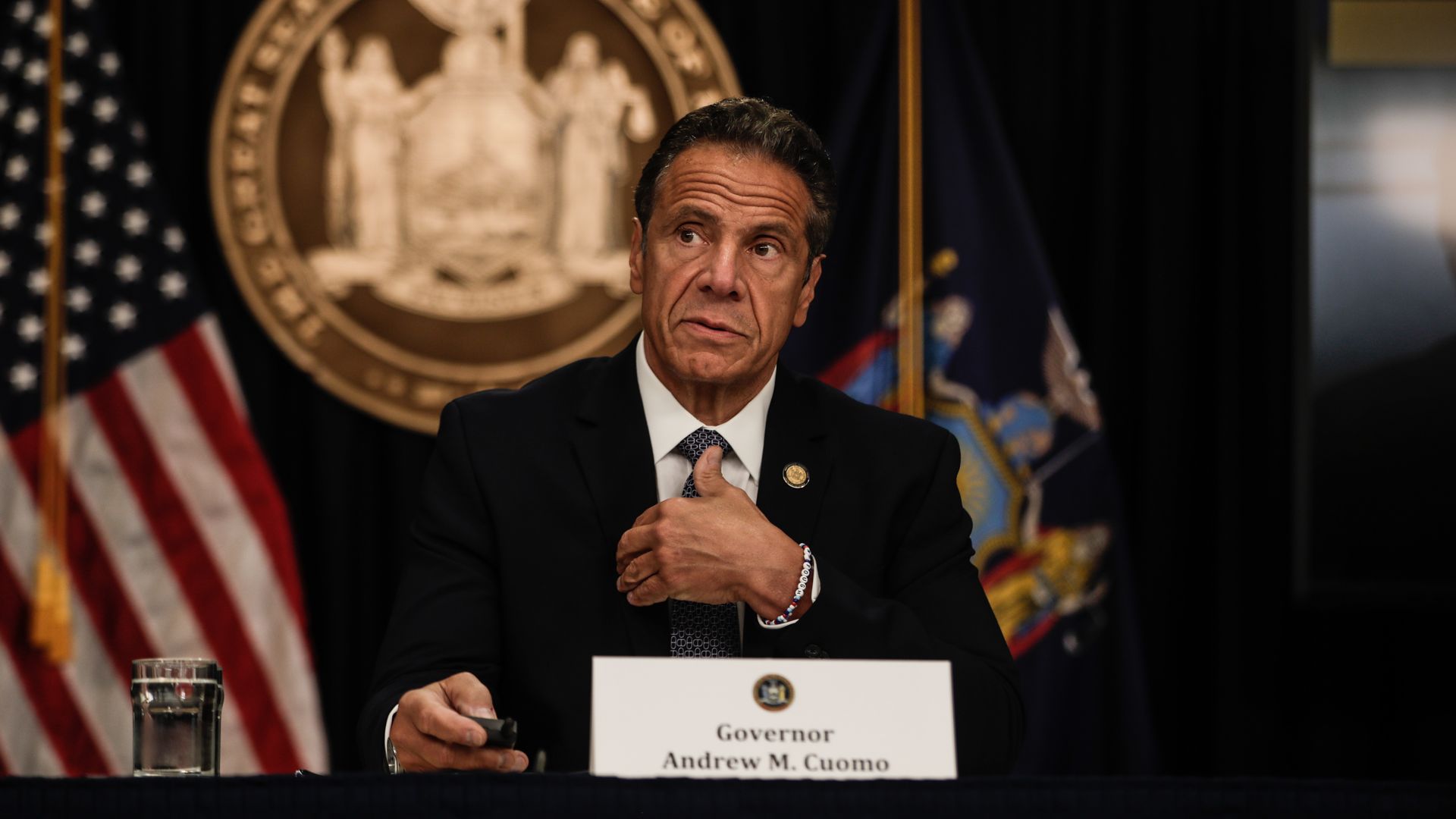
Gov. Andrew Cuomo (D-N.Y.) is writing a book that reflects on his time mitigating the COVID-19 pandemic in New York, which was the global epicenter of the virus earlier this spring, AP reports.
Why it matters: Cuomo's daily coronavirus press briefings gained a national audience. He often juxtaposed the Trump administration's updates and set the tone for governors nationwide. New York has now leveled its case numbers and begun steadily reopening.
LGBTQ youth say a slew of roadblocks prevent them from accessing mental health services, a new report from the Trevor Project says.
The big picture: Cost was by far the biggest barrier, but respondents also cited a stigma surrounding mental health issues, as well as skepticism about whether they could trust a therapist.
Coronavirus cases in nursing homes surged in late July, according to new data from the Centers for Medicare & Medicaid Services
Why it matters: Despite all the rhetorical focus on better protecting vulnerable seniors, long-term care facilities continue to be a major source of community spread in the U.S.
Two new studies yet again reiterate the fact that people of color have borne the brunt of America's coronavirus outbreak.
Why it matters: The longer we go without improving testing, protecting essential workers, updating ventilation systems, securing nursing homes or ensuring that sick people can safely isolate at home, the more already vulnerable people will continue to suffer.
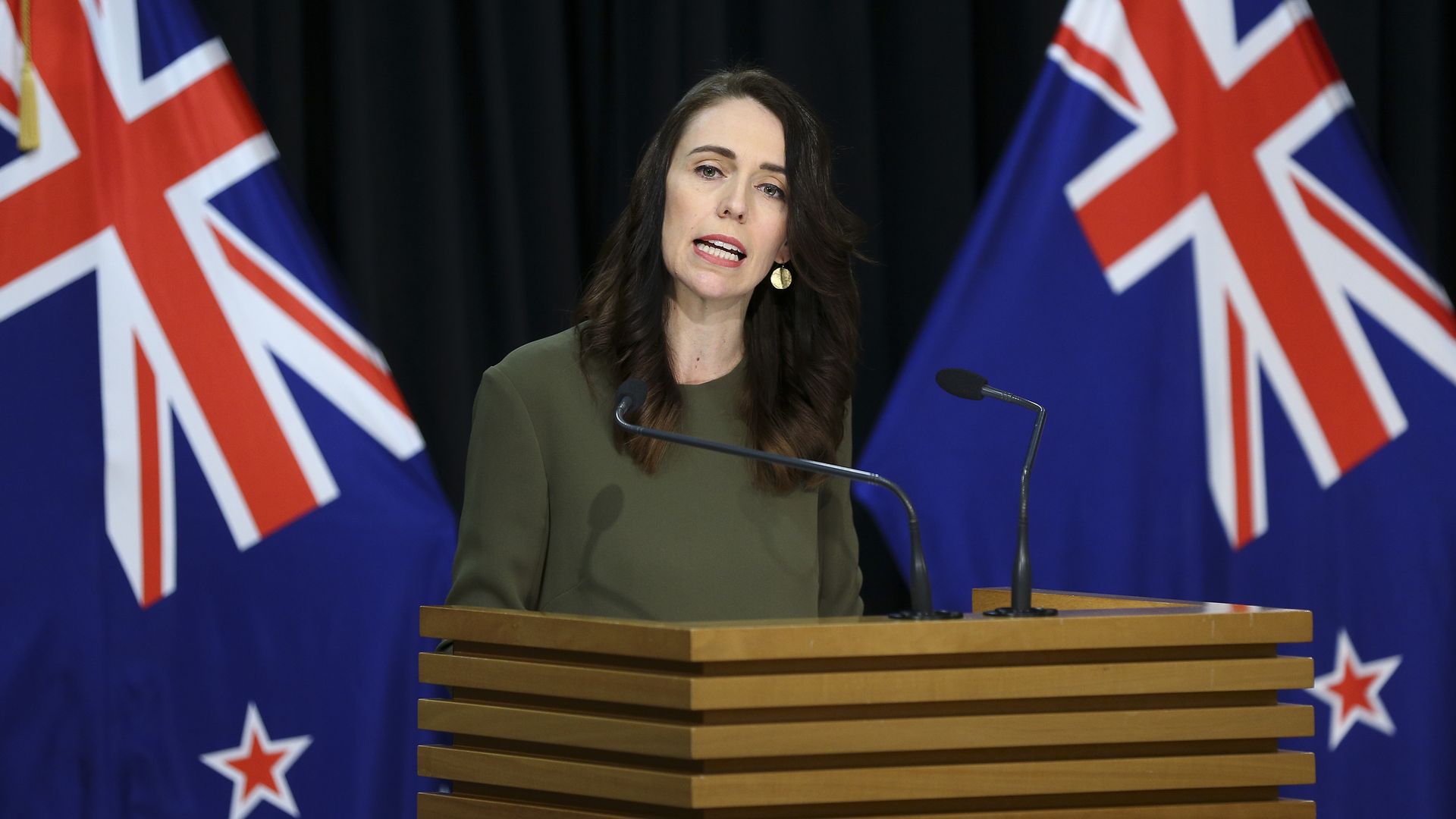
Prime Minister Jacinda Ardern on Tuesday rejected President Trump's comments on New Zealand's growing number of coronavirus cases since COVID-19 was detected in the community for the first time in 102 days last week.
Driving the news: Trump said Monday when New Zealand "beat" the virus, "it was like front page, they beat it because they wanted to show me something." "The problem is big surge in New Zealand. It's terrible. We don't want that." But Ardern said there's "no comparison between New Zealand’s current cluster and the tens of thousands of cases being seen in the United States."
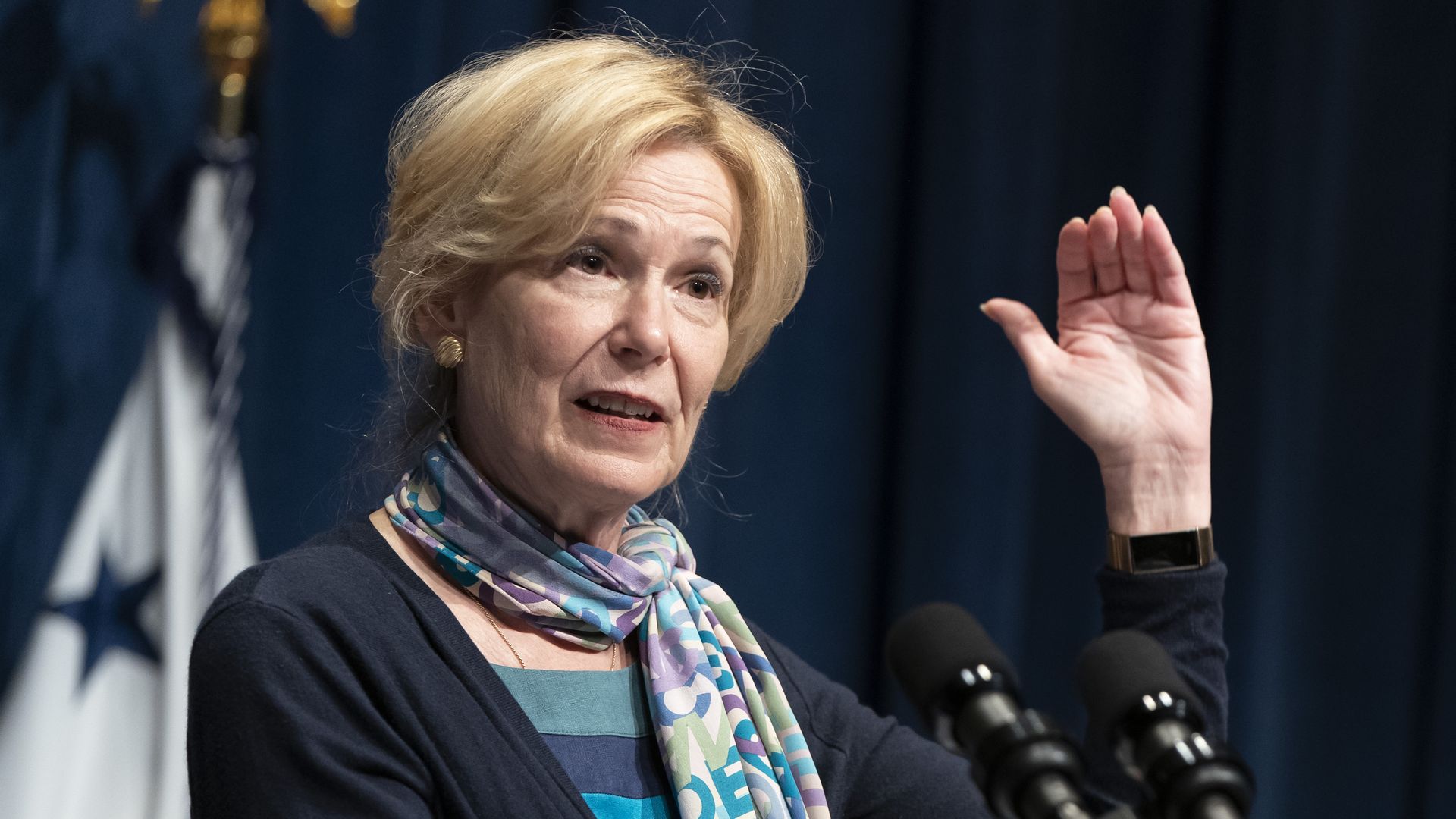
Deborah Birx, the White House's coronavirus response coordinator, told reporters Monday she would have liked to have seen the U.S. introduce stricter restrictions like Italy did to prevent the spread of COVID-19.
What she's saying: "I wish that when we went into lockdown, we looked like Italy," she said. "When Italy locked down, I mean, people weren't allowed out of their houses, they couldn't come out but once every two weeks to buy groceries for one hour and they had to have a certificate that said they were allowed. Americans don't react well to that kind of prohibition."