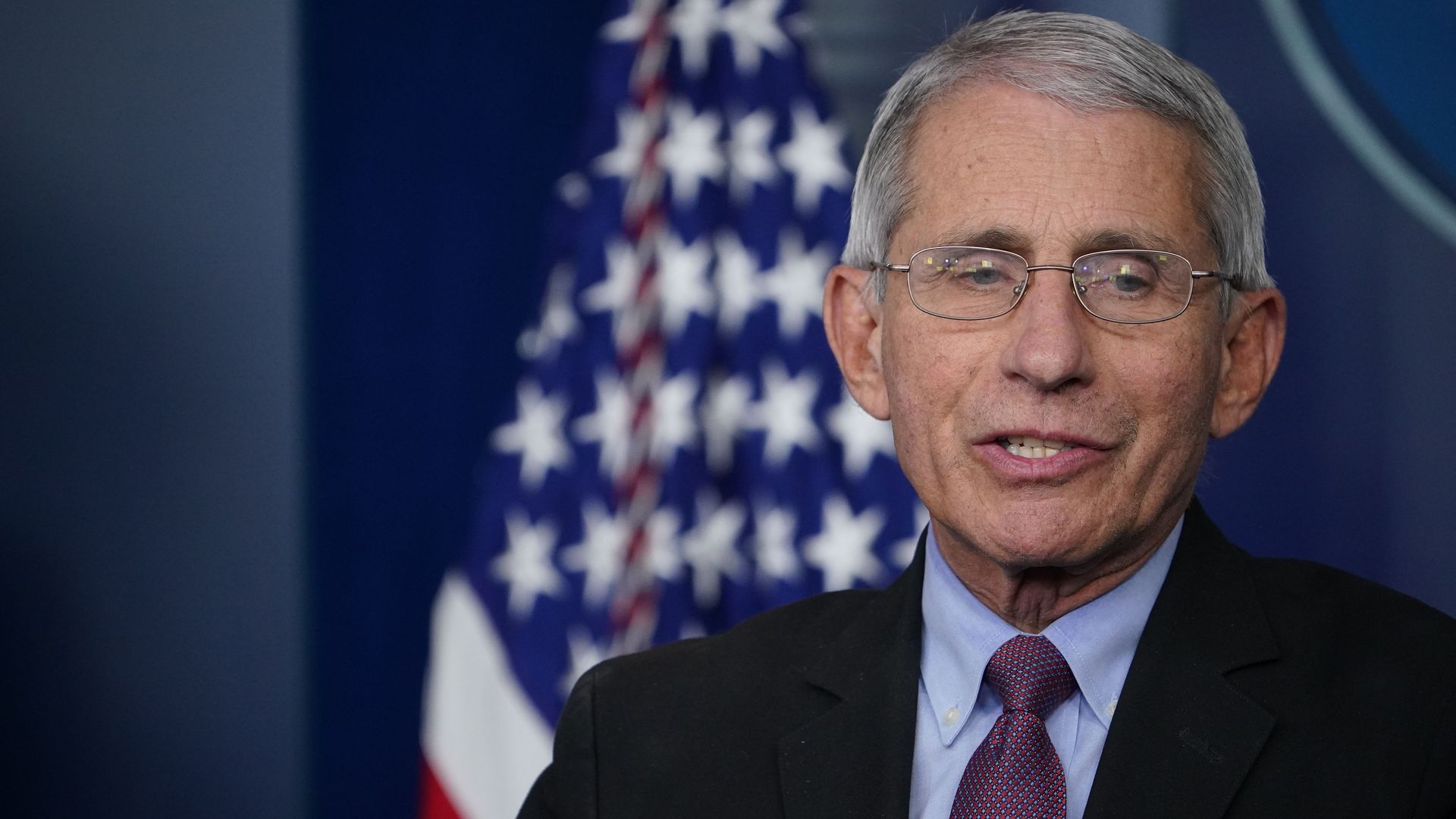
NIAID director Anthony Fauci called the coronavirus outbreak his "worst nightmare" and sounded the alarm over its continued spread in an interview aired to a biotechnology conference on Tuesday, the New York Times reports.
What he's saying: Fauci, who spent part of his career studying HIV, said the disease it caused was "really simple compared to what’s going on with COVID-19." He added that he believes that COVID-19's spread can be attributed to the frequency with which sick people were traveling.
NASCAR will allow some fans to attend Florida's Dixie Vodka 400 race and Alabama's Geico 500 race this month, the company announced Tuesday.
Why it matters: The most coronavirus infections in Florida have been reported in Miami-Dade County, where the speedway is located. In contrast, Alabama's Talladega County is not reporting a high rate of coronavirus spread.
131,296 new coronavirus cases were recorded worldwide on Wednesday, per data from the World Health Organization.
By the numbers: Compare that to 87,729 one month ago, or 4,589 on March 11 — the day the pandemic was declared. 51.9% of new cases are being recorded in the Americas, while Europe's share of new cases is down from nearly 80% in mid-March to 13.3%.
Members of the District of Columbia National Guard that responded to protests over the death of George Floyd have tested positive for the coronavirus, a National Guard spokesperson confirmed to McClatchy DC on Tuesday.
The big picture: 1,300 D.C. National Guard members were ordered to the district as the nation's capital was rocked by violent protests on May 31 that have since turned largely peaceful. A Guard spokesperson did not disclose how many positive tests the unit has recorded.
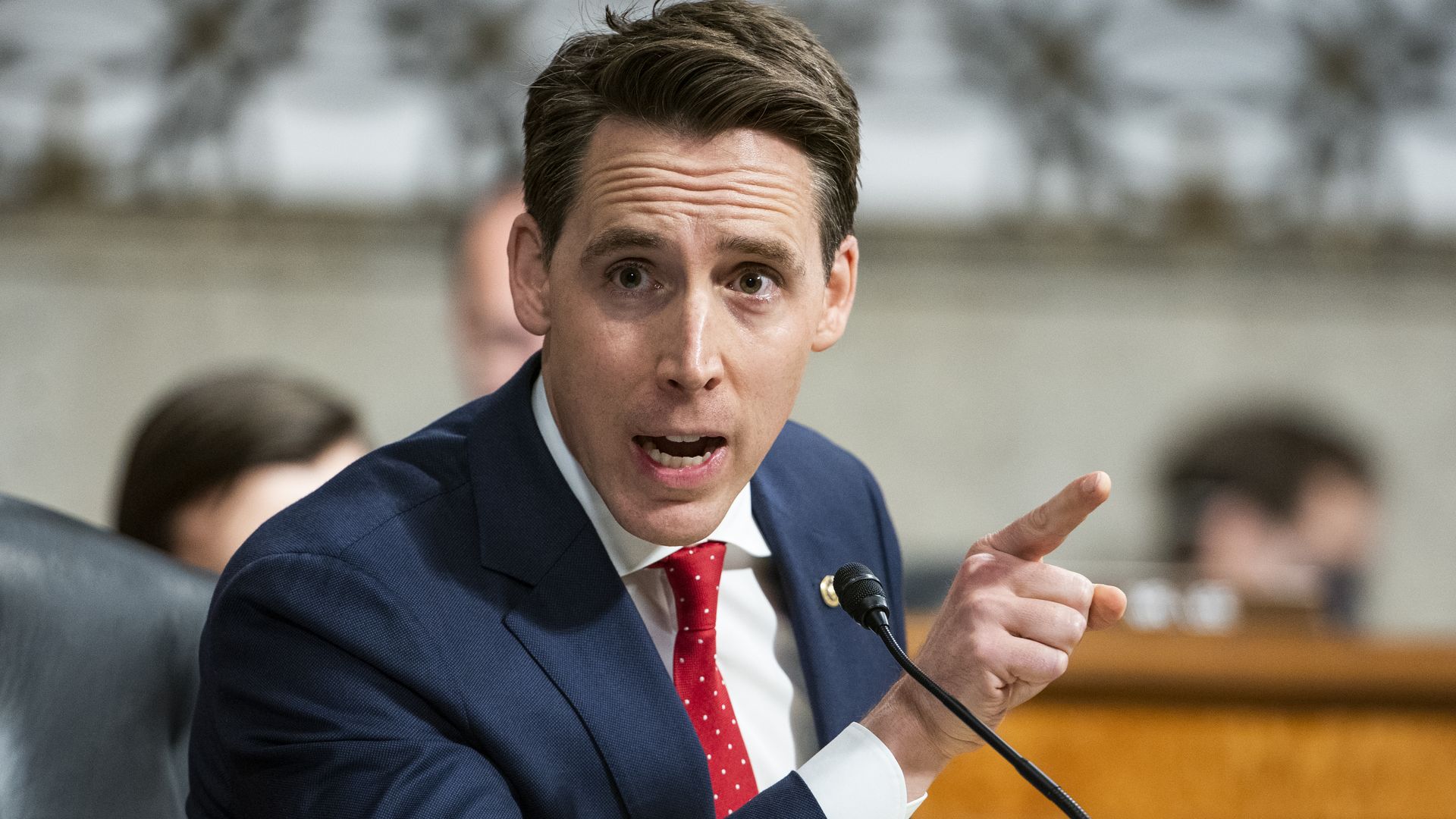
Sen. Josh Hawley (R-Mo.) wrote a letter to Attorney General Bill Barr on Tuesday asking for a civil rights investigation into jurisdictions that have forced churches to remain closed or to operate at limited capacity.
The big picture: Hawley argued that states "have violated the free speech and free exercise rights of religious Americans" by putting caps on church gatherings while allowing the protests spurred by the killing of George Floyd to continue.
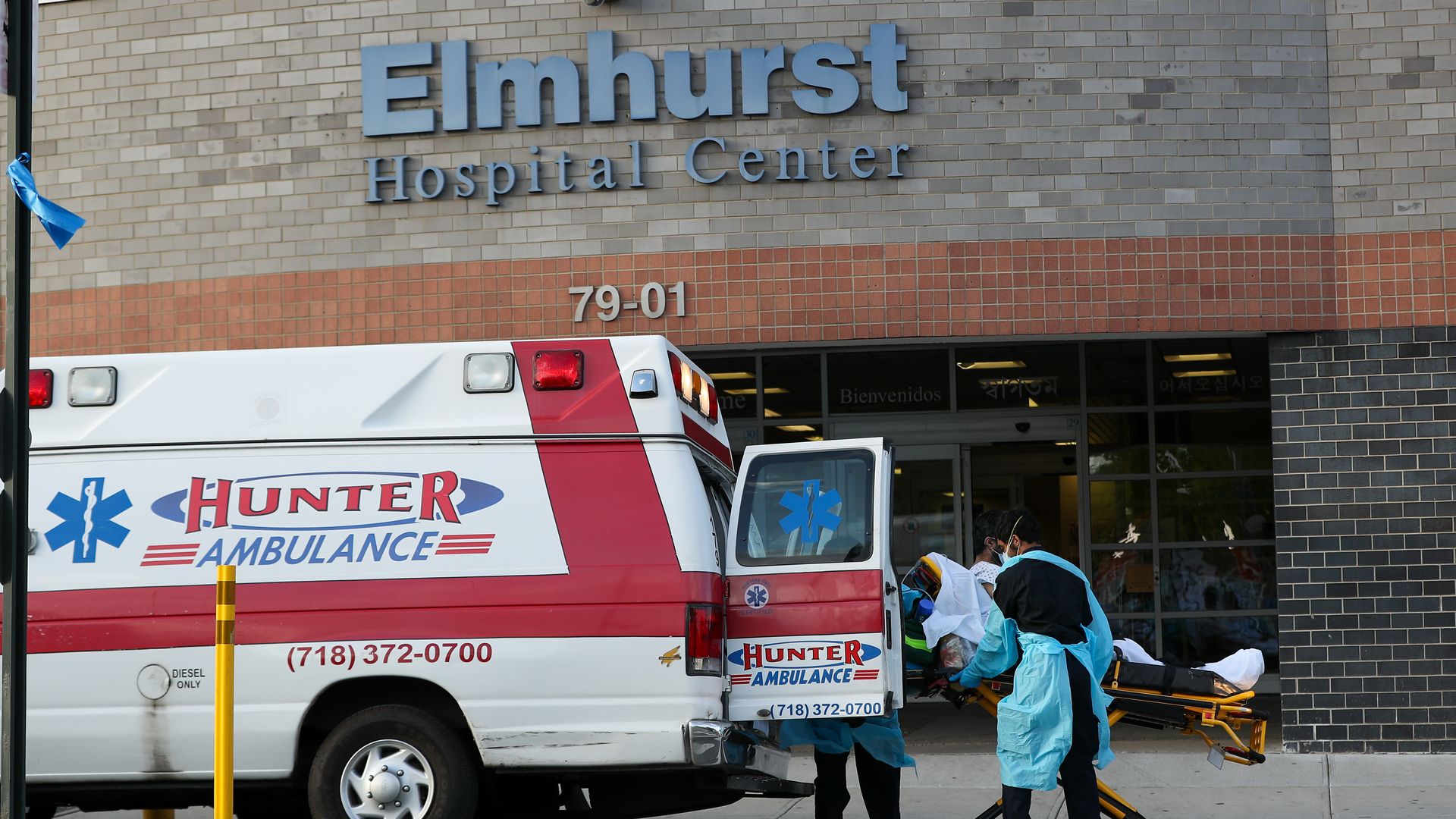
The Department of Health and Human Services said Tuesday it is distributing $25 billion to health care providers most at risk of financial collapse from the coronavirus pandemic. Facilities that treat predominantly poorer patients had been largely shut out from previous relief funding, which drew criticism from health policy experts.
Details: HHS will send $15 billion to doctors, hospitals and other providers that mostly see Medicaid patients and have not received coronavirus bailout funds yet, as well as $10 billion to safety net hospitals and facilities that treat large amounts of indigent patients. This money will come from a $175 billion fund Congress created earlier this year.
The World Health Organization clarified comments an official made on Monday that called asymptomatic transmission of the coronavirus "very rare," saying in a press conference that these carriers do take part in spreading the virus but that more information is needed to know by how much.
What they're saying: WHO official Maria Van Kerkhove clarified Tuesday that patients sometimes confuse not having any symptoms with only exhibiting mild symptoms. In addition, some patients transmit the virus before developing symptoms. Contact tracers classify this group as "presymptomatic," rather than asymptomatic.
The twin global goals of effectively responding to COVID-19 and bringing power to hundreds of millions of people lacking electricity and cooling infrastructure are converging.
Why it matters: "Reliable power is critical for effective responses to COVID-19 and other diseases," states a Brookings Institution piece.
Home field advantage is important across virtually every sport, but judging by what we've seen in Germany's Bundesliga and other soccer leagues, the advantage it provides may vanish behind closed doors.
By the numbers: Since the Bundesliga returned in front of empty stands, home teams have won just 21.7% of matches (10 of 46 games), down from 43.3% before the shutdown, per ESPN. The same trends have been seen in Estonia (11 home wins after 29 games) and Czech Republic (10 home wins after 32 games).
The U.S. saw its largest ever decline in the number of business owners between February and April, as at least 3.3 million shut their doors, a new paper from the National Bureau of Economic Research using the Census Bureau's Current Population Survey found.
What it means: The record wave of closures was widespread but disproportionately hit minority- and immigrant-owned firms, and "may portend longer-term ramifications for job losses and economic inequality," the study found.
Black Americans are paying more attention than white Americans to every element of the coronavirus outbreak, according to a new survey by the Pew Research Center.
Why it matters: Black Americans have been disproportionately hit by the pandemic and its economic fallout. This survey could simply reflect that people pay more attention to stories that hit closer to home.
The U.S. would have seen 4.8 million more confirmed coronavirus cases — and 60 million more total infections — without social distancing, according to a new study published in Nature.
Why it matters: When evaluating the cost of social distancing to the U.S. economy and society writ large, this is the number of cases to measure it against — not the actual number, which reflects the health benefits of the measures.
Eight in 10 Americans worry that mass demonstrations around George Floyd's killing, police brutality and structural racism could trigger new coronavirus infections, in Week 12 of the Axios-Ipsos Coronavirus Index.
Why it matters: More than one in 10 people surveyed has an immediate family member or close friend who's participated — and 2% say they've taken part themselves. That puts tens of millions of people in close contact with protesters.
The S&P index of top health care companies finished Monday higher than where it opened the year.
The big picture: A global coronavirus pandemic, social unrest, mass unemployment, and the halting of medical procedures hasn't been enough to derail Wall Street's rosy view of the health care industry.
Robert Fullilove, an expert on public health at Columbia University, tells Axios' Dion Rabouin that racial disparities in health shouldn't surprise anyone because their causes are baked into multiple aspects of American society.
"Let's just see racism as one of the ways that determines where you're gonna live and what kinds of conditions you're going to be exposed to," he said in an interview for "Axios on HBO."
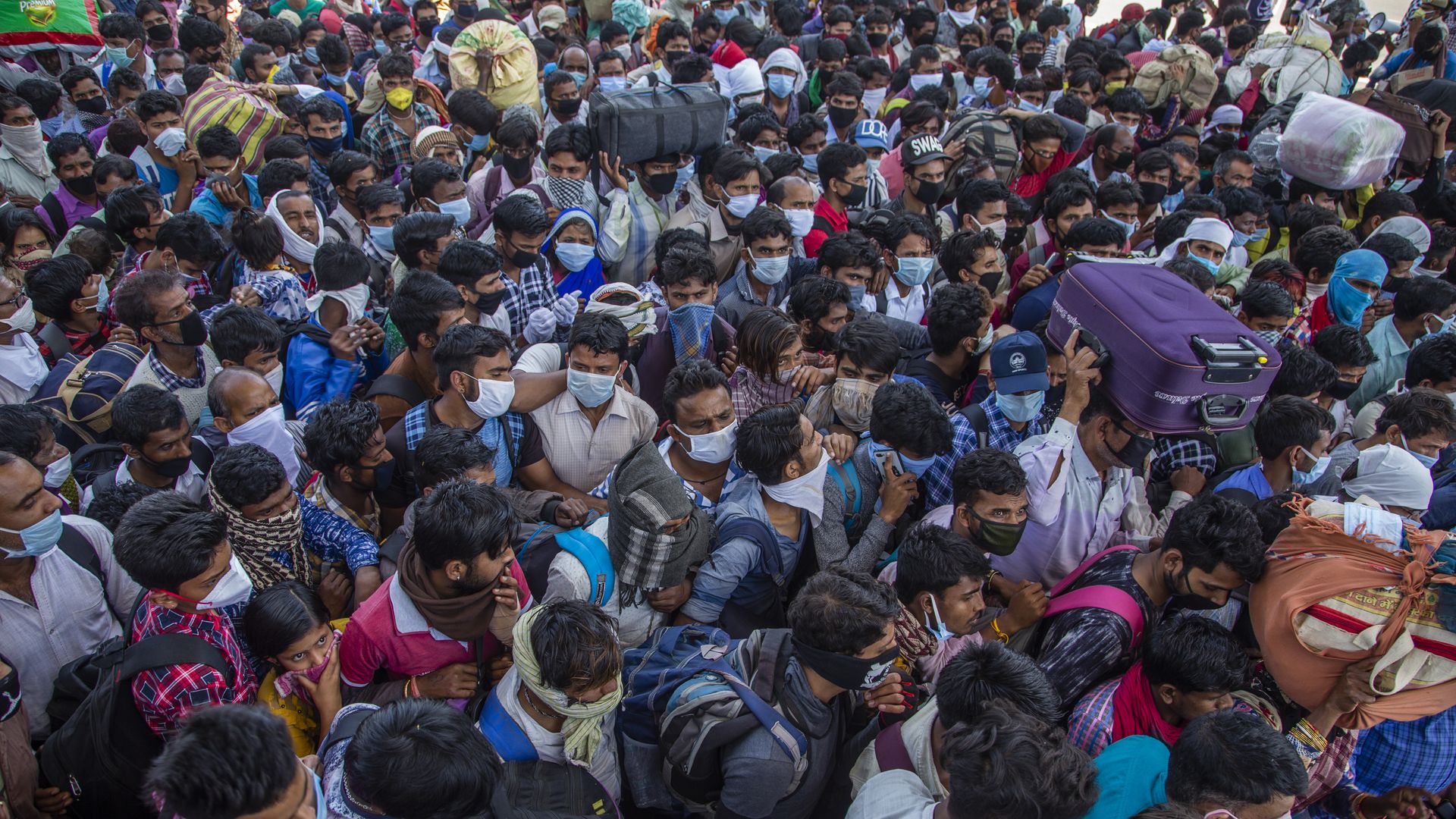
India opened up restaurants, shopping malls and places of worship today even as it recorded a record-high 9,971 new coronavirus cases, the third-most worldwide behind Brazil and the U.S.
Why it matters: Lockdowns are being lifted in South Asia — home to one-quarter of the world’s population — not because countries are winning the battle against COVID-19, but because they simply can't sustain them any longer.