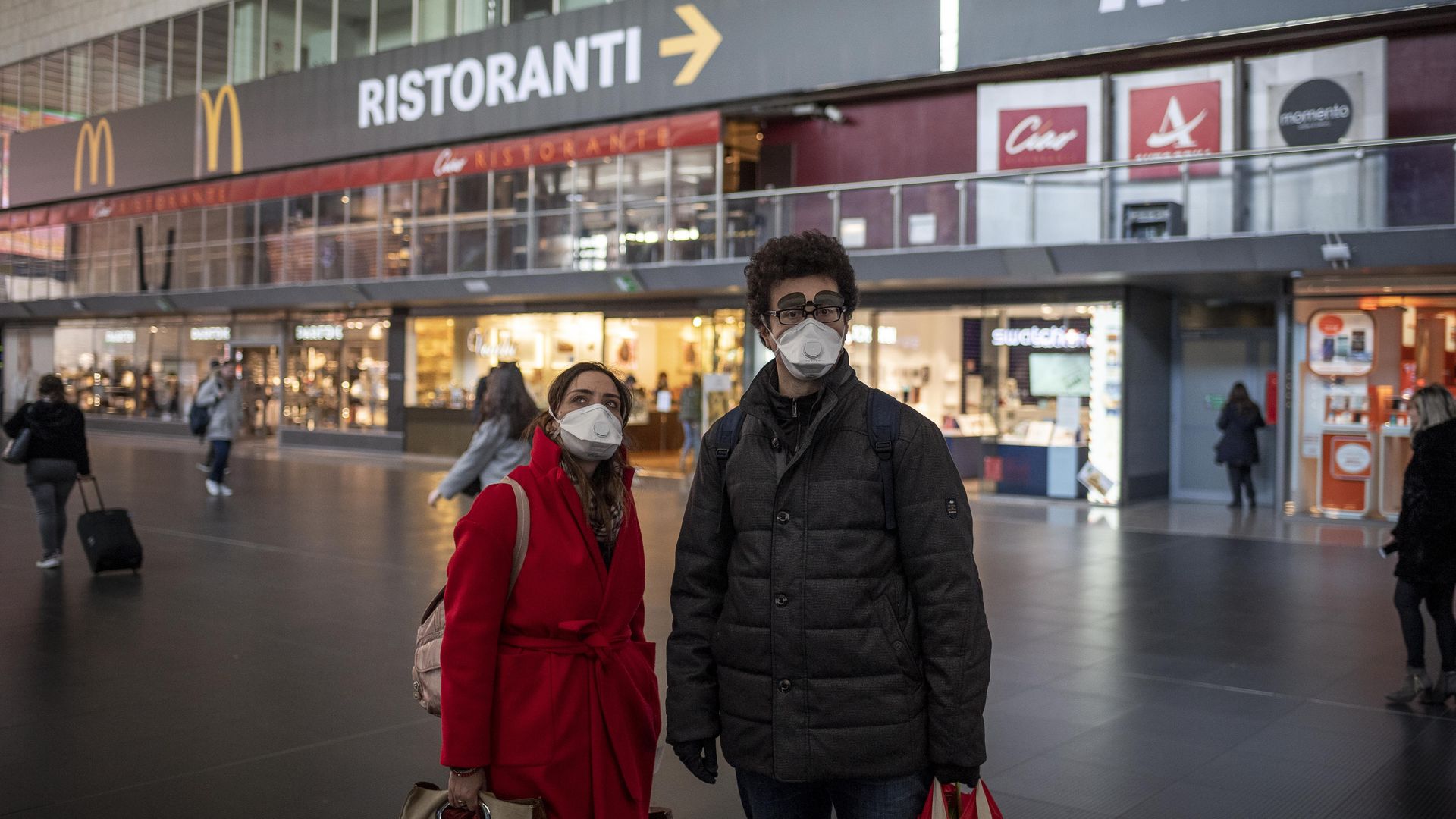
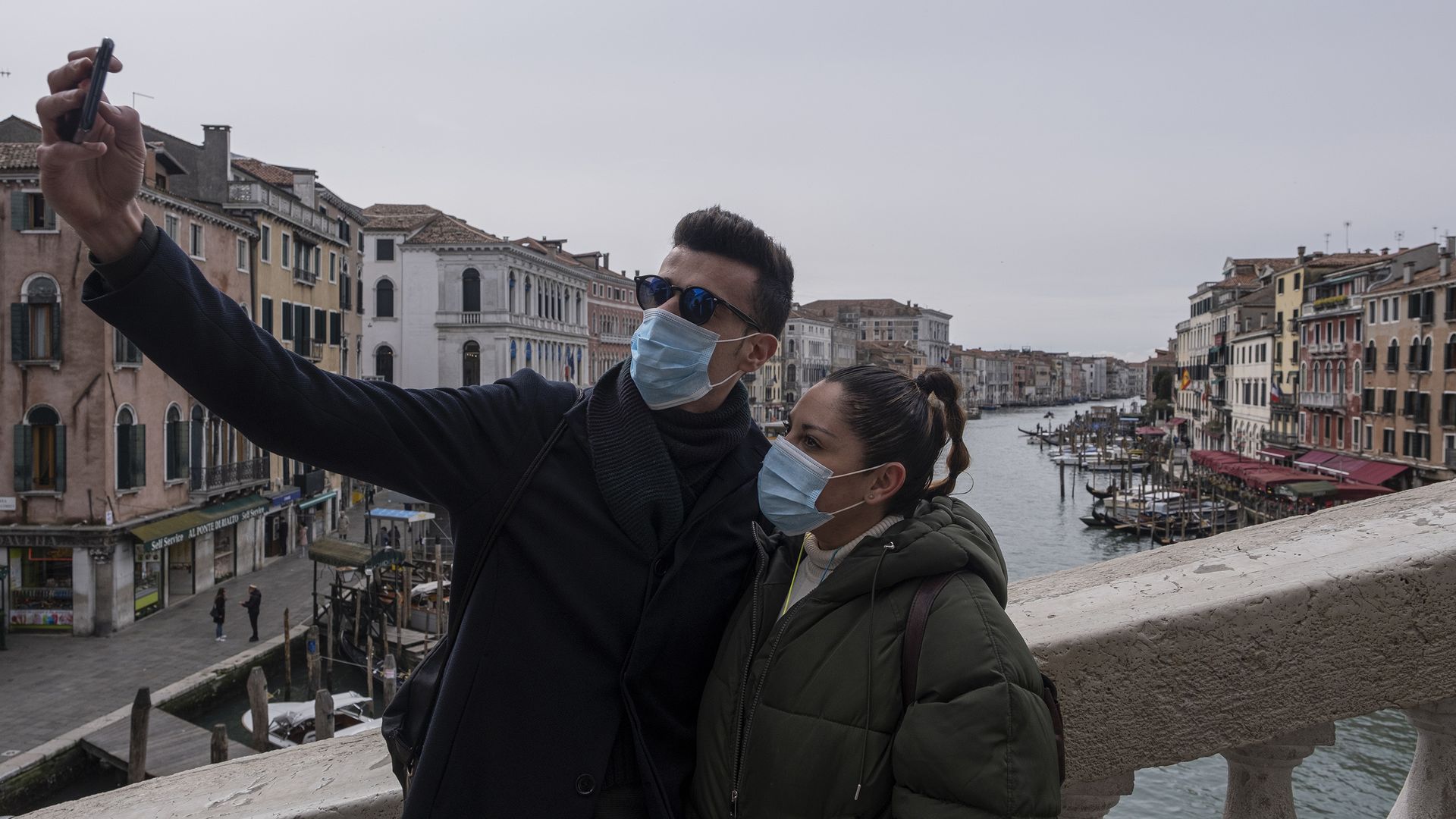
Italian Prime Minister Giuseppe Conte announced Monday that the government has extended internal travel restrictions to the entire country until April 3, after initially locking down the country's northern region in an effort to contain the coronavirus.
Why it matters: It's an extreme measure that effectively locks down 60 million people in one of the most populated countries in Europe, where more people have tested positive for the coronavirus than any country outside of China. Conte also announced that all public gatherings and sporting events would be banned.
A new Quinnipiac University poll released Monday finds that Democrats and Republicans have polarized views on both the danger the coronavirus poses and how the Trump administration is handling the outbreak.
By the numbers: The poll finds that 43% of respondents overall approve of President Trump's response to the coronavirus, while 49% disapprove.
Health Care Service Corp. is suing the federal government, arguing it is owed $2 billion from the Affordable Care Act's risk corridors program, which was put in place to mitigate insurance company losses in the law's early years.
Between the lines: The timing of the lawsuit is odd. Several other health insurers have already sued the feds over unpaid risk corridors claims, which led to the Supreme Court hearing their arguments this past December. However, a spokesperson for HCSC, which owns five Blue Cross Blue Shield affiliates, said the company is "not speculating on how the SCOTUS will rule."
President Trump tweeted Monday that cratering oil prices and "Fake News" caused the stock market's plunge, brushing off Wall Street's increasing anxieties about the novel coronavirus outbreak.
Why it matters: While oil price issues are certainly a significant driver of the market drop, Trump's tweets came after the illness' spread continued to worsen over the weekend across the globe.
Nursing homes are uniquely vulnerable to the coronavirus, and they — along with other elderly care facilities — are taking action to protect their residents, AP reports.
Between the lines: Older people and those who have other health complications are particularly susceptible to the virus, early evidence suggests, and the majority of U.S. deaths so far have been linked to a Seattle-area nursing home.
Paul Farmer, co-founder of Partners in Health, has spent decades treating infectious diseases in impoverished countries like Haiti and Sierra Leone.
What he's saying: The U.S. has lagged in its response to the coronavirus, but Farmer still has confidence in the country's public health agencies as well as the treatments that are available to infected patients.
Columbia University announced Sunday night it canceled classes for Monday and Tuesday and plans to hold remote lessons for the rest of the week after a member of its community was quarantined following exposure to the novel coronavirus.
Why it matters: The Ivy League school is the latest educational institution to suspend in-person classes and move studying online in response to the outbreak as the virus continues to spread across the U.S., which now has more than 500 cases, per data from Johns Hopkins and state health departments.
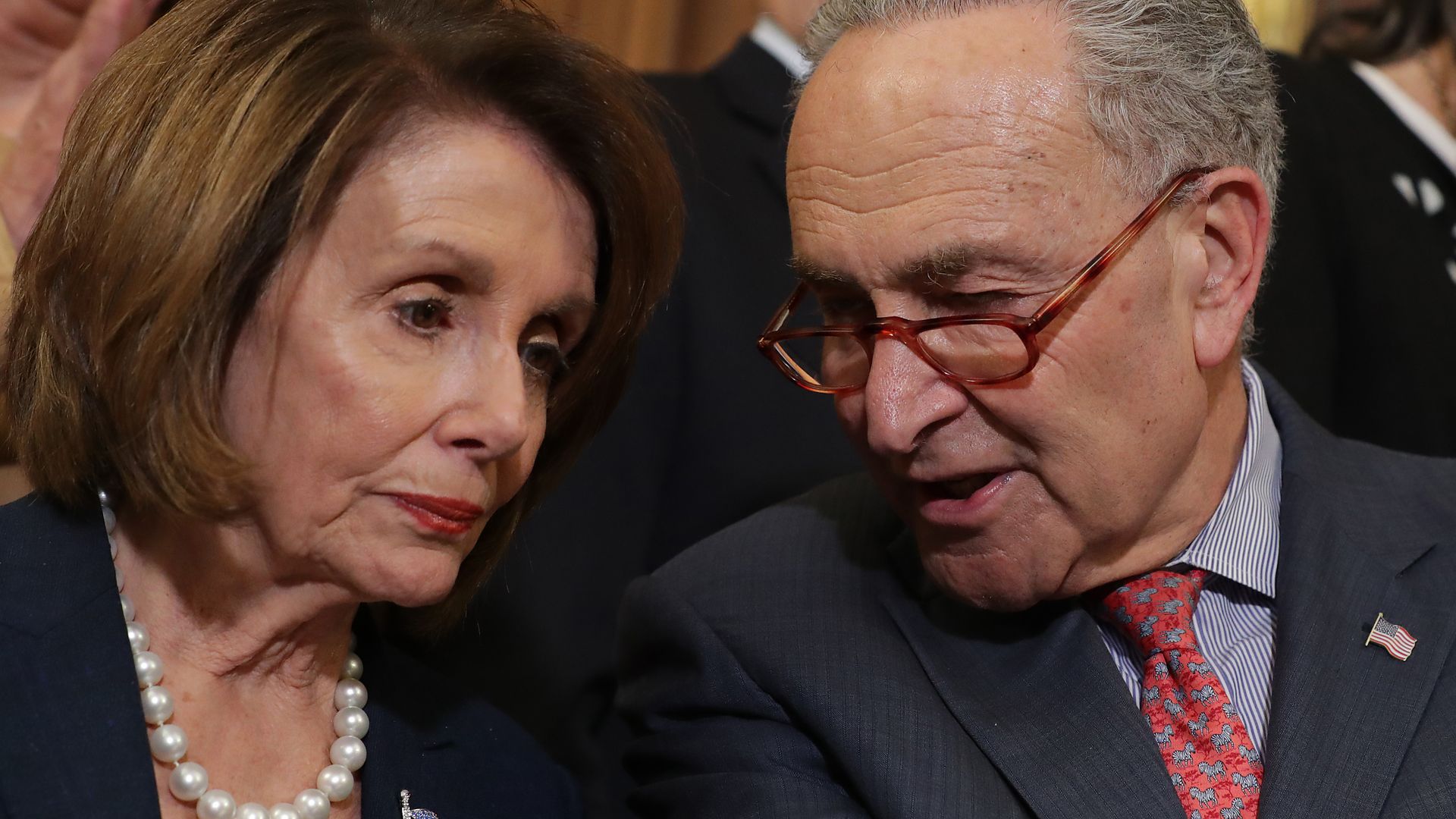
House Speaker Nancy Pelosi (D-Calif.) and Senate Minority Leader Chuck Schumer (D-N.Y.) urged the Trump administration to combat the spread of the novel coronavirus by stepping up workers' protections with a series of new measures.
Details: Pelosi and Schumer said in a joint statement the administration should introduce paid sick leave for those impacted by COVID-19, enable widespread and free coronavirus testing access, expand programs such as SNAP food stamps, and reimburse patients for noncovered costs related to the virus.
The State Department issued an advisory Sunday warning U.S. citizens against traveling on cruise ships after a second vessel carrying American citizens was impacted by cases of the novel coronavirus.
Details: "U.S. citizens, particularly travelers with underlying health conditions, should not travel by cruise ship," the statement warns. "CDC notes increased risk of infection of COVID-19 in a cruise ship environment."
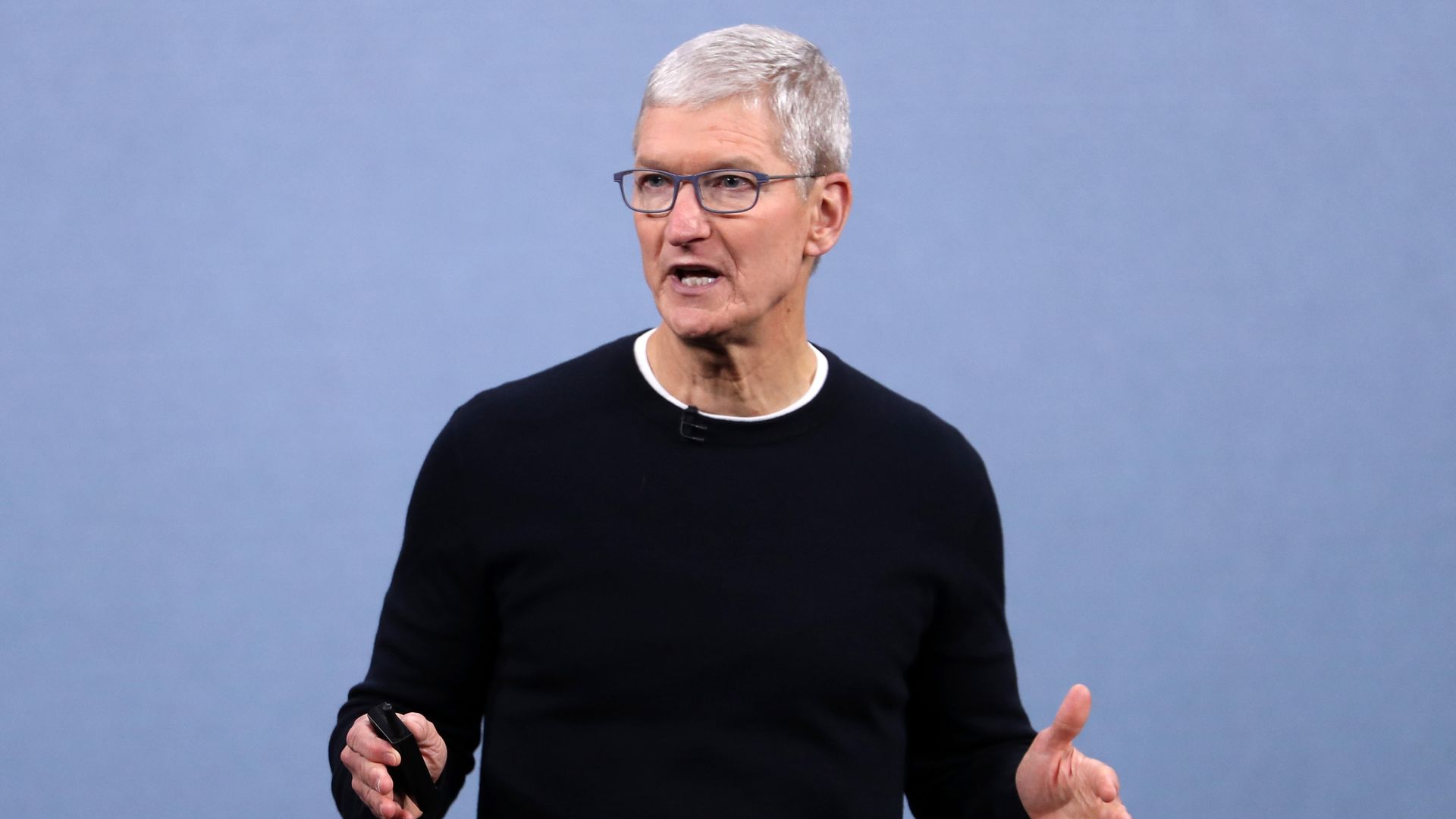
Apple CEO Tim Cook has informed employees in most global offices that they may work from home between March 9–13 as the company grapples with the "unprecedented" coronavirus outbreak, according to a memo first reported by Bloomberg and confirmed by Axios.
The big picture: Apple joins a chorus of other companies encouraging workers in Seattle or the Bay Area to work from home, including Amazon, Facebook, Microsoft and Salesforce. Apple, like these other companies, said in the memo will continue to pay its hourly staff while full-time workers telecommute.
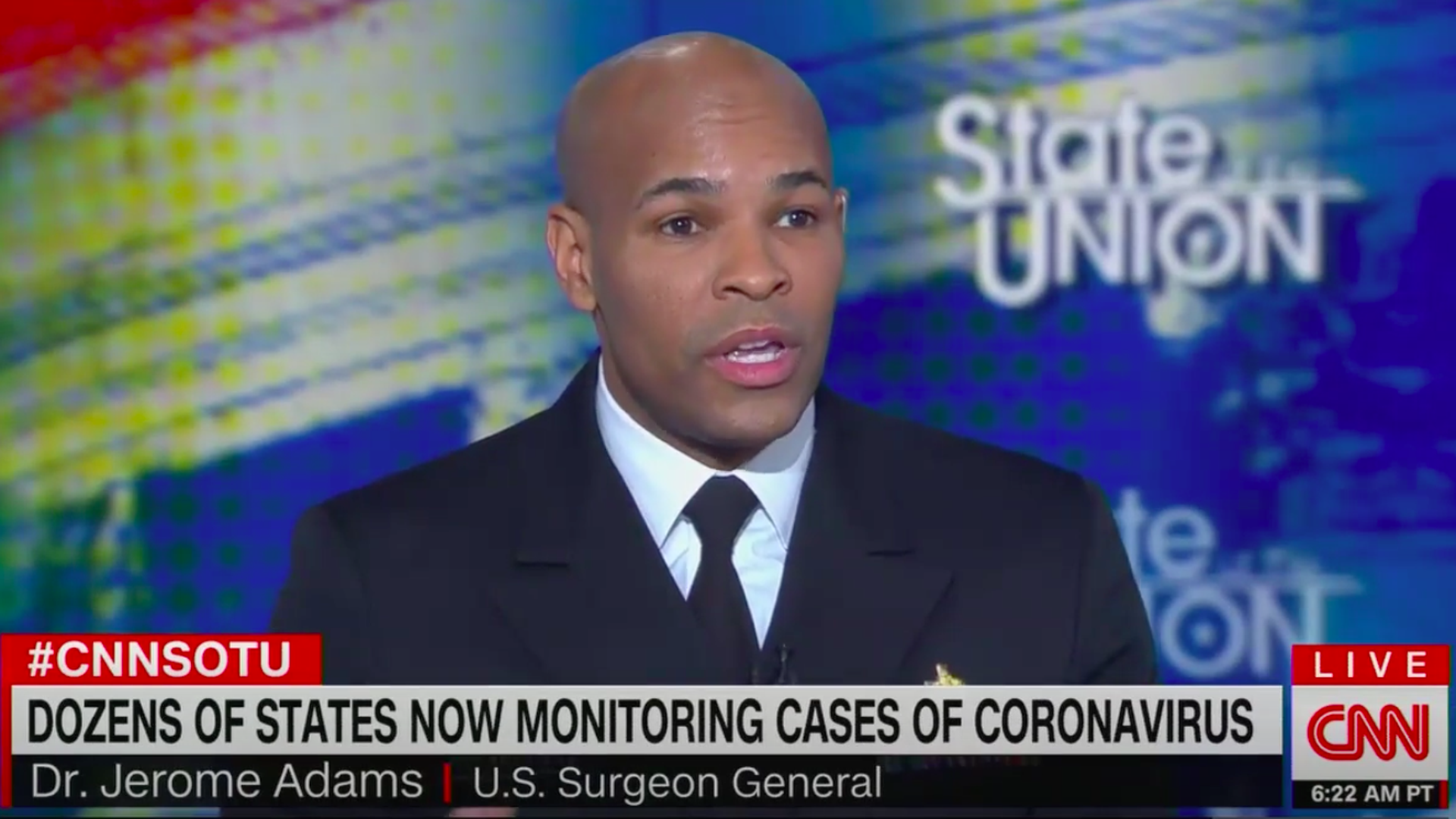
Cities around the country should start preparing for more cases of coronavirus and think about canceling large gatherings and closing schools "to prevent more deaths," U.S. Surgeon General Jerome Adams said Sunday on CNN's "State of the Union."
Why it matters: Adams said the country is moving away from trying to contain the virus to a "mitigation phase," meaning it is now spreading within communities and that people who have no recent travel history are contacting it.
As the coronavirus spreads further within the U.S., we're getting a pretty good picture of what to expect next — and how deeply our lives will change.
Why it matters: There are all kinds of scary scenarios that are more speculative, but we don't need to go down that road — there are already enough grim headlines and disruption in the changes we know are coming.
Italy's Prime Minister Giuseppe Conte signed a decree Saturday putting much of the country's north — including Venice and Milan — on lockdown Saturday to try to curb the spread of the novel coronavirus.
Why it matters: Italy has the largest number of cases in Europe — 5,883 by early Sunday, per Johns Hopkins University data. At least 16 million people are now in mandatory quarantine in the Lombardy region, along with 14 provinces, the BBC notes.Among those to test positive is the head of Italy’s Democratic Party, Nicola Zingaretti, per Bloomberg.
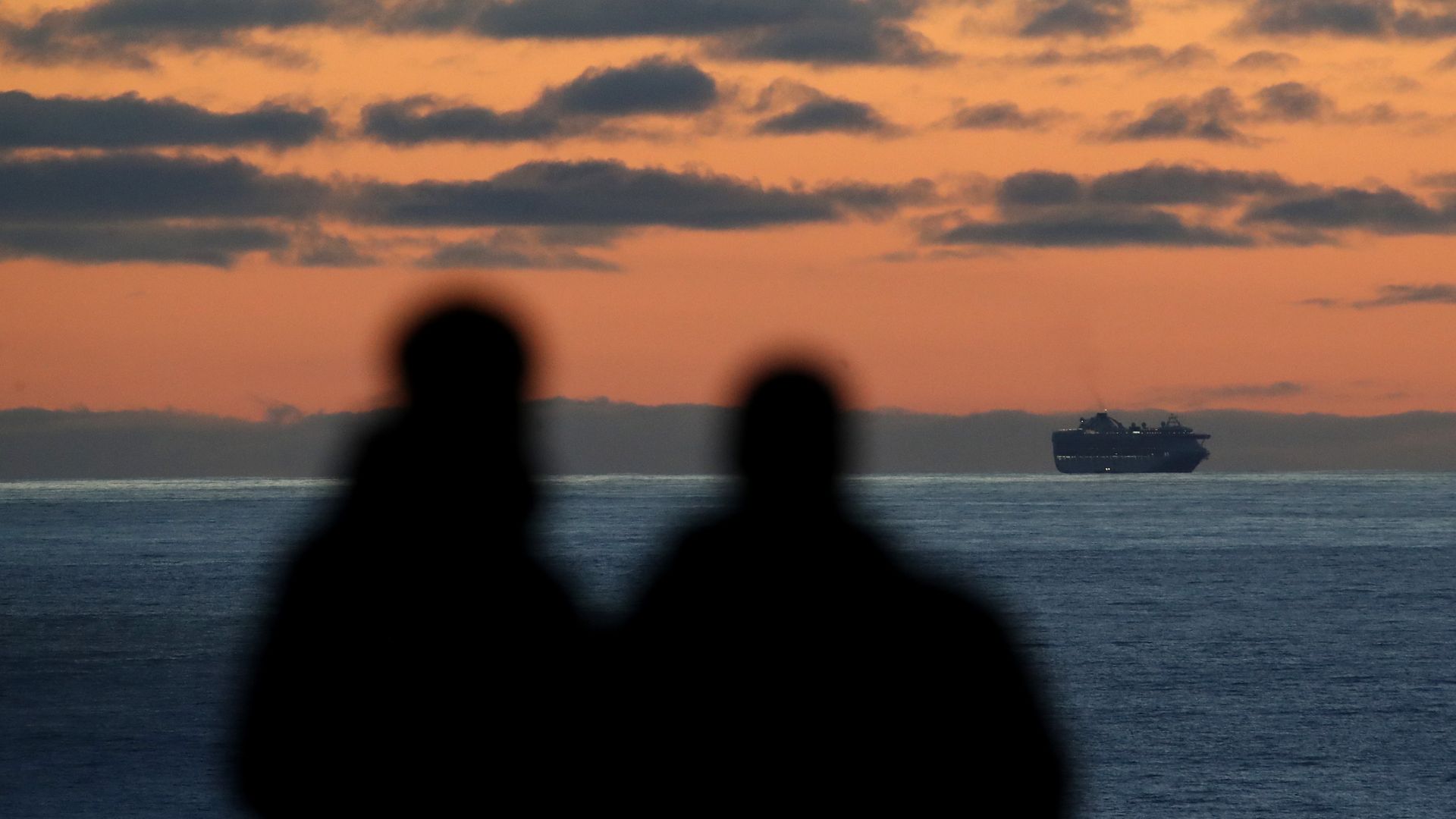
The Grand Princess cruise ship, stranded off San Francisco's coast with 21 people aboard who've tested positive for the novel coronavirus, has been cleared to dock in Oakland, California, on Monday, operator Princess Cruises said in a statement.
Details: Princess Cruises initially said in a statement early Sunday authorities had cleared it to arrive at the Port of Oakland later in the day "to begin disembarking guests who require acute medical treatment and hospitalization." But it later said after further review by state and federal authorities the docking day had changed, with a "time to be determined."
Two Floridians have died after testing positive for the novel coronavirus following international travel, the state health department said on Saturday.
What's happening: Two new presumptive positive COVID-19 cases were also announced in Florida on Saturday — the Broward County residents, a 75-year-old man and a 65-year-old man, are in isolation after testing positive for the virus in a state lab, with additional CDC confirmation pending.
A U.S. Marine in Fort Belvoir, Virginia, has become the first person in the state to contract the novel coronavirus, Pentagon spokesperson Jonathan Rath Hoffman said in a statement via Twitter on Saturday evening.
The big picture: The Marine was being treated at Fort Belvoir Community Hospital after recently returning from overseas, where he was on official business, Hoffman said. Defense Secretary Mark Esper and the White House have been briefed on the case. On Friday, a U.S. Navy sailor stationed in Naples, Italy, became the first in Europe to test positive for the virus. An American soldier stationed in South Korea was quarantined on Feb. 25 after testing positive for COVID-19.
Editor's note: This article has been updated with new details throughout.
Washington, D.C., announced its first presumptive positive novel coronavirus case on Saturday and Mayor Muriel Bowser confirmed later that a second person who visited the city had presented with symptoms in Maryland.
Details: Bowser told a news conference that the D.C. resident in his 50s who tested positive to the virus had"no history of international travel and no close contact with a known case."
Crossed lines and poor communication between the U.S. government and a leading pharmaceutical company appear to have complicated the breakneck search for a coronavirus treatment.
Why it matters: Pharmaceutical giant Gilead, in its a rush to begin clinical trials on a potential treatment, may have violated federal law instead of waiting for slow-to-come federal approvals on drug exports.