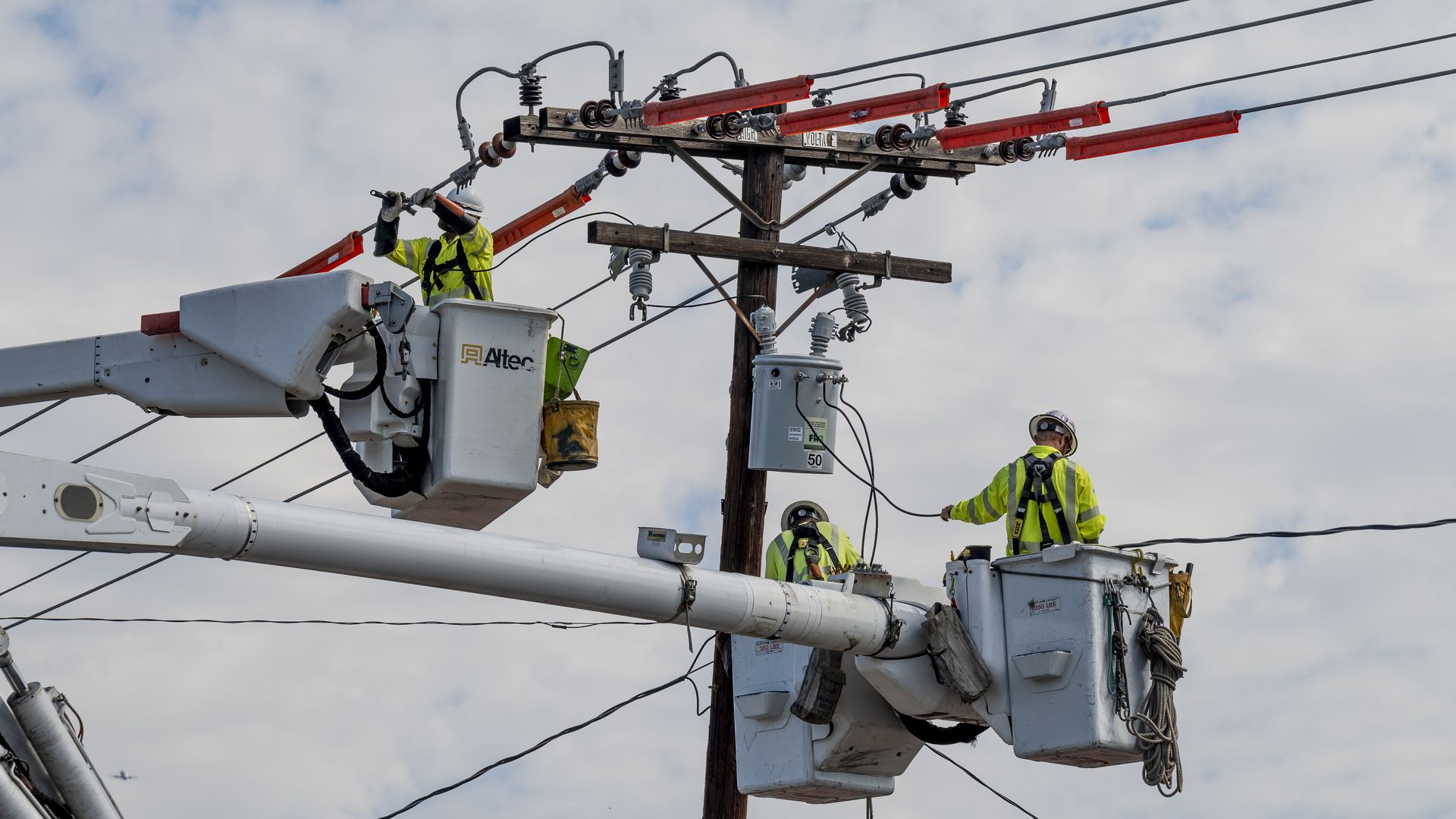
The U.S.’ outdated and fragmented power grid is increasingly threatened by the effects of climate change and global warming, but estimates show that upgrading it may cost billions, even trillions, over the coming decades.
Why it matters: The price of those improvements will likely pale in comparison to the costs — in economic damage and in lives lost — that will be incurred by not sufficiently modernizing the grid, experts say.
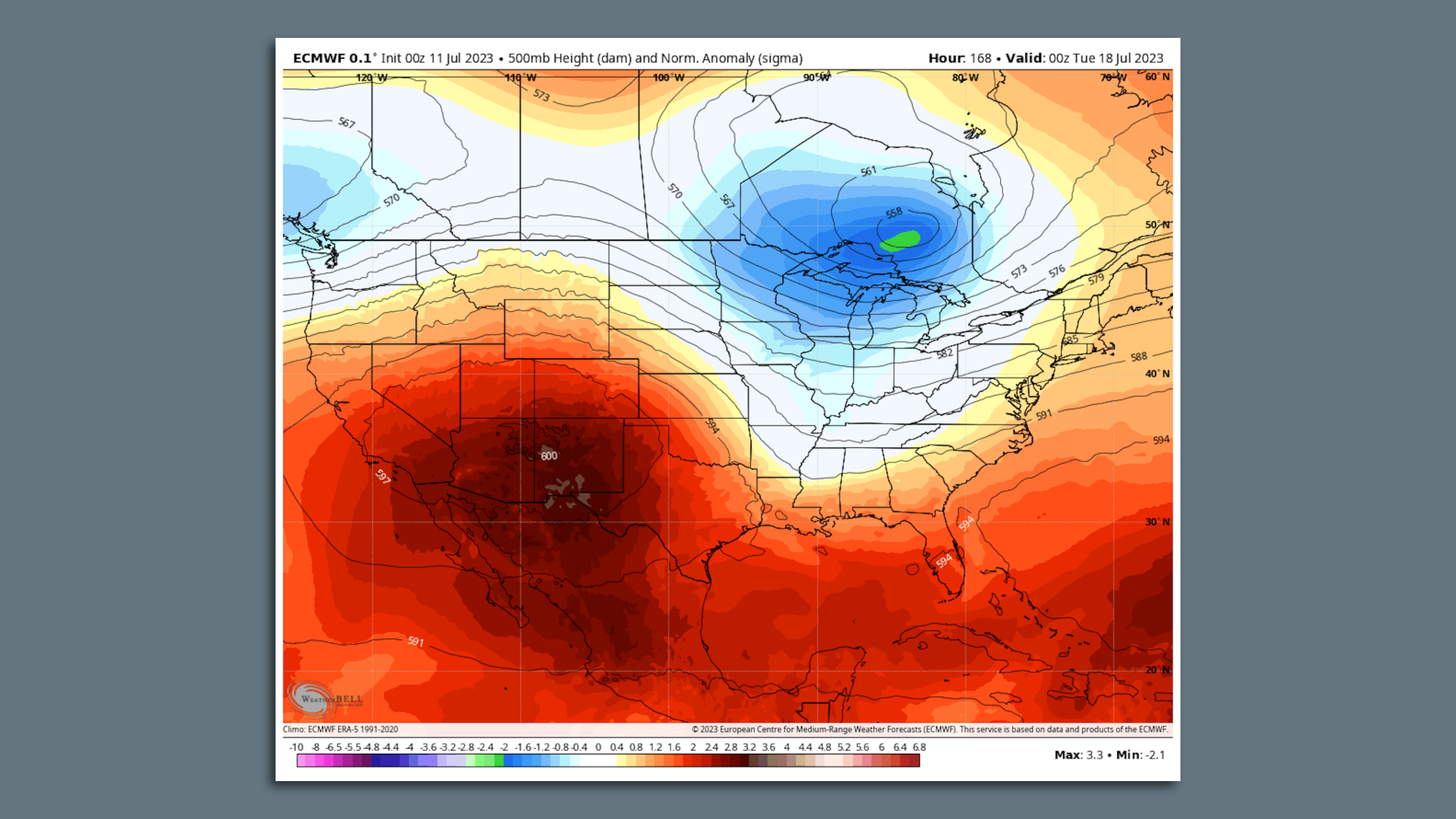
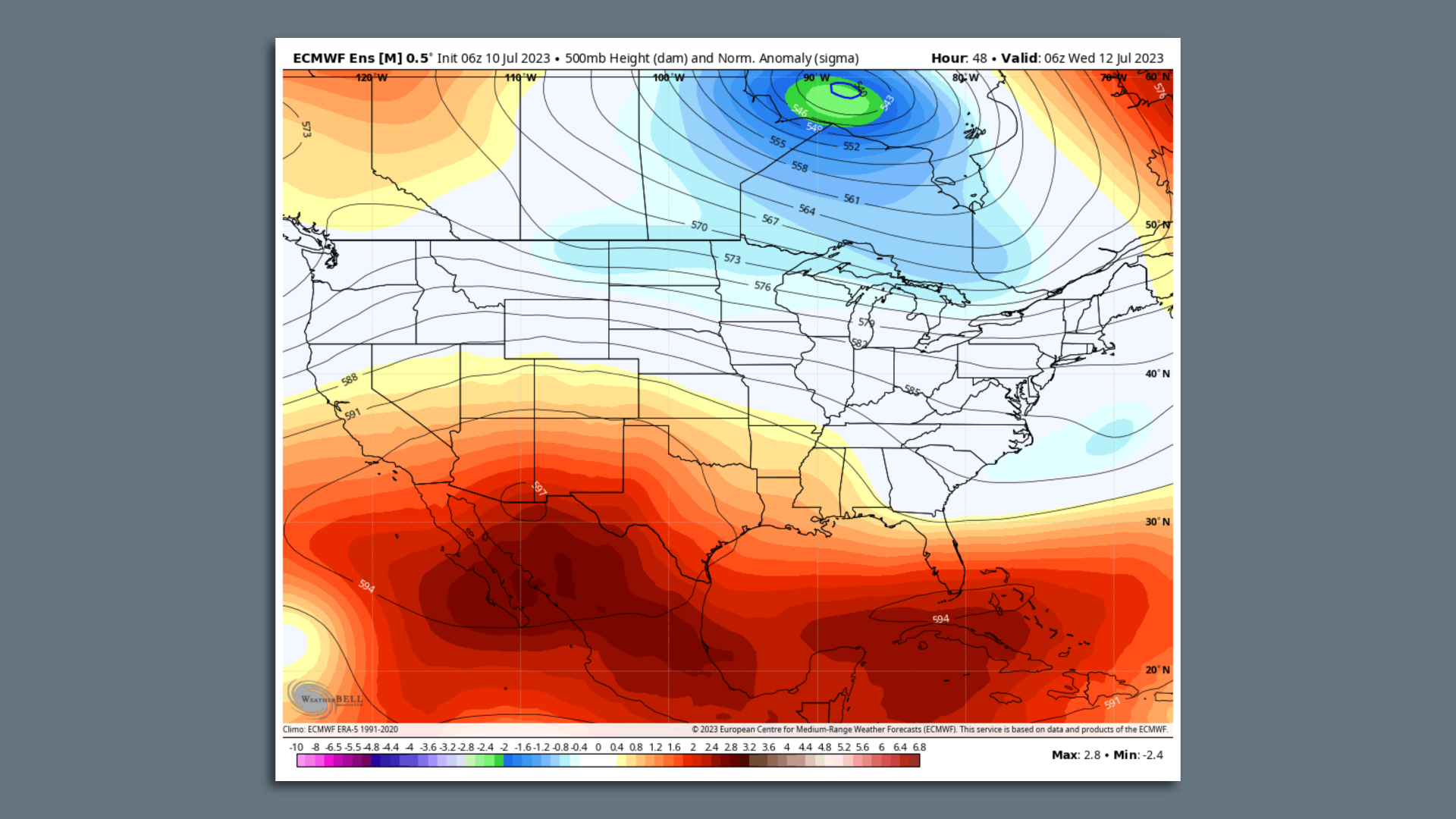
An "extremely dangerous" heat wave is ramping up from Florida to California, and is poised to topple records and threaten public health.
The big picture: The extreme heat has prompted the National Weather Service to issue heat alerts for more than 86 million people, according to heat.gov, with the hottest temperatures destined for the Southwest.
The Biden administration's full-court press on climate change cooperation with Beijing could hinge on climate envoy John Kerry's upcoming visit to China.
Why it matters: The U.S. and China are the world's top two emitters of planet-warming greenhouse gases. Climate action between them could help to achieve global climate goals and pave the way for smoother negotiations at the COP28 summit in the United Arab Emirates later this year.
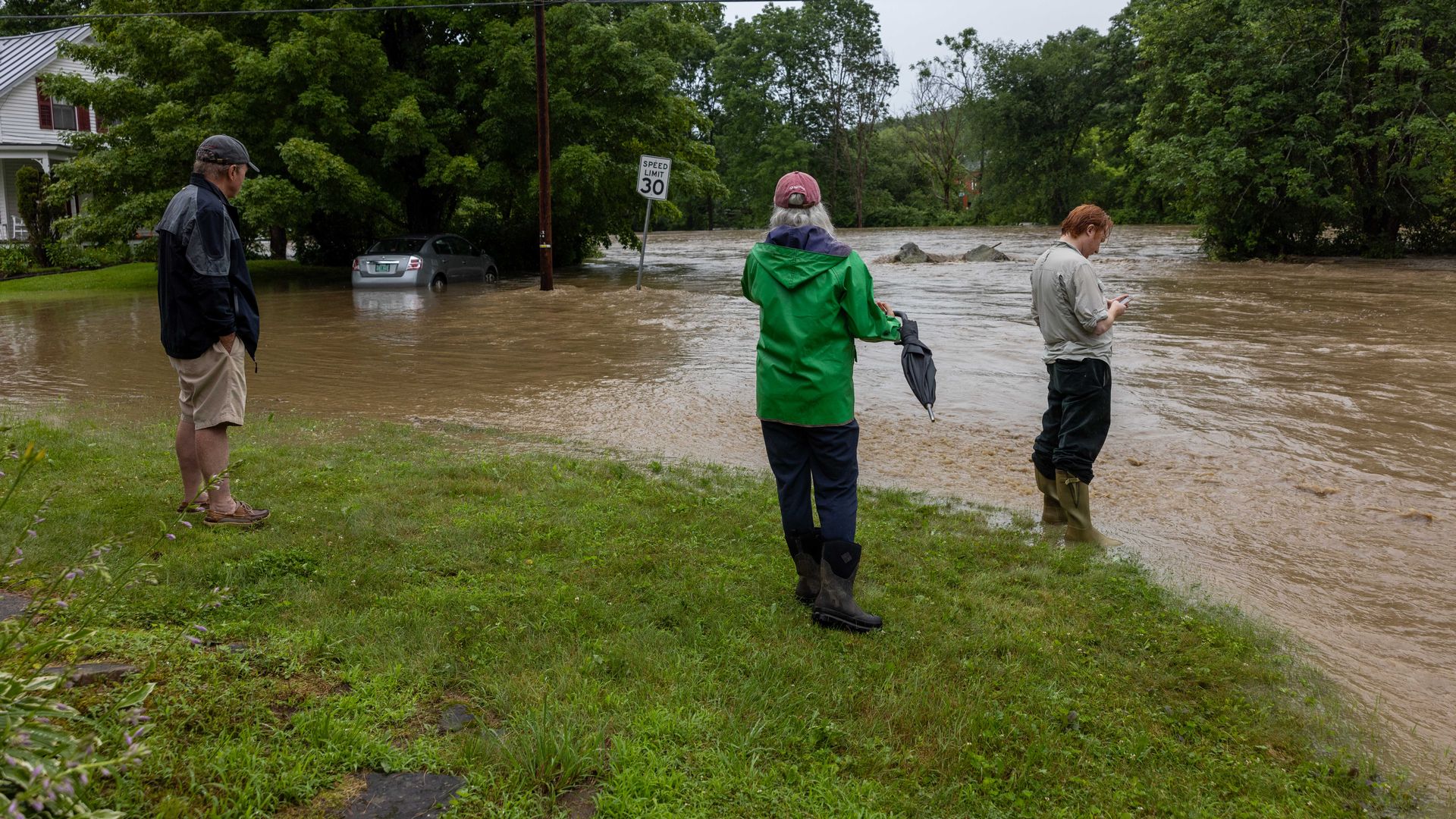
Severe storms sweeping the U.S. Northeast caused catastrophic flooding that officials in Vermont said Monday had surpassed levels experienced by the remnants of the deadly 2011 Hurricane Irene, which washed away homes and roads.
The big picture: Tuesday morning, much of the state capital of Montpelier was inundated after the Winooski River soared above levels seen during the flooding associated with the remnants of Irene.
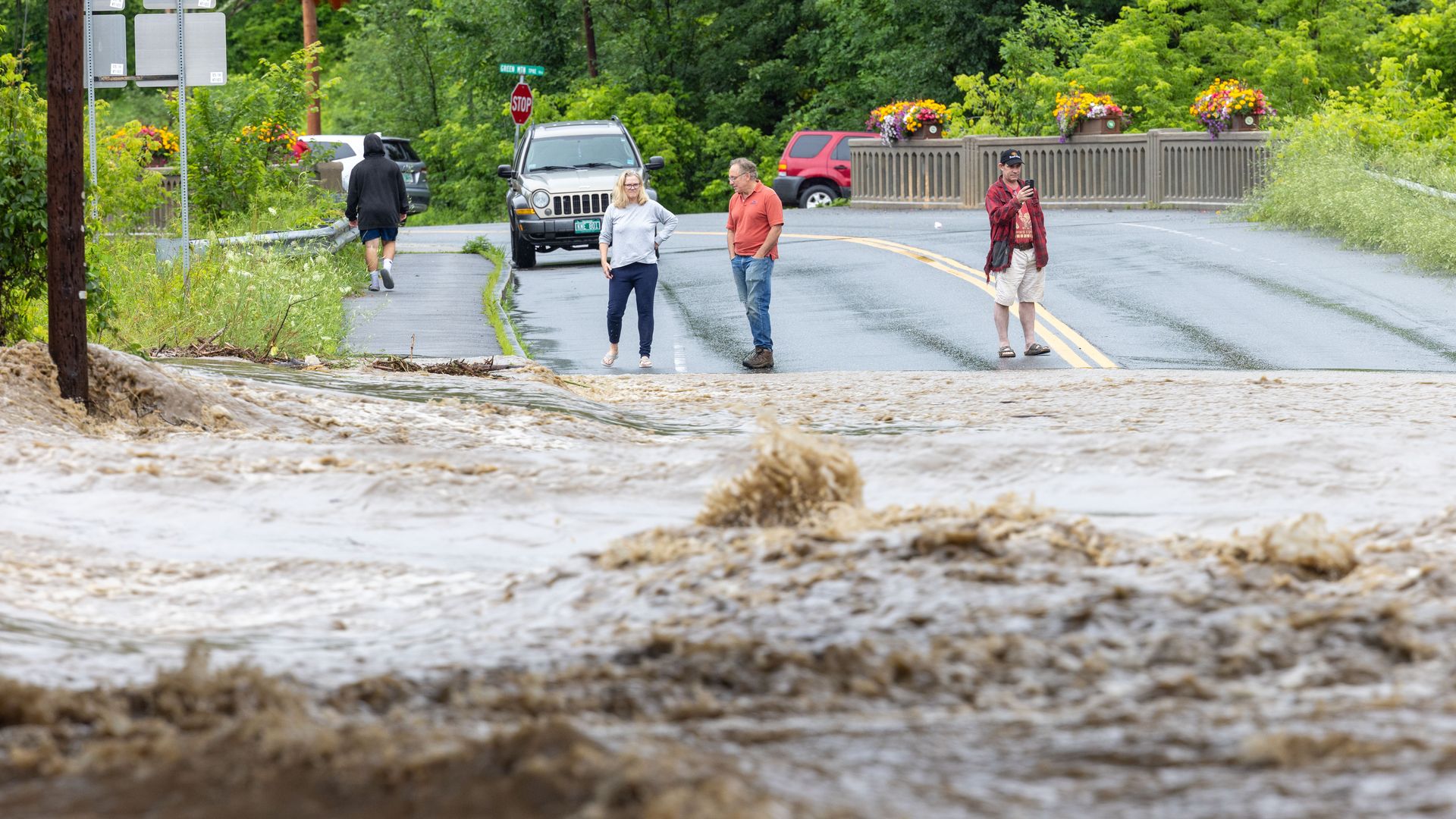
Residents in New York and New England are experiencing flooding not seen since the remnants of the deadly Hurricane Irene destroyed roads and inundated homes in 2011.
The big picture: Heavy rainfall has inundated streets and prompted multiple water rescues and road closures in N.Y. and Vermont since it hit the region Sunday. At least one death was confirmed in N.Y. as officials continued to respond to the extreme weather event Monday. Studies show climate change is increasing the frequency of precipitation extremes.
Over 61,000 people died from searing summer temperatures across Europe last year, according to a study published in the journal Nature Medicine on Monday.
Why it matters: The study's estimates reinforce the fact that extreme heat events, which are becoming more likely and more severe because of climate change, are among the most dangerous weather-related hazards, though their death tolls and destruction are often not immediately known.
The globe's historic heat records have received massive media attention, but at a regional level, excessively hot weather is building across the U.S. and is likely to last well over a week.
Why it matters: Globally, there have been four straight days of temperature records set or tied since July 3, along with seven straight days of average temperatures breaching 17°C (62.6°F), which previously had not occurred since at least 1940.
Swedish developers are getting ready to build the world’s largest wooden city, setting the stage for a possible domino effect of similar projects across the globe.
Why it matters: The use of timber in urban construction has been found to produce significantly lower carbon emissions than conventional building materials — but it also brings new risks.
The auto industry is beginning to crank out more electric vehicles (EVs) to challenge Tesla, but there's one big problem: not enough buyers.
Why it matters: The growing mismatch between EV supply and demand is a sign that even though consumers are showing more interest in EVs, they're still wary about purchasing one because of price or charging concerns.