Over 61,000 people died from searing summer temperatures across Europe last year, according to a study published in the journal Nature Medicine on Monday.
Why it matters: The study's estimates reinforce the fact that extreme heat events, which are becoming more likely and more severe because of climate change, are among the most dangerous weather-related hazards, though their death tolls and destruction are often not immediately known.
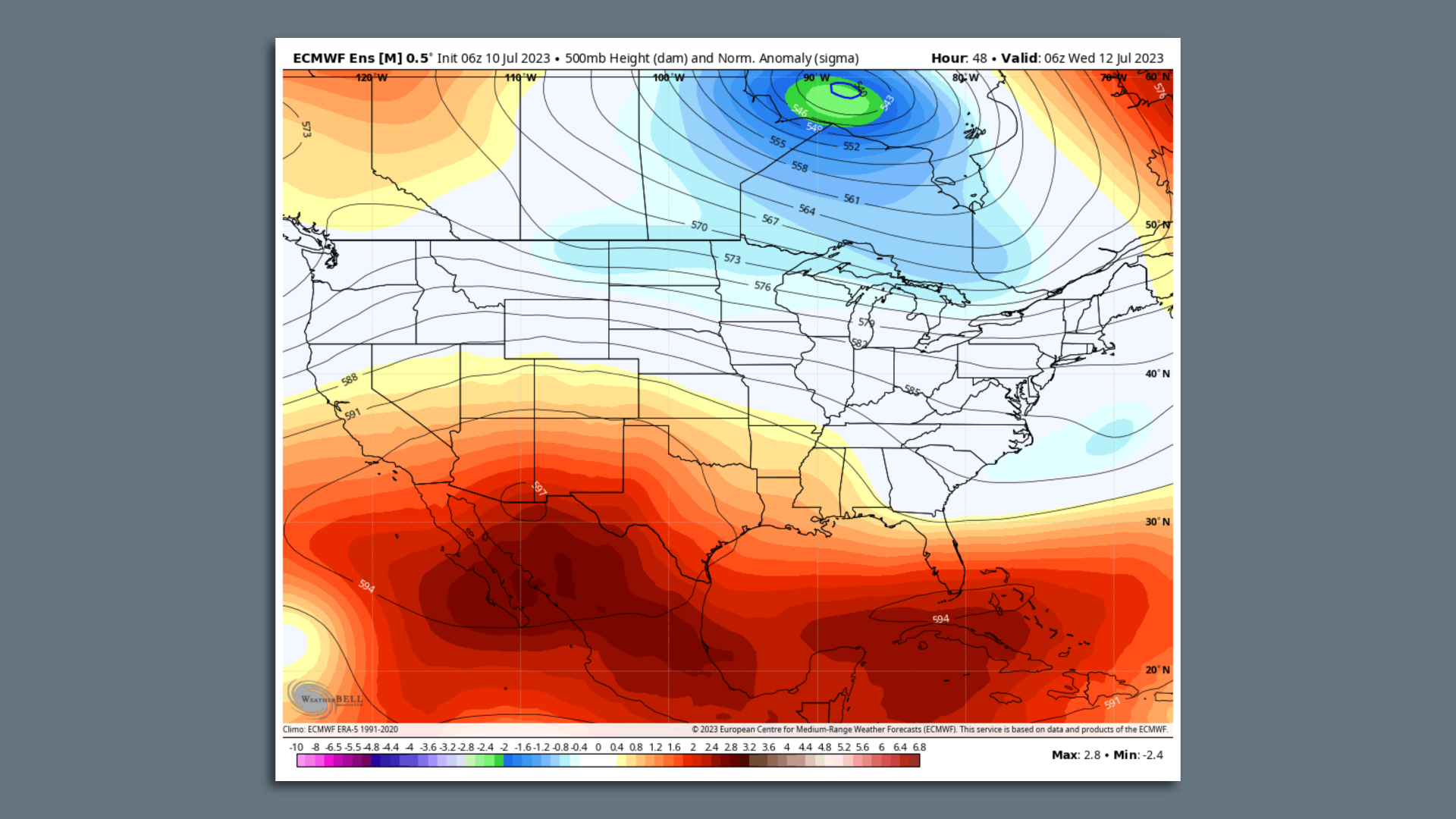
The globe's historic heat records have received massive media attention, but at a regional level, excessively hot weather is building across the U.S. and is likely to last well over a week.
Why it matters: Globally, there have been four straight days of temperature records set or tied since July 3, along with seven straight days of average temperatures breaching 17°C (62.6°F), which previously had not occurred since at least 1940.
Swedish developers are getting ready to build the world’s largest wooden city, setting the stage for a possible domino effect of similar projects across the globe.
Why it matters: The use of timber in urban construction has been found to produce significantly lower carbon emissions than conventional building materials — but it also brings new risks.
The auto industry is beginning to crank out more electric vehicles (EVs) to challenge Tesla, but there's one big problem: not enough buyers.
Why it matters: The growing mismatch between EV supply and demand is a sign that even though consumers are showing more interest in EVs, they're still wary about purchasing one because of price or charging concerns.