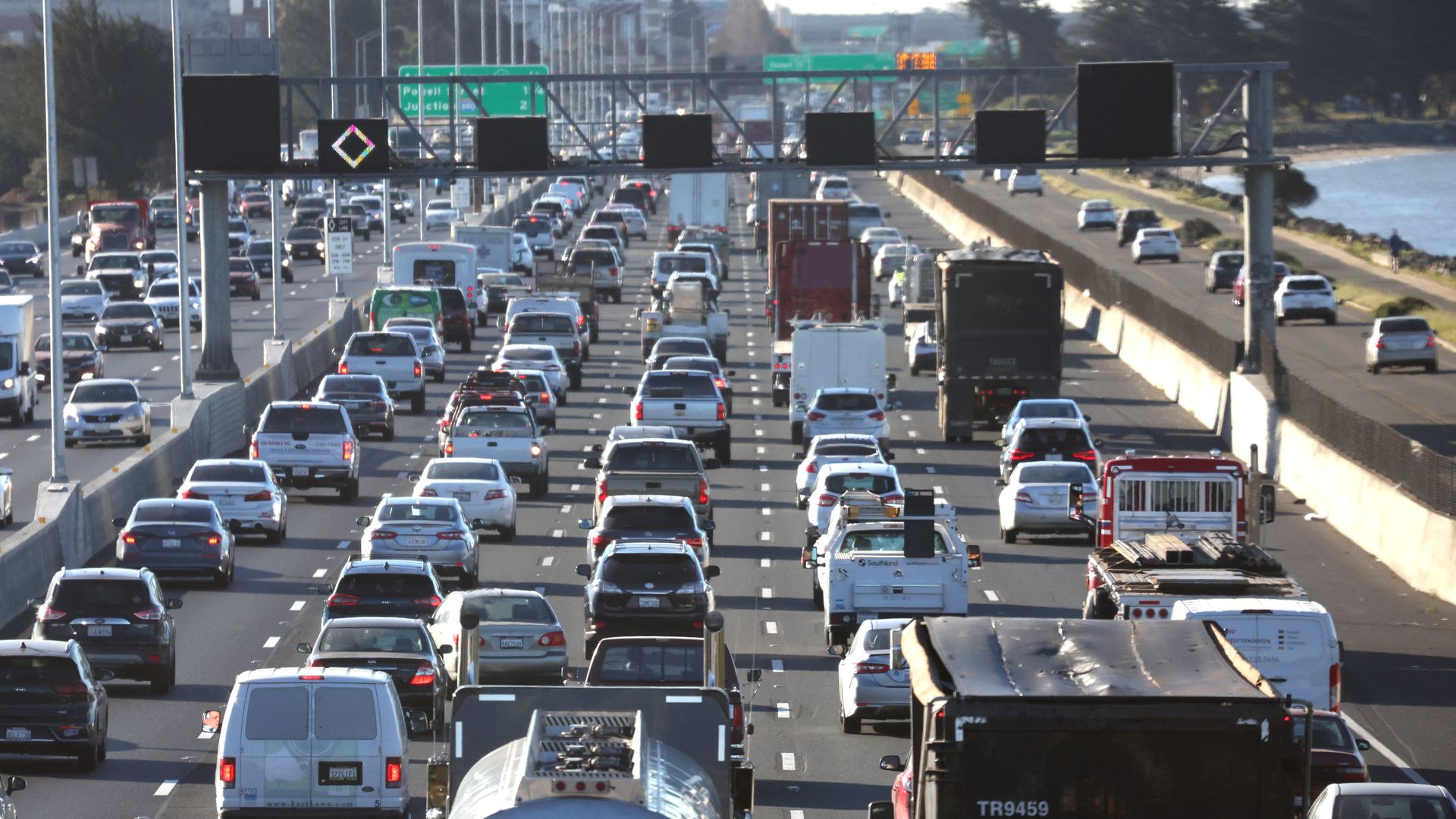
The Environmental Protection Agency on Wednesday restored California's legal authority to set tailpipe emissions standards that are stricter than the federal rules.
Why it matters: The move restores California's status as a climate regulator after former President Trump stripped the state of that power when he was in office. The EPA has long signaled its intent to reverse the rollbacks.
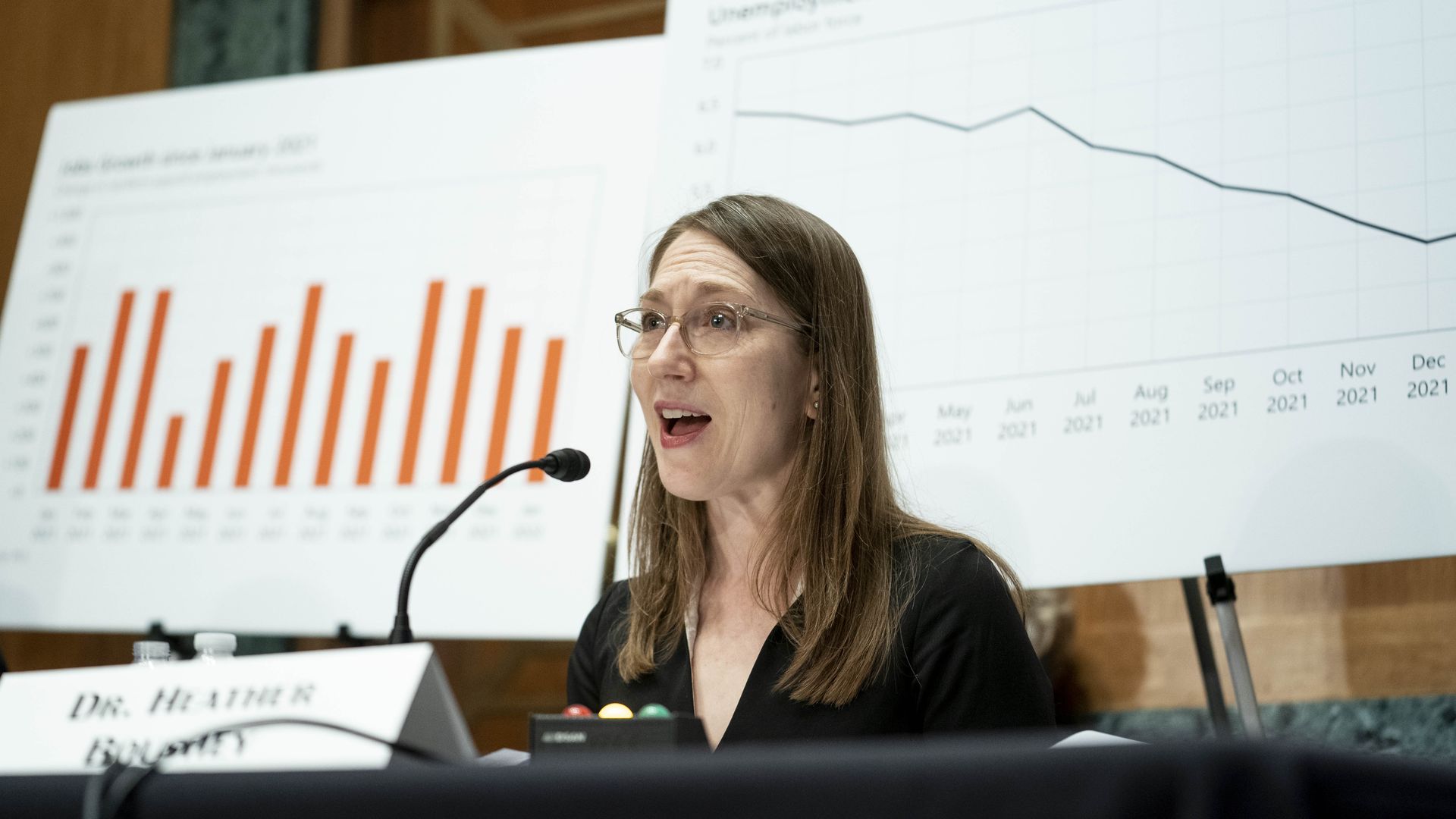
The U.S. can meet its energy needs without Russia, White House economic adviser Heather Boushey told Axios at an event Wednesday, adding that a pivot toward clean energy could help keep Americans from paying high gas prices in the future.
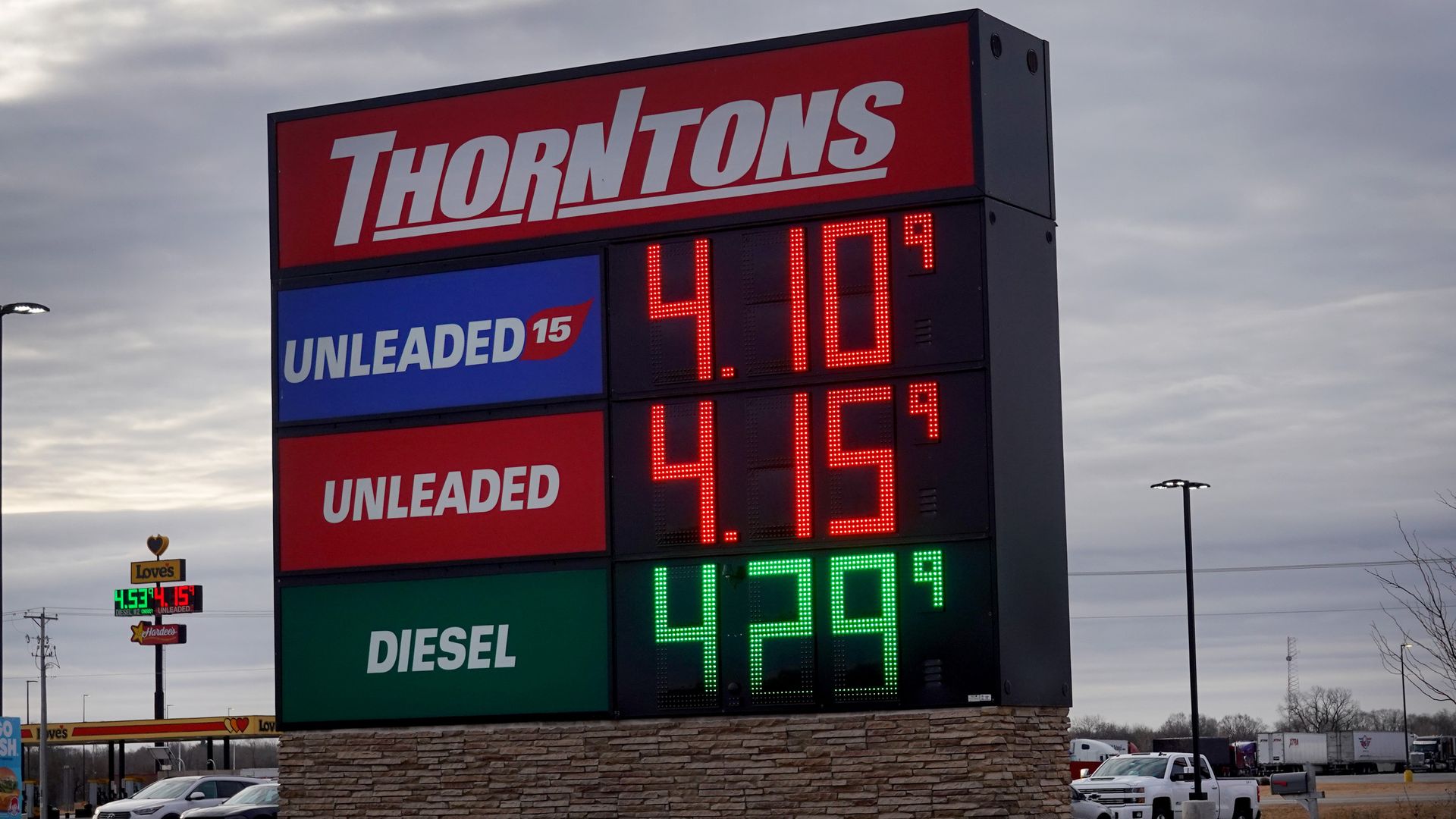
Why it matters: Gas prices hit a record high on Tuesday at $4.173 per gallon. The U.S. on the same day banned imports of Russian oil in response to Vladimir Putin's invasion of Ukraine.
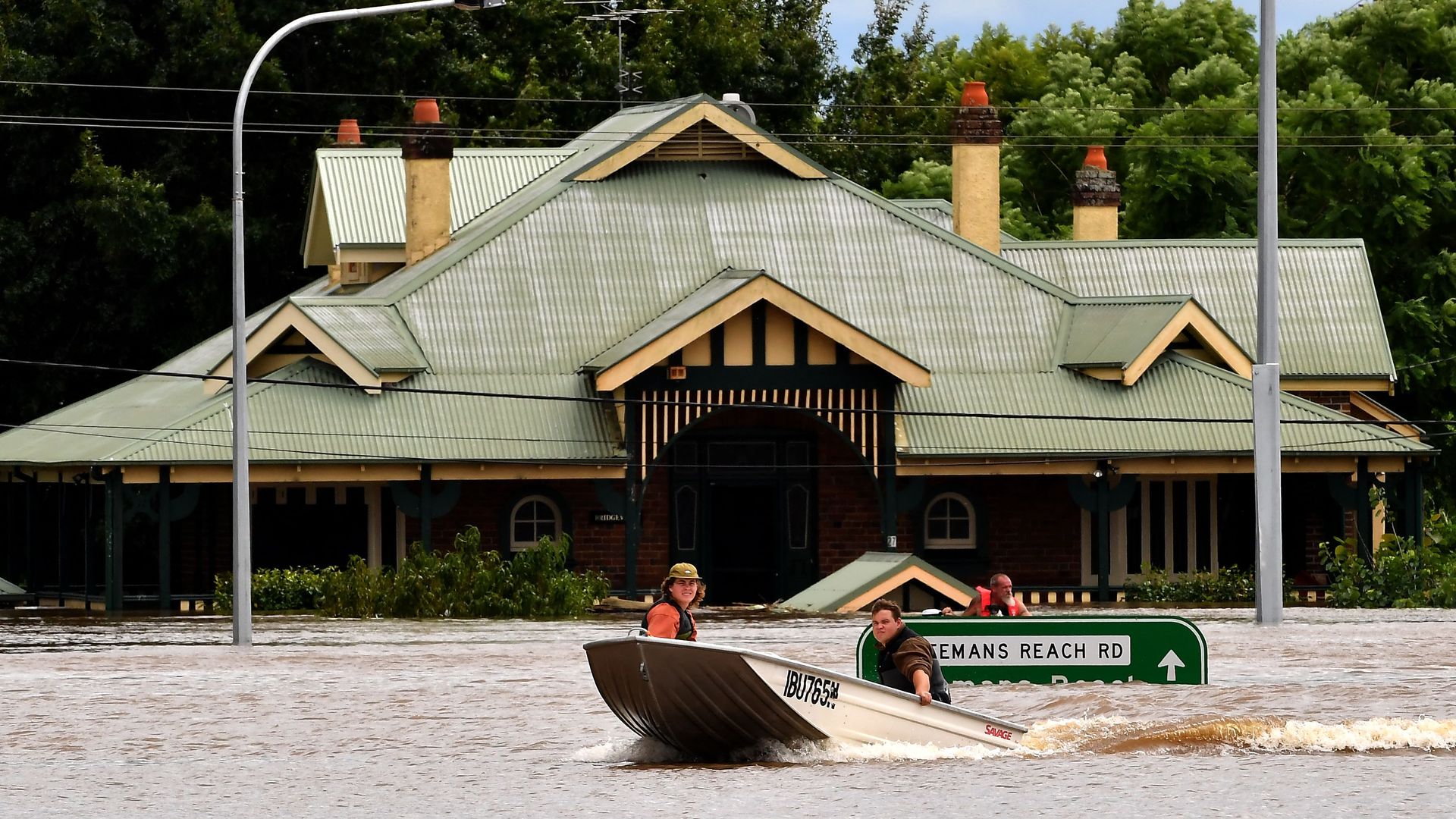
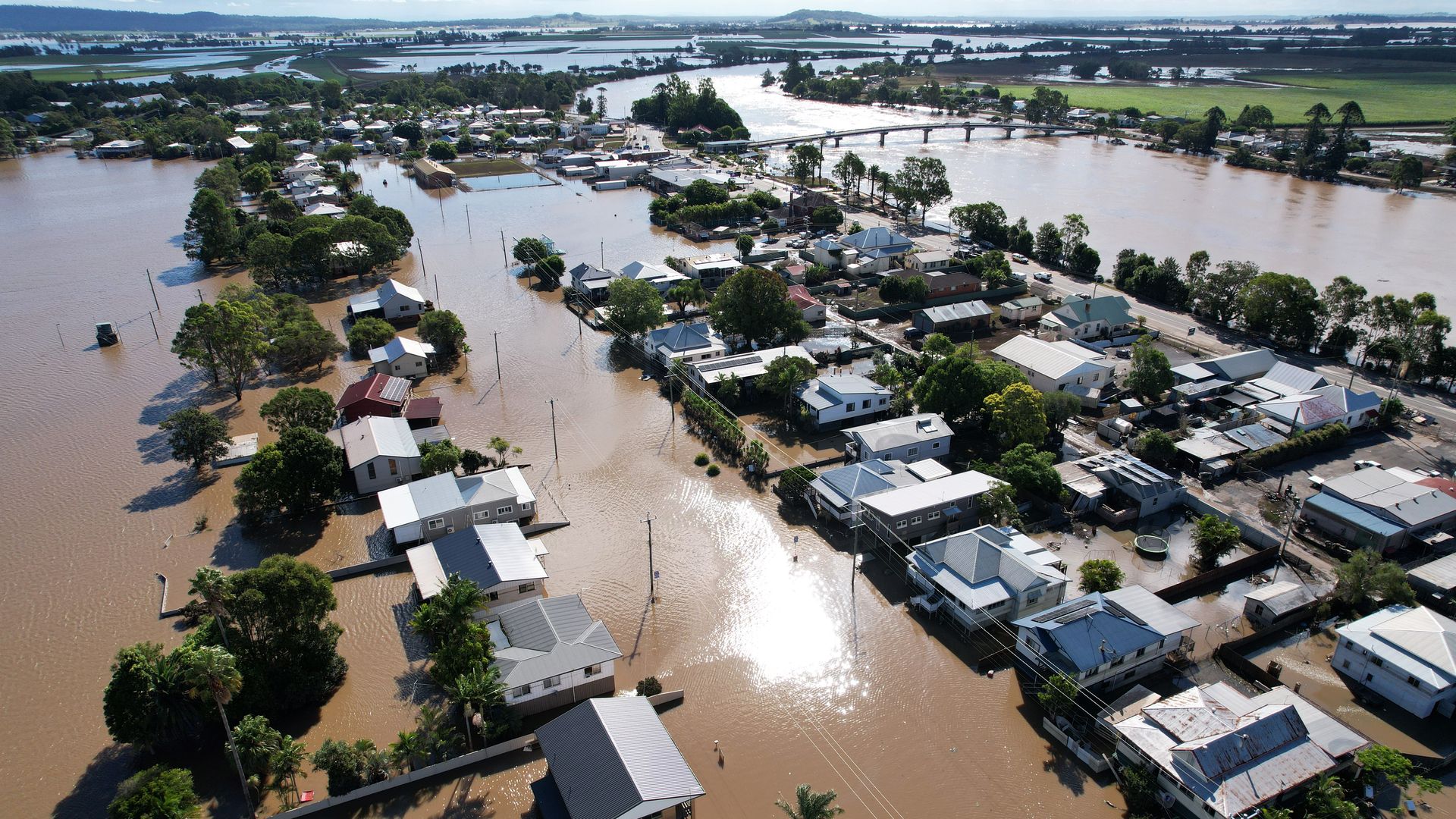
Australian Prime Minister Scott Morrison declared a national emergency Wednesday to speed up the delivery of aid to parts of the country's east coast that have been devastated by widespread, record floods for several weeks.
What they're saying: The national emergency declaration will "ensure all our emergency powers are available and that we cut through any red tape we might face in delivering services and support on the ground,” Morrison said in the press release.
The world's energy-related CO2 emissions reached an all-time high in 2021, according to new data released by the International Energy Agency.
Why it matters: The emissions rebound after the COVID-related economic downturn is another sign that the global economic recovery has not been a "green" or sustainable one.
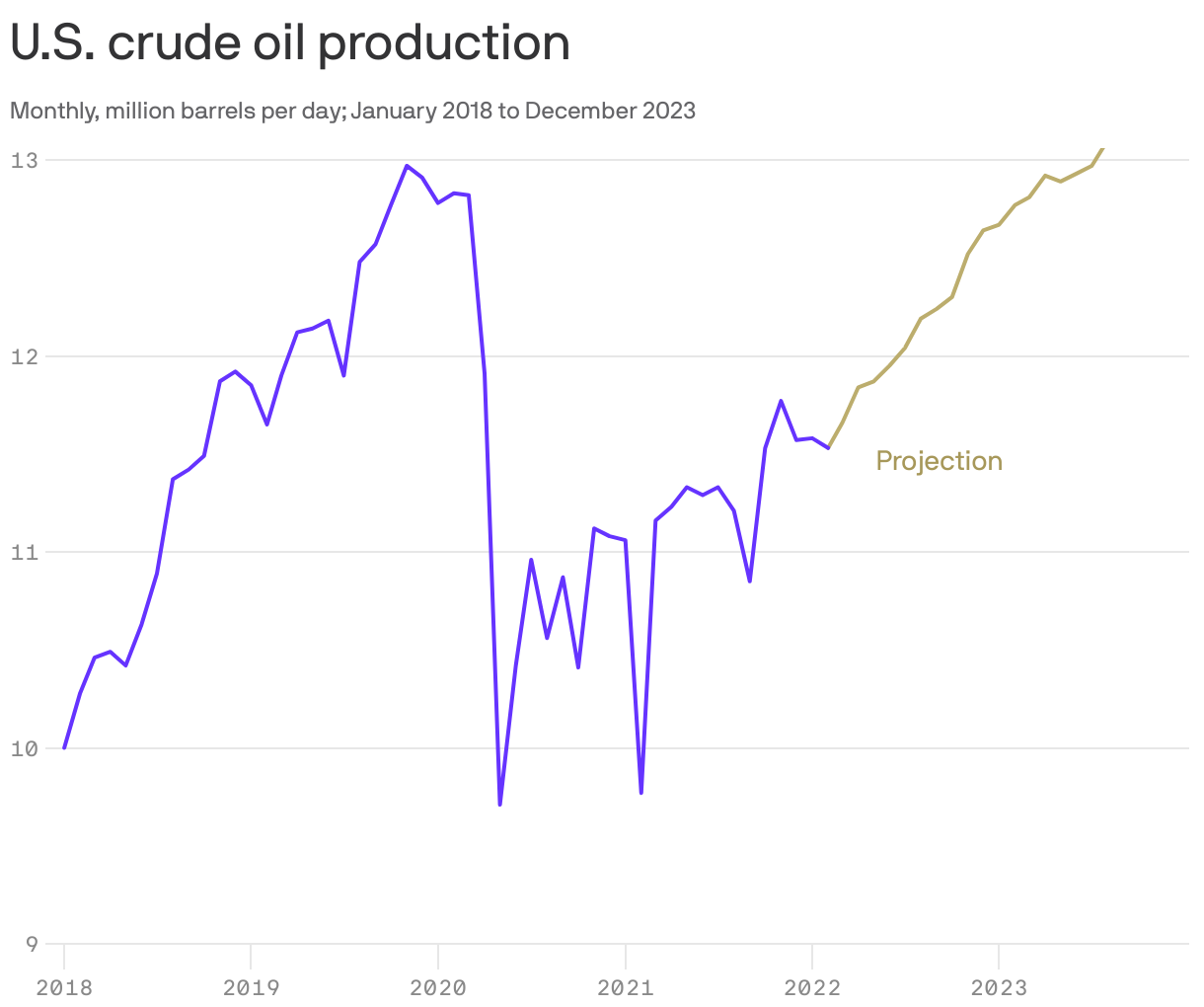
HOUSTON — One topic getting lots of attention at a huge energy industry conference here is whether U.S. oil production can grow even faster as western countries seek to isolate Vladimir Putin.
Driving the news: The U.S. Energy Information Administration just increased its 2023 U.S. production forecast to an average of 13 million barrels per day (mbd), up from 12.6 mbd in last month's projection.
HOUSTON — President Biden's ban on Russian oil imports has rather limited commercial effects, but carries symbolic weight and quickly entered domestic energy policy battles.
The big picture: The U.S. and EU commercial positions are very different. Russia provides significant amounts of oil to the U.S., but nowhere near the huge volumes it provides Europe.
The most important shifts — both substantive and symbolic — in the West's energy stance toward Russia unfolded Tuesday on both sides of the Atlantic.
The big picture: The European Union, long dependent on Russian oil and natural gas, unveiled plans to break that reliance for good — and with astonishing speed.
President Biden announced Tuesday that the U.S. will ban all imports of Russian oil, natural gas and coal in response to Vladimir Putin's invasion of Ukraine.
What he's saying: "We will not be part of subsidizing Putin’s war," Biden said. "The American people will deal another powerful blow to Putin's war machine."
HOUSTON — CEOsof multinational oil-and-gas giants Exxon and TotalEnergies gave remarks at a major industry gathering here that underscore Big Oil's differing diversification strategies across the Atlantic.
What they're saying: Exxon CEO Darren Woods touted Exxon's emphasis on carbon capture, hydrogen and biofuels.
The Biden administration is walking a tightrope when it comes to addressing the climbing price of gas in ways that square with the administration’s climate policies.
Driving the news: The White House is caught between the need to address the high price of gas, which Tuesday hit a national record, and its ambitious climate agenda.
The Department of Defense will permanently close a World War II-era bulk fuel storage facility in Hawaii that leaked petroleum into the local drinking water supply last year, Defense Secretary Lloyd Austin announced Monday.
Why it matters: Water samples from a Navy-operated well serving military families contained diesel fuel 350 times the safe level, and thousands of families had to temporarily move from their homes near Joint Base Pearl Harbor-Hickam because of the leak, according to the New York Times.
Driving the news: The record, which isn't adjusted for inflation, comes as Russia's unprovoked invasion of Ukraine continues to disrupt the markets and drive up energy costs.
Some 60,000 Sydney residents were under evacuation orders as heavy rains and flash flooding linked to climate change pummeled much of Australia's largest city on Tuesday, per Australian emergency services.
The big picture: The severe weather has lashed Australia's east coast since late last month, killing at least 20 people. An Australian Bureau of Meteorology official told a briefing Tuesday that Sydney faced a "tough" 48 hours due to heavy rains, and minor to major flooding was occurring from the state of Queensland's border to Victoria's.
SK Group is pouring $100 million into 8 Rivers Capital, which bills itself as “a full-service Net Zero solutions provider.” The move will also establish an 8 Rivers-SK joint venture that will focus on decarbonization in South Korea and other Asian markets.
Why it matters: The announcement reflects how major corporations are willing to spend big to find ways to decarbonize beyond renewables and storage.