TPG Rise invested in Monarch Bioenergy, a St. Louis-based renewable natural gas producer formed in 2018 by pork processor Smithfield Foods.
Why it matters: This is an effort to combat (and monetize) the immense amount of carbon emissions produced by animal farming, and also to cut down on the use of inorganic fertilizers.
The flooding in Australia is so extensive it's easy to spot via satellites.
Driving the news: Planet Labs captured the transformation of the environment in and around the deluged Gold Coast city of Coolangatta, Australia, from mid-February to early March.
HOUSTON — The twin crises of Vladimir Putin's war on Ukraine and climate change are putting an intense glare on the role of natural gas producers outside Russia in boosting Europe's energy security.
Driving the news: G7 energy ministers, in a statement Thursday, called on producers to put more supplies into global markets.
HOUSTON — President Biden's top environmental regulator just offered the most detailed revelations about EPA's strategy to slash CO2 and other pollution from power plants.
Why it matters: Power is the second-largest U.S. source of planet-warming gases. Rules are crucial to White House climate goals as Democrats' big clean energy legislation remains stuck.
Coal, the dirtiest of fossil fuels, is staging something of a comeback. Prices for the Australian benchmark are up about 60% since mid-February, as European power plants scour the globe for alternatives to pricey natural gas.
The big picture: Coal-fired electricity generation had been on the decline for a decade, to about 13% of Europe's mix in 2020, as power providers began phasing out the most carbon-heavy fuels. But Europe’s energy crisis, which kicked into high gear last year, is breathing new life into the coal market.
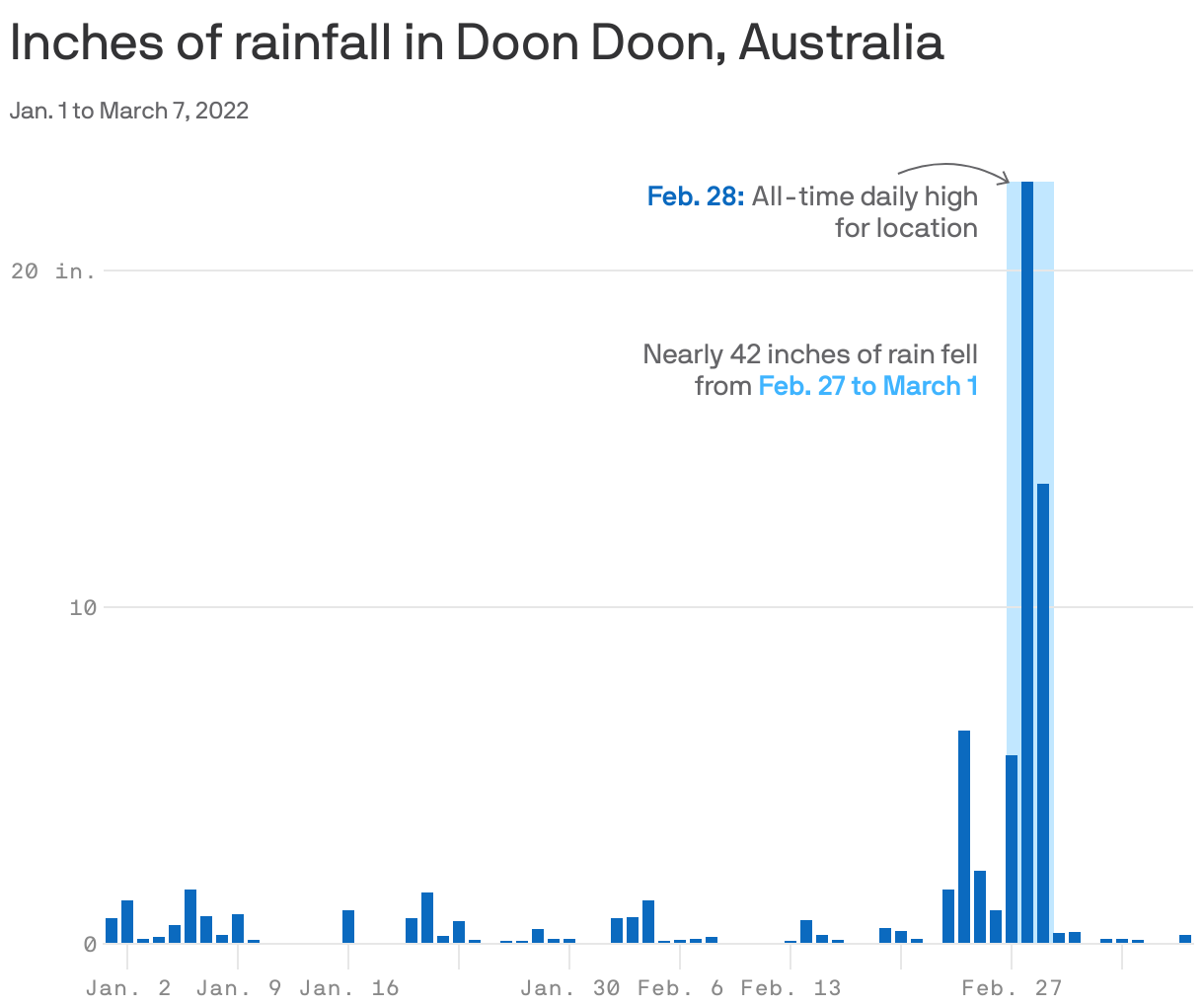
Data: Australia's Bureau of Meteorology; Chart: Jared Whalen/Axios
For more than two weeks, Australia’s east coast has been inundated by a series of rainstorms so severe they’ve earned a foreboding moniker fit for today’s supercharged weather, “rain bombs.”
Threat level: So far, at least 22 people have perished in the floods, and tens of thousands have been forced to evacuate their homes.
If there is a saving grace in this new world of $110 per barrel oil, it is that petroleum products play a less significant role in the U.S. economy than they did during the oil shocks of the 1970s, or even the price spikes of 2008.
Driving the news: Energy represented 4.2% of Americans' personal consumption expenditures in January, before the recent price surge. It was nearly 7% in the summer of 2008.
HOUSTON — Geothermal energy is hot these days, despite supplying a tiny share of global power, as startups employing sophisticated technologies are attracting significant venture capital.
What they're saying: Tim Latimer, CEO of the startup Fervo Energy, chatted with Axios at a major energy conference here.
HOUSTON — Energy Secretary Jennifer Granholm was by turns defiant and solicitous in remarks to oil-and-gas executives here as she called for cooperation on supply increases and the clean energy transition.
Why it matters: Her speech on Wednesday at the CERAWeek by S&P Global conference is part of a push for faster domestic output growth as Russia's war on Ukraine crimps supply, but without — so far — backing off policies the industry calls restrictive.



/2022/03/11/1647010768261.gif?w=3840)