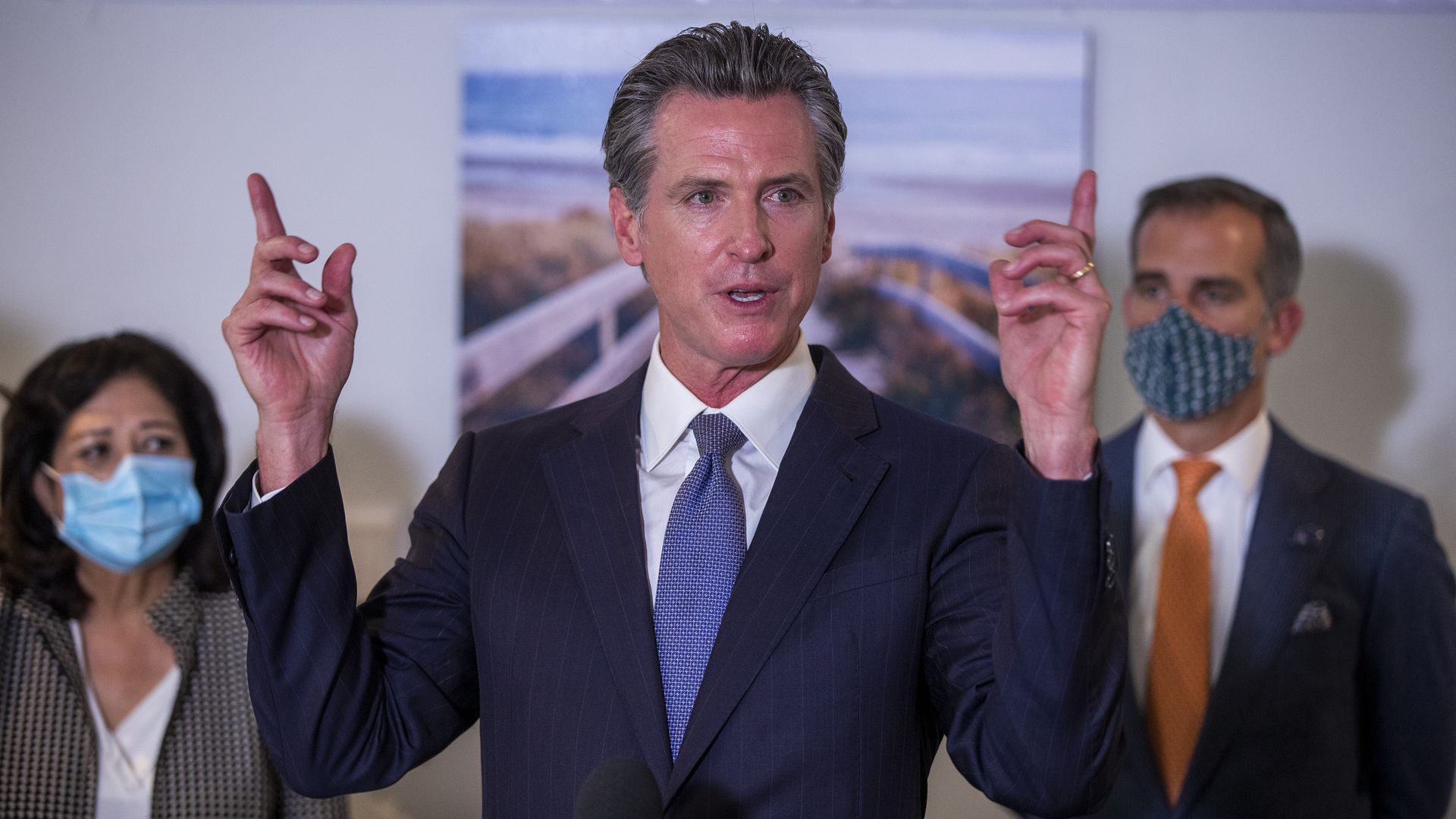
A top U.S. financial coordinating organization took several steps on Thursday to manage the growing risks that climate change poses to the U.S. financial system.
Why it matters: While the Biden administration has been taking an all-of-government approach to climate change, like factoring climate risk into planning at the Treasury Department, today's moves by the politically independent Financial Stability Oversight Council (FSOC) carry significant weight.
Here's a sign of how tough it'll be to win new emissions-cutting moves at COP26: Big developing nations are refusing to commit to net-zero emissions by 2050.
Driving the news: That's spelled out in a new statement from countries including China, the biggest greenhouse gas emitter by far, as well as India and Indonesia.
Data: FactSet and company release; Chart: Will Chase/Axios
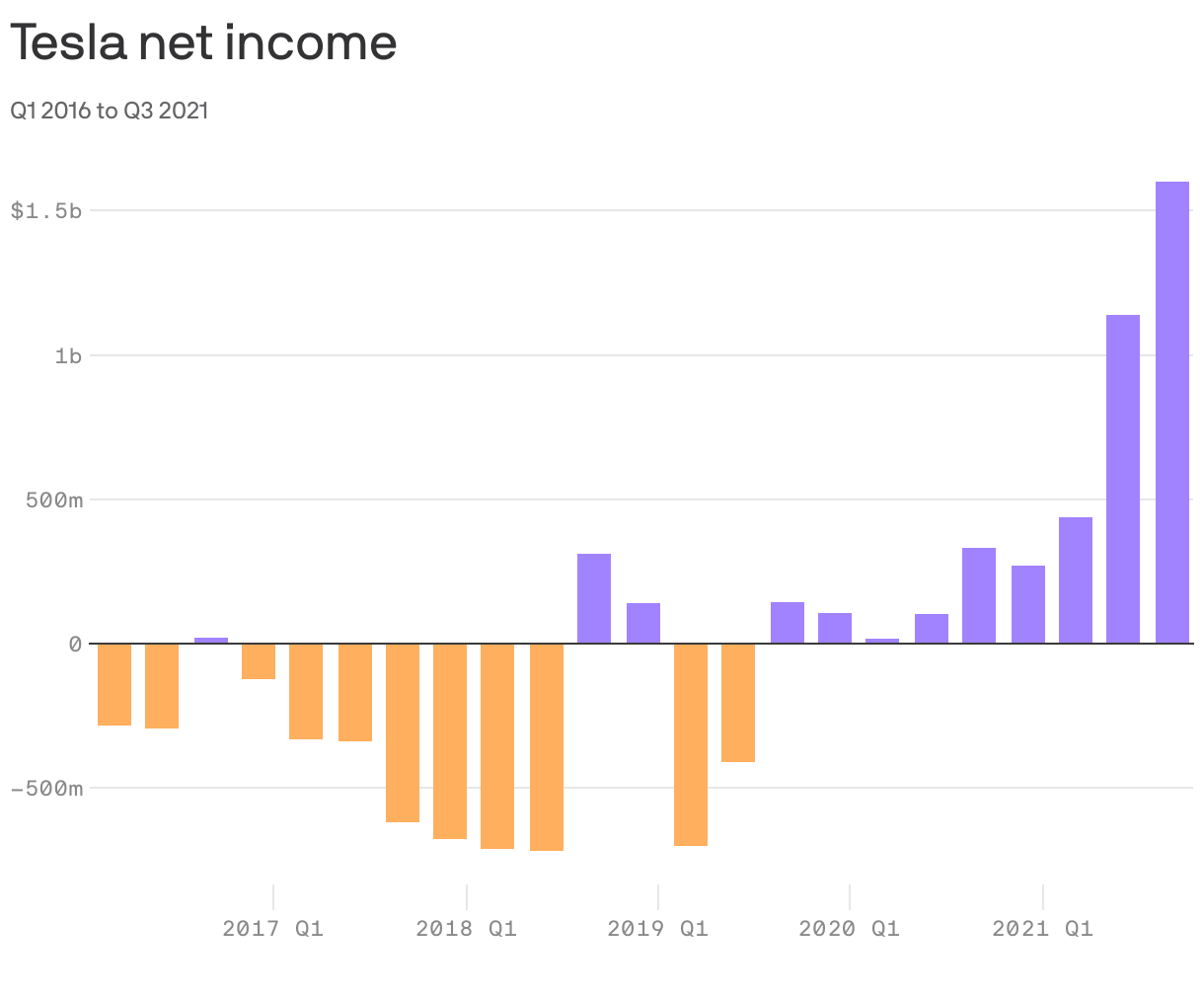
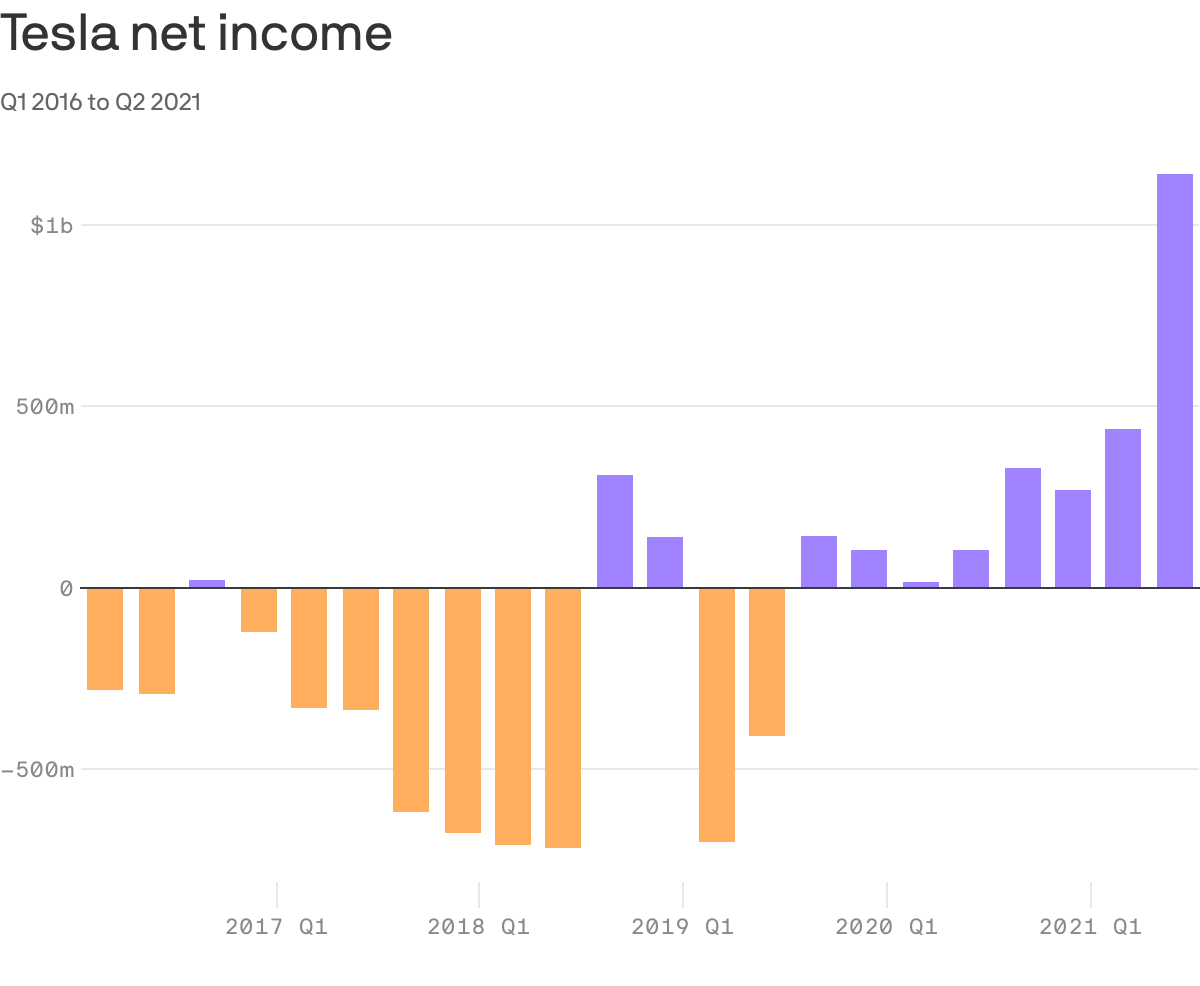
Tesla, citing a "structural shift" in demand for electric vehicles, reported its highest-ever quarterly profit of $1.6 billion and $13.8 billion in revenues despite supply chain problems.
The big picture: The company's third-quarter report says the chip shortage, port congestion and other woes have affected its factories but argues that "flexibility" and "ingenuity" are a counterweight.
The Biden administration on Thursday released a sweeping set of assessments on climate change's threat to national security and its role in fueling migration.
Why it matters: One of the key products, a formal National Intelligence Estimate on climate change, marks the first time all 18 elements of the U.S. intelligence community have released a consensus report on the topic.
Almost every week, another major automaker announces a billion-dollar-plus investment in battery manufacturing, and with it, thousands of new American jobs.
Why it matters: Eyeing President Biden's climate agenda, carmakers are racing to create a domestic battery supply chain to support their aggressive rollout of electric vehicles by the end of the decade.
Climate change is creating ideal conditions for infectious diseases to spread more quickly, according to The Lancet Countdown's annual climate report out Wednesday.
Why it matters: It's just one of the increasingly urgent threats to human health emerging from global climate change.
These events have had serious impacts on the health of entire regions and the vulnerable causing preventable deaths, food and water insecurity and the spread of infectious diseases.
New Zealand passed a "world-first" law requiring financial institutions to disclose and act on climate change impacts concerning their businesses, officials announced Thursday.
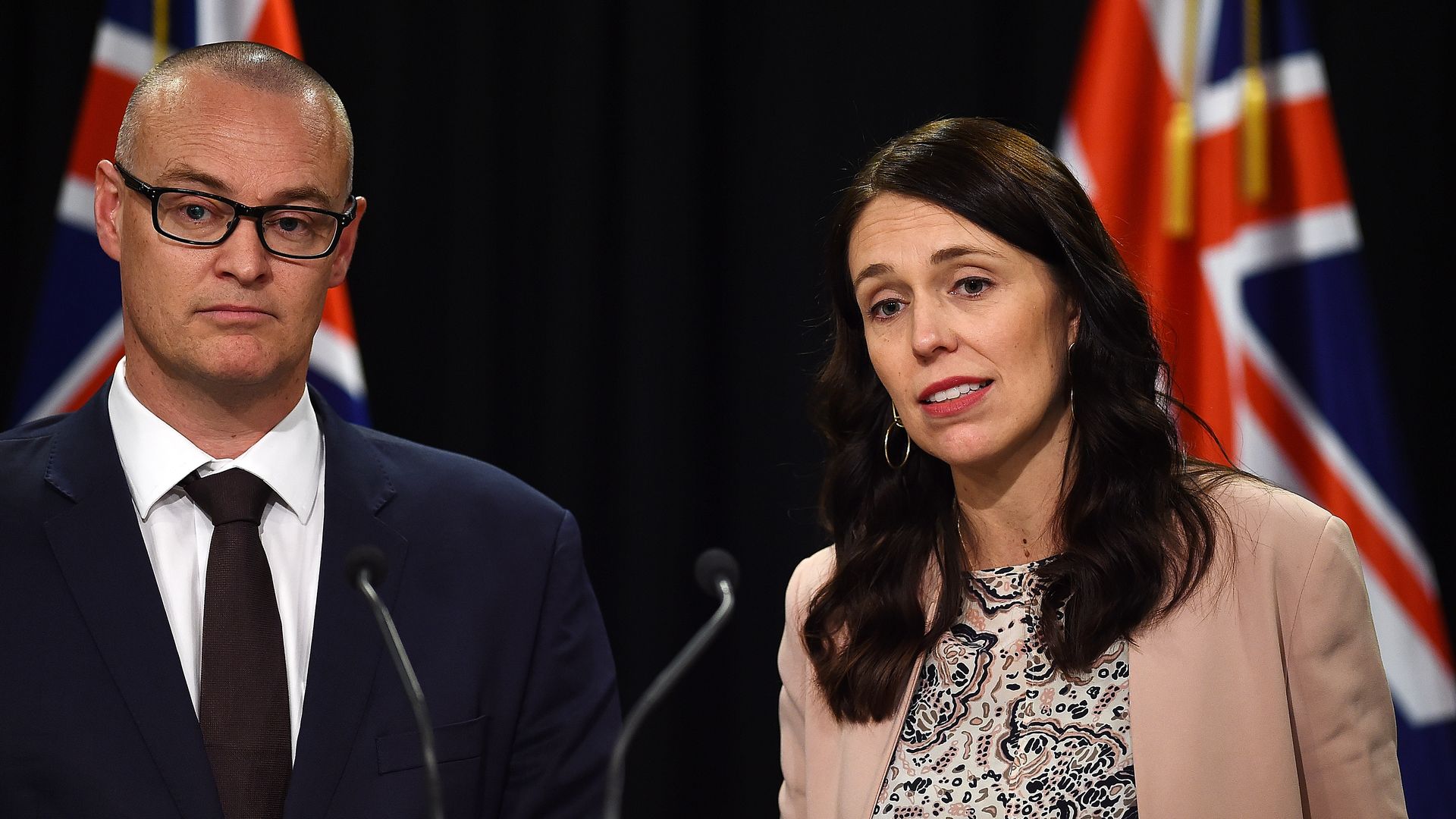
Why it matters: About 200 of the "largest financial market participants in New Zealand" will have to "disclose clear, comparable and consistent information about the risks, and opportunities, climate change presents to their business," per a statement from commerce and consumer affairs minister David Clark.
The Kremlin said Wednesday that Russian President Putin will not travel to the United Nations climate summit that starts in Glasgow, Scotland, on Oct. 31 but will take part remotely while other representatives attend in person, according to Reuters.
Why it matters: A lack of a physical appearance from the leader of the fourth largest carbon dioxide-emitting country in the world would be a blow to the crucial climate talks.
Data: FactSet and company release; Chart: Will Chase/Axios
Tesla is likely on track for another strong earnings report after logging record deliveries as the company appears to be weathering the storm of the global chip shortage.
What's next: The electric automaker will report third-quarter earnings this evening after markets close.
A United Nations report warns that governments and fossil fuel companies are planning levels of oil, natural gas and coal production that are "dangerously out of sync" with holding global warming in check.
Driving the news: "[T]he world’s governments still plan to produce more than double the amount of fossil fuels in 2030 than would be consistent with limiting global warming to 1.5°C, and 45% more than consistent with limiting warming to 2°C," it states.
What is a White House to do when it is stuck between slow-moving climate legislation and a fast-approaching climate summit where its credibility is on the line? Unveil a new White House climate website, of course, showcasing its actions to date as well as ongoing work.
Why it matters: The Biden administration, which shared the site first with Axios, focuses it around the actions taken by the White House National Climate Task Force.
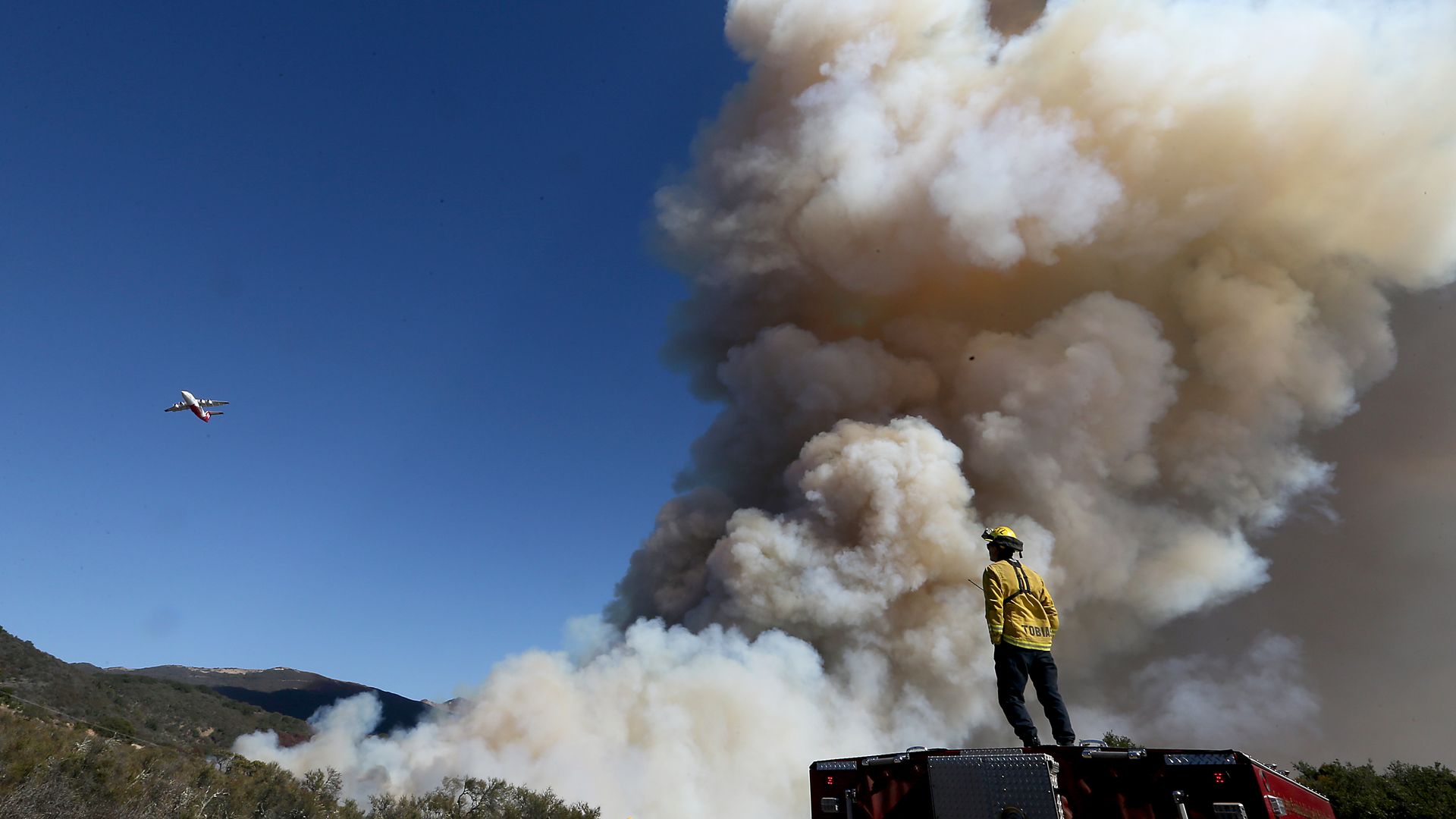
Why it matters: "California is experiencing its worst drought since the late 1800s, as measured by both lack of precipitation and high temperatures," per a statement from the governor's office. This past August was the driest and hottest one on record, "and the water year that ended last month was the second driest on record," the statement added.











/2021/10/20/1634734881152.gif?w=3840)