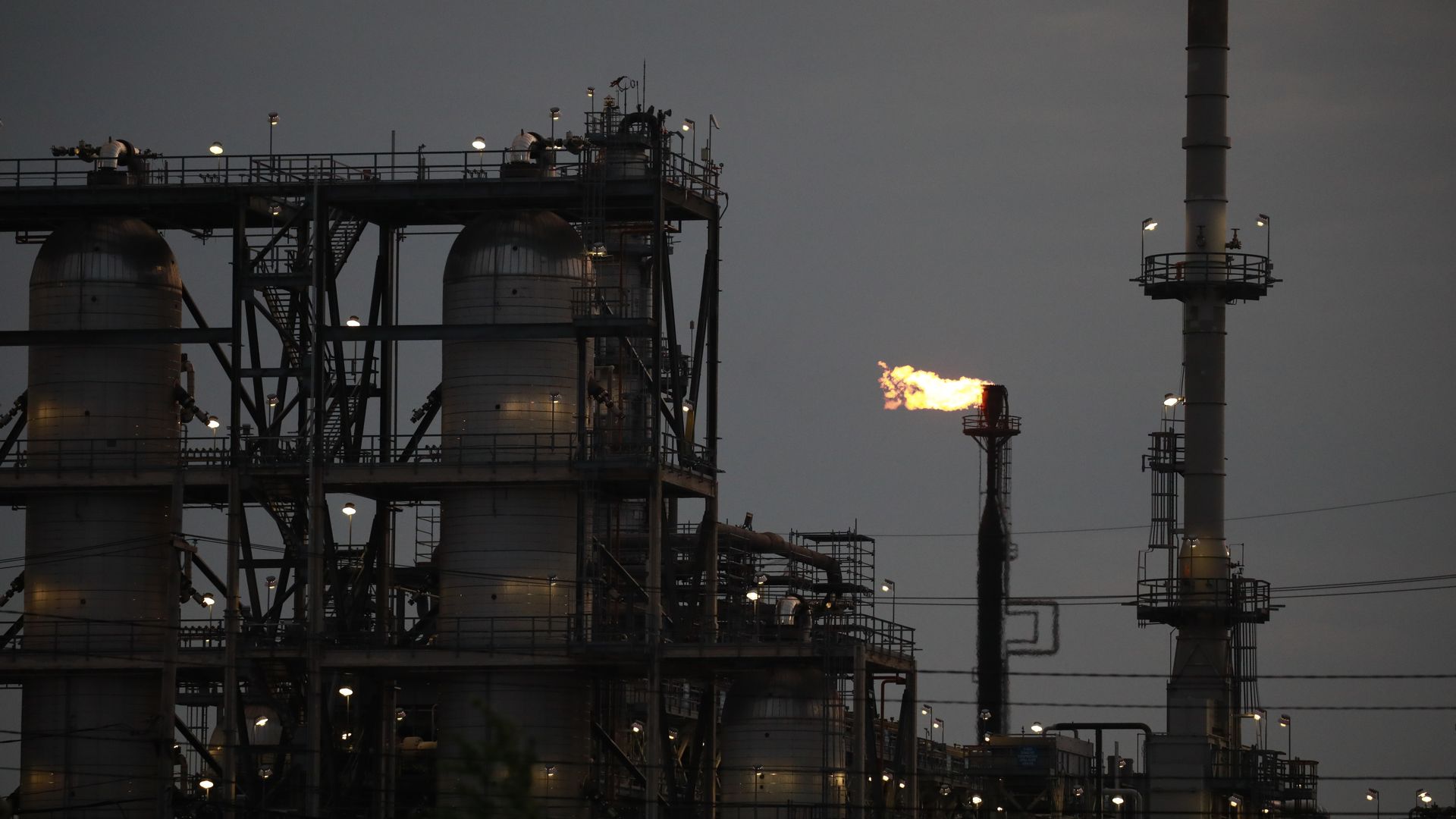
The House Committee on Oversight and Government Reform announced on Friday it will hold a "landmark" hearing next week with fossil fuel executives focused on the industry's role in spreading climate disinformation.
Why it matters: This is the first time oil company CEOs, and the head of their main trade group, will testify under oath about their knowledge of the link between burning fossil fuels and climate change, per Axios' Andrew Freedman.
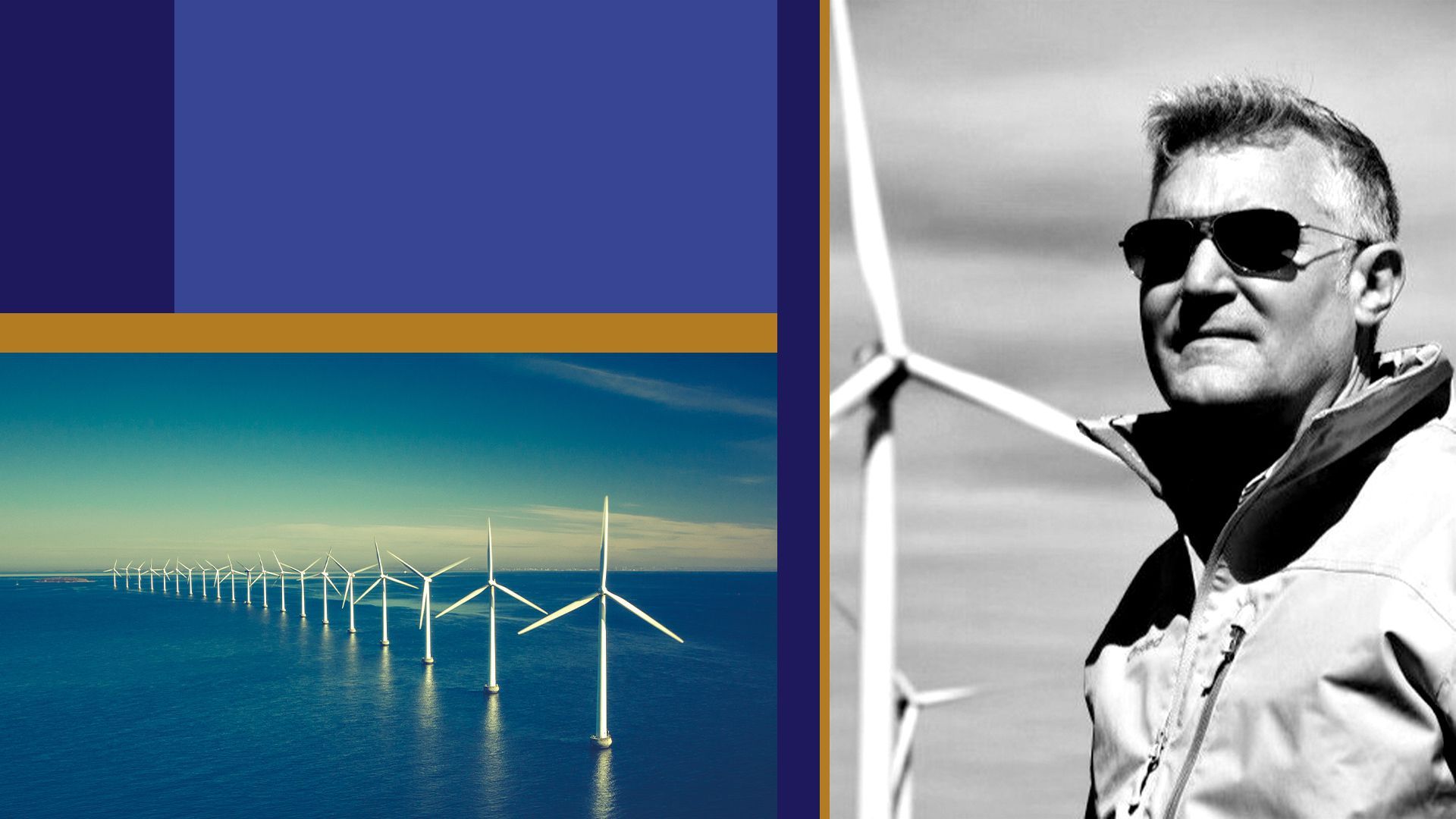
Global offshore wind heavyweight Ørsted already sees a regulatory sea-change under President Biden, but also says Congress has an important role to play.
Why it matters: A number of companies are planning to build what will be the first large-scale U.S. offshore projects.
The World Bank and International Monetary Fund are out with fresh warnings about the energy commodity run-up, but both also see some relief ahead.
Driving the news: The IMF, in a post on Thursday, projects prices will moderate in the coming months, but also says, "uncertainty remains high and small demand shocks could trigger fresh price spikes."
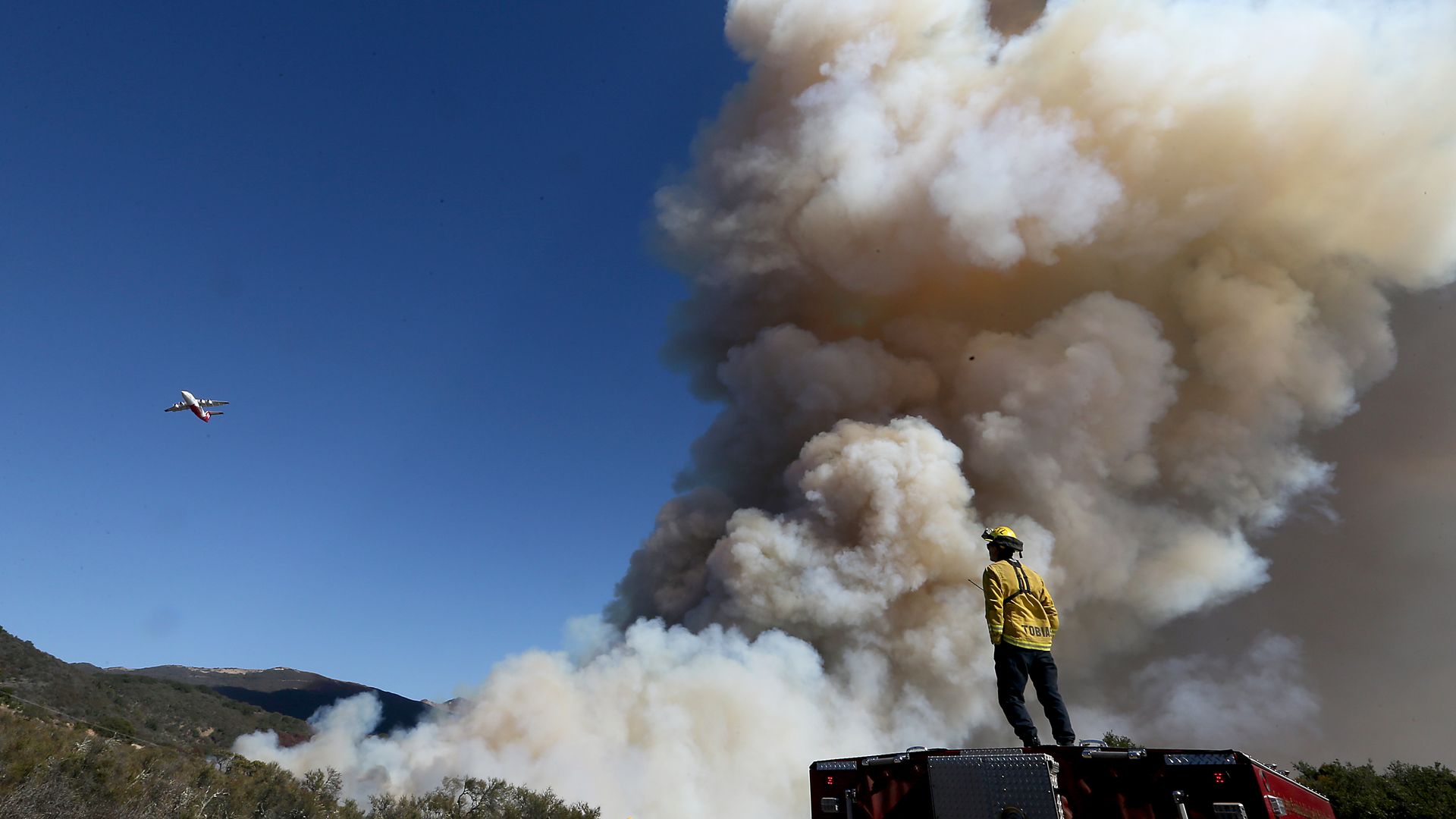
Terrafuse AI, a climate and weather risk forecasting developer, launched a free public tool Thursday, known as Wildfire AI, that provides predictive modeling to track the changing risks of wildfires.
Why it matters: Climate change and land use are leading to a huge increase in the risk of large wildfires in the West, especially California, posing challenges for the insurance industry and homeowners.
This week, I spent two glorious fall days evaluating dozens of cars, trucks and SUVs on the roads near Ann Arbor, Michigan, to determine the best of the best.
Why it matters: The annual comparison drive brings together 50 professional automotive journalists from the U.S. and Canada who are jurors for the independent North American Car, Truck and Utility Vehicle of the Year awards.
A top U.S. financial coordinating organization took several steps on Thursday to manage the growing risks that climate change poses to the U.S. financial system.
Why it matters: While the Biden administration has been taking an all-of-government approach to climate change, like factoring climate risk into planning at the Treasury Department, today's moves by the politically independent Financial Stability Oversight Council (FSOC) carry significant weight.
Here's a sign of how tough it'll be to win new emissions-cutting moves at COP26: Big developing nations are refusing to commit to net-zero emissions by 2050.
Driving the news: That's spelled out in a new statement from countries including China, the biggest greenhouse gas emitter by far, as well as India and Indonesia.
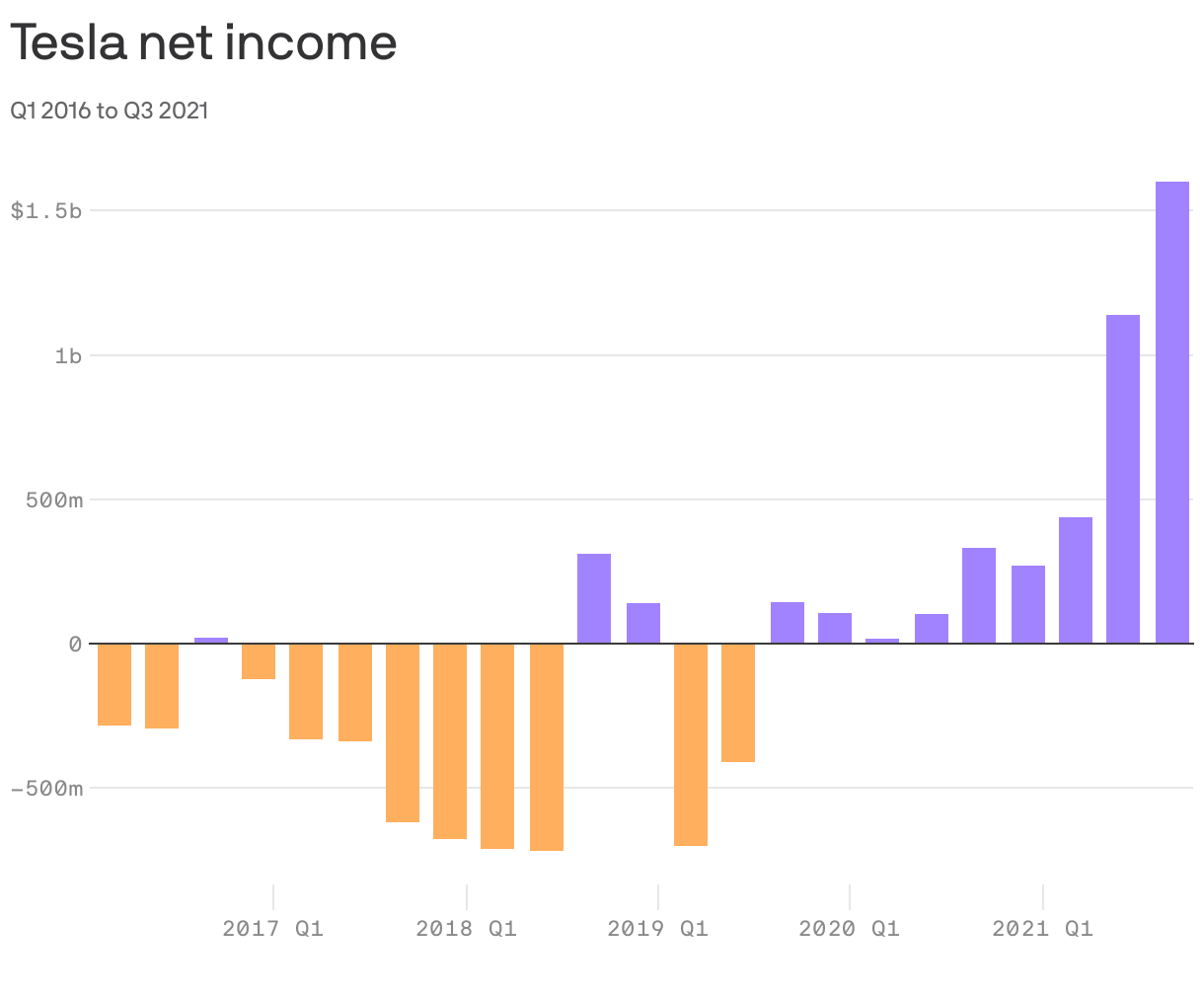
Data: FactSet and company release; Chart: Will Chase/Axios
Tesla, citing a "structural shift" in demand for electric vehicles, reported its highest-ever quarterly profit of $1.6 billion and $13.8 billion in revenues despite supply chain problems.
The big picture: The company's third-quarter report says the chip shortage, port congestion and other woes have affected its factories but argues that "flexibility" and "ingenuity" are a counterweight.
The Biden administration on Thursday released a sweeping set of assessments on climate change's threat to national security and its role in fueling migration.
Why it matters: One of the key products, a formal National Intelligence Estimate on climate change, marks the first time all 18 elements of the U.S. intelligence community have released a consensus report on the topic.
Almost every week, another major automaker announces a billion-dollar-plus investment in battery manufacturing, and with it, thousands of new American jobs.
Why it matters: Eyeing President Biden's climate agenda, carmakers are racing to create a domestic battery supply chain to support their aggressive rollout of electric vehicles by the end of the decade.
Climate change is creating ideal conditions for infectious diseases to spread more quickly, according to The Lancet Countdown's annual climate report out Wednesday.
Why it matters: It's just one of the increasingly urgent threats to human health emerging from global climate change.
These events have had serious impacts on the health of entire regions and the vulnerable causing preventable deaths, food and water insecurity and the spread of infectious diseases.
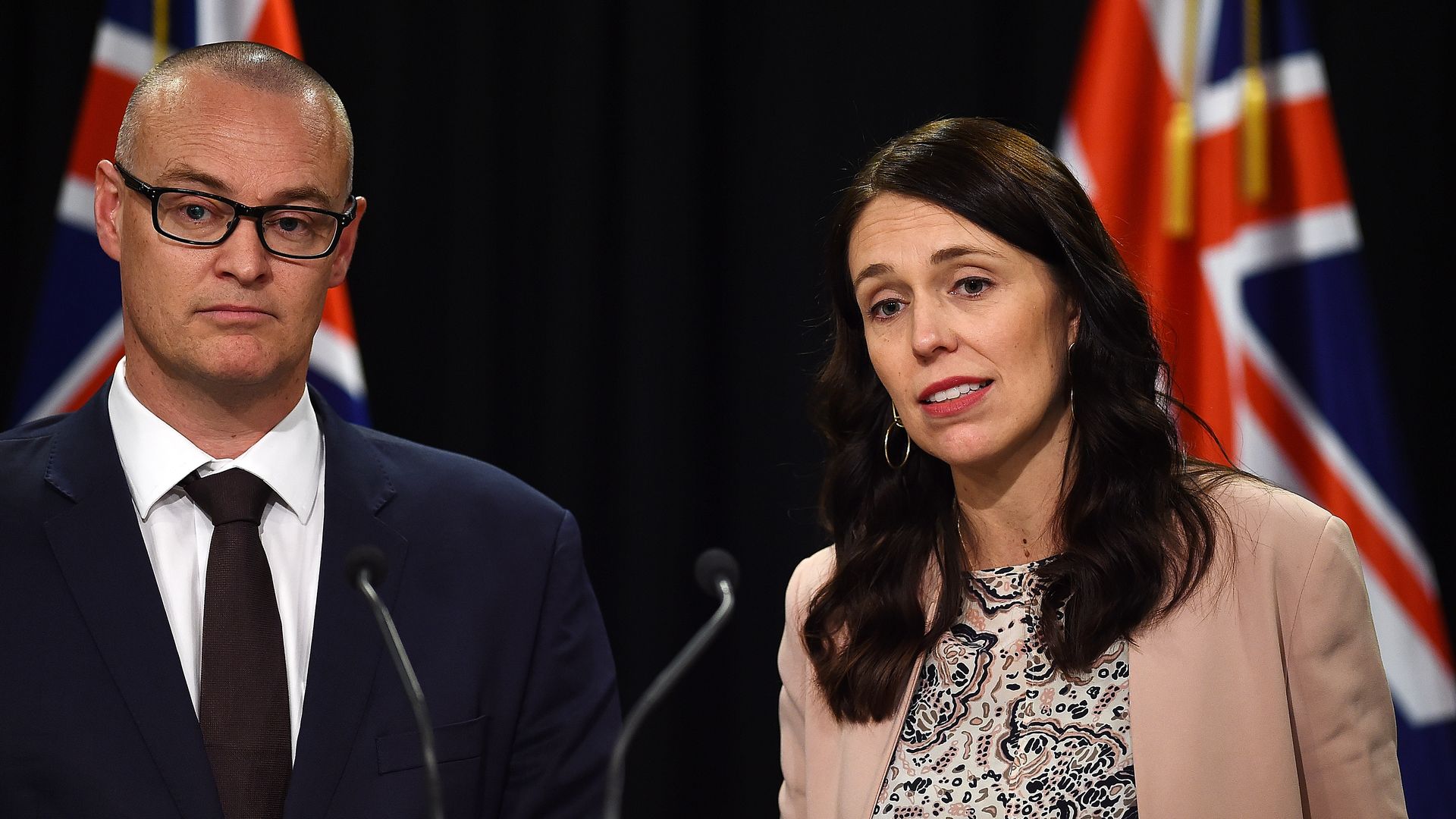
New Zealand passed a "world-first" law requiring financial institutions to disclose and act on climate change impacts concerning their businesses, officials announced Thursday.
Why it matters: About 200 of the "largest financial market participants in New Zealand" will have to "disclose clear, comparable and consistent information about the risks, and opportunities, climate change presents to their business," per a statement from commerce and consumer affairs minister David Clark.

/2021/10/22/1634907890258.gif?w=3840)