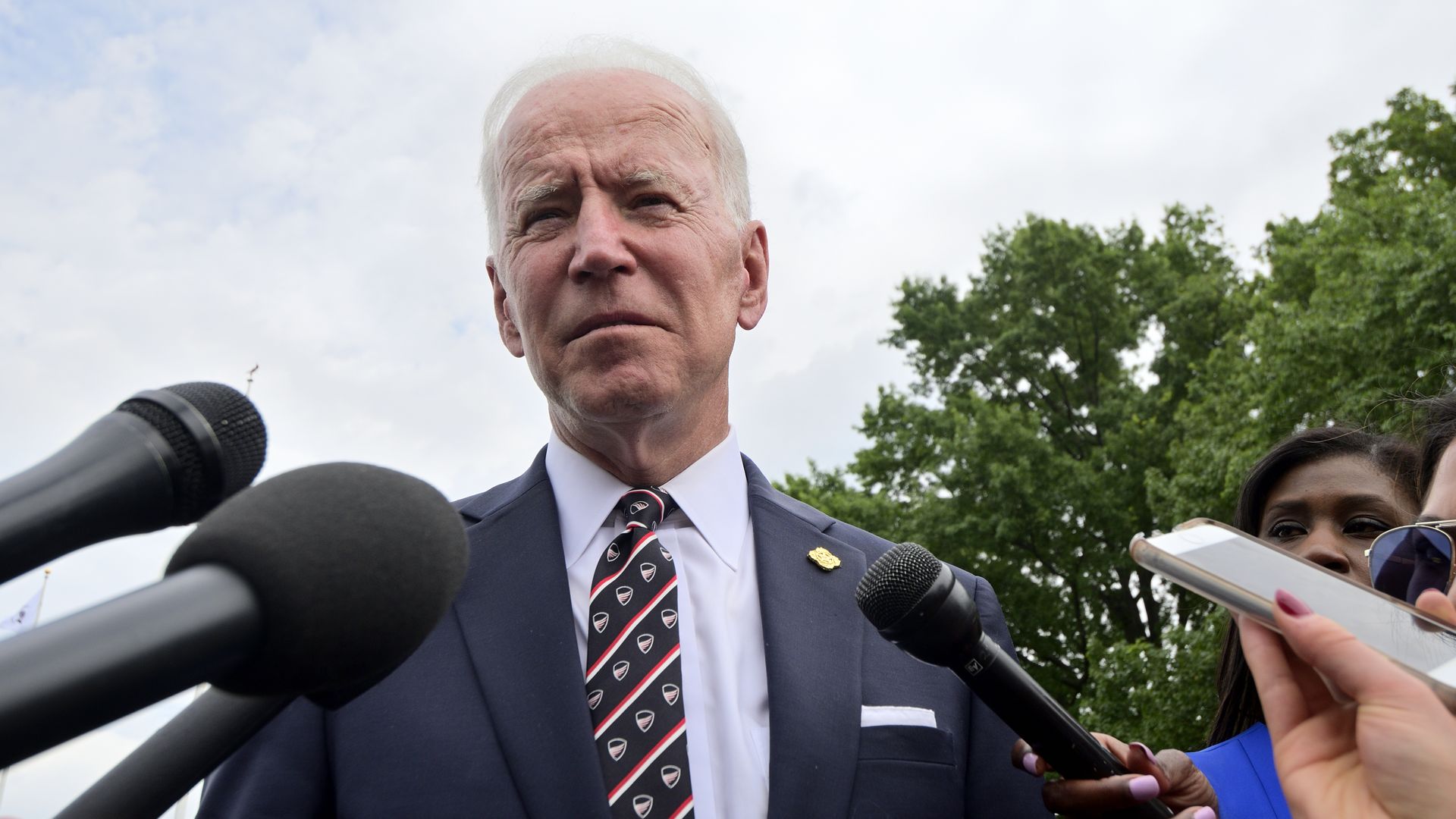
Why it matters: This is not Biden's first plagiarism blunder. His 1988 run for the White House came to a close after it was revealed that segments of a speech had been lifted. Biden also admitted to copying a law school paper, according to AP.
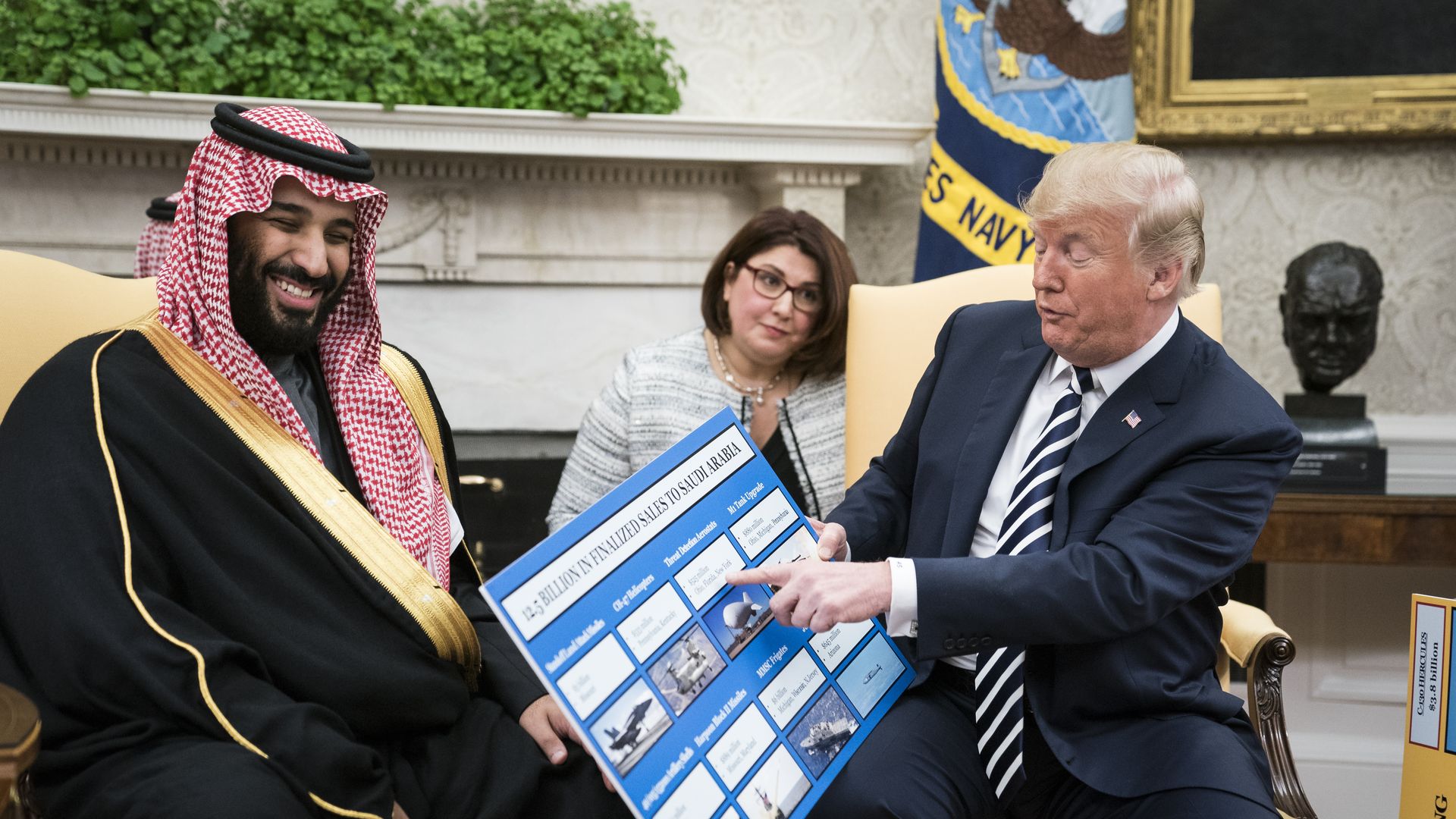
The Department of Energy approved the transfer of nuclear information from U.S. companies to Saudi Arabia seven times under President Trump, including twice after the assassination of Washington Post journalist Jamal Khashoggi by the Saudi government, according to a statement from Sen. Tim Kaine (D-Va.).
Details: The transfer of nuclear technical expertise overseas must be approved by the DOE in consultation with the State Department and other government bodies "to protect against the proliferation of nuclear weapons programs," according to Kaine. Following demands from the Senate Foreign Relations Committee, the Trump administration revealed that it approved one such transfer on Oct. 18, 2018 — 16 days after Khashoggi's death — and another on Feb. 18, 2019.
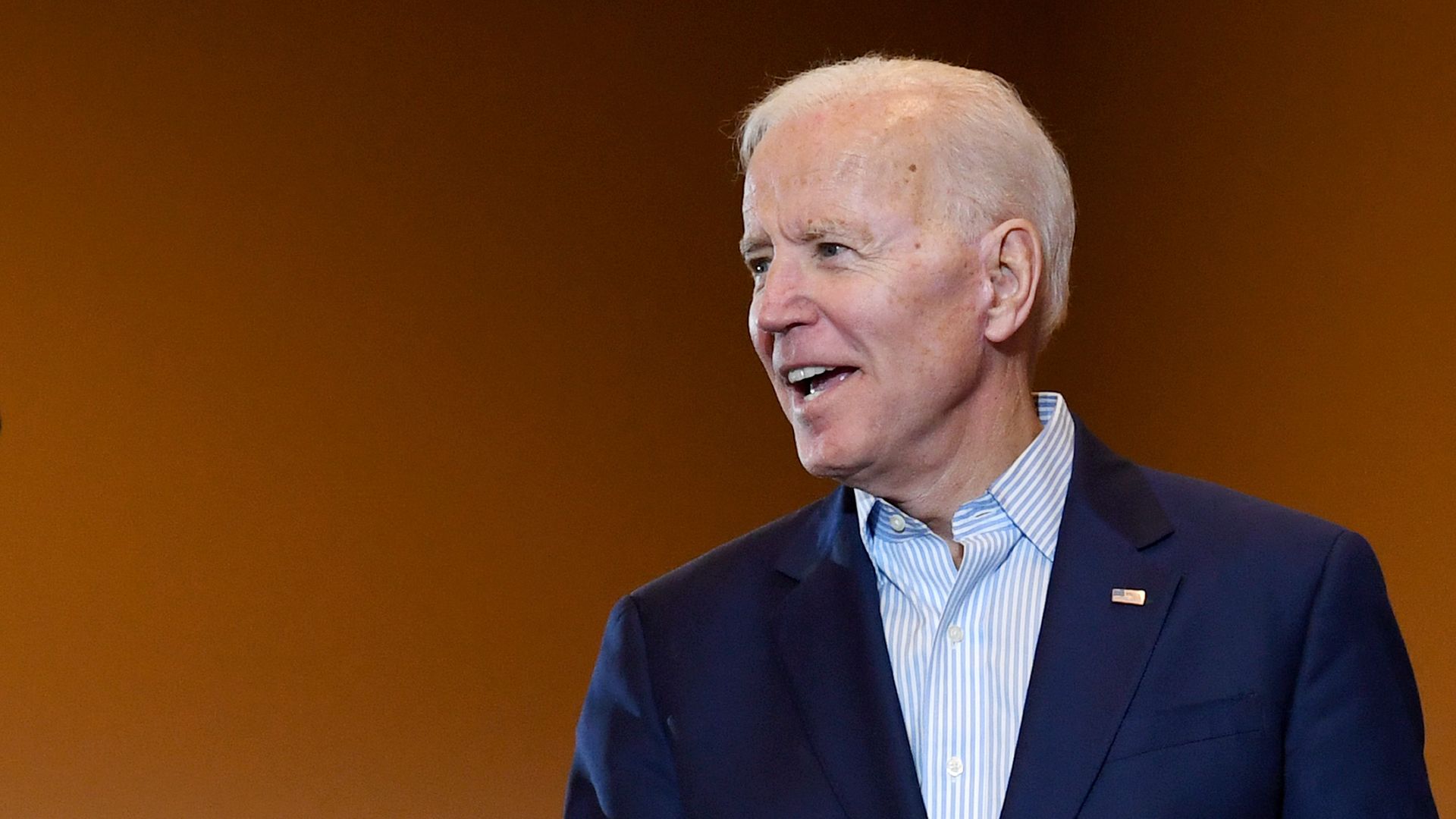
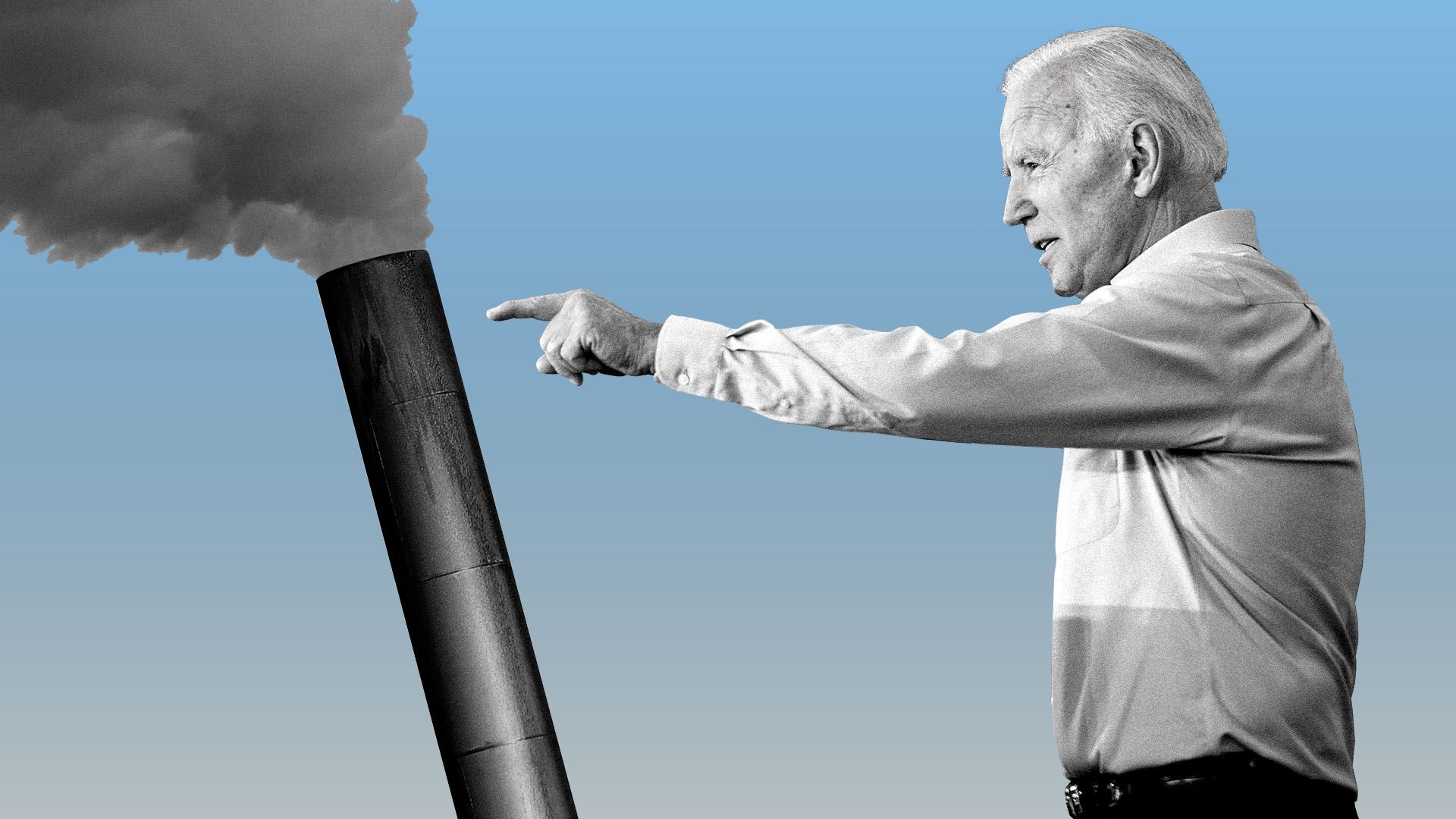
Former Vice President Joe Biden has released a climate and energy plan with the goal of achieving net-zero U.S. greenhouse gas emissions no later than 2050.
Why it matters: As the race for 2020 heats up, climate change has emerged as a key issue for primary voters — with many of Biden's competitors putting climate policy front and center. In a CNN poll released in April, 96% of Democrats and Democratic-leaning independents said it's very or somewhat important for a presidential candidate to promise aggressive action on climate change.
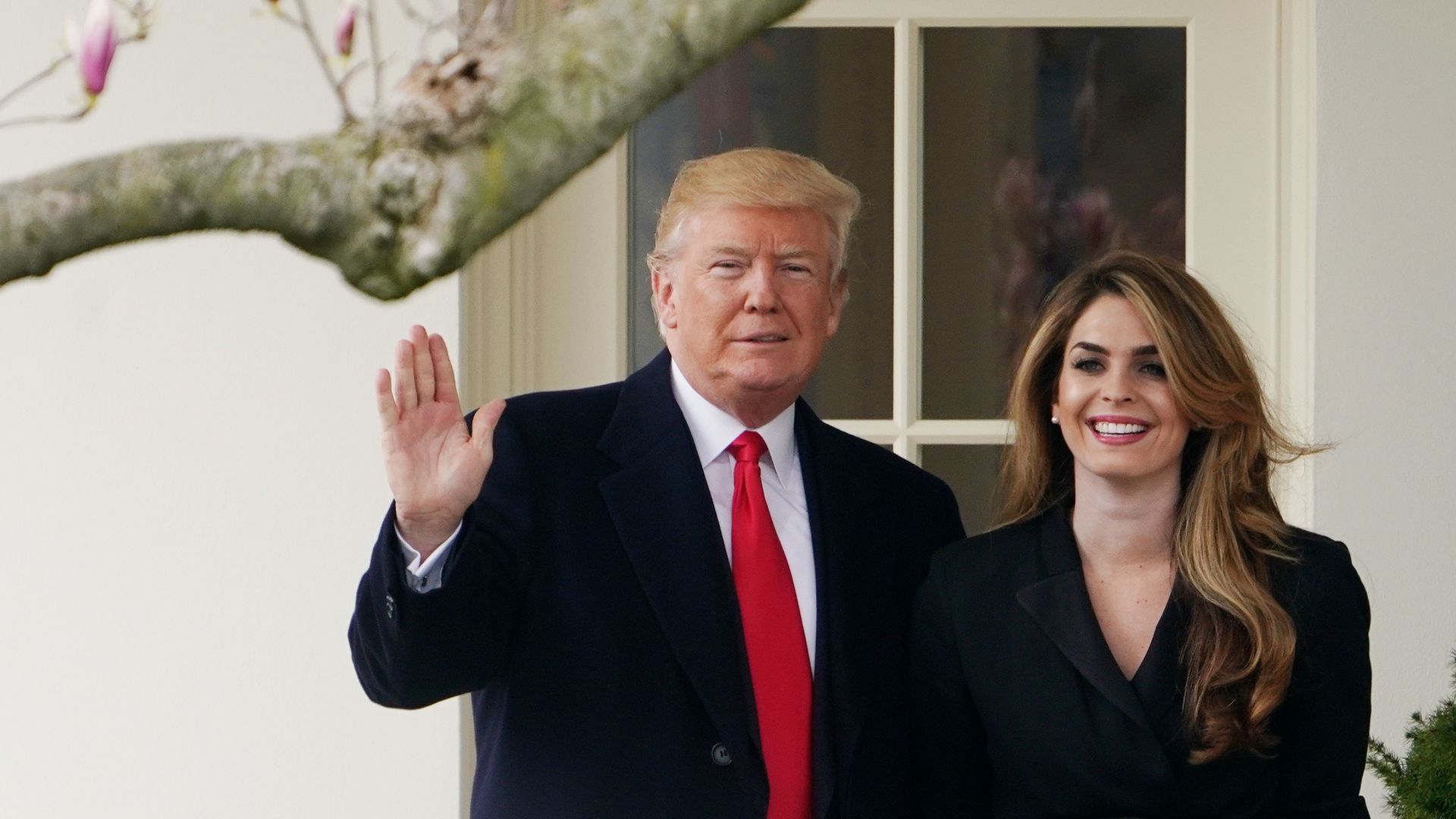
The White House has instructed former communications director Hope Hicks and former deputy counsel Annie Donaldson not to turn over documents related to their time in the administration, rebuffing subpoenas from the House Judiciary Committee, CNN first reported and Chairman Jerry Nadler later confirmed.
Why it matters: Majority Leader Steny Hoyer announced Monday that the House would vote on June 11 on a contempt resolution for Don McGahn, the former White House counsel, and Attorney General Bill Barr for refusing to comply with subpoenas. It's possible that Hicks and Donaldson could be bundled into that resolution as well, as Democrats look to enforce their subpoenas.
The consultancy IHS Markit forecasts that fully electric SUVs of different stripes (especially little ones) are going to start taking off in coming years.
The monthly peak amount of carbon dioxide in the Earth's atmosphere in 2019 jumped by a near-record amount to reach 414.8 parts per million (ppm) in May, which is the highest level in human history and likely the highest level in the past 3 million years.
Why it matters: Carbon dioxide is the most important long-lived greenhouse gas, with a single molecule lasting in the air for hundreds to around 1,000 years. The continued buildup of carbon dioxide due to human activities, such as burning fossil fuels for energy, is driving global temperatures up and instigating harmful impacts worldwide.
Joe Biden unveiled a wide-ranging climate and energy platform for his 2020 campaign Tuesday, vowing to go "well beyond" President Obama's policies at a time when he's facing skepticism on the left.
The big picture: It calls for achieving net-zero U.S. greenhouse gas emissions no later than 2050. That top-level goal is within range of Jay Inslee's detailed plan, which calls for net-zero "as fast as possible" and by 2045 at the latest.
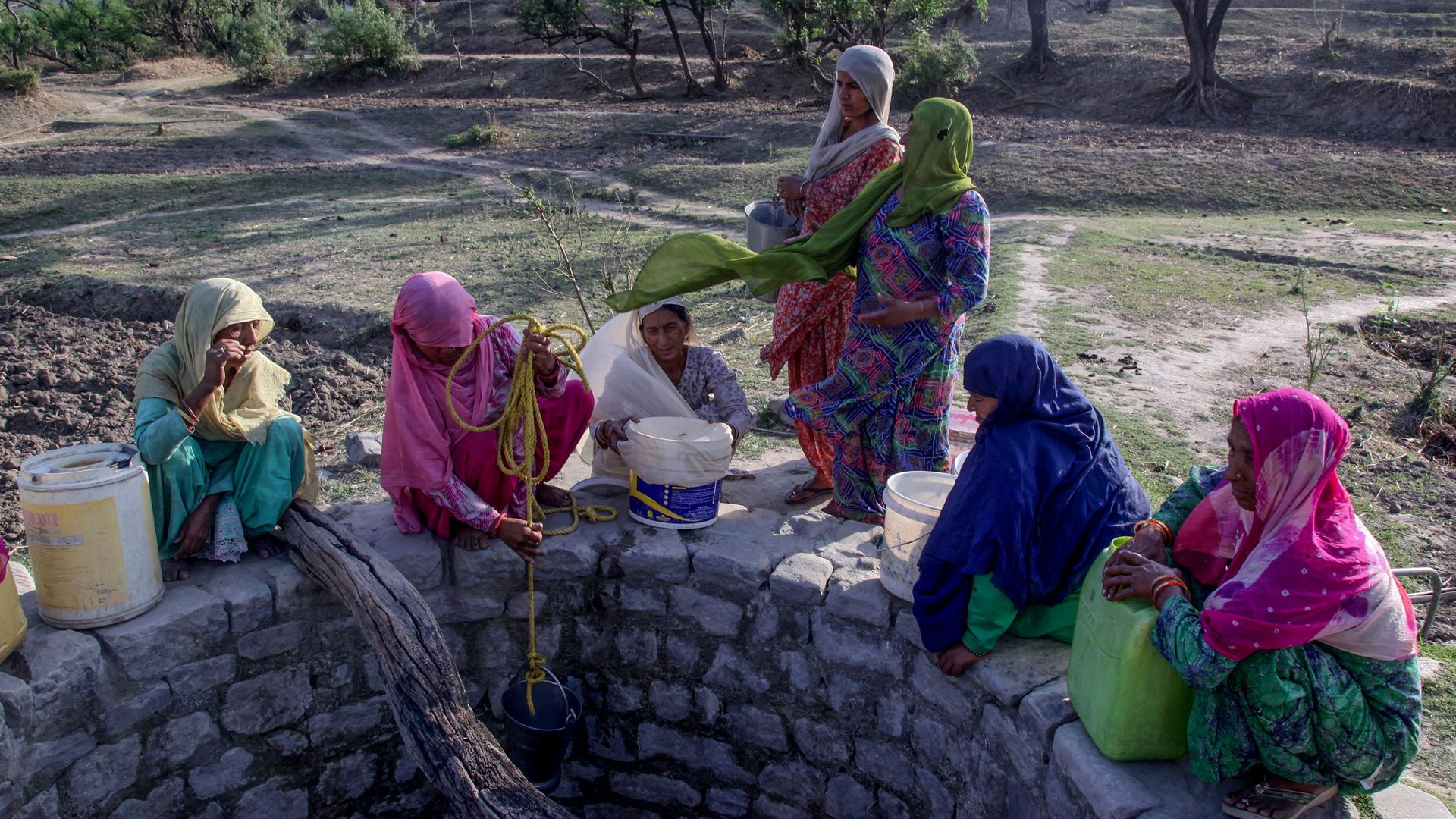
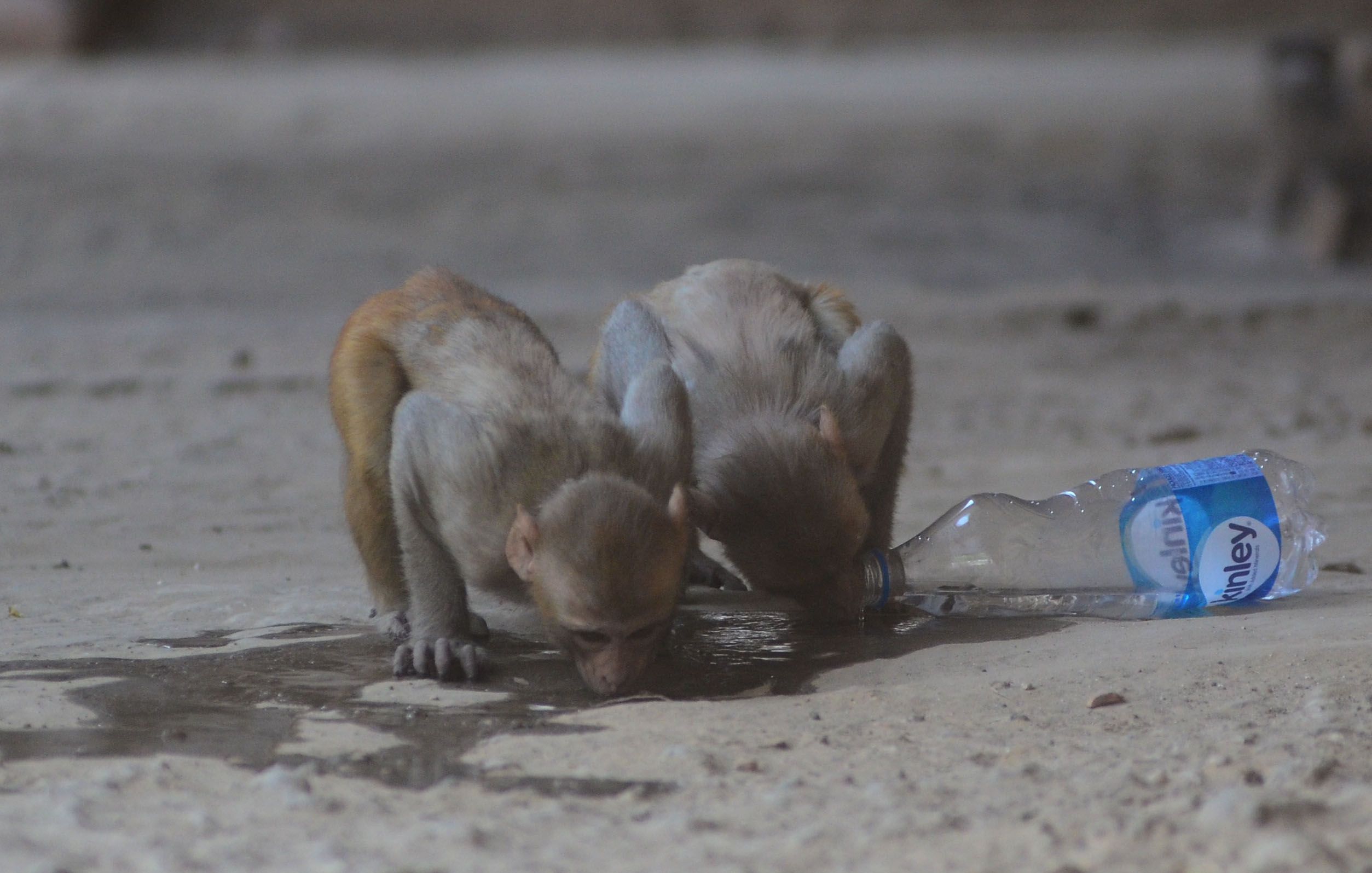
India is in the grip of a deadly heat wave that's caused water shortages in many places. Searing temperatures of up to 123°F were recorded in the city of Churu in the northern Indian plains — the location of 10 of the 15 hottest places in the world during the weekend.
The big picture: The India Meteorological Department warns sweltering conditions are set to continue across much of the country for the next few days, prompting the Health Ministry to issue an advisory. These images show the heat wave's impact.
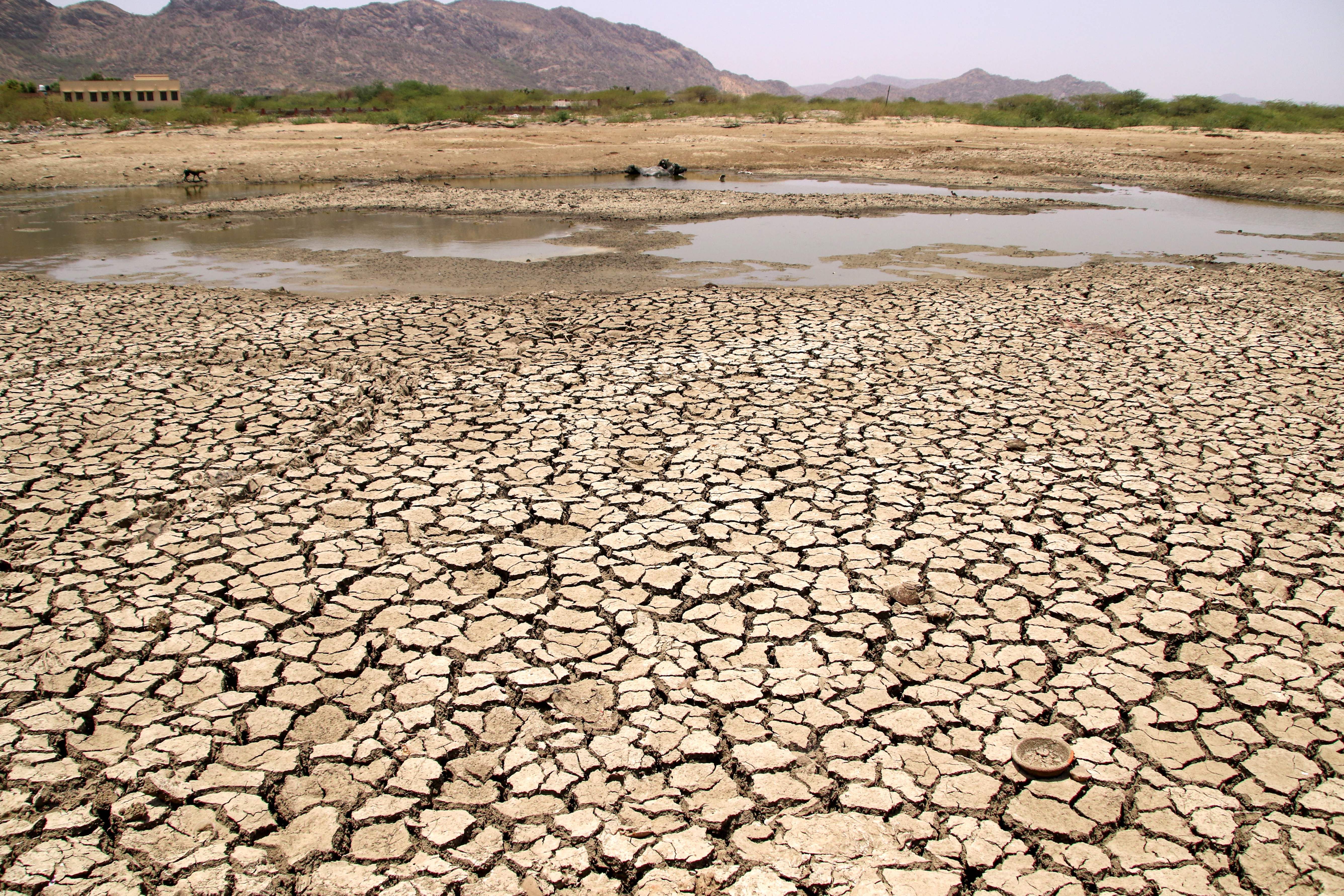
The heat's making this lake near Ajmer run dry. Photo: Himanshu Sharma/AFP/Getty ImagesMonkeys drink water from a plastic water bottle during a hot day in Allahabad. Photo: Ritesh Shukla/NurPhoto via Getty ImagesA Sadhu, or holy man, drinks water in Allahabad. Photo: Sanjay Kanojia/AFP/Getty ImagesA boy cools himself off in New Delhi. Photo: Biplov Bhuyan/Hindustan Times via Getty ImagesYouths cool off in a swimming pool on the outskirts of Amritsar. Photo: Narinder Nanu/AFP/Getty ImagesVolunteers distribute sweet water in Amritsar. Photo: Narinder Nanu/AFP/Getty Images
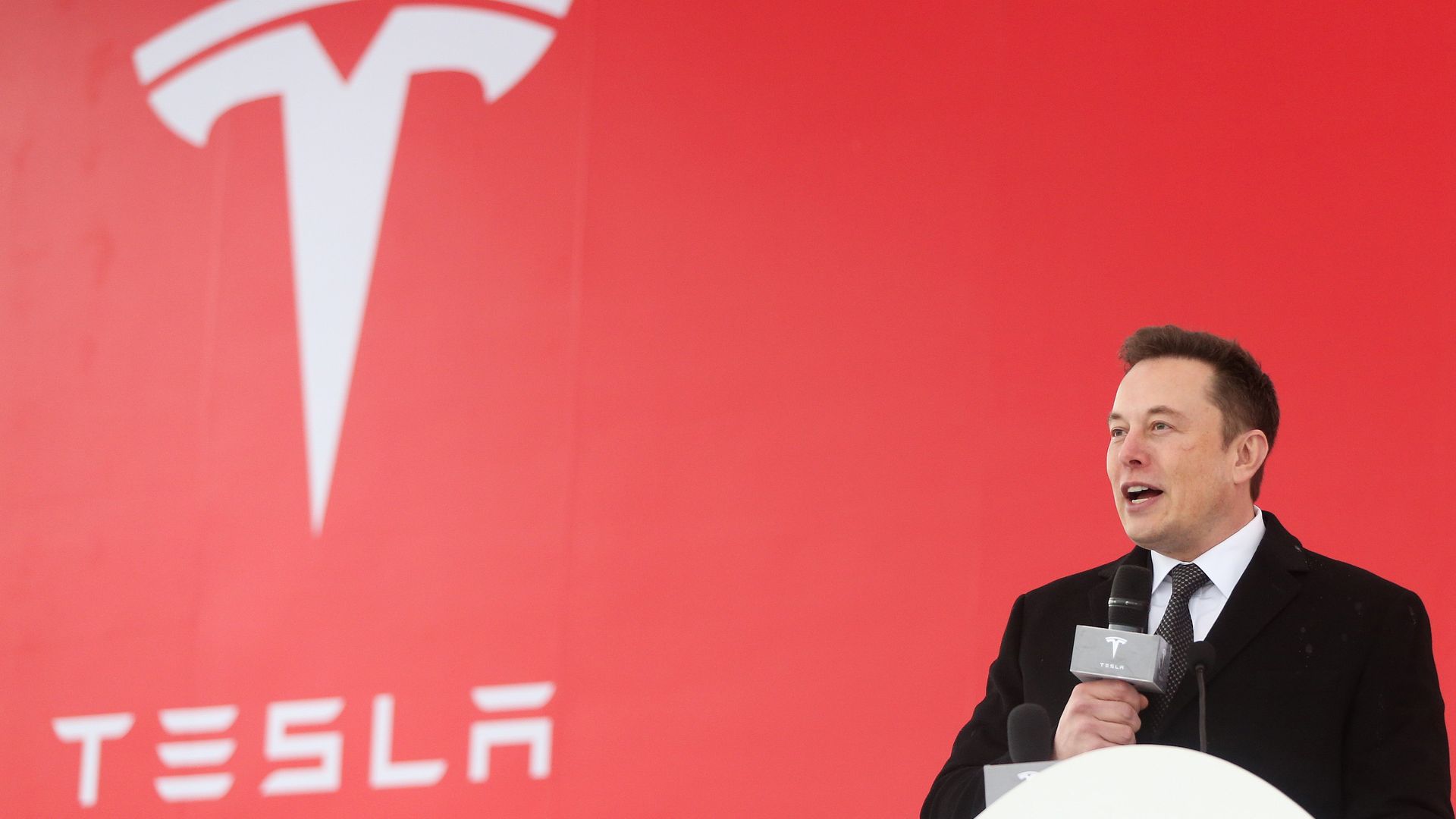
Tesla CEO Elon Musk made some news in his newly posted interview with the Tesla-focused "Ride the Lightning" podcast, when he said the company's planned pickup truck will cost less than $50,000, InsideEVs reports.
Why it matters: Pickups are hugely popular, so the ability of automakers to penetrate that market with electrics will ultimately be an important part of the wider effort to push cars with plugs into the mainstream.
From December 2019 into the next several years, a slate of federal tax credits for solar and wind power are set to expire, allowing Congress a chance to revisit this valuable plank of clean energy policy.
The big picture: Under current incentives, wind and solar power have come to produce over 8% of U.S. electricity, up from less than 1% a decade ago. But the credits have ballooned in cost — from under $1 billion in 2008 to $5.5 billion in 2018 — while doing little to promote other new energy technologies that will play a vital role in decarbonizing the economy.
Capturing carbon dioxide emissions is probably unavoidable to address climate change, but the technology to do it is still in its infancy, expensive and not broadly understood.
The intrigue: We're here to show you something none of us can really see — CO2 emissions are invisible to the naked eye — and the technology that's just getting off the ground. Keep reading to see an illustrated description of the main ways CO2 can be captured.