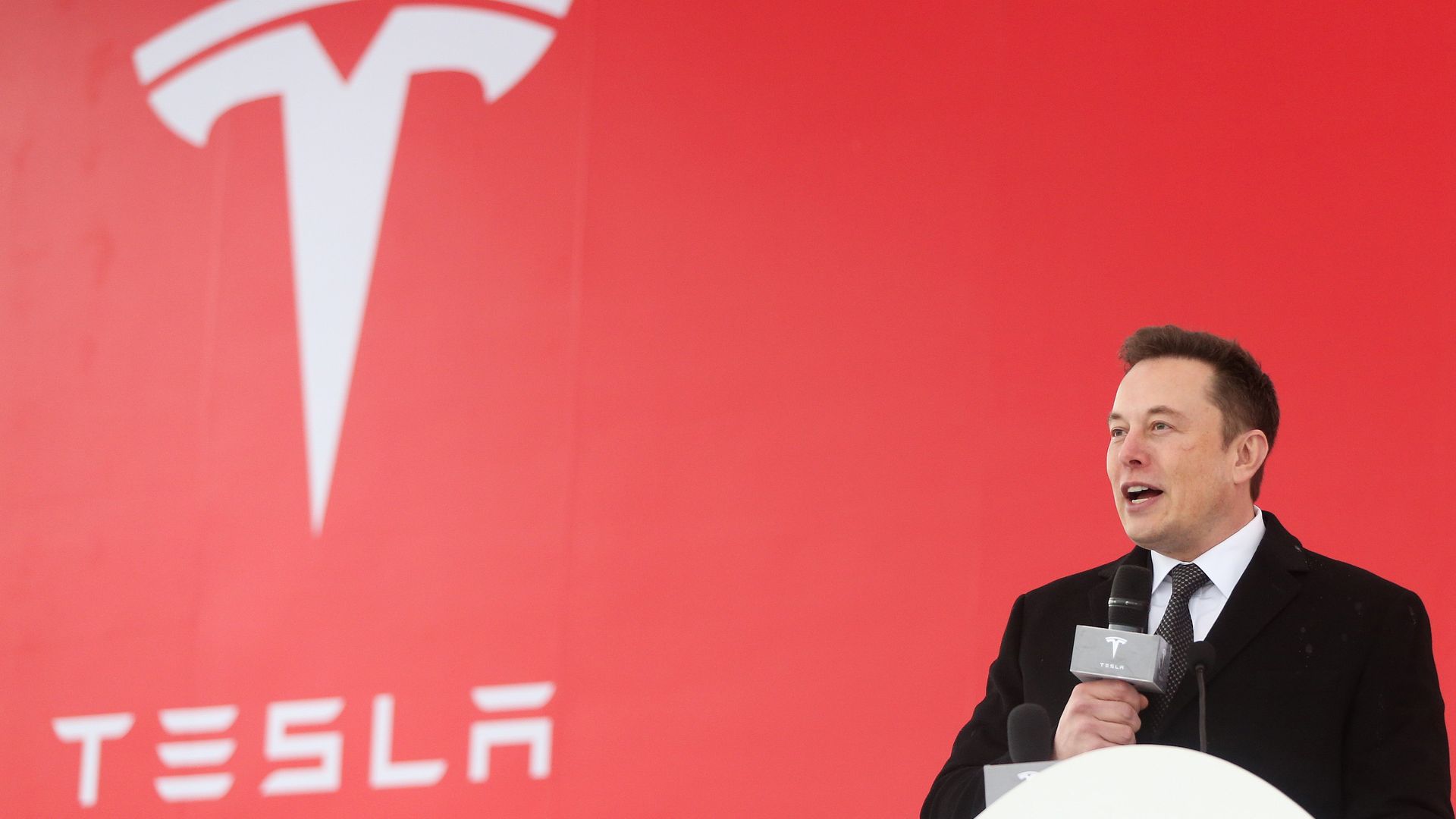
Tesla CEO Elon Musk made some news in his newly posted interview with the Tesla-focused "Ride the Lightning" podcast, when he said the company's planned pickup truck will cost less than $50,000, InsideEVs reports.
Why it matters: Pickups are hugely popular, so the ability of automakers to penetrate that market with electrics will ultimately be an important part of the wider effort to push cars with plugs into the mainstream.
From December 2019 into the next several years, a slate of federal tax credits for solar and wind power are set to expire, allowing Congress a chance to revisit this valuable plank of clean energy policy.
The big picture: Under current incentives, wind and solar power have come to produce over 8% of U.S. electricity, up from less than 1% a decade ago. But the credits have ballooned in cost — from under $1 billion in 2008 to $5.5 billion in 2018 — while doing little to promote other new energy technologies that will play a vital role in decarbonizing the economy.
Capturing carbon dioxide emissions is probably unavoidable to address climate change, but the technology to do it is still in its infancy, expensive and not broadly understood.
The intrigue: We're here to show you something none of us can really see — CO2 emissions are invisible to the naked eye — and the technology that's just getting off the ground. Keep reading to see an illustrated description of the main ways CO2 can be captured.