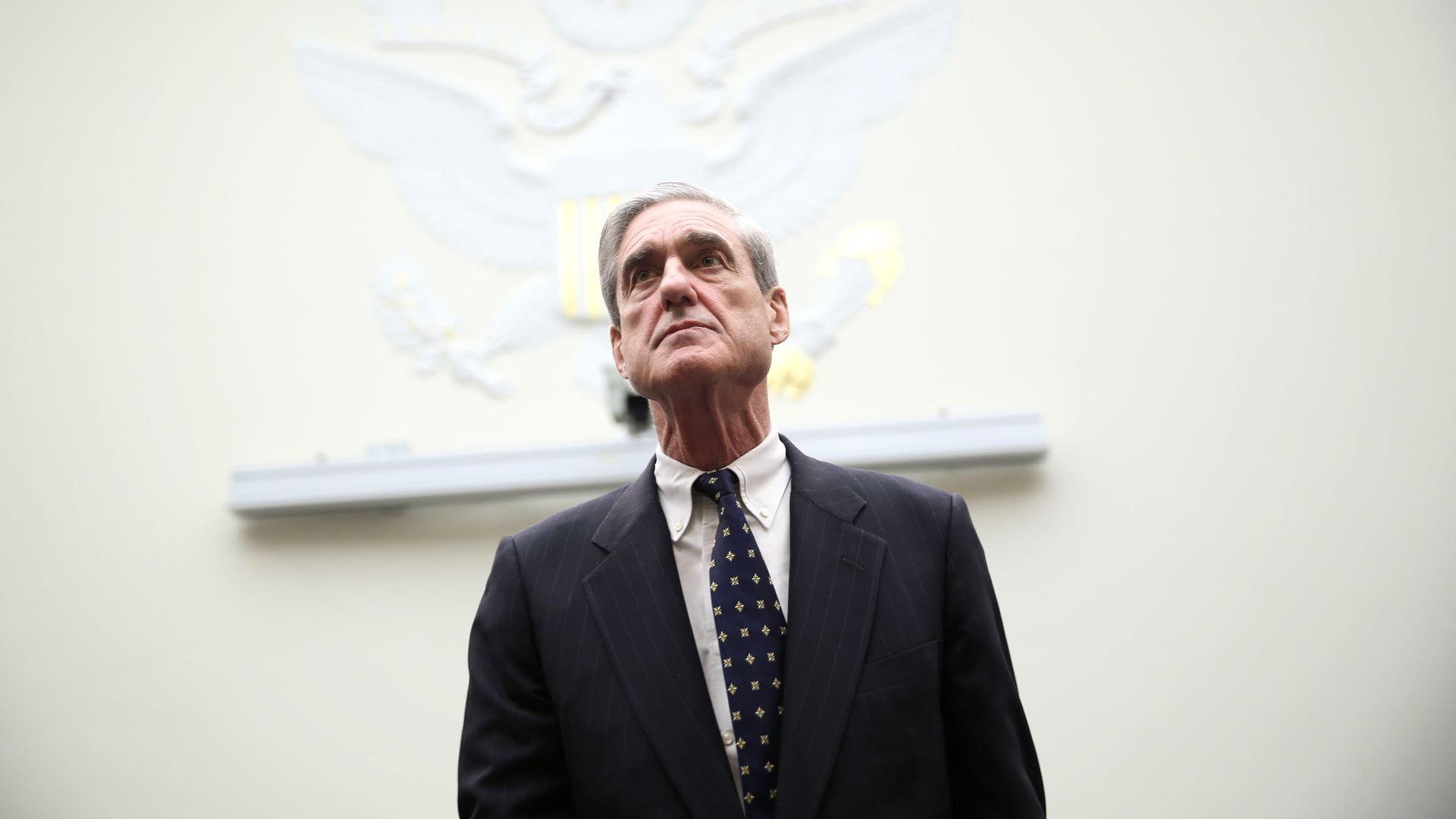
A federal appeals court unanimously affirmed the validity of special counsel Robert Mueller's appointment on Tuesday, rejecting a challenge brought by former Roger Stone associate Andrew Miller.
Background: Miller was ordered by the special counsel to appear before a grand jury last year, but defied the subpoena and alleged that Mueller's appointment was unconstitutional. The court dismissed the argument that the special counsel should have to be confirmed by the Senate, writing that Mueller "effectively serves at the pleasure of an Executive Branch officer who was appointed with the advice and consent of the Senate."
Miller is considering taking the case to the Supreme Court.
Tim Gallaudet, the acting administrator of the National Oceanic and Atmospheric Administration (NOAA), was suddenly replaced on Monday by the No. 3 official at the agency, former weather industry scientist Neil A. Jacobs.
Why it matters: The agency has been operating without a Senate-confirmed administrator for the longest time since it was created in 1970. Gallaudet, a retired U.S. Navy rear admiral, had earned plaudits for advancing the agency's priorities in ocean and atmospheric sciences without succumbing to political interference with climate research, as other agencies have during the Trump administration.
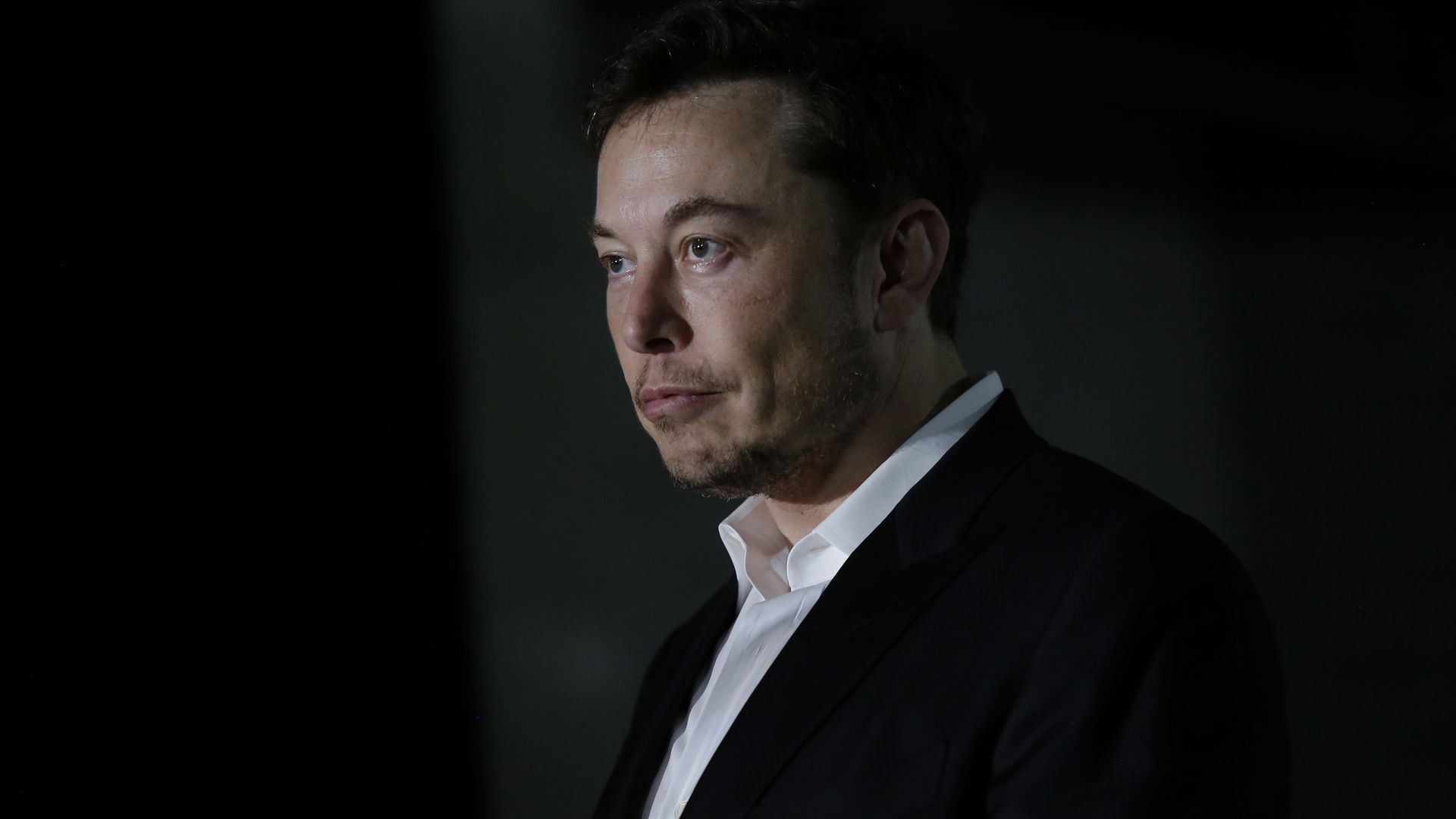
What's new: Late Monday night Musk struck back at the regulators via Twitter, writing, "SEC forgot to read Tesla earnings transcript, which clearly states 350k to 500k. How embarrassing." He also commented via Twitter Tuesday morning that "something is broken with SEC oversight."
GoExpedi, a Houston-based supply chain company for the oil-and-gas sector that's aiming to be "Amazon for the energy industry" has raised $8 million in Series A funding.
Why it matters: The e-commerce company for maintenance, repair and operations — and their new cash — is a sign of how business practices in the booming shale sector are evolving as U.S. production surges.
The continually escalating U.S. sanctions on Venezuela have created problems for more than just the country's president and his inner circle. They are creating "new compliance risks for U.S. and international financial institutions," the Wall Street Journal's Mengqi Sun writes.
Why it matters: Venezuela's state oil company, PDVSA, which has been the target of some sanctions, has many subsidiaries and outsources much of its business to third-party vendors. That means banks are picking over transactions and potential customers with a fine-tooth comb, said Daniel Gutierrez, who chairs the anti-money-laundering compliance committee at the Florida International Bankers Association.
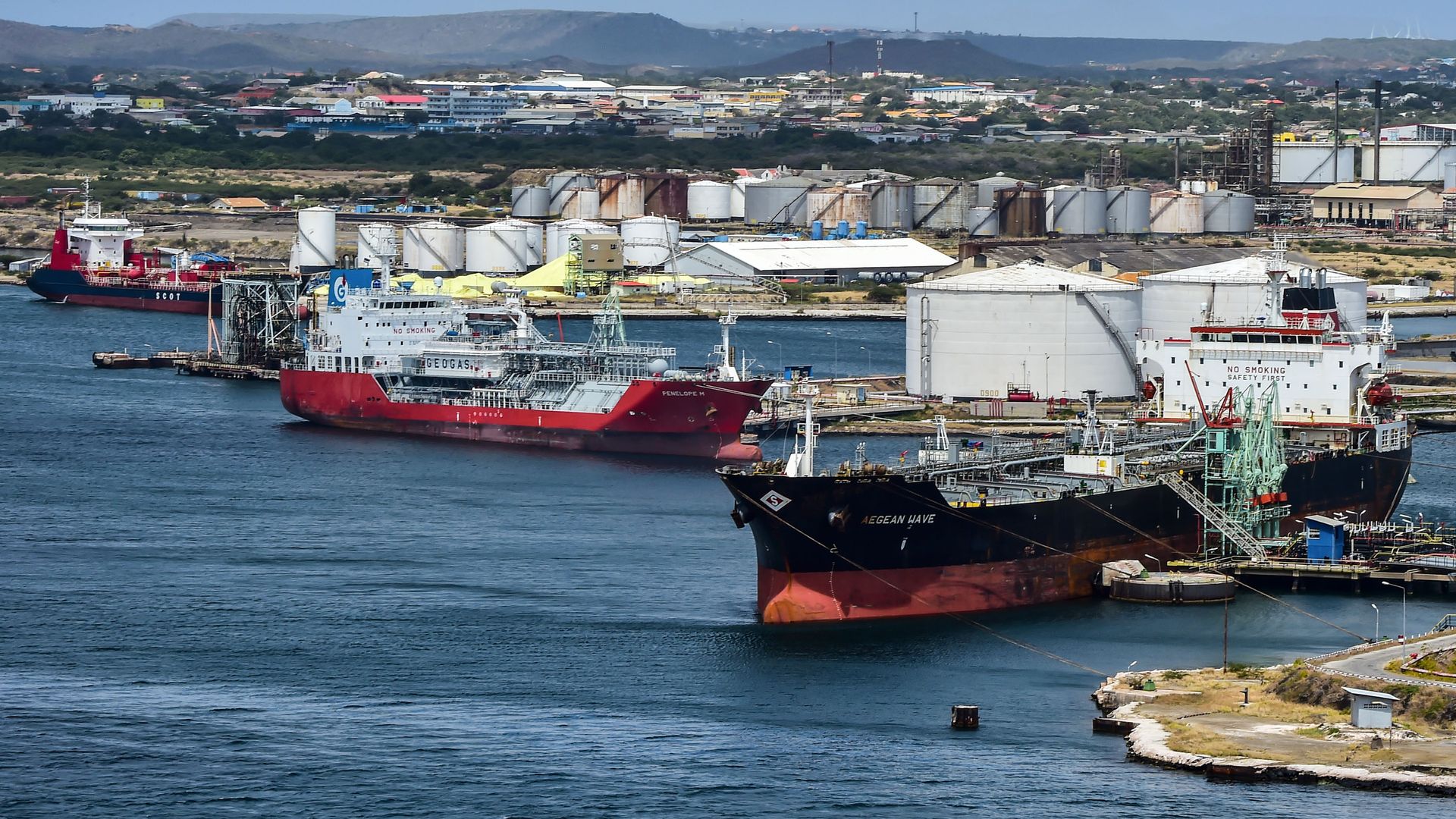
The U.S. sanctions have crippled Venezuela's oil industry so fully that the country has half a billion dollars worth of oil sitting in ships off its coast, Bloomberg's Lucia Kassai and Fabiola Zerpa report.
What's happening: An armada of 16 ships, holding 8.36 million barrels of Venezuelan crude, are floating off the country's coast. The cargoes belong to PDVSA, Chevron, Valero and Russia's Rosneft oil company.
The big picture: Municipalities could use anonymized, secure sensor data in combination with advanced computing to better understand how people travel through and use public space, without sacrificing individual privacy.
Todd Moss is a former State Department official leading a small new nonprofit with a big idea: changing what he calls an incomplete conversation about electricity access in Africa and South Asia.
Why it matters: The Energy for Growth Hub wants to help enable access to power levels needed to build and sustain manufacturing and business development — not just power homes and charge phones.
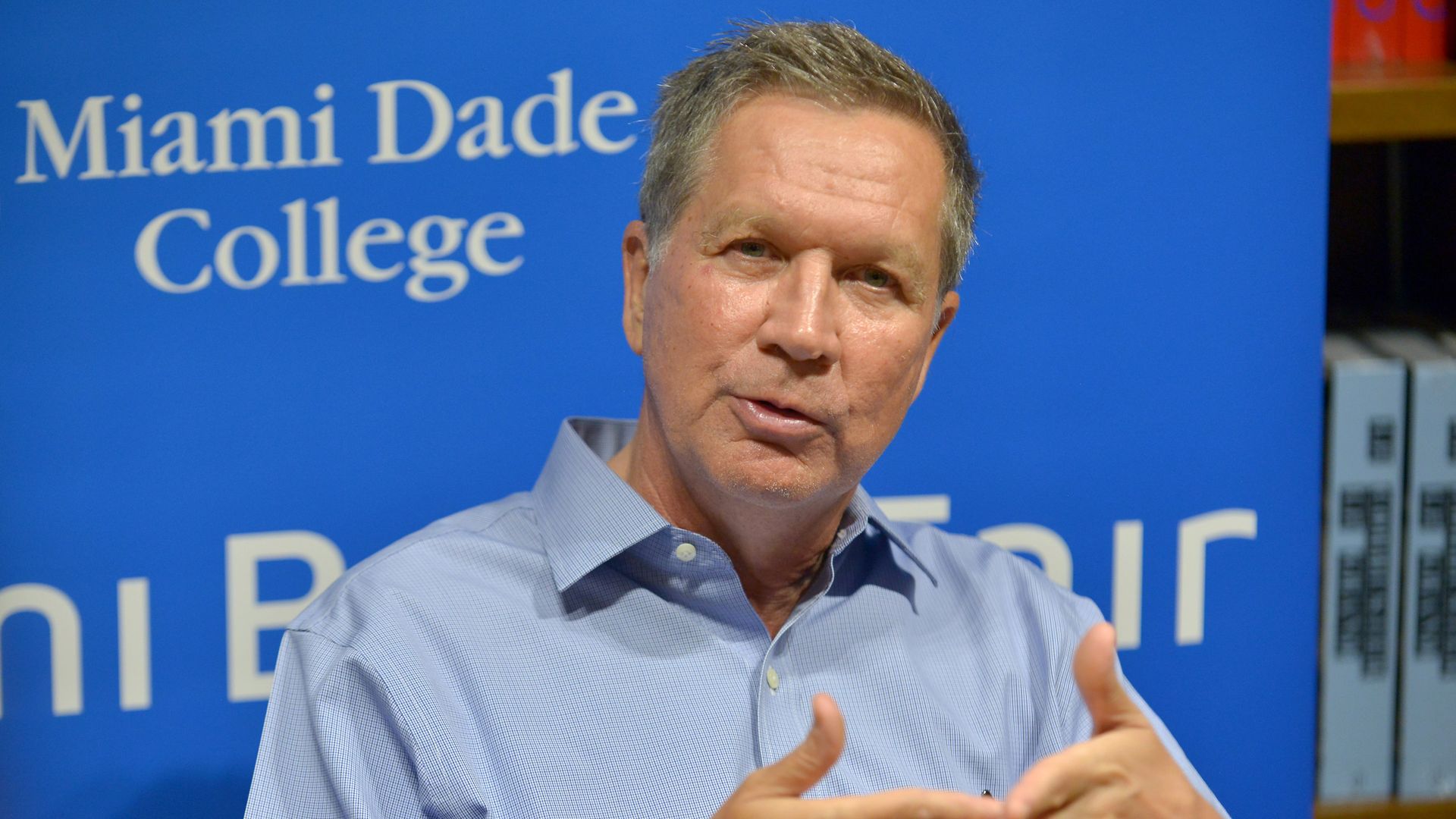
Republicans should stop denying humans’ impact on climate change and start putting forth policies to address it, former Republican Ohio Gov. John Kasich is set to say at a speech Tuesday night in British Columbia, Canada.
Why it matters: Kasich is a potential 2020 opponent of President Trump — and herepresents the leading edge of a Republican Party slowly evolving away from a decade-long position denying that climate change is a real problem. Kasich revealed his plan for his speech in an exclusive interview with Axios Monday.
Details: The SEC claims Musk violated the settlement when he wrote in a Feb. 19 tweet: "Tesla made 0 cars in 2011, but will make around 500k in 2019." The commission wrote in court papers: "[Musk] once again published inaccurate and material information about Tesla to his over 24 million Twitter followers, including members of the press, and made this inaccurate information available to anyone with Internet access."
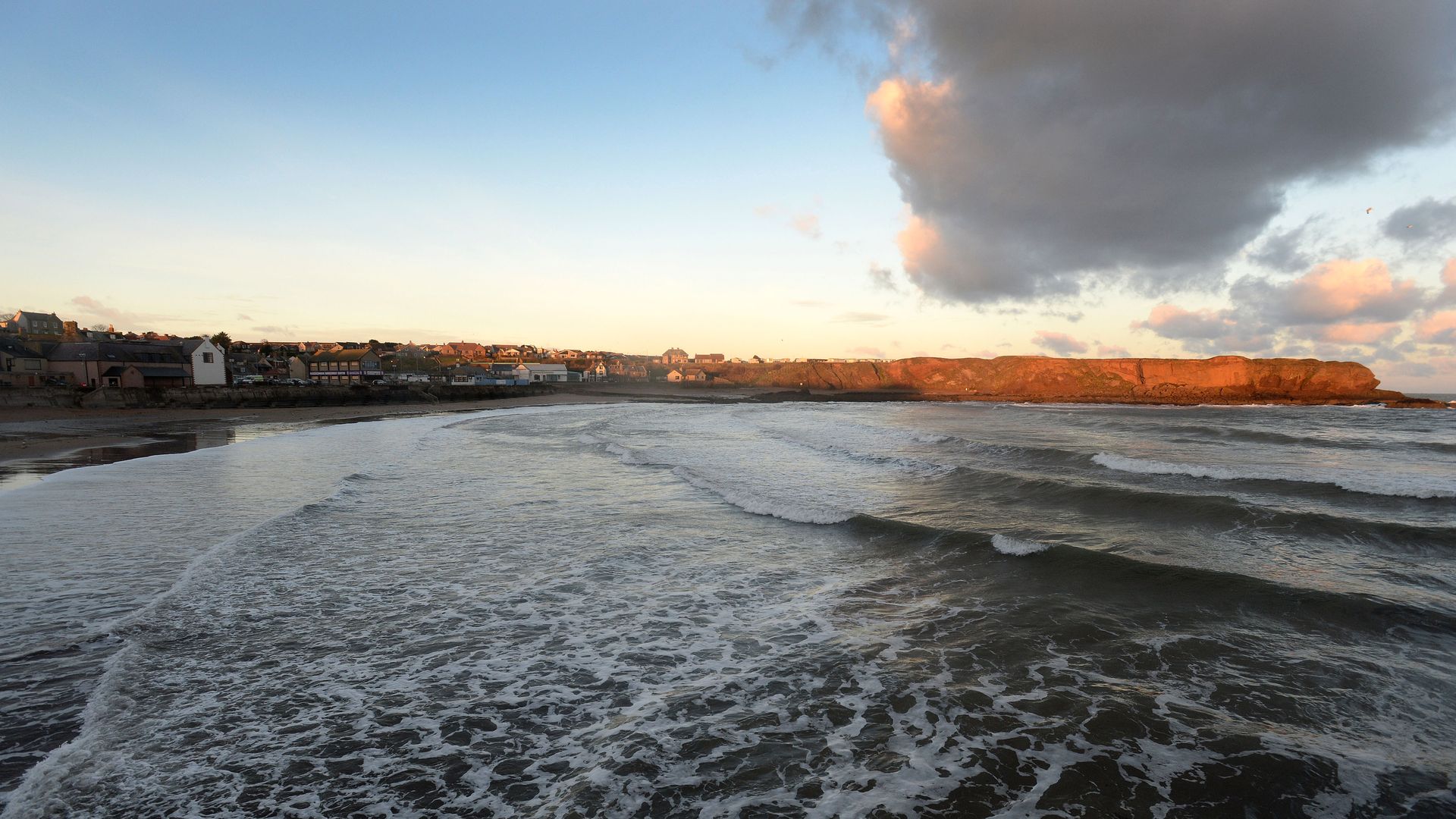
SIMEC Atlantis Energy, a sustainable-energy generation and asset management company, recently achieved a new milestone after exporting over 12 gigawatt hours of clean tidal energy to the grid from their MeyGen Tidal Array in Scotland.
Why it matters: Demonstrating reliable production is a constant challenge for any company looking to sell energy into the grid with a new technology. SIMEC's 12 gigawatt hours of grid-delivered energy since last spring is one of the best records within the marine energy community and will help bolster investor confidence.
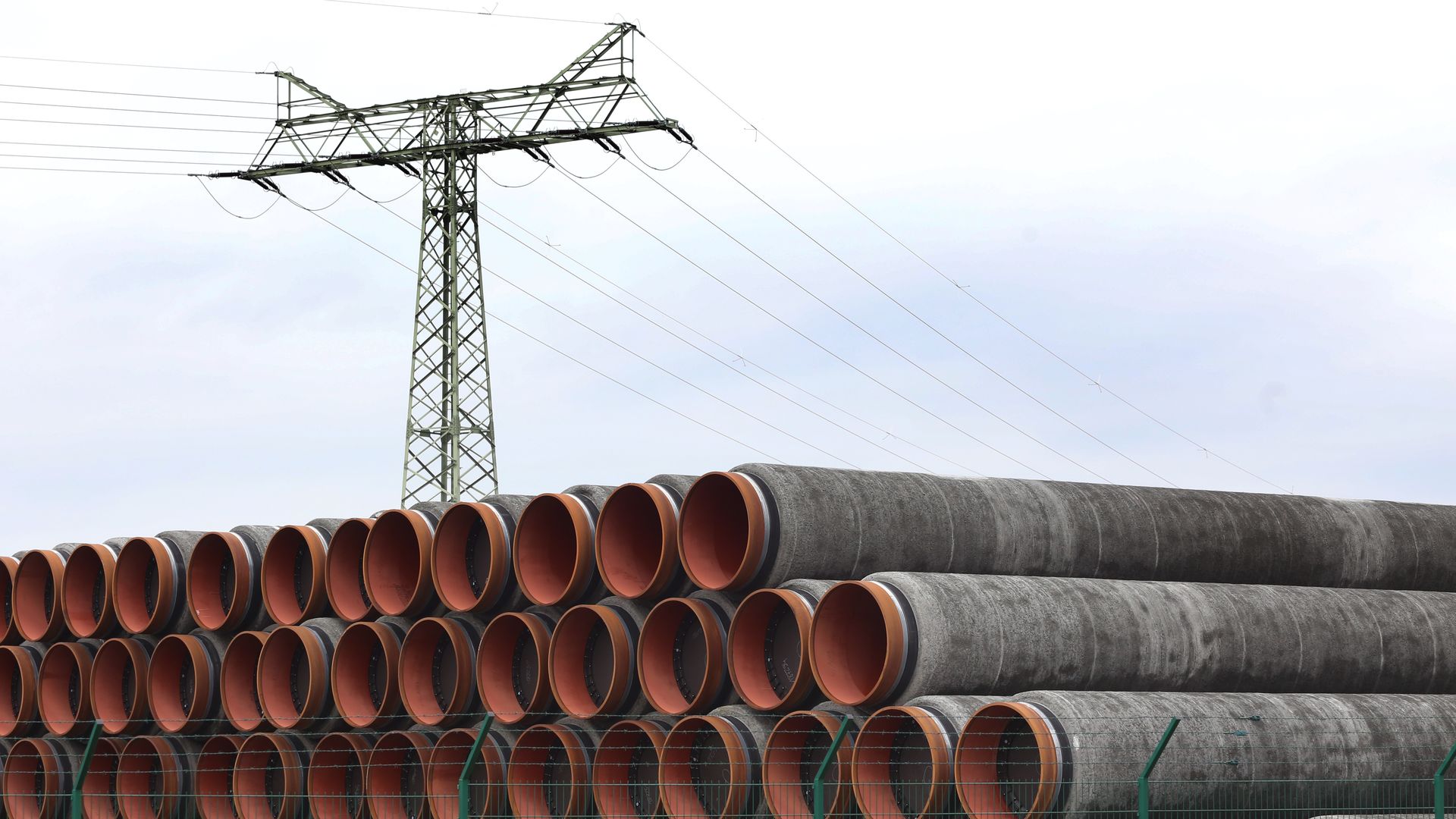
In a surprising move after months of inaction, the EU tentatively approved a compromise version of the European Commission (EC) proposal to extend provisions of a legislative framework for the EU's gas and electricity market to pipelines to and from non-EU countries.
Why it matters: Under the framework, called the Third Energy Package (TEP), energy generation and supply need to be separate from transmission networks. If the compromise secures final approval, that stipulation could affect the Nord Stream 2 (NS2) offshore pipeline currently under construction, as it's owned and operated entirely by Russia's state-owned Gazprom.
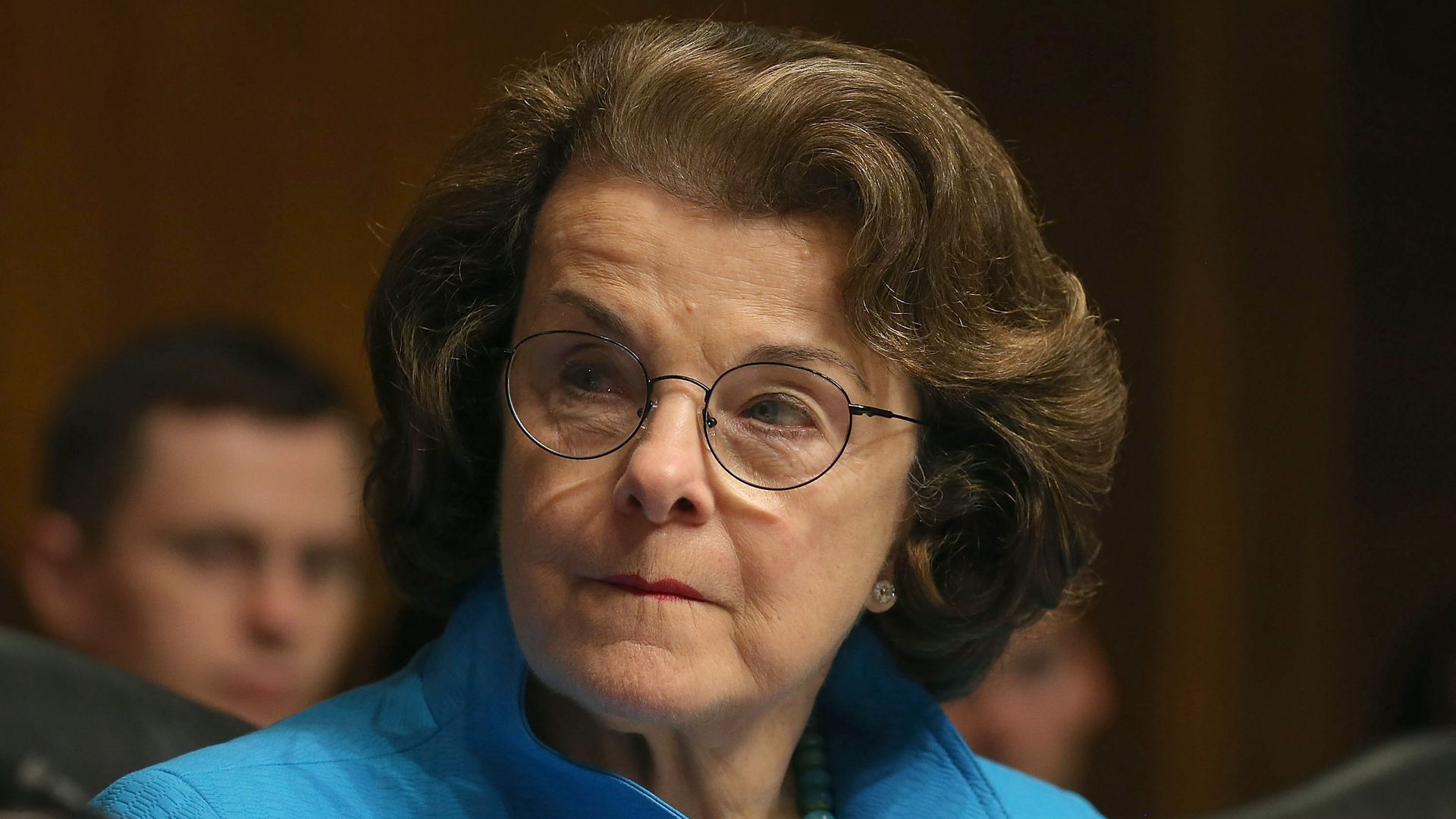
The viral footage of kids organized by the Sunrise Movement urging Sen. Dianne Feinstein to support the Green New Deal resolution says a lot about climate politics in 2019.
Driving the news: Feinstein attacked the resolution as impractical, talked up her long experience and recent re-election, and handed out her own less aggressive resolution. The New York Times describes the encounter here.
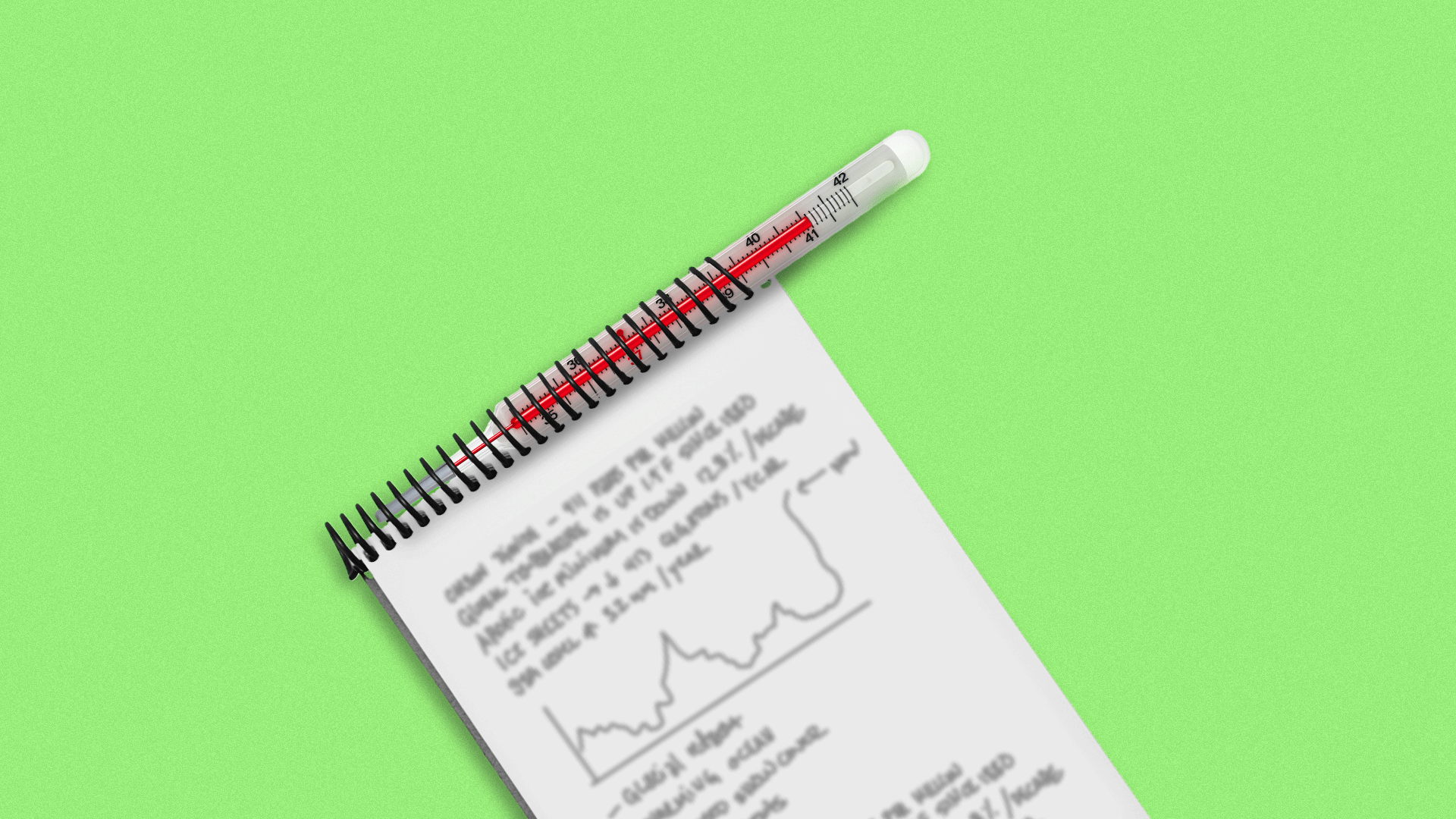
Climate change is on Washington’s front-burner for the first time in a decade — on Capitol Hill, on the campaign trail and, naturally, in newsrooms.
My thought bubble: Media companies are prioritizing climate change news like never before, and that includes Axios and my own coverage. This is the story about why and how much my focus has changed over the last two years under President Trump — which is to say a heck of a lot.






/2019/02/26/1551181876425.gif?w=3840)