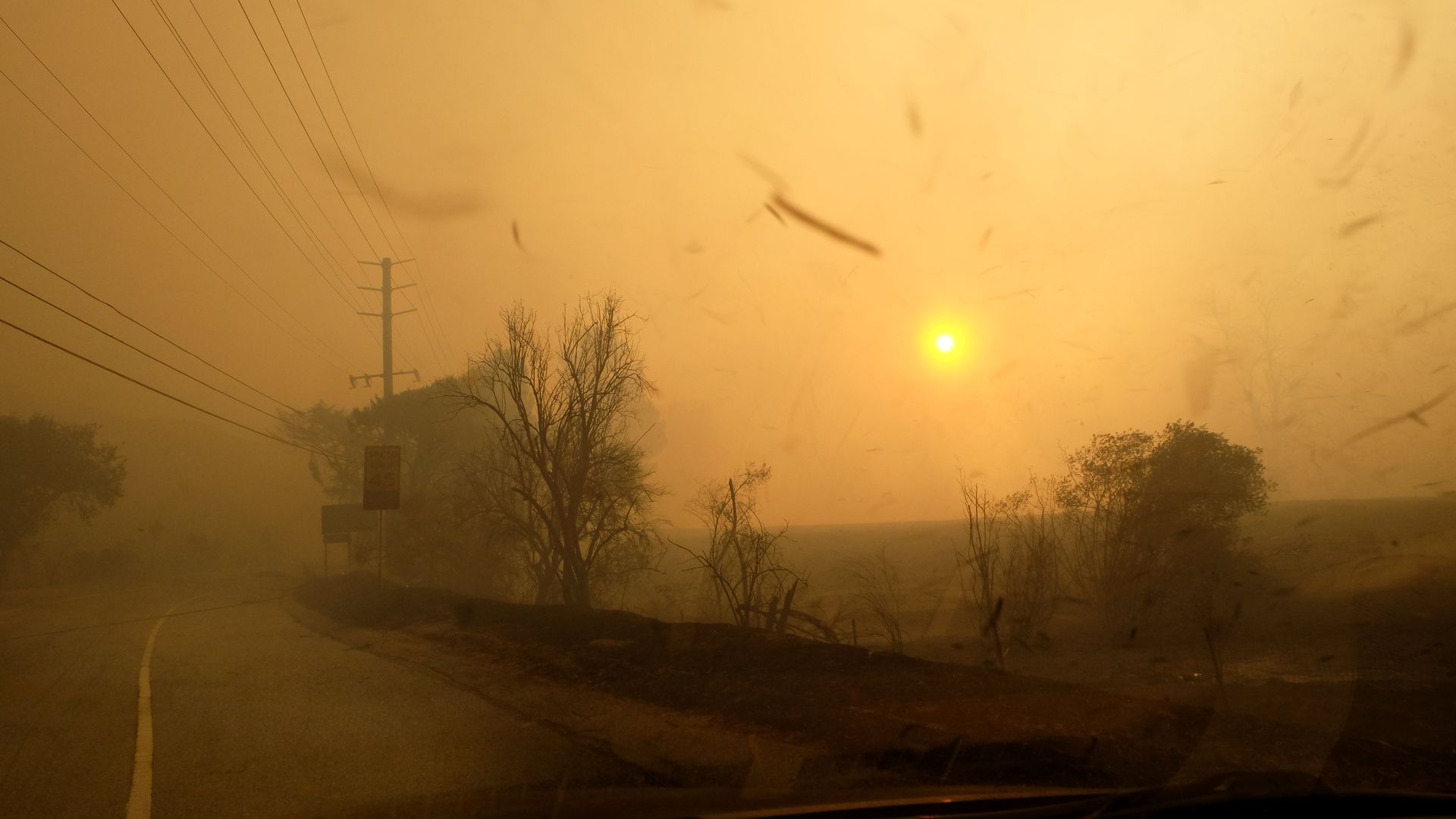
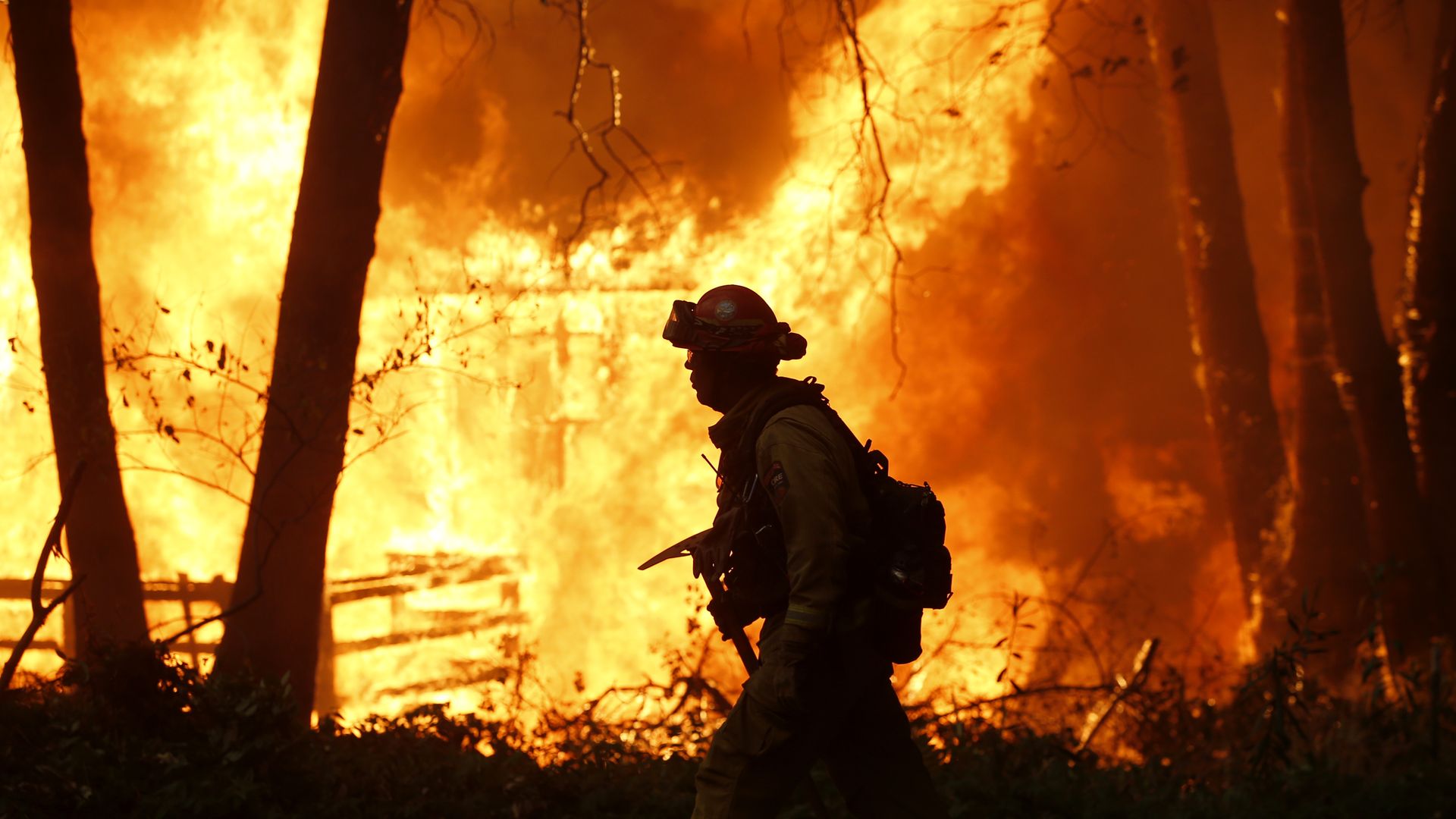
Health effects from the California wildfires — mainly from stress, inhalation of small particulates and the disturbance of people's health care needs — may reverberate for some time after the fires are finally smothered out.
Why it matters: Once people are situated in an area away from the fire, people need to take steps to ensure they are not breathing the smoke and that they are handling the stress in a healthy manner. As health officials declare a public health emergency in California, they also warn people in areas near the wildfires to limit their time outdoors.
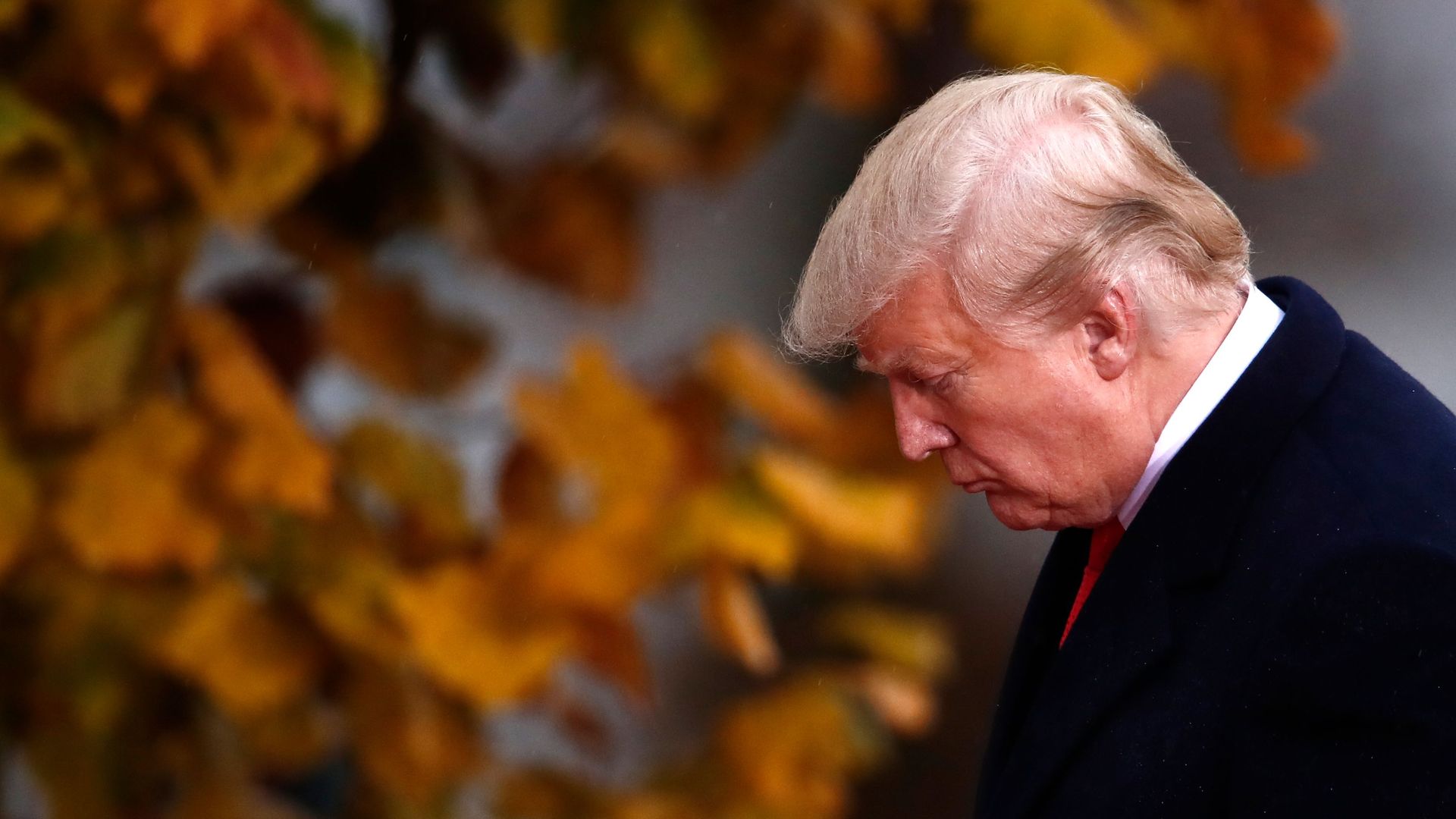
President Trump plans to travel to California on Saturday to meet with individuals who have been impacted by the wildfires that have ravaged the state, according to spokesperson Lindsay Walters.
The big picture: The Camp Fire, about 90 miles north of Sacramento, is the deadliest fire in California history. So far it's taken at least 56 lives, and that number could still climb. As of Wednesday, 130 people are still missing and around 130,000 acres of land have been scorched, CBS reports. President Trump blamed the fires last week on "gross mismanagement of the forests" in California.
Deadly wildfires continue to rage in California, destroying homes and engulfing the state in smoke. President Trump last weekend blamed “gross mismanagement of the forests” for the disasters, suggesting there’s a simple solution.
Reality check: Neither the causes of wildfires nor the strategies for mitigating them are straightforward, and forestry practices are only partially responsible. Climate change also plays a role, as do community building practices, insect infestations that increase tree mortality and even random chance.
At least 8.5 million acres have been torched by wildfires so far this year across the United States, according to data from the National Interagency Coordination Center — about 2.1 million acres above the 10-year average of 6.3 million acres burned by this point in the year. California has been particularly hard hit.
Data: National Interagency Coordination Center; Note: Cumulative counts are sometimes revised, causing short-lived spikes or dips in the number of acres burned; Chart: Axios Visuals
The big picture: California's Camp Fire, the deadliest wildfire in the state's history, has burned more than 140,000 acres so far and claimed at least 56 lives. It was only 40% contained as of Thursday morning. It's already historic in both its size and destructiveness, having burned over 8,500 homes.
Oil-and-gas giant Royal Dutch Shell and two partners rolled out a new business unit Thursday that provides a suite of energy services to buildings, such as heating and cooling, efficient lighting, controls, and electric vehicle charging.
Why it matters: It's the latest wrinkle in the growing movement of some of the largest multinational oil companies — especially European-headquartered players — into the electricity space, although it remains a small part of their overall portfolios.
Commercial and residential buildings account for 39% of carbon emissions in the U.S., making them a critical site for reducing the country’s energy consumption and tackling climate change. One way to reduce their carbon footprint is the subscription model, also known as “as-a-service,” whereby a central entity owns and upgrades equipment for customers.
How it works: Subscription companies purchase, install and maintain energy-efficient technologies such as HVAC and LED lighting in a customer’s building. The customer saves money on the expense of purchasing and maintaining the equipment over the long term and, because the equipment is energy efficient, on their utility bill.
In the U.S., there are warnings for tornadoes, floods and hurricanes — but the nearly 30,000 residents of Paradise, California got no official warning through the National Weather Service that an explosively growing wildfire was headed for their community on Nov. 8.
Why it matters: This was the deadliest wildfire in California history, and with more than 130 still missing, the toll is expected to rise. That so many people could perish in a single disaster due in part to the lack of warning means something is clearly wrong with how we're handling fire emergencies.
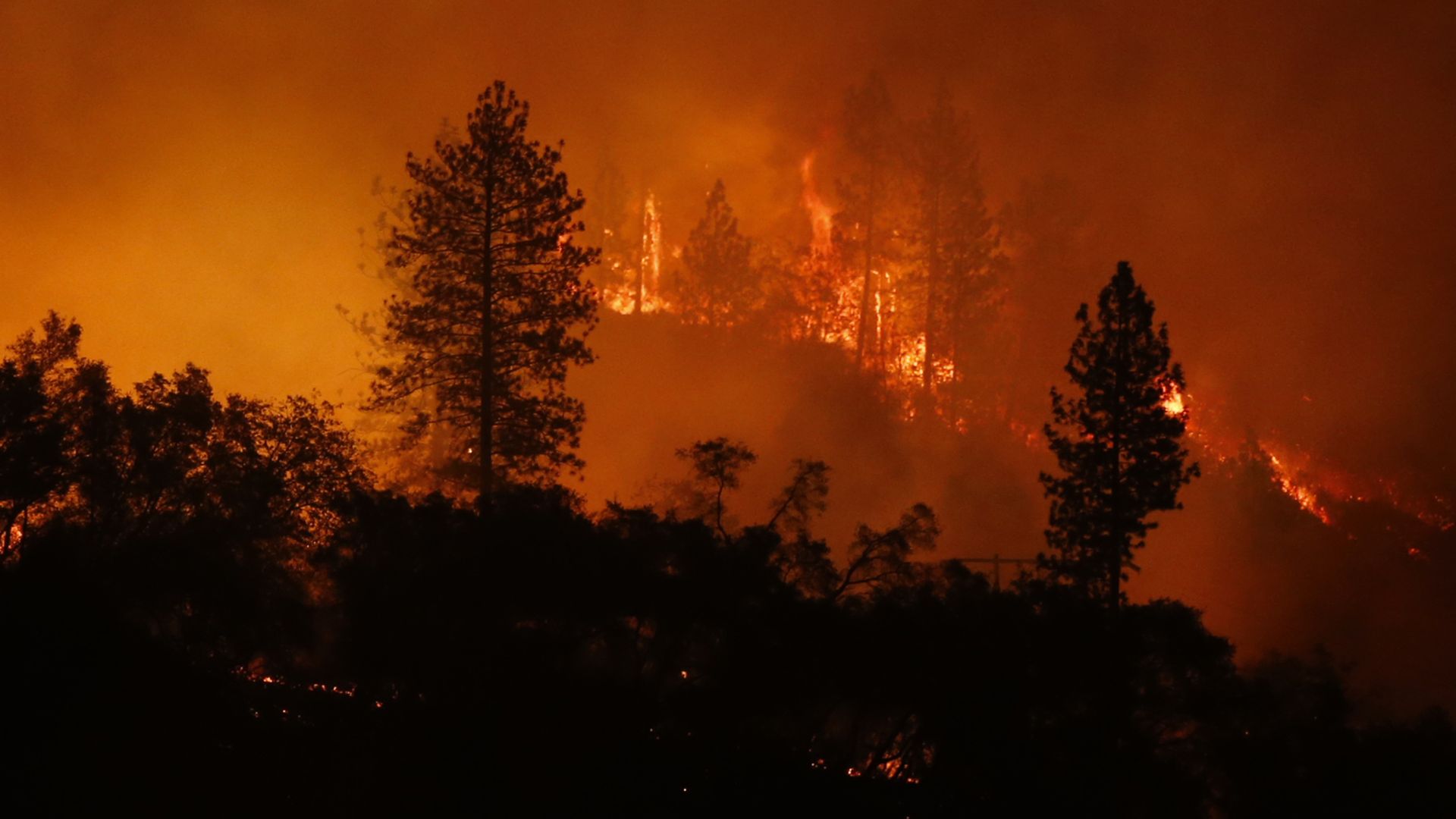
Authorities said the death toll in California's Camp Fire, the most destructive wildfire in the state's history, rose to 56 on Wednesday. 130 people are missing.
Our thought bubble: The fire has destroyed much of the town of Paradise, about 90 miles north of Sacramento, and the death toll is likely to rise further. Already an all-time state record, it raises questions about how to warn people of a new type of fast-moving, rapidly spreading wildfire of the sort California and other areas are seeing more of as climate change, land use, and population growth combine to raise risk.
Shares of Pacific Gas and Electric, the parent company of utility PG&E which services Northern California, have lost half their value amid concerns that the company could be held liable for the state's deadliest wildfire on record.
What's going on: PG&E, whose power lines have been linked to 16 of last year's devastating fires, said in a regulatory filing on Tuesday that its insurance would not fully cover the cost of damages, and there would be a "material impact" on the company's financial health if it were found responsible for the Camp Fire, which destroyed the town of Paradise in Butte County, about 90 miles north of Sacramento. That fire killed at least 48 people, with more than 200 still missing.
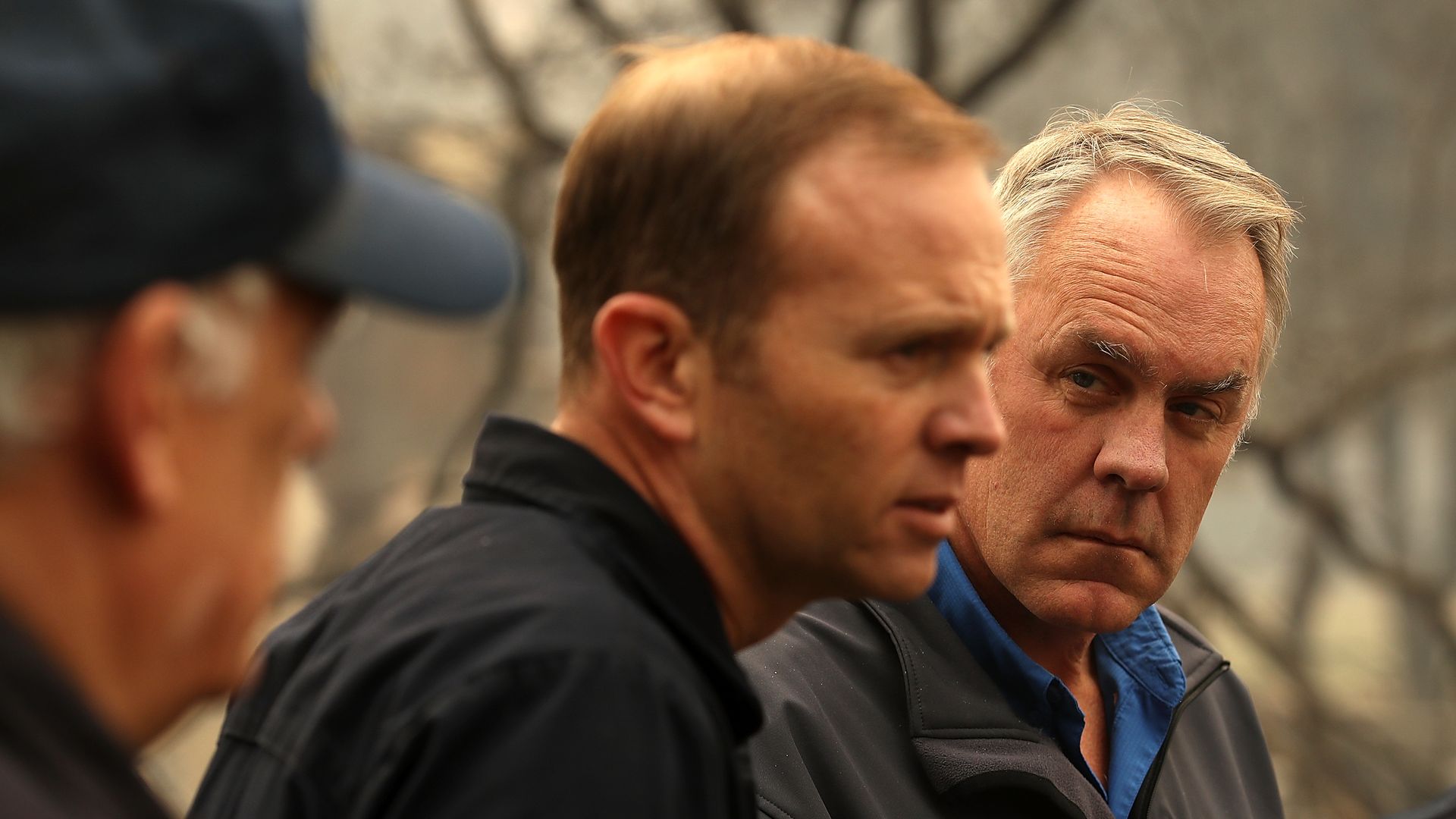
California Governor Jerry Brown (D) said on Wednesday that climate change was a major source of the wildfires that have ravaged California over the last week, while Interior Secretary Ryan Zinke, who is visiting the state, said it's not the time to "point fingers," admitting that rising temperatures was one of several contributing factors, the Associated Press reports.
Why it matters: President Trump has repeatedly pointed to "poor" forest management from the state of California as a cause of the fires, and has threatened to pull federal funding, despite scientific experts citing climate change as a major factor of the fires. Meanwhile, Zinke has previously expressed doubts about climate change and has questioned whether human emissions of greenhouse gases account for the bulk of global warming.
Last April, the Trump administration set the stage for a legal battle with California by nullifying the Obama administration's clean-car regulatory plan. Instead of requiring new vehicles to score an average of nearly 50 miles per gallon on lab tests by 2025, standards would flatline after 2020.
What's new: Formal public reaction to this plan was due on Oct. 26, and the comments show that none of the major stakeholders supports the administration's proposal. While the prospect of a compromise long looked slim, it now appears that the makings of a deal might be on the table.
The Consumer Price Index, a key measurement of inflation, rose 2.5% in October from a year earlier, more than the prior month's 2.3% year-over-year gain, the Labor Department said on Wednesday.
Between the lines: More expensive gas was largely responsible for the increase, the Labor Department said, but excluding energy and food costs inflationactually fell from the prior month on a year-over-year basis. Meanwhile, Wall Street Economist Joseph LaVorgna tweeted that he thinksinflation could fall next month due to the recent decline in oil prices, potentially giving the Federal Reserve a reason to rethink its interest rate hike path.