Environmental Protection Agency administrator Andrew Wheeler will announce today his plans to review — and likely make more stringent — air pollution standards for heavy-duty trucks.
Why it matters: This is the first time the EPA under President Trump is looking to significantly tighten — not loosen — air pollution regulations. Most of EPA's focus for the last nearly two years has been to roll back environmental rules issued by then-President Barack Obama.
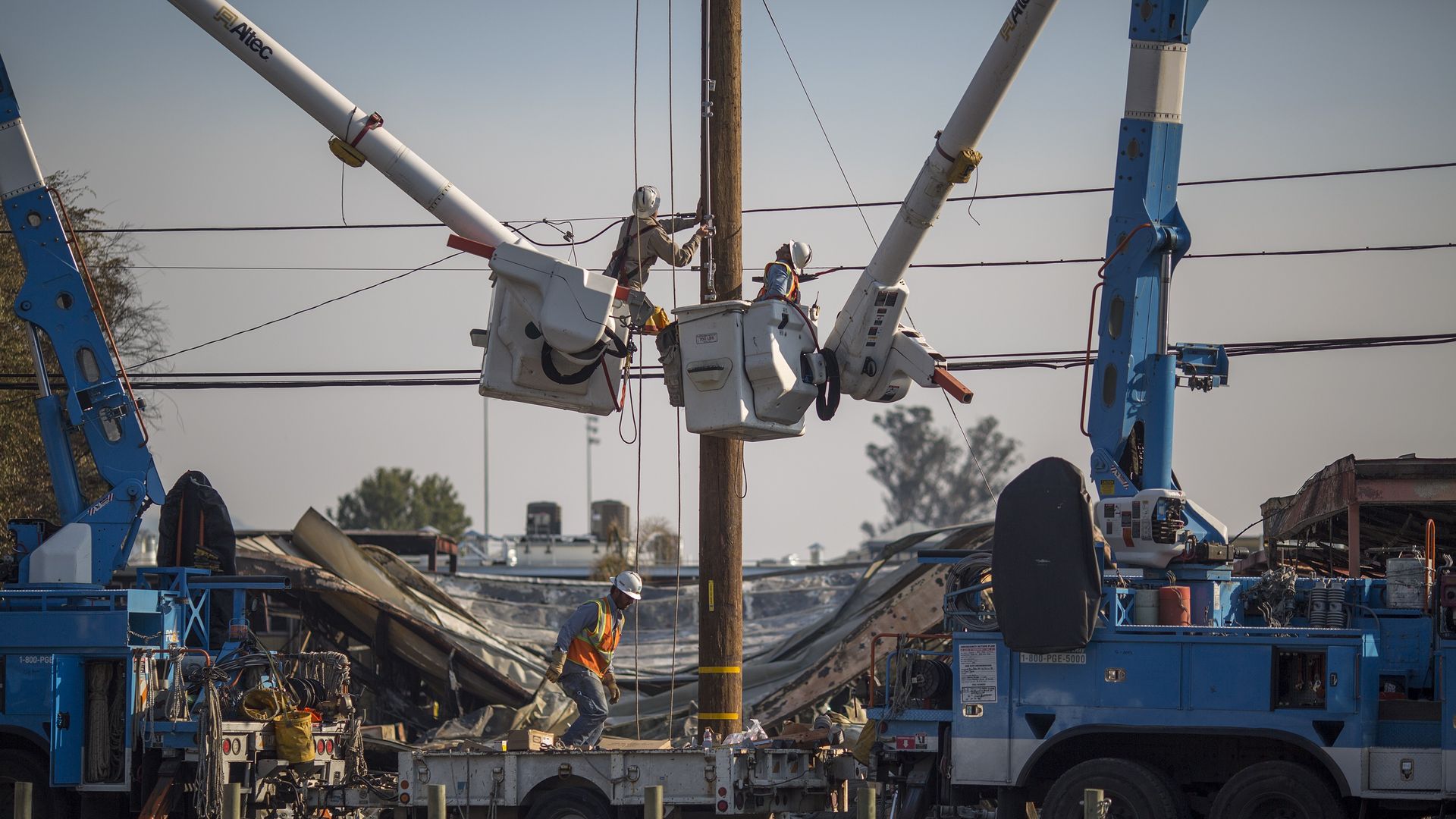
The intensity of thewildfires raging in California is just the latest example of climate change's deadly manifestations. Northern California utility Pacific Gas and Electric (PG&E) is under renewed scrutiny as a possible culprit in the Camp fire, which has devastated towns north of Sacramento, raising serious questions about the fitness of the utility's equipment and its compliance with state safety laws.
The big picture: PG&E is not alone in being unprepared for the harmful effects of a warming planet. Around the globe, many energy and fuel producers have been caught off guard this year by severe storms, anomalous temperatures and rapid changes to available water supplies.
Several automakers are joining with electric vehicle charging companies and others in a new coalition urging Congress to expand availability of $7,500 consumer tax credits for buying EVs.
Why it matters: Rollout of the EV Drive Coalition comes as Tesla, GM and Nissan — who are all members — have hit or are approaching the cap of 200,000 vehicles per manufacturer before the credit drops in value and then phases out.
The International Energy Agency's newly released World Energy Outlook finds that oil demand for passenger vehicles is slated to peak in the mid-2020s due to more efficiency, biofuels, and electric vehicles. That's according to their "new policies" scenario, which models not only existing policies but also countries' announced plans and emissions targets.
But, but, but: That projected mid-2020s peak doesn't mean that overall global demand for crude oil is reaching an inflection point anytime soon. That's because other uses — petrochemicals, heavy freight, shipping and planes — remain robust.
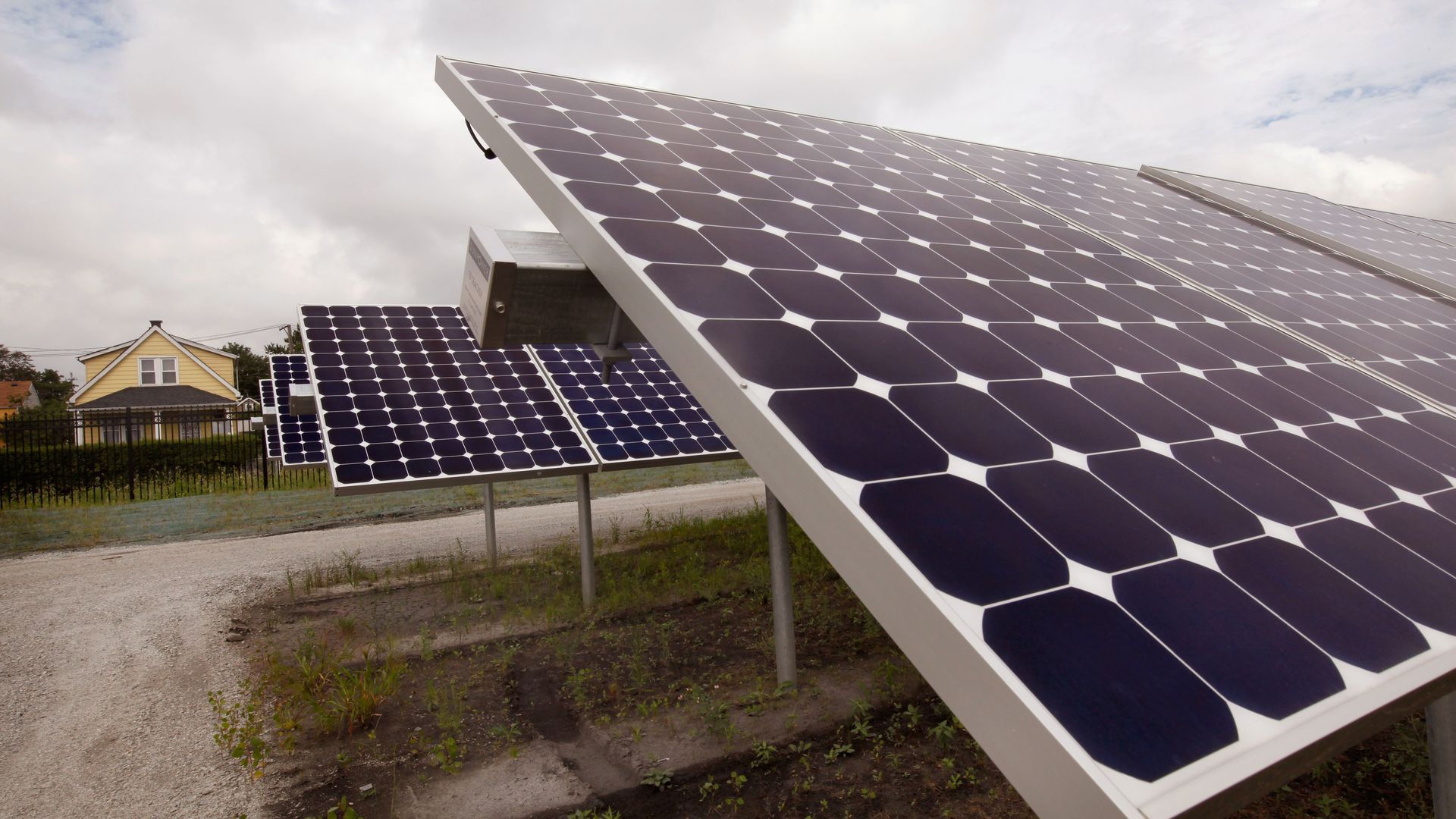
Development and deployment of solar farms continue to increase across the U.S., driven by tax incentives, falling costs and renewable energy mandates for electric utilities. Solar farms are built on farmlands that no longer generate enough revenue or have been abandoned, with some farmers entering into leases of 15–20 years with local utilities and others selling the land directly.
The big picture: Farmers who enter such leases benefit from greater revenue and stable income from rents, while utilities and solar companies benefit from access to cheap land. Although this seems like a win-win for all, some neighbors are getting upset at the change in landscape.
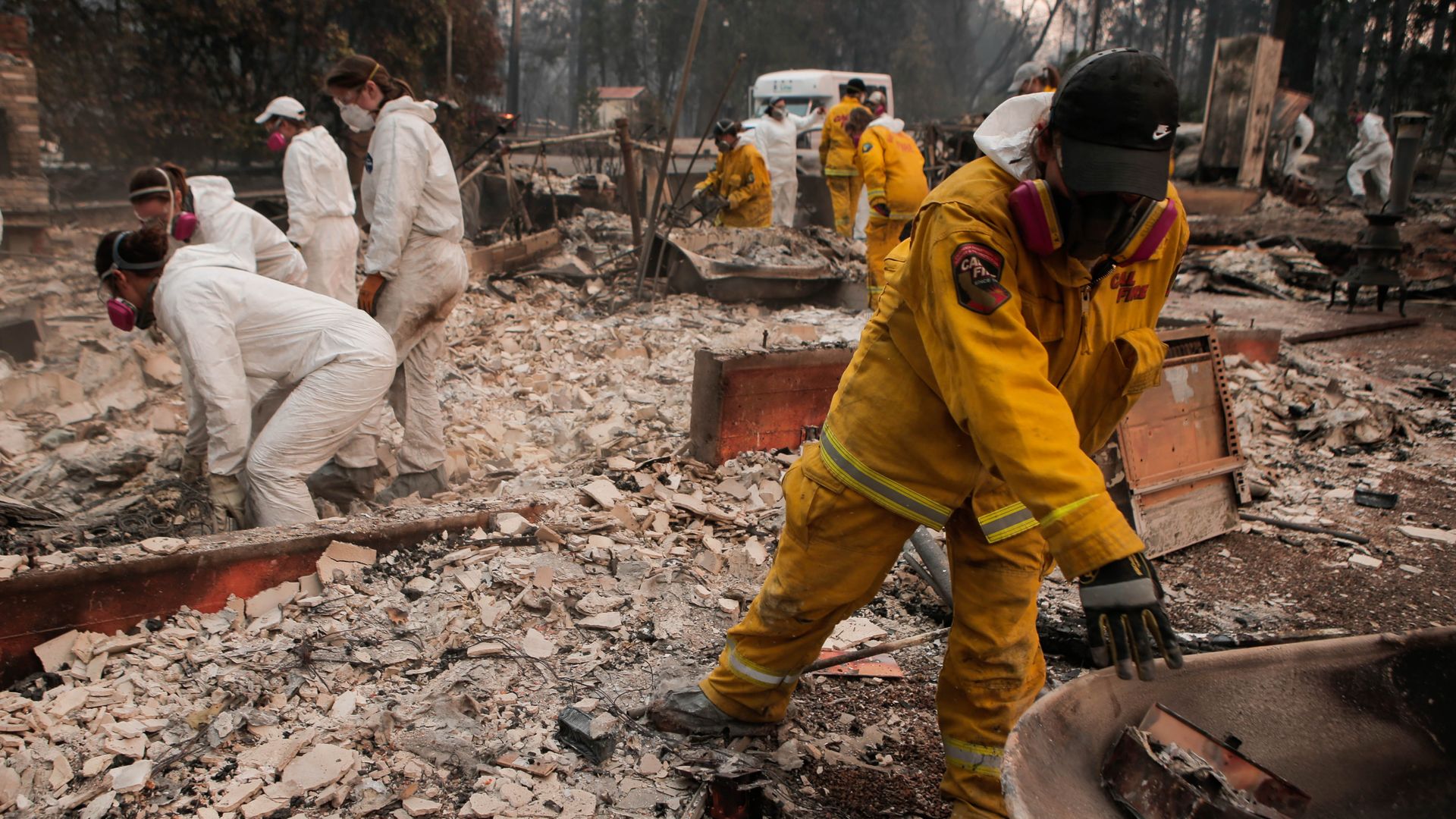
The Butte County Sheriff on Monday reported 13 more fatalities had been discovered on Monday from the Camp wildfire, which all but wiped out the town of Paradise, located about 90 miles north of Sacramento. This brings the death toll to 42, which eclipses the Griffith Park Fire of 1933 as the deadliest wildfire recorded in state history. It already holds the title of the most destructive wildfire on record.
Details: With more than 200 people still unaccounted for, the death toll may increase further. The wildfire has consumed over 6,400 homes. The latest death toll comes after President Trump said on Twitter that he had approved a request to declare the fires in California a major disaster. People affected would be eligible for federal government aid.
Projected growth of renewable power, electric vehicles and other low-carbon sources won't prevent levels of global warming that soar past the targets of the Paris climate agreement, the International Energy Agency said Monday.
Data: International Energy Agency, World Outlook 2018; Chart: Harry Stevens/Axios
President Trump expressed his displeasure in a Monday tweet about OPEC's emerging plans to dial back oil production in the coming months, perhaps by a million barrels per day, although the group's meeting in Abu Dhabi did not produce a firm plan.
"Hopefully, Saudi Arabia and OPEC will not be cutting oil production. Oil prices should be much lower based on supply!"
Why it matters: Trump's tweet puts him at odds with potential moves by Saudi Arabia, which is OPEC's dominant producer, and the wider cartel as the administration is ratcheting down Iranian exports with sanctions but wants to avoid rising prices.
One of the biggest losers this past election day was the carbon tax. Environmentalists hoped that Washington might become the first state in the country to pass such a tax through a ballot measure, but the proposal failed by nearly 13 points.
The big picture: The carbon tax, which would effectively increase the cost of producing, distributing or using fossil fuels, has emerged as a theoretically promising compromise to people on both sides of the aisle, as it would create a market-based incentive for companies to pursue aggressive action on climate change. But in practice — and even in a solidly Democratic state — the public appears unwilling to pay for it, at least in the iteration that was on the ballot in Washington.
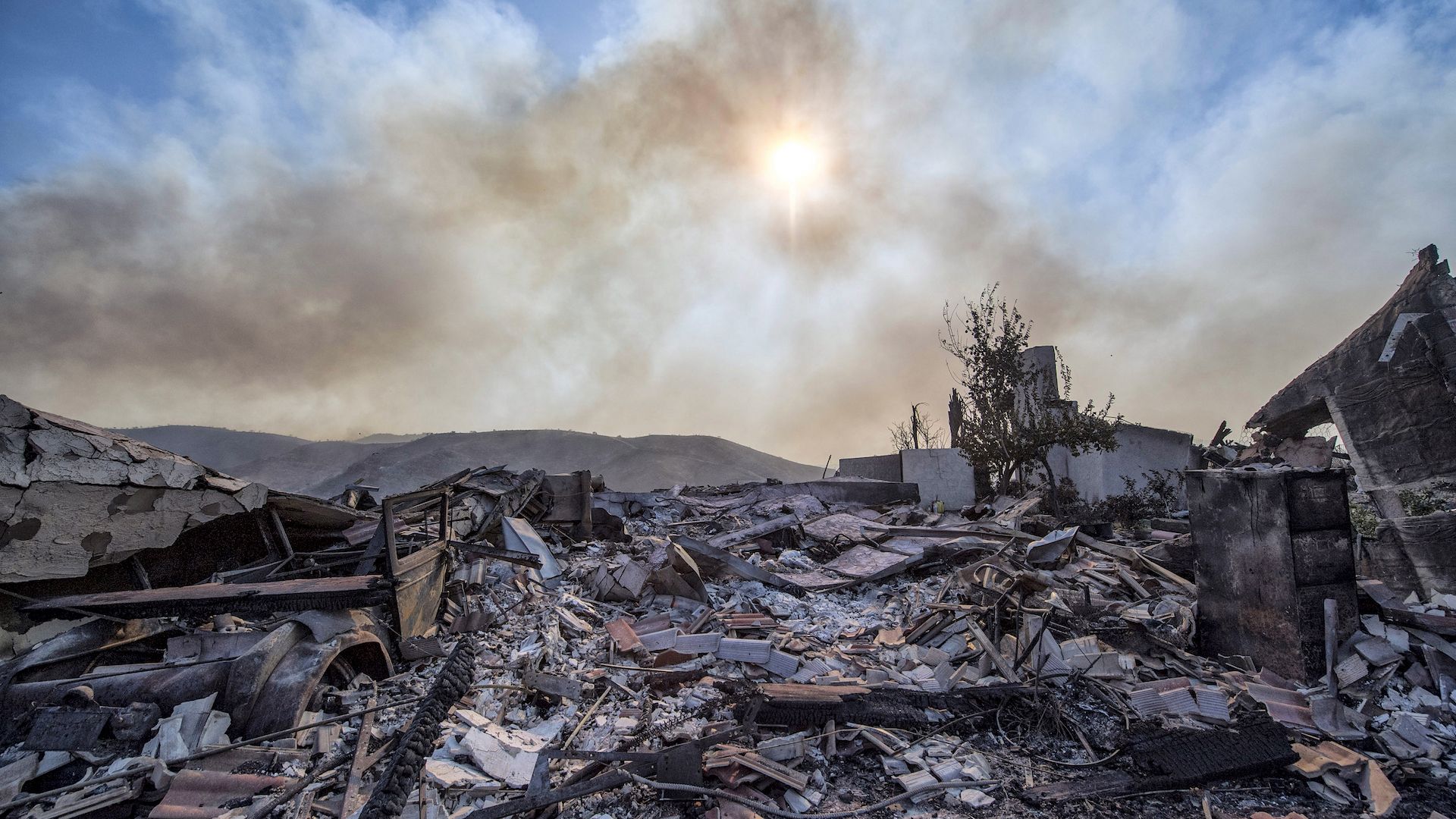
California's wildfire siege continues and may worsen Monday and Tuesday as thousands of firefighters continue to battle massive blazes up and down the state. Fanned by strong Santa Ana winds and taking advantage of near-record dry conditions, the fires are roaring into both neighborhoods and the record books.
The big picture: With at least 29 fatalities as of Monday morning, the Camp Fire has become the state's deadliest wildfire on record since 1933. With more than 200 people still missing, this wildfire, which all but destroyed the town of Paradise, about 90 miles north of Sacramento, is likely to overtake the Griffith Park Fire to become the state's deadliest such event on record.
Crude oil prices are up on Monday following weeks of declines after OPEC and allied producers signaled yesterday that they may collectively trim output next year.
Driving the news: Saudi Energy Minister Khalid al-Falih told reporters in Abu Dhabi that the kingdom plans to cut exports by 500,000 barrels per day next month. On Monday, al-Falih said the Saudis and allied producers would need to collectively cut supplies by as much as 1 million barrels per day to rebalance the market, AP reports.
America’s divisive politics and the sheer math of cutting heat-trapping emissions indicate the world’s prospect of substantively tackling climate change is getting out of reach.
Why it matters: We often talk about this issue as though big solutions are coming sooner or later. But in fact, it’s a big “if,” not “when,” America and the world will do anything close to what scientists say is needed to avoid the worst impacts of a warmer world.