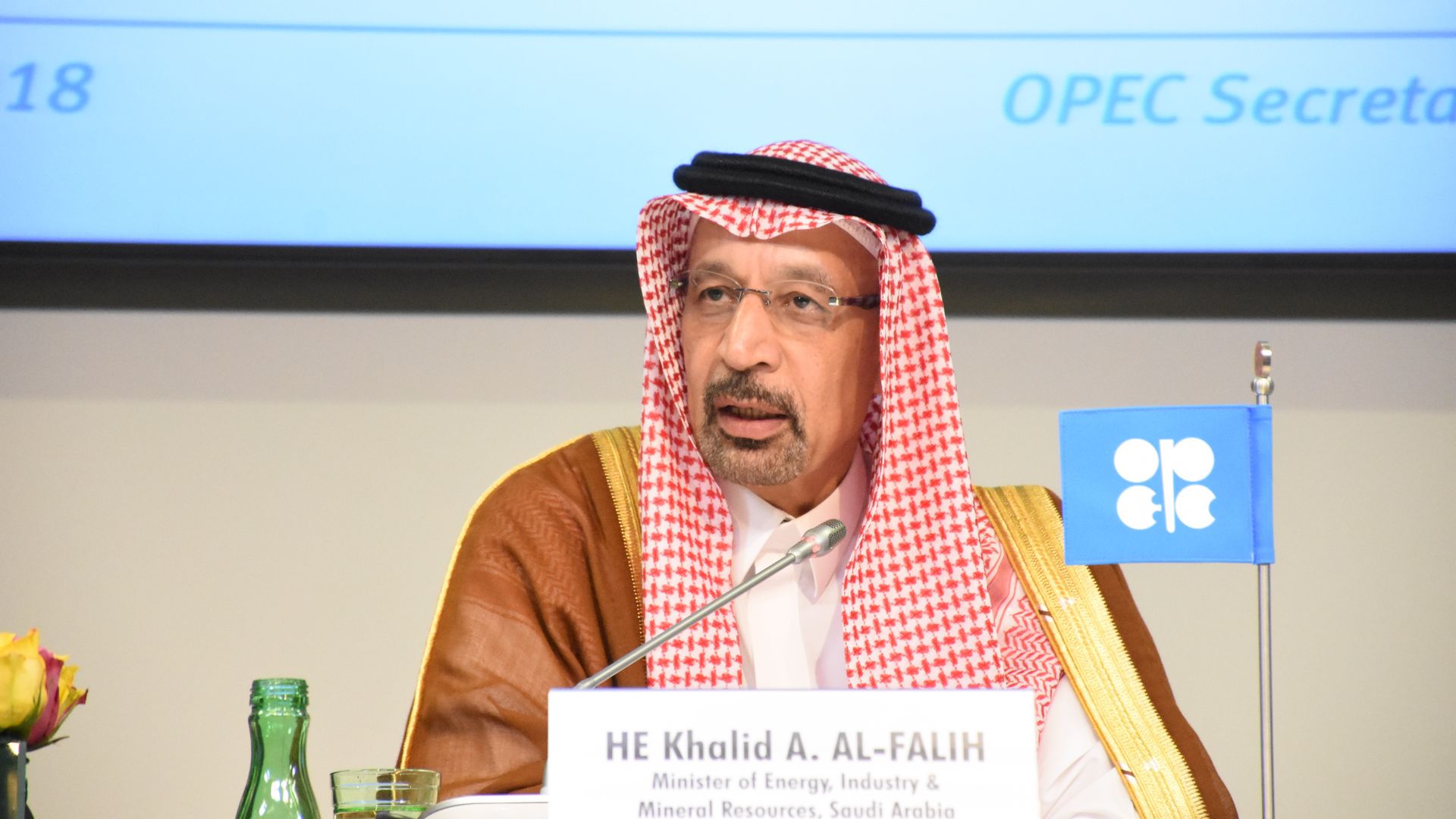
President Trump expressed his displeasure in a Monday tweet about OPEC's emerging plans to dial back oil production in the coming months, perhaps by a million barrels per day, although the group's meeting in Abu Dhabi did not produce a firm plan.
"Hopefully, Saudi Arabia and OPEC will not be cutting oil production. Oil prices should be much lower based on supply!"
Why it matters: Trump's tweet puts him at odds with potential moves by Saudi Arabia, which is OPEC's dominant producer, and the wider cartel as the administration is ratcheting down Iranian exports with sanctions but wants to avoid rising prices.
One of the biggest losers this past election day was the carbon tax. Environmentalists hoped that Washington might become the first state in the country to pass such a tax through a ballot measure, but the proposal failed by nearly 13 points.
The big picture: The carbon tax, which would effectively increase the cost of producing, distributing or using fossil fuels, has emerged as a theoretically promising compromise to people on both sides of the aisle, as it would create a market-based incentive for companies to pursue aggressive action on climate change. But in practice — and even in a solidly Democratic state — the public appears unwilling to pay for it, at least in the iteration that was on the ballot in Washington.
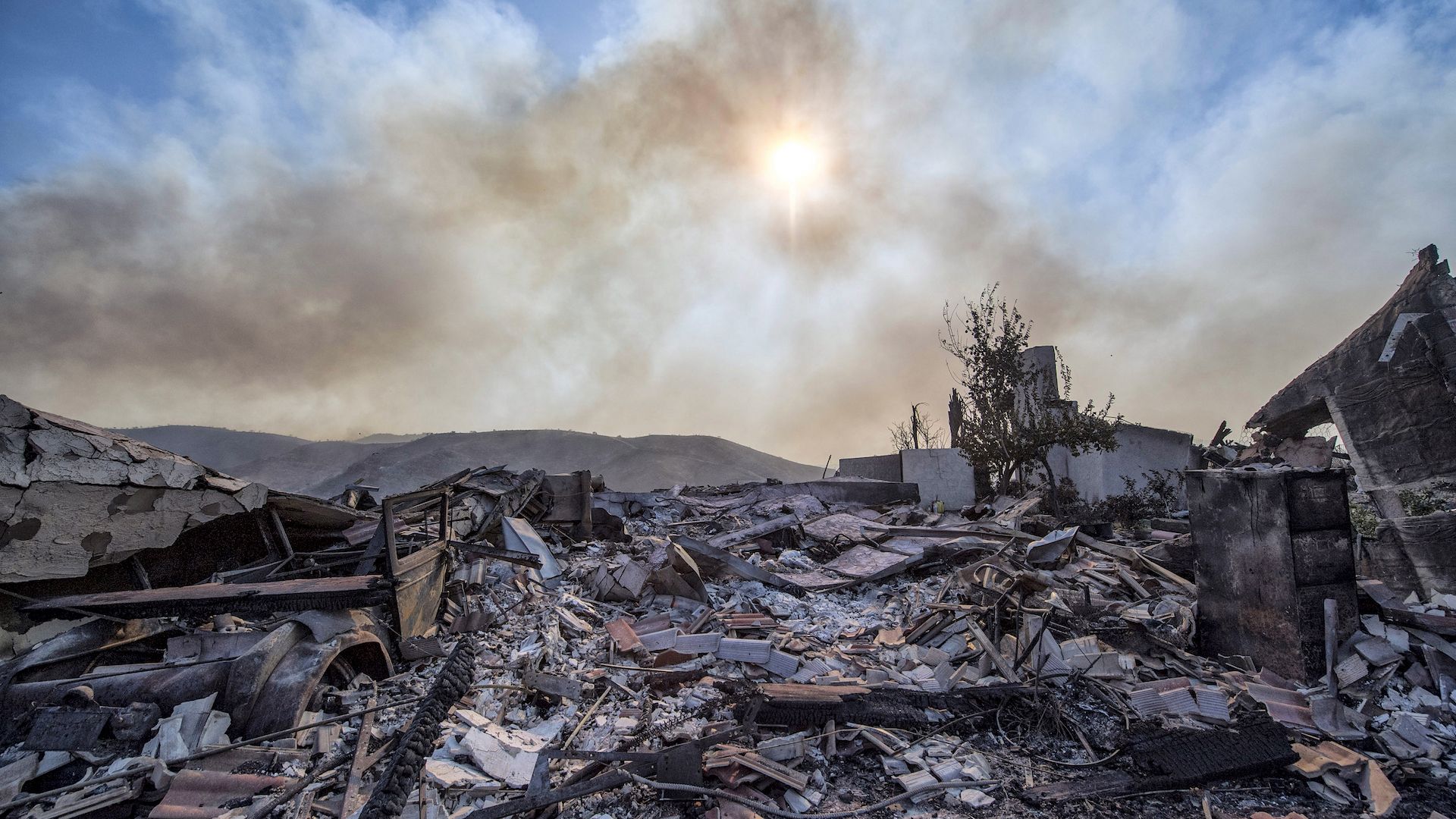
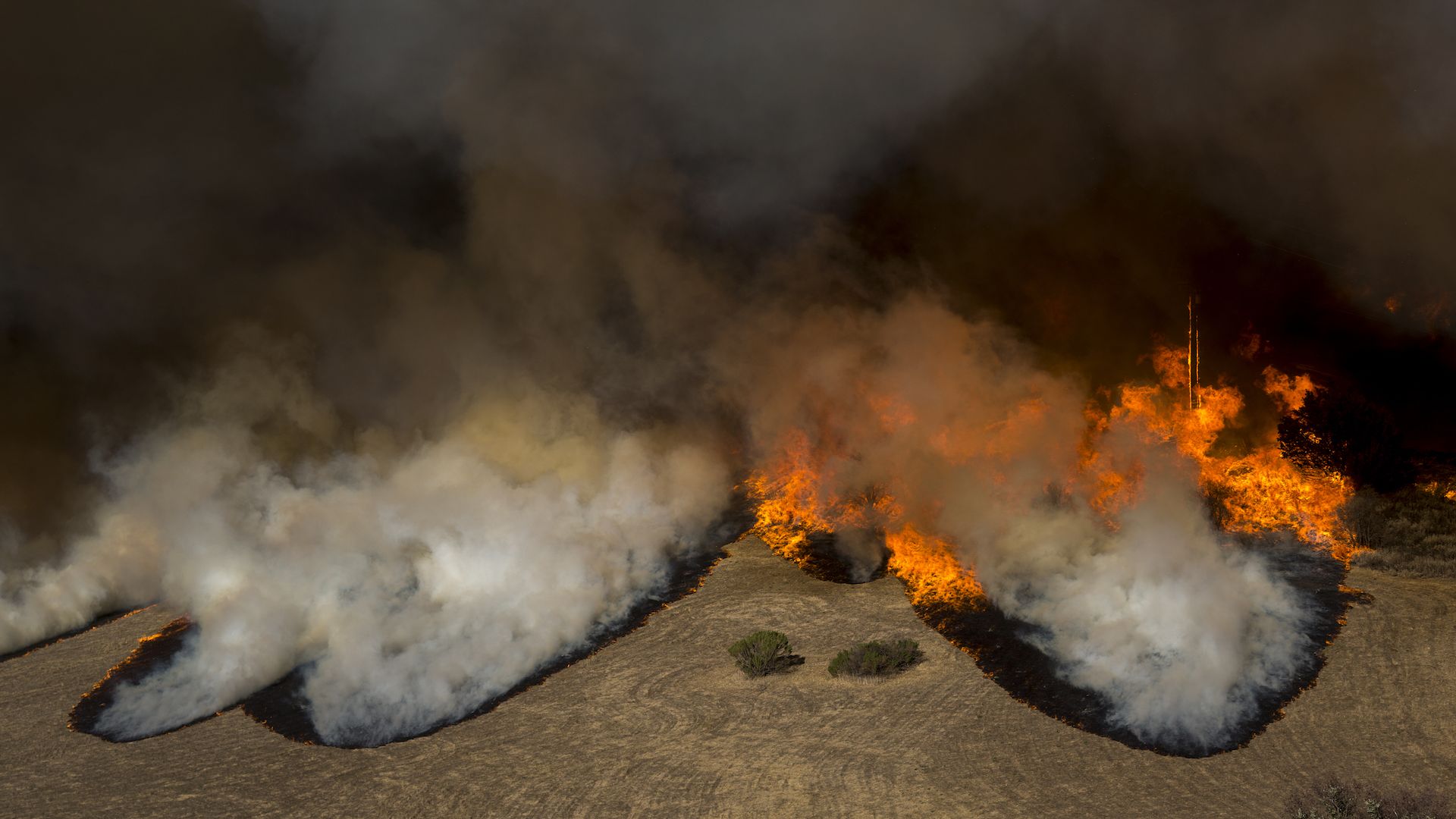
California's wildfire siege continues and may worsen Monday and Tuesday as thousands of firefighters continue to battle massive blazes up and down the state. Fanned by strong Santa Ana winds and taking advantage of near-record dry conditions, the fires are roaring into both neighborhoods and the record books.
The big picture: With at least 29 fatalities as of Monday morning, the Camp Fire has become the state's deadliest wildfire on record since 1933. With more than 200 people still missing, this wildfire, which all but destroyed the town of Paradise, about 90 miles north of Sacramento, is likely to overtake the Griffith Park Fire to become the state's deadliest such event on record.
Crude oil prices are up on Monday following weeks of declines after OPEC and allied producers signaled yesterday that they may collectively trim output next year.
Driving the news: Saudi Energy Minister Khalid al-Falih told reporters in Abu Dhabi that the kingdom plans to cut exports by 500,000 barrels per day next month. On Monday, al-Falih said the Saudis and allied producers would need to collectively cut supplies by as much as 1 million barrels per day to rebalance the market, AP reports.
America’s divisive politics and the sheer math of cutting heat-trapping emissions indicate the world’s prospect of substantively tackling climate change is getting out of reach.
Why it matters: We often talk about this issue as though big solutions are coming sooner or later. But in fact, it’s a big “if,” not “when,” America and the world will do anything close to what scientists say is needed to avoid the worst impacts of a warmer world.
With California reeling from historic and deadly blazes that span the spine of the state, meteorologists are warning that weather conditions on Sunday into Monday morning will once again favor extreme fire behavior that could make it possible for wildfires to spread out of control.
The big picture: With thousands of crews deployed, firefighters have made progress in containing both the Woolsey Fire in Ventura and Los Angeles counties as well as the Camp Fire, which destroyed the town of Paradise, killing at least 23 and burning down 6,713 structures. The Camp Fire, which is the state's most destructive on record in terms of property destroyed, was listed as 25% contained as of Sunday morning, having burned 109,000 acres so far. The Woolsey Fire is just 10% contained, and 83,275 acres in size.