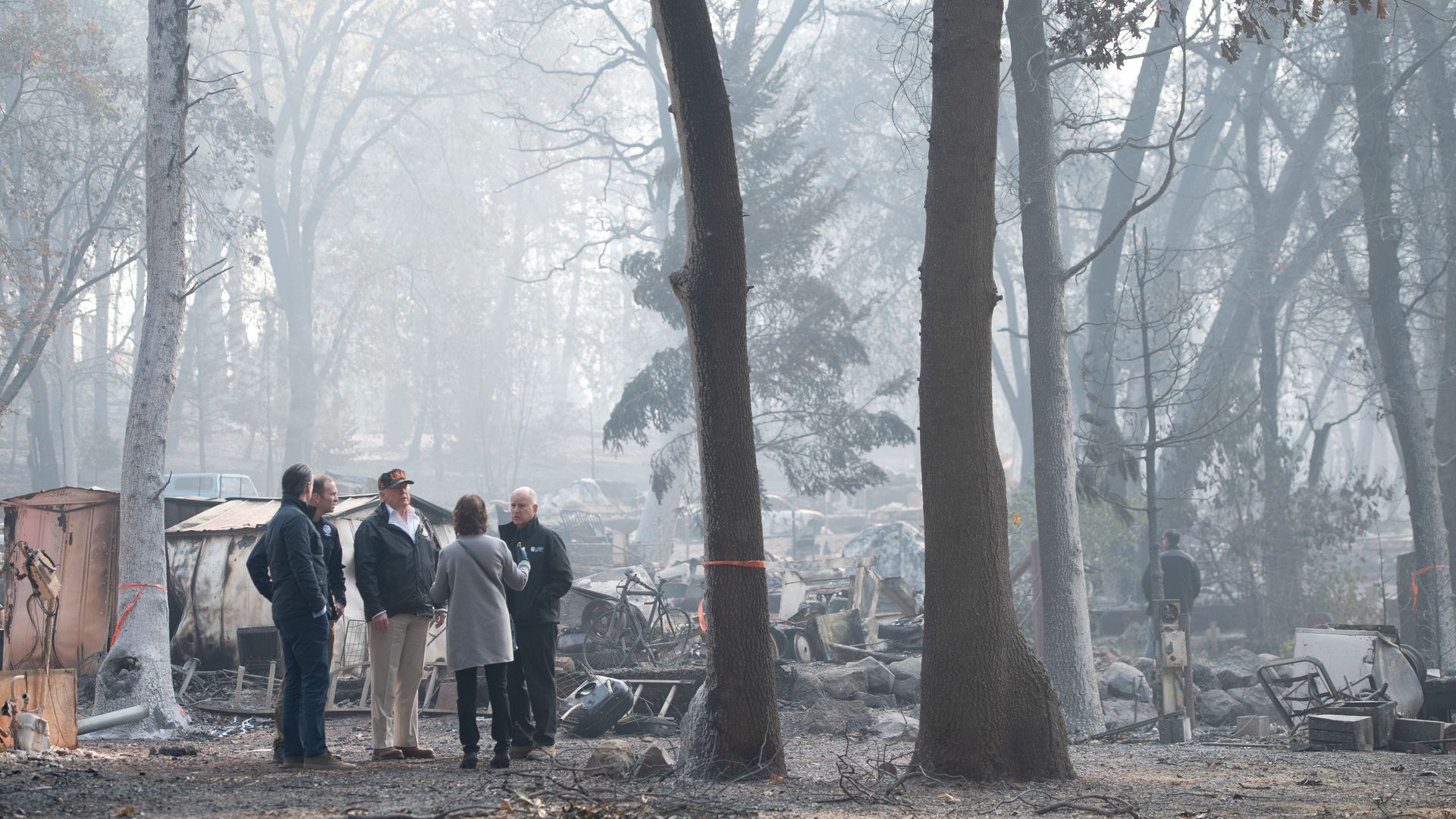
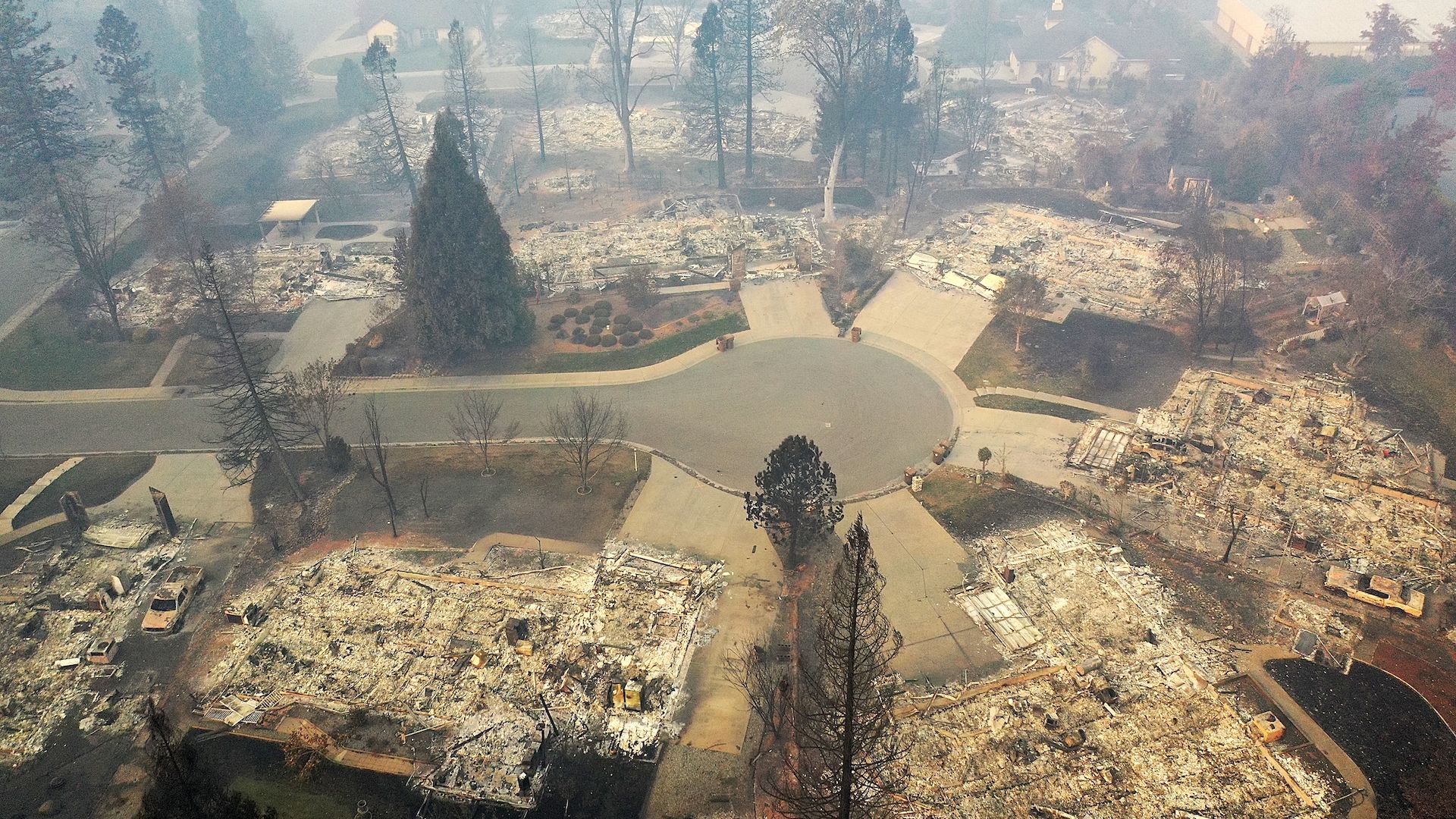
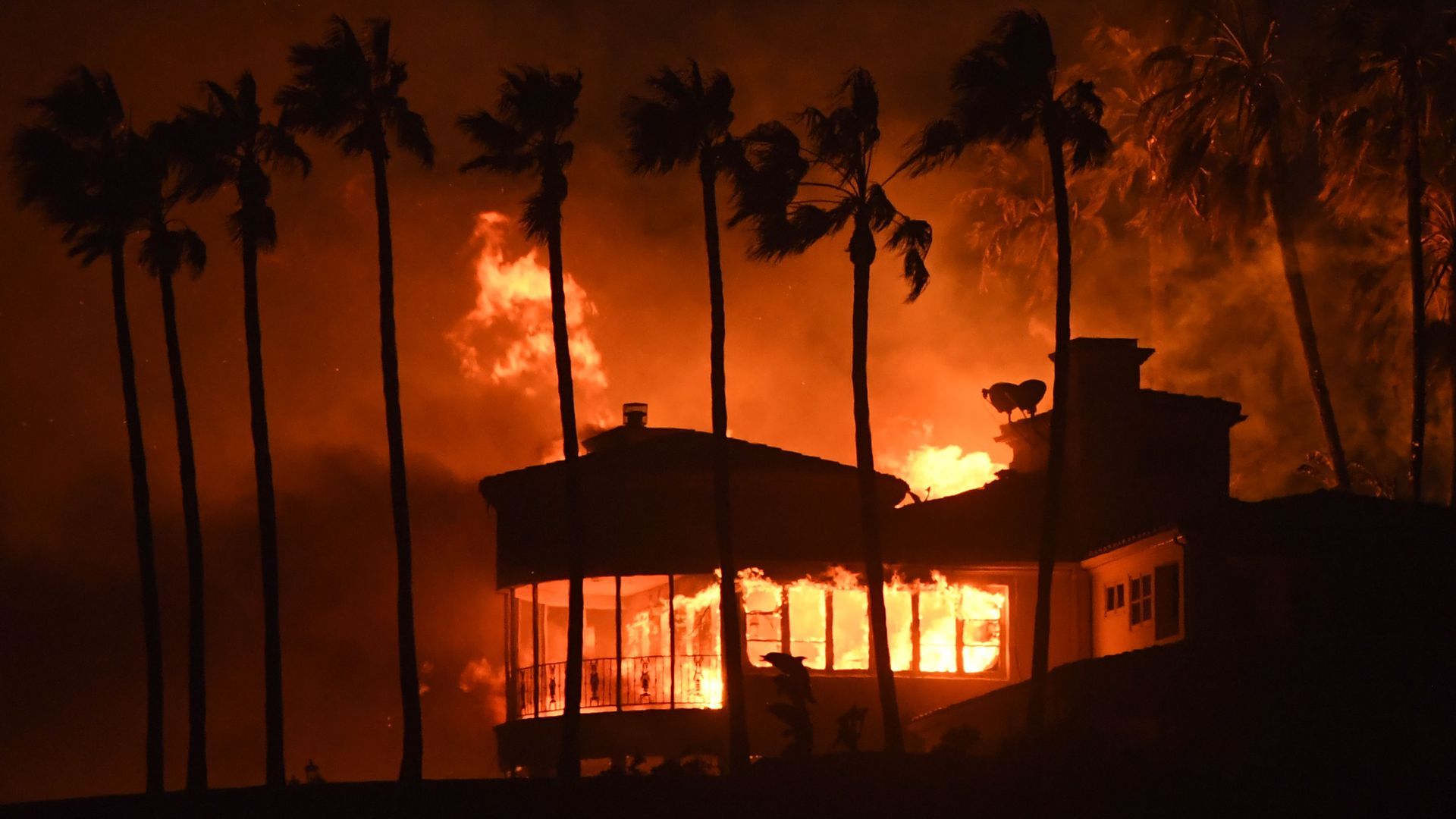
President Trump visited the devastated town of Paradise, Calif. on Saturday to view the wildfire aftermath that has left at least 71 dead and 1,000 missing.
Details: In his comments to assembled reporters, Trump said, "Hopefully, this will be the last of these, because it was a really, really bad one. People have to see this to really understand it." Trump also said that viewing the fire damage hadn't changed his opinion on climate change, though a changing climate and population growth are combining to increase wildfire risk both in California and more broadly across the American West.
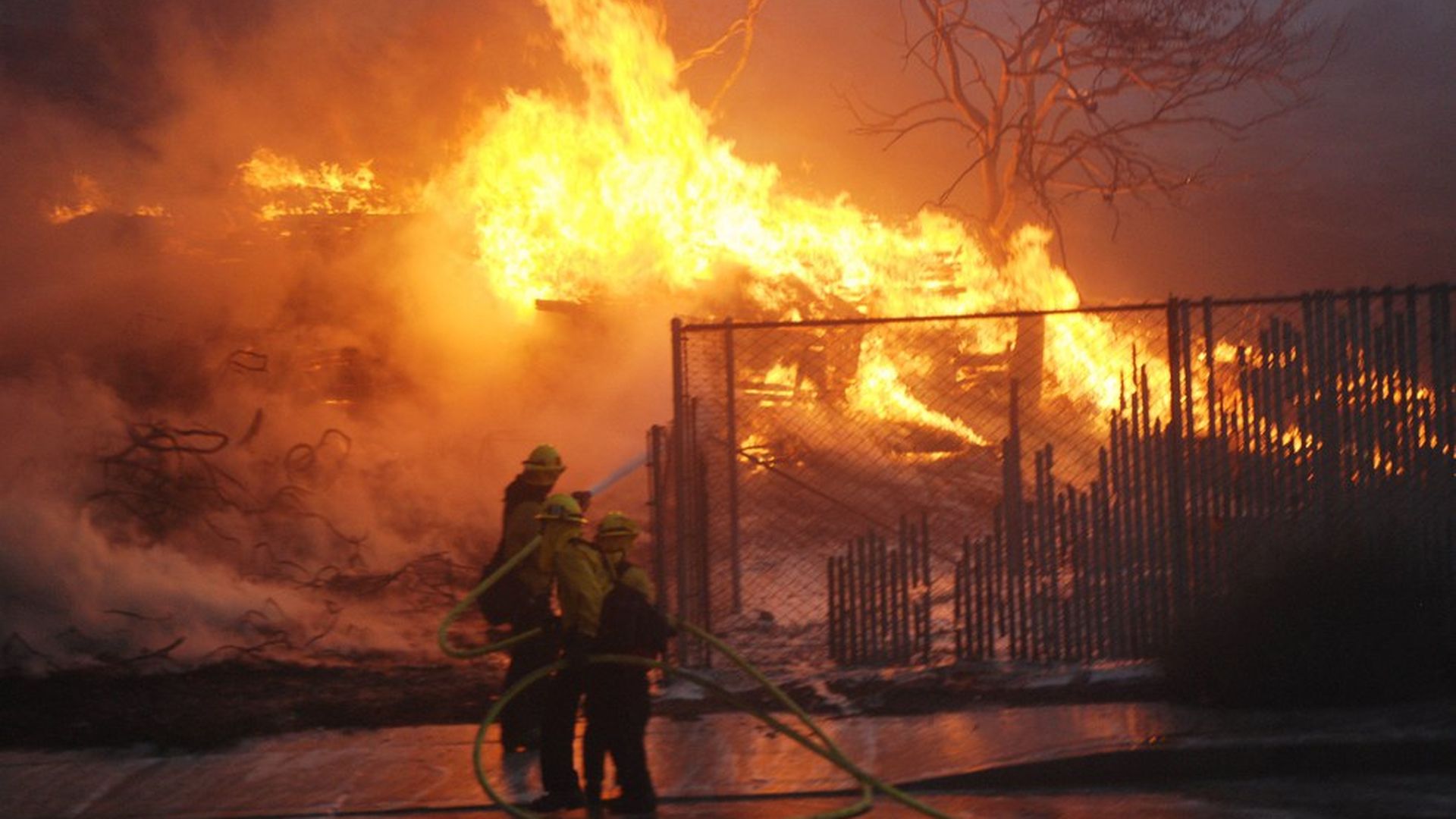
There are about 1,500 prisoners doing the grueling work of fighting California wildfires, including the record-breaking Camp Fire, according to the New York Times. This is a long-standing program in which inmates earn up to $3 a day for their volunteer work, but upon release it will be almost impossible for them to get a firefighting job in the state.
Why it matters: Many prisons offer educational and job training programs for inmates hoping to work in fields like cosmetology, firefighting or even law after serving their time. However, due to complicated occupational licensing laws that often result in denials of former criminals, the training is often useless after incarcerated men and women are released.
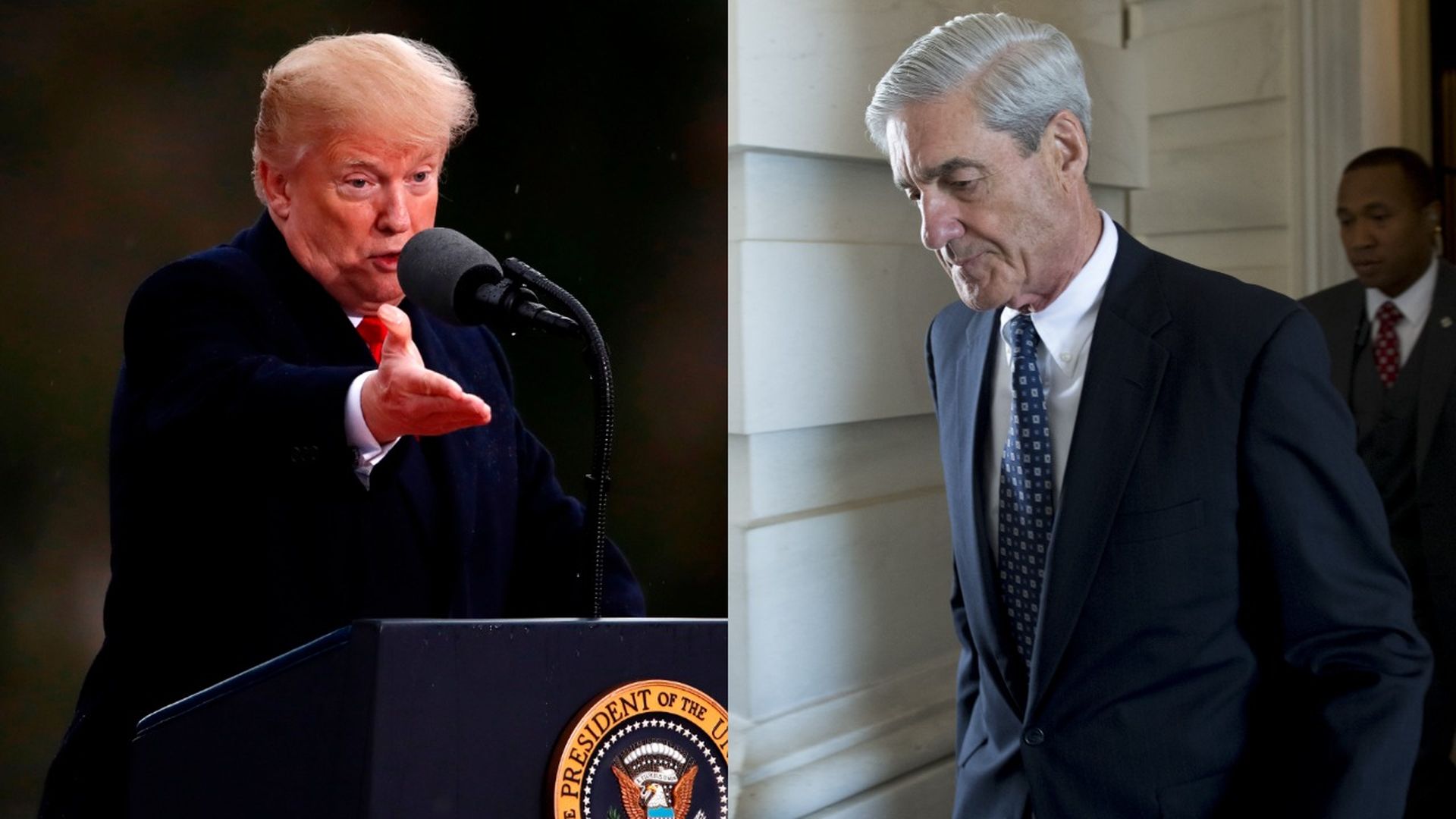
Responding to questions from Robert Mueller is President Trump’s literal moment of truth.
Why it matters: Over his decades in public life, Trump has faced scant — if any — serious consequences for saying things that are not true. However, right now, in putting together his answers for the special counsel, that all changes.
The Butte County Sheriff announced Friday evening that 71 people have been confirmed dead and more than 1,000 are unaccounted for as evacuations continue for northern California's Camp Fire.
Why it matters: The victim tolls rose sharply from early Friday with 63 dead and 631 unaccounted for. The Camp Fire is California's most destructive and deadliest wildfire on record, surpassing records set just 13 months ago. The fire is causing dangerously poor air quality to blanket the San Francisco Bay Area, threatening to aggravate chronic health conditions including asthma, heart and lung disease. Schools are closed due to the poor air quality, and many people have had to wear masks to block particulate matter from getting into their lungs.
California is never immune to big fires, but a look at the past 13 months reveals a horrifying path of destruction that deserves equal screen time to the latest political intrigues.
Driving the news: Parts of the state are blanketed in smoke, with temperatures dropping as a result and residents scrambling to get specialized masks to help filter the air. The state's air quality is currently the worst in the nation as a result of the fires, Bloomberg reports.
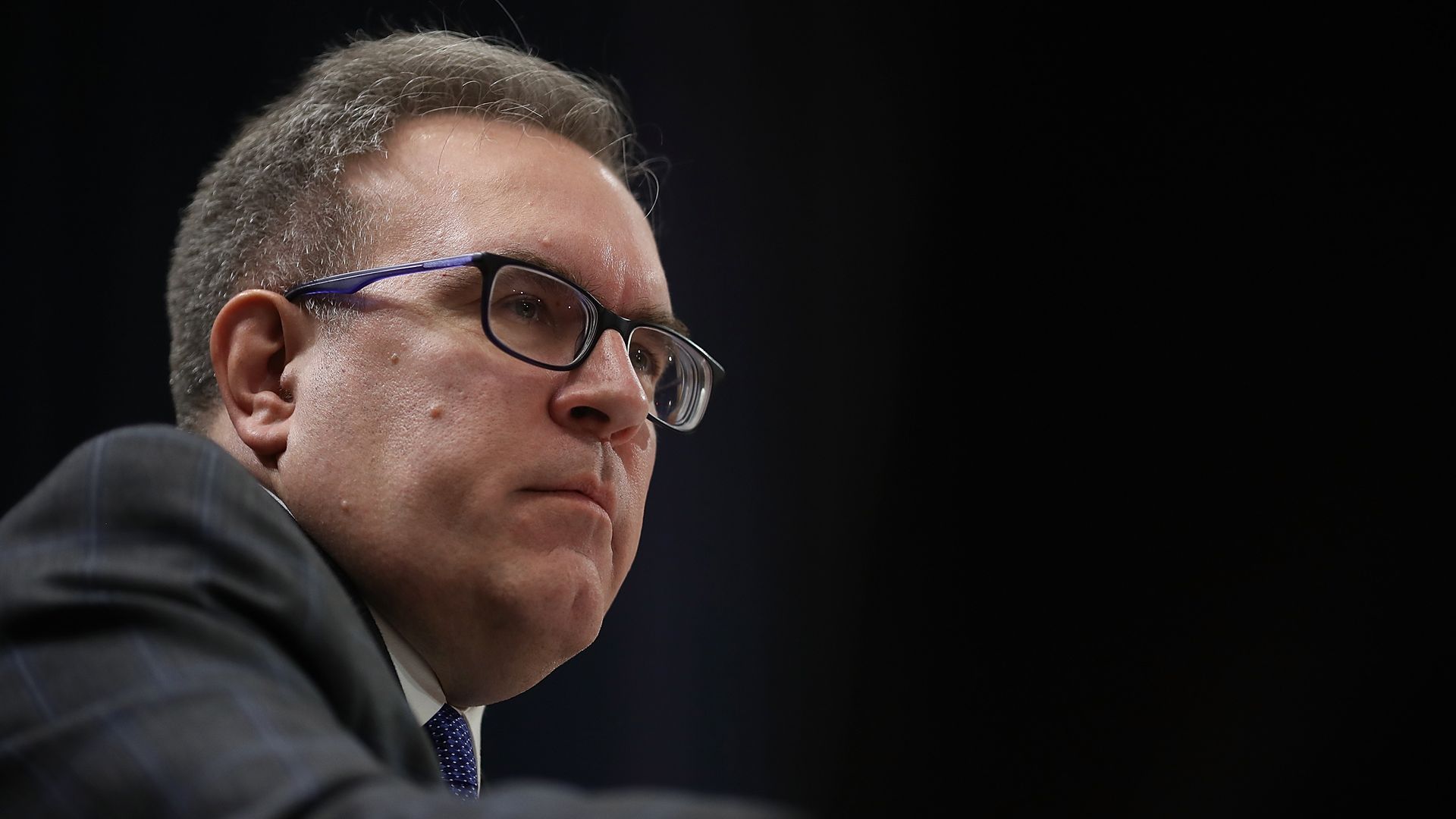
During the Medal of Freedom ceremony Friday, President Trump said he was nominating acting administrator of the Environmental Protection Agency, Andrew Wheeler, to head the agency permanently.
What's next: Wheeler, who is a former coal lobbyist and has said he is skeptical that the burning of fossil fuels is the primary cause of global warming, has been temporarily filling in as EPA chief since July following Scott Pruitt's departure. Wheeler will need to be confirmed by the Senate before before becoming the new head of the agency.
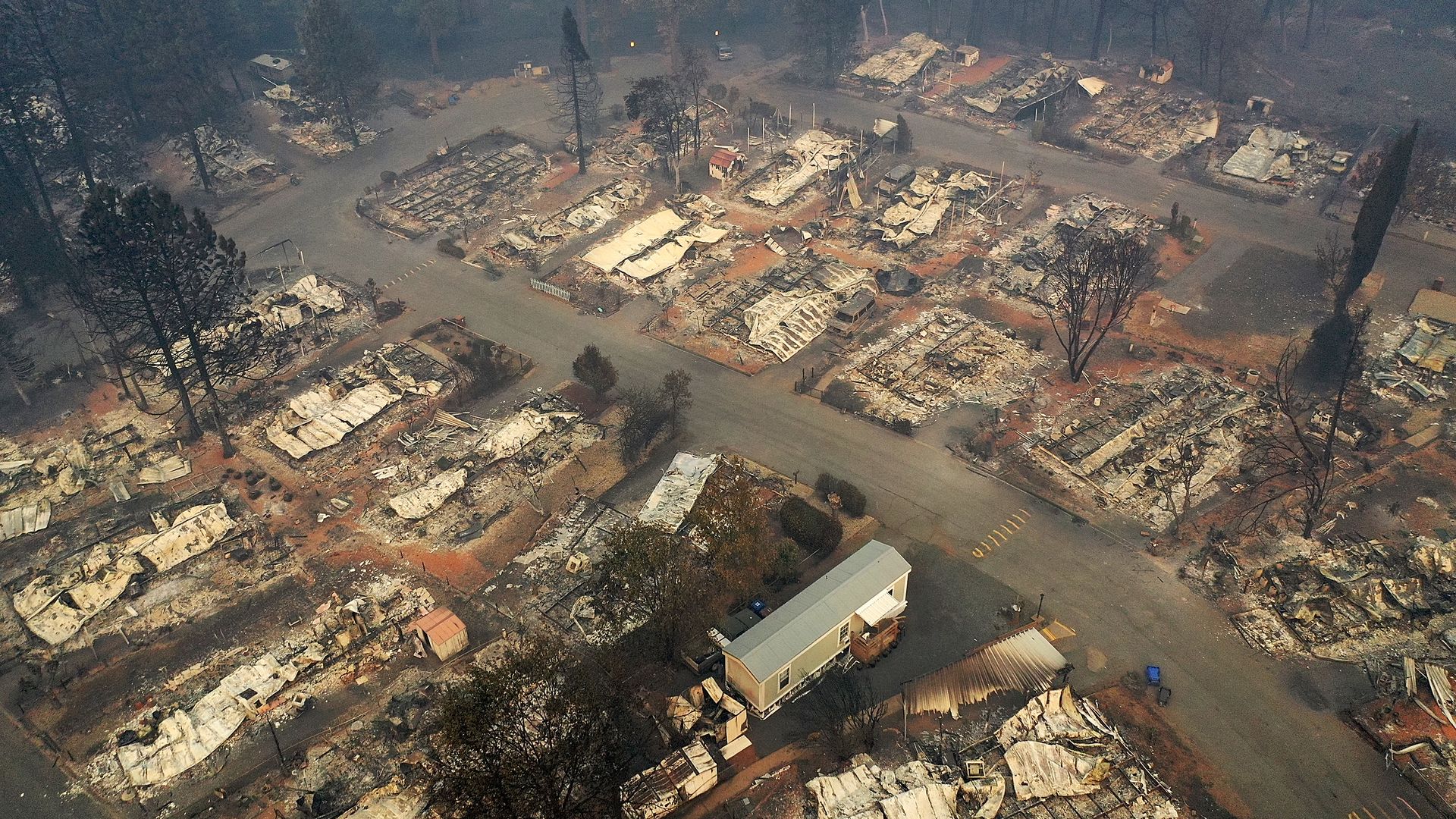
California's Camp Fire has now claimed 63 lives and destroyed at least 9,844 homes, 336 commercial and 2,076 other buildings. A staggering 631 people are now listed as missing, a up from previous figures of around 200.
Why it matters: The Camp Fire is California's most destructive and deadliest wildfire on record, surpassing records set just 13 months ago. The fire is causing dangerously poor air quality to blanket the San Francisco Bay Area, threatening to aggravate chronic health conditions including asthma, heart and lung disease. Schools are closed due to the poor air quality, and many people have had to wear masks to block particulate matter from getting into their lungs.
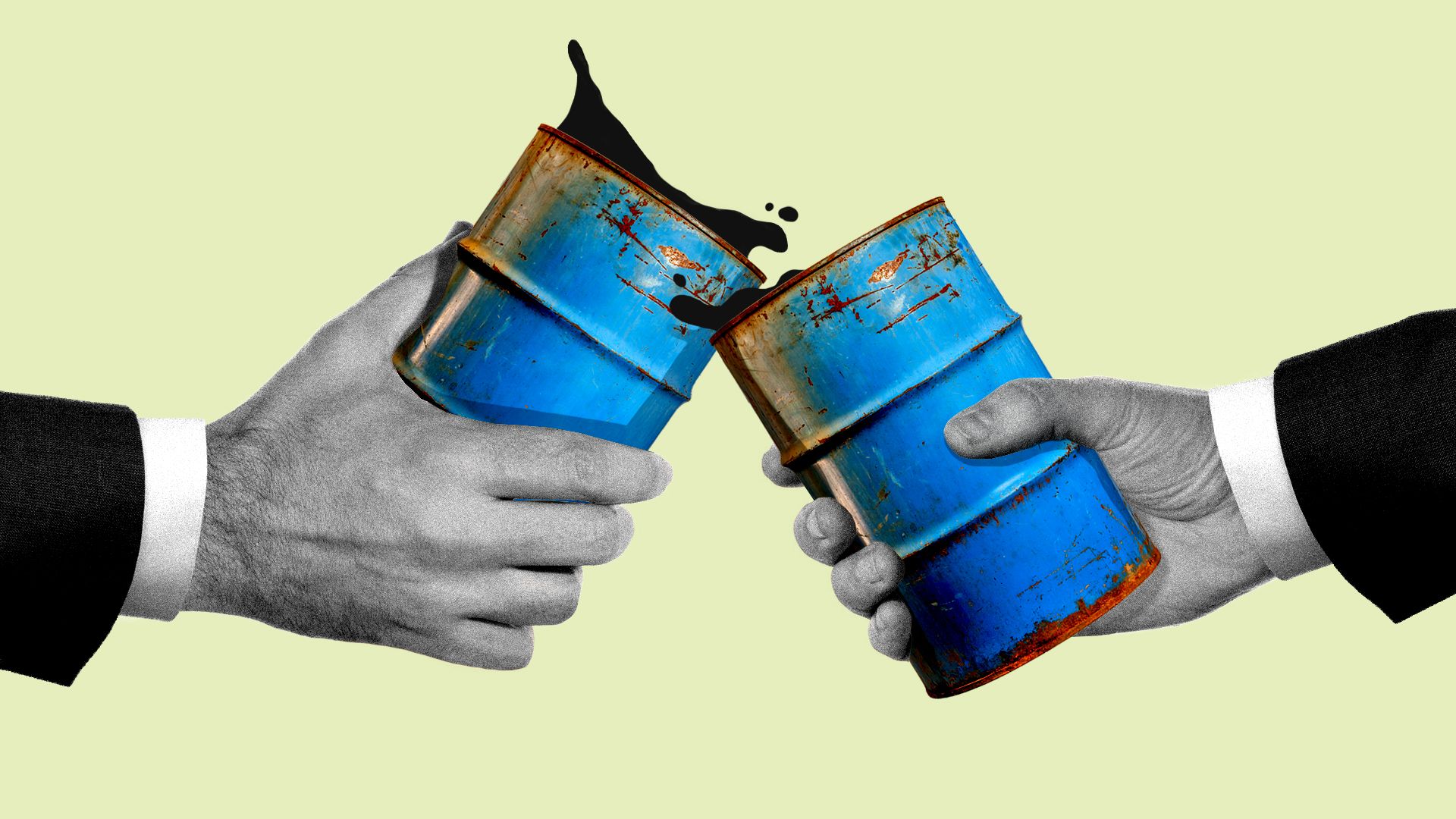
Between early August and early October, crude oil prices shot up by approximately $20 per barrel in anticipation of the Trump administration's Nov. 5 re-imposition of oil export sanctions on Iran. But in the first week of October, amid speculation of a $100-per-barrel market, crude prices suddenly reversed course.
Between the lines: The reversal illuminates the influence of geopolitics on the crude market, including the shifting role of Saudi Arabia as a major balancing force. Saudi Arabia ultimately bowed to U.S. pressure, but its hesitation speaks to an erosion of the U.S.–OPEC relationship as Russia’s influence has grown.
Falling oil prices are bad news for the oil industry — but they're great news for corporations that could use the relief from other expenses.
Why it matters: With a tight labor market that's forcing companies to pay more to attract workers, plus the costs of tariffs from President Trump's trade war, oil is one less expense that will cut into companies' profits. "The oil price decline offsets other cost pressures that businesses have," Conrad DeQuadros, an economist at RDQ Economics, told Axios.
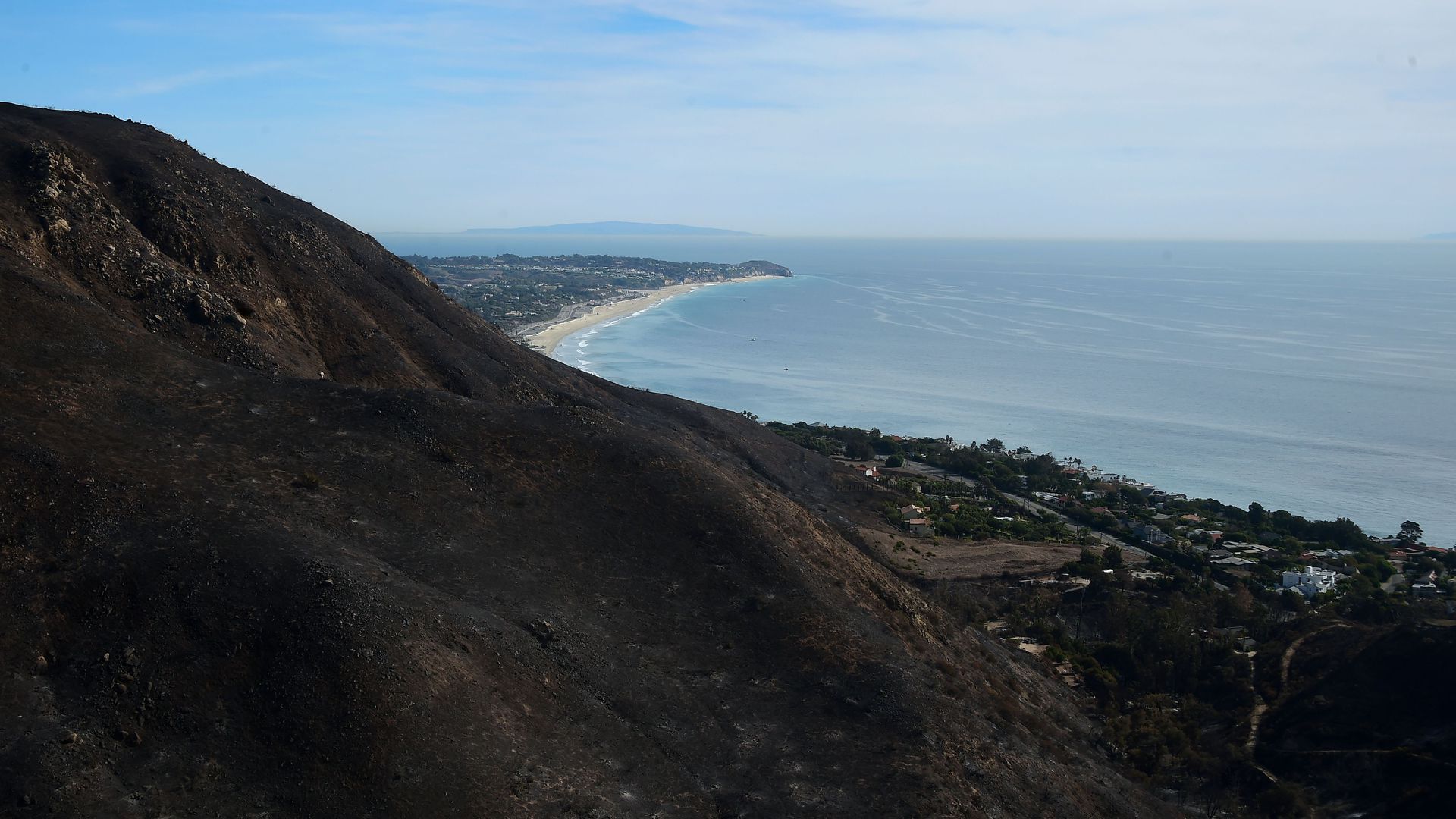
The fires that wiped out the town of Paradise, California, and burned all the way to the Pacific Ocean in Malibu are the latest in a 13-month string of the deadliest and most destructive blazes the state has ever seen.
The big picture: These fires have parameters in common — unusually warm and dry preceding conditions, strong winds that caused the fires to spread rapidly, extreme fire behavior and populated areas that are difficult to evacuate on short notice.
For Californians — many of them inured to routine annual fires, mudslides and earthquakes — a key question is not whether to rebuild when catastrophe strikes yet again. It's whether they can afford it.
Driving the news: For many fire victims, insurance — or the government — makes it so they can rebuild on the same lot. But in some of California's most recent spate of fires, that hasn't been enough. And a lot of experts see signs that more homeowners could find it hard to rebuild as insurers reassess the risk of a new future of fire.