Wednesday's economy stories



The AI industry's week from hell
A week of political upheaval, financial turmoil and salacious scandal delivered one final indignity to the AI industry Tuesday, as Anthropic's staggering IPO target fell short of expectations.
Why it matters: The bubble is wobbling. Investors, businesses and governments need a spectacular success from Anthropic to stave off a crisis of confidence that could tear through the broader economy.

Americans' credit card debt hits a record high


Americans' credit card balances hit a record $1.29 trillion in the third quarter, according to a new report released by the Federal Reserve Bank of New York.
Why it matters: Falling behind on credit card payments can trap struggling households in a cycle of fees, damaged credit and increasingly expensive borrowing. The latest figures show that financial pain is concentrated in lower-income communities, even as delinquency rates improve nationally.

Harsh new inflation reality
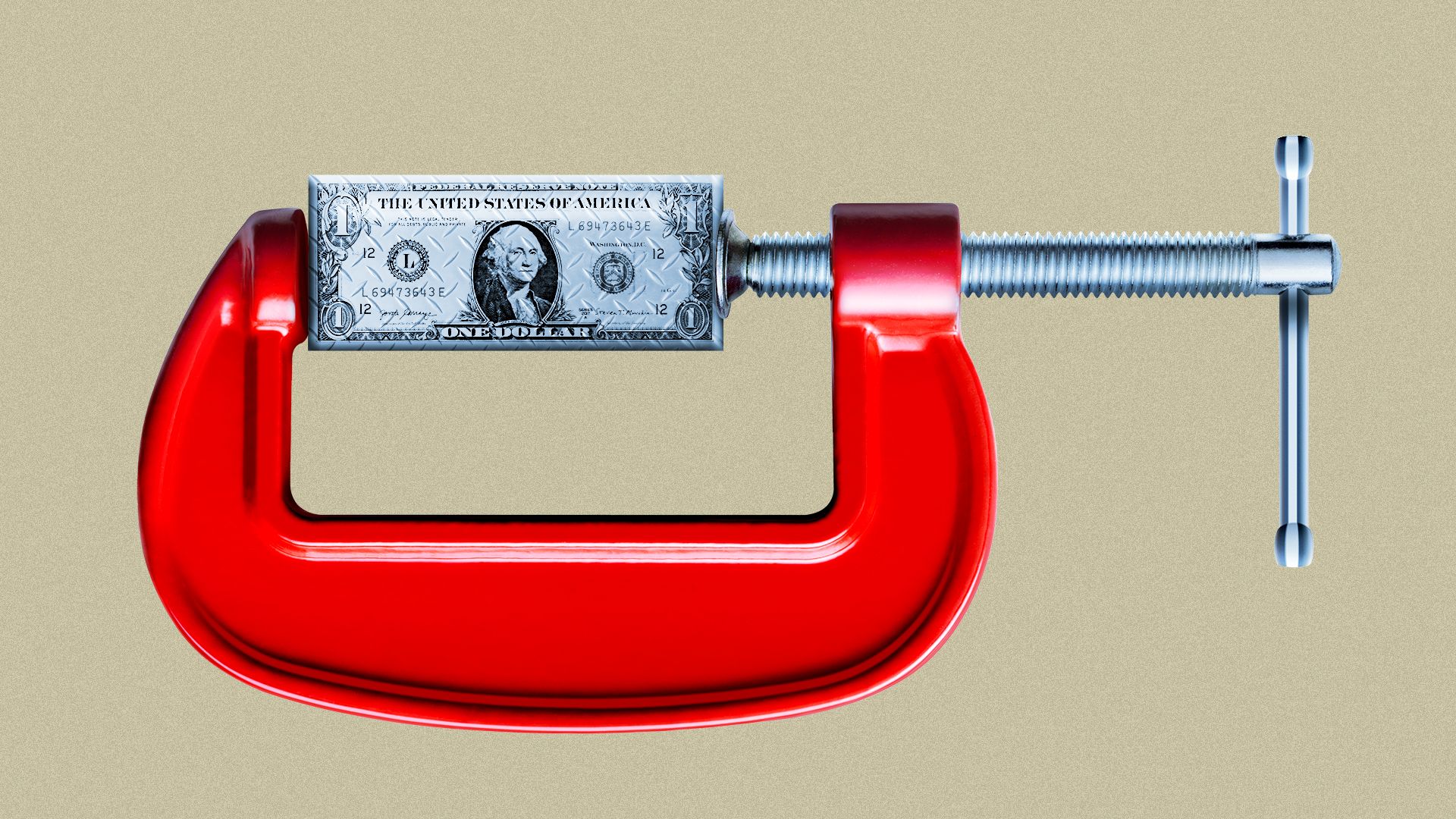
America's inflation problem is stubborn, broadening out and showing no sign of letting up.
Why it matters: October marked the third straight month of hotter-than-expected inflation, defying repeated predictions over the last couple of years that price pressures were finally about to ease.
- In this sixth consecutive year of steep price increases, consumers are finding there is nowhere to hide from inflation.
- The Iran war has added to the pain, but other factors — tariffs and the AI investment boom — have also put upward pressure on costs, complicating an affordability problem that long predates the conflict.
What they're saying: "Today's inflation report is a warning shot," Seema Shah, chief global strategist at Principal Asset Management, wrote Tuesday morning.
- "Coming just a week after the midterm elections exposed the depth of voters' concerns about affordability, the message for the Fed is uncomfortable but clear: The inflation fight is not finished," Shah wrote.
Driving the news: The headline Consumer Price Index rose 0.4% in October, down slightly from a 0.6% surge the previous month.
- Core CPI — which excludes volatile food and energy costs — climbed 0.3% for the third consecutive month, a sign that underlying inflationary pressures remain stubbornly persistent.
The Labor Department did not calculate October's annual inflation rate since last year's government shutdown prevented it from collecting price data for October 2025.
- But assuming prices that month were halfway between September and November, overall inflation over the last 12 months was 4% — up from 3.7% in September. Core inflation would have risen to 2.8%, up from 2.6%.
- Another measure similarly paints a picture of hot inflation. Core prices rose at a 3.7% annualized pace over the three months through October, the fastest pace by this gauge all year.
- It also is a sharp acceleration from the summer, when underlying inflation appeared to be cooling.
Zoom out: Gasoline prices advanced another 1% in October after surging 9.1% in September, adding to the steep increase in fuel costs since the Iran war began.
- Food prices climbed, raising concerns that higher diesel costs are rippling through to consumer prices. Grocery prices increased 0.4% after declining in September, while restaurant prices gained 0.5%.
- Shelter costs rose 0.3%, accounting for more than 30% of the overall increase in consumer prices last month.
Zoom in: Inflation is persistent in the services sector, which is largely insulated from swings in energy prices.
- A closely watched inflation measure that excludes housing, energy and food prices surged 0.4% in October — pushed up by higher costs in transportation, medical care and insurance.
What to watch: A strong labor market is not providing much relief from the sharply rising cost of living.
- Inflation has now outpaced or matched wage growth for three consecutive months, leaving workers with less purchasing power.

Get ready for rate hike(s)
The elevated inflation reading all but locks in a Fed interest rate hike in December.
- Now, the debate is shifting to whether the Fed should entertain a super-sized rate hike in December — and how much further the central bank may need to tighten policy in 2027.
State of play: Even the Federal Reserve officials who have argued for patience in getting inflation back under control are alarmed at the ongoing, broad-based price pressures of the sort evident in Tuesday's numbers.

The story of Sequoia Capital's reinvention
Sequoia Capital is the constant. A venture capital firm always in the top tier while others come and go.
- Now, though, some long knives are out — with whispers that a recent reinvention could dent Sequoia's crown.

Nashville's healthcare job openings far outpace available workers
Nashville has 25.7 open healthcare positions for every healthcare job seeker, more than 11 times the national rate. Could AI help ease the shortage, and how much will depend on training people to use the tools? A Healthcare Workforce Index from Covista, America's largest healthcare educator, examines both approaches.
- The Index is based on a model by Oliver Wyman, using 60 academic, government, industry and business data sets and studies.

Price pressures persisted in October


Inflation remained hot in October, according to data from the Labor Department released on Tuesday.
Why it matters: The Consumer Price Index shows that even as gasoline prices steadied, inflation pressures elsewhere remained stubborn.

Anthropic seeks to be valued at more than $1 trillion
Anthropic said on Tuesday that it will seek to raise up to $62.5 billion in its IPO at a market cap that could top $1 trillion.
Why it matters: This would be one of the largest IPOs ever, but smaller than some had expected.

Exclusive: Metal-ceramic specialist Intalus expanding
Intalus, an advanced materials company, is growing its production footprint with financing from Rochefort, a firm licensed under the Small Business Administration and the Pentagon's Office of Strategic Capital.
Why it matters: "We're turning myths about American manufacturing on their head," Steve Place, the company's head of corporate strategy, told Axios.
- "We can still make world-class manufacturing technology in this country."


Behind the Curtain: Trump's imperial last act

President Trump, with the clock ticking and congressional investigators closing in, plans to govern even more imperially, hell-bent on stretching executive power, targeting those on his enemies list, pardoning allies, and daring the courts and Congress to slow him down.
Why it matters: Trump and his allies are exploring executive action on new tariffs and immigration restrictions, and asserting greater control over spending. On X over the weekend, Trump discussed targeting and perhaps jailing Democrats who investigate administration officials. He claimed politically motivated harassment.
Trump is retooling his White House by elevating the one official who's synonymous with his all-gas-no-brakes style: Stephen Miller, who took over for Susie Wiles as White House chief of staff on Monday.

Wall Street bonuses on track for big gains
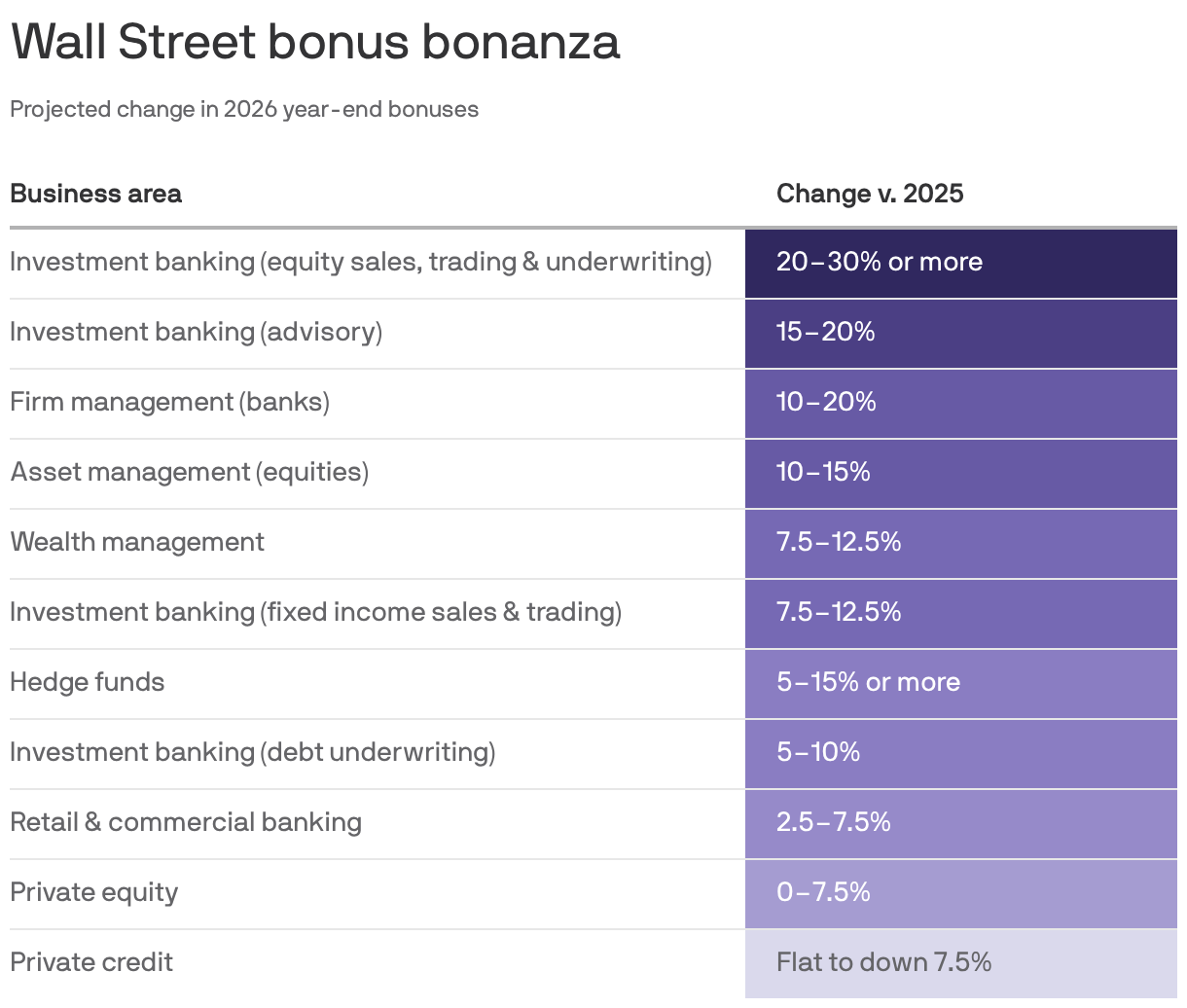
Wall Street's bankers and traders are set to rake in big increases in year-end bonuses over 2025, say new projections out Tuesday morning.
Why it matters: The AI investment surge has paid off massively on Wall Street, which raced to (for a fee) help hyperscalers, frontier AI firms and other smaller companies issue stock and debt, go public, spin up financing deals, and so on.
- The surge in volatility didn't hurt either — traders benefit when markets move around a lot.

Where cheeseburgers cost the most and least
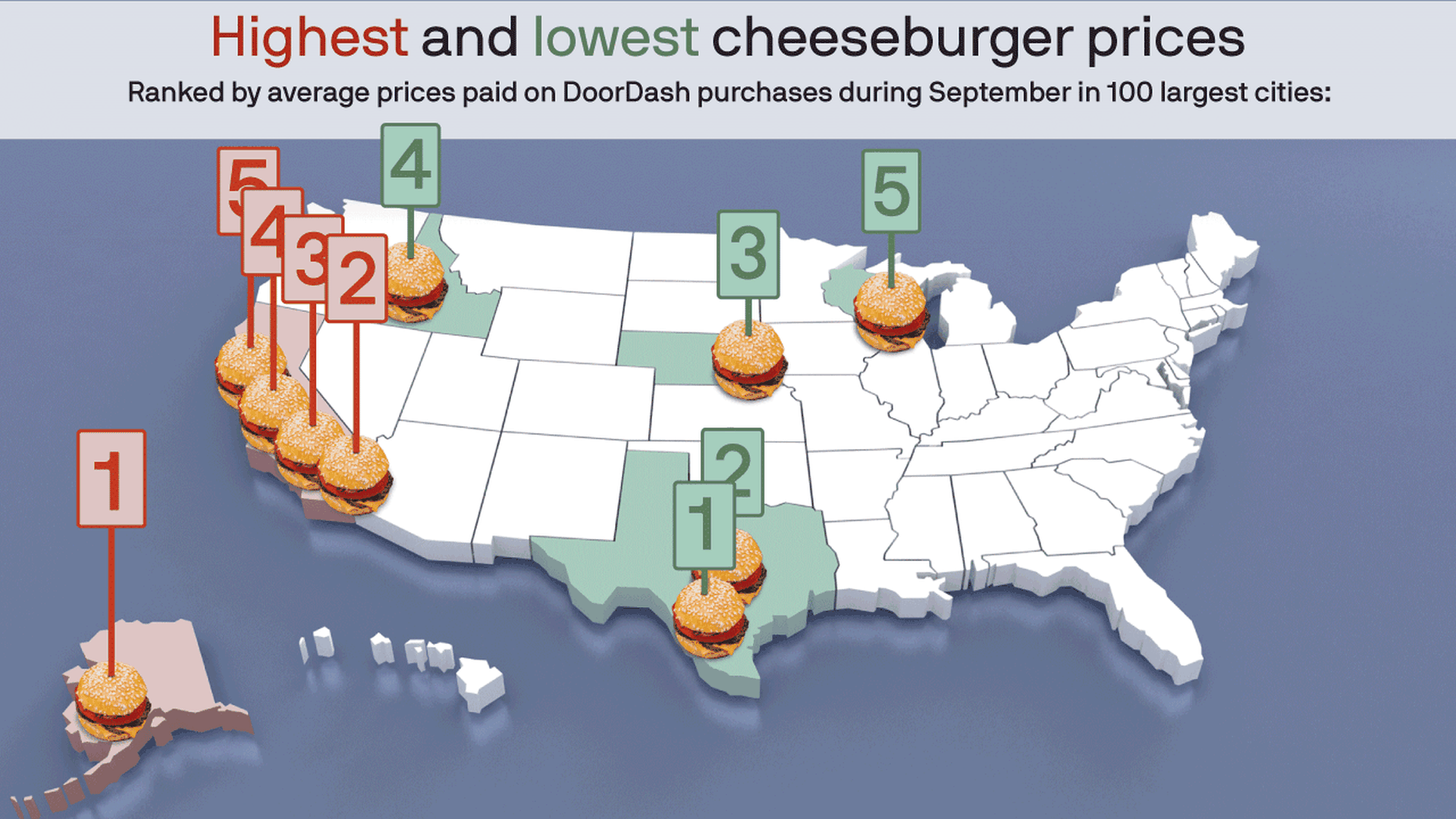
The average cheeseburger meal in Austin, Texas, is nearly half what you'd pay in San Diego.
Why it matters: What counts as an inexpensive meal in one city could be a splurge in another.
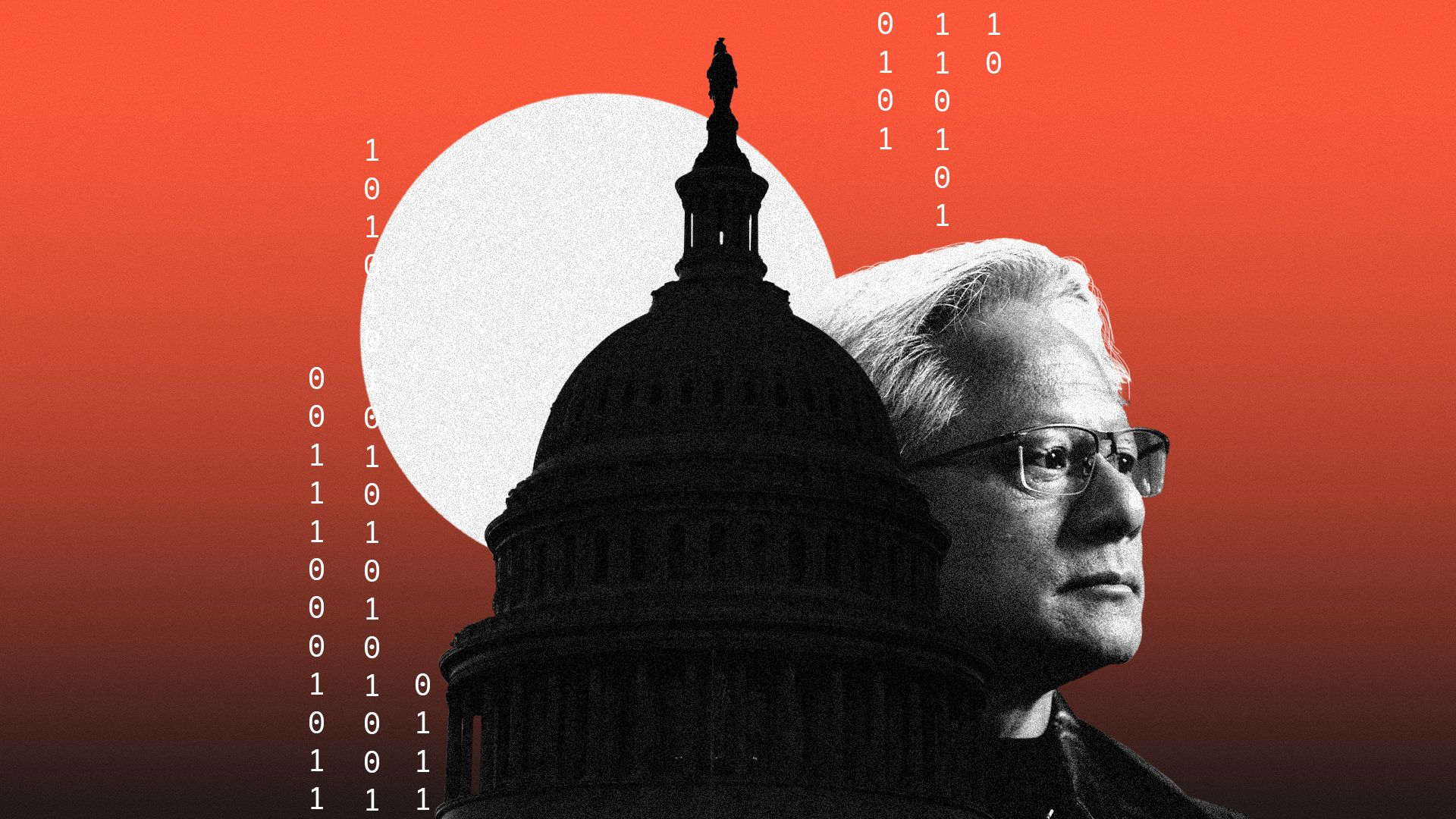
Nvidia's crisis and the politics of an AI pause
A political backlash against AI and data centers — now compounded by a crisis facing the technology's most influential champion — could help force a slowdown that industry leaders have struggled to achieve voluntarily.
Why it matters: Tapping the brakes on AI development — which frontier AI developers claim to want but have so far failed to do given the risk of offering an advantage to a competitor — could give society more time to prepare for economic upheaval and the risks of superintelligent systems.

AI stocks bounce back — with one notable exception
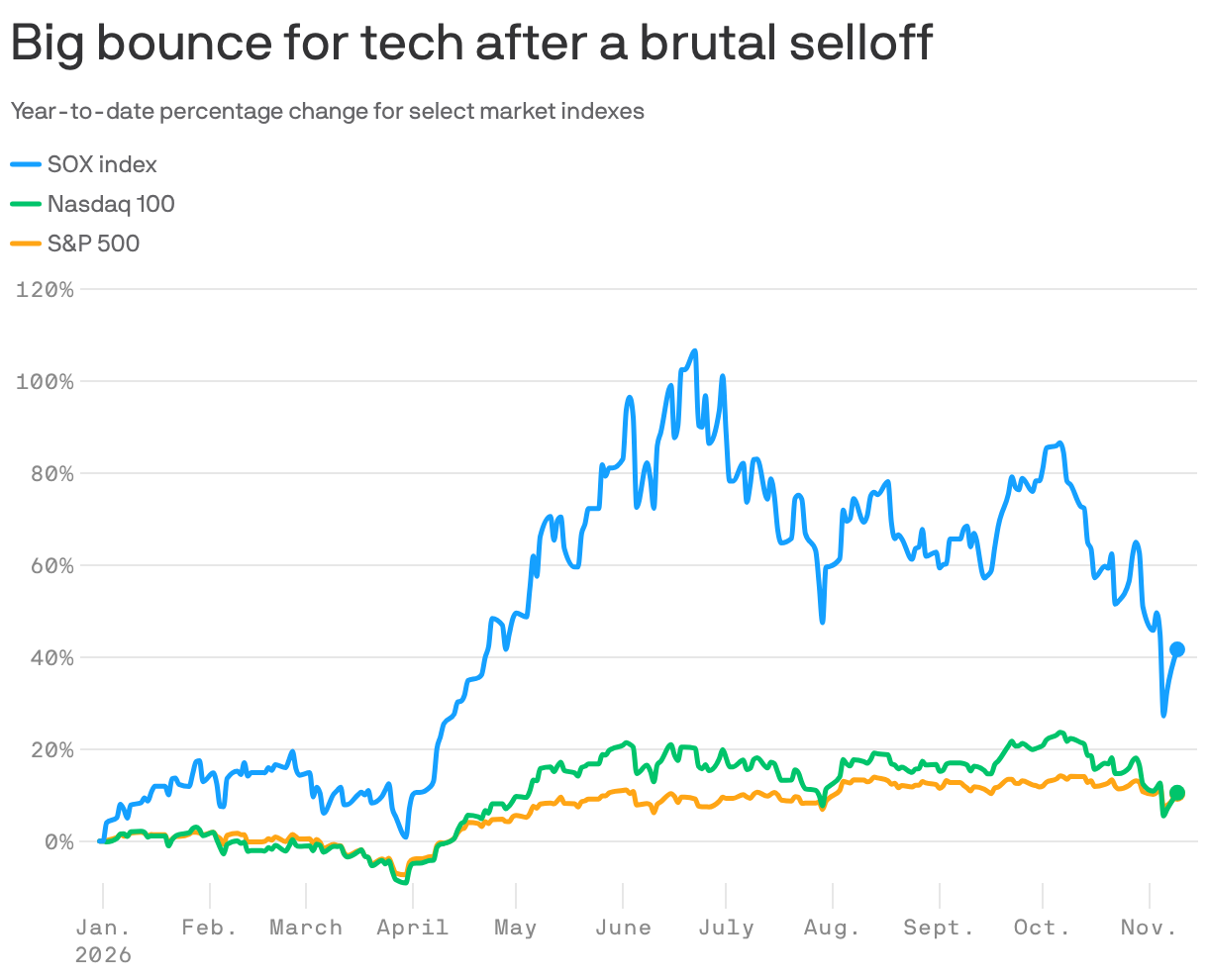
The AI trade has regained momentum despite — or maybe because of — Nvidia's struggles following the weekend revelations from CEO Jensen Huang.
The big picture: Monday's sudden burst of exuberance for AI was the latest wide swing for a market upended by last week's "blue tsunami" in the midterm elections and the threat they could pose to the data center boom.