Democrats are preparing a hostile audit of President Trump and his inner circle, intent on exposing — and ultimately ending — the most lucrative presidency in American history.
Why it matters: Since winning the 2024 election, Trump has operated in a Wild West of his own making — monetizing the office to the tune of billions, while enabling family, friends and donors to cash in along the way.
Fewer Americans are reading books, but here's the plot twist: The bookstore is still staging a comeback.
Why it matters: Once left for dead in the wake of Amazon's rise and the death of Borders,Barnes & Noble and independent booksellers have pulled off a stunning turnaround, opening new stores and reporting higher sales.
OpenAI may give the U.S. government a 5% stake in the company, per the Financial Times. The proposal is in very preliminary conversations, according to a person familiar with the matter.
Why it matters: If the overture is taken up by the Trump administration, that would mean the government would have a vested interest in weighing whether or not to limit the release of an OpenAI model.
With the U.S. hosting the World Cup, there have been plenty of anecdotes about a booming tourism economy in host cities — Scotland fans drinking Boston bars out of beer, for example.
But no World Cup hiring bump is evident in the June employment data.
By the numbers: Leisure and hospitality employment fell by 61,000 jobs in June. That's the category that includes restaurant and hotel employment and is most sensitive to tourism trends.
The job market entered the summer with less momentum than looked to be the case just a month ago.
Why it matters: Call it a yellow card for the labor market. Thursday morning's employment report doesn't undo three months of stronger hiring, but it does warn that the rebound is less durable than first thought.
Why it matters: The accounts put a conservative spin on a progressive idea, giving kids money so that they can build wealth — think the "baby bonds" proposal of Sen. Cory Booker (D-N.J.) , but done Wall Street style.
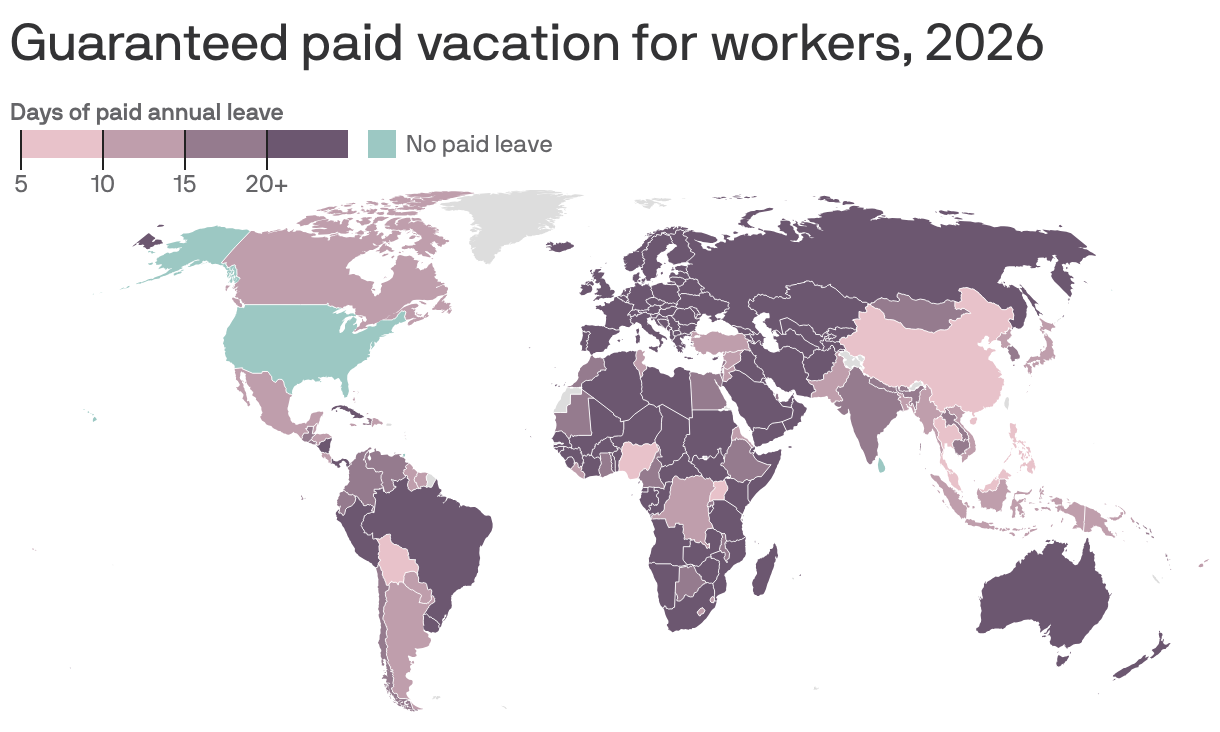
Chalk it up to American exceptionalism: The U.S. is one of only nine countries in the world that doesn't guarantee workers some kind of paid annual leave, according to a comprehensive new analysis of all 193 United Nations member states.
Why it matters: These policies have become fairly standard around the world — they're not merely some European August vacation thing — but paid vacation in the U.S. is seen more as a privilege managed privately by employers.