Fewer people are reading, but bookstores are making a comeback anyway

Add Axios as your preferred source to
see more of our stories on Google.
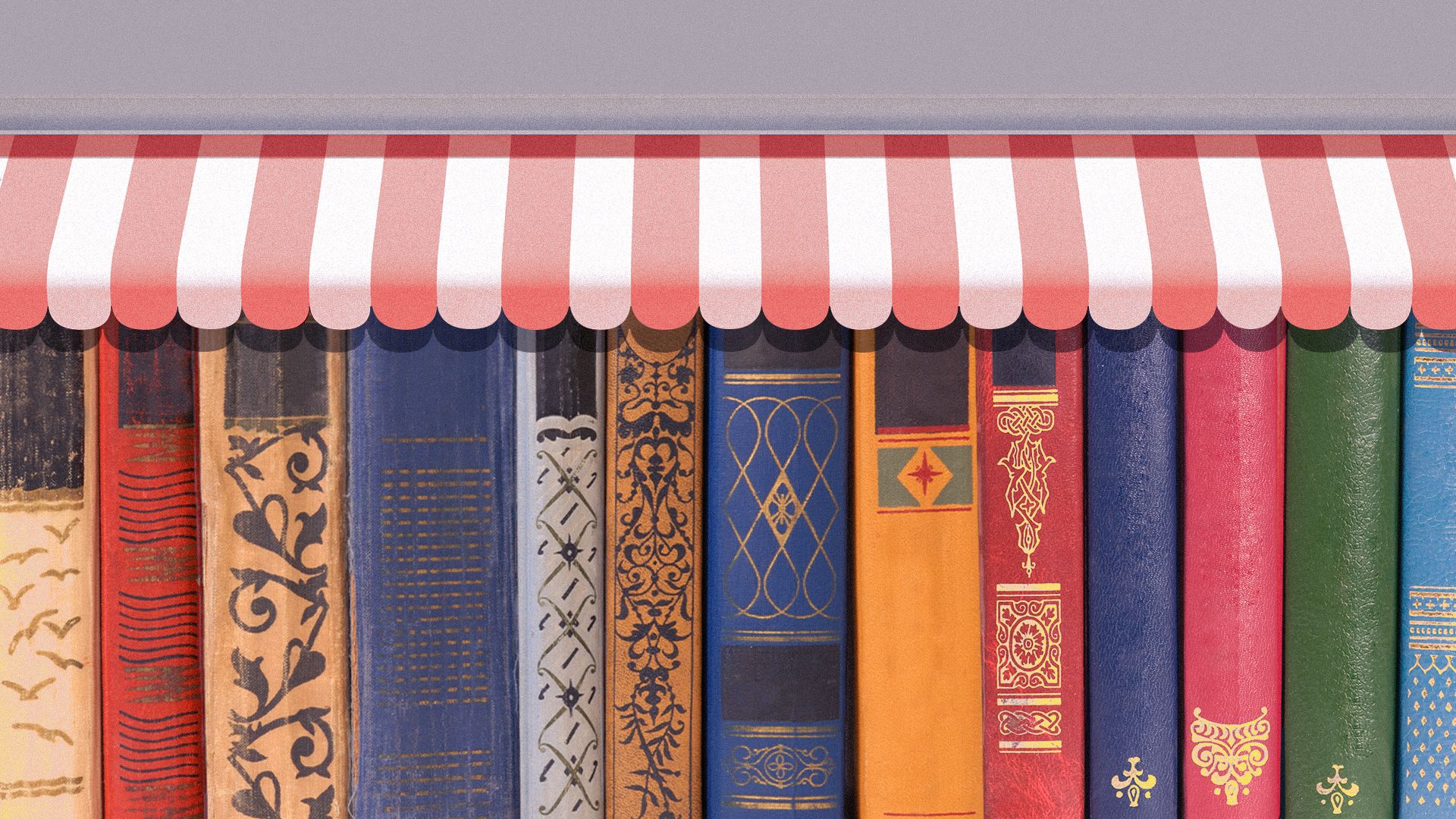
Illustration: Aïda Amer/Axios. Stock: Getty Images
Fewer Americans are reading books, but here's the plot twist: The bookstore is still staging a comeback.
Why it matters: Once left for dead in the wake of Amazon's rise and the death of Borders, Barnes & Noble and independent booksellers have pulled off a stunning turnaround, opening new stores and reporting higher sales.
The big picture: AI threatens to disrupt information consumption, and certain genres are slumping — but bookstores have remade themselves as a hideaway from modern distractions and a place of authentic discovery.
- "The revival is there," Barnes & Noble CEO James Daunt tells Axios.
- "You have people deciding that they want to align their work with their values, and they're passionate about bookstores, they're passionate about their community," Allison Hill, CEO of the American Booksellers Association, says.
- "And then, on the other side, you see consumers, readers wanting to shop in alignment with their values."
Zoom in: Daunt — an experienced U.K. bookseller — is widely credited with turning around B&N since taking over in 2019.
- He empowered local managers to stock books based on what their communities like to read, renovated stores, overhauled book displays and refreshed the retailer's assortment of non-book items, betting big on toys and games.
- "If you let the bookstore teams themselves get on and do sensible things — common sense things — within their stores, most of them begin to run much better stores, and that becomes an increasingly virtuous upward cycle of improvement," Daunt says.
Independent booksellers are also enjoying a renaissance.
- The number of U.S. bookstore companies rose 70% from 2,010 in 2021 to 3,416 in 2025, according to the American Booksellers Association.
- 73% of booksellers recorded a sales increase in 2025, with more than 47% saying sales rose at least 6%.


Yes, but: 36% of Americans say they're reading fewer books than they did a decade ago, according to a CBS News poll conducted in June.
- Only 23% are reading more, while 40% are reading about the same.
- Meanwhile, AI-generated summaries and dwindling attention spans due to social media threaten to undermine bookstores.
Zoom in: Author Tim Ferriss recently revealed that sales of his "how to" books are plunging — and he blamed chatbots for providing answers that people would previously get from books.
- WSJ recently published a viral story — "Dad books are a dying breed" — noting that serious nonfiction books are slumping.
The other side: Daunt rejects the suggestion that reading is on the decline and said AI won't replace books.
- Daunt acknowledged that certain genres aren't selling well, such as political books. (This interview was conducted before "Regime Change" by NYT reporters Maggie Haberman and Jonathan Swan took off.)
- But he says that trends change quickly. He noted that the romance genre was hot but said that's fading and now it's the "romantasy" genre that's in.
- "Nonfiction is fine — nonfiction is doing really well," he says.
"I've been around for a long, long, long time, and this has been a constant part of the narrative around the world of bookselling — 'people don't read,'" Daunt says.
- "Actually, it predates my being a bookseller. I was told that I was destined for a life of destitution because I didn't read properly, and that was because I watched half an hour of television a day with my parents. It's lazy journalism, I think it's utter nonsense."
- Curiously, he said, B&N has noticed an uptick in newsstand sales with outlets like The Atlantic performing well — with an emphasis on exclusive editions featuring the likes of Taylor Swift. "Put Taylor Swift on a front cover — we're going to sell lots of those," he adds.
"Starved for community"
Peggy Stover, a University of Iowa business marketing professor, said bookstores are benefiting from the trend of Gen Z seeking out analog experiences, such as vinyl records.
- "It's going back to the past where the technology was simpler and there's also a feeling of nostalgia that is involved in the popularity of bookstores," Stover says.
- "People use them as a gathering place to go have a cup of coffee, do it as a meetup, and I think Gen Z is looking at that habit again and bringing it back."
Indeed, the public's desire for connection — at a time when research shows people increasingly don't know their neighbors — is a powerful force for bookstores.
- "One of the reasons we opened a bookstore is because we were starved for community and we could see this was something other people were feeling as well," Sarah Williams, co-owner of Next Chapter Books in Detroit, tells Axios Detroit.
Return to public markets?
What we're watching: Elliott Management — which owns Barnes & Noble and the U.K.'s Waterstones, which Daunt also runs — is considering an IPO for its thriving book retailers, according to Bloomberg.
- Asked by Axios about the possibility of an IPO, Daunt said it's "not even 1% my decision."
- "We're owned by a private equity firm, and I really have almost no interest in the private equity industry beyond understanding that they like buying things cheap and selling them for more than they bought them for," Daunt says.
- "They like doing so relatively soon, and we've been obviously been a very, very good investment, because we were in a hole, and now we're not, so they will sell, of course. How they'll sell — I could not be less interested."
The bottom line: Bookstores are hanging tough.
