Trump Accounts are about to launch. Here's what we know

Add Axios as your preferred source to
see more of our stories on Google.
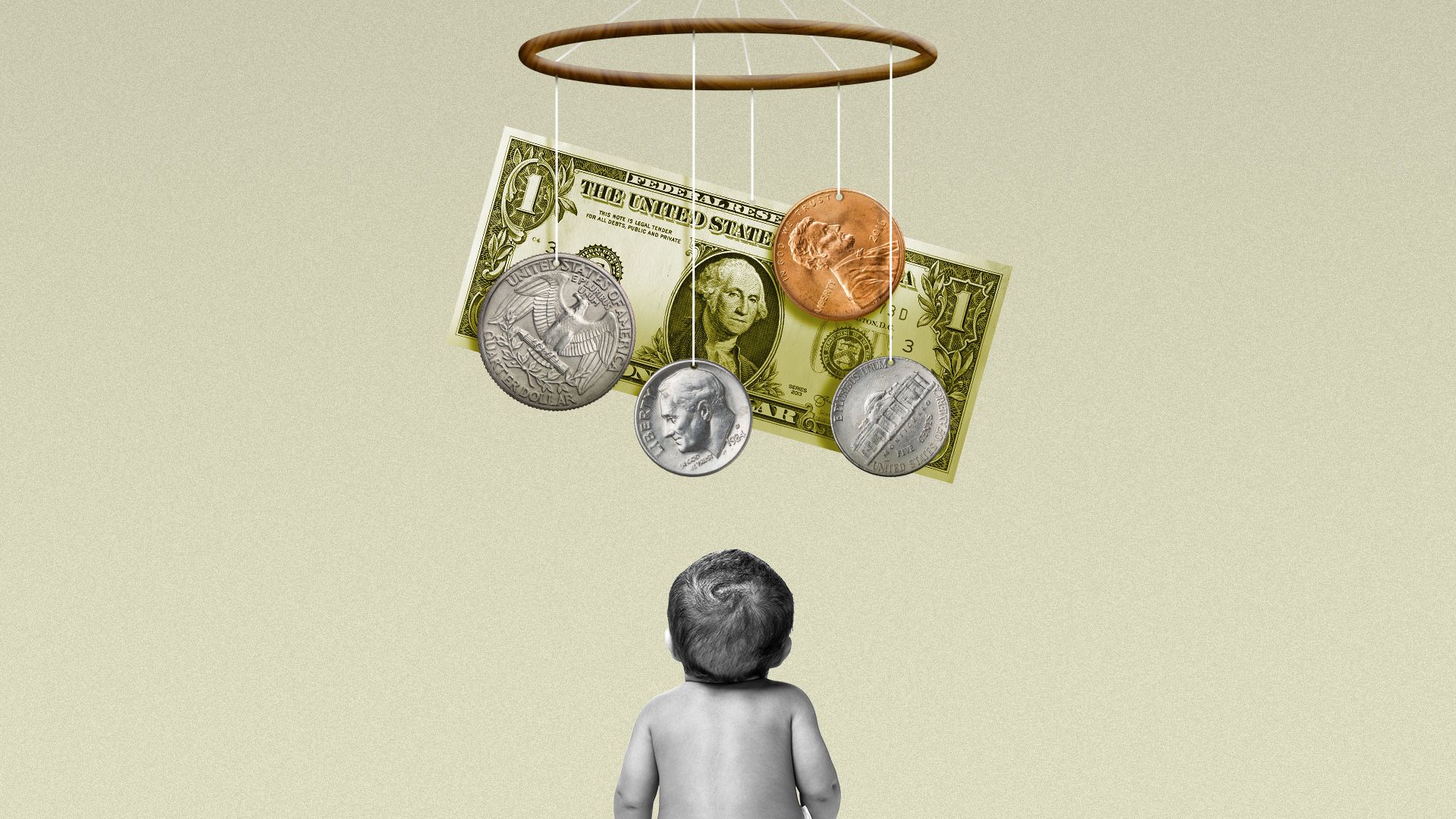
Illustration: Sarah Grillo/Axios
Trump Accounts, basically IRA-style investment vehicles for kids, are set to launch on Saturday — and more details are emerging about how they work.
Why it matters: The accounts put a conservative spin on a progressive idea, giving kids money so that they can build wealth — think the "baby bonds" proposal of Sen. Cory Booker (D-N.J.) , but done Wall Street style.
- For now, the federal government is giving babies born from 2025-2028 $1,000 to seed the accounts.
- Some philanthropists are also kicking in donations, and some employers are teed up to contribute to their employees' accounts.
The latest: On Wednesday, the Treasury Department announced that at launch, all contributions will be invested in an exchange-traded fund that tracks the S&P 500, the State Street SPDR Portfolio S&P 500 ETF.
- Four other ETF options are rolling out in the next few months — including another S&P 500 ETF from iShares and Vanguard's Total Stock Market ETF.
- These are pretty plain-vanilla, low-cost funds.
How it works: Families who are eligible for the $1,000 contribution from the federal government — and have signed up for accounts — should see the money on Saturday, per a Treasury spokesperson.
- And they'll also be able to start contributing.
Between the lines: These accounts are the latest sign of how U.S. policy has moved toward stock-market solutions for some of Americans' biggest money challenges — retirement via 401(k)s, saving for college with 529s.
Catch up quick: The accounts were created last year, part of Trump's One Big, Beautiful Bill Act.
- The idea originated with progressive economists, as a way to close the racial wealth gap. Baby bonds, as originally conceived, were meant to be publicly funded — $50,000 seeded at birth for the poorest kids by the time they reached adulthood.
Zoom in: Some proponents of the accounts now worry that they risk widening the wealth gap.
- The main concern is that the accounts are opt-in and that parents with higher incomes are more likely to sign up and contribute more money.
- "Small differences can compound into large gaps," as McKinsey lays out in a new analysis.
- Advocates are pushing for auto-enrollment. "We still need to figure out how to get this to be as automated as possible in order for it to have maximum reach," says Madeline Brown, a senior policy associate at the Urban Institute.
Yes, but: 86% of Trump Accounts opened are linked to families who earn less than $200,000 annually, according to the Treasury's June 2026 figures, per a Treasury spokesperson.
- More than 50 companies have committed to making contributions for their employees — so children who aren't eligible for the federal money could still get something, the department says.
- The accounts will get more people invested in the stock market.
For the record: "Billionaires and multinational corporations ranging from Michael Dell to Ray Dalio to Micron have pledged to donate billions of dollars of their wealth to the Trump Accounts of working-class children," White House spokesman Kush Desai tells Axios.
- "High-income parents have always had an array of tools to grow wealth for their kids, but Trump Accounts are giving middle-class parents the same opportunity — with billionaires chipping in to help."
By the numbers: Already more than 6 million accounts have been registered — including 1.5 million who are eligible for the $1,000, according to a Treasury spokesperson.
- 23 governors have pledged to work toward opening accounts on behalf of foster kids.
What to watch: Many of these companies plan on contributing funds to accounts their employees open for their children. Details on how that would work are still forthcoming.
