The UN's International Maritime Organization will evacuate more than 11,000 sailors stranded in the Strait of Hormuz during the U.S.-Iran war, the agency said Tuesday.
Why it matters: The operation underscores how the U.S.-Iran war disrupted a critical global shipping route and left thousands of civilian seafarers stuck.
Senate Democrats are asking the Treasury Department's Office of Inspector General to investigate resources devoted to a proposed $250 bill bearing President Trump's portrait.
Why it matters: Federal law bars living people from appearing on U.S. currency, making congressional action necessary before any $250 bill featuring Trump could be issued.
CANNES, France — Shoppers want a more active role in shaping how brands show up and sell to them, said executives at an Axios Live event on June 22.
Why it matters: Companies seeking long-term loyalty are moving toward treating customers as collaborators in product development, marketing and brand building.
Axios' Kerry Flynn and Christine Wang moderated the Expert Voices roundtable, which was sponsored by Hotwire and Sam's Club.
5 big takeaways from the conversation:
AI is helping companies better understand their audiences. BelBrands GM and CMO Carolina Cespedes-Virguez said the company uses it to analyze and summarize customer reviews and ratings.
PacSun is reimagining the role of the focus group, said the company's CEO Brieane Olson. The retailer has launched a "youth advisory council" with 14 members ages 12 to 21 to help shape strategy.
Businesses are embracing younger generations as workers and consumers, said Samantha Critchell, Elf Beauty's head of corporate communications.
Leaning on organic users can be more powerful than celebrities, eBay chief communications officer Gigi Ganatra Duff said. "When you have community and content and commerce all together, that's really where the magic happens."
Trust is a competitive advantage, said Joy Robins, the New York Times' global chief advertising officer. "There's a reason that when you get the Wirecutter seal of approval, the thing sells out in minutes."
Content from the sponsor's remarks:
Sam's Club acting head of communications John Byrum explained that a consistent narrative is important because "the consumer doesn't care where a piece of content or a message is coming from. They don't distinguish between marketing and communications."
"Retail has changed, relationships have evolved," Hotwire global CEO Grant Toups said. "More and more organizations … are faced with the challenge of having to tell complex technology stories into a really, really loud competitive landscape."
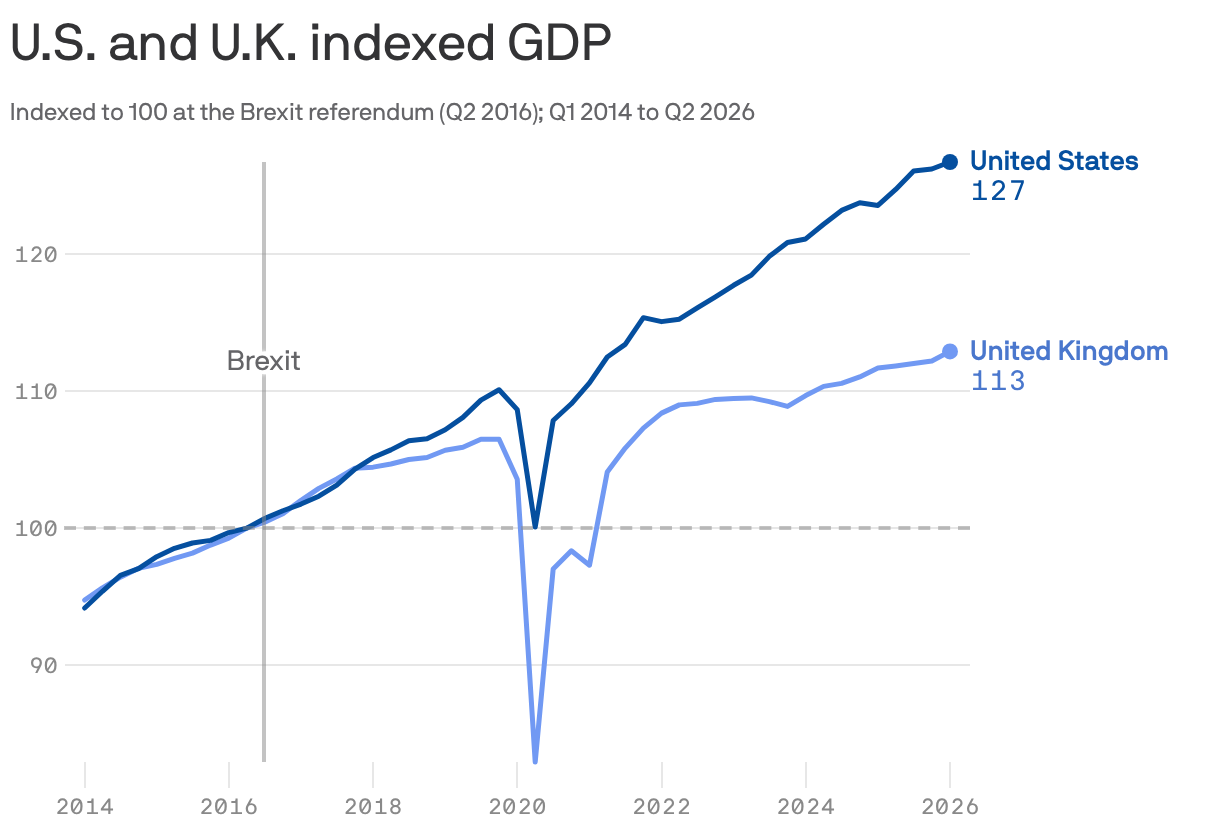
Brexit is the real-world test of what happens when a major economy voluntarily raises trade barriers, restricts the free flow of workers and generates years of policy uncertainty — all at once.
A decade since the vote to leave the European Union, the results are largely in.
Why it matters: The economic drag came from overlapping effects.
Businesses held off on investment as uncertainty dragged on, executives spent years consumed by Brexit logistics, and the firms most integrated with European markets were often the ones hit hardest.
Even a mild positive revision would reverse a stretch of after-the-fact updates that showed the labor market was notably weaker than it appeared in real time.
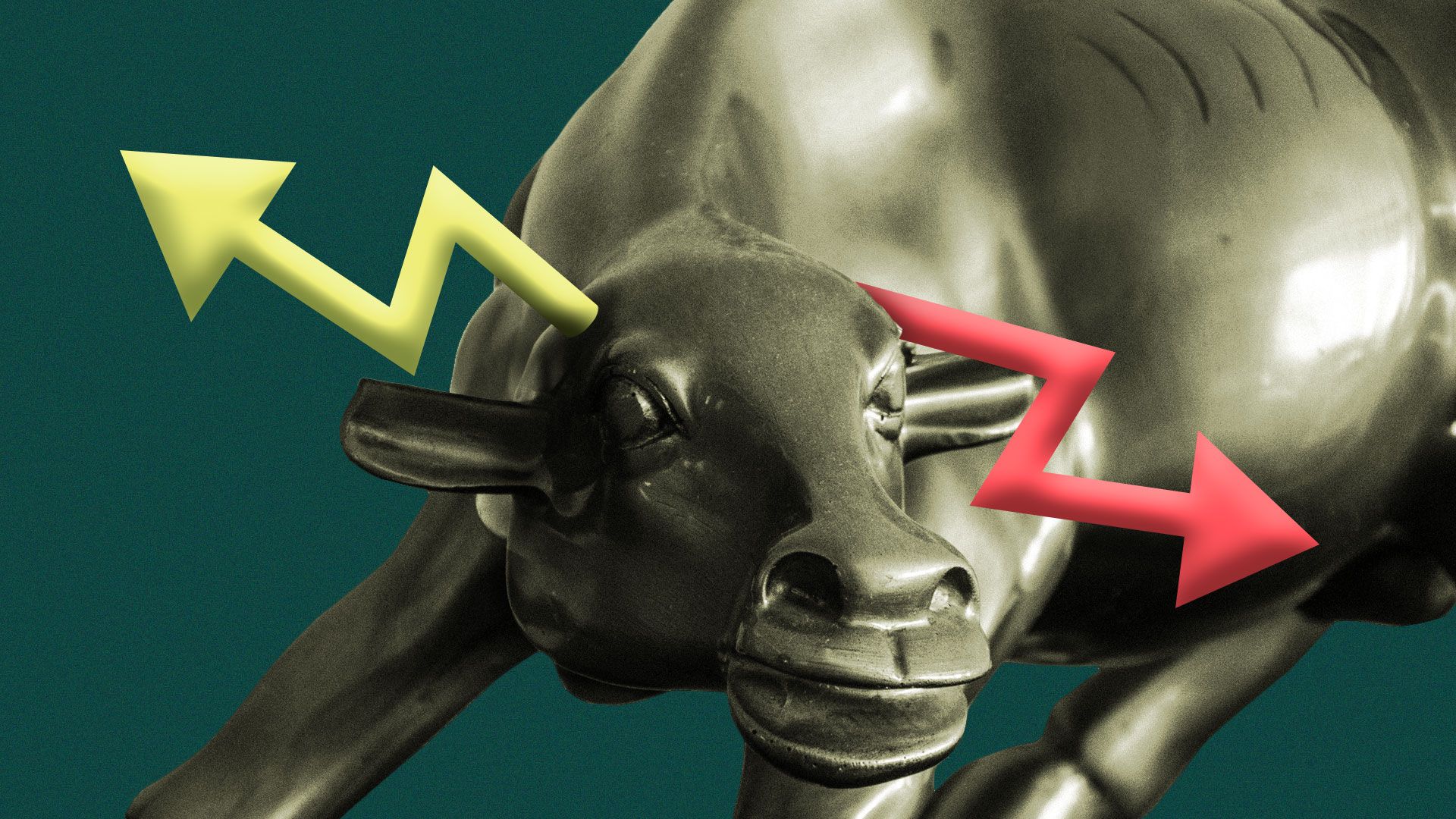
Tech stocks shriveled up Tuesday as fears about an AI bubble sapped market momentum.
Why it matters: Chatter about a bubble has been prominent in recent months but hasn't yet delivered a long-lasting blow to stocks.
Driving the news: The tech-heavy Nasdaq Composite Index fell 2.5% shortly after the opening bell.
The broad S&P 500 index was down roughly 1%.
Zoom in: It's a particularly ugly day for chip memory and data storage stocks.
They suffered some of the worst declines early, after a 10% overnight drop in South Korea's KOSPI index, which is dominated by memory chip makers Samsung Electronics and SK Hynix.
In the U.S., memory chip maker Micron dove more than 10% in early trading, storage device maker Sandisk plunged more than 12% and hard disk drive makers Seagate Technology and Western Digital were both lower by roughly 8%.
The big picture: Makers of memory chips and data storage devices have been some of the biggest beneficiaries of the AI infrastructure boom, which has created unprecedented demand and soaring prices for products that were long seen as commodity inputs to tech products like laptops and cellphones.
Shares of SpaceX — which went public less than two weeks ago — briefly fell below their opening price of $150 on Tuesday.
The company — known broadly for rockets — has become an AI play as investors bet on a lucrative future with orbital data centers.
The bottom line: It's too early to tell whether this is a serious shakeout — or just a temporary rebalancing.
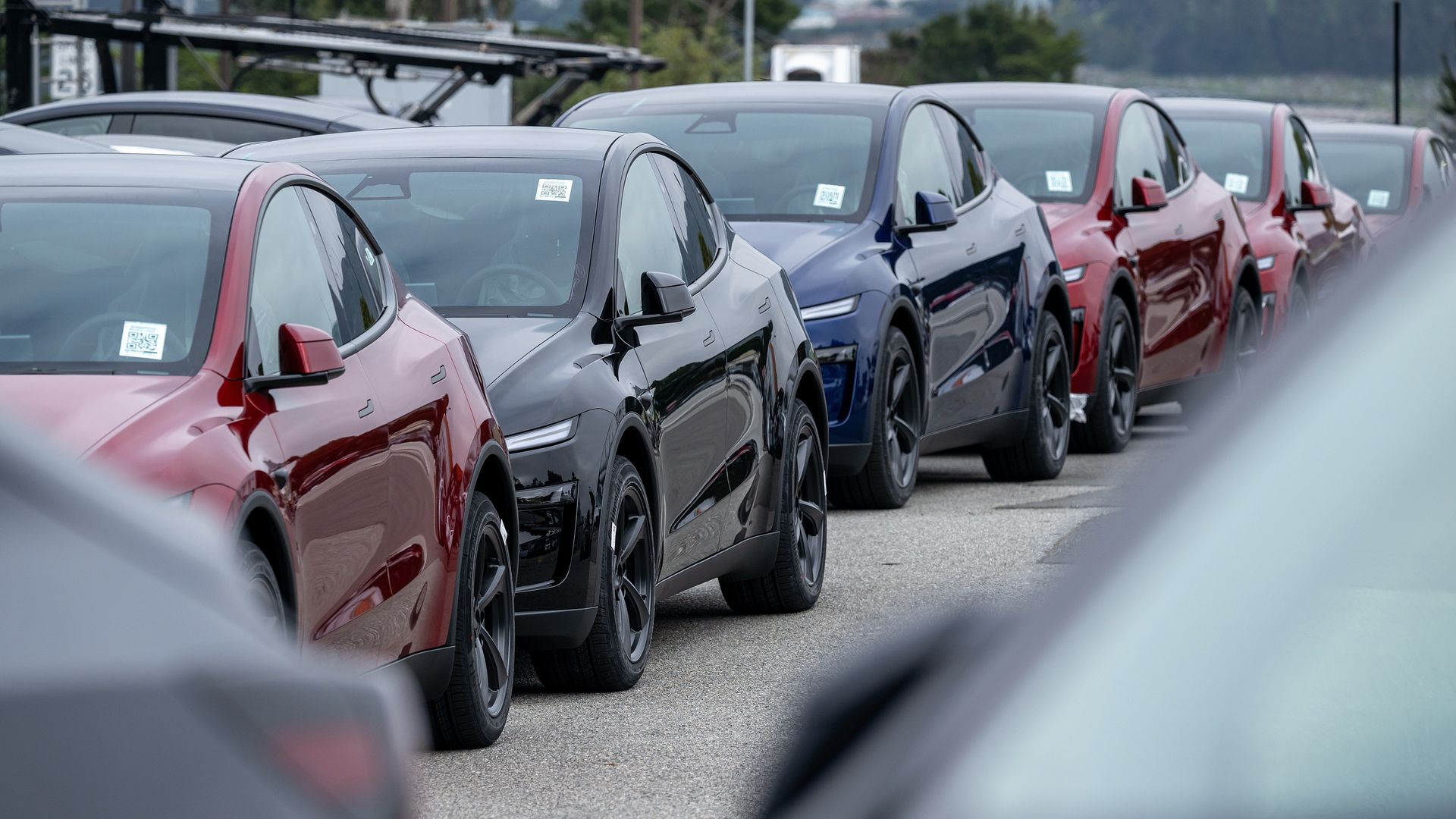
Two Tesla models topped an annual list of the most made-in-America vehicles — but a majority of the top 10 for the 2026 model year were Japanese-brand vehicles.
Why it matters: The "buy American" movement has long been a rallying cry for automakers, policymakers and certain consumers — but it's not always easy to tell which vehicles were actually manufactured here.
A booming stock market is definitely making the rich richer, but it won't do much to lift prospects for most everyday Americans or the broader economy, concludes RSM's chief economist Joe Brusuelas in an intriguing new post.
The big picture: Rising stock prices help a very small slice of folks at the top, and the rich don't spend much of those gains — which would at least drive overall economic growth.
Why it matters: Keir Starmer was elected as a competent, level-headed antidote to 14 years of Conservative rule — a period consumed by austerity, ideological warfare and the chaos of leaving the European Union.
Driving the news: After just recently securing $86 billion in a record IPO, Elon Musk's SpaceX plans to raise at least $20 billion more by selling bonds.
Why it matters: SpaceX's public offering earlier this month spotlighted the importance of the stock market to the AI boom. But giant tech companies are also leaning heavily on the corporate bond market to source cash for AI investment.