Saturday's economy stories

Consumers caught in triple stack of pain

Americans desperately want day-to-day life to be more affordable. Right now, they aren't getting it.
The big picture: The pinch of high prices for food, energy, housing and more has driven seismic shifts in public opinion over the last four years. Since the onset of the Iran war, the cost of living looks likely to get worse, not better, at least in the near term.

Trump's signature is coming to U.S. currency — as cash use fades

President Trump's signature is set to appear on U.S. currency — a first for a sitting president — as Americans use physical cash less than ever.
Why it matters: Cash still carries outsized symbolic power — even as its role in everyday payments shrinks.
Borrowing costs are surging amid Iran war


The Iran war is sending longer-term borrowing costs surging amid prospects for higher inflation, fewer Federal Reserve rate cuts and more federal borrowing.
Why it matters: Higher rates create new pressure for an already-faltering housing sector, make the U.S. government's fiscal challenges worse and could weigh on business investment and consumers alike.

It's a woman's economy now
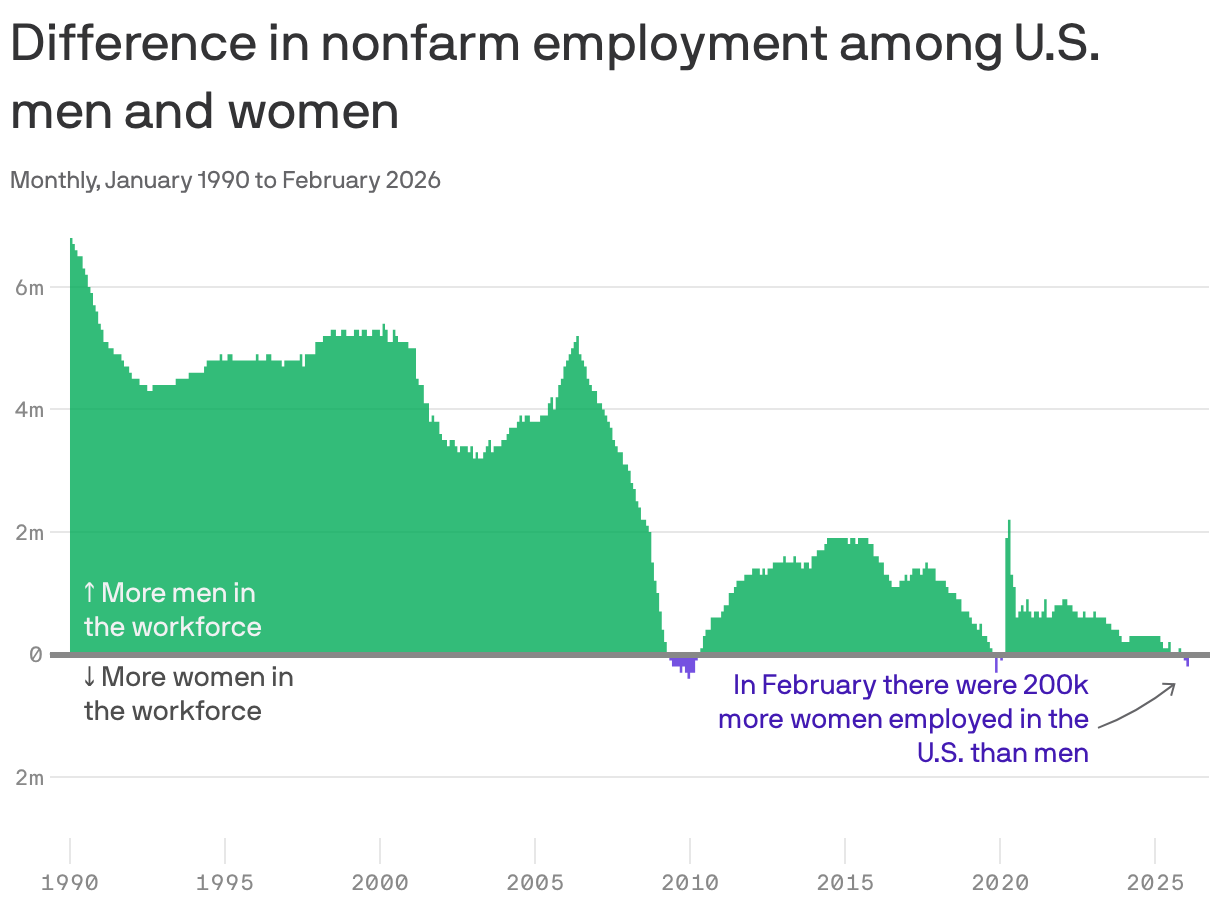
For only the third time ever, there are more women employed in the U.S. than men, according to federal data highlighted in a report from Indeed, the jobs site.
Why it matters: This isn't quite a women's empowerment story — what's happening in part is that traditional male-dominated occupations are shrinking, while female-led jobs are growing.
Between the lines: Overall, those jobs pay less than ones held by men.
- "If you're seeing a shift toward more female employment, all else equal, you would see a shift toward lower wages," Laura Ullrich, economic research director at Indeed, tells Axios.
Two dynamics are driving the shift:
1. The fastest-growing sector of the job market, particularly over the past year, is health care, where women dominate. Job growth in construction and manufacturing has been relatively flat or negative.
2. Men's participation in the job market has been declining. Male employment fell overall by 142,000 jobs from February 2025 to February 2026, Ullrich notes.
- That's also partly because the immigration crackdown pushed a lot more men out of the workforce and restricted their entry into it.
Friction point: It would seem like a no-brainer for more men to move into health care, but they so far have been reluctant to take jobs that can be perceived as "women's work."
- "There's no inherent reason that 95% of speech language pathologists are women," Ullrich says. "That's a good job. It pays six figures."
- "Men are missing out in the labor market because there are too many 'no-go' zones for male workers," economist Richard Reeves, founder of the advocacy group American Institute for Boys and Men, tells Axios.
Zoom out: For a long time, there was a big push to get more women into STEM (science, technology, engineering and math).
- But there's been less of an effort to push more men into health care, or what Reeves calls HEAL professions: jobs in health and education that require literacy.
- Getting more men into jobs in health, social care and education matters for gender representation in those vital fields and would address labor shortages, he says.
- "It is also essential for improving job prospects for men themselves."
Flashback: The first time women outnumbered men in the job market was in the wake of the recession after the financial crisis. Male-dominated positions in construction and manufacturing were hard hit.
- The second time, the economy was booming just before the pandemic. Women who had made gains in education — with a growing share of college degrees — seemed better positioned to take advantage of the changing economy, as the New York Times noted then.
- What's happening now is basically a return to that trend line.
Stock indexes step into correction territory


When the Iran war started, market analysts issued reassuring notes: Short-lived geopolitical shocks don't typically rattle the stock market, they said.
Why it matters: We're now into month two of conflict. Equities are wobbling, and investors are growing increasingly skeptical of President Trump's assurances.
Where it stands: The tech-heavy Nasdaq index is now down 11% from its record-high close on Oct. 29 — officially entering correction territory.
- The Russell 2000, an index tracking smaller companies, landed in correctionville last week.
- The S&P 500 has held up a bit better, but it's down 7.2% from its closing high.
Catch up quick: Minutes after the market closed Thursday, Trump posted that he was extending the deadline for Iran negotiations.
- "As per Iranian Government request, please let this statement serve to represent that I am pausing the period of Energy Plant destruction by 10 days." That would bring his latest deadline to Monday, April 6.
The latest: That statement didn't calm the markets for long. Oil prices spiked to around $110 a barrel when the market reopened.
- "While the delay might reduce some of the immediate escalation risk, it offers no new visibility on the path toward resolution," Deutsche Bank analysts wrote in a note this morning.
The big picture: If the market does take a another leg down, the effects on American households would be more pronounced than in previous oil price shock moments.
- Nearly 40% of household wealth in the U.S. is tied up in stocks — compared with about 10% during the 1990 oil price shock, UBS economist Arend Kapteyn said in a note yesterday.
- That means Americans would be hit with a double whammy from the geopolitical conflict: higher energy prices and lower brokerage account balances. That in turn would be a drag on overall economic growth, as households cut back on spending.
- It would also be another downer to the consumer mood.
Zoom out: The stock market doesn't typically take kindly to long periods of high oil prices stemming from Middle East Conflict.
- Over the past 50 years, there were nine oil price shocks, where prices rose 20% or more, according to an analysis from Joe Seydl, a senior markets economist at JPMorgan Private Bank.
Zoom in: Four of those shocks led to a selloff in stocks — an S&P decline greater than 10%:
- The 1973 oil embargo, the Iranian hostage crisis, the 1990 Gulf war and the Russian Invasion of Ukraine in 2022.
- In each case, oil prices rose more than 50%.
Stunning stat: The price of Brent crude is up nearly 40% from the beginning of the war.
Yes, but: It's not just the oil price that triggered the selloff, Seydl writes. Each of those selloffs coincided with either a recession in the six months after the shock or Federal Reserve interest rate increases.
- The past doesn't predict the future.
What to watch: Weekend postings by Trump. The president has had a tendency to escalate the conflict with Iran with social media posts on Saturdays and Sundays that in turn has driven a lot of market volatility.

Late-night Senate vote puts DHS one step closer to mostly reopening
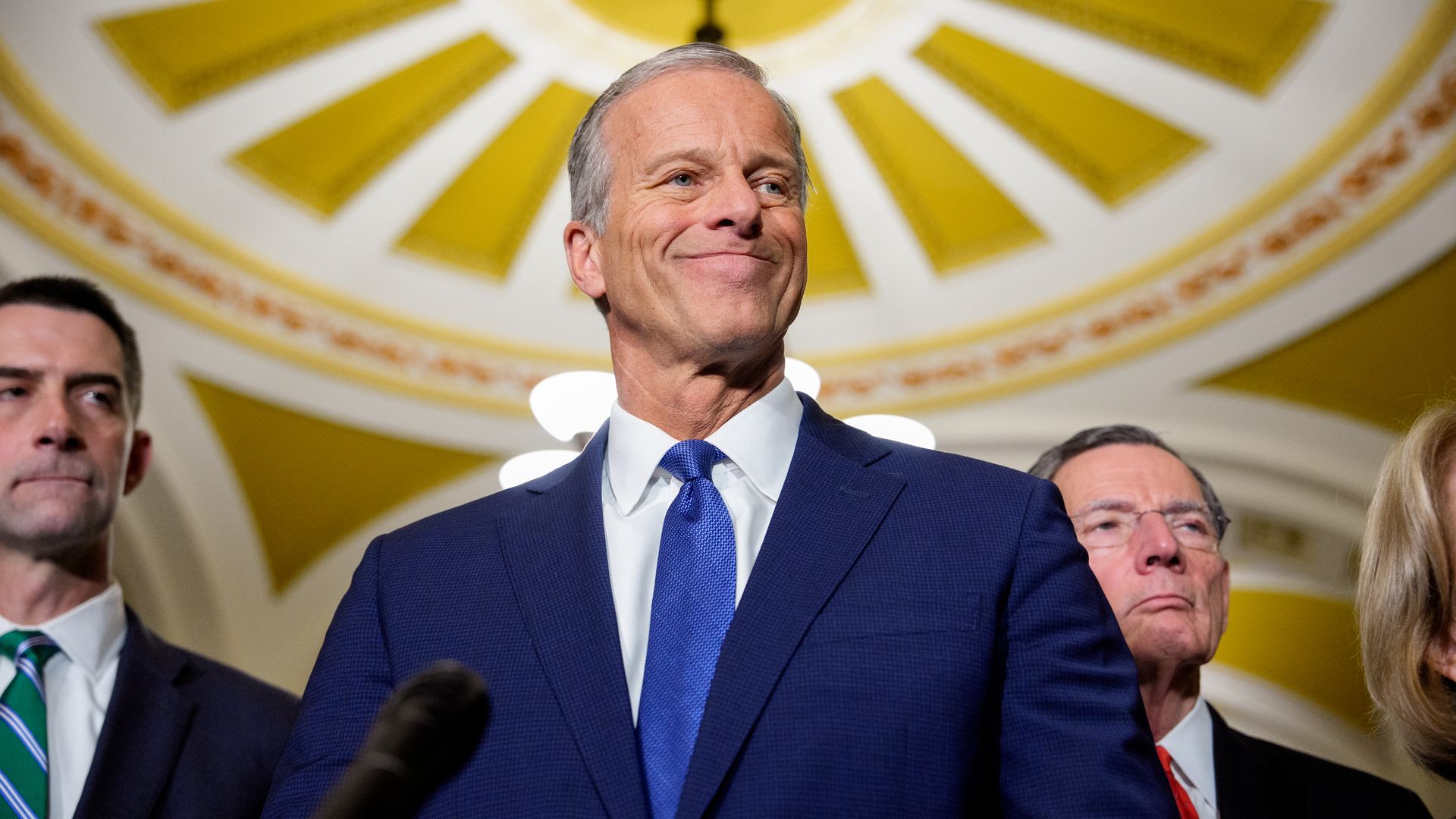
The U.S. Senate voted overnight to pass a bill that would reopen all of the Department of Homeland Security, except a few immigration enforcement agencies.
Why it matters: The vote puts Congress one step closer to ending a 42-day shutdown that has resulted in widespread airport security disruptions and missed paychecks for hundreds of thousands of workers at key national security agencies.
Exclusive: Sen. Warren seeks to turn up the pressure on private equity landlords
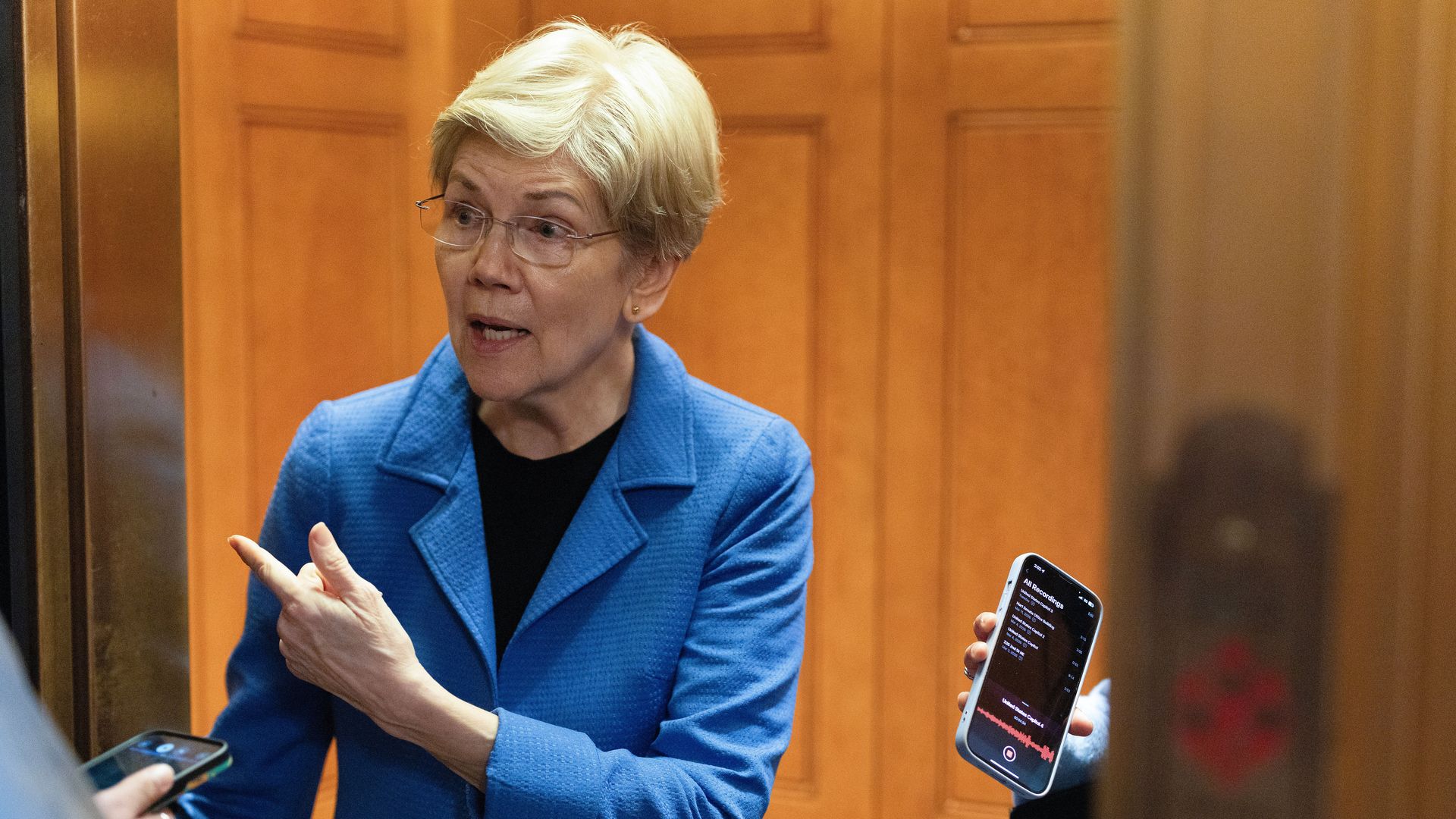
Following the Senate's push to ban institutional investors from owning single-family homes, Sen. Elizabeth Warren (D-Mass.) is now pressing the corporate landlords that hold multifamily apartments and manufactured homes.
Why it matters: These companies, including private equity and publicly traded real estate firms, are taking heat from lawmakers and the president over a housing affordability crisis that's gripped the country in recent years.
Where it stands: This week, Warren sent letters to 14 corporate landlords, including Blackstone, Starwood and Invitation Homes, seeking more information on:
- The number of properties they or their affiliates own or have sold, rents charged, evictions conducted and more. The letter asks for a detailed accounting of complaints by renters across their properties.
- The letter to Starwood, viewed by Axios, also requests information on any communications the company has had with the Trump administration.
Catch up quick: Earlier this month, the Senate passed the ROAD to Housing Act by a 89-10 vote. The product of negotiations between Warren and Sen. Tim Scott (R-S.C.), the bill would ban large institutional investors from buying single-family homes.
- The provision is getting big pushback from House conservatives who are calling it "socialism." The big housing companies also say they're being unfairly targeted.
- Institutional investors hold just 3% of single-family homes in the U.S., Warren notes.
Yes, but: Blackstone has said that the number is even smaller — with investors owning 0.5% of single-family homes and it holding just 0.06%. "Far too immaterial to impact rents or markets," it said in an earlier release.
- The firm argues that single-family rental homes enhance housing affordability.
Zoom in: These companies play a bigger role in manufactured housing and multifamily rentals.
- In her letter, Warren says they are responsible for higher rents and eviction rates.
What they're saying: "America is facing a housing crisis with skyrocketing costs and a severe shortage of affordable housing supply," she writes.
- "Wall Street and giant corporate landlords are making the crisis worse by gobbling up homes and apartment complexes, jacking up housing costs across the country, and using aggressive and discriminatory tactics to push up profits at the expense of families."
The other side: "Our members offer quality homes to hardworking families who prefer the flexibility of renting or who are not yet positioned to buy," said the National Rental Home Council, a trade association that represents Invitation Homes and other big institutional landlords.

Pentagon weighs sending 10,000 more combat troops to the Middle East
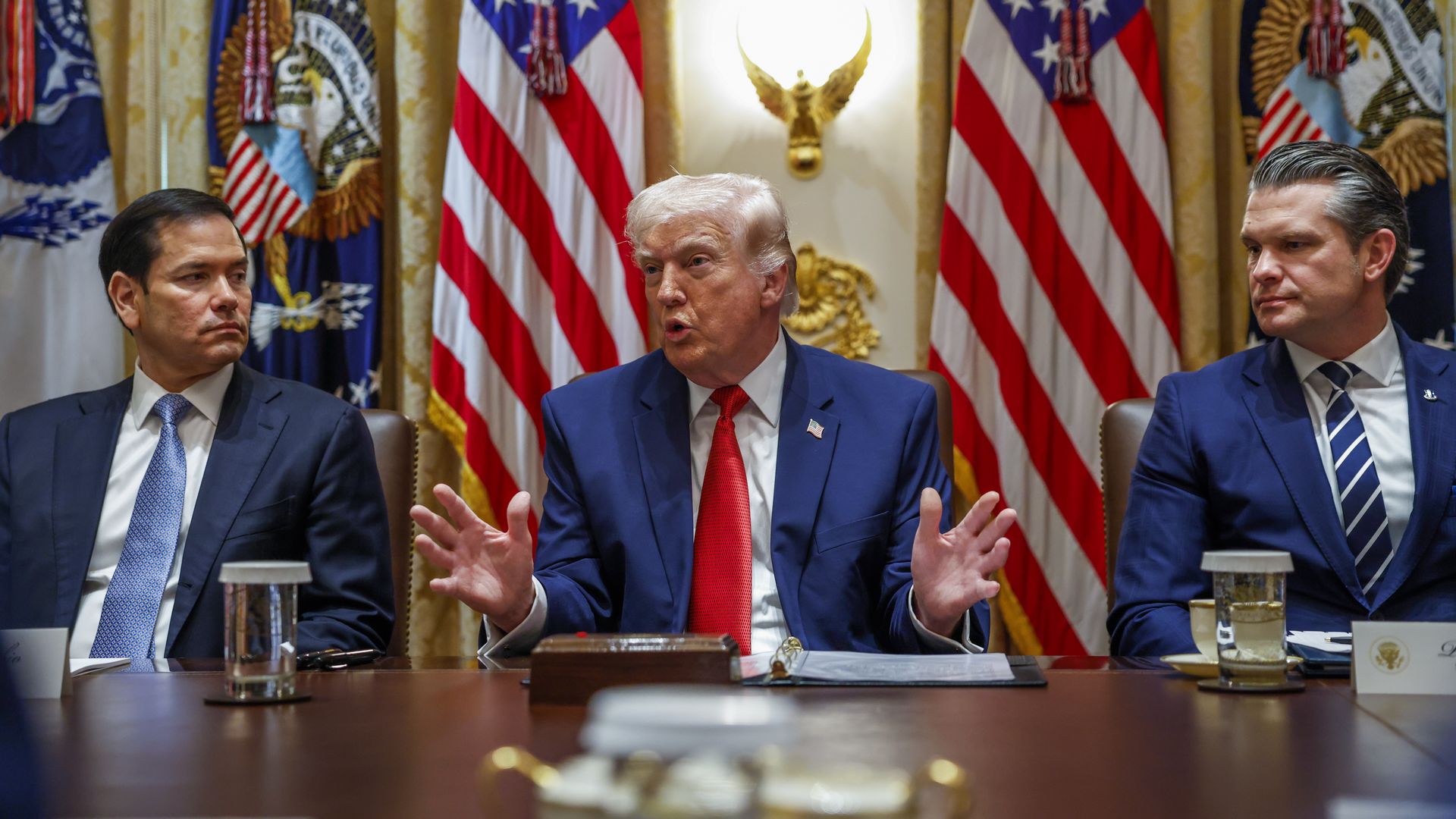
The White House and the Pentagon are considering sending at least 10,000 additional combat troops to the Middle East in the coming days, according to a senior U.S. defense official.
Why it matters: If the Trump administration decides to send extra troops, it will significantly increase the number of combat soldiers the U.S. has in the region. It is another signal that a U.S. ground operation in Iran is being seriously prepared.

Working moms are building community beyond parenting

A new type of community is emerging for working moms who want to connect with each other beyond parenting and their careers.
Why it matters: Many women are simultaneously managing households, careers and social lives — and searching for community with others navigating a similar reality.