Trump dismisses affordability concerns in State of the Union


Add Axios as your preferred source to
see more of our stories on Google.
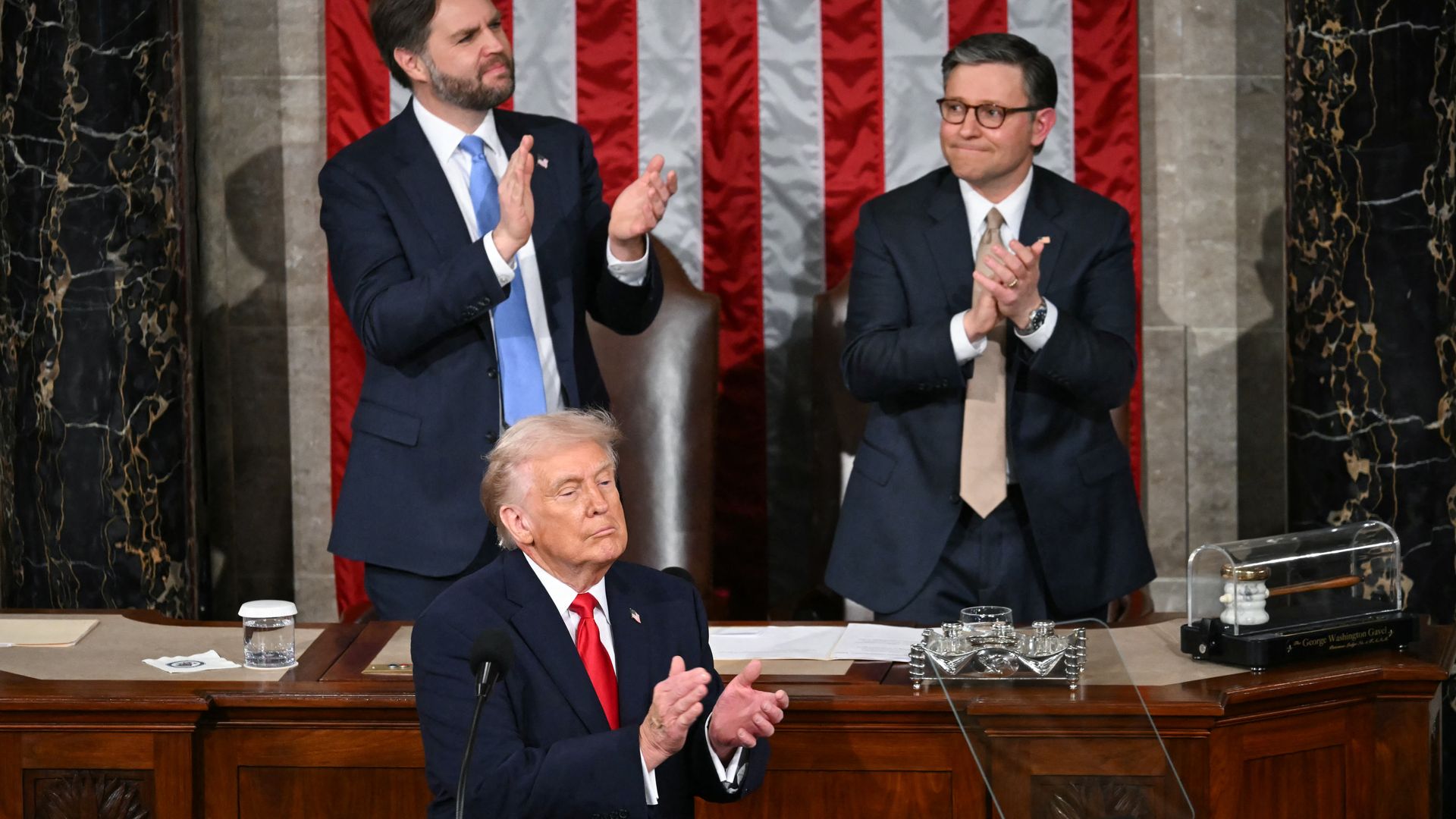
President Trump at Tuesday night's State of the Union address. Photo: Andrew Caballero-Reynolds/AFP via Getty Images
Sometimes, presidents use their State of the Union to offer a laundry list of poll-tested policy proposals that might assuage Americans that their concerns are being addressed. President Trump chose a different tack Tuesday night.
The big picture: The president is sticking to a boastful message about the state of the economy heading into the midterms, aiming to persuade voters that these are the best of economic times.
- It follows a series of proposals floated by the president and his allies, especially around housing and borrowing costs, meant to address Americans' deeply negative views on affordability.
- "The roaring economy is roaring like never before," Trump said Tuesday night.
State of play: Remember the president's pitch to cap credit card borrowing costs at 10%? It didn't make the cut in his 10,600-word address.
- He also didn't mention his administration's use of mortgage bond purchases by Fannie Mae and Freddie Mac to try to push down mortgage rates.
- On housing, however, he did repeat a call for Congress to block large institutional investors from buying up single-family homes, an idea popular on the left but less so among the Republicans who control Congress.
- He was dismissive of Democrats' emphasis on the word affordability, saying, "Their policies created the high prices. Our policies are rapidly ending them," and that "prices are plummeting downward."
Zoom out: Rather than present an I-feel-your-pain message paired with a litany of policy proposals, he argued that things are looking great.
- "The price of eggs is down 60%," he said. "The cost of chicken, butter, fruit, hotels, automobiles, rent is lower today than when I took office by a lot."
- That view does not align with public polling, which has shown sharply negative views about the economy as voters complain about the price of day-to-day purchases.
- The University of Michigan consumer sentiment survey, for example, was at 56.6 this month, similar to its level during the peak of inflation in 2022 and down from 71.7 when Trump was inaugurated.
What they're saying: "Thematically," wrote Tobin Marcus and Chutong Zhu with Wolfe Research, the president "followed his instinct to persuade voters that America is in a golden age, rather than empathizing with 'affordability' concerns."
- The speech "was full of political theater, but included fewer economic policy proposals than we were expecting," Brian Gardner, chief Washington policy strategist at Stifel, said in a note.
Reality check: Many of the ideas that the president and his administration have floated had serious political, legal or practical limitations that would limit their ability to calm voter concerns over affordability.
- That's especially true with proposals that would need to be passed in a narrowly divided Congress in an election year.
Yes, but: The Biden administration learned the hard way that the politics of telling voters things are better than they think often doesn't go very well.
